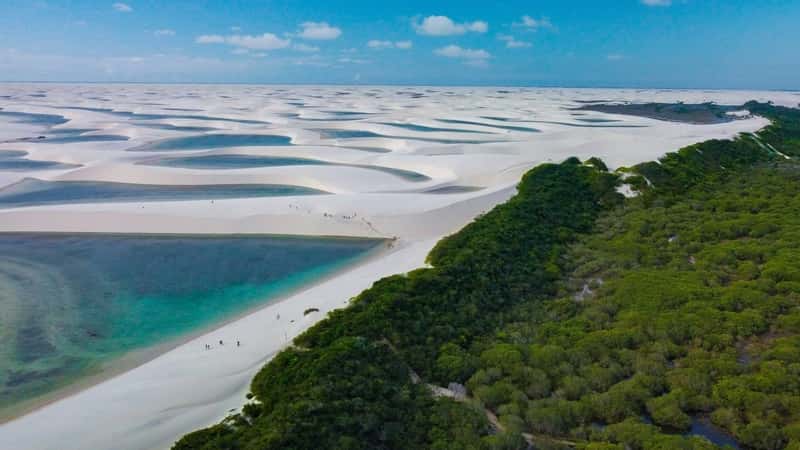
A Guide to Lençóis Maranhenses: Brazil's Most Surreal Landscape – Image for illustrative purposes only (Image credits: Unsplash)
Maranhão, Brazil – Far from the well-known beaches and waterfalls that draw most visitors to Brazil, a vast stretch of white sand dunes rises in the northeastern state of Maranhão. The Lençóis Maranhenses National Park presents an arresting sight: endless ridges of pale sand that resemble a desert at first glance. Yet the scene shifts dramatically once the rains arrive, transforming the dunes into a mosaic of freshwater lagoons.
A Landscape Shaped by Contrasts
The park covers roughly 155,000 hectares of coastal dunes and wetlands. Wind and seasonal flooding have sculpted the terrain over centuries, creating a setting that defies easy classification. Sand dominates the surface, yet the underlying geology traps rainwater in natural depressions between the dunes.
These depressions fill each year, producing clear pools that range from shallow ponds to deeper lagoons. The water remains fresh because it comes directly from rainfall rather than from the sea. The result is a temporary aquatic world set against an otherwise arid backdrop.
The Seasonal Cycle That Creates the Lagoons
Rainfall typically begins in January and peaks between March and May. During this period, water collects in the valleys between dunes and can remain for several months. By late summer the pools begin to shrink, and the landscape gradually returns to its drier appearance.
The timing of the rains determines how extensive the lagoons become. In years of heavier precipitation the water can cover large areas, turning the park into a striking patchwork of blue and white. Visitors who arrive at the right moment witness one of the most unusual freshwater environments in South America.
Life Within the Shifting Sands
Despite the harsh surface conditions, the park supports a range of plant and animal species. Grasses and shrubs take root where moisture lingers, while fish and aquatic insects appear in the lagoons during the wet months. Birds use the temporary waters as resting and feeding sites along migration routes.
Local communities have long adapted to the seasonal rhythm. Some residents guide visitors across the dunes or offer boat trips on the larger lagoons when water levels allow. Their knowledge of safe routes and changing conditions helps travelers navigate the remote terrain.
Why the Site Continues to Draw Attention
The visual contrast between brilliant white sand and vivid turquoise water creates an almost unreal effect. Photographers and nature enthusiasts return repeatedly to capture the changing scene. The park’s isolation has helped preserve its character, limiting large-scale development.
Access remains limited to a few entry points, and movement inside the park is usually on foot or by four-wheel-drive vehicle. This controlled approach maintains the sense of discovery that first-time visitors often describe. The combination of dramatic scenery and seasonal renewal keeps Lençóis Maranhenses among Brazil’s most distinctive natural areas.
What matters now: The lagoons reach their fullest extent in the months following the rainy season, offering the clearest window into the park’s dual identity as both dune field and wetland.