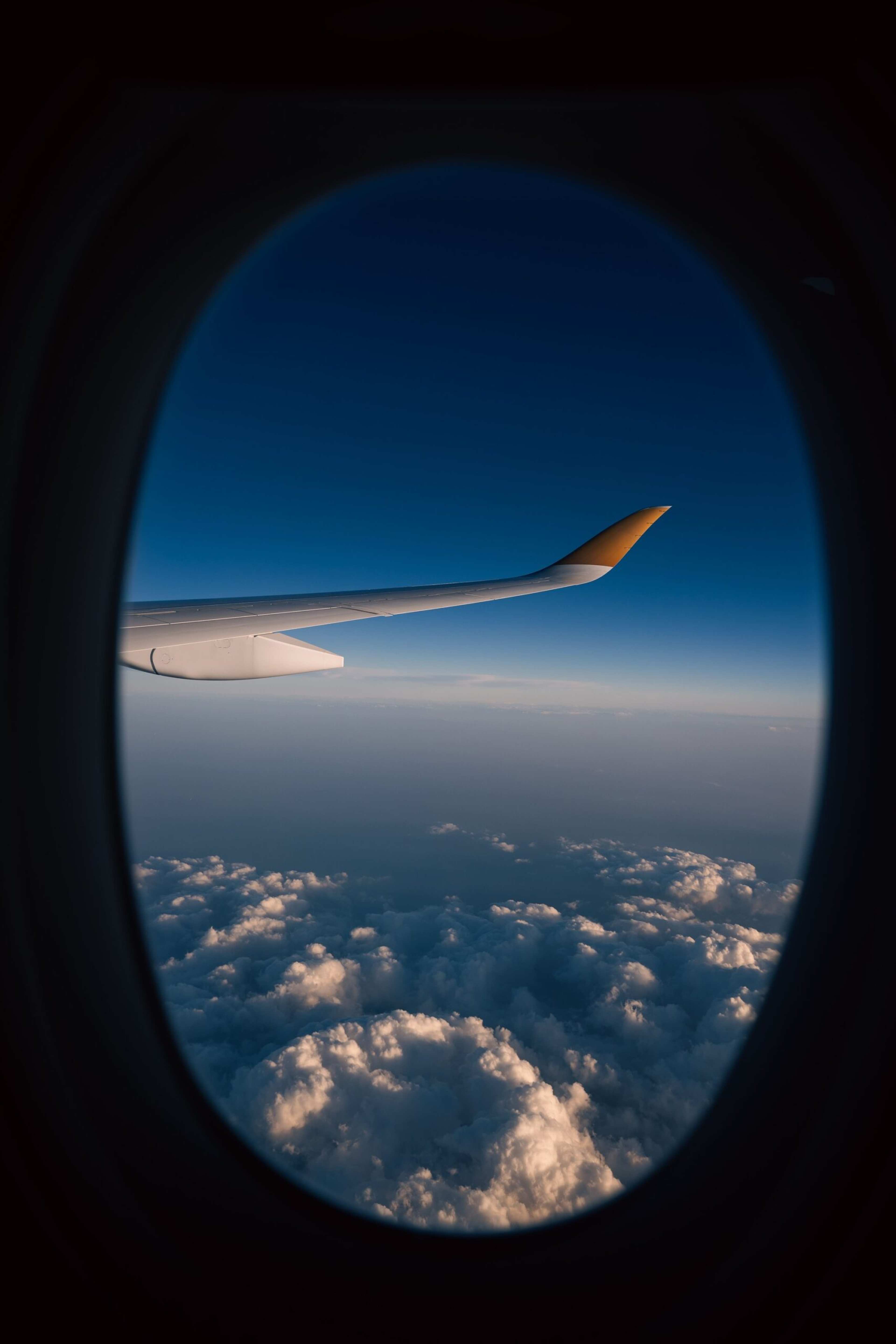
The city never shuts up.
Neither does your head.
You book the trip not because you want to see something.
You book it because you want to feel nothing for a while.
Or rather – you want to feel something so enormous that your own noise goes quiet by comparison.
There is a gap most people carry quietly. It lives between the version of yourself you present at Monday’s meeting and the version that stares at the ceiling at 2 AM, cataloguing every regret, every unfinished conversation, every door you didn’t walk through. Identity Travel is the unconscious art of moving your body across geography in the hope that the internal weather might change. Dark sky destinations are the most honest version of this impulse. You aren’t going to see stars. You are going to be made small by them. And for one strange, merciful night, small feels like relief.
1. The Compression Theory
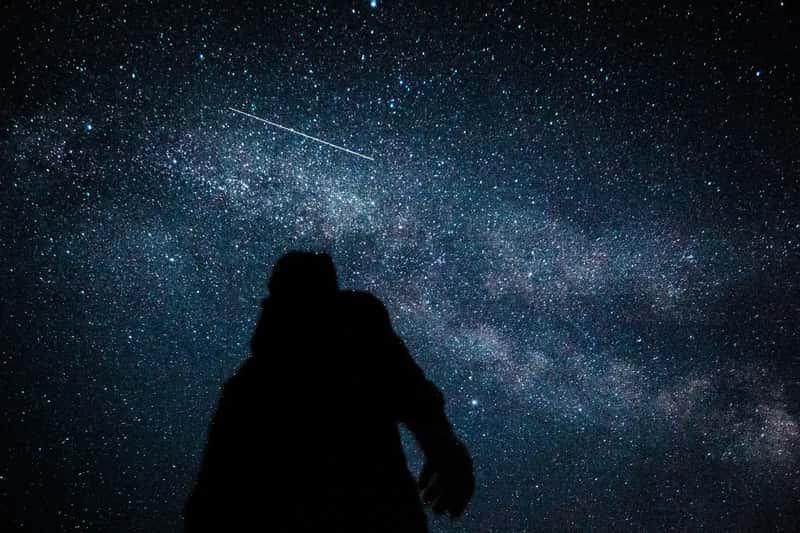
Here is the thing about your problems.
They feel enormous because your frame is too small.
Psychology has a name for the corrective. Vastness is the core cognitive appraisal associated with awe, which activates a need for cognitive accommodation. In other words, your brain, when confronted with something genuinely bigger than itself, is forced to restructure. It cannot hold both the cosmos and your quarterly anxieties at the same scale simultaneously.
Something has to shrink.
It will not be the Milky Way.
The problems and stresses of our daily lives take on less significance when compared with the scale of nature. That sentence should be printed on every boarding pass to a dark sky reserve. It is not poetry. It is neuroscience wrapped in plain language.
The compression works. The research confirms it. The body already knows.
You are not escaping your life when you drive three hours from city lights. You are recalibrating the instrument.
2. The Small Self
There is a concept in psychology that sounds like an insult but is actually a gift.
It is called the “small self.”
Awe has been found to activate a sense of small-self, through which people feel humbler in the grand scheme of things – self-diminishment – and more connected to the greater whole. This is not about humiliation. This is about relief. About setting down a self that has become too heavy to carry through every ordinary Tuesday.
The person who seeks out dark skies is chasing this, whether they name it or not.
Studies have found that awe can create a diminished sense of self – an effect known as “the small self.” Some studies have shown that people draw physically smaller representations of themselves after being prompted to experience awe, as compared to a control group.
Smaller. But not less significant.
That is the critical distinction. You are not disappearing under those stars. You are finally arriving at your actual proportion. And actual proportion, after years of outsized anxiety, is a profound form of rest.
3. The Cortisol Negotiation
Stress is biochemical. So is the cure.
The body does not care about your intentions when you stand under a dark sky. It simply responds. Growing global evidence shows that awe-filled experiences activate brain regions tied to emotional regulation, reduce cortisol levels, and restore a sense of calm.
Cortisol is the chemical language of threat.
The stars speak a different dialect entirely.
Viewing vast night skies activates brain regions associated with awe, wonder, and spiritual connection – states linked with reduced activity in brain areas processing worry and rumination. The architecture of anxious thought literally quiets down. Not because you’ve solved anything. Because you’ve been interrupted by something more interesting than your own suffering.
That interruption is the whole point of the journey.
Some people need therapy. Some need medication. Some need to lie on cold ground in a field in Utah and let the silence do its work. Most of us need all three, at different hours.
4. The Night Sky Connectedness Index
Science, eventually, catches up to what the body already knew by instinct.
In February 2024, a new “Night Sky Connectedness Index” was published in the Journal of Environmental Psychology. It showed that a greater connection to the night sky was positively related to a person’s mental health and happiness.
A whole index. Built to measure what ancient humans understood without a methodology.
The findings indicated that a greater connection to the night sky was significantly and positively related to a person’s mental health and happiness. The research also suggests that those people who live in more light-polluted areas are less connected to the night sky and feel less likely to protect it.
Read that last sentence slowly.
Less connection. Less protection. Less well-being.
The city didn’t just steal your view of the stars. It quietly stole a psychological anchor that human beings have been using for 300,000 years. Dark sky travel is not a luxury. It is a form of psychological restitution.
5. The Anecdote (Because Theory Needs Skin on It)
I drove to a dark sky reserve alone once, after a year I don’t fully want to reconstruct here.
There was no epiphany. No cinematic moment of clarity. I lay on the hood of my car, and the sky was so full of light-that-was-actually-dark that my brain went briefly, mercifully, offline.
Not empty. Just – released from the obligation to narrate itself.
I thought about a decision I’d been circling for months. And under that sky, I couldn’t find it. Not because it was solved. Because as astronomer Adrian West describes it – this is “a Band-Aid for the soul.” When you’re looking out into the great unknown, you feel like your mundane earthly problems aren’t so important anymore.
He’s right. They aren’t. Not under there.
I drove home the next morning and the problem was still waiting on the kitchen counter. But I was different enough to finally pick it up and look at it squarely. That is the quiet magic of scale. It doesn’t erase the problem. It re-sizes your relationship to it.
6. The Attention Restoration
Your brain has a finite attention budget.
Modern life spends it down to nothing by 11 AM.
The approach to astronomy as mental health intervention is grounded in both Kaplan’s Attention Restoration Theory and Acceptance and Commitment Therapy. Kaplan’s theory is deceptively simple: certain environments allow the mind to rest its directed attention and recover its capacity for focus. The night sky is the purest version of this restorative environment ever identified.
For researchers, the night sky offers a unique advantage. It exemplifies “soft fascination” – an effortless attention that restores clarity.
“Soft fascination.” Hold that phrase for a moment.
Not the hard, grinding attention of a deadline. Not the anxious hypervigilance of social media. A soft gaze, held by something beautiful, that asks nothing of you in return. The stars do not require your productivity. They do not track your engagement metrics. They are simply there, ancient and indifferent and somehow, because of that very indifference, profoundly kind.
7. The Darkness Itself
People underestimate the darkness.
They think they are going for the stars. They are also going for the black between them.
Research shows that darkness and dim illumination improved creative performance, and that darkness elicits a feeling of being free from constraints and also triggers a risky, explorative processing style.
Free from constraints.
That is a clinical way to say: in the dark, you remember who you were before the world told you who to be.
Visual stimulation with images of dark night sky significantly reduced the concentration of oxygenated hemoglobin in the right prefrontal cortex, and the psychological rating of healing was significantly higher compared to bright night sky. The darker the sky, the deeper the healing response. The brain, measurably, lets go. The prefrontal cortex – the seat of over-analysis, of catastrophizing, of the internal critic that never clocks out – goes physiologically quieter.
You are not imagining that the dark feels safer. Your neurons confirm it.
8. The Overview Effect, Ground-Level Edition
Astronauts have a term for what happens when they see Earth from space.
They call it the Overview Effect.
It is the sudden, irreversible understanding that borders are invented, that divisions are fragile, that the human story is one story. Researchers are particularly focused on leveraging this “Overview Effect” – a cognitive shift often described by astronauts when viewing Earth from space. By guiding ordinary individuals to gaze at the cosmos, researchers aspire to replicate this profound shift, eliciting feelings of tranquility, gratitude, and a shared sense of humanity.
You don’t need a rocket.
You need a blanket and a field with no ambient light.
Researchers are discovering that the cosmic element – the vastness, the awe – induces a uniquely profound shift. It not only calms individuals but transforms their understanding of self and their role in the universe. That transformation is what dark sky travelers are unknowingly signing up for. Not a holiday. A recalibration of the entire inner operating system.
9. The Identity Gap Under Stars
Here is the uncomfortable truth about Identity Travel.
You cannot pack your constructed self efficiently enough to survive a dark sky.
The version of you that has job titles, grievances, and a carefully curated personality – that version gets very quiet when the Milky Way is overhead. When we engage with something awesome, something bigger than ourselves, it helps reduce focus on the self. Witnessing the scale of the Universe puts things into perspective. “Thinking about the scale of the Universe, how old the Universe is, how old the Earth is… to some extent this can help us get rid of the idea that we have control over every single aspect of our lives.”
This is where the Identity Gap becomes visible.
The gap between who you perform and who you actually are is illuminated – paradoxically – by the darkness. Experiencing awe often puts people in a self-transcendent state where they focus less on themselves and feel more a part of a larger whole. In that state, the performance drops. The mask gets heavy. And for one brief, honest moment, you meet yourself without the costume.
That meeting is why people keep going back to dark skies.
10. The Return
The hardest part of dark sky travel is not the drive out.
It is the drive home.
Because the stars don’t come with you. The city rises back up on the horizon, orange and insistent. Participants in research described a newfound mental spaciousness, with one noting that they still picture the Milky Way when things feel heavy, which reminds them that their problems are not infinite.
Not infinite.
That is the most useful sentence psychology has produced in years.
Preliminary results show that stargazing immediately reduced symptoms of depression and improved participants’ mood. The team noted a consistent pattern: participants reported reduced feelings of anxiety and low mood within 24 hours of the astronomy experience. Twenty-four hours. The sky does its work fast. The question is what you do with the window it opens.
Scientists studying “awe psychology” find that experiencing vastness and beauty beyond normal understanding may reset negative thought patterns by shifting perspective. Reset is the operative word. Not delete. Not cure. Reset – as in, the defaults are restored, the cache is cleared, and you are returned briefly to a version of yourself less calcified by habit and fear.
The return is where the real work begins. You bring the sky home in your nervous system, in the loosened grip of a mind that spent a night remembering its actual size. Not the inflated, catastrophizing size. Not the shrunken, ashamed size. The real one. The one that fits inside a universe without screaming about it. Dark sky travelers are not running away. They are running toward the one honest mirror that has never lied to them – the one hung 2,000 light years overhead, indifferent to their resume, their failures, their unpaid bills, their unresolved childhood. It shows them only what is true: that they are small, and temporary, and made of the same ancient material as everything burning up there in the dark. And somehow, impossibly, that is the most comforting thing a human being can be told.
You drive home changed. Not fixed. Changed. There is a difference that only becomes clear much later, in some ordinary moment – washing a dish, waiting for a light to change – when you notice the tightness in your chest has moved a few degrees to the left of catastrophe, and you remember why, and you quietly start planning the next trip out into the dark.
The sky will be there. It always is. Waiting for you to remember that the universe was never asking you to be larger than you are.