Somewhere between the glossy Instagram photos of laptops on beaches and the marketing copy from visa consultancies, the real story of digital nomad visas got lost. These permits sound like a golden ticket: legal residency, tropical scenery, and freedom from a cubicle. The reality, once you dig into the fine print, is a lot more complicated and a lot more interesting.
Over the past few years, dozens of countries have rushed to create these programs, hoping to attract remote workers and their spending power. What they don’t always advertise clearly are the tax traps, income hurdles, and paperwork headaches that come bundled with the privilege of working from a new country.
What a digital nomad visa actually grants you
A digital nomad visa is a residence permit, not a work permit in the traditional sense. It allows someone to live in a country while earning money from clients or employers based somewhere else entirely. A digital nomad visa is a temporary residence permit for people who work remotely for companies or clients outside the host country, and unlike a normal work visa, it doesn’t let you take a local job since your income has to come from abroad.
This distinction matters more than most applicants realize going in. The visa is not the same thing as a green light to freelance for local businesses or take a job with a company in your new host country. Most programs ask for three things: proof of remote income above a set threshold, health insurance, and a clean criminal record. Beyond that baseline, everything else varies from country to country, which is exactly where the confusion starts.
Income requirements swing wildly by country

There’s a persistent myth that digital nomad visas are all roughly the same. They are not, and the income thresholds prove it. Most European visas sit in the $2,700 to $3,800 range, while the toughest destinations, Japan and Estonia, want $4,500 to $5,500 a month in documented income.
On the other end of the spectrum, some countries barely ask for anything at all. At the accessible end, Georgia asks for no minimum income and lets you stay a year tax free on foreign earnings. Meanwhile, in Latin America, Colombia ($750/month) and Brazil ($1,500/month) offer the lowest income thresholds of the more established programs, which makes them appealing for freelancers still building up a client base rather than seasoned six figure consultants.
A visa doesn’t automatically fix your tax situation
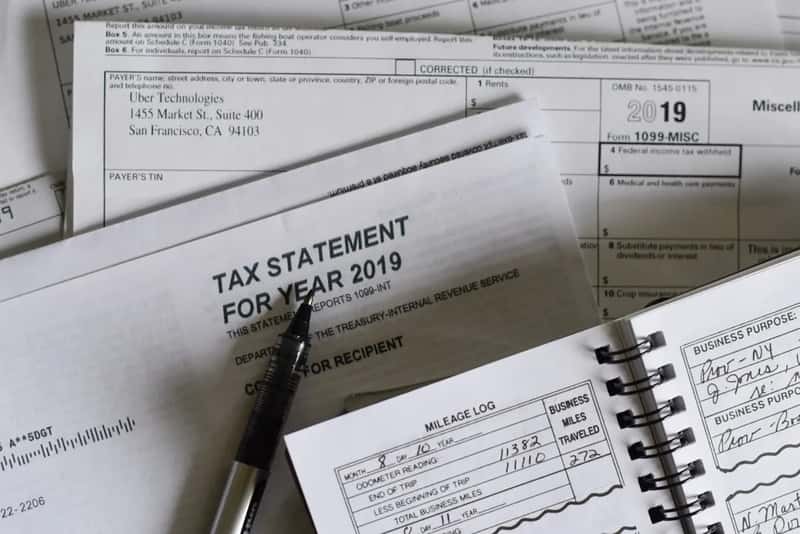
This is the part nobody puts on the landing page. Getting approved for a visa solves an immigration problem, not a tax one. As one compliance guide puts it plainly, a digital nomad visa solves the immigration problem, but it does not automatically solve the tax problem.
The two systems, immigration and taxation, run on entirely separate tracks. Immigration rules and tax residency laws operate independently, since a visa determines whether you can legally live and work in a country but doesn’t dictate where you owe taxes. People assume that if a country lets them stay, it has also settled the tax question. It hasn’t.
The 183 day rule is a floor, not a ceiling

Almost every nomad has heard of the 183 day rule, the idea that staying under half a year in a country keeps you off the tax radar there. It’s a useful starting point, but treating it as an absolute rule is where people get into trouble. Most countries follow the 183-day rule and will tax your worldwide income once you become a resident, and while it’s the most common threshold for tax residency worldwide, it’s not universal and has important variations.
Some countries can claim you as a tax resident well before you hit that number. The 183-day rule is a floor, not a ceiling, since many countries can claim you as resident even below 183 days if other ties are present. Owning a long term lease, keeping a family home, or maintaining what tax authorities call a “center of vital interests” can pull you into tax residency far sooner than a simple day count would suggest.
Americans still owe the IRS, wherever they live

For US citizens specifically, there’s a wrinkle that trips up an enormous number of new nomads. Moving abroad, even with a shiny new visa, doesn’t pause the relationship with the IRS. For Americans, these visas provide legal residency without requiring a local employer, but they do not change your U.S. tax obligations, and you must still file a U.S. return on worldwide income.
The main relief tool is the Foreign Earned Income Exclusion, but it comes with its own strict conditions. For the 2026 tax year, the exclusion limit is $132,900 per person. Qualifying for it usually requires passing the Physical Presence Test, meaning 330 full days outside the U.S. in any 12-month period, which is a much stricter bar than simply holding a nomad visa somewhere.
Your employer can inherit a tax problem too

This is one of the least discussed risks, and it doesn’t fall on the nomad at all, it falls on the company paying them. When a remote employee works from a foreign country long enough or in a way that looks substantial, tax authorities can decide the employer itself has a taxable footprint there. A digital nomad visa does not protect your company from Permanent Establishment liability, and under the OECD’s November 2025 update to the Model Tax Convention, a PE is triggered when an employee’s in-country activities are substantial enough to give the host country the right to tax a portion of your company’s global profits.
There’s also a related issue for anyone working as an employee rather than a freelancer. Your presence in a foreign country could create what is known as a permanent establishment for your employer, meaning the company will be required to register locally and pay corporate taxes in that country. Employers who quietly approve a “work from anywhere for a year” request sometimes have no idea this liability exists until it lands on their desk.
Health insurance and social security gaps

Health insurance is usually a hard requirement for approval, but the fine print on what counts as adequate coverage gets skipped over often. Beyond insurance, there’s the separate matter of social security contributions, which many nomads assume disappear once they leave their home country. Self-employed nomads must cover full social security taxes, 15.3 percent for Americans, though many countries offer digital nomad visas with tax benefits.
Even destinations that exempt nomads from local income tax don’t necessarily exempt them from everything else. Even with exemptions, digital nomads may still need to contribute to social security or pay indirect taxes like VAT. It’s easy to read “tax free” on a government website and assume that means zero financial obligation, when in practice it usually just means zero income tax.
Most nomad visas don’t lead to citizenship
There’s a romantic idea floating around that a digital nomad visa is step one of a longer immigration journey. For most countries, that’s simply not how the program was designed. Digital Nomad Visas are temporary, usually lasting 6 months to 2 years, and do not necessarily lead to permanent residency or citizenship.
A handful of countries are genuine exceptions, and it’s worth knowing which ones. Portugal is often held up as the standard bearer here, since 5 years of residence leads to Portuguese citizenship and EU citizenship under its D8 program. Spain offers a similar long game, with 10 years of residency generally required, though that drops to 5 years for applicants from Latin America or Portugal. Most other programs, though, are built purely as a temporary stay, full stop.
Bringing family changes the math

Anyone planning to relocate with a partner or kids needs to budget for a steeper income bar. It’s rarely a flat add on fee, and it’s rarely explained clearly during the initial marketing push. Some countries like Croatia and Greece increase the minimum income threshold by 10 to 20 percent per additional family member, while others like Barbados and Belize use a flat “family rate.”
The good news is that family inclusion is fairly standard across the board, even if the cost isn’t. Most digital nomad visa programs allow you to include a spouse or partner and dependent children in your application. The details on documentation, separate applications, and fee structures differ enough between countries that it’s worth checking the specific program rather than assuming a template applies everywhere.
Final thoughts

Digital nomad visas are a genuinely useful tool, and the surge in programs, now numbering somewhere past sixty countries worldwide, has made legal remote work abroad more accessible than it’s ever been. Still, the paperwork that grants the right to stay is only one layer of a much thicker cake. Tax residency, employer liability, social security, and the actual path (or lack of one) toward something more permanent all sit underneath, quietly waiting to surprise anyone who didn’t read past the headline benefits.
None of this means the visas aren’t worth pursuing. It just means the honest version of the pitch involves a lot more homework than a scenic photo of a beachside coworking space ever lets on.