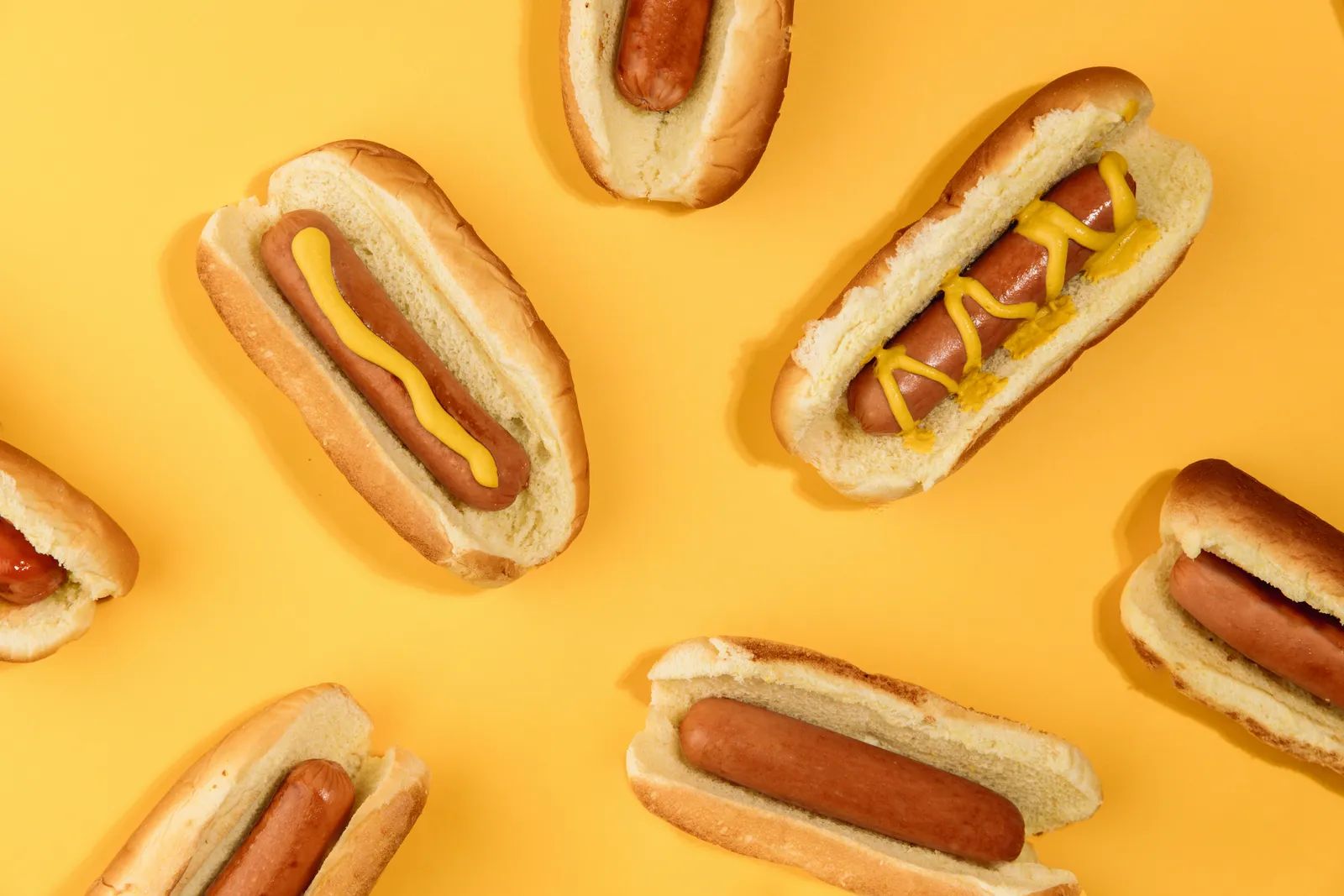
Hot dogs come out of the package fully cooked, which can make them seem like a pantry-stable food that will keep through the weekend and beyond. The USDA’s guidance points the other way. A consumer guide on the topic ([1]) walks through the refrigerator and freezer timelines, and the federal numbers themselves are short. An unopened pack with no product date lasts two weeks in the refrigerator, while an opened pack has only one week.
Cooked Does Not Mean Permanent
The USDA defines frankfurters, also known as hot dogs, wieners or bologna, as cooked or smoked sausages. That processing gives them a long, familiar shelf presence on store shelves, but it does not make them shelf-stable. The agency advises refrigerating or freezing them right after purchase.
Spoilage tends to show up in two ways. The first is quality. Hot dogs dry out, pick up freezer odors or turn slimy over time. The second is safety, since bacteria can multiply in the refrigerator and on a warm counter. The second concern is the one that matters most, and it is also the one that is hardest to judge by eye.
Reading the Refrigerator Clock
The timelines are straightforward, but they depend on a few conditions. The USDA and the FoodSafety.gov cold storage chart give the same core figures, and both assume the refrigerator stays at 40°F or below. The table below gathers the main guidance in one place.
| Situation | How long | Source |
|---|---|---|
| Unopened, no product date, refrigerated | 2 weeks | USDA |
| Opened, refrigerated | 1 week | USDA and FoodSafety.gov |
| Frozen, for best quality | 1 to 2 months | USDA |
| Cooked leftovers, refrigerated | 3 to 4 days | USDA leftovers guidance |
Clemson Extension adds a wrinkle for packs that carry a sell-by date. Its chart allows unopened hot dogs no longer than one week past that date, which can be tighter than the two-week figure that applies when there is no date at all. NC State Extension also recommends checking the refrigerator with an appliance thermometer, since the clock only works if the cold holds.
What the Date on the Package Really Means
Many shoppers read a printed date as a hard deadline, but the USDA treats most dates as guidance for stores and quality. Its product dating guidance says that, with the exception of infant formula, dates do not indicate a product’s safety. A product should remain safe and wholesome if a date passes during home storage, provided it was handled properly and kept at 40°F or below.
That reassurance has limits. Once a pack is opened, the one-week clock applies regardless of the printed date. A package that is still within its sell-by window can be past the USDA’s opened-pack limit if it has been open for ten days, so it helps to write the opening date on the wrapper and follow any handling instructions printed on the label.
Freezing, Thawing and the Two-Hour Rule
The freezer offers the longest runway, though the USDA frames its figure as a quality measure. For maximum quality, the agency recommends freezing hot dogs for no more than one to two months. The USDA’s freezing guidance also states that frozen foods remain safe indefinitely when held at 0°F, so the limit concerns flavor and texture rather than safety. Freezer burn, which can leave dry or pale patches, does not make food unsafe either, though it does affect the eating experience.
Thawing needs as much care as freezing. The USDA lists the refrigerator, cold water and the microwave as acceptable methods. Cold-water thawing calls for a leakproof bag, with the water changed every 30 minutes, and the hot dogs should be cooked right away. Microwave thawing also means cooking immediately, because parts of the food may begin to cook during the process. Food should not sit out on the counter to thaw, and the USDA’s rule that hot dogs should not stay at room temperature for more than two hours, or one hour above 90°F, still applies at cookouts and tailgates.
Signs to Discard and Who Should Heat Them
Smell and appearance are useful clues, but the USDA warns that they are not complete tests. The agency says people cannot see, smell or taste the bacteria that cause illness. A normal-looking hot dog can still carry a risk if it has been stored too long or left out too long, so the timeline matters alongside the senses.
Related Stories From Travelbinger



A University of Helsinki review of vacuum-packed cooked sausages links slime on the surface to lactic acid bacteria, which is one reason slime is treated as a clear spoilage sign. Based on the sources, the following signs call for throwing the pack out:
- Slime or a sticky film on the surface
- A sour or otherwise off smell
- Visible mold
- An opened pack kept more than a week in the refrigerator
Higher-risk households need one more step. The USDA and CDC advise pregnant people, adults 65 and older, and people with weakened immune systems to heat hot dogs until steaming hot, which CDC puts at 165°F, before eating. Listeria can grow at refrigerator temperatures, and USDA notes it can grow at temperatures as low as 31°F. For a household that includes someone in one of those groups, heating every hot dog is a simple habit that removes much of the uncertainty.
The clock on a hot dog pack is short, and it starts the moment the package is opened. Two weeks unopened and one week after opening is the federal baseline, and the freezer can extend the life of leftovers, provided they go in early and stay at 0°F. Writing the date on the package and freezing what will not be eaten within the week are simple steps that keep the next cookout from becoming a guessing game.