
There’s a specific number that separates the people who travel comfortably in their fifties and beyond from those who are constantly recalculating whether they can afford the trip they already booked. It isn’t a secret formula, and it isn’t the same for every household, but financial planners and recent consumer surveys point to a fairly consistent range. Reaching it by 50 doesn’t guarantee a life of five-star hotels, but it does mean you’re no longer traveling on borrowed time or borrowed money.
What “ahead of average” actually means for travel money

Being ahead of average isn’t about matching some flashy influencer lifestyle. It simply means your travel spending is funded by planning rather than by whatever happens to be left over after bills. On average, Americans expect to spend approximately $10,600 on trips and vacations in 2025[1], a figure that includes flights, lodging, food, and activities across all the trips someone takes in a year.
Falling near or above that number by your fifties, without relying on credit card debt to get there, is a reasonable marker of being ahead. It suggests your income and savings have grown enough to absorb travel as a planned expense rather than an occasional splurge you regret in January. That distinction matters more than the raw dollar figure itself.
The average traveler’s budget has grown fast in just two years
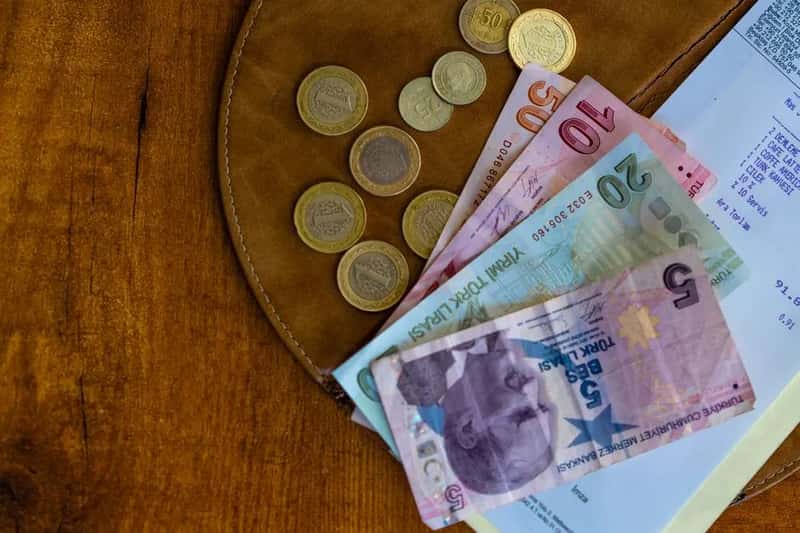
Travel spending hasn’t stayed flat. The average American plans to spend $5,915 on travel in 2025, a 31% increase from the $4,532 the average American spent on travel in 2024[2]. That jump reflects both inflation in flights and hotels and a genuine appetite for travel after years of pandemic-era restraint.
Separately, MMGY’s Portrait of American Travelers study found the average vacation budget has climbed to $5,051, with travelers expecting to take 4.1 trips per person[3]. The gap between these figures and the broader $10,600 estimate shows how much surveys can vary depending on what they count as a “trip.” Either way, someone budgeting comfortably above these numbers by 50 is spending more deliberately than most.
Retirees and near-retirees are budgeting differently than everyone assumes

Financial advisors who work with clients approaching retirement see a wide spread in what people actually set aside. The travel expense many advisors suggest for clients ranges from an annual amount of $10,000 up to $50,000, with being single versus traveling with a family having a big impact on that number[4]. That range is intentionally broad because a retired couple visiting grandchildren twice a year has very different needs than someone chasing international bucket-list trips.
Some planners frame it differently, treating travel as a slice of overall retirement spending rather than a fixed dollar figure. A common starting point is building a dedicated, sustainable travel budget worth 5% to 10% of annual retirement spending, to avoid accidentally draining savings[5]. Someone with a $70,000 retirement budget, for example, would land somewhere between $3,500 and $7,000 a year for travel under that model.
Where six figures in dedicated savings puts you

Reaching 50 with a meaningful travel fund usually means it was built alongside, not instead of, retirement savings. Financial planners generally suggest you should have five to six times your annual income saved by age 50, so someone earning $75,000 per year would ideally have $375,000 to $450,000 set aside across savings, retirement, and brokerage accounts[6]. Travel money typically comes out of that broader pool rather than sitting in its own separate account for most households.
Context matters here too. One major factor is retirement goals, and if someone wants to retire at 55 with ambitious plans to travel, they should probably have more than five times their salary saved before turning 50[6]. That’s a useful gut check for anyone eyeing an early retirement built around seeing the world.
How current savings by age 50 actually compares
Real numbers tell a more sobering story than the ideal targets suggest. Among those aged 45 to 54, the average savings in 2022 was $313,220[7], but averages get pulled upward by high earners with unusually large balances. Averages are often skewed by outliers including extremely high earners, and the median amount saved by those aged 45 to 54 was just $115,000[7].
That median figure is far below the five-to-six-times-income benchmark for most earners, which explains why travel often gets squeezed rather than expanded in this age bracket. It also means anyone who has managed to build a genuine travel fund on top of retirement savings by 50 is doing better than the typical American in their cohort. The gap between average and median is a useful reminder that headline numbers can be misleading.
Baby boomers still spend more per trip than anyone else
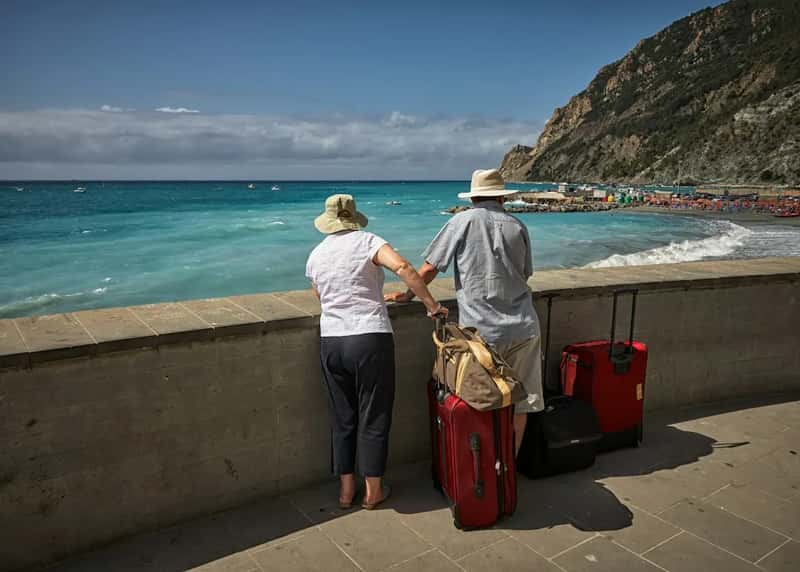
Once people do travel later in life, they tend to spend more freely per trip than younger generations, even if they travel less often. Baby boomers are the biggest travel spenders according to the U.S. Traveler Trends 2025 report by Phocuswright, leading in accommodations, experiences, and transportation[8]. 23% of baby boomers spend more than $6,000 per trip, compared to 17% of millennials and 16% of Gen X[8].
This pattern holds even among people who aren’t fully retired yet. A June 2023 Bankrate study found that of Americans aged between 59 and 77, half had already spent or planned to spend at least $1,000 on travel and leisure that year, while 17% were targeting $5,000, the biggest travel budget of any other generation[9]. Reaching that kind of per-trip spending by your fifties, without financing it on a credit card, puts you comfortably ahead of the pack.
Gen X is squeezed, and it shows in the data

People currently in their late forties and fifties face a unique bind. Gen X travels the least as a result of work and family commitments[10], often caught between aging parents and financially dependent adult children. The percentage of Gen Xers traveling with children under 18 has dropped significantly from 28% in 2021 to just 17% in 2024, as this generation instead embraces multigenerational travel with adult children and extended family, or solo and friend-based trips[11].
Despite traveling less often, Gen X travelers tend to be careful shoppers. Travelers of all ages are looking to spend their money wisely, with 93% of Gen X looking for the best deals when booking trips[10]. That combination of infrequent but well-planned travel is a reasonable way to still hit an above-average annual budget without overspending.
Why timing your travel budget matters as much as the amount

Financial writers increasingly frame the sixties, not the seventies or eighties, as the real window for ambitious travel. It’s easier to travel in your 60s than your 70s and 80s, so it may be good to check off some bucket list items if you have sufficient savings[13]. It can still be doable in your 70s with good physical fitness, but it gets a lot more difficult in your 80s, so it’s better to make bucket-list trips in your 60s if you can afford to[13].
That framing changes how a travel budget by 50 should be judged. It’s not just about the dollar figure sitting in an account, but about whether that money is scheduled to be spent while travel is still physically easy. Someone with a modest fund earmarked for their early sixties may be better positioned than someone with a larger balance they keep deferring indefinitely.
Small, consistent contributions build the fund faster than people expect

Building a travel-specific fund doesn’t require sudden windfalls. One projection illustrates the math clearly: $196 a month invested consistently for 35 years, using a 10% annual return in line with the stock market’s long-term historical average, could fund $50,000 worth of travel every single year for the rest of your life[14]. That’s a long runway, starting in your late twenties, but it shows how modest monthly amounts compound into meaningful travel money.
For someone starting later, closer to 50, the monthly contribution needed to hit a similar target rises substantially since there’s less time for compounding to do the work. Still, the underlying principle holds: a dedicated, automated monthly transfer toward travel tends to outperform sporadic saving whenever there’s spare cash. Consistency, more than the size of any single contribution, is what separates people who hit their travel goals from those who keep pushing them back.
The takeaway on where you actually stand

Numbers like $5,915 for average annual travel spending, or $10,600 when every trip and expense is counted, give a useful baseline for 2025 and 2026. Numbers like five to six times your income saved by 50, or a dedicated travel fund built from small monthly contributions, give a useful target. Somewhere between those two sets of figures sits a realistic answer to whether your own travel budget is putting you ahead. The honest measure isn’t a single magic number but whether your trips are funded by planning rather than pressure, and whether that plan still leaves room to actually go while travel remains easy to enjoy.