
Ask a few travel sites what a credit card point is worth and you’ll get a few different answers. The Points Guy’s October 2026 valuations put Amex Membership Rewards at 2.0 cents, Capital One at 1.85 cents and Chase Ultimate Rewards at 2.05 cents.[1] NerdWallet’s estimates for Amex and Capital One miles sit lower, at about 1.3 cents.[2]
None of these figures are official. Credit cards, airlines and hotels don’t publish valuations, so there’s no definitive answer.[3] What you actually get depends on how you redeem, and a handful of common habits quietly pull that number down.
Booking Flights Through the Bank Portal by Default

The portal is the easy route, and that’s the problem. Portals offer simplicity, broad availability and stable value, typically in the range of one to 1.5 cents per point depending on your card.[4] With Amex, for instance, 10,000 points applied to an airfare charge through Amex Travel will usually erase about 100 dollars.[4]
The gap shows up on pricier trips. In one comparison, a trip that cost 192,000 points through the Chase portal needed less than half that when the points were transferred to United and booked directly.[5] Transferring to an airline partner can deliver two to five cents per point on the same flight, sometimes more.[6] If you’re flying business class overseas, the portal is rarely where your points go furthest.
Transferring Points to Airlines for Cheap Fares

The mistake can run the other way too. Transfer partners get plenty of attention, so it’s tempting to move points for every flight. Transferring 30,000 points to an airline for a 200 dollar flight yields only about 0.67 cent per point, and the portal would give much better value while leaving more points for later.[4]
A rough rule helps. Most economy awards start at about 20,000 points when you transfer directly, so a fare under roughly 250 dollars is usually better handled through the portal.[5] To check any redemption, divide the cash price by the points required. TPG describes a good redemption as one that meets or exceeds its published valuation for that currency.[7]
Ignoring Carrier Imposed Surcharges

A low points price doesn’t mean a low total. When you redeem for a flight, the points cover the base fare, while taxes, fees and carrier imposed surcharges are charged separately in cash.[8] A Lufthansa first class award booked through United MileagePlus can carry about 1,400 dollars in fuel surcharges on top of 110,000 miles, while the same seat through Air Canada Aeroplan drops to roughly 200 dollars.[9]
Which program you book through matters. The program decides whether to pass the surcharge on, so the same seat can be cheap through one and expensive through another.[10] As of September 2026, United MileagePlus and Air Canada Aeroplan don’t add them, and American adds them only on British Airways and Iberia awards.[10] Virgin Atlantic’s award surcharges also rose sharply in April 2026.[11]
Transferring Before Confirming Availability

Once points leave your bank account, they generally can’t be moved back. Even so, many people transfer first and search afterward. A transfer only pays off if the partner actually has award availability and the cash price is high.[12]
The fix is simple, if a little tedious. Price the award in the program’s booking engine first, so you can see the real taxes and fees before transferring anything.[13] Availability can also depend on where you look. Japan Airlines, for example, releases far more availability to members of its own program than to partner programs.[14]
Letting Points Sit While Programs Change

Points aren’t a savings account that holds its purchasing power. Award pricing shifts, often upward, and transfer terms can change too. Aeroplan’s June 2026 reset, for instance, raised North America to Europe first class awards from 100,000 to 120,000 points, according to one industry roundup.[15] The World of Hyatt transfer ratio also got worse on October 1 for select Chase cardholders.[1]
More changes are already scheduled. Club Eurostar rewards devalue on October 28, 2026, and Singapore Airlines KrisFlyer follows on October 31, per Upgraded Points.[16] Hoarding for years can make sense for a specific trip. Without a plan, though, it’s a bet that nothing gets more expensive.
Skipping Transfer Bonuses When You Have Time
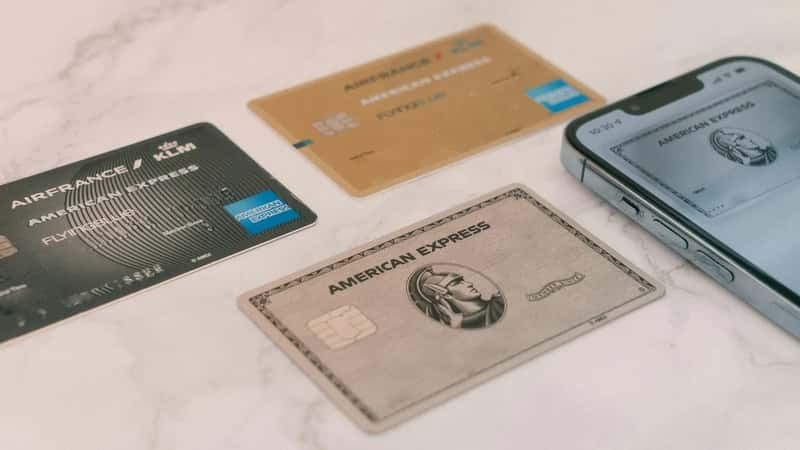
If you’re going to transfer anyway, timing can stretch your balance. Issuers and partners occasionally offer bonuses, so a 25 percent bonus turns 100,000 points into 125,000 airline miles.[17] Until October 31, Amex is offering a 25 percent bonus to Flying Blue, so the rate becomes 1:1.25 instead of 1:1.[18] Capital One has a 20 percent bonus to British Airways Avios through the same date.[18]
These offers don’t last. A 70 percent Chase to Marriott bonus ran only until October 15.[19] A 20 percent bonus is the most common amount, followed by 30 percent.[14] A bonus only helps if you’d have made the transfer regardless, so check the award price and fees before acting on one.