You hand over the keys and think you’re handing over a car. The valet has already read the whole story. Within about ten seconds of opening the door, the cup holders, the seat position, the back seat and the dashboard have each said something about you.
Here are 15 things valets say a car gives away before the guest says a word. The surprise is that it has almost nothing to do with the badge on the hood. One of these clues falls apart the moment you test it against the stereotype, and another is quiet enough to change how an attendant behaves for the rest of the shift.
#15 – The Fast-Food Wrappers Reveal a Second Kitchen
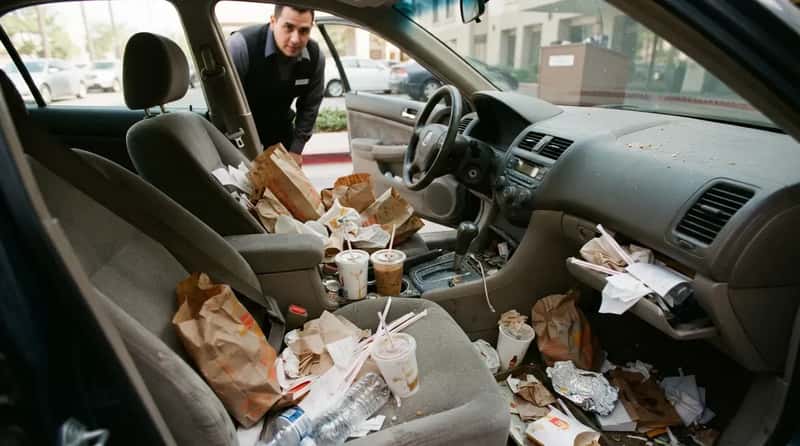
The door opens and the first clue hits before anything else: the smell. Fries, coffee, maybe a breakfast sandwich from three days ago. Valets say the cup holders and door pockets are the fastest way to see how someone really lives. A car stacked with napkins, straws and drive-thru bags is basically a rolling dining room.
Here’s the twist: it’s rarely judgment. A takeout-packed car usually belongs to someone sprinting between shifts, school pickups and errands, and attendants say they read it as a schedule, not a flaw. The mess says less about character than about how many hours that person spends behind the wheel. Most valets feel something closer to sympathy than disgust.
At a Glance
- Stacked drive-thru bags usually point to a packed schedule, not a careless habit.
- Extra napkins and straws in the door pocket suggest a regular, repeat routine.
- A stray coffee cup in the holder often means the day started early.
- Valets say the smell tells them more than the clutter does.
But that’s nothing compared to what one simple seat adjustment gives away in #14…
#14 – The Seat Position Secretly Tells Who Actually Drives
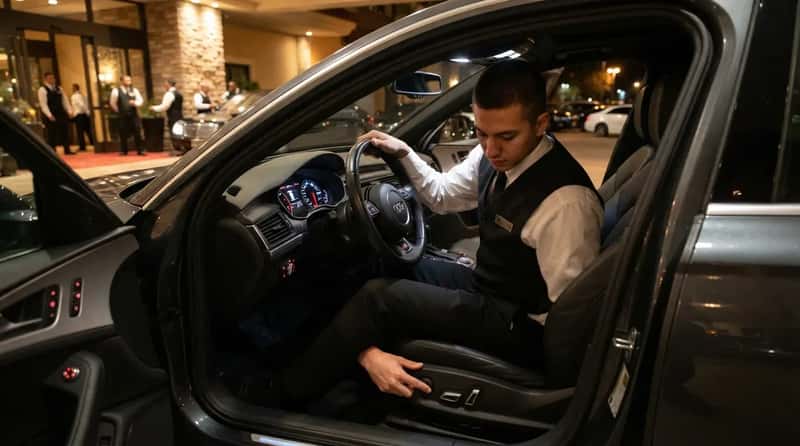
The first thing a valet does is slide the seat forward. That one move often shows whether the person at the curb is the car’s usual driver. If the seat is pushed far back and the mirrors are tilted at odd angles, the car may belong to a spouse, a parent or a friend who lent it for the night.
Valets say this comes up often at weddings and big dinners, where couples swap cars. Every attendant has to reset the seat and mirrors just to move the car a short distance. The best ones put everything back exactly as it was before the guest returns, and most guests never notice a thing.
Next up is a clue you can spot the second the back door opens, in #13…
#13 – The Car Seat in the Back Rewrites the Whole Night
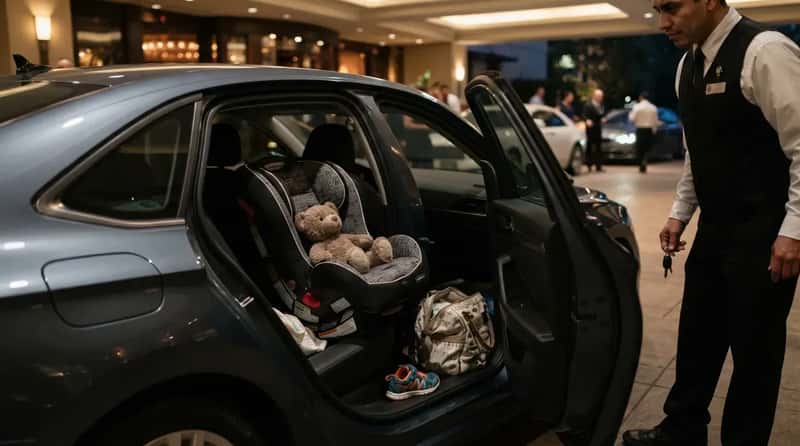
A child seat in the back changes how a valet reads the evening. This is probably a rare date night, a quick family stop or a parent who has been running on fumes since morning. Booster seats, a diaper bag wedged on the floor and a stray stuffed animal are the giveaways.
Attendants say these cars call for extra care. Nobody wants to knock a seat out of position or accidentally leave a tiny shoe behind. Many valets also say these guests are often the most hurried, because a sitter’s clock is ticking. The real clue is the tired sigh as they climb in.
The soundtrack inside is just as revealing, as #12 shows…
#12 – The Radio Volume Exposes the Mood You Arrived In
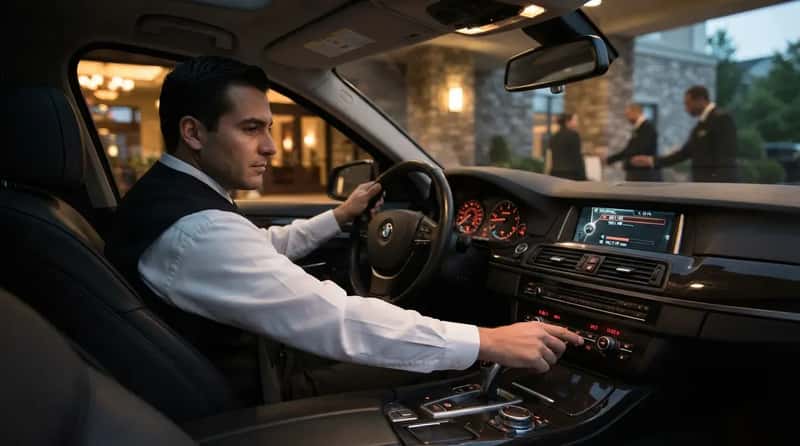
Hit the ignition and the stereo answers for the driver. Valets often say the first sound out of the speakers tells them how the trip went. A blasting playlist suggests a celebration. A low talk-radio murmur suggests a long, grinding commute.
Some attendants joke that the preset stations are a personality test. Country, classic rock, sports talk, kids’ songs on a loop: each one paints a picture. Plenty of valets say they turn the volume down right away, so the guest doesn’t come back to a car that blasts at them.
And the dashboard has a warning that’s much harder to ignore, in #11…
#11 – That Glowing Fuel Light Is a Quiet Confession
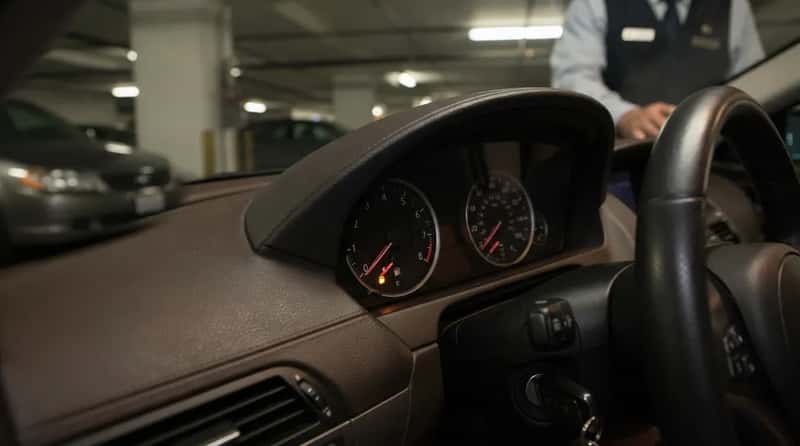
A fuel needle sitting on empty is a clue every valet recognizes. It usually means a guest is rushing and running behind. Attendants say the driver who pulls up with that light on is often the one who jumps out saying, “I’m sorry, I’m late.”
There’s a practical consequence, too. Valets move cars through tight garages and short loops, so a nearly dry tank means they can’t afford any extra circling. Most won’t say a word about it. They just try not to be the reason someone ends up stranded.
Still, an empty tank is easy to fix. The next clue is not, in #10…
#10 – Ignored Dashboard Lights Say More Than Any Receipt
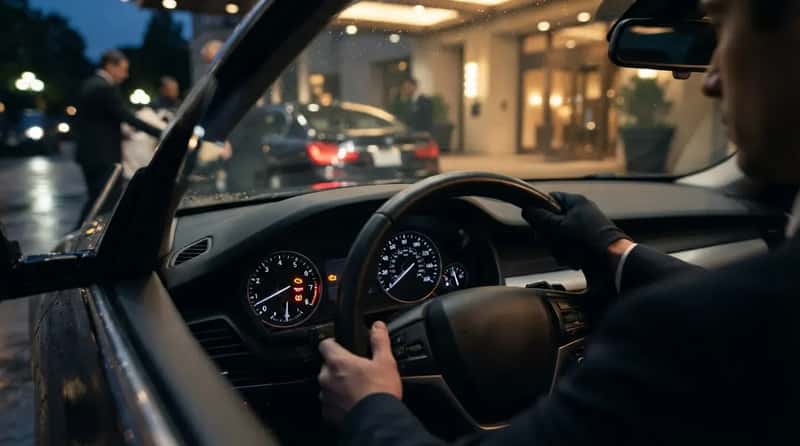
A check-engine light is easy to spot, and valets see them constantly. A tire-pressure icon or an oil warning can glow for months. Attendants say a long-running light usually signals a busy owner, not a careless one. Life gets in the way of the repair shop.
Still, valets pay attention for a reason. A car that feels rough, sounds odd or won’t shift smoothly is one they can’t afford to get blamed for. Good teams note warning lights on the ticket or flag them to a manager. It protects the guest and the staff at the same time.
Some cars come with a built-in shield against all this, which is #9…
#9 – Valet Mode Shows the Owner Has Already Thought About You
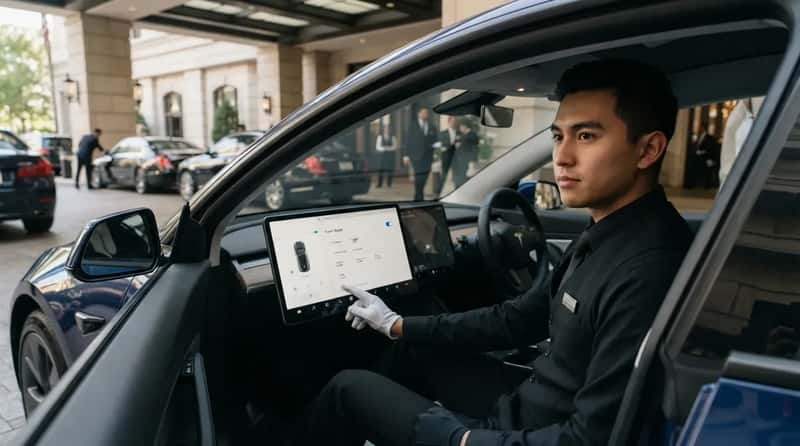
Some modern cars include a special mode for attendants. Tesla’s Valet Mode, for example, limits the car’s power and speed and locks the glovebox and front trunk. A valet who sees that setting knows right away that the owner plans ahead.
Older cars had a similar idea in the valet key. It starts the car and opens the door but keeps the trunk or glovebox locked. Attendants read it as the mark of a careful owner who treats a handoff like a trust exercise. The setting is a small statement: I trust you, within limits.
Then there are the cars that don’t really belong to the person driving them, which brings us to #8…
#8 – The Rental Tag Gives Away a Traveler in Town
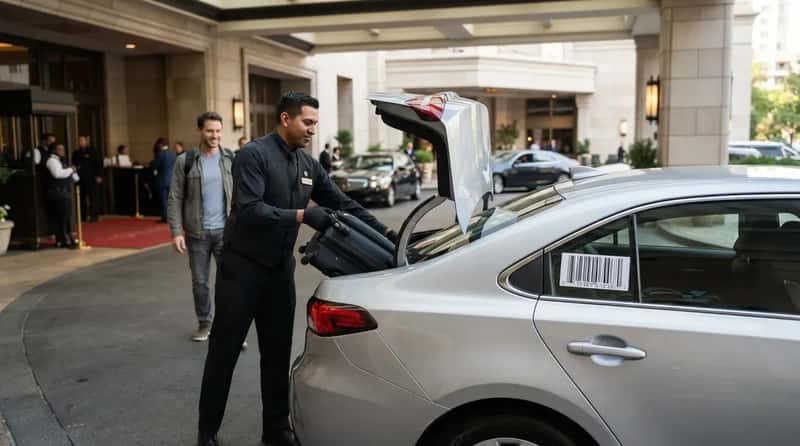
A barcode sticker on the window or a plastic tag on the key ring tells a valet something instantly: this guest isn’t local. Rentals come with their own surprises, from unfamiliar controls to keyless systems and mystery buttons. Attendants say they sometimes have to hunt for the ignition or the trunk release.
The clue also changes the tone of the stop. These guests are often on vacation or a business trip, with luggage still in the back. Valets say they tend to be more patient with visitors. Some even toss out quick directions or a restaurant tip while they wait for the keys.
Quick Compare
- Rental car: unfamiliar buttons, a barcode sticker, luggage in the back and a driver who may need directions.
- Daily driver: seat and mirrors already dialed in, a lived-in cabin and a driver who knows the neighborhood.
- Borrowed car: the seat is set for someone else and the owner hands over a quick list of quirks.
But what’s sitting on the passenger seat can be the real giveaway in #7…
#7 – The Laptop on the Seat Is a Mistake Waiting to Happen
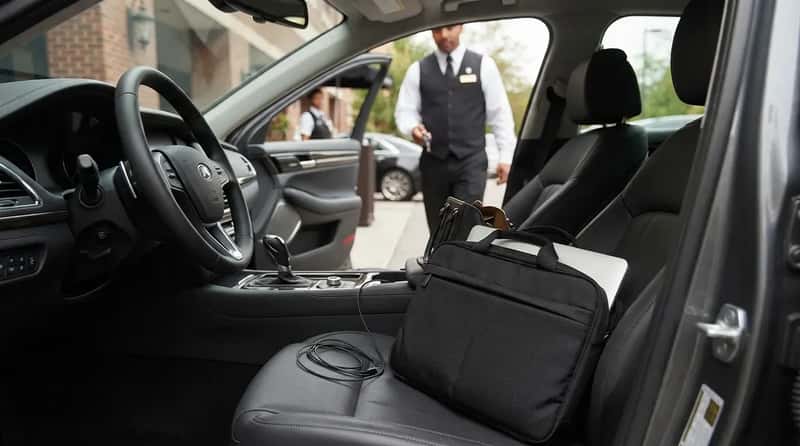
The clue valets mention most often is the item left in full view. A laptop bag, a purse, a wrapped gift or a phone charger is easy for anyone walking past to spot. Attendants say they would rather ask a guest to take valuables than watch them sit exposed.
Many valet companies train staff to remind guests to bring their belongings. The consequence of skipping that step is rarely dramatic. It’s usually a long, awkward conversation about a missing item that nobody can account for. Guests who clear their seats before handing over the keys save everyone the trouble.
Meanwhile, the outside of the car has its own story, in #6…
#6 – Every Dent Gets Noticed Before You Say a Word
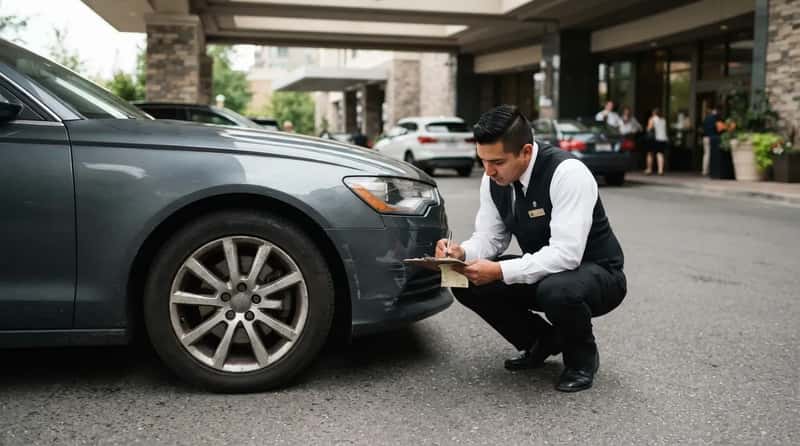
Before a valet drives away, there’s usually a quick walk around the car. They check bumpers, mirrors and wheels. Those scratches and dings aren’t a judgment. They’re a record, and many companies mark them on the ticket.
That list protects everyone. If a guest later says a scratch is new, staff can compare it to what they noted at drop-off. Valets say the worst arguments start when no one looked first. A car with lots of existing wear is also a clue, since it often belongs to someone who parks on the street rather than in a garage.
And then there’s the car that stumps even seasoned attendants, in #5…
#5 – A Manual Transmission Can Stop the Line Cold
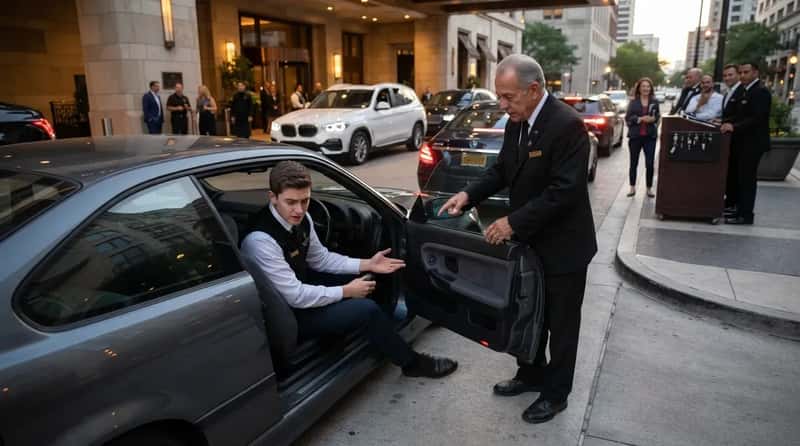
A stick shift is a surprise at a modern valet stand. Many drivers today have never learned to operate one. Attendants say a manual car raises the stakes, because a stalled clutch in a tight garage is a very public mistake.
Some operations quietly keep one or two stick-shift-ready people on shift. Others ask the guest to park it themselves. Valets say owners of manual cars tend to be enthusiasts, and they often speak up first with instructions. It’s a small clue that says this person really loves their car.
Why It Stands Out
- It’s the one car at the stand that not every attendant can legally and safely move.
- A stall in a tight ramp is visible to every guest waiting in line.
- The owner usually arrives with instructions already loaded.
- It quietly signals someone who chose driving over convenience.
The next clue is more cheerful, and it’s all about the occasion in #4…
#4 – Garment Bags and Gift Wrap Announce the Occasion
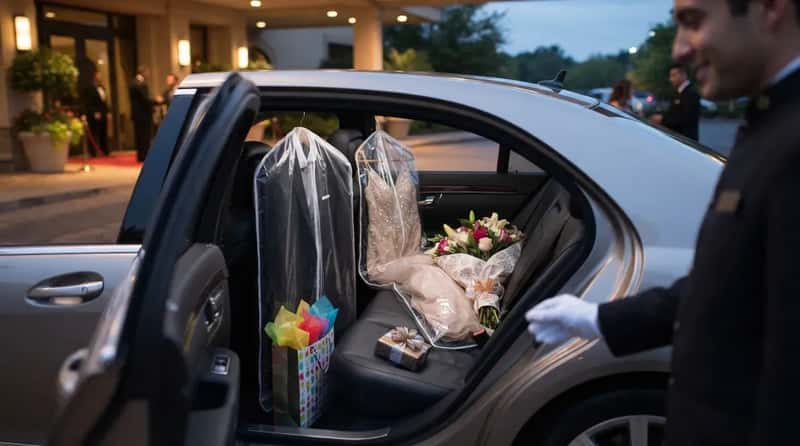
A tuxedo hanging on the rear hook says it plainly. So does a gown in a plastic cover or a bouquet riding in the back seat. Valets often know the evening’s purpose before the guest has even stepped out of the car.
Birthday balloons, wrapped boxes and a cake carrier suggest a party. Attendants say they handle these cars with extra care, because the cargo matters more than the car. A few say it’s the best part of the job: watching the start of someone’s big night.
But some back seats tell a much fuzzier story, and the next clue is furry, in #3…
#3 – Dog Hair Gives Away the Real Family Member
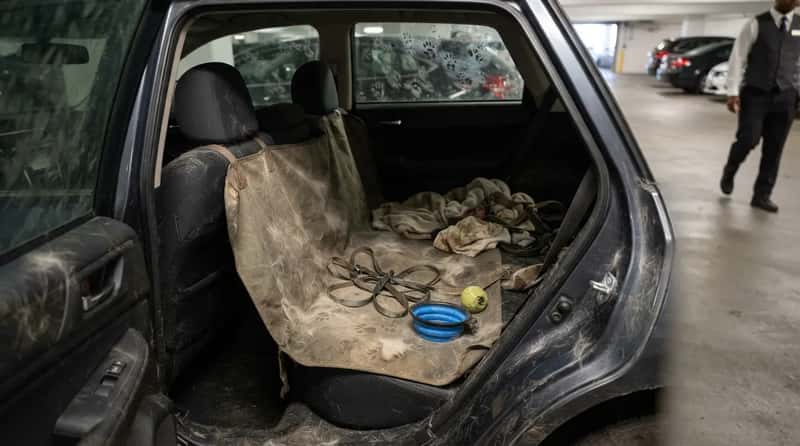
A layer of fur on the seats is a calling card. So are a travel water bowl, a seat cover and a leash tossed in the trunk. Valets say they can spot a dog owner from across the lot, long before the dog ever appears.
It tells them a few things. This guest probably spends weekends outdoors and uses the car for more than commuting. It also tells them to expect a little fur on their sleeves. Attendants say they tend to be careful with these cars, because a dog’s favorite window usually has nose prints on it.
Now for a claim that may surprise you, and may start an argument, in #2…
#2 – The Fancy Car Is a Surprisingly Poor Tip Predictor
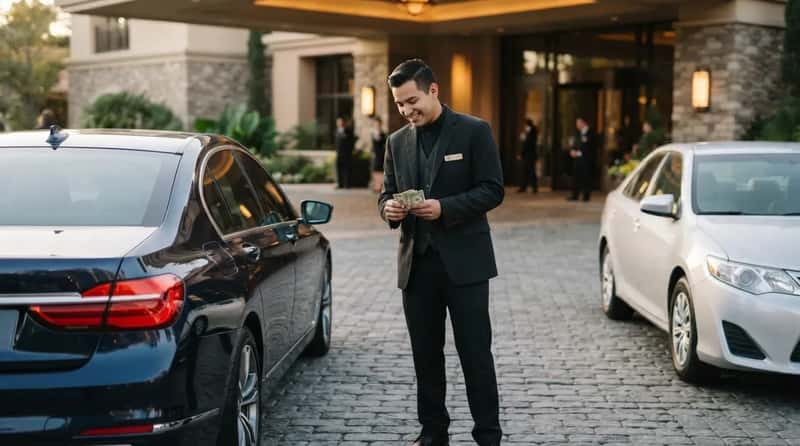
Most people assume a luxury badge means a generous tip. Many valets say it’s often the opposite. They report that the driver who arrives in a modest sedan is just as likely to hand over a fair tip, and sometimes a better one. Plenty of attendants have given up on judging by the sticker price.
Etiquette guides generally put the standard valet tip at around $3 to $5 when the car is returned. Many say $5 is the cleaner default at hotels and upscale venues. No one tips by badge, so valets stopped guessing.
But the clue that stays with valets longest isn’t about money at all, as #1 shows…
#1 – The Hospital Parking Pass Tells a Story No One Asks About
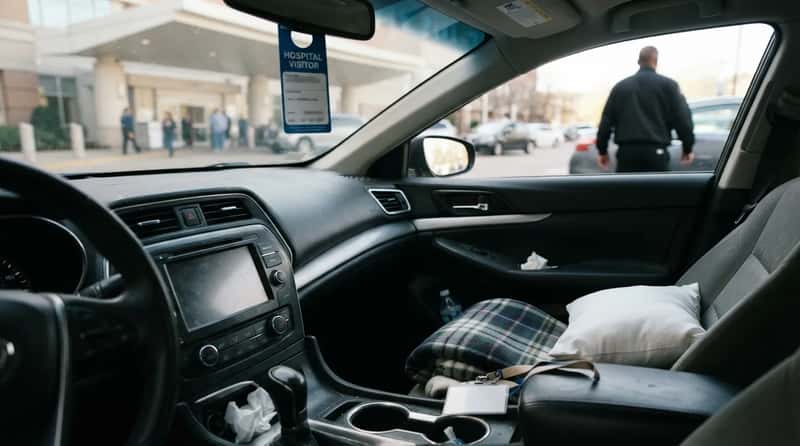
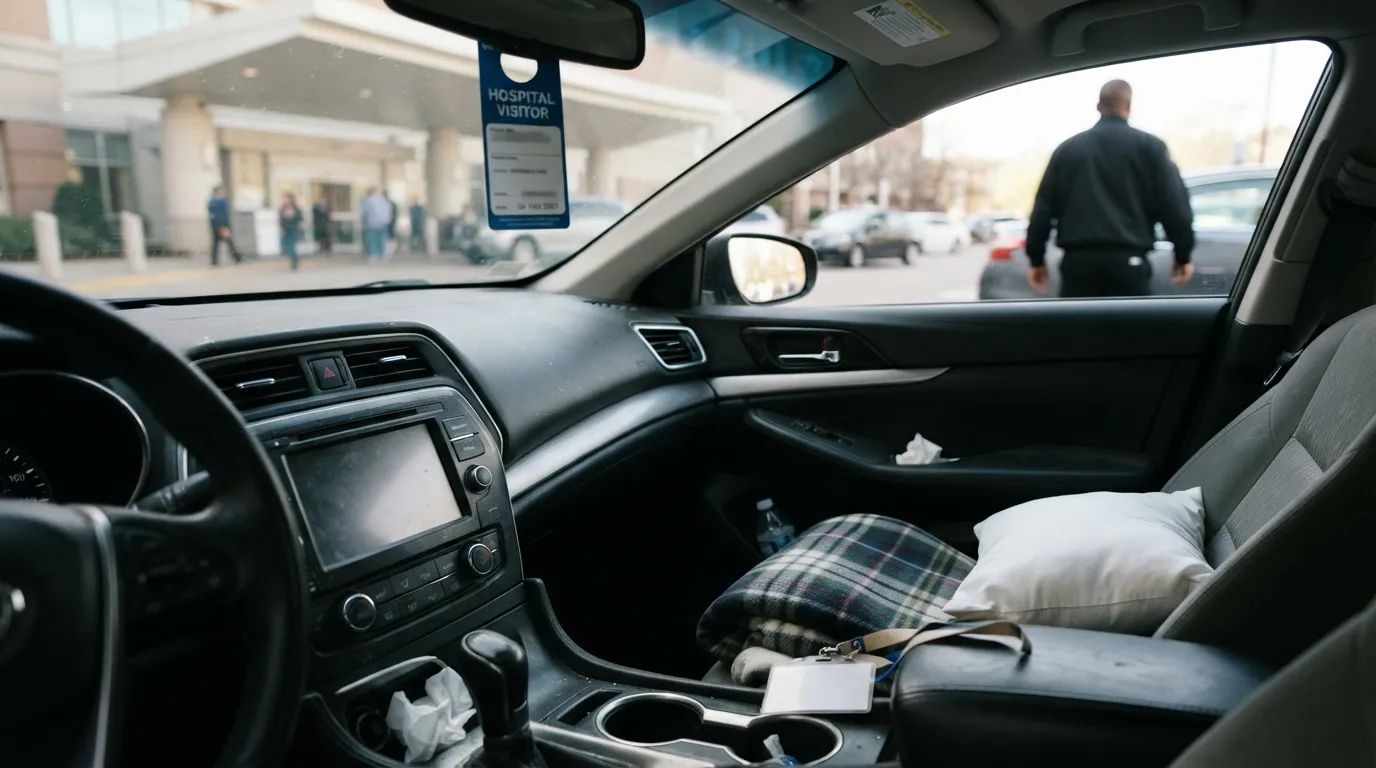
Some valets work at hospitals and medical centers. There, the clues in the car carry a different weight. A visitor pass on the dashboard, a lanyard in the cup holder or a pillow and blanket in the back seat can mean a very long week. Valets say they read those signs and keep their questions to themselves.
At these stands, the job is mostly about being gentle. The attendant moves fast, speaks softly and hands the keys back without small talk. Many say a quiet “take care” matters more than any polish. The car shows them who’s arriving. It never tells them how that person feels.
Valets don’t need a conversation to learn a lot about you. A seat position, a radio dial or a garment bag can say it first. The most surprising part is how little of it is about status: the fancy car predicts almost nothing, while a dog-hair seat cover, a rental tag or a hospital pass says plenty.
Maybe that’s the quiet lesson of the curb. The car is only metal and glass until someone’s life is sitting inside it, and the people who park it for a living have learned to look at the life first.