A ferry terminal during a storm is not the same building you waited in last July. The benches are the same, the fluorescent lights are the same – but almost everything else about the place changes.
What actually happens inside, from the first weather alert to the moment engines finally restart, is stranger and more intense than most travelers expect. Here’s what really unfolds, backed by real storms, real cancellations, and the people who got stuck inside.
The Warning Signs Start Hours Before the Storm Even Hits
The terminal starts changing long before the first wave hits the seawall.
Ferry operators may suspend service to protect riders, crew, the vessel, and the terminal itself. That call gets made well before conditions actually turn dangerous.
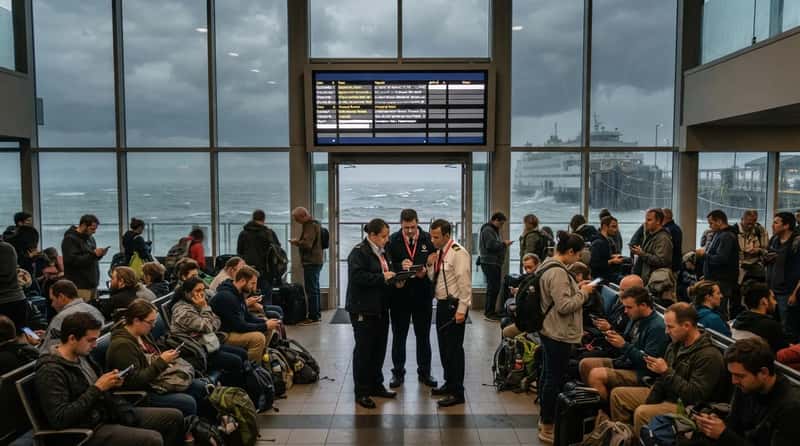
Passengers feel it before anyone announces a thing. Departure boards start flickering, and staff huddles quietly replace the usual small talk.
Alerts about a possible disruption go up on apps and webpages, but they routinely lag behind what’s happening on the ground. The terminal knows something you don’t yet.
Strangers start talking to each other. Phones come out in unison as people quietly work out backup plans.
It stops feeling like a waiting room. It starts feeling like a staging area.
That shift in mood, though, is nothing compared to what happens to the building itself.
The Water Doesn’t Stay Outside
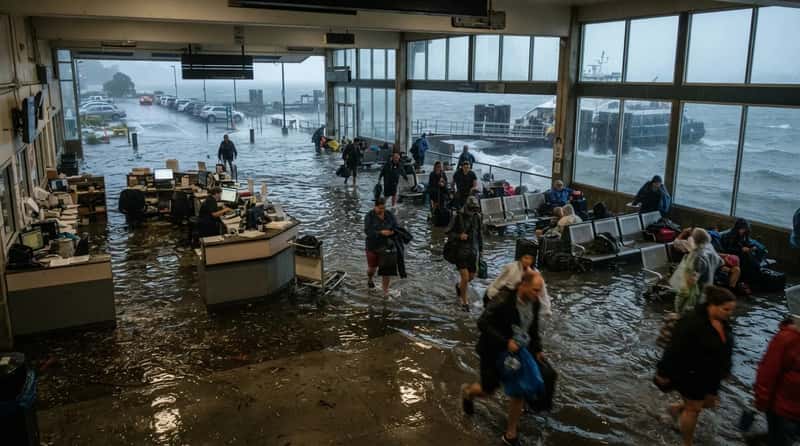
Storm surge is the threat most passengers never think about – until their shoes are soaked.
In coastal areas, surge from severe storms can flood terminals, wreck infrastructure, and block the roads leading in. At low-lying terminals, the tide line can reach the ticketing desk within minutes.
At a Glance: Storm Surge Risks
- Surge can flood terminals, damage docks, and cut off access roads within minutes
- Low-lying terminals are the most vulnerable – water can reach ticket counters fast
- Low-clearance vehicles are often stranded first, even while the ferry itself keeps running
- Some coastal agencies now fund flood-proofing to protect electrical and computer systems
During one storm, vehicles disembarking on the Shelter Island side of North Ferry ran straight into high water covering the terminal roadway. Low-clearance cars had to sit and wait it out while the ferry itself was technically still running.
The boat worked. The building didn’t.
New York officials have said as much themselves – flood-proofing projects exist specifically to protect the mechanical, electrical, and computer systems that keep ferry service running during a coastal storm.
The terminal is far more fragile than it looks. Once water gets in, the timeline for everything collapses fast.
Wind Is the Real Decision-Maker
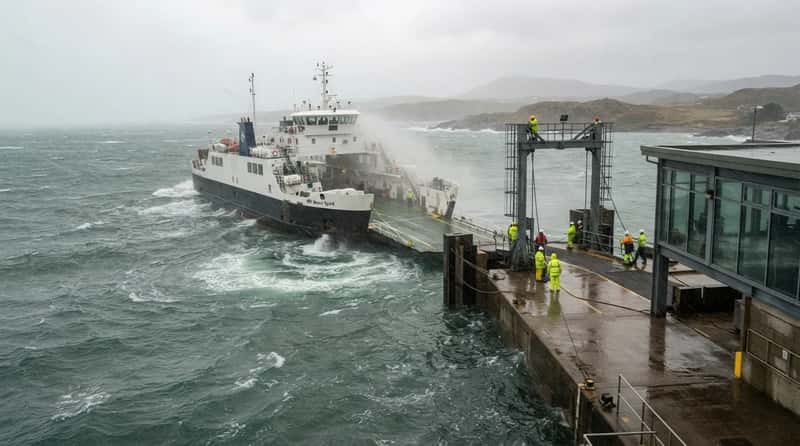
The storm doesn’t have to look dramatic for everything to stop. Wind alone does most of the damage.
Wind is the primary factor in ferry cancellations, and operators track both sustained speed and gusts. A steady 20 mph wind might be fine, but gusts to 35 mph can make docking unsafe.
Crosswinds shove ships off alignment as they try to approach the pier. A misaligned docking in high wind can shear off a gangway or rupture a berth.
In practice, when winds exceed 25-30 knots, many operators cancel departures outright, especially to smaller islands or exposed stretches of open water. The cutoff isn’t arbitrary – it’s built around vessel engineering limits.
Inside the terminal, none of that math gets explained to you. You just watch the board flip to “Cancelled.”
Not All Ferries Are Equal in a Storm
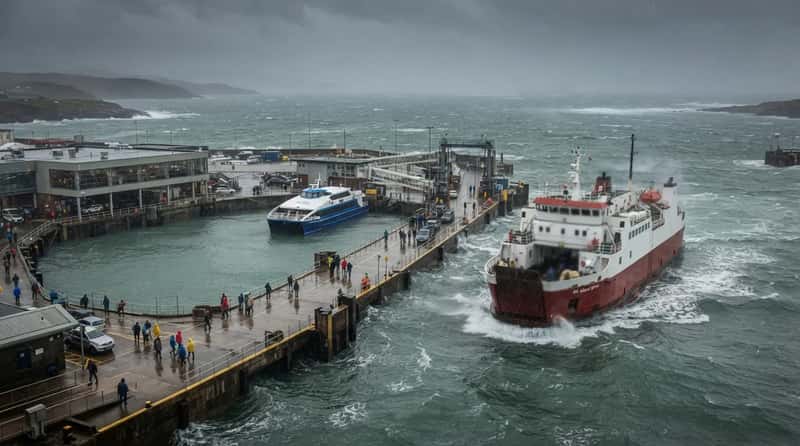
Here’s what most passengers get wrong: assuming their ferry is either “running” or “not running.” It’s rarely that simple.
Hydrofoils and fast catamarans are extremely sensitive to wind and waves – it only takes about two meters of wave to shut the ride down. Traditional ferries are larger and heavier, and they hold up better, but even they can’t sail in truly rough seas.
Quick Compare: Fast Ferries vs. Traditional Ferries
- Hydrofoils and catamarans: Can be pulled from service in waves as low as two meters
- Traditional ferries: Heavier and more stable, but still limited in truly rough seas
- Same route, same storm: One type may cancel while the other keeps sailing
- Booking tip: Fast ferries carry more weather risk in autumn and winter
On the same route, you can watch the high-speed service get cancelled while the traditional ferry keeps sailing. Booking a fast catamaran in autumn or winter is a gamble a lot of travelers don’t realize they’re taking.
A massive Spirit Class vessel handles completely differently than a small boat with far less sail area exposed to the wind. Conditions can look calm at the dock while the open crossing is raging – or the crossing is fine but the surge at the terminal makes docking too dangerous.
Same storm. Completely different outcome, depending on which boat you booked.
The Go/No-Go Call Is More Science Than Instinct
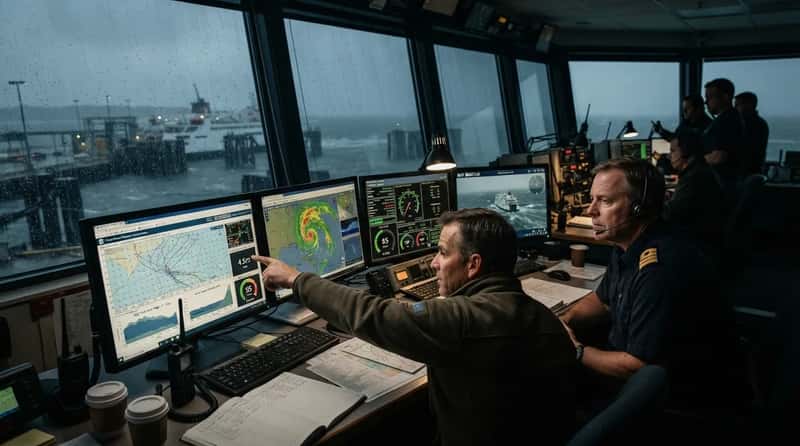
Passengers assume a captain just makes a gut call. It’s actually a rigorous, fast-moving calculation.
The process runs through a 24/7 nerve centre, a strict mathematical matrix, and decades of seafaring experience layered on top. Weather data, wave-height projections, and vessel parameters all feed into one decision window.
Real-time forecasting tools track storm trajectories, wind speeds, and sea conditions as they shift. The decision can change within 30 minutes if conditions move faster than predicted.
Coordination with the Coast Guard and local emergency agencies happens constantly behind the scenes. It’s what allows for timely evacuations and a faster restart once the storm clears.
Inside the terminal, none of that process is visible. Passengers just feel the silence where an announcement should be.
Entire Routes Shut Down – Often Without Warning
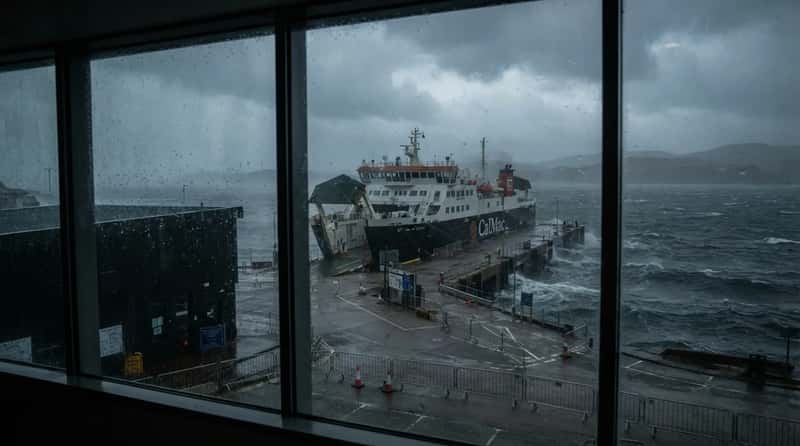
When a storm crosses a certain threshold, the whole network can go dark within minutes.
Fast Facts: Storm Eowyn’s Ferry Fallout
- Wind gusts reached up to 100 mph across parts of Scotland, Northern Ireland, and Wales
- CalMac Ferries and Steam Packet Ferries suspended entire schedules at once
- Police Scotland told already-booked passengers not to travel toward affected ports
- In Canada, forecast gusts of 100 km/h were enough to cancel P.E.I.-Nova Scotia service
During Storm Eowyn, almost every sailing linking England, Wales, and Scotland with the island of Ireland was cancelled. CalMac Ferries on Scotland’s west coast and Steam Packet Ferries between Heysham and the Isle of Man both pulled their schedules at once.
Wind gusts up to 100 mph were possible in the affected regions. Police Scotland told anyone booked on those sailings not to even travel to the area, given the red weather warning.
In Canada, the pattern repeated. A forecast of winds gusting to 100 km/h was enough to cancel ferry service between P.E.I. and Nova Scotia.
Entire island communities got cut off – not for hours, but for full days. The worst part is that many passengers only find out once they’re already sitting in the parking lot.
Stranded Passengers Turn the Terminal Into an Overnight Camp
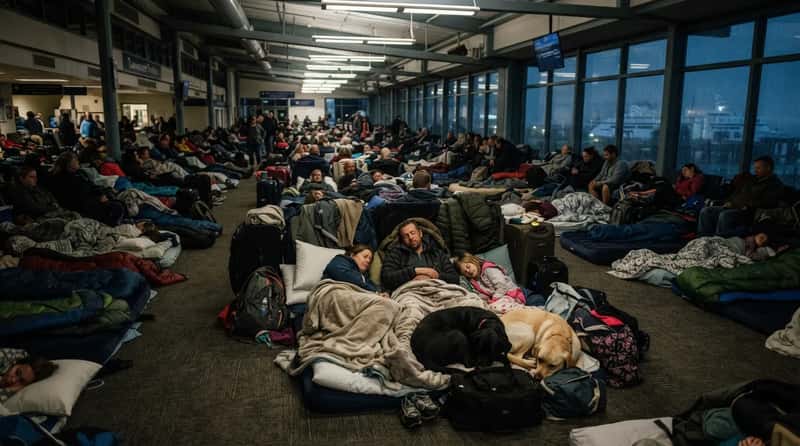
This is the part nobody warns you about. When ferries stop and roads become impassable, the terminal turns into shelter – planned or not.
One passenger spent Monday night curled up in her Toyota RAV4 at the Tsawwassen ferry terminal, with her husband, her daughter, and two Labrador retrievers packed in beside her. She got almost no sleep, had no bathroom access, and had no idea when she’d get home.
“There were vehicles parked all the way down the highway toward Tsawwassen. It was unreal.”
Stranded B.C. Ferries passenger
That backup wasn’t a fluke – it followed more than 75 ferry cancellations in a single day.
Knowing a few nearby places to stay ahead of time can soften last-minute chaos like this. Smaller ports fill up fast once the weather turns, and by the time most people think to book a room, everything within ten miles is already gone.
Staff Don’t Panic – They Go Into Emergency Mode
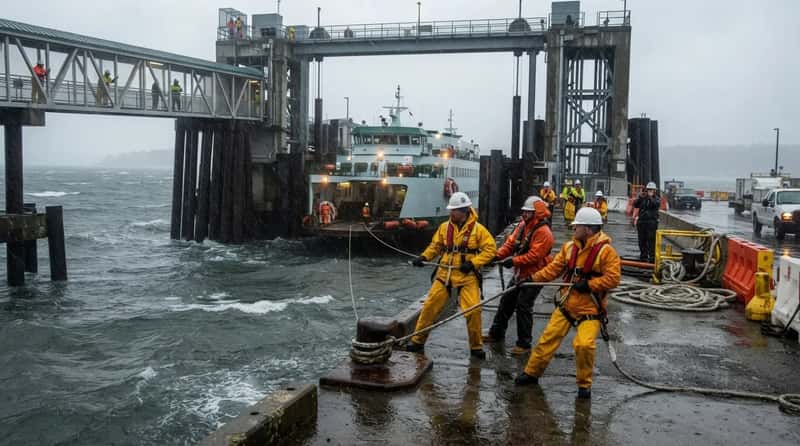
Here’s what passengers rarely see: the terminal staff isn’t scrambling. They’re running a plan they’ve rehearsed before.
Operators suspend service to protect passengers and crew, reroute vessels around the worst of the storm, and move ferries to safe locations or secure them against the weather. Under formal port emergency protocols, every step is strict and pre-approved.
Vessels allowed to stay in port follow pre-set mooring arrangements. Terminal operators halt cargo operations, and the Captain of the Port can order extra precautions to protect the whole waterway.
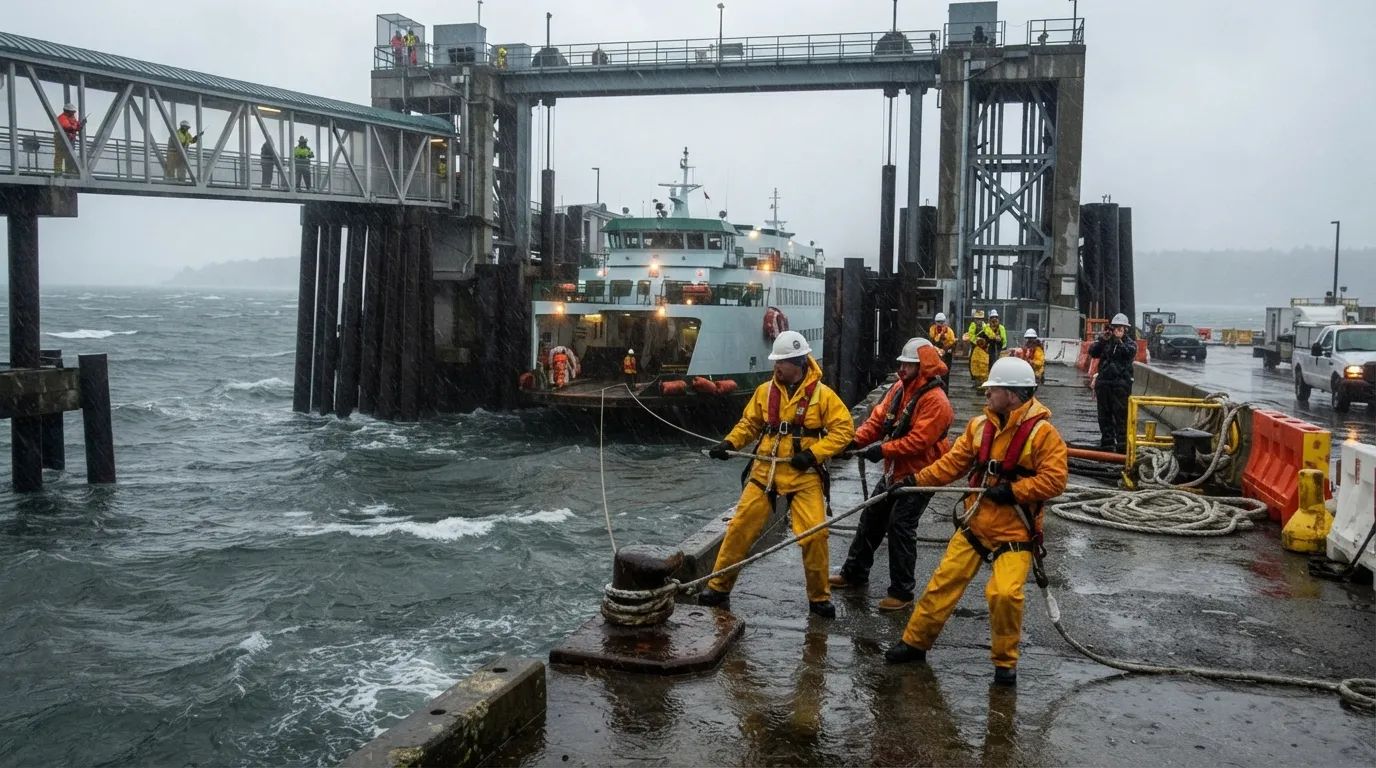
Crews keep working through the worst of it – securing lines, watching berths, checking for structural damage. Meanwhile, passengers inside are just refreshing an app and watching the vending machine run dry.
Once the storm passes, operators still have to inspect every vessel and every piece of infrastructure before service resumes. The wait doesn’t end the moment the wind drops.
The Restart Is Its Own Kind of Chaos
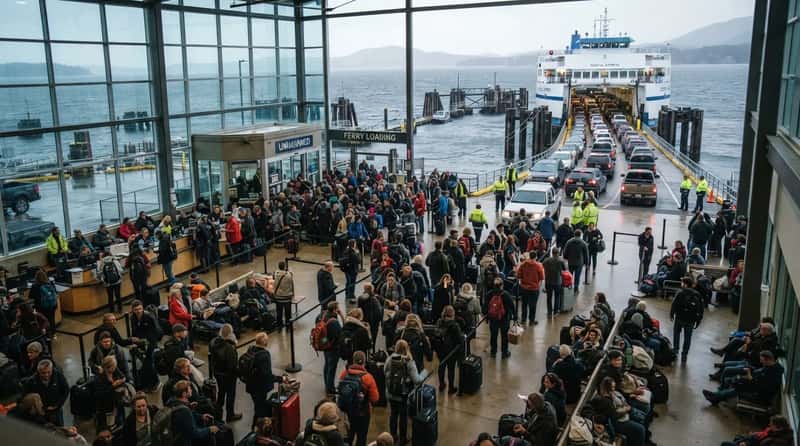
Passengers who’ve lived through a storm shutdown all say the same thing: the restart is a different kind of intense.
Operators warn that anyone without a reservation should expect long waits throughout the day once routes reopen. The backlog of stranded vehicles and foot passengers can stretch for hours.
Worth Knowing Before You Rebook
- Passengers without a reservation can face waits stretching many hours once routes reopen
- Backlogs from a single storm day can take well beyond that day to fully clear
- Build in extra buffer time between ferry connections and flights or trains
- Ask at the counter – some operators prioritize rebooking for locals or essential travel
When storms are in the forecast, a rigid schedule is a recipe for a bad day. It’s worth building in extra hours – or even an overnight stay – between ferry connections and other transport like trains or flights.
The restart isn’t really an ending. It’s a triage event, with staff sequencing vehicles and prioritizing passengers while a crowd that’s been sitting for twelve-plus hours grows restless.
And yet, the moment those engines fire up and the gangway finally drops, the whole mood in the building shifts. The dread that built all night dissolves in about thirty seconds.
That, oddly enough, is the part people remember most.
The Bottom Line
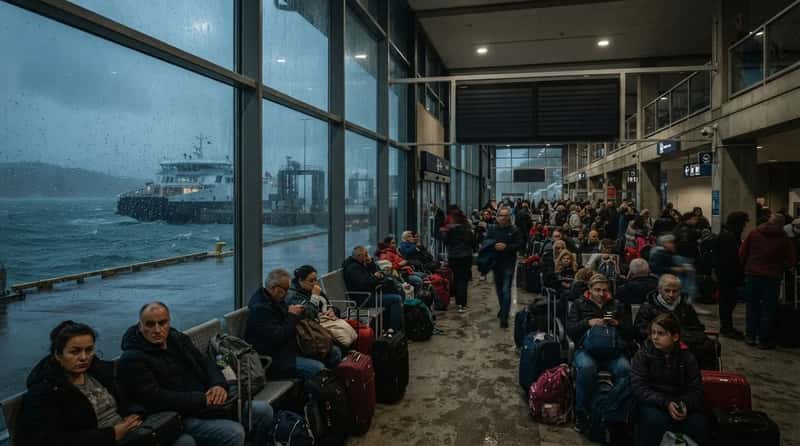
A ferry terminal in a storm is never a comfortable place. High winds, heavy rain, and reduced visibility can turn a routine crossing into a genuine risk in minutes.
The decision to cancel is never simple, and the ripple effects go far beyond a flipped departure board. Passengers get stranded for days, infrastructure gets tested to its limits, and staff operate under emergency protocols the public never sees.
If you’re ever caught in one, come prepared: cash, snacks, a backup place to sleep, and patience. Have you ever been stuck at a ferry terminal during a storm? Tell us what it was really like in the comments.
Bonus: The Insider Trick Nobody Tells You
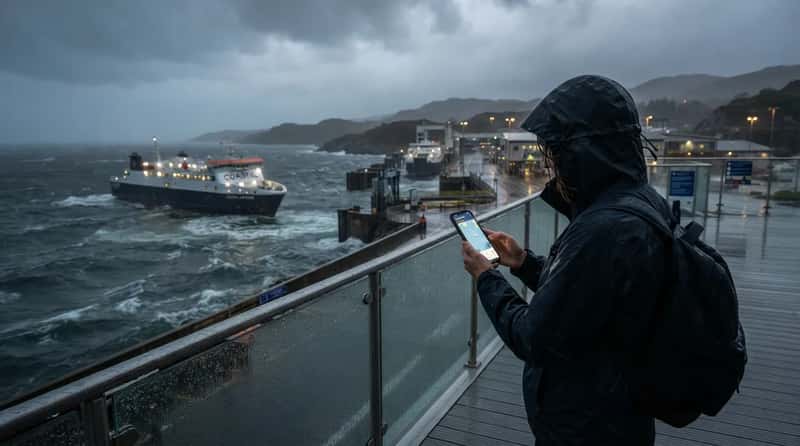
Skip refreshing the operator’s app and watch the ferry itself instead. Most large ferries broadcast their position live, and you can see what the boat is actually doing minutes before any official update posts.
- Find the vessel name on your ticket or the route page, then search it on a free ship-tracking site or app.
- Watch its speed and heading: a vessel slowing to a crawl, idling offshore, or turning back toward its last port is a strong sign a cancellation is coming.
- Check that against the nearest marine or coastal buoy forecast rather than a general weather app – operators make go/no-go calls off marine-specific wind and wave data, not the daily forecast you see on your phone.
- If the boat isn’t moving toward your terminal 30-45 minutes before departure, start your backup plan immediately instead of waiting for the board to flip.
This one habit routinely buys travelers a head start that the official channels simply can’t match.