Picture this: a truck and trailer roll into a campground loop at golden hour, and before the driver even shifts into park, the host sitting outside the office already has a read on them. Not from a conversation. Not from the reservation form. Just from thirty seconds of watching a rig ease into a gravel pad.
It sounds impossible, but hosts who’ve spent whole seasons parked at the edge of a loop swear it’s true. The backing angle, the hesitation, the way a tow vehicle gets tucked away – it’s basically a personality test nobody signed up for. Here’s what that first parking moment actually gives away, one telltale sign at a time.
1. The Backing-In Attempt Outs the Rookies Instantly
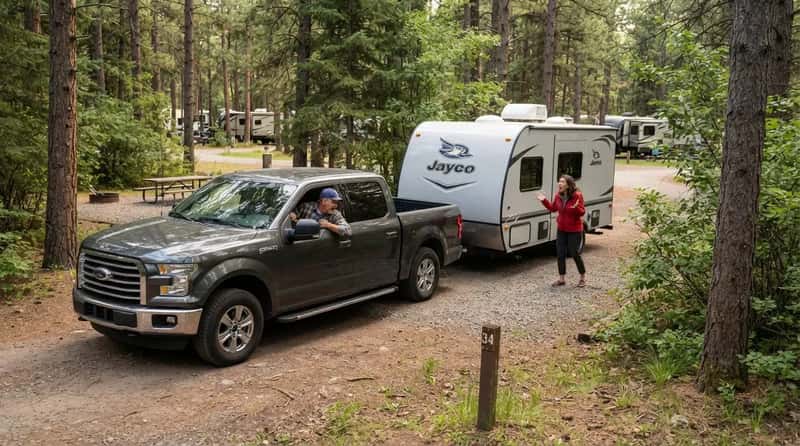
Nothing separates a seasoned camper from a first-timer faster than the backing-in process. Veterans angle wide, glance at their mirrors like it’s muscle memory, and correct in small, lazy movements – the whole thing is over in under a minute and nobody ever climbs out to direct traffic. First-timers, on the other hand, jackknife the trailer, overcorrect hard, and need two or three full stop-and-reset cycles just to get close to straight.
The real giveaway isn’t the mistakes – it’s what happens after them. Confident campers laugh it off and try again. Nervous ones tense up fast, snap at whoever’s trying to spot for them, or just abandon the spot half-crooked and walk away. Hosts say that early frustration rarely stays in the driveway; it tends to resurface later as short tempers at the bathhouse or complaints about noise nobody else can even hear.
2. Pulling Through Instead of Backing In Reveals a Planner
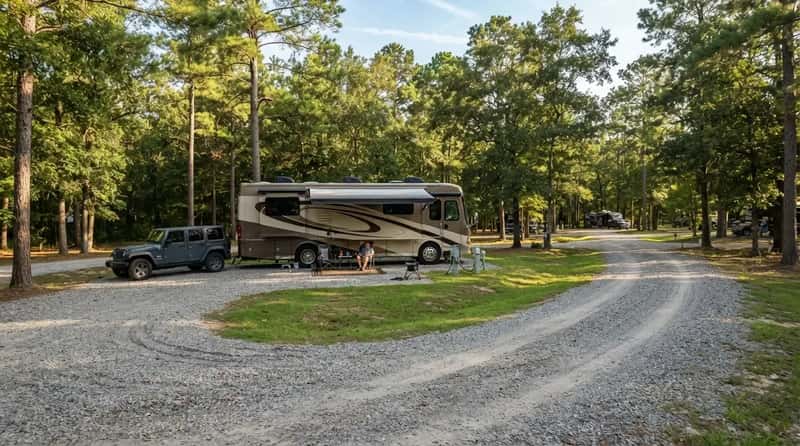
Some campers specifically request pull-through sites so they never have to back in at all, and hosts notice exactly who asks for that upgrade every single time. It’s not laziness. It’s usually a sign of someone towing something oversized, traveling solo, or simply someone who values a stress-free arrival over saving a few dollars on a cheaper spot.
What’s fascinating is the personality split this reveals. Pull-through campers tend to be the planners – they book ahead, know their rig’s exact dimensions down to the inch, and almost never need help once they’ve parked. Campers who insist on backing into a tighter, cheaper site even when a pull-through sits open, meanwhile, are often the same ones who show up with zero reservation and just hope for the best – a pattern hosts say lines up almost perfectly with last-minute, disorganized trips.
3. How Long It Takes to Level the Rig Exposes the Perfectionists
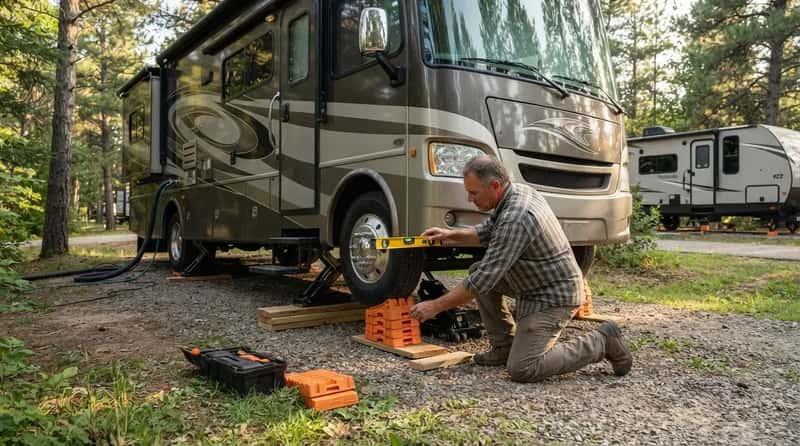
Getting a camper level isn’t optional – an unlevel fridge can stop cooling properly and slide-outs can bind – but how much a traveler obsesses over it varies wildly. Some pull out a bubble level, adjust the blocks twice, and move on in five minutes flat. Others spend forty-five minutes chasing a perfect level with a kind of intensity that borders on ritual.
Hosts who’ve watched this play out for years say the over-levelers are almost always the same people who later show up at the office with extremely specific questions – about water pressure, about exact quiet hours, about whether the fire ring can be nudged six inches to the left. It’s not annoying, hosts insist, it’s just a pattern. The five-minute levelers, on the other hand, tend to become the low-maintenance guests a host barely thinks about again until checkout.
Fast Facts
- Absorption-style RV fridges typically need to stay within a few degrees side-to-side and front-to-back to cool the way they’re supposed to.
- Slide-outs are built to extend and retract safely only when the rig is close to level, so a lazy leveling job can strain the motors.
- A basic bubble level or a leveling app on a phone is usually all it takes – laser precision isn’t required.
- Staying noticeably off level for hours can mean a warm cooler by morning, not just an uneven floor underfoot.
4. Where They Dump the Tow Vehicle Says Everything About Their Manners
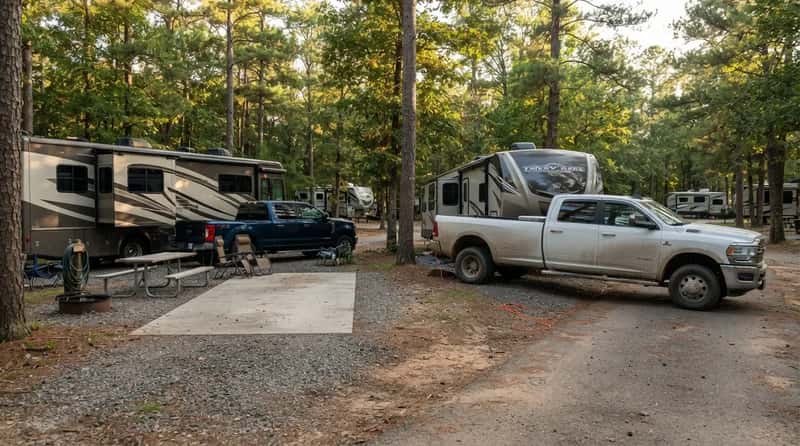
Once the RV or trailer is set, the second parking decision – where the truck or tow car ends up – is its own quiet confession. Organized campers tuck the vehicle neatly beside the rig, out of the roadway, leaving the picnic area and fire ring fully open for everyone. Others leave the truck wherever it happened to stop, blocking half the site or spilling straight into the neighbor’s turnaround space.
Hosts say this second parking choice often predicts how respectful a group will be about shared space for the rest of the stay. Campers who instinctively protect walking paths and sightlines for their neighbors tend to keep noise down and clean up without being asked. The ones who leave a truck blocking the road are, more often than not, the same campers a host will end up gently reminding about quiet hours by night two.
5. Arriving After Dark Sorts Travelers Into Two Very Different Camps
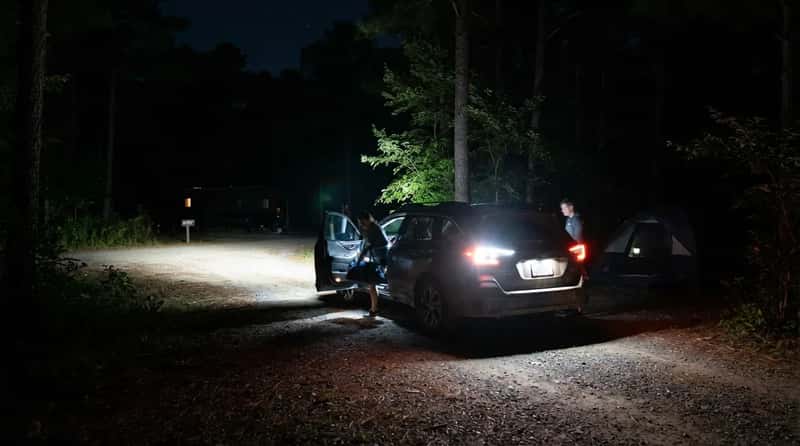
Every host has a story about headlights sweeping across the loop well past 10 p.m., and they’ll tell you it’s rarely a random accident of traffic. Late arrivals tend to split into two groups: exhausted families who badly underestimated drive time, and spontaneous travelers who decided to camp on a whim just hours earlier.
What gives them away in the parking itself is speed and volume – headlights left blazing too long, doors slamming, voices carrying because nobody’s thinking about the sleeping camp around them. Hosts say the loudest arrivals are almost never malicious, just unaware, but it’s also the single most common complaint they field from neighboring sites the next morning. A quiet, careful late-night parking job, by contrast, usually belongs to an experienced camper who’s run this exact drive-in-the-dark routine plenty of times before.
At a Glance
- Most campgrounds set quiet hours somewhere between 10 p.m. and 6 or 7 a.m., posted right on a sign near the entrance.
- Generators are almost universally off-limits during those hours, even at private RV resorts.
- Headlights, slamming doors, and raised voices are consistently the top late-night complaints hosts hear from neighboring sites.
- Calling ahead about a late arrival can keep a reserved site from quietly being marked a no-show.
6. The Speed of the Awning Deployment Is a Countdown Clock
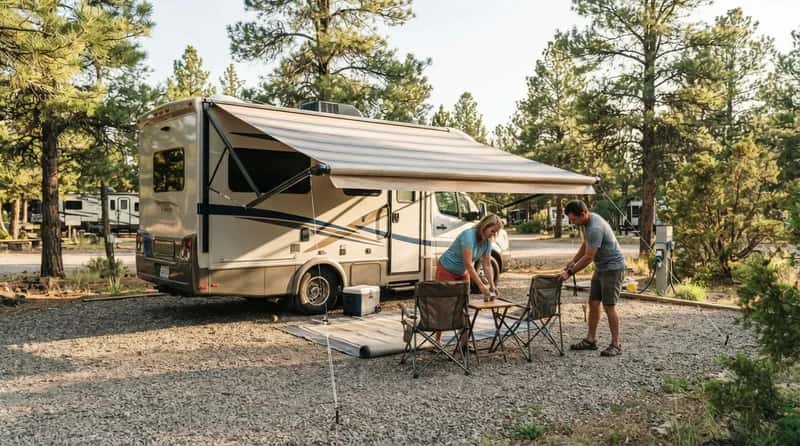
An awning or shade canopy popped out within the first ten minutes is one of the clearest signals of a traveler settling in for the long haul. Hosts say campers booked for a single night almost never bother – why deploy an awning you’ll just roll back up by sunrise?
Multi-night stayers, on the other hand, treat the awning like a front porch. They angle it for afternoon shade, set up chairs underneath almost immediately, and sometimes even stake it down against the wind before unpacking anything else. Hosts have learned to read that awning like a calendar – the more effort that goes into the outdoor setup within the first hour, the longer that site is likely to stay occupied.
7. Straddling the Site Lines Is the Fastest Way to Get a Host’s Attention
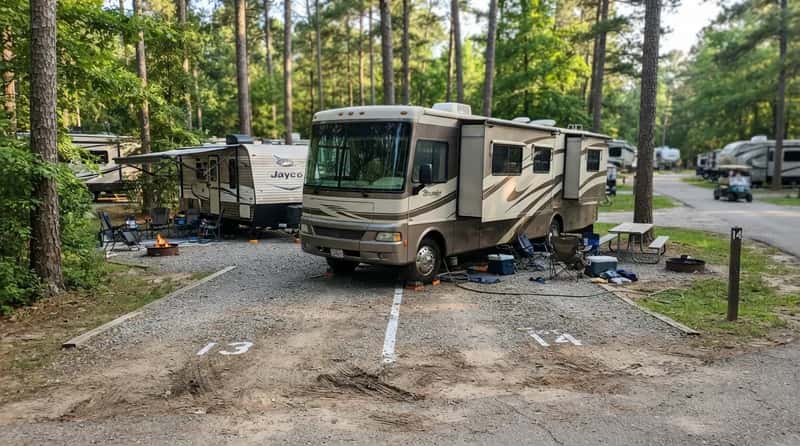
Campground sites usually have painted lines, gravel borders, or post markers defining exactly where a rig belongs, and hosts say the campers who park crooked across those lines stand out immediately – almost always for the wrong reasons. It eats into a neighbor’s space, blocks shared walkways, and sometimes creeps dangerously close to a fire ring that isn’t even theirs.
The traveler who parks slightly crooked and never bothers to straighten it out is, according to most hosts, telling on themselves before check-in paperwork is even finished. It’s rarely a one-time slip. It tends to be the same personality that leaves gear scattered outside the site boundary, plays music a little too loud, or lets a dog wander off-leash despite the posted signs. Parking within the lines, hosts say, is one of the simplest and most reliable predictors of a considerate stay.
Worth Knowing
- Painted lines, gravel borders, or wooden posts usually mark the exact footprint a rig is allowed to occupy.
- Gear or awnings spilling over that line are among the most common complaints hosts hear from next-door neighbors.
- Most standard sites are sized for one RV plus a couple of vehicles, so extra trucks often need overflow parking.
- A rig parked squarely inside its lines leaves neighbors with full, unblocked use of shared walkways and fire areas.
8. A Rough, Sloped Pad Reveals Who Actually Solves Problems
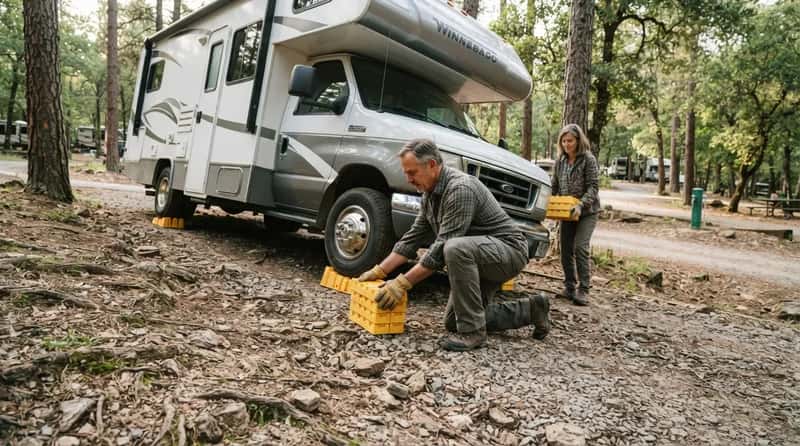
Not every site is a perfectly flat slab of gravel, and how a traveler reacts to a lumpy, sloped, or root-covered pad says a lot about their overall camping temperament. Some campers shrug, grab a few extra leveling blocks from a bin they’ve clearly used a hundred times, and solve it in minutes without a word of complaint.
Others treat an imperfect pad like a personal insult – marching to the office to demand a different site, or worse, forcing the rig into position and grinding the undercarriage against a rock in the process. Hosts say this single moment, more than almost anything else, predicts whether a guest will be easygoing or high-maintenance for the rest of their visit. The problem-solvers tend to become the quiet, self-sufficient campers a host barely thinks about again.
9. The Distance They Leave From Their Neighbors Gives Away Their Social Battery
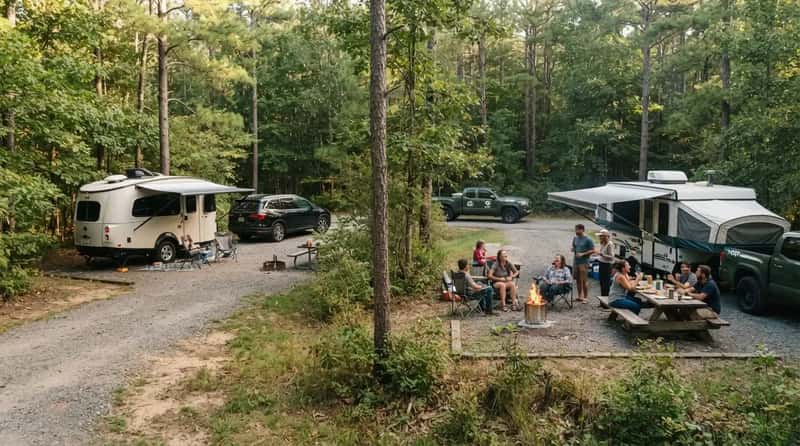
Even when sites are spacious enough to allow flexibility, some travelers angle their awnings and chairs as far from neighbors as physically possible, while others set everything up to maximize casual conversation with whoever’s camped next door. Hosts notice this instantly, because it usually predicts exactly how much interaction they’ll have with that guest all weekend.
The distance-lovers tend to keep to themselves, wave politely, and rarely ask the host for anything beyond basic directions. The close-parkers, meanwhile, are often the ones borrowing firewood, chatting at the water spigot, and quietly becoming the unofficial social hub of the loop by the second night. Neither style is wrong, hosts say – it’s simply one of the fastest ways to predict who’s there to unplug and who’s there to make new friends.
10. Checkout-Day Chaos Reveals Who Actually Read the Rules
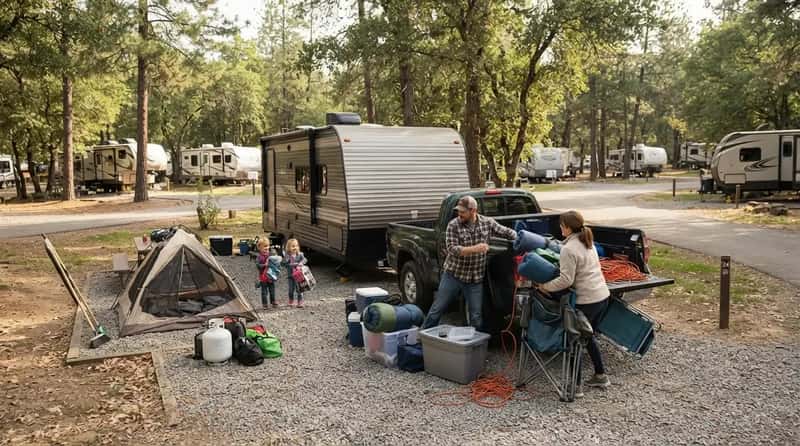
The way a traveler exits a site can be just as revealing as the way they arrived. Prepared campers pull the tow vehicle around, hitch up calmly, and roll out well before the posted checkout window – usually leaving the site looking exactly like it did the day they showed up.
Hosts say the more chaotic exits – trucks running late, gear still scattered across the pad, someone frantically trying to back up a trailer for the first time under pressure – almost always belong to campers who treated checkout time as a suggestion instead of a rule. It’s a small parking-lot drama, but hosts insist it’s one of the most consistent personality reveals of the entire stay. How someone leaves a place, it turns out, often says more than how they arrived.
Fast Facts
- Checkout times at most RV parks and campgrounds fall somewhere between 11 a.m. and 2 p.m.
- Many public parks set checkout around 1 p.m. specifically to give staff a window to prep sites for afternoon arrivals.
- Sites usually aren’t deep-cleaned between guests, so a messy exit is often still sitting there when the next camper rolls in.
- Calling ahead to ask about a late checkout tends to work out better than showing up unhitched and hoping for grace time.
What It All Adds Up To
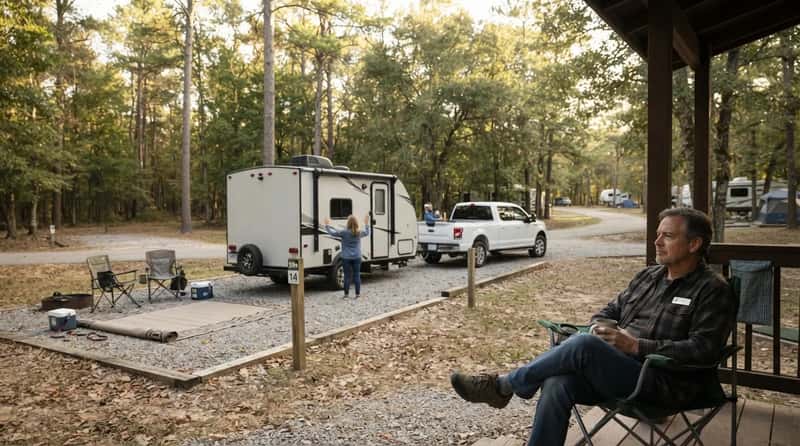
Parking looks like the most boring five minutes of any camping trip, but hosts who watch it season after season know better. The way a traveler backs in, levels up, spaces out their gear, and eventually rolls out again quietly maps their whole personality – patient or rushed, considerate or careless, planner or wing-it type. None of it requires a single conversation.
Next time you pull into a site, remember someone’s probably watching from a lawn chair near the office – and by the time you’ve unhitched the trailer, they’ve already got you figured out.