Open that little door in a hotel room today and you may find a bare shelf, a warning sticker, or no fridge at all. Most travelers assume hotels just got cheap. The real story is stranger, and it starts with a tiny airline whiskey bottle, a 500% jump in in-room drink sales, and one very awkward checkout line.
The minibar was supposed to be a gold mine. Instead it became a staffing headache, a billing fight, and a perk most guests never touched. Then there’s a twist near the end that flips the whole story: guests aren’t done with the fridge at all. Here’s what the data and the insiders actually say.
#10 – The Fridge Idea That Started at 35,000 Feet
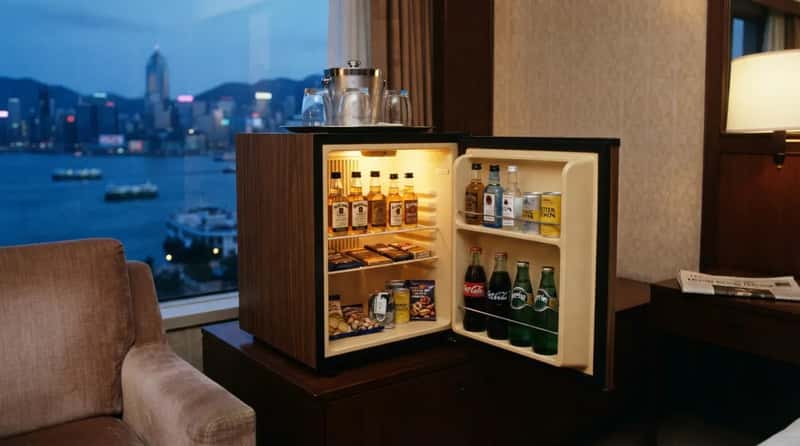
The hotel minibar began with a tiny airline whiskey bottle. In 1974, Robert Arnold, food and beverage director at the Hilton in Hong Kong, was handed a small 50 ml bottle of whiskey on a flight from Switzerland. The idea stuck with him. Back in Hong Kong, he put small fridges in guest rooms.
The payoff was huge. In the months after launch, in-room drink sales rose 500%, and the hotel’s annual revenue rose 5%. The next year, Hilton rolled the concept out across all its hotels. The early setup ran on trust: guests told reception what they’d consumed, and later cleaning staff checked the contents daily.
- The first stock: water, soft drinks, chocolates, nuts and small bottles of alcohol.
- The skeptics: rival hotels doubted guests would pay far more for things sold cheaper outside.
But the profit that made every hotel copy this idea turned out to be much smaller than you’d guess, and that’s #9…
#9 – The Revenue Everyone Chased Was Actually a Rounding Error
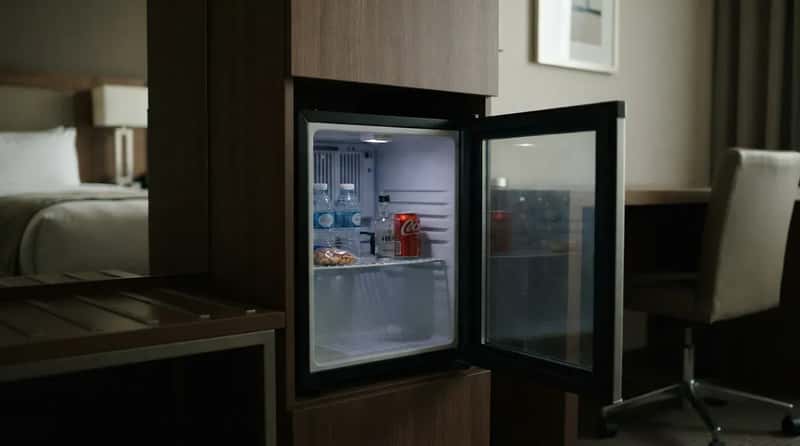
For most hotels, the minibar never made real money. PKF Hospitality Research found that U.S. minibar revenue was about 1% of total hotel revenue, and it fell 28% between 2007 and 2012. Other industry sources put it even lower, reporting that minibar earnings often come to less than 1% of total food and beverage revenue.
Meanwhile, the costs kept stacking up. Labor-intensive restocking, frequent disputes over charges and the energy use of the fridges all pushed hotels away from them. CNBC also points to food spoilage and theft.
Fast Facts
- Minibars made up about 1% of total U.S. hotel revenue, per PKF Hospitality Research.
- That share fell 28% between 2007 and 2012.
- Some industry sources say it’s often under 1% of food and beverage revenue.
- The hidden costs: restocking labor, charge disputes, spoilage, theft and electricity.
Here’s the part many people don’t realize: a feature can look like a luxury to guests and a headache to the people running it. Many industry watchers now argue the minibar was never a real perk. It was a small profit line with a fancy door on it.
And if you think the markup was the biggest problem, wait until you see what guests did instead, in #8…
#8 – “7-Eleven Killed the Minibar”
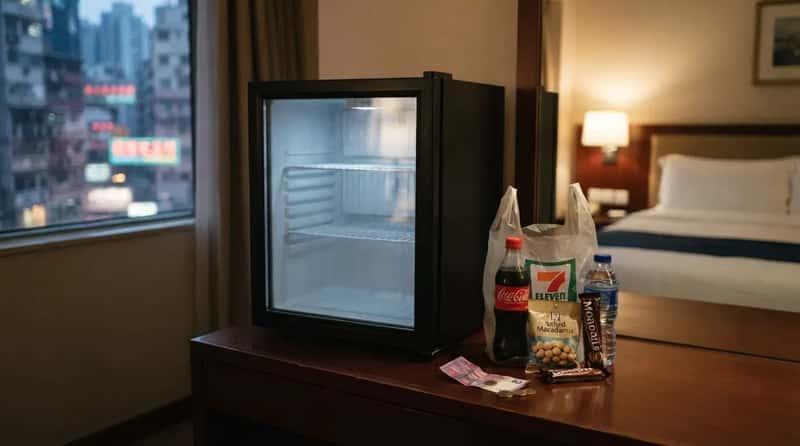
The biggest minibar rival turned out to be the corner store. That’s not a joke. CNN once quoted a Hong Kong hotel manager saying “7-Eleven killed the minibar.” Guests had simply learned there was a cheaper option a short walk away.
The price gap was hard to ignore. As 24-hour convenience stores and gas stations spread, in-room snacks mattered less. Why pay $5 for a soda when a dollar one is down the street? Cvent described guests as tired of paying $10 for a Coke and $8.50 for a small bag of macadamia nuts. And the amenity ranked dead last in a survey: only 21% called the room fridge important, versus 89% who wanted free Wi-Fi.
Some hotels saw it coming years earlier, and what they did about it may surprise you in #7…
#7 – The Staffing Math That Made Managers Wince
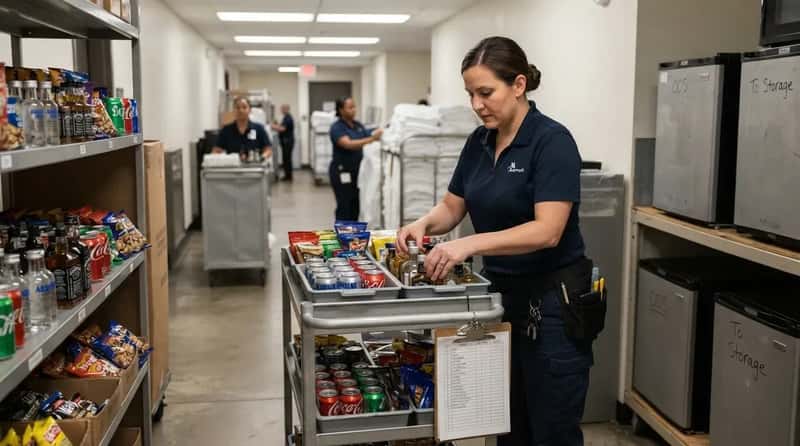
One big New York hotel did the math and walked away. The Marriott Marquis in Times Square began removing most of its roughly 1,900 minibars as early as 2004. The reason was labor. At the time, eight full-time staff were needed just to maintain 150 minibar units.
That’s the hidden cost guests never see. A minibar isn’t just a fridge. It’s a tiny store that needs inventory, checks and cleanup in every room. The chores add up fast:
- Restocking, monitoring expiration dates, preventing theft and running the mini-fridges.
- Extra housekeeping tasks, plus arguments over room charges at checkout.
But the real shocker is how few guests were ever using the thing, and that’s #6…
#6 – Only One in Three Guests Ever Touched It
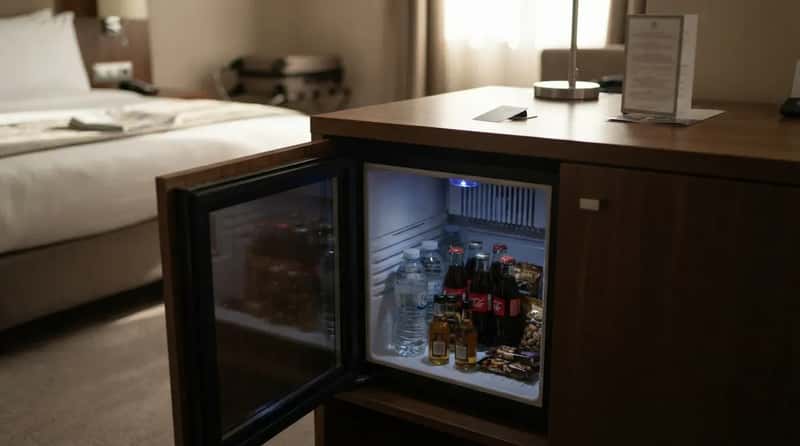
The minibar was a hotel fixture that most guests ignored. Data from minibar system provider Bartech shows only 33% of guests actually use in-room minibars, with average daily spending around $12. That’s a lot of rooms with nothing happening. Hotels were stocking and powering something two out of three guests skipped.
Tech upgrades didn’t fix it. Efforts to modernize minibars, including automated billing that detects item use, didn’t reverse the trend. Part of the problem is plain mismatch. We’ve become used to having precisely what we want, when we want it, and a fixed shelf of generic snacks rarely delivers that.
At a Glance
- Guests who use the minibar: about 33%, per Bartech.
- Average daily spend: around $12.
- Guests who skip it: roughly two out of three.
- Importance of a room fridge in one survey: 21%, versus 89% for free Wi-Fi.
Plenty of travelers swear the minibar saved them at midnight. The numbers say most never opened it.
Then hotels changed the room itself, and the changes were bigger than a missing fridge. That’s #5…
#5 – Hotels Redesigned Rooms Around the Bed and the Lobby
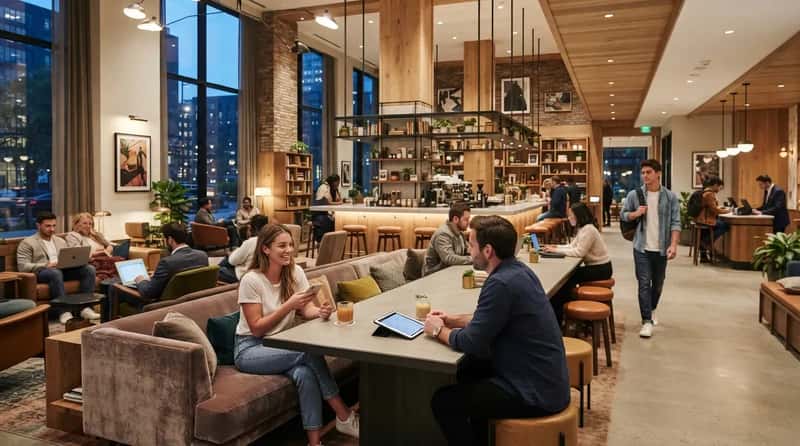
The minibar wasn’t the only thing to go. As owners designed new hotels for millennial guests, features such as spacious desks, roomy dressers and well-stocked minibars started to fade. Industry insiders say the thinking is simple. Owners believe these travelers prefer hip communal lobby spaces, or their beds.
Business travel shifted too. With iPhones and iPads standard, many business travelers no longer carry suitcases full of papers. Today the focus is on free Wi-Fi, social hours and community-focused lobbies. Some rooms lost more than a fridge: closets have been taken out of some new rooms and replaced by hanging racks.
Meanwhile, the “smart” fix that was supposed to save the minibar made things worse, and the details are in #4…
#4 – The Sensors That Charged Guests for Just Looking
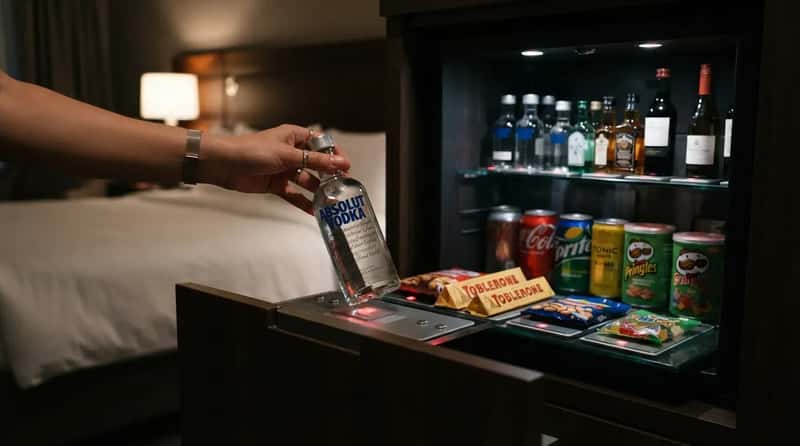
Automation was supposed to end the guesswork. Years ago, many hotels relied on housekeeping to check the minibar by hand. Then many properties switched to automated systems that detect when an item is moved, lifted or taken out. The catch is how touchy they can be. In some hotels, a charge is triggered when a sensor detects something has been moved for more than 60 seconds.
Reports of mistakes piled up. A manager at Milwaukee’s Ambassador Hotel estimated that as many as 90 percent of automatic minibar charges were errors, so staff manually checked each room first.
Elsewhere, guests had to catch the mistakes themselves. One reporter at a Chicago DoubleTree found snack charges of $6.06 to $7.72 for items his family never ate. A hotel rep agreed to remove them.
But one traveler’s water bottle story shows how fast this can go wrong, and that’s #3…
#3 – The Most Expensive Water Bottles Ever Moved
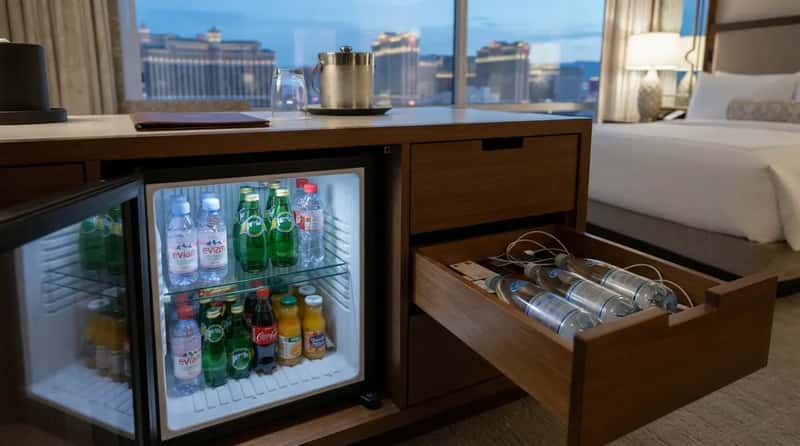
One reader story captures the whole problem. A traveler on a Las Vegas trip said her husband went to a nearby CVS for sparkling water. To make room, he took all the bottles out of the mini fridge and put them in the cabinet, not knowing about the sensors. The hotel charged them for everything he had removed. A long conversation with the front desk fixed it.
It’s an anecdote, but it isn’t alone. Another reader said a hotel charged for removing items she’d asked to have taken out of the room. And the surprise can arrive late, with charges showing up days later on your credit card.
Quick Compare
- Manual billing: guests declare what they used at checkout, and 66% preferred it in the 2025 Dometic study.
- Sensor billing: items moved, lifted or removed can trigger charges, and some systems fire after 60 seconds.
- The trust gap: one Milwaukee manager estimated up to 90% of automatic charges were errors.
No wonder guests wary of being charged for something they haven’t used may choose not to open the minibar door at all. The data backs it up: guests lean toward the honor system over the sensor.
So if guests hate the minibar, why did one study find they want the fridge more than ever? That twist is #2…
#2 – The Twist: Guests Want the Fridge, Just Not the Minibar
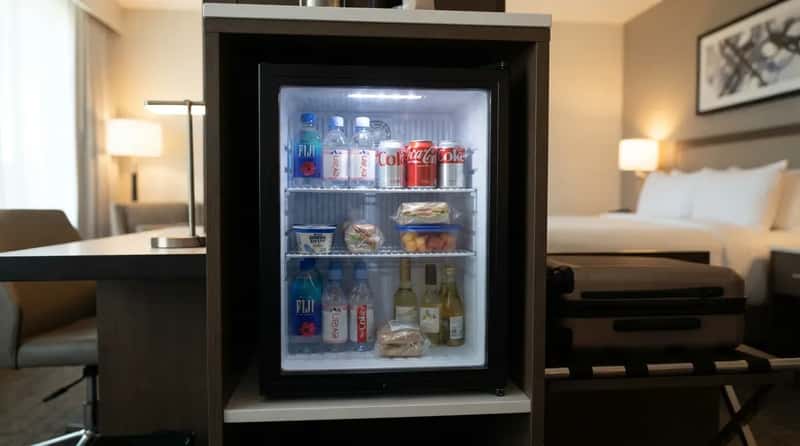
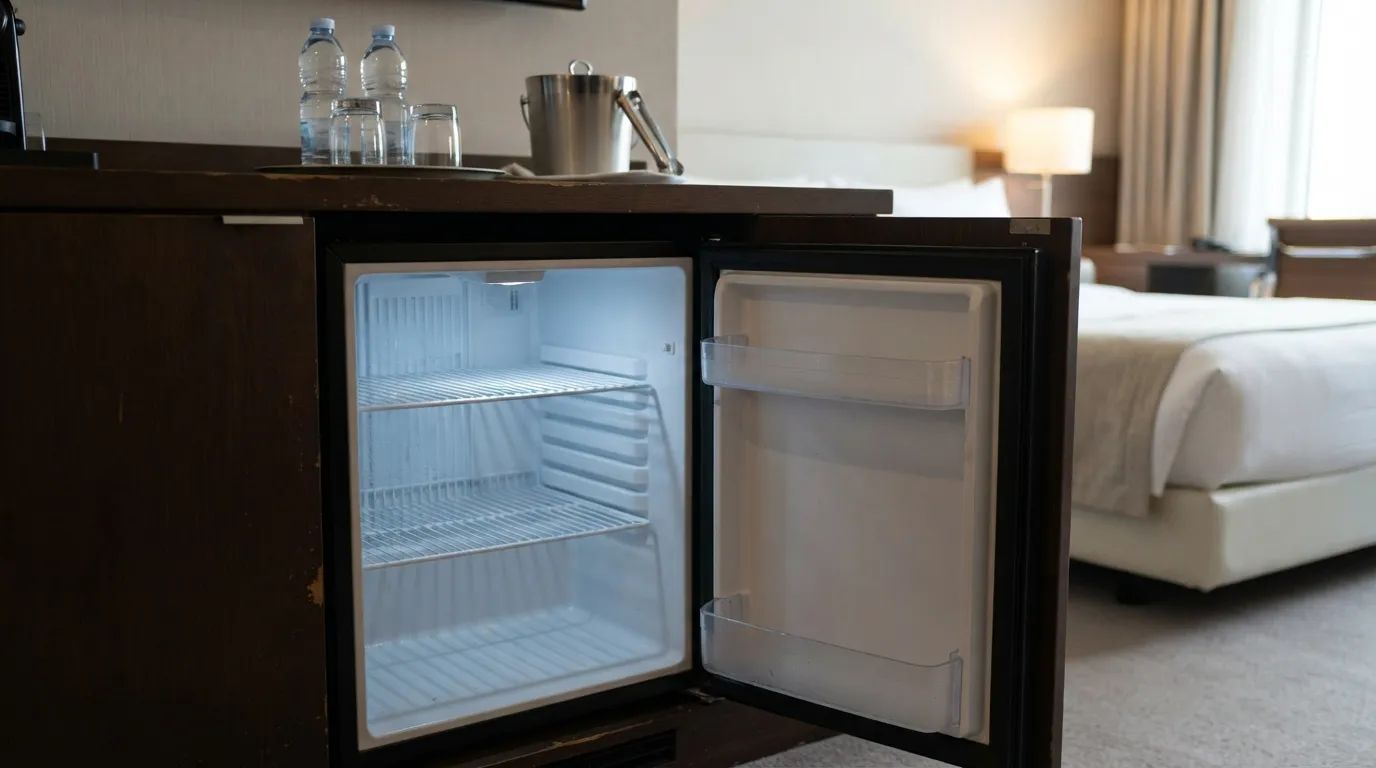
Here’s where the story turns. A 2025 Dometic survey of 2,000 hotel guests in the U.S. and Germany found 40% said an empty minifridge was important when booking. That’s on par with TVs at 41%, and up from 26% in 2019. People don’t miss the overpriced snacks. They want somewhere cold to put their own things.
Some hotels have figured that out and leave the fridge empty for guests to fill. But it isn’t free everywhere. A viral post about a Las Vegas hotel described a $50 per stay fee for storing personal items or altering the minibar, with personal-use fridges available for a daily fee.
It drew backlash, and plenty of travelers call charging for fridge space in your own room the pettiest fee in hospitality. Experts said some Strip properties will provide a mini-fridge on request, often at no charge.
But the biggest secret is what happened to the snacks themselves, and it’s #1…
#1 – The Minibar Isn’t Dead. It Just Moved.
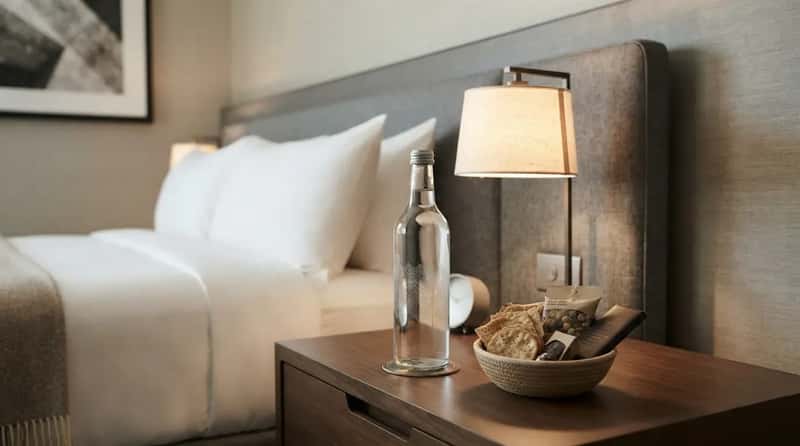
The snack never vanished. The shelf did. Hotels now place chargeable bottled water on bedside tables, because people are more likely to grab it at night than get up for a glass. The sale just happens somewhere you’re less likely to notice it. Hotels are also installing 24-hour lobby kiosks and self-serve snack bars.
Some hotels are rethinking it as a perk. Some boutique hotels and high-end resorts offer curated selections of local specialties or gourmet snacks. Hyatt’s Andaz brand offers complimentary nonalcoholic drinks and snacks from the in-room mini-fridge, though guests often pay a daily destination fee.
Why It Stands Out
- The nightstand: chargeable bottled water sits where guests actually reach for it.
- The lobby: 24-hour kiosks and self-serve snack bars replace the in-room shelf.
- The upscale twist: curated local specialties at boutique hotels and high-end resorts.
- The free version: Andaz offers complimentary nonalcoholic drinks and snacks, though a daily destination fee may apply.
And the tech side keeps pitching itself. One industry piece claims smart in-room systems deliver up to 25% higher ancillary revenue per room and 30% lower labor costs. Treat that as a vendor-style claim, not settled fact.
So the old minibar may be gone, but the real lesson is waiting just below…
The Empty Shelf Was Telling Us Something
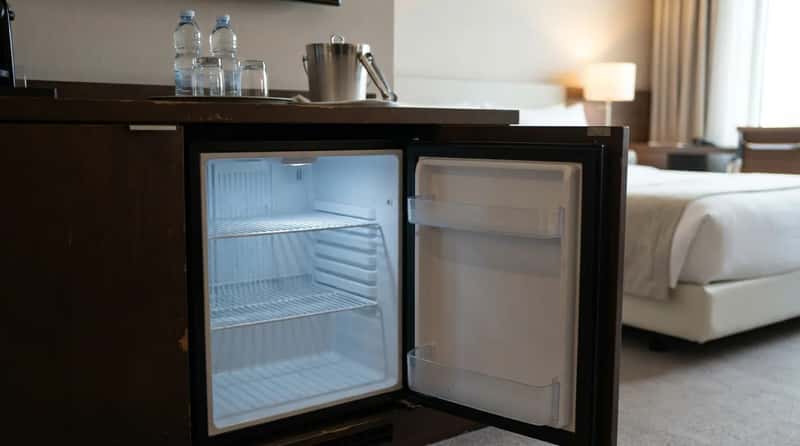
The minibar didn’t disappear because hotels stopped wanting your money. It faded because the profit was small, the labor was heavy, the corner store was cheaper, and the sensors made guests feel watched. What people want now is a cold, empty shelf they can trust. The snacks moved to the nightstand, the lobby and the app. What’s the most you’ve ever been charged for a snack you swear you never touched?