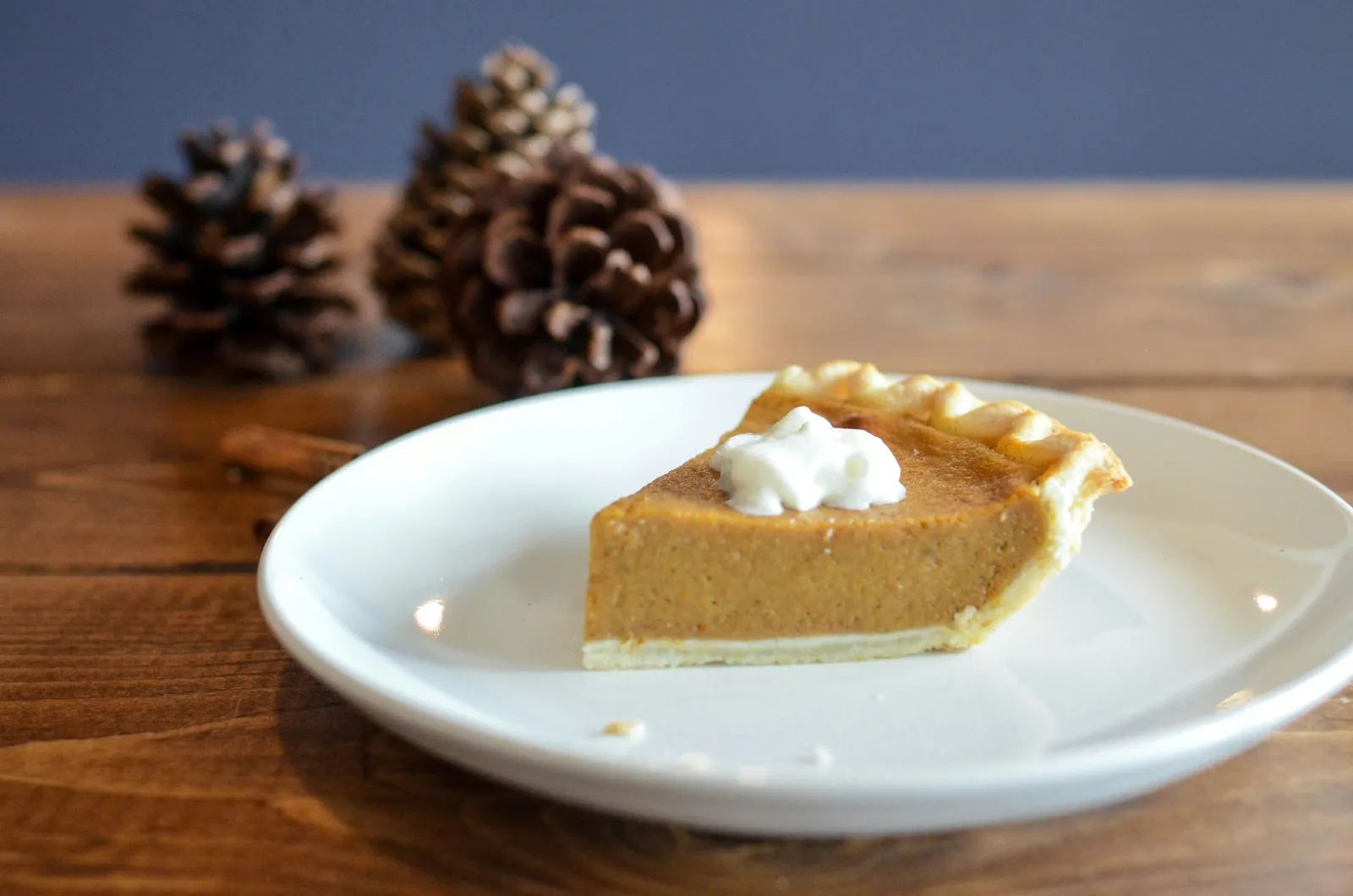
The pie that looked perfect after Thursday dinner often lingers in the refrigerator by Sunday, leaving hosts unsure whether it remains safe to serve. Pumpkin pie carries a shorter window than many expect because its filling relies on eggs and milk, ingredients that make it far more perishable than a fruit-based dessert. Food safety guidelines emphasize that the clock starts the day the pie is baked, not the day it is sliced. ([1])
Why Eggs and Milk Change the Rules
Fruit pies benefit from high sugar and acid levels that naturally discourage bacterial growth. Pumpkin pie filling lacks those protections and instead depends on dairy and eggs, which create an environment where bacteria can multiply more readily once the pie leaves proper refrigeration. Extension programs from several universities note that any pie containing cream, milk, or eggs requires stricter handling than apple or cherry versions. This difference explains why the same dessert table rules do not apply across all holiday pies.
Refrigerator Storage According to Federal Guidelines
The USDA-linked FoodSafety.gov chart recommends keeping homemade or bakery pumpkin pie in the refrigerator for 3 to 4 days after baking. That timeline counts from the day the pie comes out of the oven, so a pie baked on Wednesday for Thursday dinner reaches the end of its recommended window by Sunday. Some state extension services suggest up to seven days under ideal conditions, yet the more conservative federal figure accounts for real-world variables such as temperature fluctuations. Once the pie is cut, covering it tightly helps limit moisture that can lead to a soggy crust.
Freezing Extends the Window
For longer storage, the same federal chart lists 1 to 2 months in the freezer for best quality. The pie can be frozen whole, halved, or in slices after it cools completely, then wrapped tightly in plastic and foil to prevent freezer burn. It remains safe beyond that period if kept at a steady 0°F, though texture and flavor may decline. Thawing should always occur in the refrigerator for at least 12 hours rather than at room temperature, which can cause condensation and a soggy crust. Once thawed, the pie should not be refrozen.
Practical Limits and When to Let It Go
A pumpkin pie should not sit out at room temperature for more than two hours, or one hour if the ambient temperature exceeds 90°F. Overnight on the counter or several hours on a dessert table pushes it past safe limits. Visible mold, a sour or off smell, or a slimy surface are clear reasons to discard the pie. Even without those signs, any pie past the 3 to 4 day refrigerated window or left out too long should be thrown away. A quick reference list helps during busy holiday periods:
– Baked Wednesday, now Sunday: finish today or discard.
– Left on the counter overnight: discard.
– Slice thawed after three months: quality may have slipped, though safety holds if kept frozen.
– Store-bought pie sold unrefrigerated: follow the package label once opened. The difference between a safe slice and an uncertain one often comes down to simple timing rather than appearance. Keeping that calendar in mind lets families enjoy the dessert without second-guessing every leftover piece.