Amtrak’s Pennsylvanian covers about 444 miles between Pittsburgh and New York, and since November 18 it has run twice a day instead of once.1 A full trip takes about nine and a half hours, which is most of a day. The little details decide whether that day feels like a treat or a trudge.
Which train will take your suitcase? Which car sells lunch? And what is the mountain curve from the 1850s that rail fans cross the state just to see? That curve sits about five miles west of Altoona, and the answer is waiting at the end of this list. Lunch comes first, and on this train it is sold in a single car.
#10 – The One Car Where Lunch Lives (And Where Coach Gets to Stretch)
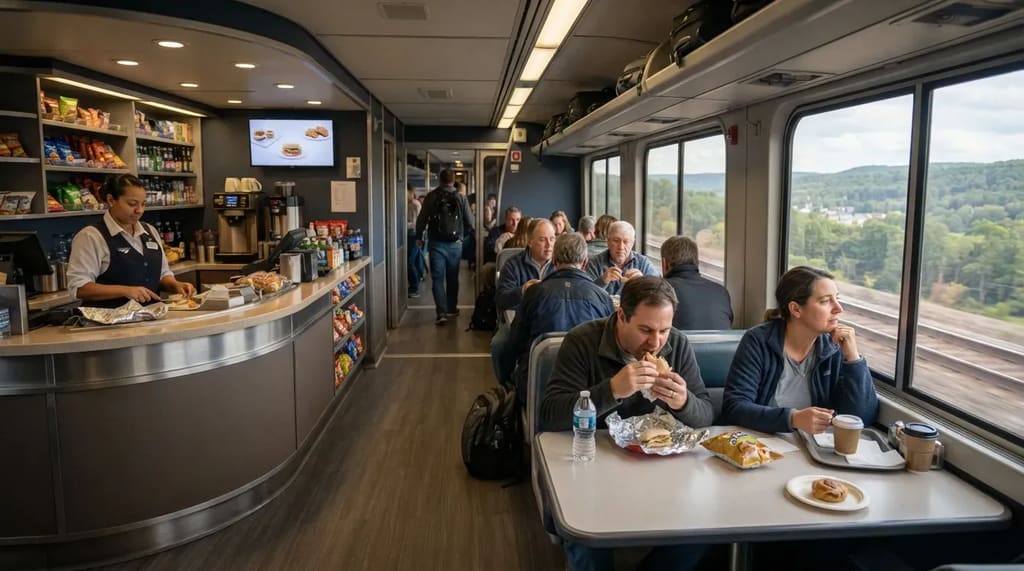
The café car sits between Coach and Business Class, so you pass through it on any walk to the other end of the train. It sells meals, snacks and beverages, and the menu has included cheeseburgers and sandwiches. If you are hungry at hour four, this is the only place that will fix it.
Coach passengers can sit in the café car while they eat. That gives you a reason to leave your seat in the middle of a nine-hour day, and a change of scene helps more than it sounds. Even a coffee at a different window can reset a long afternoon.
Vegetarians will find the choices narrower. One reviewer of the route found mostly veggie burgers and pizza. I would pack a sandwich for the real meal and use the café for coffee and a stretch.
The café car also sits right next to Business Class, which raises the question of what the extra fare buys.
#9 – The Business Class Upgrade That May Not Be the Bargain It Sounds Like
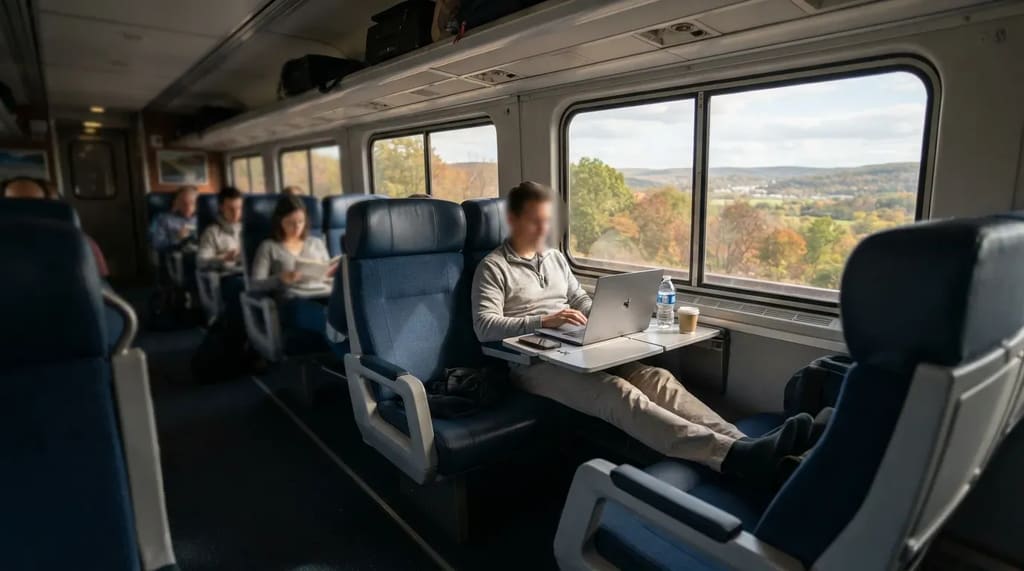
A Business Class ticket includes unlimited soft drinks, coffee and tea from the café. Over nine hours that adds up, though only if you would otherwise have bought several. If you are a one-coffee traveler, the math does not do much for you.
Reviews split on the seats. Some riders report more legroom and room to spread out, while others found the seating no better than coach. That mixed verdict is the real story here.
Coach already offers a spacious seat, café access, tray tables, Wi-Fi and outlets, so the upgrade buys less than the name suggests. I would not pay it on price alone. If the fare gap is small and you want a calmer car, it is a fair treat.
Neither fare changes the baggage rules, and those can wreck a trip if you miss them.
#8 – The Baggage Catch: Checked Bags Ride Only on Certain Trains
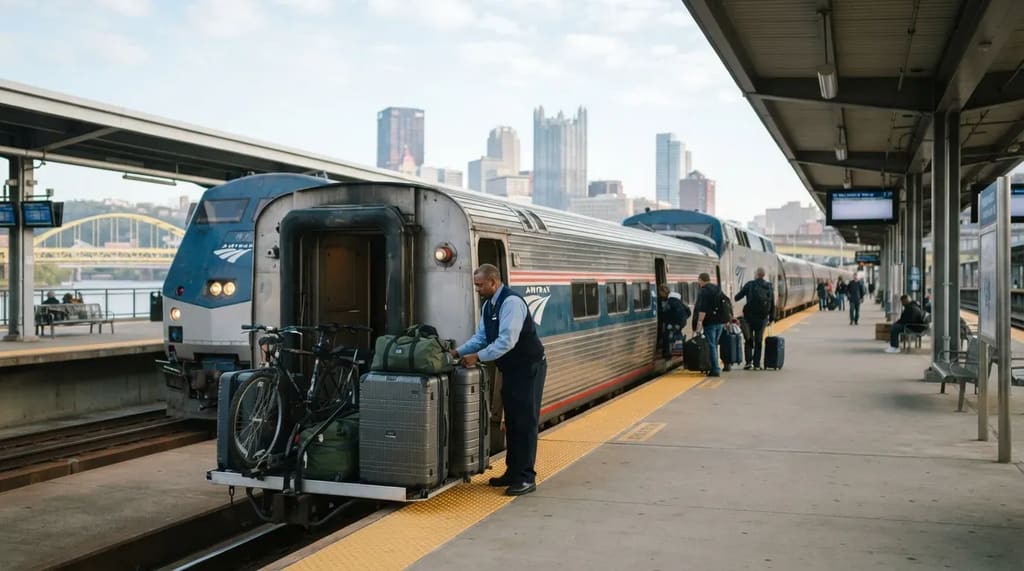
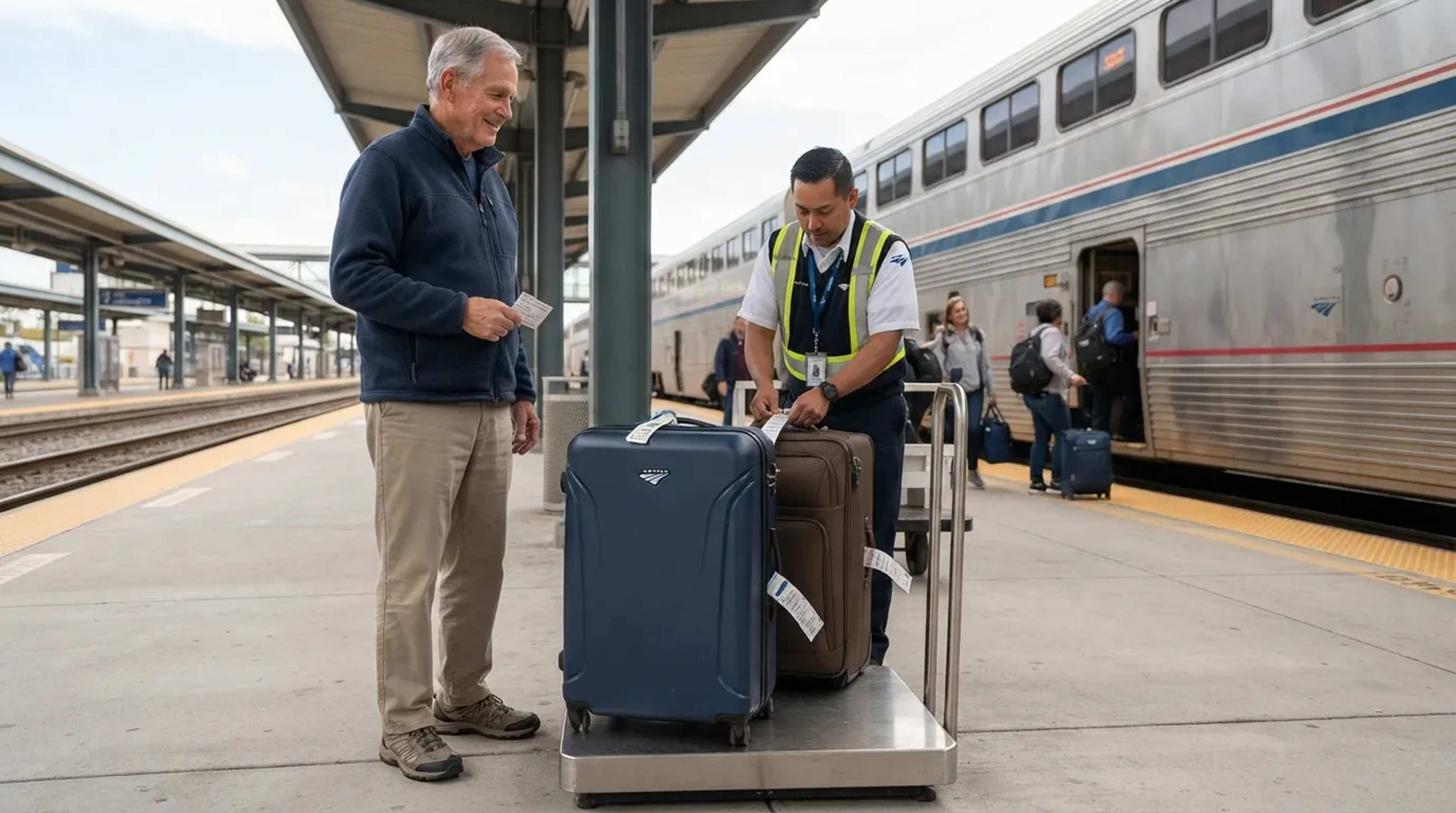
Checked baggage and trainside bicycle service are available, but since November 18 only on trains 42 and 45.1 2 Train 42 is the 7:10 a.m. departure from Pittsburgh, so the 1:00 p.m. train, number 44, is not on that list. Plenty of travelers would never guess that from the schedule alone.
If you are bringing a big suitcase, a bicycle or a load of gifts, build the trip around the 7:10, even if the 1:00 looks friendlier on paper. Going the other way, the 12:25 p.m. from New York is train 45, which makes it the westbound one that takes bags. The 5:50 a.m. does not.
Carry-on travelers are not affected, since a bag you carry rides with you on either train. For everyone else, Amtrak’s booking flow shows whether checked baggage is available when you buy a ticket.
#7 – Sit on the Right and the River Comes to You
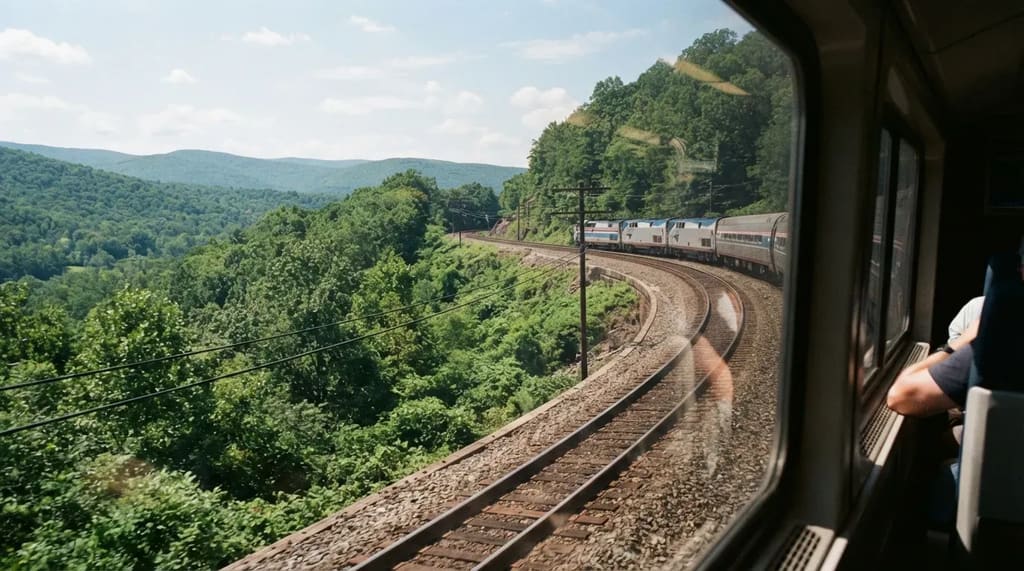
A rider’s guide to the route says the right side of the train, facing forward, is the better one from Pittsburgh to New York for views of the Susquehanna River and the Horseshoe Curve. That is the side to look for if you have a choice. It costs nothing and can change what your whole day looks like.
The scenery keeps changing. The train crosses the Appalachian Mountains, passes through Harrisburg and Pennsylvania Dutch Country, then runs on through Philadelphia and New Jersey.3 Near Duncannon the line leaves the Susquehanna and follows the smaller Juniata River for much of the way to Altoona.4
At a Glance
- Best side: right, facing forward, when riding from Pittsburgh to New York.
- Big river: the Susquehanna, which the line follows near Harrisburg.
- Smaller river: the Juniata, picked up near Duncannon and followed toward Altoona.
- Bridge to watch for: the Rockville Bridge, which carries the line over the Susquehanna near Harrisburg.
- Backup spot: the café car windows, if your side of the train is full.
Window choice settles what you see. It does not change how long you spend seeing it.
#6 – Where 444 Miles and Nine-Plus Hours Really Go
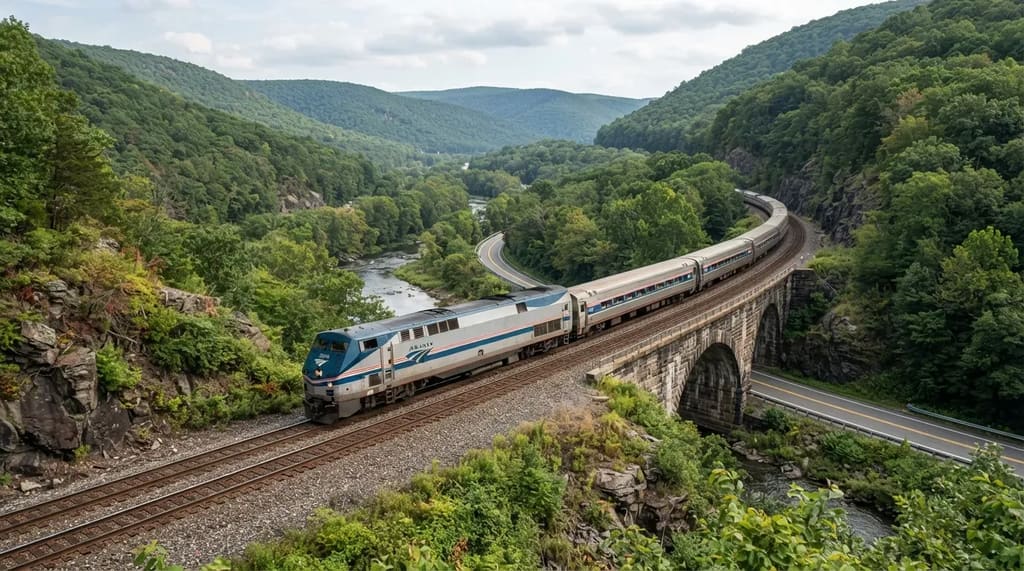
The route runs 444 miles between Pittsburgh and New York by way of Philadelphia, with 17 stops. Booking listings put the 7:10 a.m. train at 9 hours 33 minutes and the 1:00 p.m. at 9 hours 25, so expect a few minutes of difference between the two.
The time is not spread evenly. It is about 5½ hours from Pittsburgh to Harrisburg, 2 hours from Harrisburg to Philadelphia and 1½ hours from Philadelphia to New York. More than half the day is gone before you reach Harrisburg.
That first stretch runs over track owned by Norfolk Southern, a freight railroad, between Harrisburg and Pittsburgh. At Harrisburg the crew is exchanged, and one traveler described a stop of about ten minutes. That is time for a stretch, though you should stay close to the train and listen to the conductor.
Those hours cost different amounts depending on the day you buy them.
#5 – The Fare That Changes With the Calendar
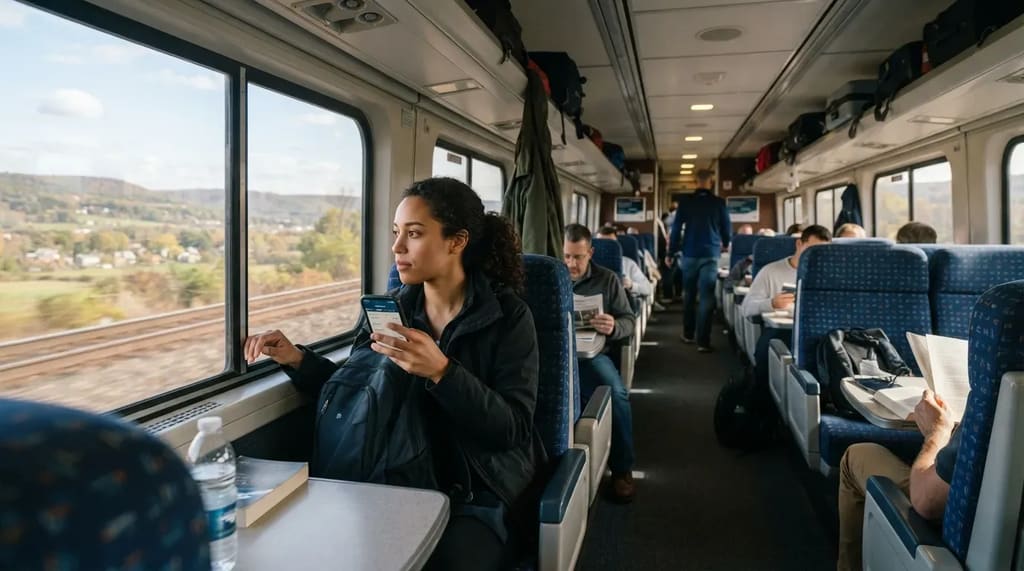
No single price describes this train. One booking site listed $160 for the 1:00 p.m. departure and $190 for the 7:10 a.m. Another showed an average of about $136 for the Pennsylvanian, and a 2026 travel feature put fares starting around $60 per person.
The low end goes to early planners. A Business Class traveler who took the train in 2023 found even that class rather cheap if you book early.
Holidays are a different matter. At the launch of the second train, Governor Shapiro said westbound trains between Harrisburg and Pittsburgh were already sold out the day after Thanksgiving. A second train adds seats, but it does not remove the need to book ahead on a holiday weekend.
Tickets are sold on Amtrak.com and the Amtrak mobile app.1 I would not wait for a better fare on a holiday date, because that is when waiting tends to cost the most.
A low fare on the wrong train can still leave you stepping off in New York at ten at night.
#4 – Two Departures, Two Very Different Days: 7:10 vs. 1:00
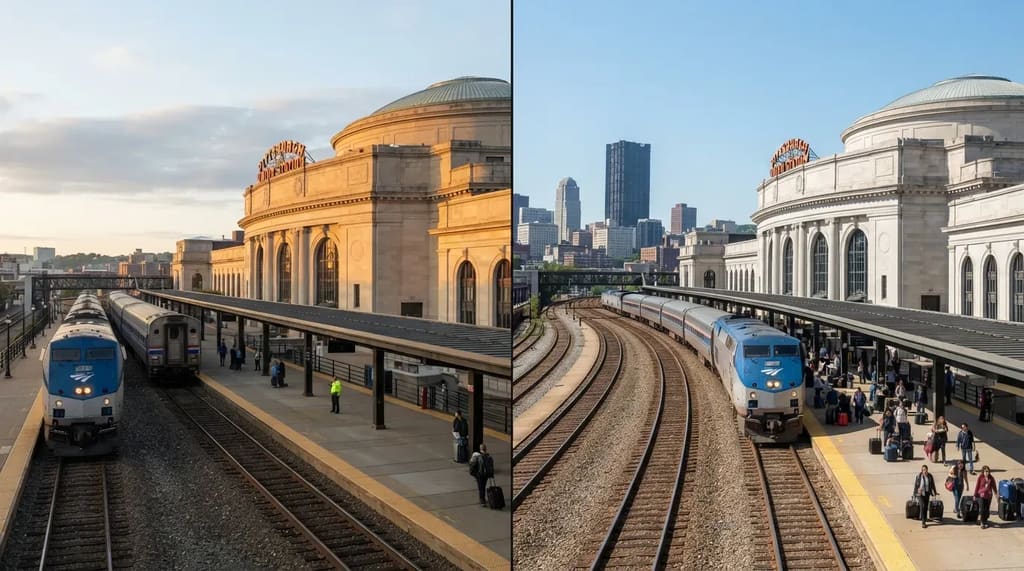
The two eastbound departures from Pittsburgh Union Station are at 7:10 a.m. and 1 p.m.5 The early one gets you to New York with the evening still ahead of you. The later one has a real use, too, since it lets you spend a morning in Pittsburgh first.
Quick Compare
| Train | Leaves | Arrives | Checked bags |
|---|---|---|---|
| 42 (east) | 7:10 a.m. Pittsburgh | 4:43 p.m. New York | Yes |
| 44 (east) | 1:00 p.m. Pittsburgh | 10:25 p.m. New York | No |
| 43 (west) | 5:50 a.m. New York | 3:14 p.m. Pittsburgh | No |
| 45 (west) | 12:25 p.m. New York | 9:54 p.m. Pittsburgh | Yes |
Still, I would take the 7:10 unless you have a reason to stay. It is the eastbound train that takes your checked bags, as covered earlier. A 10:25 p.m. arrival makes for a long day, and that is before you find your way to a hotel.6
#3 – The Free Wi-Fi That Fades When the Mountains Arrive
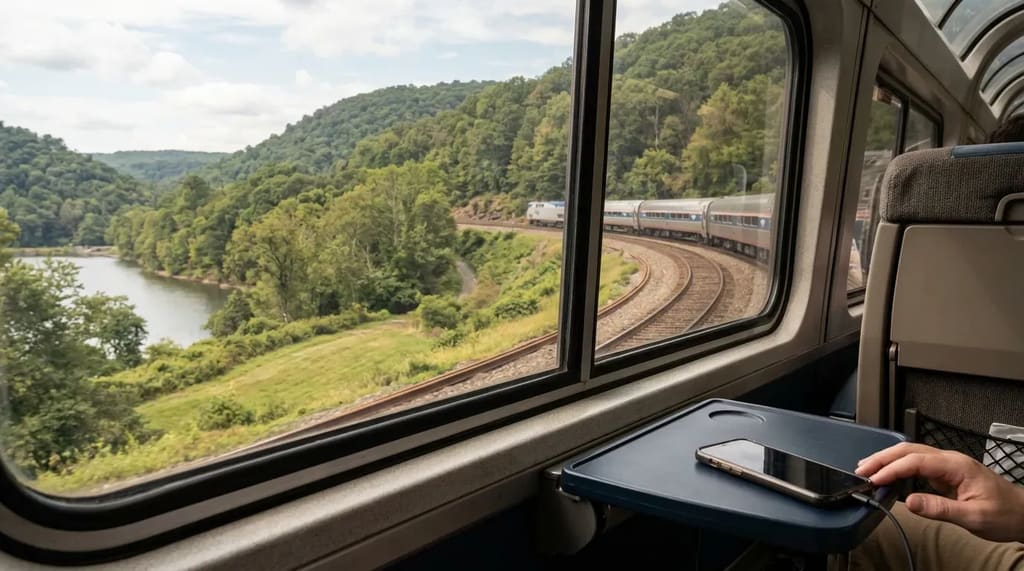
Amtrak lists free Wi-Fi and café service for customers on the Pennsylvanian, and power outlets are available as well.1 Those are useful on a nine-hour day, especially when your phone battery is the thing keeping you entertained.
The signal is not steady all the way. A 2025 travel feature noted that service dips in the mountains. The line crosses the Alleghenies by the Gallitzin Tunnels west of Altoona and the Horseshoe Curve, which is also the stretch worth looking out the window for.
Don’t plan a video call or a large download for that part of the trip. Load your show, your book and your confirmation numbers before you leave Pittsburgh, and treat the mountain stretch as time off.
Strong signal or weak, the schedule was the bigger limit for decades, until the second train arrived.
#2 – A Second Train After Decades of Just One a Day
The Pennsylvanian first ran on April 27, 1980, and for more than four decades travelers had only a single daily train in each direction. Axios Pittsburgh called the new round trip the first new passenger train service for Western Pennsylvania in decades. For a state with this much rail history, that is a striking gap.
The route has had other shapes. Amtrak began the Three Rivers in 1995 to replace the Broadway Limited, and it ran through to Chicago. On March 8, 2005, Amtrak cut service back to Pittsburgh and New York and restored the Pennsylvanian name.7
Related Stories From Travelbinger
The delay came from the track. Between Harrisburg and Pittsburgh the trains run over Norfolk Southern’s Pittsburgh Line, a major east-west freight route. The governor’s office said state and federal investments in freight rail infrastructure and safety upgrades made the expansion possible. In other words, the second train depended on work along a freight railroad’s tracks.
That same Norfolk Southern line crosses the Alleghenies by a route laid out in the 1850s, and its best-known section has a stop nearby.
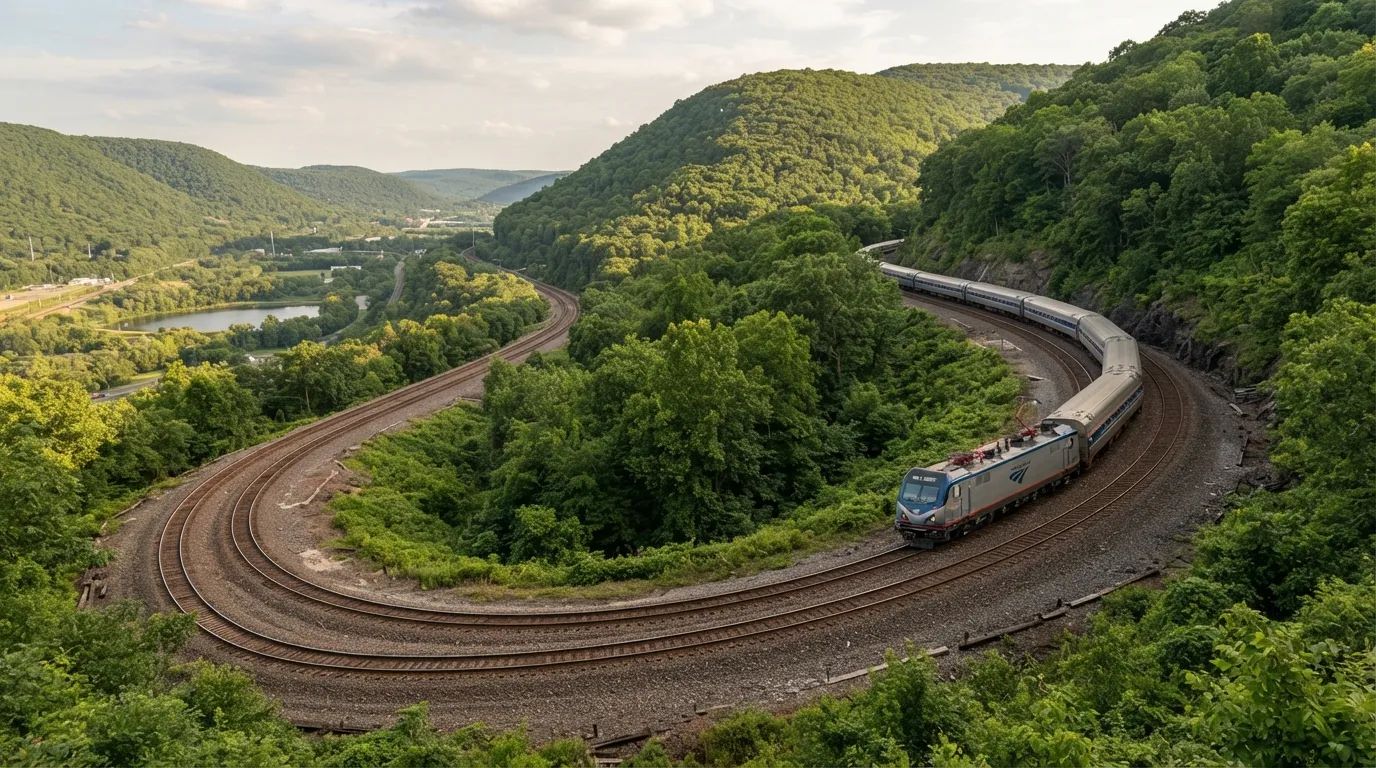
#1 – The Horseshoe Curve: A Railroad Feat From 1854, Five Miles From Altoona
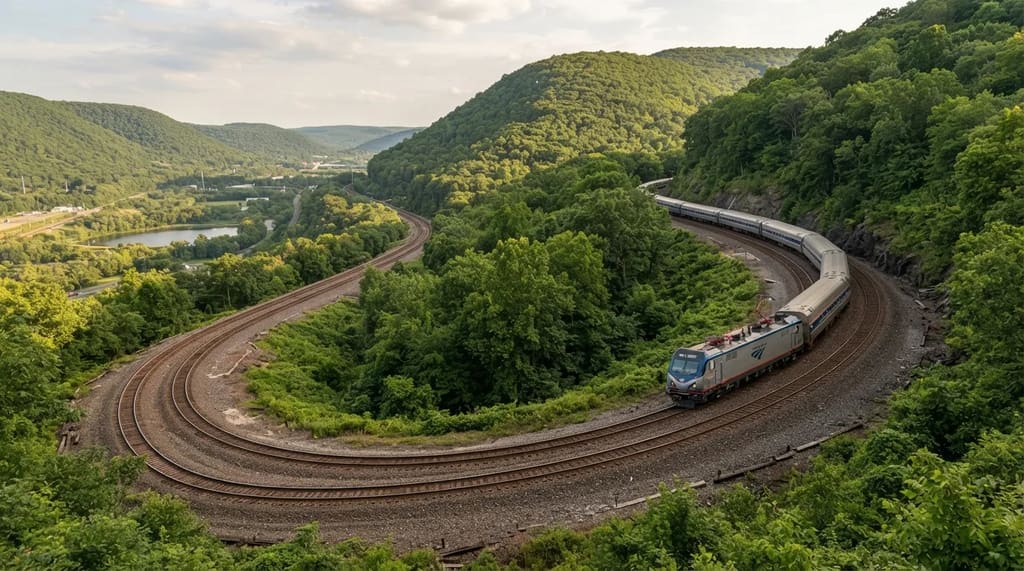
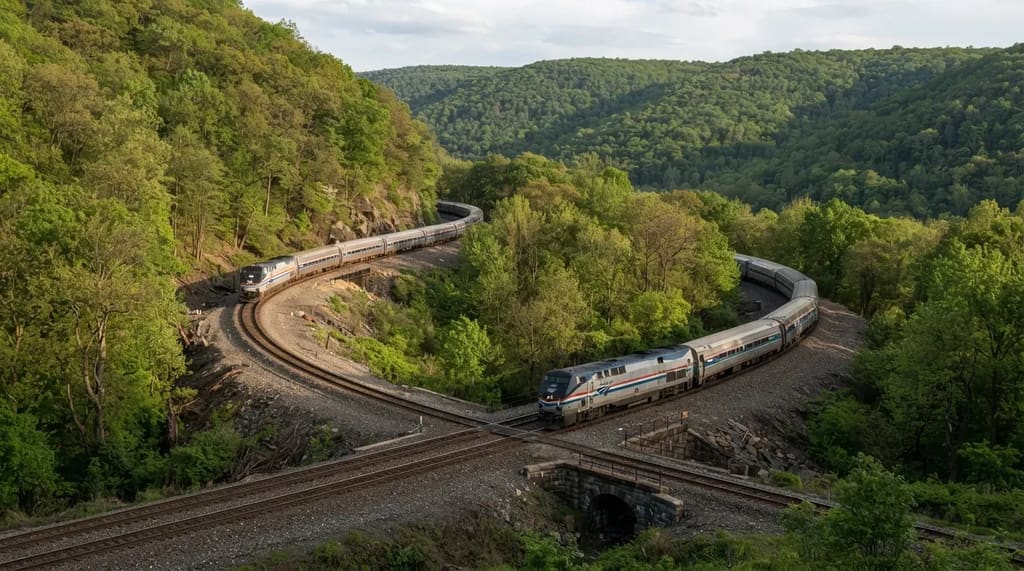
The Horseshoe Curve was built to replace the Allegheny Portage Railroad, a complicated system of canals and inclined planes. The curve let the railroad keep an acceptable grade up the mountain, which is why engineers bent the track instead of pushing it straight at the ridge.
Only the Pennsylvanian runs through it as a passenger train. The climb west out of Altoona runs at about a 1.76 percent grade, so a train from Pittsburgh is coming down the mountain through the curve, not climbing it.
Why It Stands Out
The crew can tell you when it is coming. A rail fan on an enthusiast forum suggested going to the café car and asking the crew how long until the curve. That beats staring at the window for an hour in case you miss it.
For a closer look, the stop is Altoona, and the curve is five miles from it. A Johnstown tourism group has run a fall tour that boards the eastbound Pennsylvanian at Johnstown and returns on the westbound.
If you can spare a day, getting off at Altoona and seeing the curve from the ground is worth the extra stop. If you can’t, the café car and a good window seat will do.
The Pennsylvanian is slow if all you want is to get from one big city to another. It makes more sense as a day with something in the middle, whether that is the river views, the mountain crossing or an afternoon in Altoona.
Sort out the practical things first, meaning the train number, the bags and the fare, and let the scenery take care of itself.
If you could get off at one stop between Pittsburgh and New York for a few hours, which town would you pick, and what would you want to see there?
- Amtrak Second Round Trip: https://media.amtrak.com/2026/10/amtrak-expands-pennsylvanian-service-with-second-daily-round-trip-beginning-nov-18/
- Gettysburg Connection Pennsylvanian: https://gettysburgconnection.org/second-daily-pennsylvanian-train-begins-november-18/
- Amtrak Pennsylvanian Route: https://www.amtrak.com/pennsylvanian-train
- Explore PA History Altoona: https://explorepahistory.com/hmarker.php?markerId=1-A-1B1
- Pennsylvanian Route Timetable: https://content.amtrak.com/content/timetable/Pennsylvanian.pdf
- Railway Age Pennsylvanian Doubles: https://www.railwayage.com/passenger/intercity/pennsylvanian-doubles-november-18/
- Pennsylvanian Train History: https://en.wikipedia.org/wiki/Pennsylvanian_(train)
- Trains Magazine Horseshoe Curve: https://www.trains.com/ctr/railroads/railroad-operations/horseshoe-curve/