You hand your keys to the valet, take two steps toward the lobby doors, and think nothing of it. But the doorman standing there has already made a dozen silent judgments about you before you’ve said a single word. It’s not rude, it’s reflex, and for guests over 60, that reflex reads louder and clearer than for almost anyone else.
Veteran doormen won’t say this out loud, but they’ll admit it if you ask the right way: older guests give off the most consistent, most readable signals of any age group. Some of those tells are exactly what you’d expect. Others will genuinely surprise you, and a few might sting a little.
#14 – How You Climb Out of the Car Gives You Away Instantly

Doormen watch the exit before anything else, because it tells them more than a face or an outfit ever could. A smooth, unhurried exit signals someone who travels often and knows exactly what happens next. A stiff or hesitant one tells the doorman this guest might need a hand, without a single word being exchanged.
That first three seconds shapes the next ten minutes more than most guests realize. Doormen quietly decide, almost on instinct, whether to offer an arm, slow their own pace, or simply step back and let the guest lead. It’s the fastest read in the entire job, and it happens before the trunk is even popped.
#13 – A Beat-Up Leather Suitcase Earns More Respect Than a New One
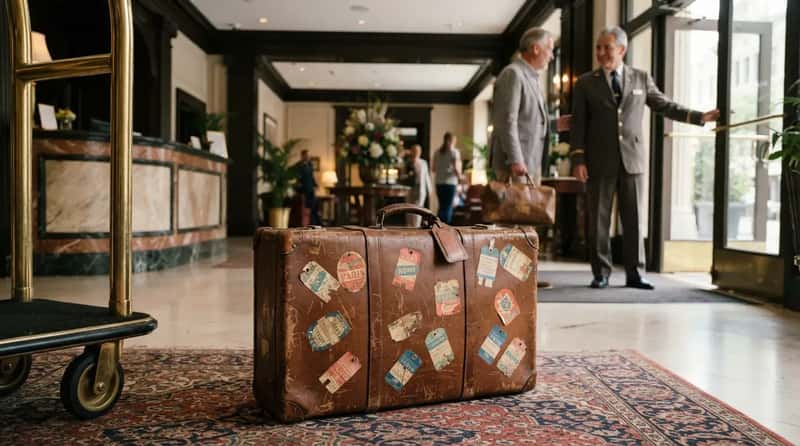
Older guests often carry luggage that’s clearly been somewhere, and doormen notice immediately. A scuffed leather bag or a suitcase with faded airline tags reads as lived experience, not neglect. Newer staff sometimes assume shiny means important, but seasoned doormen have learned it’s usually the opposite.
Guests with well-worn bags tend to get treated with easy familiarity instead of stiff, performative politeness. Scuffed luggage is one of the strongest silent signals of a genuinely well-traveled guest, and it often earns a warmer welcome than a brand-new matching set ever could. The bag doesn’t have to be expensive. It just has to look like it’s earned its dents honestly.
Fast Facts
- Faded tags and worn corners read as “frequent traveler,” not “careless owner.”
- Matching new luggage sets are often read as a special-occasion trip, not routine travel.
- A single scuffed carry-on can shift a guest’s entire first impression in seconds.
- Doormen say honest wear beats expensive shine almost every time.
#12 – Your Walking Speed Tells Them Exactly How Long to Chat
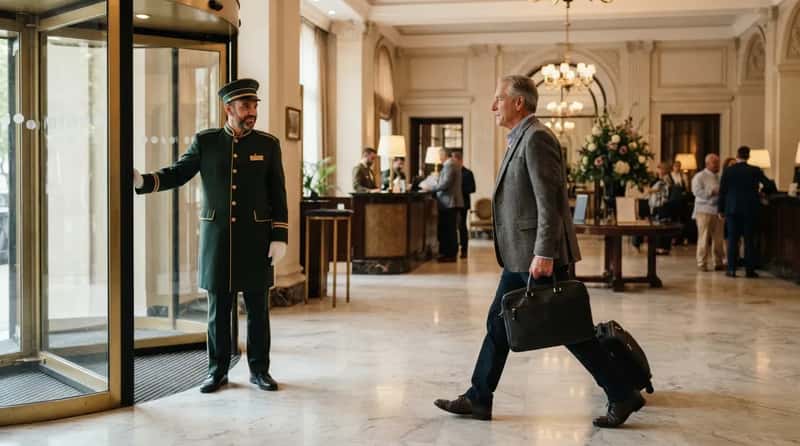
Pace across the lobby is one of the fastest reads a doorman makes, especially with guests over 60. A brisk, purposeful walk says this guest wants efficiency, not small talk. A slower, more relaxed pace signals someone who actually wants a longer, warmer check-in.
Doormen adjust their entire approach around this single cue, often before anyone speaks. Matching a guest’s pace, not just their tone, is one of the most overlooked skills in hospitality. Guests rarely realize they’re being mirrored, but it happens constantly, and it’s one of the quiet reasons some stays feel effortless from the first minute.
#11 – Eye Contact Decides Whether You Get Warmth or Formality
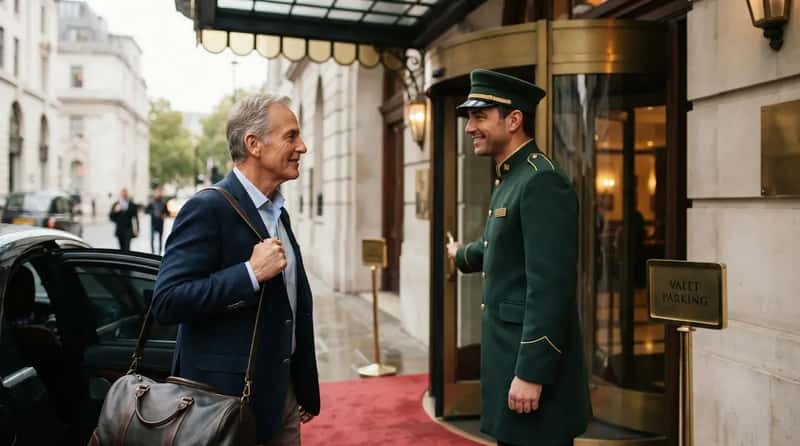
Doormen say eye contact is one of the clearest personality signals they get in the first few seconds. Guests who make eye contact and offer a small nod are read as approachable and easy to talk to. Guests who look past the doorman entirely tend to get treated more formally, almost like a transaction instead of an interaction.
This isn’t judgment, it’s calibration. Guests over 60 who greet the doorman directly tend to get noticeably more attentive service throughout their stay, not out of favoritism, but because rapport was built in that first glance. A single nod, it turns out, can quietly change the tone of an entire visit.
#10 – The Way You Tip Says More Than the Amount Ever Could
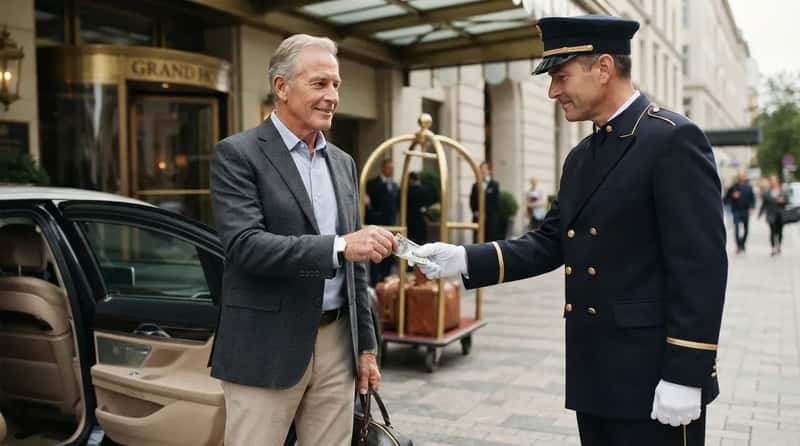
How a guest handles a tip, not just the amount, is a detail doormen quietly clock every single time. Some guests tip smoothly and briefly, almost as an afterthought, which reads as frequent travel. Others fumble, overthink, or make a small production of it, which usually signals someone less accustomed to the exchange.
Doormen insist the manner matters far more than most guests assume. A confident, casual tip tends to leave a stronger impression than an overly generous but awkward one. It’s not about being cheap or flashy, it’s about looking like you’ve done this a hundred times before.
#9 – “I’ve Got It” Doesn’t Always Mean You’ve Got It
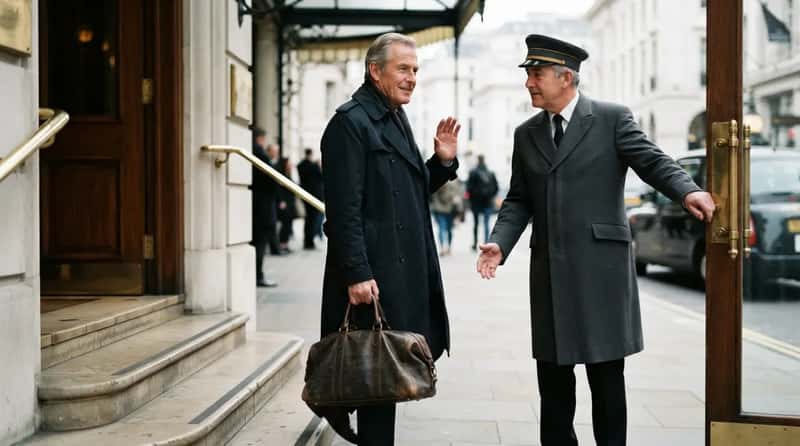
One of the trickiest reads with older guests is the reflexive wave-off when help is offered. Many guests over 60 decline assistance out of habit or pride, even while carrying something heavy or navigating a tricky set of stairs. Experienced doormen learn to offer a second, quieter chance rather than taking that first no at face value.
This creates a small, familiar dance that veteran staff know by heart. Some admit they intentionally linger nearby after being waved off, half-expecting the offer to be reconsidered a few seconds later. It plays out dozens of times a day, and it’s one of the more tender, unspoken parts of the job.
#8 – Your Phone Habits Tell Them If You Want Company

A guest scrolling through their phone while waiting sends one message, and a guest glancing around the lobby sends a completely different one. Doormen read phone use as a request for space, and open body language as an invitation to talk. This is especially true for guests over 60, who staff say are more likely to put the phone away entirely once a conversation actually starts.
That small choice shapes everything that follows. Guests who keep their phones tucked away tend to get longer, more personal conversations at checkout, simply because the door was left open earlier in the stay. It’s a tiny signal with a surprisingly long memory.
Quick Compare
- Phone out, eyes down: read as “leave me alone,” politely respected.
- Phone away, eyes up: read as open, often gets a friendly comment.
- Phone put away mid-wait: the strongest invitation signal of all, staff say.
#7 – Arriving Alone Changes the Entire Welcome
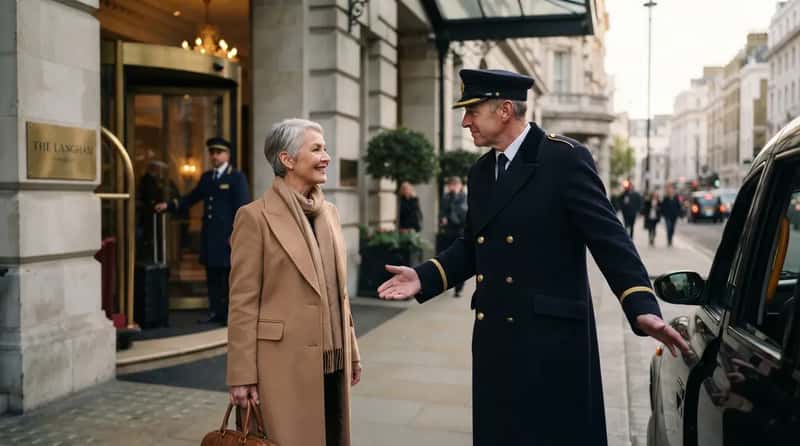
Doormen notice almost instantly whether a guest over 60 arrives alone, with a spouse, or with adult children in tow. Solo travelers in this age group are often given a slightly more attentive welcome, since staff assume there’s less built-in support during the stay. Guests arriving with family, by contrast, are read as needing less hands-on help.
This isn’t favoritism so much as quiet risk assessment. Solo guests over 60 are frequently offered extra check-ins or gentle reminders that other guests never receive, without ever having to ask. It’s one of the more protective instincts doormen rarely talk about, but it’s there in almost every solo arrival.
#6 – A Worn Wedding Band Says More Than Any Luxury Watch
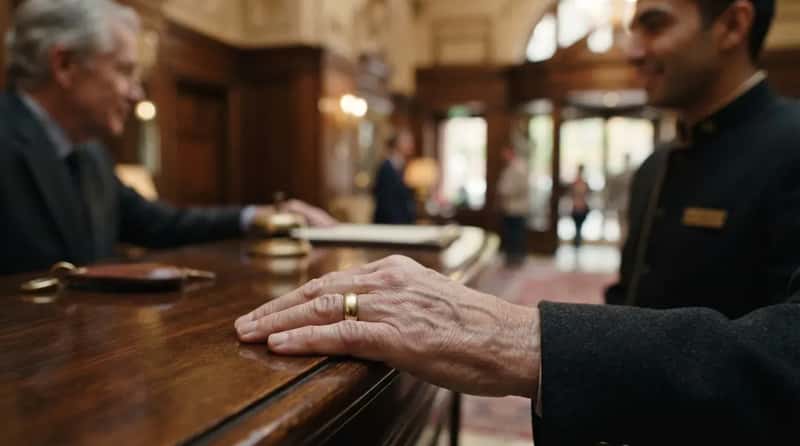
Doormen do notice jewelry, but not the way most guests assume. A flashy watch gets a glance, but it’s the wedding ring, or lack of one, that shapes more of the actual interaction. Guests wearing decades-old rings are often read as sentimental travelers, more likely to ask about local history or a landmark that’s been standing for fifty years.
This tiny detail quietly steers small talk in a specific direction. A worn wedding band is a stronger conversation starter than any luxury accessory, because it invites a personal question instead of a status observation. It’s one of the few details that makes strangers feel instantly familiar.
#5 – Dressing Up Too Much Can Actually Backfire
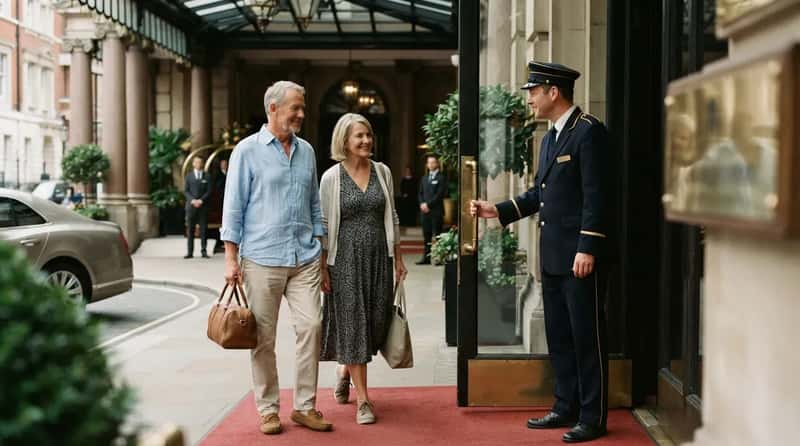
Here’s the one that surprises people: doormen say guests who arrive dressed to the nines sometimes get a slightly cooler welcome than guests in comfortable, casual clothes. Overdressing can read as an expectation of special treatment, which puts staff a little on guard instead of at ease. Casual, relaxed guests, meanwhile, are often assumed to be easier to please and quicker to smile.
This runs against what a lot of guests over 60 grew up believing about first impressions. The old idea that you dress “properly” for a hotel arrival can actually create distance with staff instead of closing it. Comfort, not formality, tends to earn the warmer welcome today, and most guests never see it coming.
Worth Knowing
- Formalwear at check-in can unintentionally signal high expectations, not high status.
- Casual guests are more often assumed to be relaxed and low-maintenance.
- Staff say warmth usually follows ease, not polish.
- Comfortable clothing rarely counts against a guest, even at upscale properties.
#4 – Carrying an Umbrella Is the Real Mark of a Seasoned Traveler
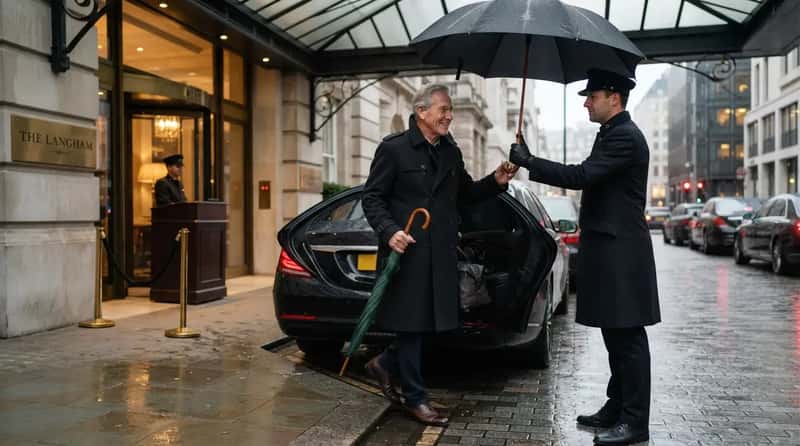
Small, practical items say a lot, and doormen point to the umbrella as one of the biggest tells there is. Guests over 60 who arrive prepared for weather, rather than caught off guard by it, are read as frequent, experienced travelers. This detail often outweighs luggage brand or clothing when staff are silently sizing up sophistication.
It sounds minor, but it shapes expectations fast. A simple umbrella or a packable rain jacket signals more travel experience than an expensive suitcase ever could. Preparedness, not price, turns out to be the real status symbol at the curb.
#3 – What’s in Your Hands Reveals More Than You’d Think
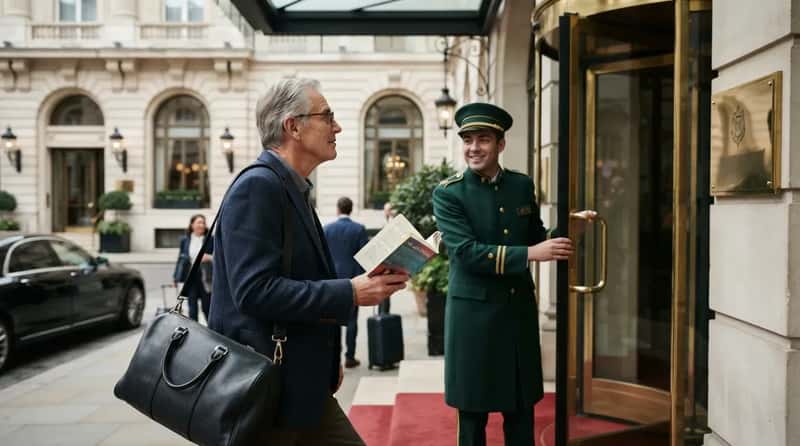
A paperback, a folded newspaper, or a tablet peeking out of a bag tells doormen something about the kind of conversation a guest might welcome. Guests carrying a physical book are often approached more casually, since it signals someone unhurried and open to a passing comment. Guests glued to a device are typically left alone, undisturbed on purpose.
This small prop becomes an unspoken invitation or a polite boundary, and doormen read it instantly. Guests over 60 holding a visible book tend to get noticeably more spontaneous small talk than any other group. It’s a detail almost no one realizes they’re broadcasting.
#2 – Returning Guests Get Recognized Faster Than the Front Desk Can Even Pull Up Their Name
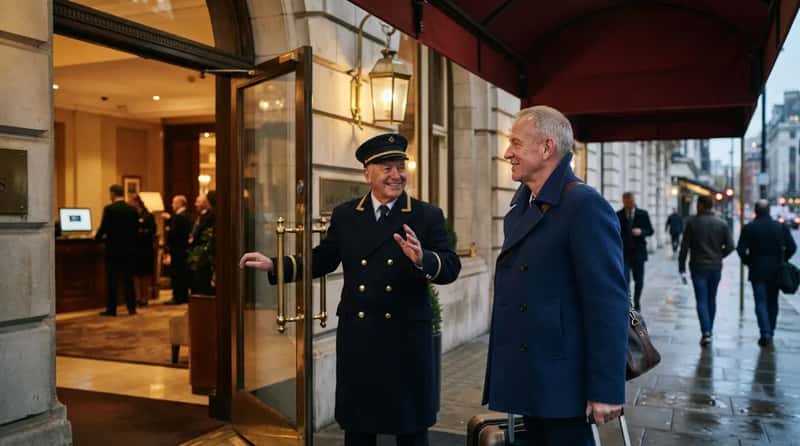
Doormen pride themselves on memory, and guests over 60 who’ve stayed before are often recognized within seconds, sometimes before the front desk even finds the reservation. A familiar face, a returning coat, or a particular way of greeting the door can trigger instant recall in staff who see hundreds of guests a week.
This recognition isn’t just a nice touch, it changes the whole stay. Recognizing a returning guest often leads to small, unofficial upgrades in attention that never show up on any bill. Loyalty, it turns out, is remembered by faces long before it’s remembered by a database.
#1 – The Shoes Never, Ever Lie
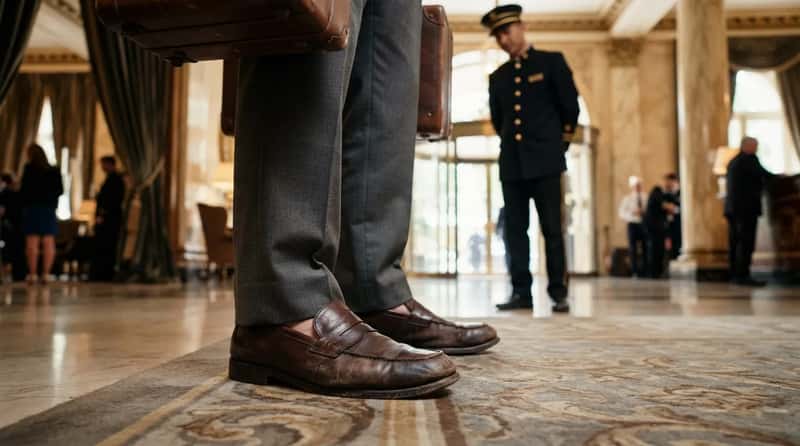
If there’s one universal truth among doormen, it’s this: shoes tell the real story. Scuffed, comfortable, well-broken-in shoes signal a relaxed, experienced traveler who isn’t performing for anyone. Stiff, brand-new shoes, especially on guests over 60, often signal nervous energy or a trip that feels bigger and more significant than usual.
This one tiny detail outranks luggage, clothing, and even tipping habits combined. Veteran doormen consistently name shoes as the single most reliable signal of who a guest really is, faster and more accurate than almost anything else they observe. It’s the one tell that almost never fails, and once you know it, you’ll never walk into a lobby the same way again.
Why It Stands Out
- Shoes are read before luggage, clothing, or even a guest’s face, staff say.
- Broken-in shoes signal comfort with travel itself, not just comfort with walking.
- Brand-new shoes on an older guest often hint at a milestone trip, not just a casual one.
- It’s the one tell doormen say has never once misled them.
None of this is about judgment. It’s pattern recognition built over thousands of arrivals, and guests over 60 tend to carry the clearest patterns of all. The doormen who do this well aren’t reading people to categorize them, they’re reading people to serve them better, faster, and with less friction.
So the next time you step out of a car under a hotel awning, remember someone already knows more about your trip than you’ve told anyone. What’s the tell you never expected? Drop it in the comments.