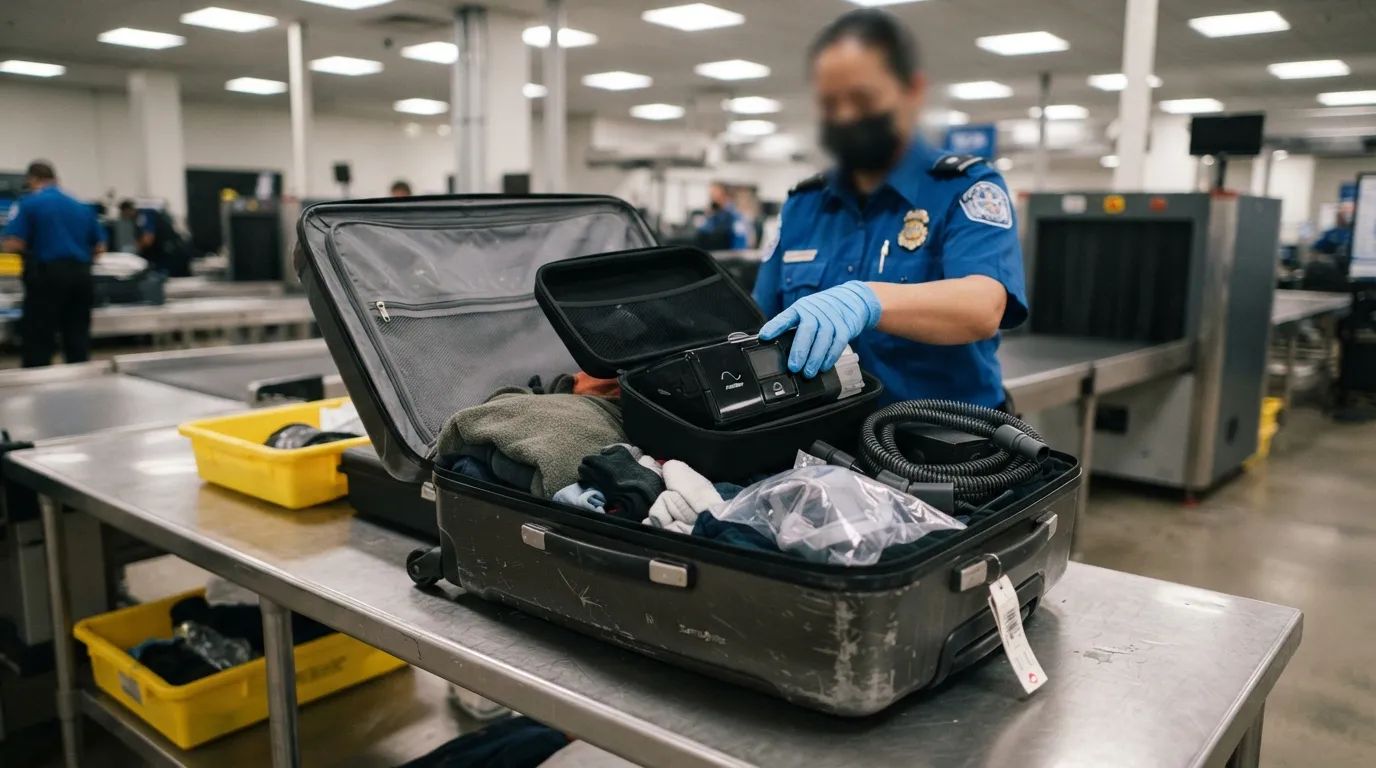
Your checked bag travels through a part of the airport you never see, and the people there read it fast. For travelers over 70, what stands out is often packed for good reasons: medicine, medical equipment, batteries, gifts for the grandchildren.
Stay through the final item. It covers the one category TSA itself recommends keeping out of the suitcase, and a mistake there can’t be fixed once the bag is on the belt. First, how you’d even know someone looked inside.
#14 – The Notice Left Inside Your Suitcase
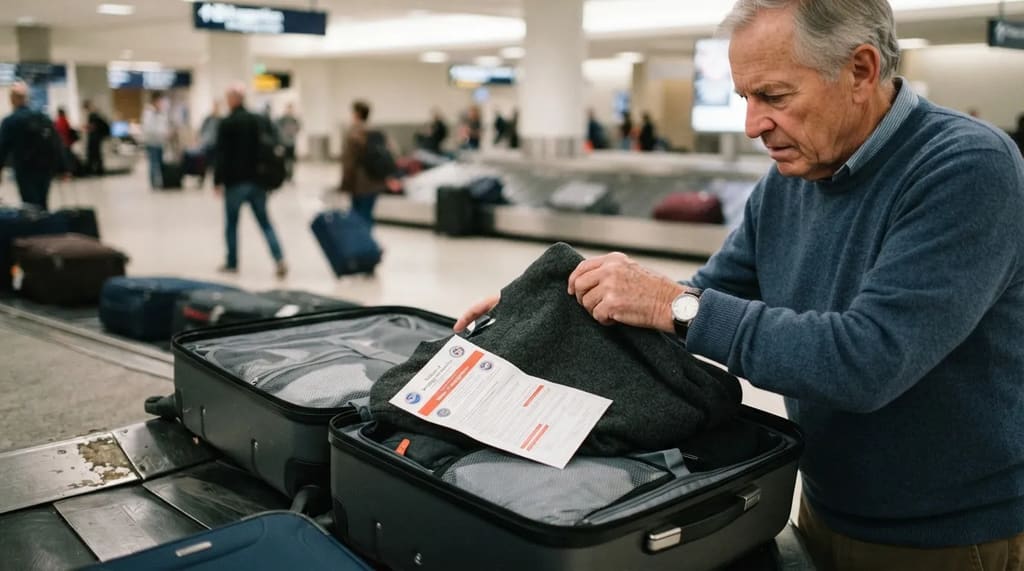
If an officer searches your bag, TSA leaves a “Notice of Baggage Inspection” inside. It’s a plain slip of paper, and it’s easy to miss under a sweater.1
You aren’t there when it happens, so that slip is your only proof. Look for the notice before you leave baggage claim.
Check the zippers and any lock while you’re there. If something is broken or missing, the airline’s baggage desk is a few steps away, and a report is far easier to make before you’ve driven home.
The notice won’t say how the officer got past your lock. That’s where a cheap padlock can cost you.
#13 – The Padlock That Gets Cut Off
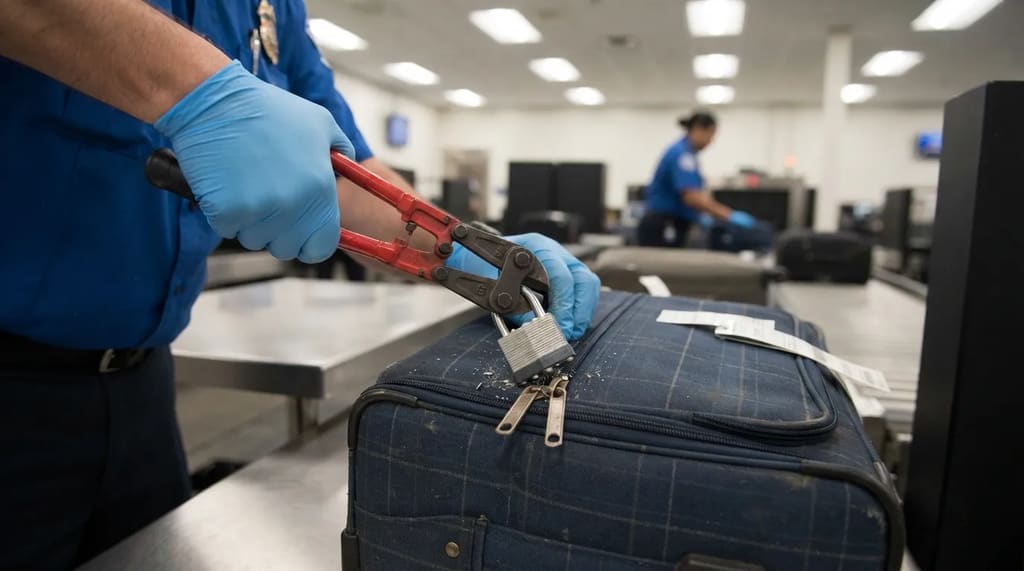
A lock on a checked bag has to open for someone other than you. Since you’re not there, officers need a way in.
With an ordinary padlock, they have one option: cut it off. TSA-recognized locks open with an officer’s master key, so the lock survives the search.1
Quick Compare
- Ordinary padlock: may be cut off if officers need to open the bag.
- TSA-recognized lock: opens with a master key, so the lock stays intact.
- Tamper-evident seal: no lock at all, but a broken seal shows the bag was opened.
Use a TSA-recognized lock, or skip the lock and use a tamper-evident seal. A broken seal tells you the bag was opened, the same way the notice from the last item does.
A lock only keeps a zipper from drifting open. It was never meant to stop a search.
Many travelers assume screening rules ease with age. TSA does have an age-based break, but it starts later than you’d think and stops short of your suitcase.
#12 – What the Age 75 Perk Doesn’t Cover
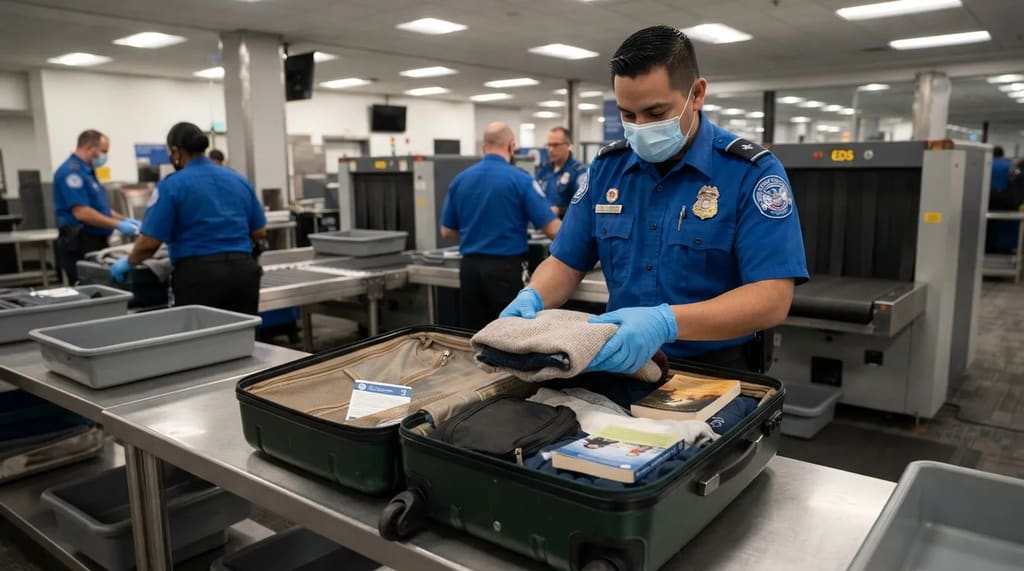
TSA says travelers 75 or older can receive a form of expedited screening. The well-documented age-based perk starts at 75, so if you’re 70 to 74, you get none of it.
Even at 75, the break applies at the checkpoint. Shoes used to be exempt for passengers 75 and older, but now everyone can keep their shoes on, according to AARP’s report on the policy change.
None of that touches the suitcase. Checked-bag screening follows strict federal standards and can trigger additional inspection regardless of PreCheck status.
If a lighter search of your checked bag is why you’re weighing PreCheck, don’t pay for it. PreCheck and the age perk change your line, not your checked bag.
What does decide whether your suitcase gets opened is how readable the scan is. A bag packed to the zipper is the easiest way to make it unreadable.
#11 – The Overstuffed Suitcase
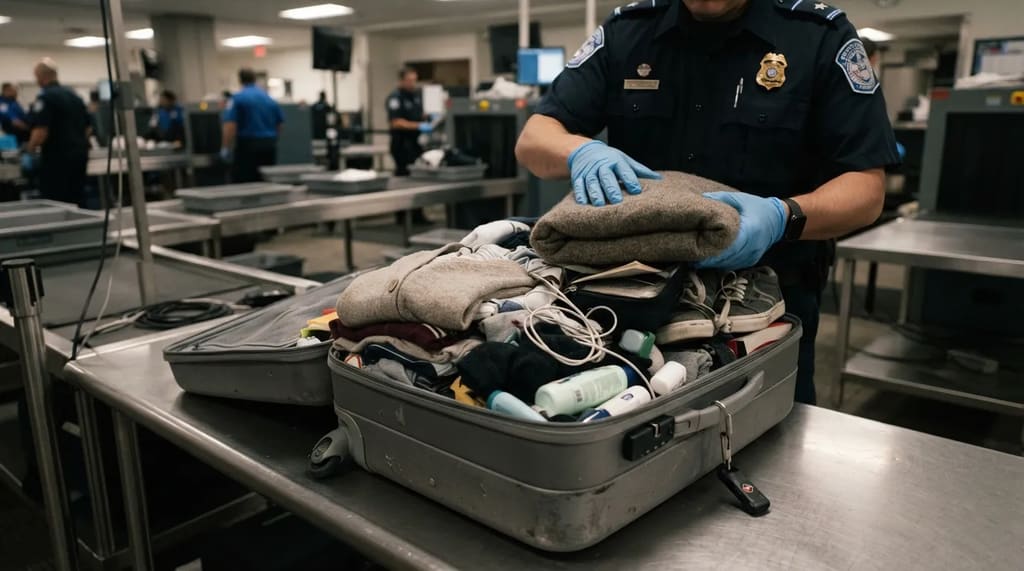
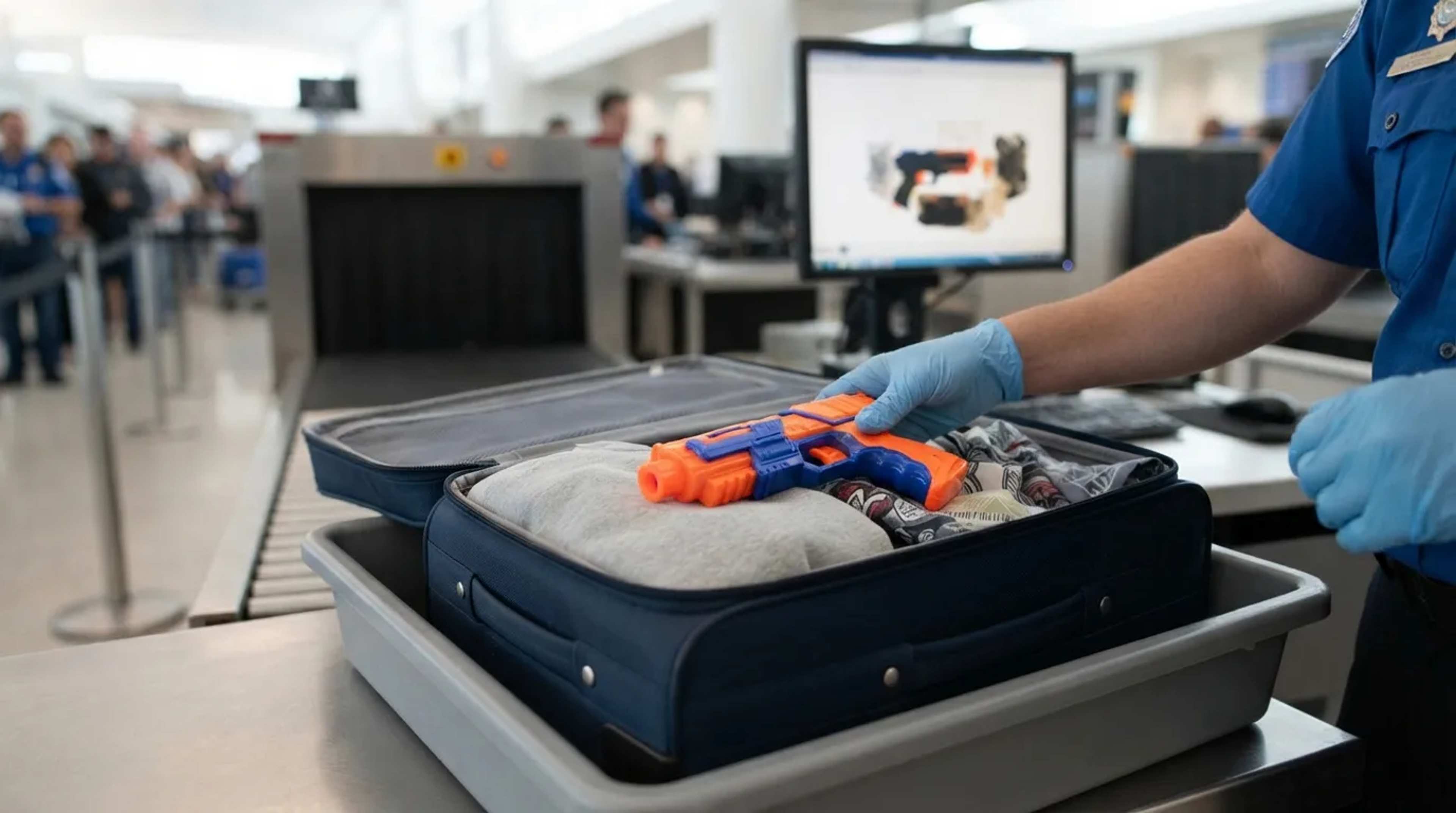
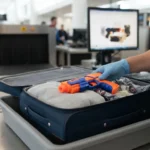
Nothing in your bag has to be prohibited for it to be opened. A tightly packed bag can trigger a check because overlapping items make the scan harder to read.
On a longer trip, cardigans, shoes, toiletries and gadgets get pressed into one dense layer. An officer who can’t tell what’s inside has one way to find out: open it and repack it for you.
A suitcase you have to sit on to close may be inviting a search. Move the overflow to a second, lighter bag, and leave space between dense items like shoes, electronics and toiletries.
Electronics are the worst offenders for stacking. The chargers coiled around them make the picture even harder to read.
#10 – The Charger Knot at the Bottom of the Bag
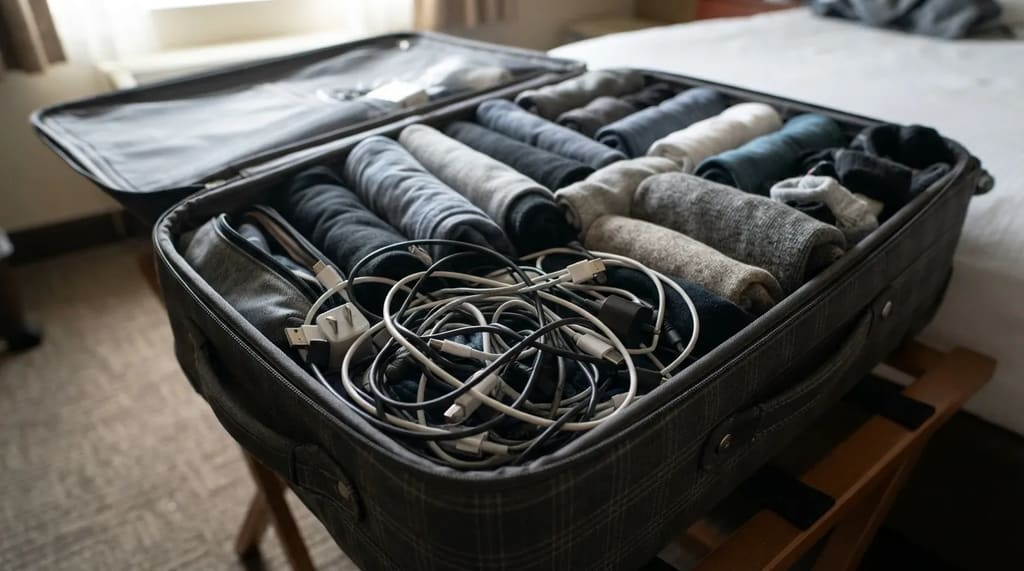
Between the phone, tablet, camera and e-reader, a long trip means a nest of cords. Left loose, they wind around everything else in the suitcase.
Tightly packed devices, chargers and cords can obscure an X-ray image, which may lead officers to search the bag. Wires and batteries are common, but they need a closer look to confirm normal use.
Gather every cord into one pouch. If you must pack something that could cause extra screening, put it at the top of the bag so it can be removed quickly.
Keep all cables in one pouch near the top of the suitcase. That also gives you the visible space from the last item.
Cords are one kind of mass a scanner struggles with. Food is another.
#9 – Food and Powders Packed as Dense Blocks
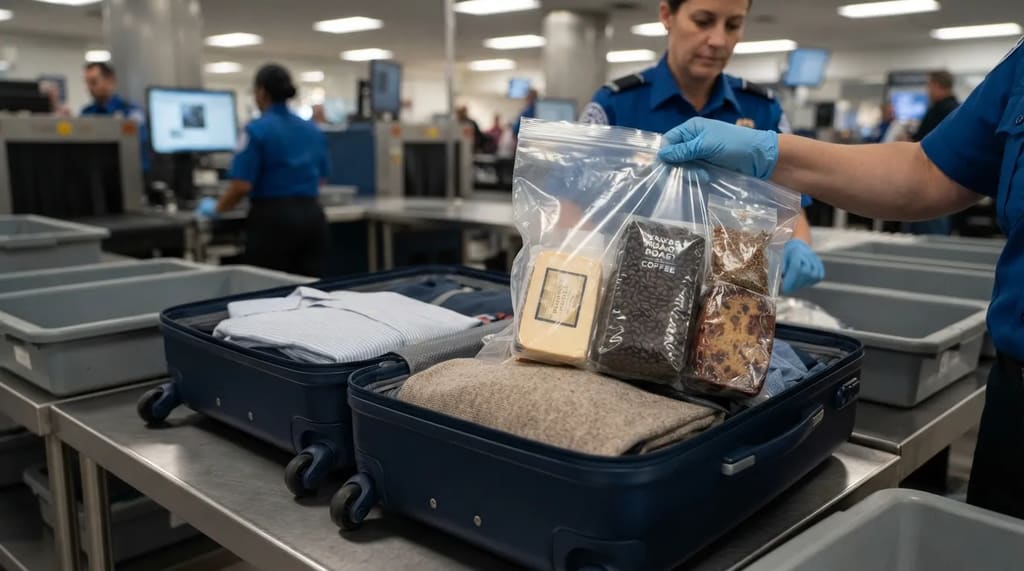
Food is allowed in checked bags, yet it can still get yours opened. Bulk powders, spices and dense food can appear as opaque masses on scanners and may need a hand check.
Souvenir food from the trip falls squarely in that group, along with any bulk dry goods you’re bringing for family.
An officer facing a mystery lump has to dig for it, and your clothes get handled along the way. Put the food in one clear, easy-to-open bag, and keep dense food together in one spot, not scattered among clothes.
Food is only unclear on a scan. The next item is wrapped in ribbon and sent straight to the search table.
#8 – Wrapped Gifts for the Grandchildren
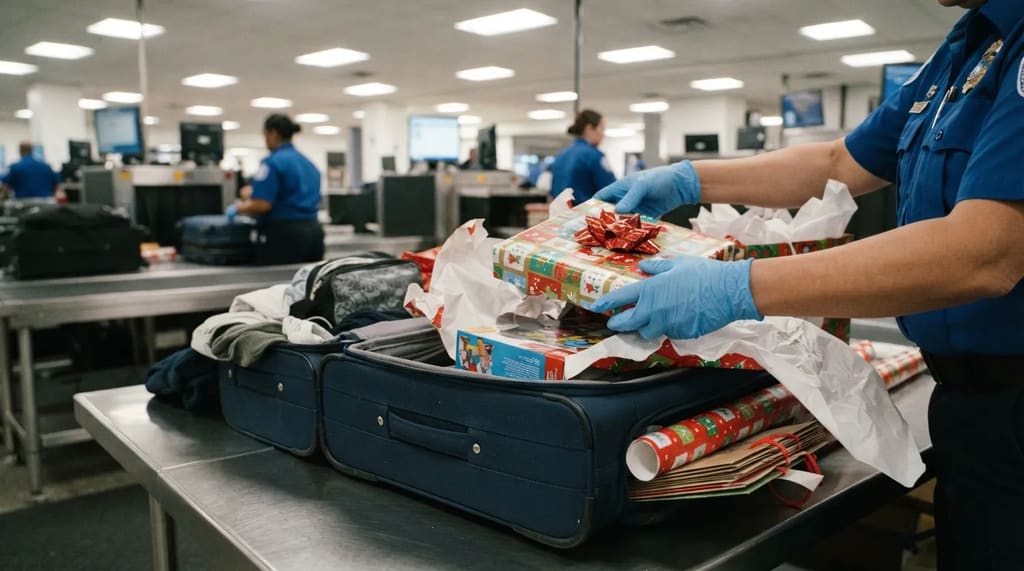
The presents are wrapped, the ribbons are curled, and the paper may not make it to the other end. Officers must be able to see the contents of a package, and wrapped gifts are often opened for inspection.2
One wrapped box can mean the whole bag gets unpacked and repacked by a stranger. The ribbon rarely survives.
Worth Knowing
- A wrapped gift in a checked bag may be unwrapped during inspection.
- Gift bags with tissue paper take seconds to reopen and reassemble.
- Wrapping paper itself is easy to pack flat or rolled for use at your destination.
- Wrapping on arrival also keeps the surprise intact for the kids.
Pack the gifts unwrapped, add a roll of paper or a few gift bags, and wrap everything after you arrive. It costs a few minutes and keeps a search from ruining the surprise.
A wrapped box is merely unclear. A golf bag or a set of hiking poles is perfectly legal and still draws a look.
#7 – Golf Clubs, Hiking Poles and Tool Kits
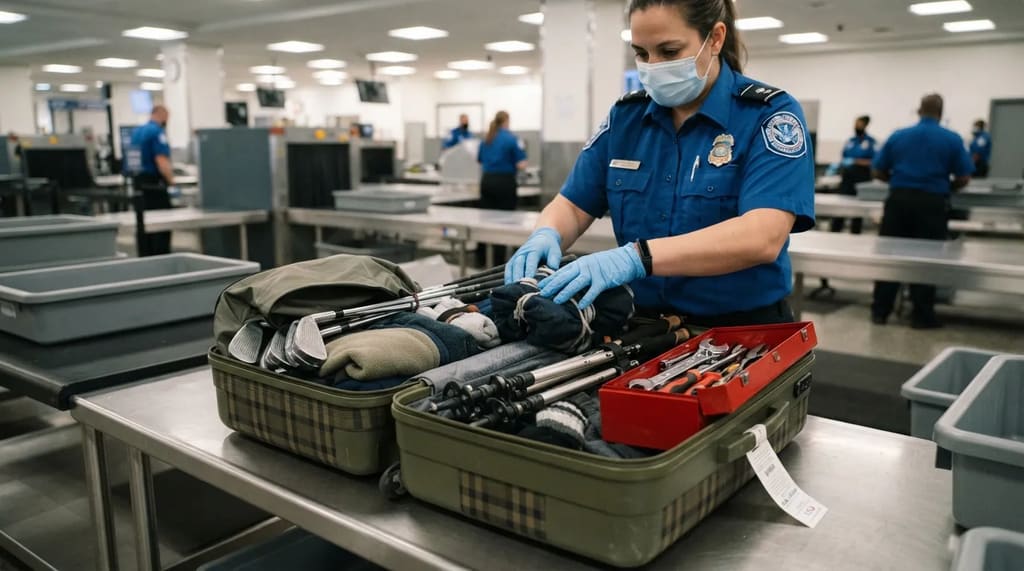
Allowed doesn’t mean ignored. Tools, hiking poles and sports equipment are usually allowed in checked bags, but their shape and density can prompt a closer look.
If you’re hauling clubs, poles or a toolbox to a family member’s house, expect a possible hand check. Pack so someone can see everything quickly and reach in without getting cut.
Group the gear together and cover any sharp edges. A neat bundle is easy to inspect and easy to repack properly.
Some items aren’t merely hard to read on a scan. They’re banned from the hold outright, and a few sit in ordinary garage cabinets.
#6 – Flammables That Look Harmless
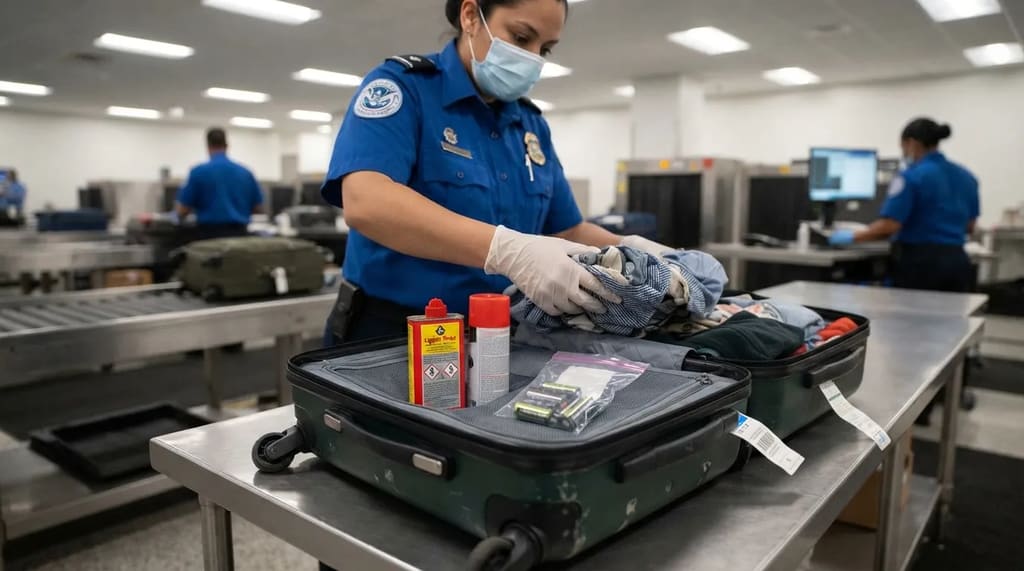
Some things never belong in a checked bag, however well sealed. Lighter fluid, spray paint and some lithium batteries are among the flammable items TSA prohibits in checked luggage.
A physical search follows whenever the X-ray machines flag an explosive or flammable object. Garden and garage leftovers are the usual culprits, so a last look at the bottom of the bag is cheap insurance.
At a Glance
- Garage leftovers: lighter fluid, spray paint, gasoline.
- Celebration leftovers: fireworks from a holiday or a road trip.
- Power items: spare lithium batteries, covered again in #3.
TSA’s “What Can I Bring?” pages list each item separately for carry-on and checked bags, but the final decision rests with the officer. If an item isn’t clearly listed as allowed in checked bags, leave it home.
Here’s where the list turns personal. The next item is one you may not be able to leave home at all.
#5 – A Scooter or Wheelchair Battery
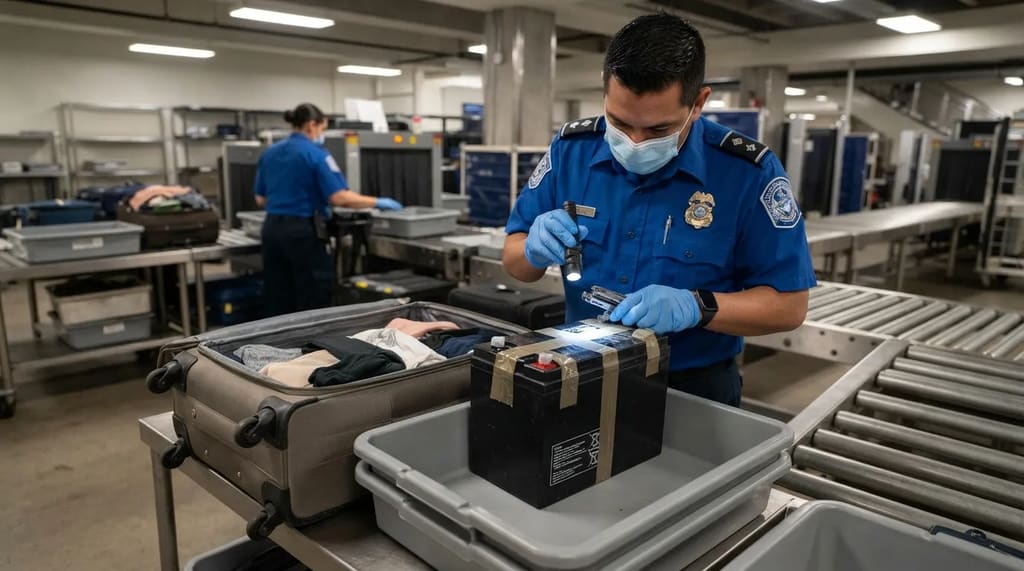
TSA lists battery-powered wheelchairs and mobility devices as not allowed in carry-on bags, and allowed in checked bags with special instructions. That makes this the first item here you can’t solve by moving it into the cabin.3
A spillable battery may stay installed if it’s securely attached, its housing protects it, the terminals are guarded against short circuit, and it stays upright. If the device can’t be stowed upright, the airline may remove the battery and package it separately.3 4
Advance arrangements and extra check-in time may be necessary. Call your airline before the trip, and plan to arrive earlier than usual.
A sleep apnea machine is far smaller than a scooter. The question is whether it should ride in the hold at all.
#4 – The CPAP Machine in the Hold
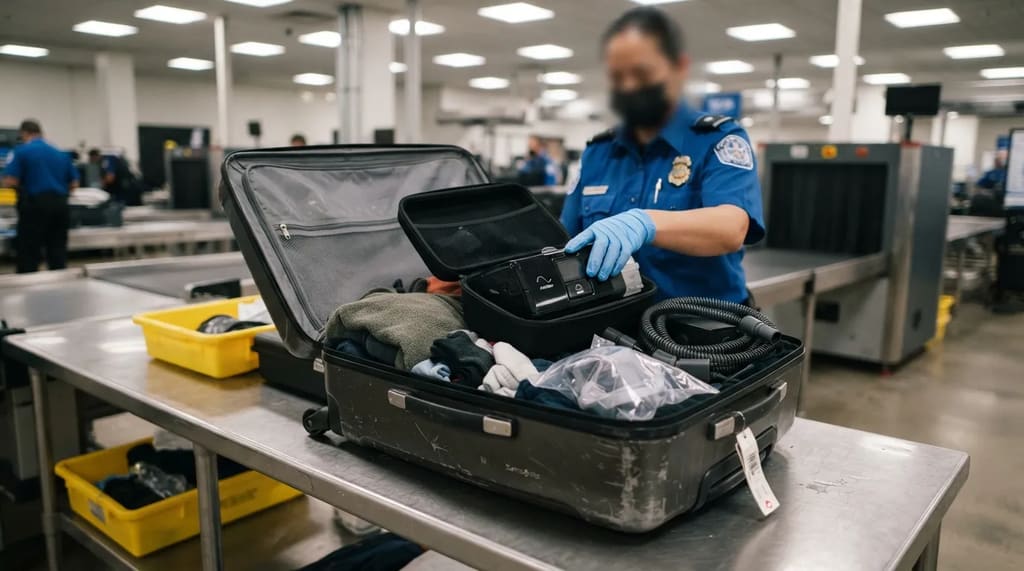
TSA allows CPAP machines in checked and carry-on bags, and that’s where the trouble starts. You can check one, but checked bags carry a risk of damage, loss or delay.
In the U.S., CPAP machines are considered medical equipment, and you have the right to carry them onto a plane.4 With most airlines, your CPAP doesn’t count as an extra carry-on bag or toward luggage limits.
That makes carrying it on the cheapest protection you have. Carry the CPAP aboard, since it won’t count against your bag limit.
The machine isn’t the part that can’t ride below. Its battery, and every battery like it, falls under a stricter rule.
#3 – Spare Batteries and Power Banks in the Suitcase
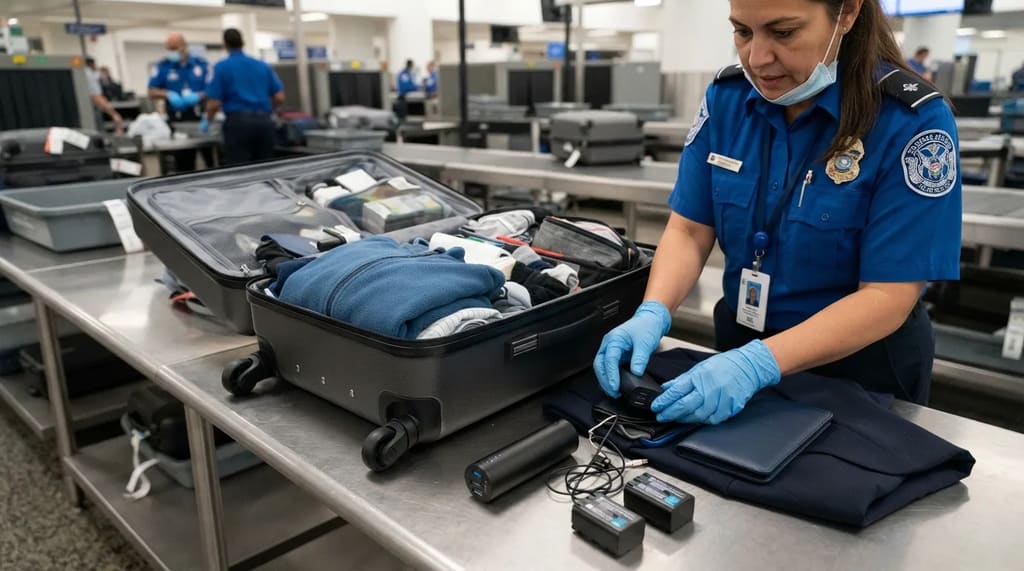
Spare lithium batteries and power banks aren’t allowed in checked bags because of the fire risk. If found during screening, they’re removed and may lead to a search of your entire bag.5 6
Devices are treated differently. When portable electronic devices powered by lithium batteries are in checked baggage, they must be completely powered off.
Related Stories From Travelbinger
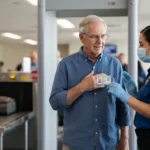
A tablet in sleep mode isn’t off, so hold the power button until the screen goes dark. A power bank forgotten in a jacket pocket counts the same as one packed on purpose.
Spare batteries and power banks travel in the carry-on only.
A battery gets a bag opened. A bag with your pills in it can leave you without them mid-trip, and officers face their own puzzle when they open a pill box.
#2 – Pills Without Their Original Bottles
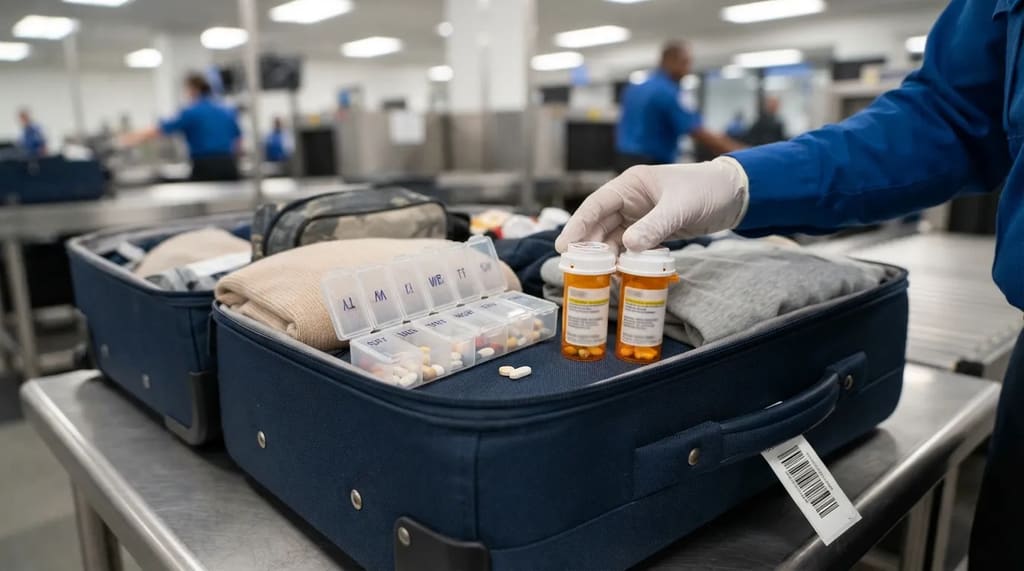
TSA says prescription medications don’t have to be in their original bottles at security. States have their own labeling laws, though, so a passenger still needs to comply.1
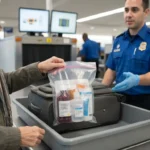
Original packaging still helps. It lets officers identify a medication quickly if your bag needs extra inspection, while a loose pile of similar-looking pills in a sandwich bag does the opposite.7
A weekly pill organizer is handy, but on its own it’s a poor choice for the hold. Pack the pill organizer with the labeled bottles beside it.
TSA doesn’t limit the quantity, though your airline and destination country may have separate rules.
Labels solve the identification problem. They do nothing about the bigger one: what happens if the whole suitcase doesn’t arrive when you do.
#1 – Your Daily Medicine in the Checked Bag
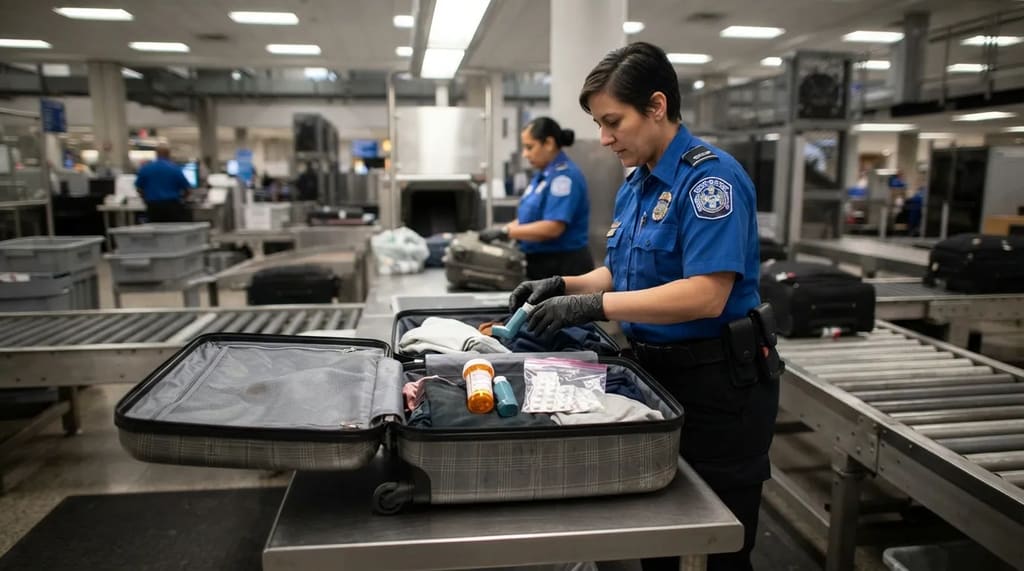
TSA lets you pack medication in a checked bag, and it strongly recommends you don’t. The agency wants it in your carry-on.1
Checked bags can be delayed or lost, leaving you without medications you need. If your insulin, anticoagulant or rescue inhaler is in a misrouted bag, you face a serious problem mid-trip.
Everything else on this list is about a bag being searched. This one is about a bag being absent, and essential medicine rides in the carry-on, while the hold gets backups only.
A checked bag is the one place on your trip where you can’t answer a question. It’s scanned, searched and sometimes delayed while you’re somewhere else.
So pack it for a stranger with a few seconds and no way to ask you anything. Clear food bags, one pouch of cords, labeled bottles and a TSA-recognized lock do the explaining for you, and the things you’d have to explain in person stay with you.
Which single item would hurt most if your bag arrived a day late, and where does it ride on your next trip?
- TSA Travel Tips: https://www.tsa.gov/travel/travel-tips
- Wrapped Gifts HuffPost: https://www.huffpost.com/entry/fly-with-wrapped-gifts-goog_l_656609abe4b028b0f3cdd982
- DOT Assistive Device Stowage: https://www.transportation.gov/resources/individuals/aviation-consumer-protection/assistive-device-guides/assistive-device-stowage
- DOT Stowing Devices: https://www.transportation.gov/resources/individuals/aviation-consumer-protection/assistive-device-guides/stowing-devices
- Power Bank Rules Belkin: https://www.belkin.com/company/blog/tsa-approved-power-bank-travel-guide/
- American Airlines Restricted Items: https://www.aa.com/web/i18n/travel-info/baggage/restricted-items.html
- AirHelp Medication Rules: https://www.airhelp.com/en/blog/taking-medicine-on-plane/
- TSA Medication Requirements FAQ: https://www.tsa.gov/travel/frequently-asked-questions/i-am-traveling-medication-are-there-any-requirements-i-should-be