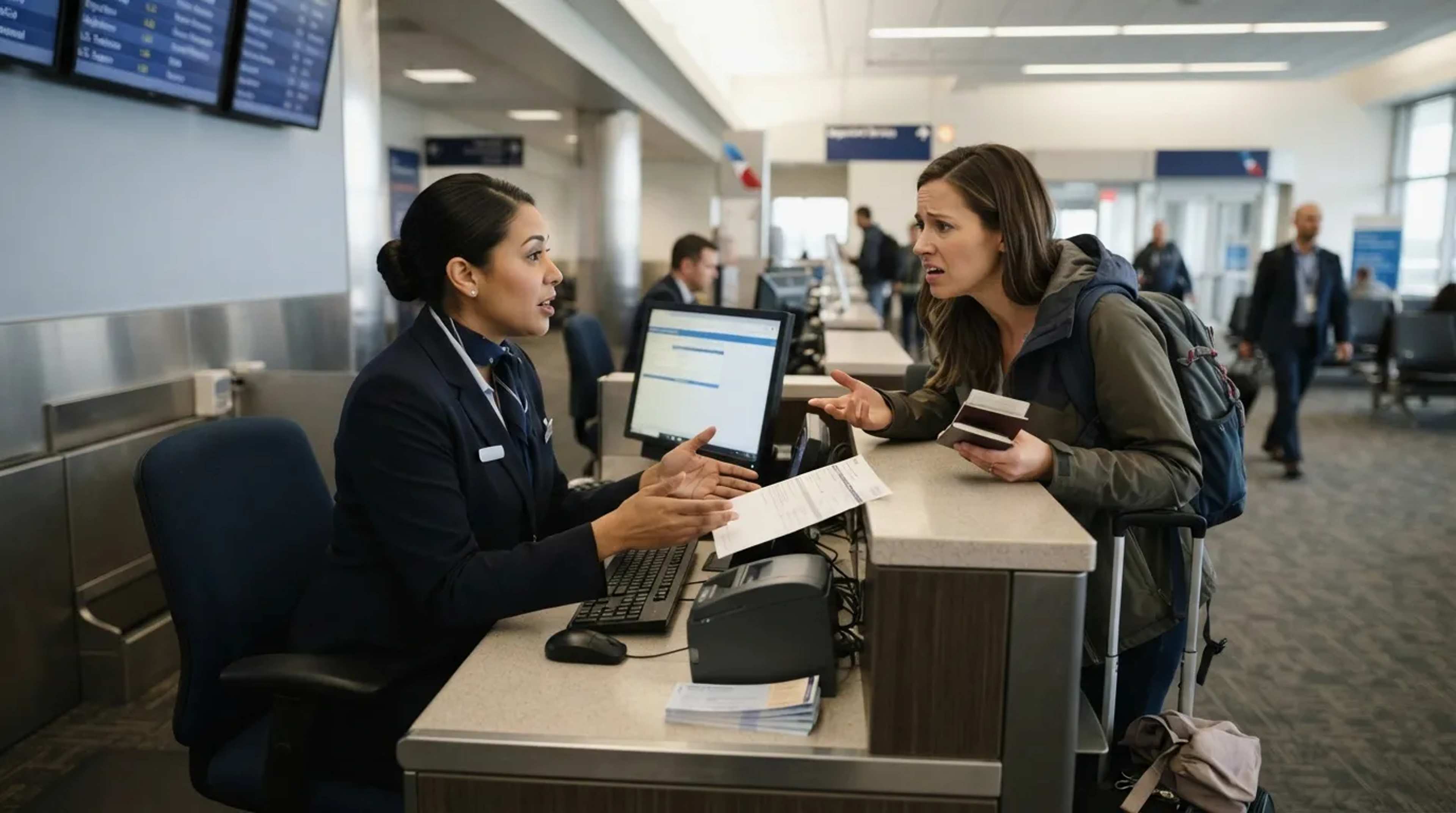
From the passenger side of the counter, a missed connection looks simple. An agent types, sighs and slides over a new boarding pass. Behind that keyboard, though, ground crews are juggling seat maps, bag tags, hotel blocks and rulebooks that change depending on who caused the delay.
Some of the moves below are official. Others are quiet judgment calls you never see, and a few of them decide whether you sleep in a hotel or on a terminal floor. Stick around for #1, because it isn’t written in any rulebook at all. Here’s what the rules and the airlines’ own published commitments actually say.
#15 – The Short Gate Hold Nobody Announces
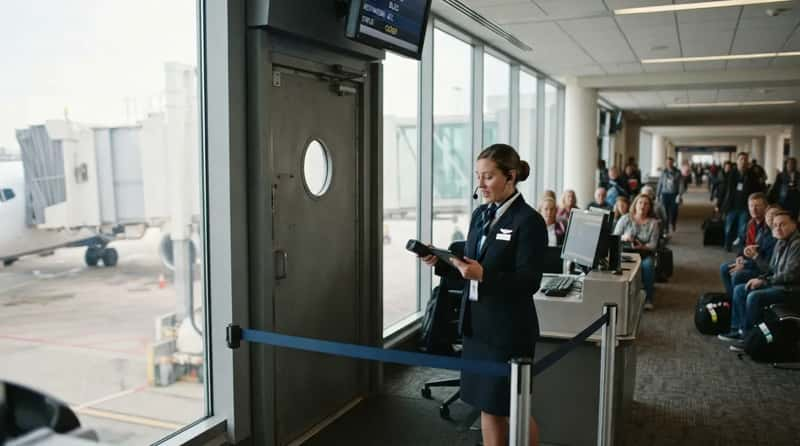
Sometimes the fix is just a few minutes of patience at the door. When a group of connecting passengers is running behind, an agent may ask whether the flight can wait briefly. Whether that’s possible depends on departure timing, crew limits and the cause of the delay, so it’s never a promise.
The catch is that a hold that saves ten passengers can make fifty others late. That’s why crews treat it as a trade-off, not a favor. And when a hold fails, the door closes and everyone slides to the next improvisation on this list.
But the next move is what happens when the door has already closed…
#14 – The Quiet Reroute Through a City You Never Planned On
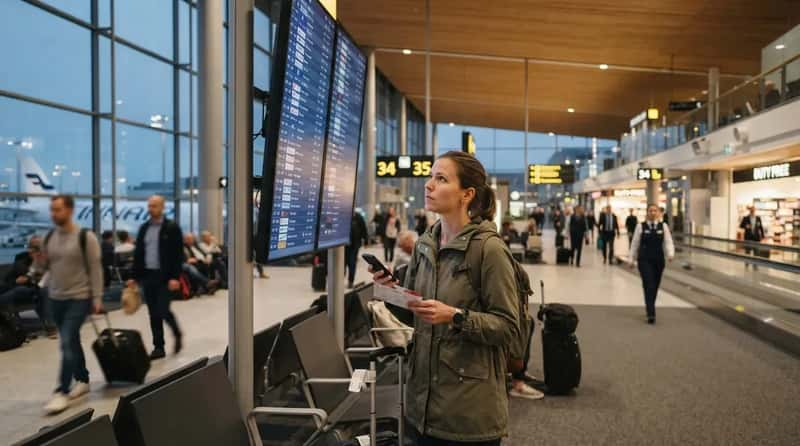
When the direct fix is gone, agents rebuild your trip from scratch. That can mean a different hub, a different order of flights or a layover city you’ve never set foot in. The fastest route to your destination is often not the one on your original ticket.
Airlines can rebook you on their next available flight, route you via partner carriers, or offer a next-day departure, according to one missed-connection guide. The new routing isn’t always better, though. The DOT counts extra connections and airport changes as “significant” changes to an itinerary, which matters if you decide the new plan isn’t worth taking.
At a Glance
- Next available flight on the same airline
- A routing through a partner carrier
- A next-day departure when nothing else works
- A refund option if the change is “significant”
That last point matters more than you’d think, and it ties into #13…
#13 – Putting You on a Rival’s Plane (If Your Airline Allows It)
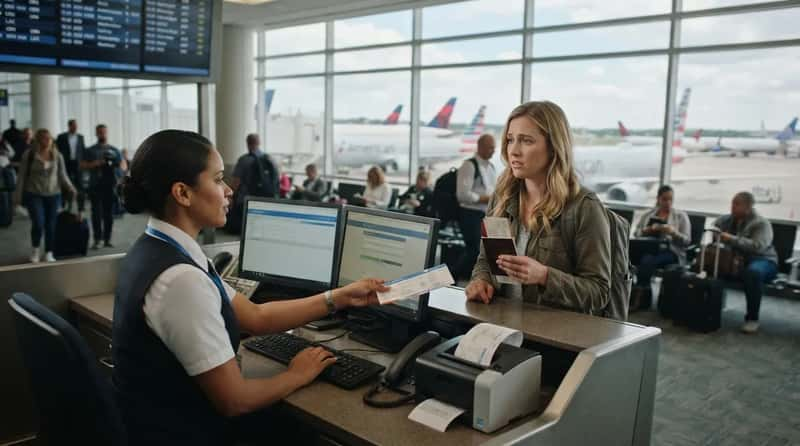
Here’s the move travelers always assume is automatic. It isn’t. Alaska, American, Delta, JetBlue and United are among the carriers that voluntarily commit to rebooking on partner or competitor airlines at no extra cost. That commitment is tracked on the DOT’s customer service dashboard.
Other airlines don’t offer it. Allegiant, Frontier, Southwest and Spirit rebook only within their own networks, according to one 2026 guide. Even among airlines that do, some condition partner rebooking on their own flights being unavailable until the next day, as the DOT noted in its rulemaking.
Of course, partner flights only work when airlines have friends, which brings us to #12…
#12 – The Alliance Safety Net Most Flyers Forget Exists
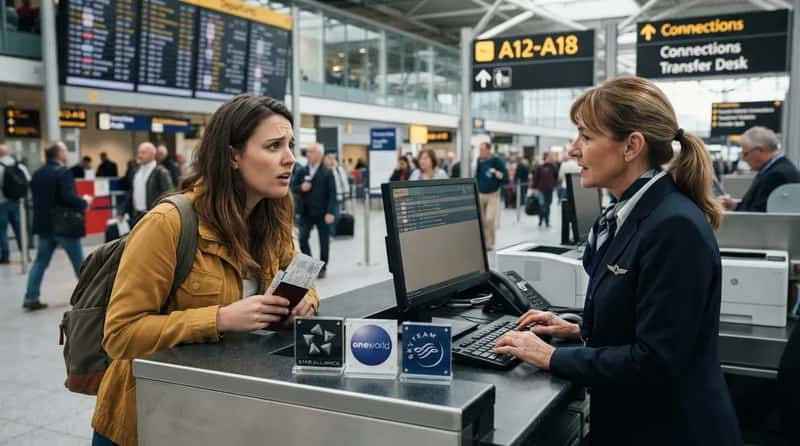
Big airline alliances exist for moments like this. Carriers in Star Alliance, oneworld and SkyTeam can often rebook you onto a partner’s flight when their own are full. That’s one reason a ticket from a major carrier is more flexible than it looks.
Many travelers still never ask. One guide says to ask about this option specifically, because agents may not offer it first. Alliance membership doesn’t guarantee a seat, but it widens the pool of possible flights a lot.
Seats are only half the story, though. Next up, the part you can’t see…
#11 – The Bag Shuffle Happening Under Your Feet

While you’re standing at the counter, your suitcase has its own emergency. When your itinerary changes, the bag tag has to match the new route. Crews work with baggage teams to move your bag onto the new flight, and the timing can be brutally tight.
Sometimes the bag makes it and sometimes it doesn’t. Your bag and you can end up on different planes. If you’re rebooked in a hurry, it’s worth asking the agent to confirm the bag is tagged to your final destination.
Worth Knowing
- Ask whether your bag is checked through to the final city
- Keep medication, chargers and a change of clothes in your carry-on
- Snap a photo of your new bag tag receipt if you get one
- If the bag doesn’t show up, report it to the airline before you leave the airport
Meanwhile, a different kind of juggling is happening at the desk. Here’s #10…
#10 – Three Lines at Once: App, Phone and Gate
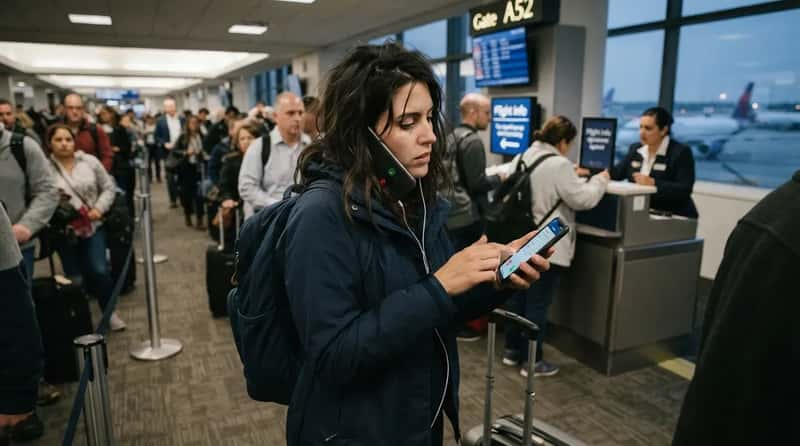
The longest line isn’t the only way in. Travel guides advise using the airline app, calling customer service and heading to the gate agent all at the same time. The fastest fix often comes from the line you weren’t standing in.
Agents at the gate, in the service center and on the phone are all looking at the same inventory. Whoever gets to it first can take the seat. That’s why the person tapping on a phone in the queue sometimes gets a new boarding pass before reaching the desk.
When rebooking can’t happen quickly, the next improvisation is about keeping you fed…
#9 – The Meal Voucher With a Stopwatch Attached
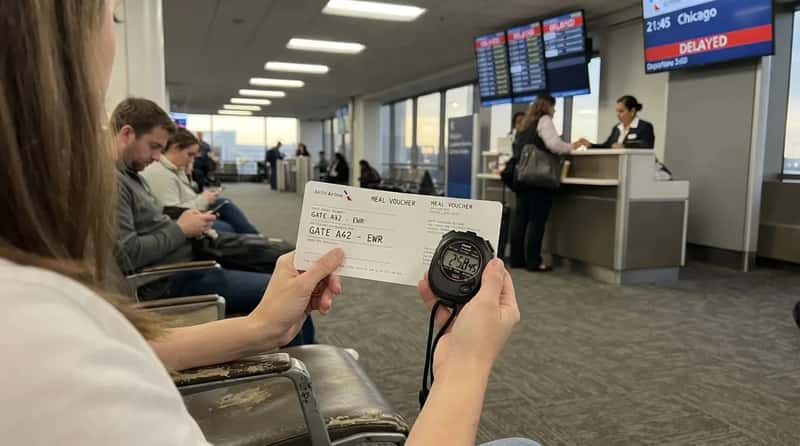
Free food is real, but it’s conditional. As of 2025, all ten major U.S. carriers have committed to meal vouchers when a controllable delay keeps you waiting three hours or more. The key word is “controllable.”
Weather, air traffic control and FAA ground stops are a different story. For those, one guide says you generally get rebooking only, and most meal and hotel commitments don’t apply. A crew’s first job is often to figure out which category your delay lands in.
Meals are the small stuff, though. Wait until you see what happens overnight…
#8 – The Overnight Hotel Block That Appears Out of Nowhere
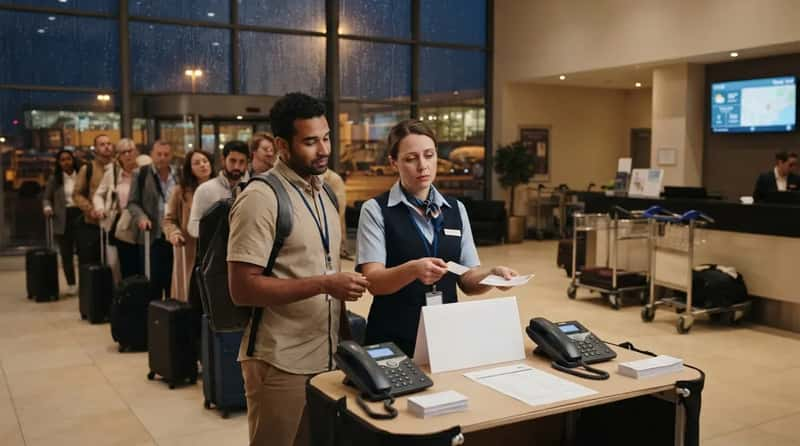
When a missed connection turns into a night away, crews pull out hotel blocks. For overnight delays within an airline’s control, every major carrier except Frontier has committed to complimentary hotel accommodations, according to a 2025 summary of the DOT dashboard.
The fine print is the cause again. If the airline didn’t cause the mess, the hotel usually isn’t on them. That’s why two passengers stuck in the same terminal can walk away with very different treatment.
Getting the room is one thing. Getting to it is #7…
#7 – The Shuttle Nobody Mentions Until You Ask
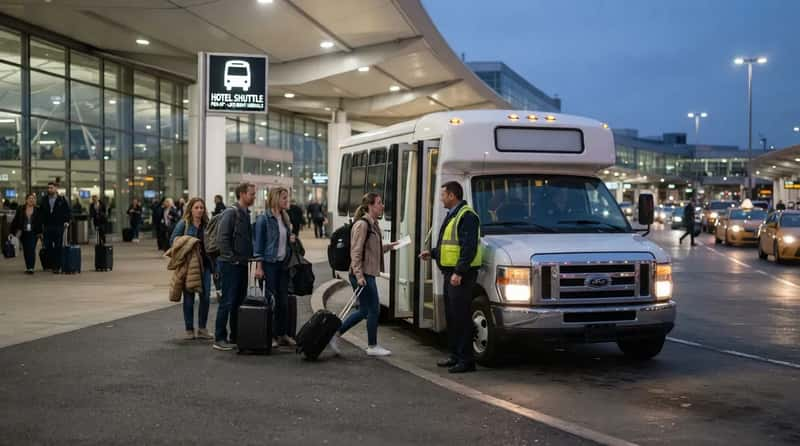
A hotel voucher doesn’t help much if you can’t get to the hotel. For overnight controllable delays, American, Delta and United have committed on the DOT’s dashboard to book hotel rooms and provide ground transport. Alaska lists the same commitment for overnight cancellations.
Crews often hand over a voucher and point toward a shuttle stop, with little explanation. The ride is part of the promise, not a bonus. If nobody mentions it, ask.
Fast Facts
- The ground transport promise is tracked on the DOT’s customer service dashboard
- Ask whether you’ll get a shuttle or a voucher to the hotel
- Ask about the ride back to the airport the next morning
- If you pay for a ride yourself, keep the receipt
And if none of this sounds appealing, there’s an escape hatch at #6…
#6 – The Refund Option That Changes Everything
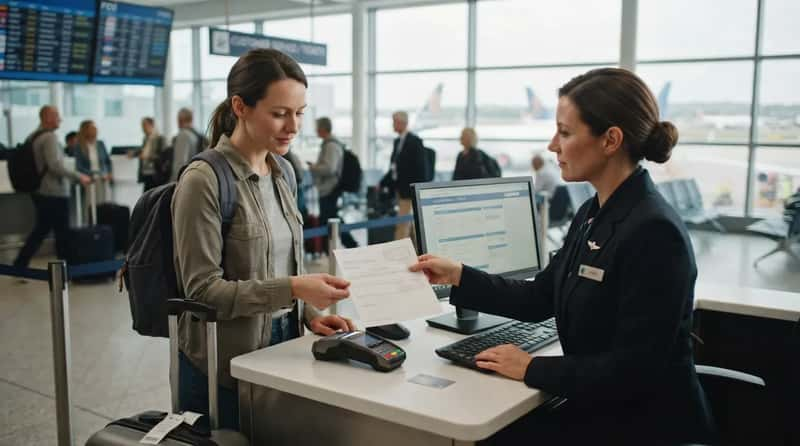
Sometimes the best improvisation is walking away. If your flight is canceled or significantly changed, you can decline the alternative and ask for a full refund. The DOT counts domestic delays of 3 hours or more and international delays of 6 hours or more as “significant.” Extra connections, airport changes and cabin downgrades count too.
That matters for trips tied to a wedding, a meeting or a cruise departure. A new routing that lands after the event is worth nothing. A good agent will tell you which option is actually better for you.
But the real decision-maker behind every option is a label you rarely see…
#5 – The Cause Code That Decides Your Whole Night
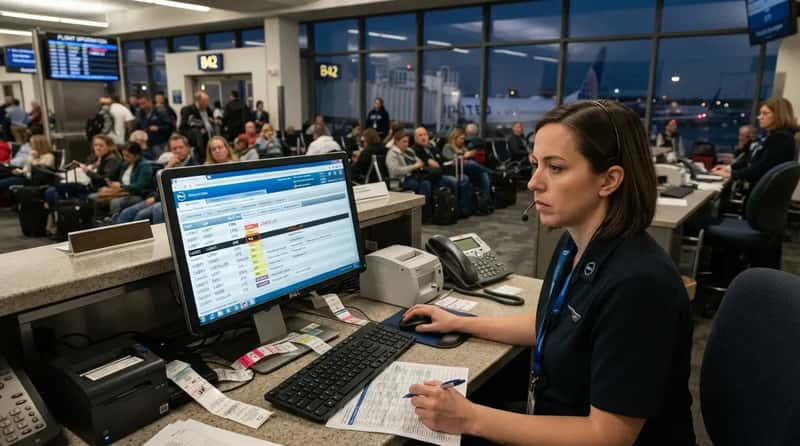
Every delay gets a reason, and that reason drives what you receive. Airline-controlled problems like mechanical issues, crew scheduling and IT failures come with rebooking, meals and hotel commitments. Weather, air traffic control and FAA ground stops generally get rebooking only.
Passenger-caused misses, like a late arrival at the gate or a self-booked short layover, usually get nothing from the airline. The same missed flight can lead to three completely different outcomes. That’s why the delay cause is the most important detail on the screen in front of the agent.
Which leads straight to the toughest scenario of all, #4…
#4 – The Separate-Ticket Trap Crews Can’t Fix
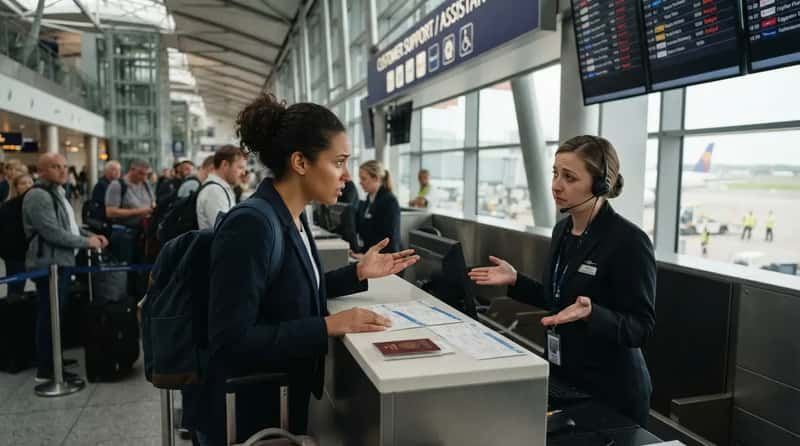
This is where agents run out of tools. If you booked two separate tickets to save money, you’re largely on your own. When the first flight runs late and you miss the second, neither airline is obligated to rebook you for free or cover your expenses.
Crews improvise anyway, with whatever flexibility they can find. The DOT’s own guidance suggests asking whether another carrier will honor your ticket, but notes no rule requires it. Many travelers only learn this at the worst possible moment, standing at a counter with two itineraries and no safety net.
But the question agents dread most has nothing to do with seats…
#3 – The Compensation Question They Steer Around
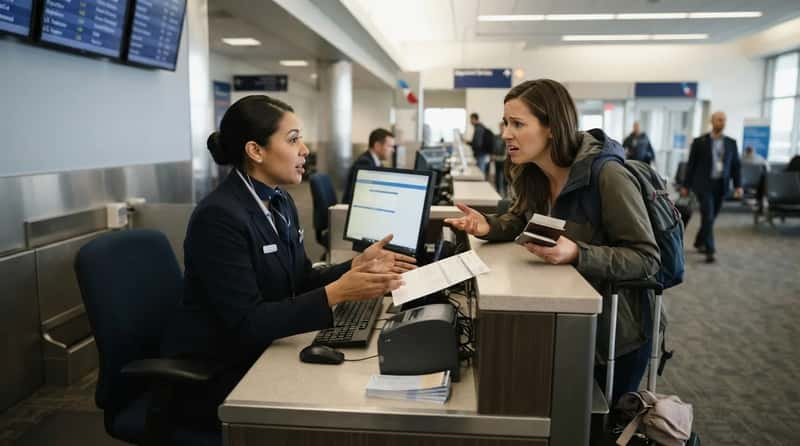
Many travelers expect cash for a ruined connection. In the U.S., that’s not how it works. U.S. airlines aren’t required to pay cash compensation for delays.
What you may get depends on each airline’s own promises: rebooking, meals or a hotel. So when someone asks for money, agents often pivot back to what’s on the menu. That can feel like a dodge, but it reflects the real rules. Europe is a different story, and U.S. travelers sometimes assume the same protections follow them home.
Quick Compare
- U.S.: No federal rule requires cash for delays, so airline promises fill the gap
- EU: Set cash amounts of €250, €400 or €600 by flight distance, in qualifying cases such as long arrival delays
- The confusion: Travelers hear about European payouts and expect them on domestic flights
And now the dramatic one, which most passengers never see happen…
#2 – The Escort Across the Ramp
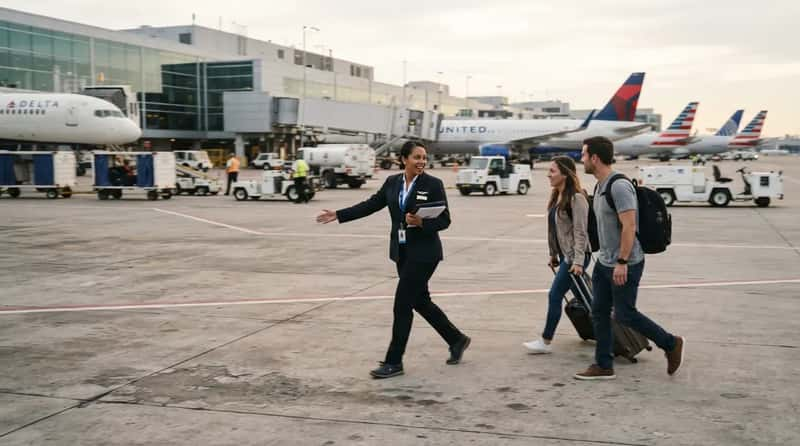
At some large airports, a tight connection gets a physical fix. Agents may meet connecting passengers at the jet bridge and walk them quickly toward the next gate. Some airports also use vans or buses for connecting passengers. The details vary by airport and airline.
The idea is simple. A person in uniform who knows the shortcut can save minutes that no app can. It doesn’t work everywhere, and it only works if the next flight is still waiting.
Still, the strongest improvisation on this list isn’t in any rulebook…
#1 – The Judgment Call That Isn’t Written Down
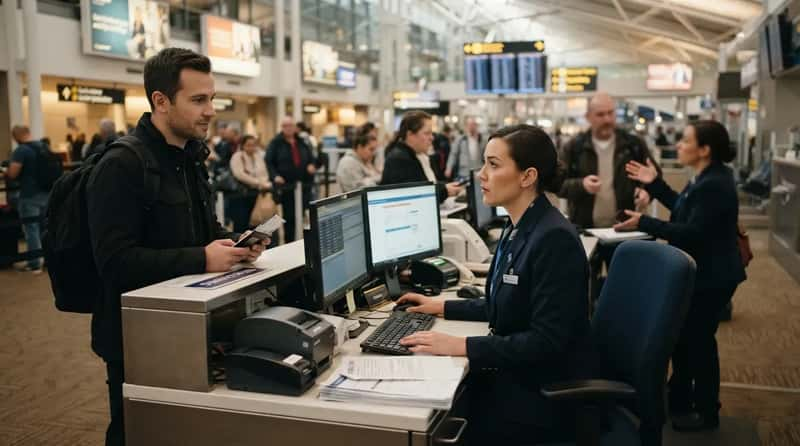
Rules set a floor, and people decide the rest. Airline commitments are voluntary, and even the DOT’s rulemaking acknowledged that protections for rebooking and hotels vary between carriers. In the gaps between those promises, an agent’s discretion matters.
Picture two travelers with the same problem. One arrives calm, with the flight number ready and the delay cause asked about. The other is furious, and agents are human. No policy promises kindness, but it often changes which options get offered first.
The truth behind every missed connection is that ground crews improvise within limits set by airline promises, delay causes and your ticket type. Partner rebooking isn’t universal. Meals and hotels depend on who caused the delay, and cash compensation isn’t required in the U.S.
The rulebook sets the floor, but the rest is a conversation at a counter late at night. The biggest surprise is how much can hinge on the right question asked at the right moment.