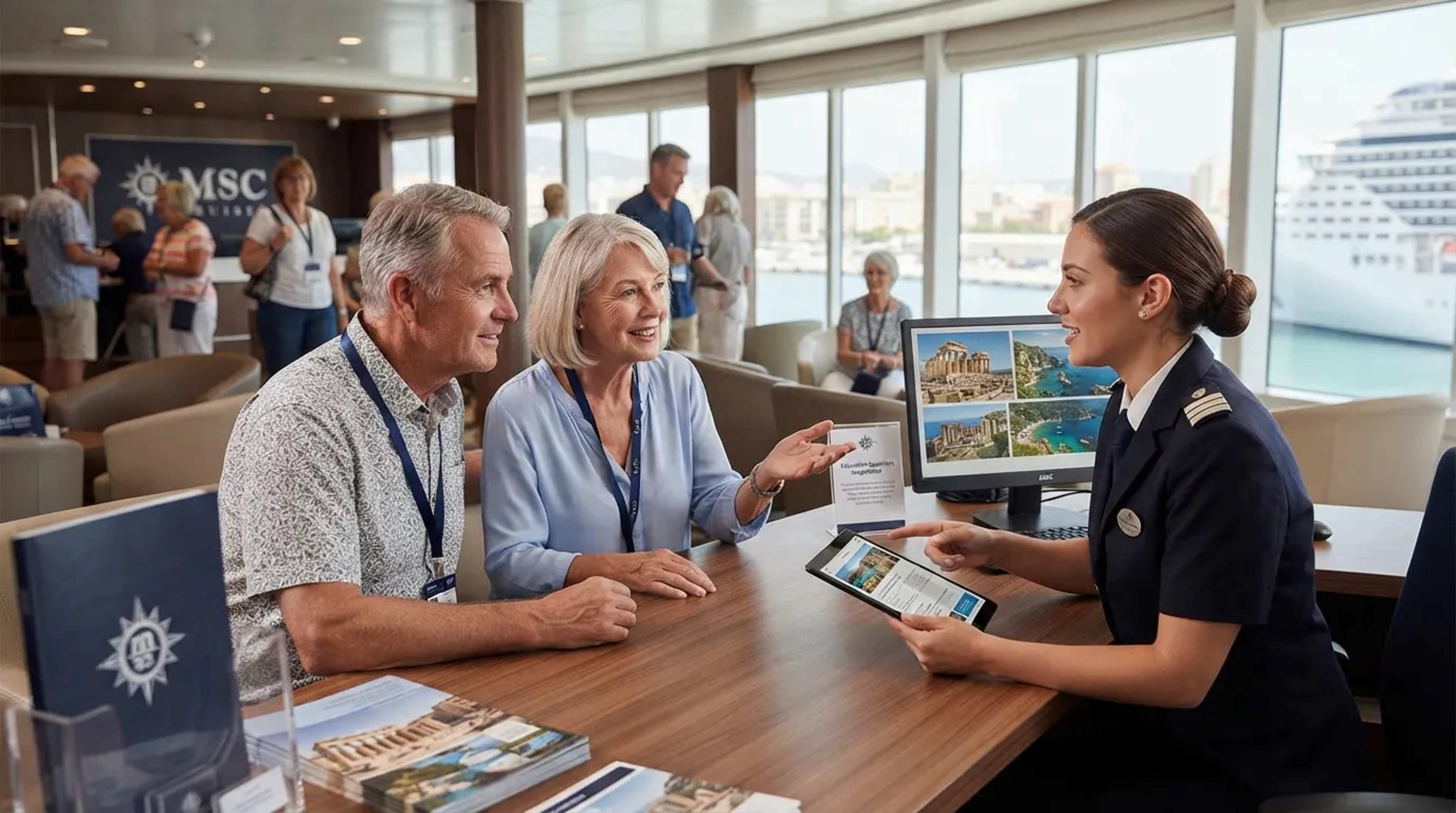
Every port day has a moment when the cruise line’s responsibility ends and yours begins. For travelers over 65, a missed bus, a forfeited deposit or an ambulance bill can each trace back to one assumption made weeks earlier at the booking screen.
The fifteen mistakes below are the ones that sour port days, and most take minutes to fix before you sail. Stay through #1, where a single phrase in your insurance paperwork can decide a bill in the tens of thousands.
#15 – Small Bills Left Behind on the Ship
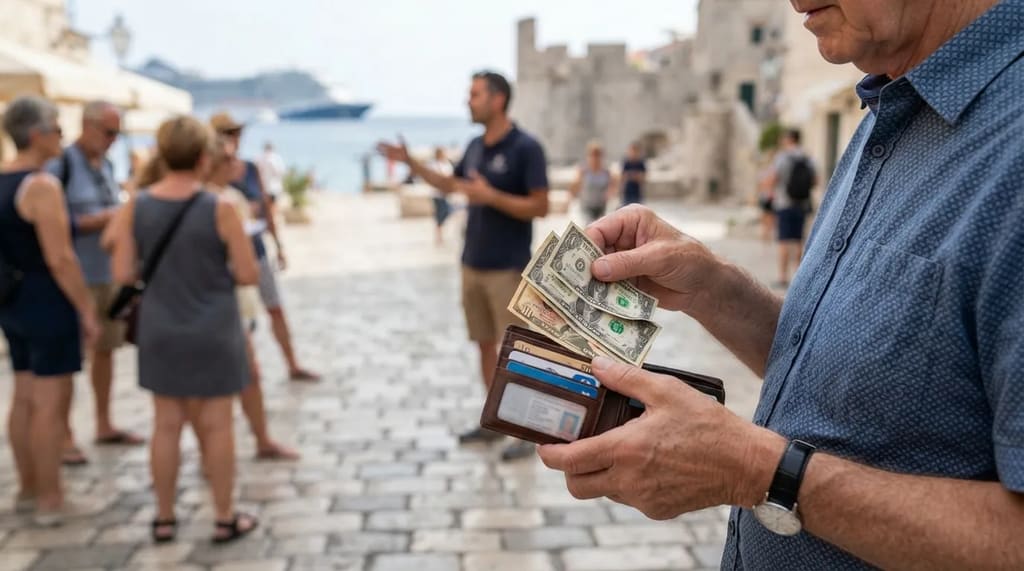
Royal Caribbean calls tips for shore excursion staff always appreciated and always optional.1 That wording leads many travelers to assume the tip is already handled.
It usually isn’t. Guides and drivers may work for independent companies rather than the cruise line, so onboard gratuities generally don’t reach them.
Carry a few small bills in a pocket separate from your wallet. On independent tours, ask whether the price already includes gratuities.
Cruise Critic notes that a tip over 20 percent is typically unnecessary.
Cash is the easy fix. Misreading what you’ve actually paid for takes more care, starting with the name on the ticket.
#14 – The Tour Title You Never Read Past

A title tells you almost nothing about how your day will feel. An “e-bike tour” can be a traditional bike ride with hills, and a “city tour” can be mostly time on a motorcoach.
An eight-hour tour may not include a meal at all. If you’ve skipped breakfast and brought no cash, that’s a long afternoon.
Read the full description for length, transport, meals and walking before you pay. Check the listed difficulty level too, because we’ll come back to what those labels really promise.
At a Glance
- Length: Does the total time include travel to and from the pier?
- Transport: Is it mostly motorcoach, or mostly on foot?
- Meals: Is lunch included, or do you need cash?
- Effort: Does the difficulty level match your pace?
The description tells you what the tour is. It doesn’t tell you whether you want all of it, and the biggest tours try to sell you everything at once.
#13 – A Highlights Tour That Promises Everything

A tour that hits eight sights in five hours spends much of that time on the road. Pick the two or three things you most want to see, then find a tour that lingers there.
Size matters as well. Ship-booked excursions often come with very large groups, which can make some sites slow and cumbersome.
Pick two or three sights, then find the tour that lingers at them. Highlights tours are overrated for anyone who tires easily, because a shorter list with time to sit beats a checklist you finish on your feet.
Big groups carry another cost the brochure skips. When one person lags, the whole bus waits.
#12 – Straggling Back to the Meeting Point

If your guide has to search for you, that time comes out of the tour everyone else paid for. It’s the most common way one traveler slows a group.
Write down the meeting time, what the bus or guide’s sign looks like, and a landmark close by. Then arrive five minutes early, every time.
If you walk slowly or need frequent rest stops, tell the guide at the start. A request made at the beginning is far easier to plan around than one made at the end of a stop.
Showing up on time is only half the battle. The other half is knowing how much walking the tour really holds.
#11 – What “Moderate” Means Once You’re Walking

On a ship’s excursion, “moderate” typically means cobblestones, uneven terrain and sustained walking. That’s a different thing from a stroll along a promenade.
Lines grade their tours differently, and the activity symbols are advisory rather than contractual. A more useful yardstick is Princess’s published benchmark: guests who can manage three to five steps onto and off a tour bus should generally be able to book standard tours.
Count the bus steps you can manage comfortably before you choose a level. If a long flight of stairs at home leaves you winded, choose a tour labeled easy or mild.
Quick Compare
- A promenade stroll: Smooth, flat and easy to stop whenever you like.
- A “moderate” shore tour: Cobblestones, uneven terrain and sustained walking.
Even the right rating assumes you reach the pier in the first place. At some ports, that means stepping into a small boat that moves.
#10 – The Step Down Into a Tender Boat
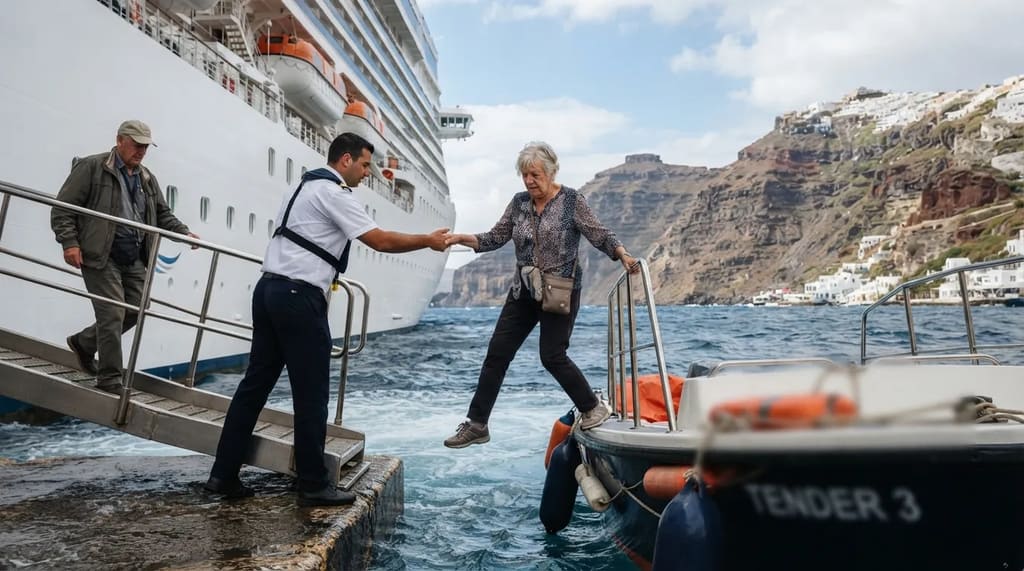
At a tender port the ship anchors offshore, and passengers transfer to a small boat. That means stepping down into something that’s moving.
Santorini, Bar Harbor, Sitka, Kotor, Sorrento and Cannes are among the ports that use tenders. If you use a scooter or power chair, most lines don’t allow them on tender boats.
Royal Caribbean says power chairs and scooters are generally possible only on roll-on tenders, and the captain makes the final decision.
Ask your cruise line which ports on your itinerary require tenders. Booking through the ship can also bring priority disembarkation, which matters when you’d rather not stand in a tender line.
Not every tour that looks accessible is, either. Four short questions sort out which ones are.
#9 – Four Questions Behind Every Accessibility Symbol

Every line marks tours with an activity level or an accessibility symbol. Those symbols are advisory rather than contractual, so the detail has to come from you.
Ask four questions before booking any tour labeled accessible:
- Is the vehicle equipped with a lift or a ramp?
- How far is the walk from the parking spot to the site?
- What’s the surface underfoot?
- Is there an accessible restroom on the route?
Ask the shore excursions desk before you sail if possible. Ramp or lift vehicles are available only on select tours and itineraries, so the answer changes from port to port.
Once the tour is right, the clock becomes the next trap. The time printed in big letters isn’t the one that matters.
#8 – All Aboard Comes Before the Sailing Time
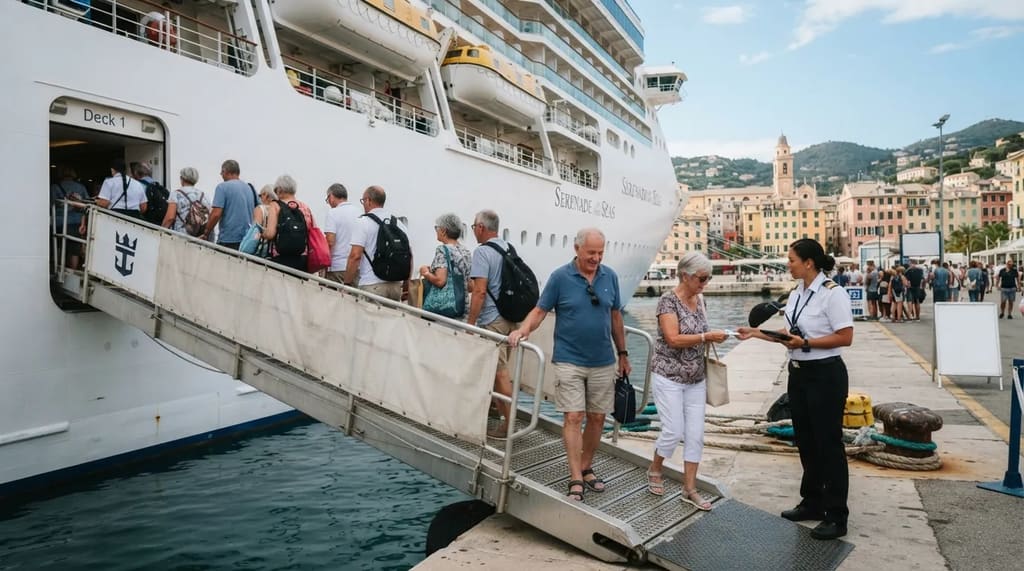
The time printed as sail-away isn’t your deadline. All aboard falls 30 to 60 minutes before the ship sails, and Royal Caribbean says its own is generally about 30 minutes before departure.2
Confirm the official time in the ship’s app, the daily program and the sign posted where you leave the ship. Check, too, whether the ship’s clock matches the clock on shore.
Your deadline is all aboard, not sail-away.
Knowing the deadline is one thing. How much margin to leave before it is where independent bookings go wrong.
#7 – The 90-Minute Cushion Independent Tours Need
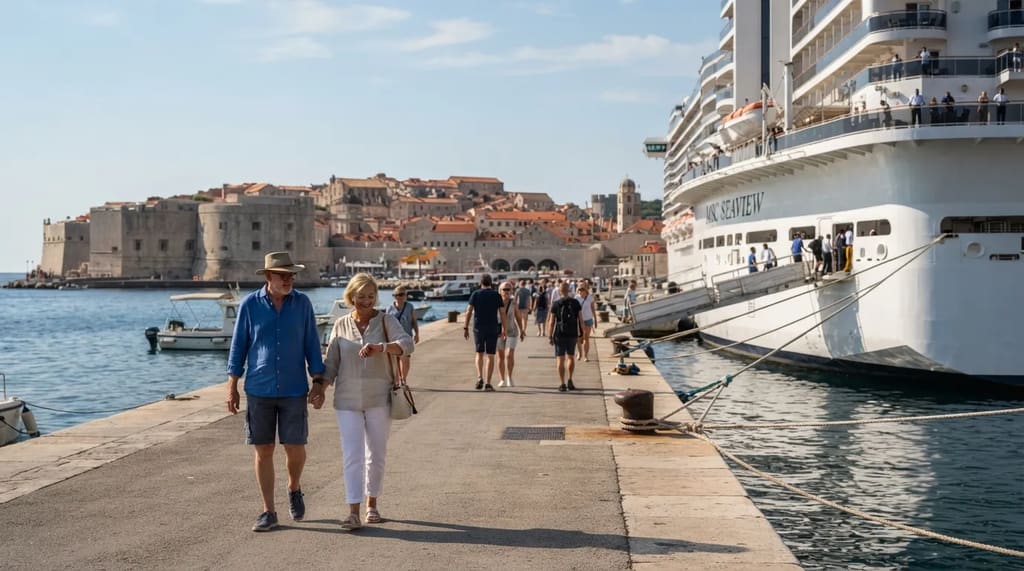
The standard advice among experienced independent cruisers is that your tour should end at least 90 minutes before all aboard. A tour that returns 30 minutes before the deadline isn’t a plan, it’s a bet.
On an independent loop, a stalled bus delays you, not the cruise line. Take the all-aboard time from the previous section and work backward:
- Subtract 90 minutes from all aboard. That’s the latest the tour may end.
- Add the ride from the tour’s final stop to the pier.
- Make sure your guide knows how far you’re going and when you want to be back.
That cushion exists because of a difference the confirmation email never spells out. Only one kind of booking makes the ship wait.
#6 – Saving Money on a Tour Two Hours Inland

If a tour you booked through the cruise line returns late, the captain holds the ship until your group is back. Book independently and the schedule risk is yours, with no guarantee the ship holds for you.2
The ship’s price buys that guarantee, and it isn’t cheap. Lines know their own excursions are convenient, so they have little incentive to price them competitively.
A smaller group tour booked directly often costs a fraction of the ship’s price. So the practical rule is to go independent for easy ports and pay the ship’s premium for far ones.
A tour that drives two hours inland to a ruin or rainforest carries real risk of traffic or delay. Pay the ship’s premium when the tour goes far from the pier.
Quick Compare
- Ship-booked: The captain holds the ship for a late group, but you pay a premium and often join a very large group.
- Independent: Often a fraction of the price and a smaller group, but the schedule risk is entirely yours.
Some independent operators try to close that gap with a promise of their own. Read what it actually pledges, because it isn’t a ship holding its engines.
#5 – A “Back to Ship” Guarantee Is a Refund
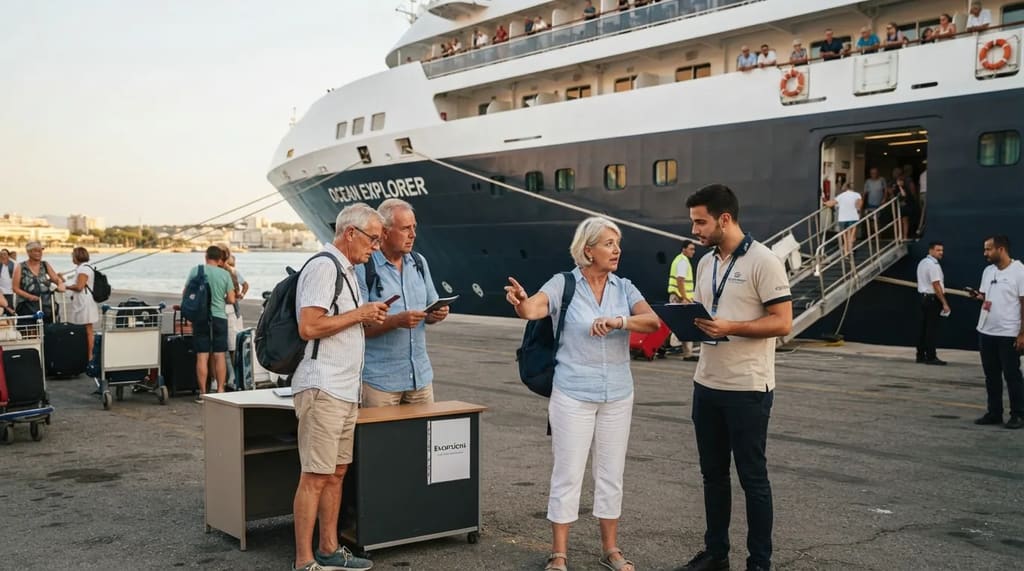
Some independent operators advertise a back-on-time guarantee, and it’s easy to hear that as “the ship will wait.” It’s a refund-style promise, not a ship-wait: they pay your expenses to catch up if you miss the ship.
What’s covered varies. Some operators say they’ll help with transport, meals and accommodation, and others will fly you to the next port at the company’s expense.
Treat the guarantee as a reason to prefer one operator over another, never as a reason to shrink your cushion. Find out exactly what the guarantee pays for before you rely on it.
Money can also leave through a different door, well before you reach the port. It leaves when an itinerary changes and your booking can’t.
#4 – A Non-Refundable Booking on a Shaky Itinerary

If the ship skips a port, your ship-sponsored tour is refunded, but policies vary for privately booked excursions. That gap is widest where plans change most.
Weather-sensitive itineraries such as Alaska or the Norwegian coast are where a non-refundable prepayment is riskiest. Ship-sponsored tours can generally be canceled without penalty up to 24 to 48 hours before the port day, but wait too long and you can forfeit the entire amount.
Big booking platforms offer free cancellation on most listings up to 24 hours ahead, while some operators require 48 to 72 hours. Get independent cancellation terms in writing before you pay.
Now suppose the day runs late and the ship does leave. The most important things you own may still be in your cabin.
#3 – Medications Left Behind in the Cabin
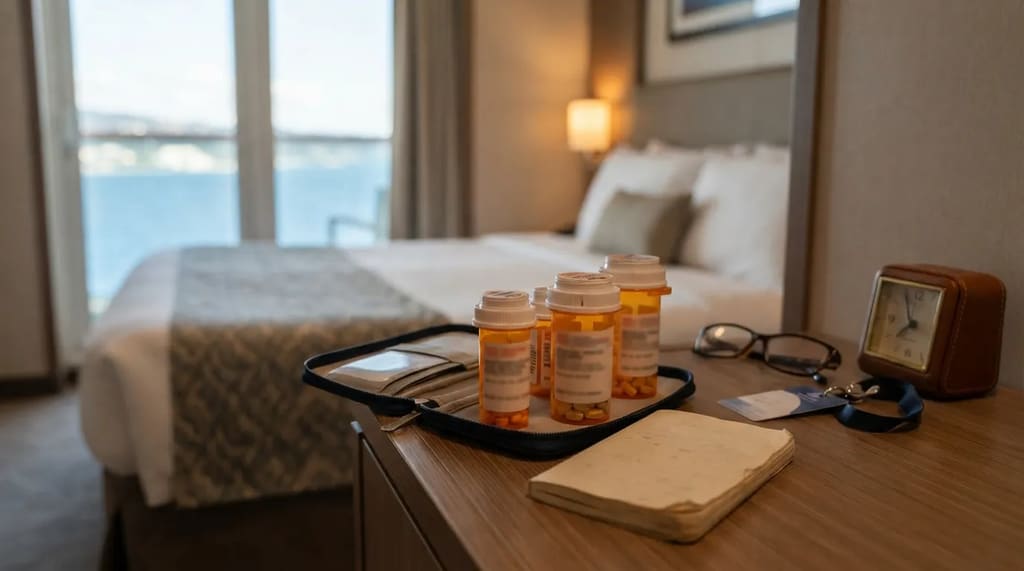
If an independent tour runs late and the ship sails, every pill you own is on a vessel heading to the next port. That’s a long gap to cover when you take something daily.
Carry the day’s doses and a prescription list on you. Keep them in their original containers.
Replacing medication abroad isn’t simple, because Medicare drug coverage may be limited outside the U.S.3 and refills may be restricted. U.S. News & World Report notes that short-term travel health insurance is strongly recommended to protect against catastrophic medical costs or lost medications.
Worth Knowing
- Medicare drug coverage may be limited outside the U.S.
- Refills abroad may be restricted.
- Original containers make your doses easier to identify and explain.
- A written prescription list gives a foreign pharmacist or doctor a place to start.
Pills can be replaced, with effort. A hospital bill in a foreign port is another matter, and the card in your wallet may not cover it.
Related Stories From Travelbinger


#2 – Assuming Medicare Travels With You
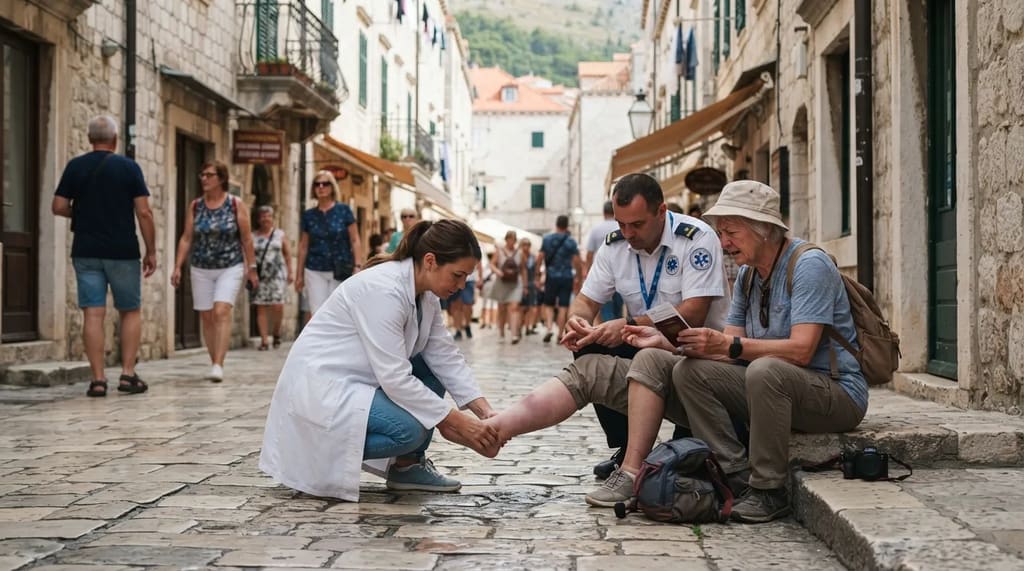
The State Department says Medicare does not cover medical costs outside the United States.4 Original Medicare generally pays $0 for emergency care abroad.
There’s a narrow ship exception. KFF Health News reports Medicare will sometimes cover necessary care on a cruise ship, but not if the ship is more than six hours from a U.S. port.5
A fall on a cobbled street in a foreign port is a different situation, since Medicare may not cover treatment there. Some Medigap plans offer limited emergency coverage abroad, up to 80 percent after a deductible and subject to a lifetime limit.
A Medicare Advantage plan’s foreign benefit is a reason to read your plan, not a reason to skip travel insurance.
Even a plan that pays for the emergency room can leave out the ride there. That ride is the largest number in this article.
#1 – The Air Ambulance Bill That Dwarfs the Tour

Medical evacuation can easily cost $50,000 to $100,000 or more, and one source puts air ambulance costs above $100,000 internationally.6 It’s the largest figure attached to any shore day, and no tour price comes close.
The coverage gap is wider than most travelers expect. Medicare Advantage plans typically don’t cover emergency medical evacuation or air transport back to the U.S.4
It matters most on the tours with the longest rides. A severe emergency in a remote area or on a cruise ship can require an airlift, and that’s the same two-hours-inland tour that earned the ship’s premium earlier.
Confirm in writing that your policy pays for emergency medical evacuation. Check the exclusions too, since policies can carry geographic, cruise, activity and trip-length exclusions.
A shore day sits between two sets of rules. The cruise line’s protections end at the gangway, and yours begin with whatever you arranged beforehand.
That makes one question worth asking at every booking: if this goes wrong, who is responsible? A ship tour has an answer, a private tour has terms, and your health has a policy.
What’s the farthest you’ve traveled from the pier on a port day, and who would have been responsible if the day had run late?
Bonus: The Five-Minute “Port Day Card” That Rescues a Bad Day
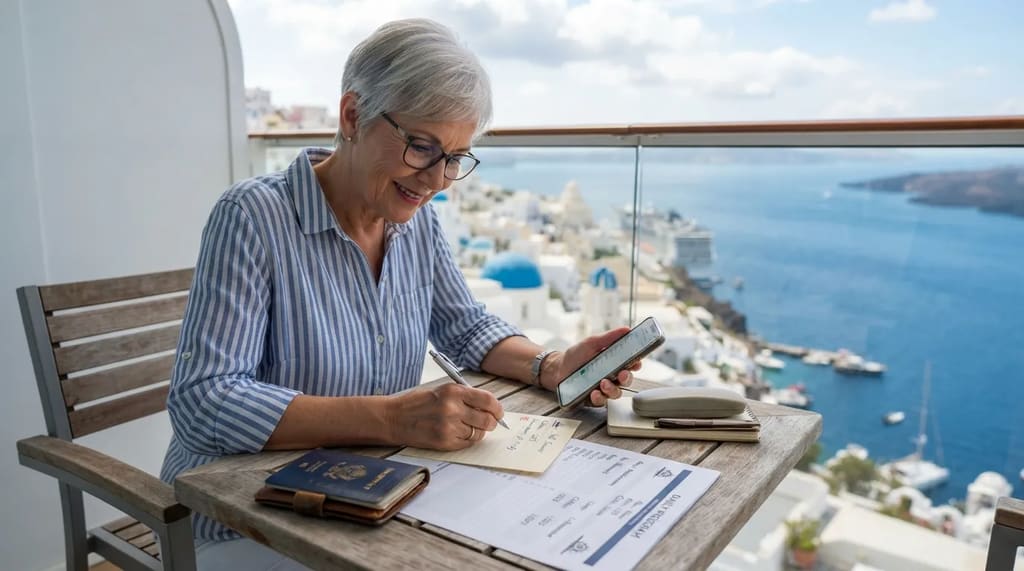
Most of the mistakes above get worse when you can’t reach anyone. A paper card in your pocket works when a phone battery dies, a roaming plan fails or a stressful moment wipes your memory.
Make it the night before each port, and carry it apart from your phone:
- Ship details: The ship’s name, your cabin number and the all-aboard time, copied from the daily program. Many daily programs also list the ship’s emergency or port contact number, so copy that too.
- Insurance details: Your travel insurer’s 24-hour assistance number and policy number, plus the Medicare or plan number you confirmed in #2.
- Medical details: Your medication list, any allergies and one emergency contact back home.
- Tour details: The operator’s name, phone number and the meeting point from #12.
Then add one rule: if you think you’ll miss all aboard, call the ship or its port contact before the deadline, not after. Telling them early gives everyone more options than explaining after the ship has sailed.
Photograph the card and leave a copy with your travel companion. It costs nothing, and it turns a crisis into a phone call.
- Royal Caribbean Shore Excursions FAQ: https://www.royalcaribbean.com/faq/topics/reserve-purchase-tours-dining-before-cruise
- Royal Caribbean All Aboard Time: https://www.royalcaribbean.com/faq/questions/do-i-need-to-book-a-shore-excursion
- Medicare Coverage Outside U.S.: https://www.medicare.gov/publications/11037-medicare-coverage-outside-the-united-states.pdf
- State Department Medicine and Health: https://travel.state.gov/en/international-travel/planning/guidance/medicine-health.html?c=TFOBE
- Kiplinger Medicare Cruise Rule: https://www.kiplinger.com/retirement/medicare/medicare-and-cruises-the-6-hour-rule
- Generali Medicare Travel Guide: https://www.generalitravelinsurance.com/travel-resources/medicare.html