Most travelers walk into a hotel lobby, hand over a credit card, and accept whatever room number gets typed into the system. They assume the extras – the suite, the late checkout, the bottle of wine waiting on ice – are reserved for VIPs or people willing to overpay. That assumption is quietly costing regular guests hundreds of dollars a year in perks that cost the hotel absolutely nothing to hand over.
Here’s the part nobody tells you: hotels aren’t hiding these freebies out of stinginess. They’re sitting there unused because most guests never ask, and the ones who do usually ask the wrong employee, at the wrong moment, in the wrong way. Once you know who actually holds the keys – literally and figuratively – the whole equation flips in your favor.
15. The Upgrade Almost Nobody Thinks to Request
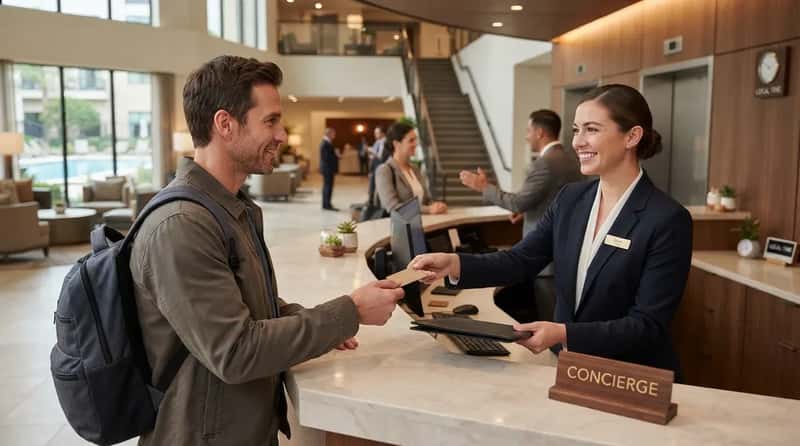
Front desk agents at most branded hotels have real authority to move you into a better room, but they rarely offer it unless someone asks first. On any given night, a hotel typically has a small handful of upgraded rooms sitting empty with nobody assigned to them. Someone has to end up in those rooms – it just usually isn’t the guest who stayed quiet at check-in.
The trick isn’t a secret password, it’s specificity. Instead of asking for “any upgrade,” ask for something concrete, like a high-floor corner king or a room facing the pool. Vague requests get vague answers, but a specific ask gives the agent something exact to check the system for. That alone changes the odds more than most travelers realize.
Fast Facts
- Ask for a specific room type, not “any upgrade available”
- High-floor, corner, and view rooms are the easiest free swaps
- Empty upgraded rooms exist most nights, even at busy hotels
- The front desk agent, not a corporate office, decides who gets them
14. Late Checkout Isn’t Locked Behind a Loyalty Card

Most guests assume late checkout is reserved for elite members, so they never even ask the person standing right in front of them. The reality is looser than that. Housekeeping schedules and how full the hotel is that particular day determine availability far more than your membership tier does.
Guests who simply ask stand a real chance at scoring extra hours, and sometimes more than that – a free movie, a stocked minibar, a small room service credit. The person controlling this isn’t a corporate office somewhere. It’s the desk agent that morning, deciding room by room whether housekeeping actually needs that extra hour or not.
13. A Manager Can Waive What the Front Desk Can’t

Here’s something most travelers never realize: the person checking you in often has less authority than the person standing a few feet behind them. Resort fees, parking charges, and even minor damage disputes are frequently decided above the front-desk level entirely.
If the desk agent seems limited in what they can offer, politely asking for a manager isn’t rude – it’s just knowing where the actual decision gets made. Managers typically carry discretionary budgets built specifically for smoothing over guest friction, and most guests never trigger that budget because they stop asking after the first no.
12. The Golden Hour for Free Suite Swaps

Timing your check-in isn’t superstition, it’s math, and most guests get the math backwards by walking in during the busiest window of the day. Hotel front desks are typically slammed processing check-ins between 2 and 3 p.m., right when the day’s upgrade quota may already be spoken for.
Arrive during that crunch and you’re competing with a dozen other guests for the same rushed attention. Arrive later and the picture flips completely – by early evening the hotel has a clear read on the day’s bookings, and if suites remain empty, staff may offer them without you even asking. Some employees quietly call the hours after 9 p.m. the real golden window.
11. Free Nights From a Loyalty Program You’ve Never Joined
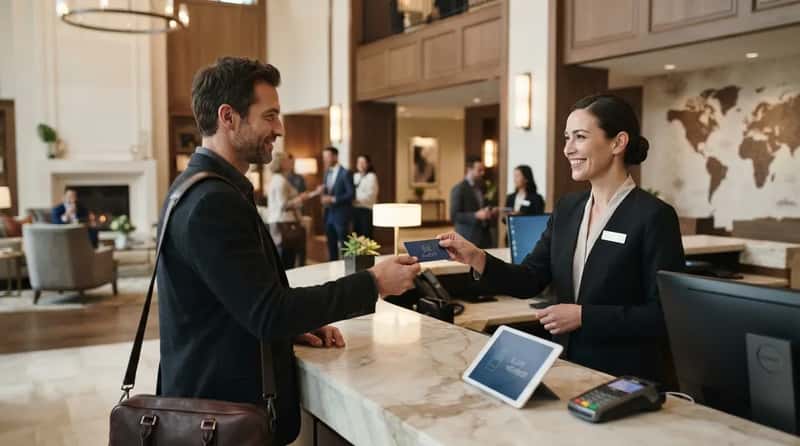
Most people assume loyalty perks only apply to hotels they’ve already stayed at dozens of times. That’s not how modern hotel loyalty actually works anymore. Status match programs let you transfer elite standing from a brand you already belong to into a brand you’ve never set foot in.
Some chains make it almost embarrassingly easy – a quick email with proof of your status elsewhere, and they’ll match it with no hidden fees and no waiting period. A total stranger to that brand can suddenly have upgrade priority before their first stay even begins.
10. Signing Up Free Puts You on the Radar Instantly

You don’t need years of stays or a stack of points to matter inside a hotel’s system – you just need to exist inside it. Signing up for the loyalty program costs nothing and takes under two minutes at the front desk or on your phone.
But the effect on how you’re treated can be immediate. Even the free entry-level tier flags you as someone who chose the brand on purpose, and that single flag separates you from an anonymous walk-in the moment you check in. It sounds almost too simple, which is exactly why most travelers skip it.
9. The Direct-Booking Discount Nobody Advertises

Booking through a third-party app might feel like the smart move, but it quietly strips away leverage you didn’t know you had. Hotels typically pay a real commission, often somewhere between 15 and 30 percent, for every guest who books through an outside platform instead of booking direct.
That’s why staff tend to prioritize guests who booked direct – you represent pure profit instead of a chunk already owed to someone else. When a hotel keeps that entire booking fee, it has more room to work with when deciding who gets upgraded, comped, or forgiven on a fee.
Quick Compare
- Booking direct: hotel keeps the full rate, more room to comp perks
- Booking through an app: hotel pays a 15-30% commission first
- Best odds for freebies: direct bookings, especially by phone
8. A Phone Call Can Beat Any App’s Best Price

Most travelers never pick up the phone anymore, and that’s exactly why the ones who do get treated like a rare exception. A short, polite call before booking can unlock a rate the website never shows anyone scrolling through search results.
The person answering that call has more flexibility than an automated booking engine ever will, because they can see real-time occupancy instead of a locked price grid. Ask nicely for a better rate, and many front desks will simply offer one – it really can be that simple.
7. Mentioning an Occasion Changes the Whole Interaction

Most people keep their anniversary, birthday, or big promotion to themselves at check-in, and that silence is costing them more than they realize. Staff genuinely want to make milestone stays memorable, but they can only do that if they know it’s happening.
Say it out loud, and be specific about it, and doors open that would otherwise stay shut – a room upgrade, a plate of chocolate-covered strawberries, a bottle of champagne waiting when you walk in. It sounds like a small detail to mention. It almost never is.
6. Vague Requests Get Vague Results, Every Single Time

This is the most controversial opinion on this list, and it needs to be said plainly: most people who “never get upgraded” are sabotaging themselves with the way they ask. Saying “do you have anything better?” gives an agent absolutely nothing to work with.
Being straightforward and specific gives them permission to actually help you. Not every employee has the same level of authority either, which is exactly why a clear, confident ask lands with the right person while a vague one goes nowhere at all.
5. Midweek Stays Turn Into Silent Upgrade Windows

Weekends feel like the obvious time to travel, but they’re often the worst time to expect anything for free. Business hotels empty out from midweek into the weekend, and resort-style properties empty out during the week, and either gap becomes real leverage.
Choosing a resort midweek or a business hotel over the weekend, right when their usual crowd disappears, gives staff actual empty inventory to hand out. Idle rooms are far easier for an agent to give away than fully booked ones, and that timing alone can be the whole difference.
Worth Knowing
- Business hotels tend to empty out Friday through Sunday
- Resorts and leisure hotels tend to empty out Monday through Thursday
- Matching your stay to the “off” crowd gives staff real inventory to give away
- Idle rooms are far easier to comp than fully booked ones
4. Honest Reviews Can Quietly Buy You Favors Later

This one raises eyebrows, but hotel staff genuinely do track public reviews more closely than most guests assume. Writing detailed, honest reviews on major travel platforms builds a quiet reputation that some properties actively reward on a future stay.
Some hotels check and respond to guest reviews directly, and a polite heads-up before arrival mentioning your public profile can put you on their radar before you even check in. It feels almost old-fashioned in a review-flooded world, which might be exactly why it still works.
3. Discretion Gets You Further Than a Loud Ask

The loudest, most demanding guests standing in the lobby are usually the ones walking away with nothing. Staff respond to people who make the interaction easy, not the ones who turn it into a negotiation in front of a line of strangers.
Asking quietly, one-on-one, lets an agent say yes without an audience watching and without setting a precedent they’ll regret an hour later. It’s a small behavioral shift, and the payoff is bigger than most people expect.
2. The Manager’s Discretionary Fund Almost Nobody Triggers
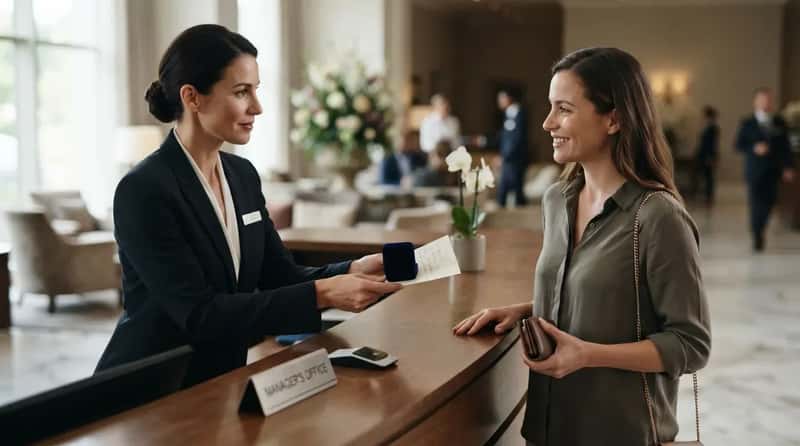
Almost nobody knows this exists, and that’s precisely why it stays underused. Most hotel managers carry a small, flexible budget meant purely for guest goodwill, and it isn’t listed on any rate sheet or loyalty chart anywhere.
It gets activated quietly, only when a guest voices a genuine concern or occasion calmly and directly. The guests who tap into this fund aren’t the ones who complain the loudest – they’re the ones who stay calm and give staff an actual reason to want to help.
1. Elite Status Without a Single Night Ever Stayed
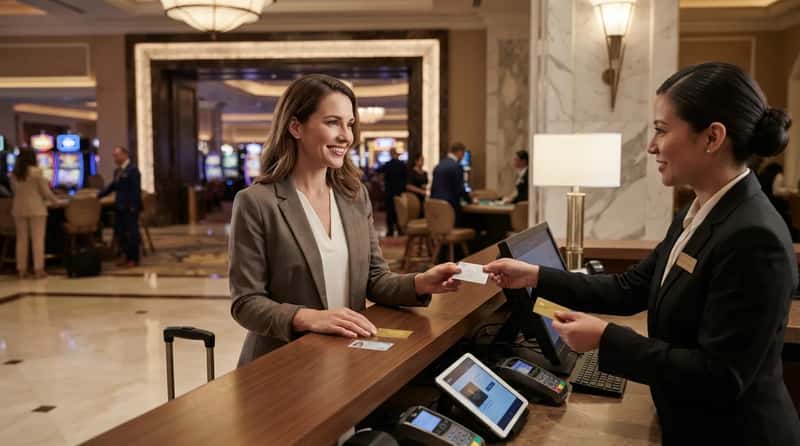
This is the one that changes everything, and almost nobody outside the points-and-miles world knows it exists: you can walk into a hotel with elite-level perks before you’ve ever stayed there once. Status matching lets one loyalty program grant you equivalent status based on your standing with a completely different brand.
Apply before your trip, and you can land upgrades, late checkout, free breakfast, and bonus points at a hotel chain you’ve technically never used. Some casino-hotel brands even do it instantly at the counter – flash a valid VIP card from a competitor and walk away with matched status on the spot. Most travelers never request this because they assume status has to be earned the slow way. It doesn’t.
At a Glance
- Status match requests usually take just minutes to submit online
- Some brands confirm instantly at the front desk with a competitor’s card
- Matched status can include free breakfast, late checkout, and room upgrades
- No stay history with the new brand is required to qualify
None of these fifteen things require extra money, a special connection, or luck. They require asking the right person, at the right moment, in a way that gives them something specific to say yes to.
Hotels aren’t secretly generous – they’re secretly flexible, and that flexibility only shows up when someone actually asks for it out loud. The next stay you book, try just one of these and see what happens.