You think the flight begins when the engines spool up. For the crew, it begins the moment you step onto the jet bridge. While you’re hunting for 23C and apologizing to the person behind you, someone in a uniform has already clocked your bag, your shoes, your mood and the way you walk.
Most of what they notice is harmless, even funny. But a few of these quick glances change where someone sits, who gets extra help, and in rare cases, what happens to a person’s life. Keep reading, because the last one on this list is the reason crews never fully stop watching.
#15 – The Carry-On Fight That Starts Before You Sit Down
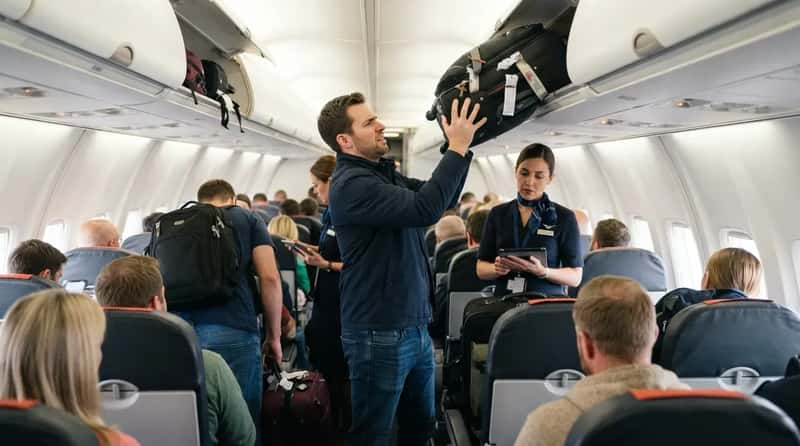
Your bag gives you away before you find your seat. Crew members watching the boarding line spot the oversized roller and the overstuffed backpack from a mile off. They also spot the passenger who plans to “make it work.” Bins have size and weight limits, and a bag jammed in sideways can block a latch or shift in turbulence.
Here’s the part that surprises people. Crews remember who stepped aside and who lifted a stranger’s bag. They also remember who blocked the aisle for five minutes while rearranging a suitcase, with forty people sighing behind them.
Those little moments set the tone for the whole flight. But the next clue starts at your feet.
#14 – The Flip-Flops That Make Crews Wince
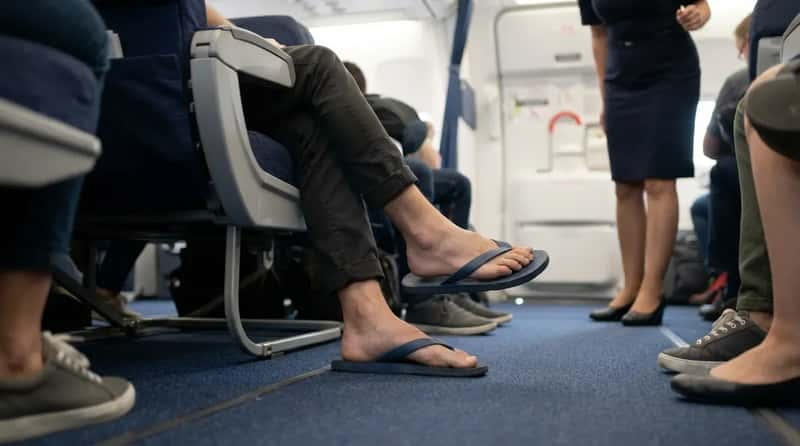
Footwear tells a flight attendant how you’d cope in an emergency. Crews are trained to tell passengers to remove high heels before using an evacuation slide, because sharp heels can damage the slide. Flip-flops raise a different worry. They can slip off in a rush and leave bare feet on a surface that may be hot, wet or littered with debris.
Here’s the unpopular take. If you’ve picked an exit row, flip-flops are a poor match for the job that seat comes with. It’s a small thing, but crews notice it because they’re the ones who would have to manage that scene.
And the next clue is something you can’t see through the noise.
#13 – The Headphones Already On During the Safety Demo
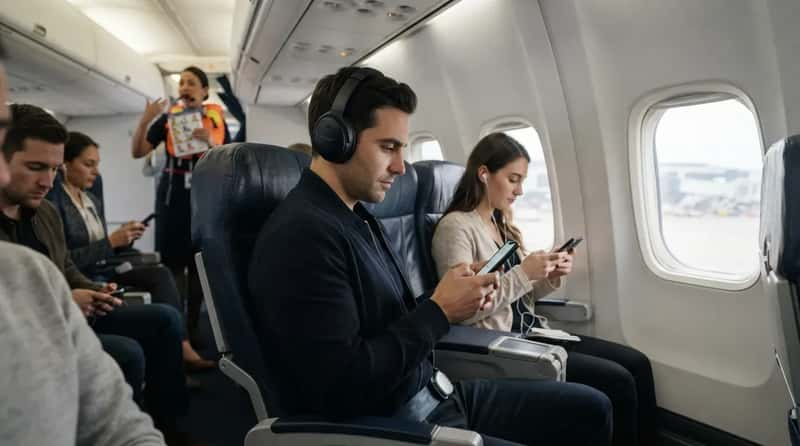
Some passengers board with noise-canceling headphones already on, eyes locked on a screen. Federal rules require airlines to give a safety briefing, so crews go through it every flight, including for the people who never look up. The crew can’t tell whether a passenger took it in or just heard a muffled voice over a podcast.
Turns out, the crew’s biggest worry isn’t the passenger who has heard it a hundred times. It’s the first-timer sitting next to them, who copies the veteran and tunes out too.
A few seconds of attention costs you almost nothing. Next up is a habit crews love to see.
#12 – The Passenger Who Counts the Rows to the Exit
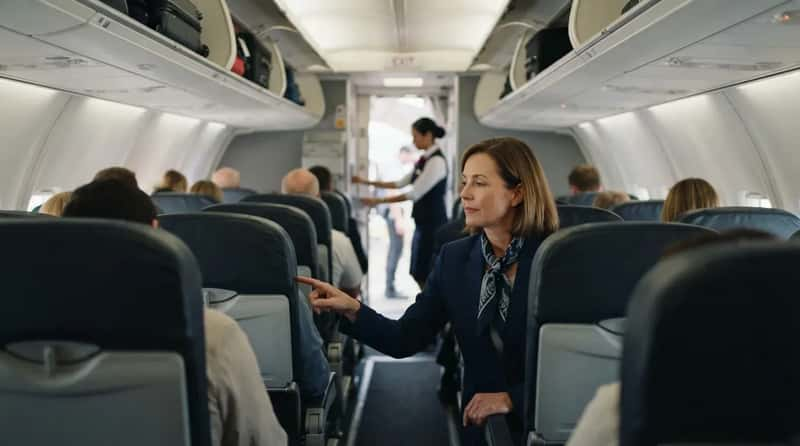
Every so often a crew member sees someone glance down the aisle and quietly count seats to the nearest exit. They notice, and they approve. The FAA’s own passenger guidance recommends locating your closest exits and counting the rows between you and them. Smoke and darkness can make an aisle hard to read.
That 90-second standard assumes passengers know where to go. The people who’ve already scouted the exit are the ones likely to move first and move calmly. It’s a ten-second habit that most travelers skip.
But what happens at the door is an even bigger tell.
#11 – The Greeting at the Door Is Secretly a Screening
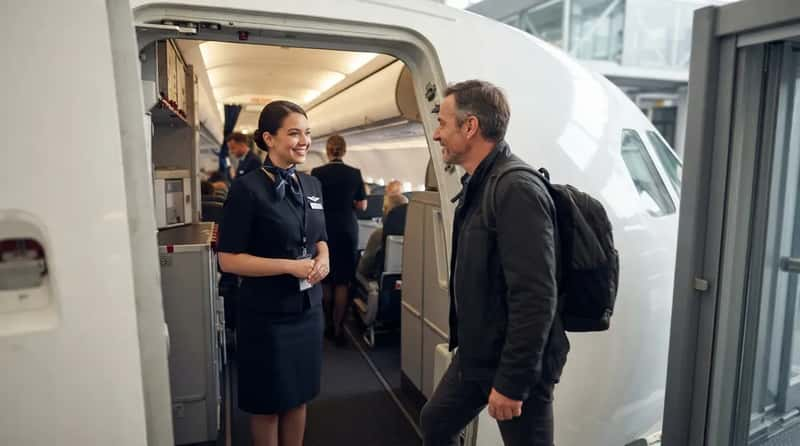
That cheerful “welcome aboard” isn’t only politeness. It gives the crew a quick look at every person who comes through the door. They watch how you walk and how you speak. They also pick up on whether you seem unwell, agitated or confused.
Most people don’t realize that a flat, wordless walk past the crew can be as noticeable as a loud complaint. A friendly nod costs nothing and usually earns goodwill.
Sometimes that first glance flags a serious problem, which brings us to a rule many travelers don’t know exists.
#10 – The Passenger Who Shouldn’t Be Allowed to Board
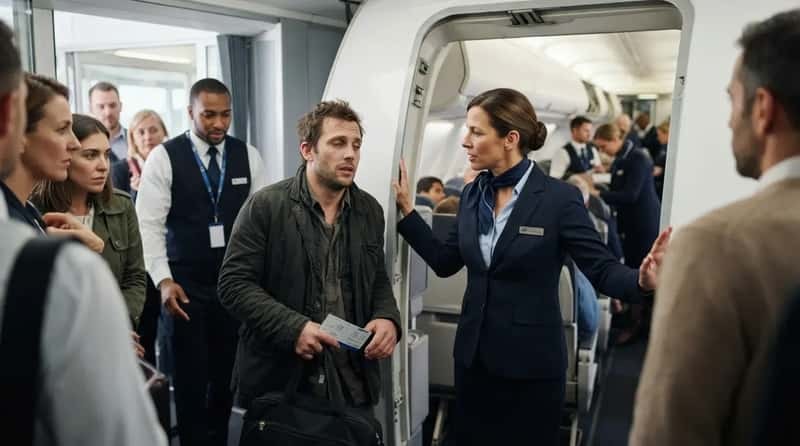
Federal regulations say an airline can’t allow a person who appears intoxicated to board. They also bar crews from serving alcohol to anyone who seems intoxicated. Crew members are trained to watch for slurred speech, unsteady walking and a strong smell of alcohol during boarding. If they have concerns, the gate agent or a supervisor gets pulled in.
Unruly passenger reports surged in 2021 and have dropped since, but the stakes haven’t changed. Passengers can’t drink their own alcohol on board unless the crew serves it. The FAA can also impose civil penalties in the tens of thousands of dollars.
Fast Facts
- Airlines can’t let a passenger who appears intoxicated board (14 CFR 121.575).
- Crews can’t serve alcohol to anyone who seems intoxicated.
- Only alcohol served by the airline may be drunk on board.
- The FAA’s zero-tolerance policy on unruly passengers began in January 2021.
- The usual warning signs are slurred speech, an unsteady walk and a strong odor of alcohol.
Crews would much rather stop a problem at the door than manage it at 35,000 feet. And the next seat assignment comes with real responsibilities.
#9 – The Exit Row Volunteer Who Gets a Second Look
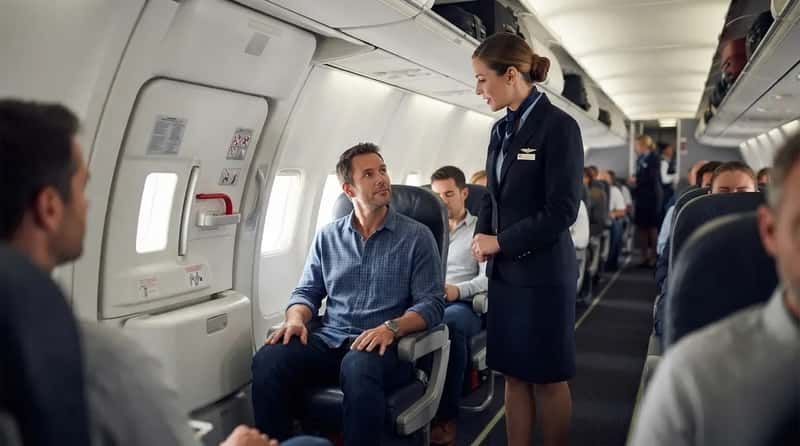
Everyone wants the extra legroom. Crews know that seat comes with an assignment. FAA rules say exit-row passengers must be willing and able to help open the exit and assist others. They must also be at least 15 and able to understand crew instructions. Flight attendants glance over each exit row before departure.
Here’s the take that starts arguments. Crews can and do move passengers who don’t meet the requirements, even if they paid for the seat. If you’d rather not take on the responsibility, you can say so and nobody should make you feel bad about it.
Next, a visible choice that puts the smallest passengers at risk.
#8 – The Baby in Arms Who Worries Crews Most
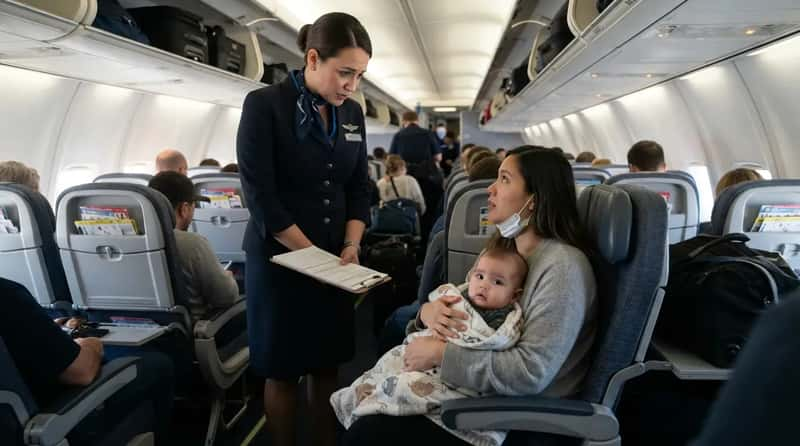
Parents boarding with infants get a lot of sympathy, and crews notice the details. Children under two can legally fly on a parent’s lap in the U.S. The FAA still says the safest place for a child is in an approved child restraint, and it strongly urges one for any child under 40 pounds. Flight attendants look for the label showing a car seat is certified for aircraft use.
The reason crews care is simple. Even strong arms can’t reliably hold a baby through sudden turbulence. Most parents just haven’t been told, and nobody wants to be the one to lecture a tired mom in row 18.
So crews who spot a lap infant quietly hope for a smooth ride. The next item is about a seatbelt you can’t even see.
#7 – The Blanket Hiding a Seatbelt Problem
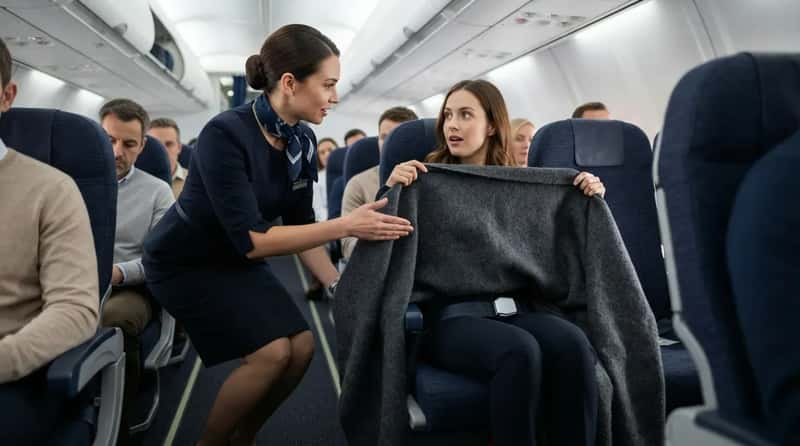
Before departure, flight attendants walk the aisle checking seatbelts. The passenger tucked under a big cozy blanket gets a polite request to lift it. A belt has to be visible, snug and low across the hips. Crews can’t confirm that from the aisle if everything is buried.
The FAA has said that most turbulence-related injuries involve people who weren’t wearing their seatbelts. That’s why crews keep asking, even in the middle of a calm flight. It isn’t nagging. It’s a lesson learned the hard way.
And the next clue is about someone who may need far more than a seatbelt.
#6 – The Pale, Sweaty Passenger Crews Quietly Flag
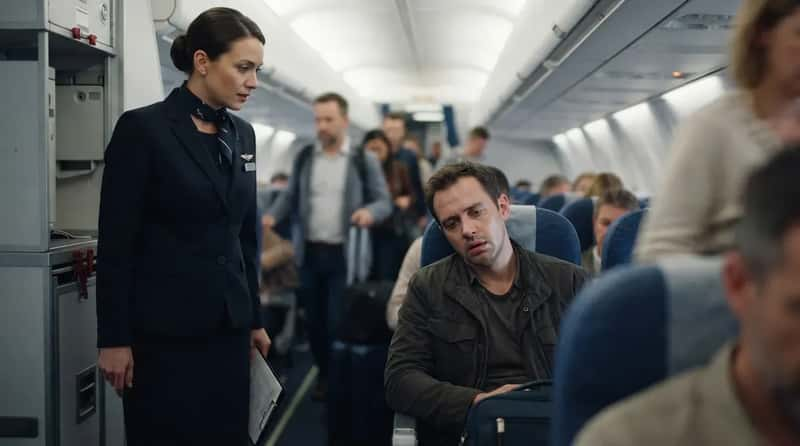
A flight attendant who sees a passenger boarding with gray skin, heavy sweating or labored breathing starts paying close attention. Crews are trained in first aid and carry medical kits. They can’t diagnose, though, and the nearest hospital may be hours away. An airline can refuse to board a passenger whose condition may put their own safety or others’ at risk.
That study helps explain why crews take early warning signs seriously. Some in-flight emergencies aren’t sudden at all. Someone just looked unwell at the gate. Telling a crew member early is always better than waiting.
Now, a passenger with four legs.
#5 – The Dog in the Aisle and the Paperwork Behind It
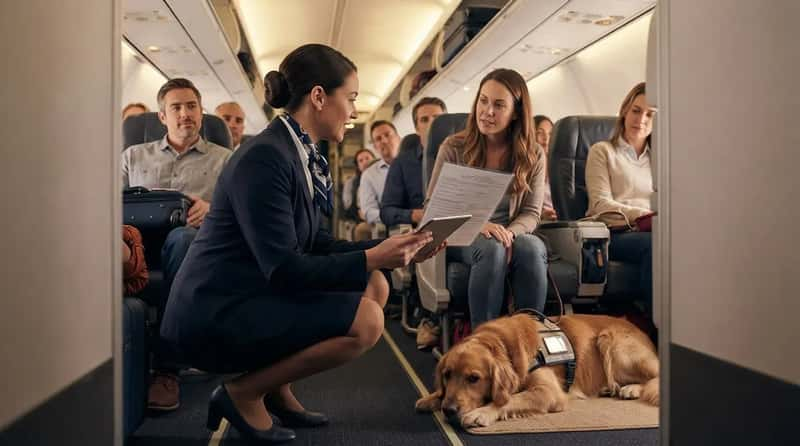
Animals on board get noticed instantly, usually by the whole row. Since a U.S. Department of Transportation rule took effect in January 2021, airlines only have to treat trained service dogs as service animals. Emotional support animals are now handled as pets. Crews look at leashes, carriers and whether an animal is staying calm.
Pets in carriers must fit under the seat and stay inside for the flight. Airlines can ask service-animal users for DOT forms. The crew can’t demand proof of a disability, but they can ask for the required paperwork and ask what task the dog performs. It’s a calmer process than the viral videos suggest.
Quick Compare
- Trained service dog: Works on a task tied to a disability, and the airline can ask for the DOT service-animal form.
- Emotional support animal: Treated as a pet on U.S. airlines since the 2021 DOT rule.
- Pet: Stays in a carrier under the seat for the whole flight.
Next, a service many travelers never think to ask for.
#4 – The Quiet Request for a Private Safety Briefing
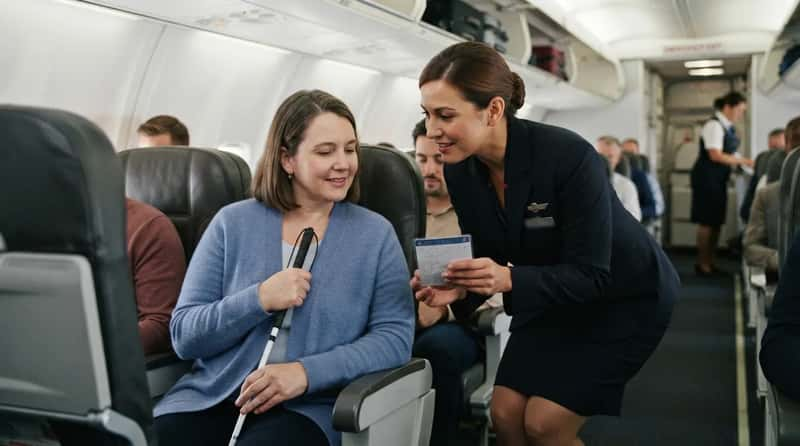
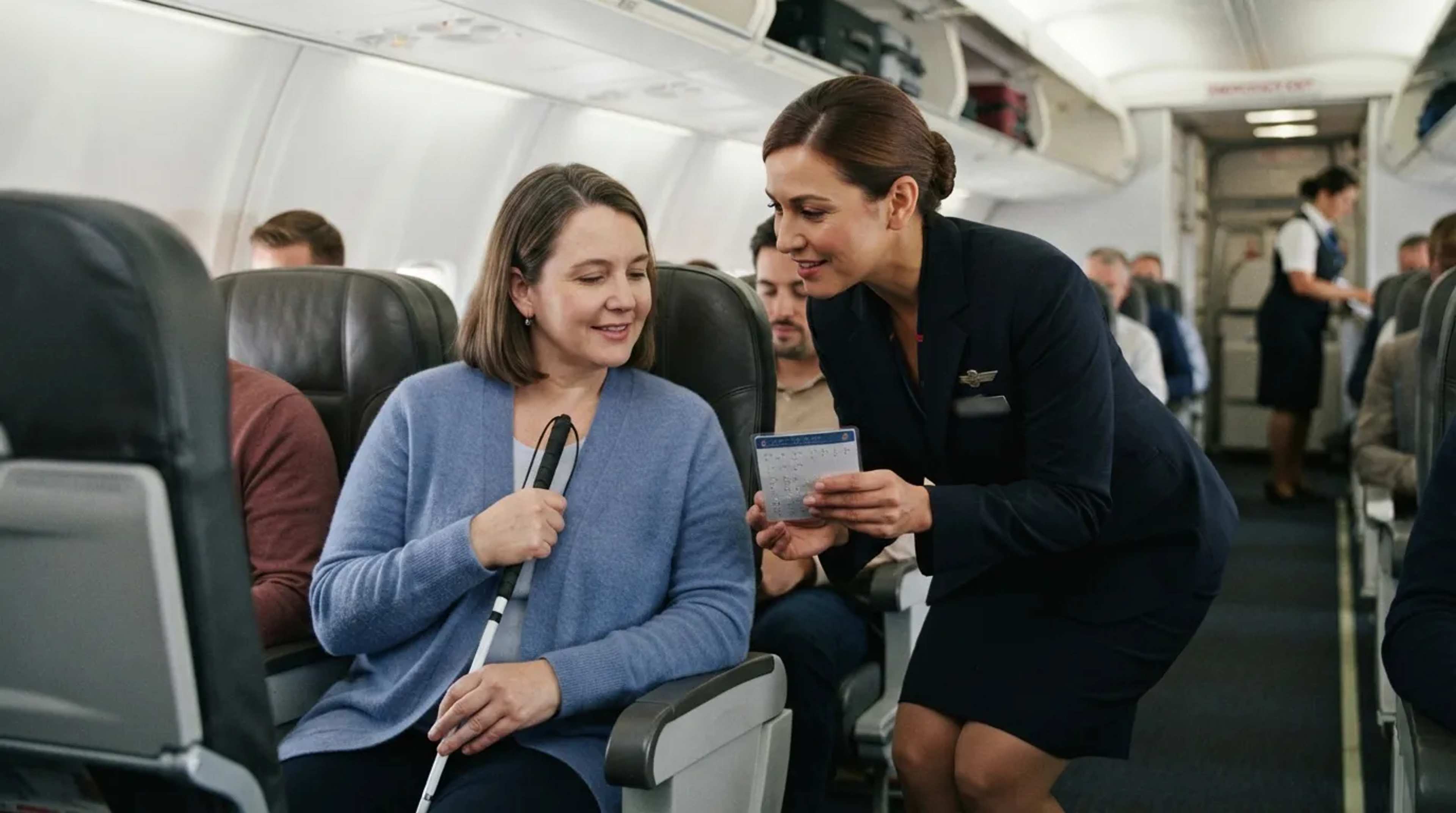
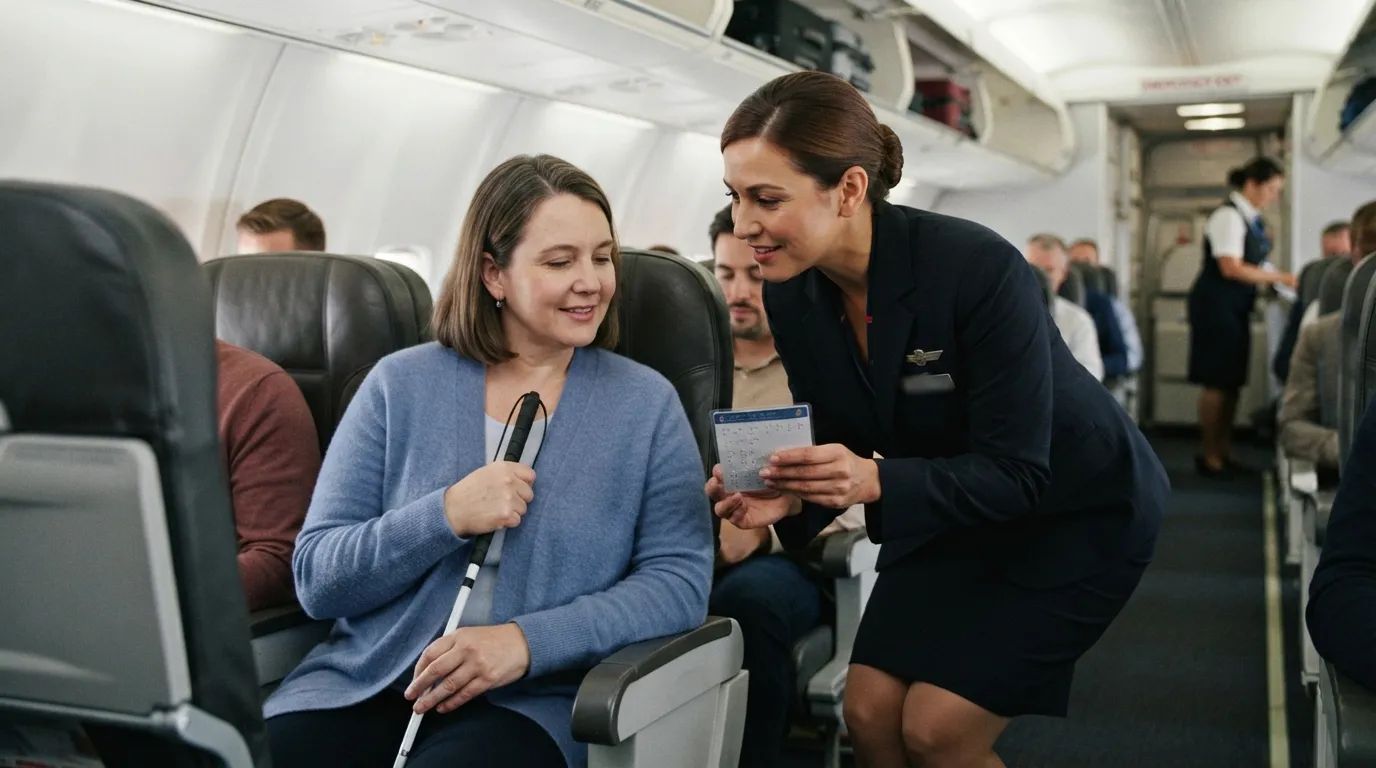
Some passengers need the safety demo explained differently. That might be someone who is blind, deaf or has limited mobility. Under federal air-travel accessibility rules, airlines must provide a personal safety briefing to a passenger with a disability who requests one. Crews are trained to give it.
Crews can’t always tell who wants this on sight. The passengers who speak up early tend to get the smoothest flights. It’s a small conversation that can change how safe and welcome someone feels for the next several hours.
Now, a harmless-looking move that crews watch closely.
#3 – The Seat Swap That Isn’t Quite as Harmless as It Looks
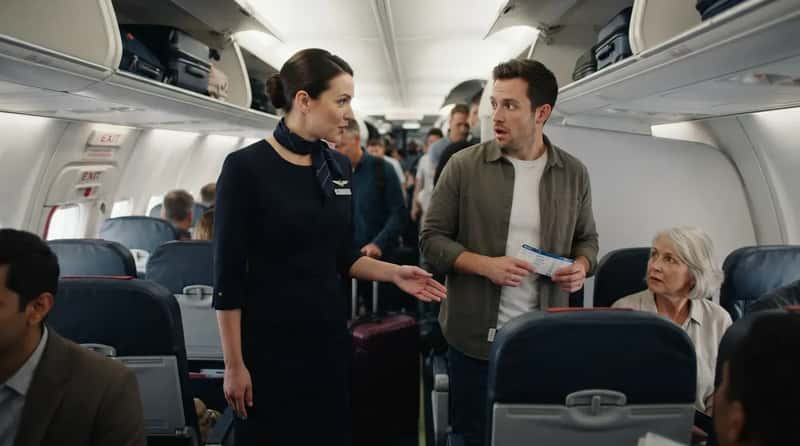
Passengers trade seats all the time. Crews see it happening during boarding and mostly stay out of it. But a swap can put someone in an exit row who doesn’t meet the requirements. On smaller regional aircraft, where weight and balance matter more, crews may even ask passengers to move.
There’s a real debate here. Many travelers feel that refusing to swap makes you the villain. Crews, on the other hand, mainly care that nobody sits where they shouldn’t. Families trying to sit together usually get help if they ask.
But the strongest tell may be what people do when things go wrong.
#2 – How You Act When the Plane Just Sits There
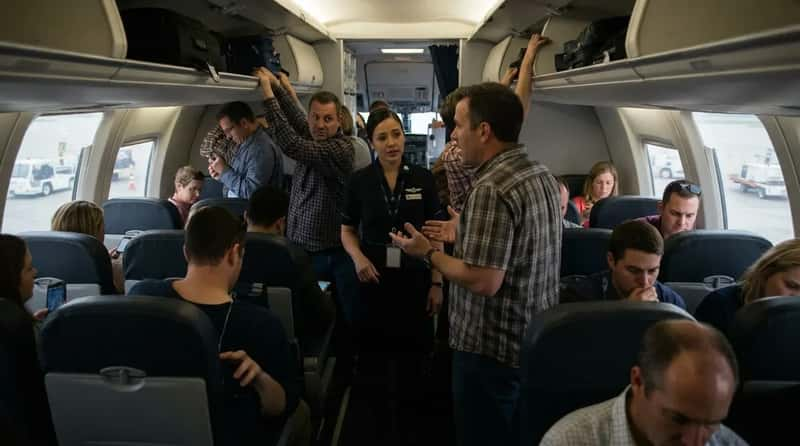
Delays reveal people. When the plane sits with doors closed, crews watch who stays patient and who stands up the moment the wheels stop. Federal rules limit tarmac delays. Airlines generally must let passengers off before three hours on domestic flights or four on international ones, with some safety and control exceptions.
Airlines must also provide water and snacks within two hours and keep lavatories working. A calm, friendly passenger can quietly settle the people sitting around them. An angry one can spread tension just as fast.
At a Glance
- 2 hours: Airlines must offer water and a snack.
- 3 hours: The domestic limit before passengers must be allowed off.
- 4 hours: The international limit, on the same terms.
- Exceptions apply for safety or security, or when air traffic control says returning to the gate would disrupt operations.
The crew is trying to keep a few hundred strangers comfortable in a locked metal tube. And the last clue is the one that matters most.
#1 – The Passenger Who Doesn’t Seem to Be Traveling Freely
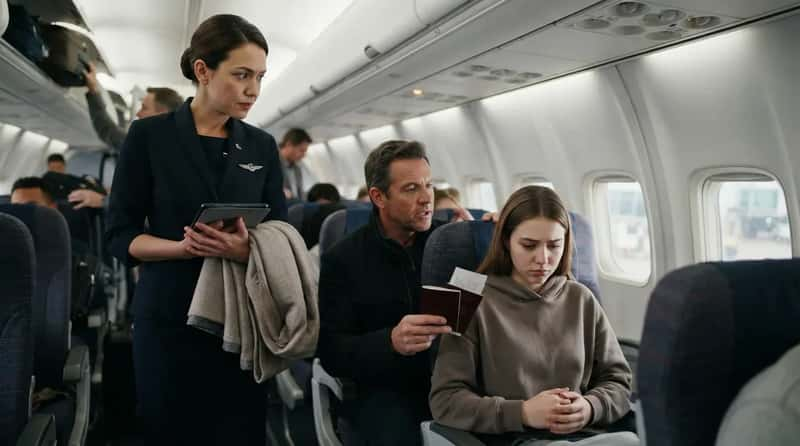
The most serious thing a flight attendant can notice is a person who seems to be traveling under someone else’s control. Airlines and the Department of Homeland Security’s Blue Campaign have trained crews to recognize possible signs of human trafficking. These can include someone else speaking for the passenger or holding their documents, visible fear, or confusion about where they’re going. No single sign proves anything.
In 2011, Alaska Airlines flight attendant Shelia Fedrick noticed a teenage girl who seemed afraid and was traveling with an older man. Her quiet intervention helped get the girl to safety, and her story is often used in training. A trained crew member’s attention is sometimes the only chance someone gets to be noticed. If you suspect trafficking, the National Human Trafficking Hotline is 1-888-373-7888.
Some of what crews notice is small, like a stuffed bag, a pair of flip-flops or headphones during the safety demo. Some of it is serious, like a passenger who looks unwell or one who may not be free. In every case, they’re reading the cabin before the door closes because they’re responsible for everyone on board.
So next time you board, remember that the friendly nod at the door goes both ways. Someone is looking out for you, one glance at a time.