A sleeper ticket sounds like the all-inclusive version of train travel: a real bed, meals, and someone to turn down your sheets. On Amtrak, a dedicated First Class attendant handles turndown service, helps with meals and helps with luggage. So you’d think you could just show up with a suitcase and a good attitude.
But the same small problems keep surfacing on cross-country runs: a curtain that won’t stay shut, a room the size of a closet, a stack of bags with nowhere to go. The fixes are cheap, and several fit in a coat pocket. One of them is a roll of something you’d expect to find in a garage, and the item at the very top of this list isn’t gear at all.
#15 – A Roll of Duct Tape (Yes, Really)
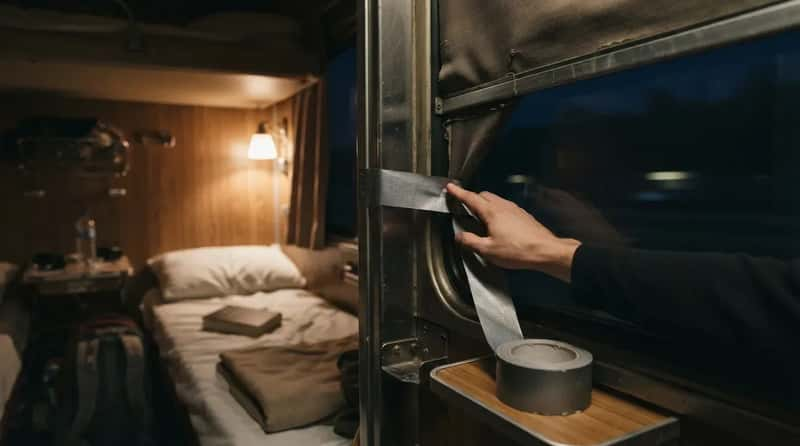
It’s the strangest item on the list, and the one veteran riders defend the hardest. Small annoyances turn up more often than you’d expect in an older railcar, from a curtain that won’t stay put to a window shade that rattles through every curve.
An attendant can’t fix everything from a supply closet, and nobody wants to page someone at 2 a.m. over a flapping shade. A quick strip of tape handles it in seconds. Rattles and clanking can drive you nuts, even in the newer cars. One small fix could be the difference between sleeping and staring at the ceiling.
#14 – Your Own Soda, Because the Café Pours Only One Brand
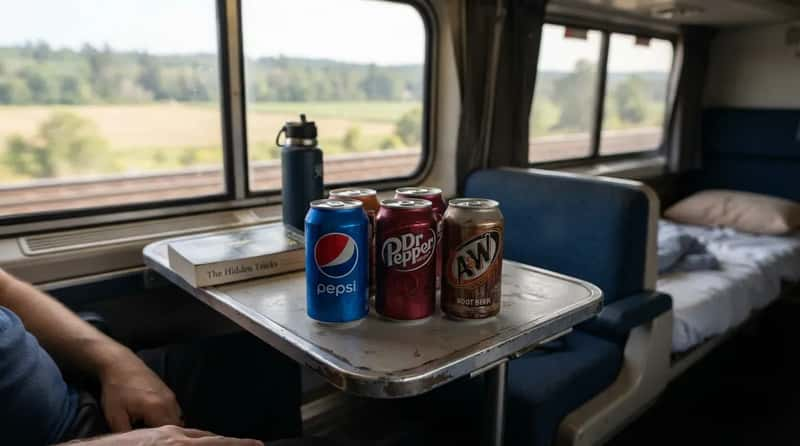
Onboard drinks come with a catch most first-timers miss. You’re allowed to bring soft drinks with you, and there’s a reason people do. Amtrak only carries Coke products.
If you’re loyal to Pepsi, Dr Pepper or one specific root beer, the menu won’t rescue you at hour 14. Some riders call that a trivial gripe. Others say it’s the first thing they pack. Either way, a couple of cans from home end the debate before it starts.
#13 – A Power Strip, Because Everyone Wants the One Outlet
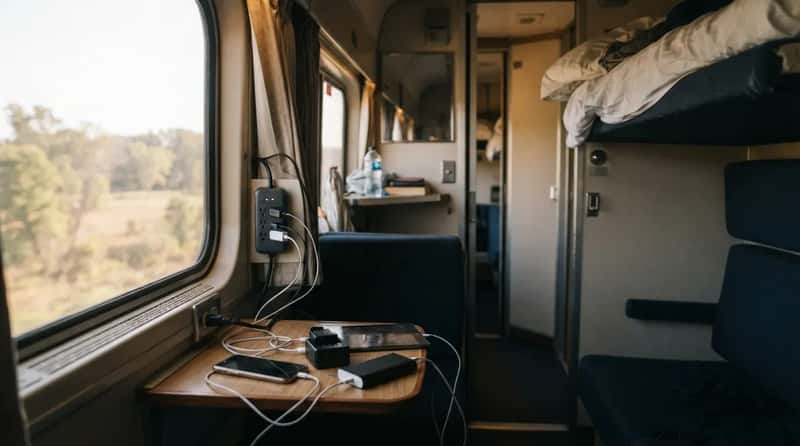
Your room has power, but probably less than your gadgets want. A roomette has a door, a window, climate controls, outlets and reading lights. One rail blogger notes there is always at least one outlet in a bedroom, and he suggests packing an extension cord.
A phone, a tablet, a camera and a headset add up fast. A multi-outlet power strip shows up on a list of what sleeping-car attendants say overnight passengers should pack. It sounds small, but it keeps a two-person room from turning into a charging fight at midnight.
Fast Facts
- A roomette includes outlets, climate controls and reading lights.
- One rail blogger says every bedroom has at least one outlet.
- His workaround is an extension cord, and a power strip does the same job.
- Phones, tablets, cameras and headsets all compete for the same spot.
#12 – Disinfecting Wipes, Because Shared Spaces Are Still Shared
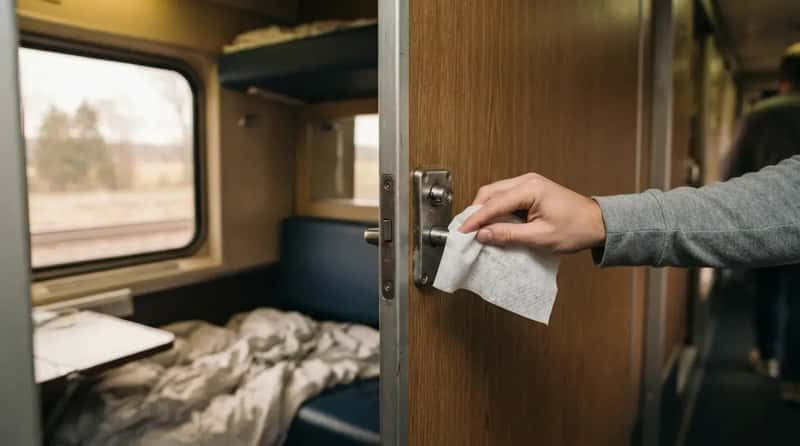
Even a private room has surfaces that hundreds of people have touched. On Superliner trains, Roomette passengers use the shared restrooms and showers in the car. That makes a pack of wipes one of the cheapest upgrades you can make.
One veteran rider says she wiped down her compartment long before COVID-19 arrived. Her list for the restrooms includes toilet seats, the sink countertop, faucet handles and door locks. It takes a minute. Most people never count how many handles they touch before breakfast.
#11 – Rubber Flip-Flops, Because the Shower Isn’t Yours Alone
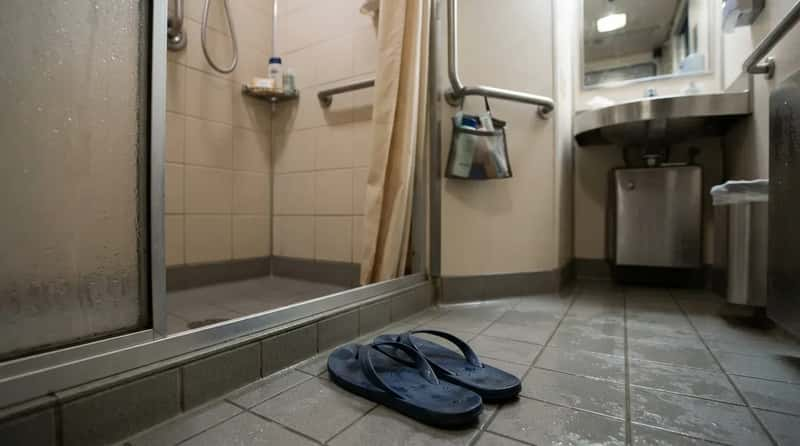
A hot shower is a real perk of a sleeper, and it raises a footwear question. The shared shower room is clean, but it’s still a shared shower room. One forum rider calls it a relatively clean but watery place that takes some preparation.
That rider packs bath shoes and a kit for wet places. Only Bedroom-class rooms come with a private in-room shower. They also include a private sink and restroom. Everyone else in a Superliner roomette heads down the hall, so a ziplock bag for wet shoes helps on the walk back.
At a Glance
- Superliner roomette: shared restrooms and showers in the car.
- Bedroom: private in-room shower, sink and restroom.
- Either way: flip-flops and a bag for wet shoes make the trip easier.
#10 – Your Favorite Snacks, Even Though Meals Are Included
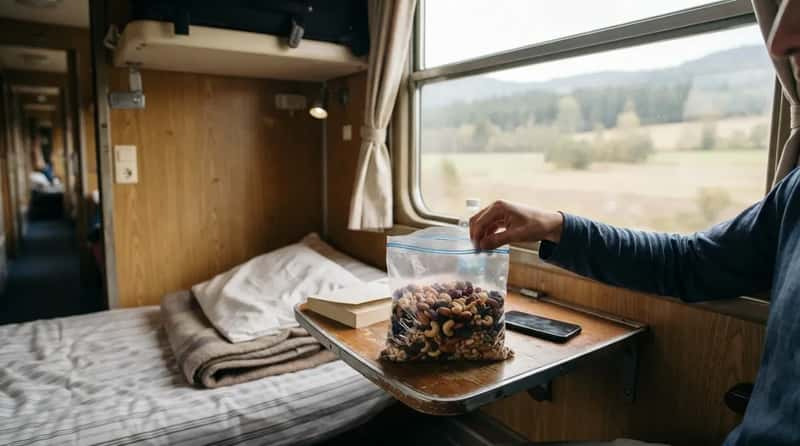
Free dining-car meals don’t always cover what you want, when you want it. Meals are complimentary for sleeping-car passengers. But you may find yourself craving something else, or just not loving the menu.
Veterans suggest bringing favorite snacks to tide you over between meals. One writer swears by trail mix with enough nutrients to handle unexpected circumstances. That might sound like overkill until a long delay stretches the gap between seatings.
#9 – A Collapsible Cooler for Anything That Can’t Wait
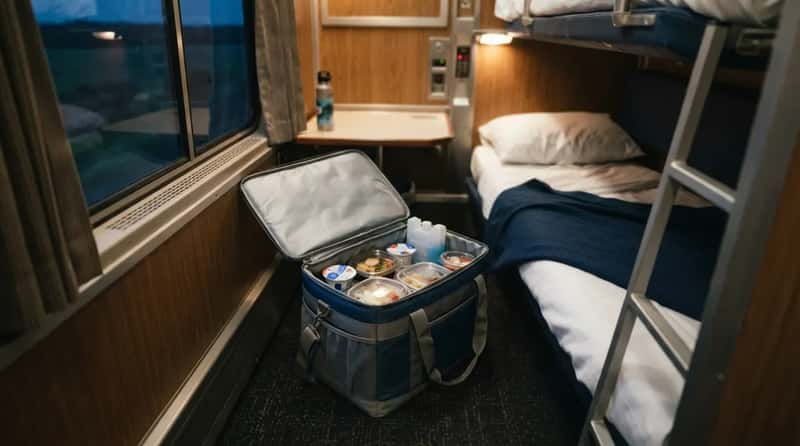
This one matters most for dietary or medical needs. If something has to stay cold, you need to bring your own cooler. Amtrak cannot heat or store personal items.
That means no borrowing the galley fridge. Your room attendant can get ice for you to replenish as needed. A fabric cooler folds flat once it’s empty, so it costs almost no space on the trip home. It’s a small piece of gear with a big consequence if you skip it.
#8 – A Small Bottle for the Room, With Strings Attached
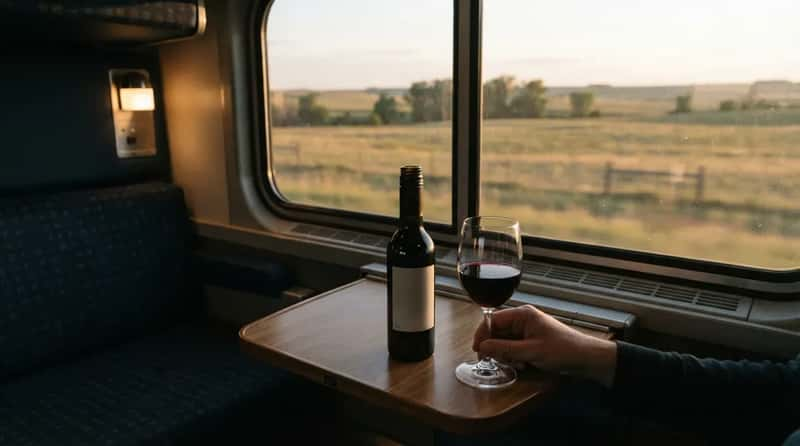
Sleeper rules really are different from coach rules. You’re allowed to bring your own alcohol into a private sleeper, whether a bedroom or a roomette. You can only enjoy it as long as you don’t carry it out of your private room into shared spaces.
That’s where riders disagree. One forum poster says most dining attendants don’t mind BYOB in the dining car, while a travel guide says to keep it in the room. Policies can change, so check Amtrak’s current rules before you pack a bottle. Either way, a quiet drink in your own room while the prairie rolls past is hard to beat.
Worth Knowing
- Private sleepers, both bedrooms and roomettes, are where personal alcohol is allowed.
- The shared spaces are where the trouble starts.
- Riders disagree about the dining car, so the room is the safe bet.
- Rules can change, so check Amtrak’s current policy before you pack.
#7 – Earplugs, a Mask and Safety Pins, Because Privacy Is a Curtain
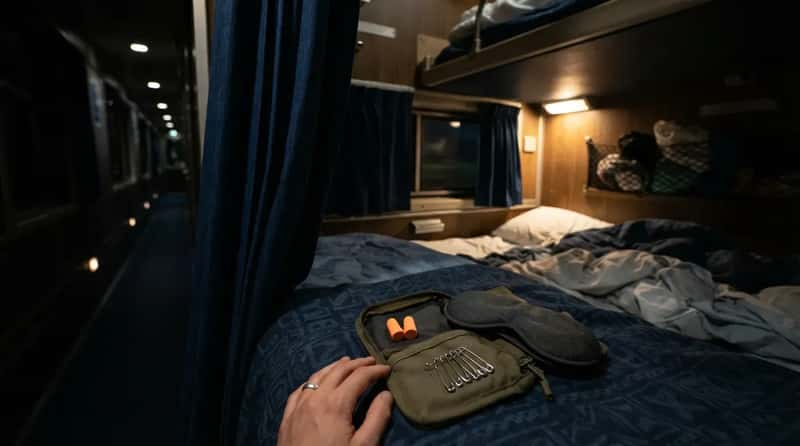
Your room feels private until a hallway conversation proves otherwise. One veteran rider says Amtrak sleepers are a dormitory, so he packs safety pins to close the curtains completely. He adds earplugs and a face mask.
That’s one rider’s opinion, not Amtrak’s pitch. Still, it matches what many people discover around midnight. A simple pin can be the difference between a sliver of corridor light and total darkness. The tip costs a couple of dollars and takes seconds to set up.
#6 – Your Own Pillow, Because the Standard Ones Run Thin
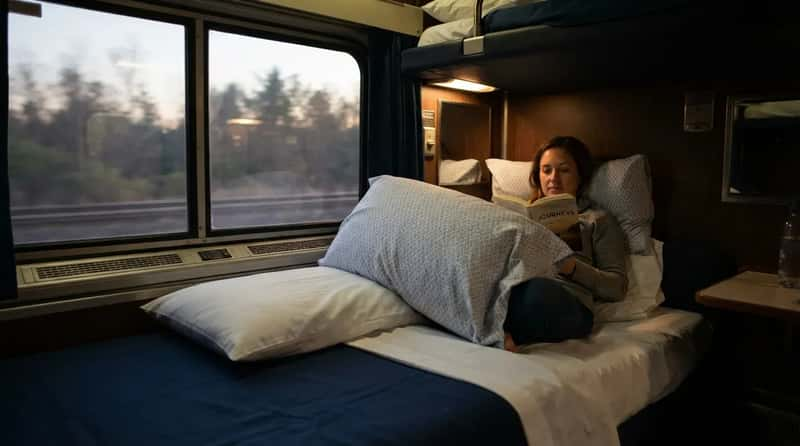
The bed is supplied, but comfort is personal. Amtrak provides blankets and pillows, and riders who want a better night’s sleep can bring their own. One guide’s blunt take: Amtrak pillows are pretty thin.
If you read in bed, you may want more support. Extra pillows are easy to get from the upper bunk if you ask your room attendant. One forum poster suggests buying a cheap pillow and tossing it at the destination. That’s a divisive idea, and not everyone will love the waste. But it solves the problem.
#5 – Soft Clothes, Because Travel Jeans Make a Rough Night
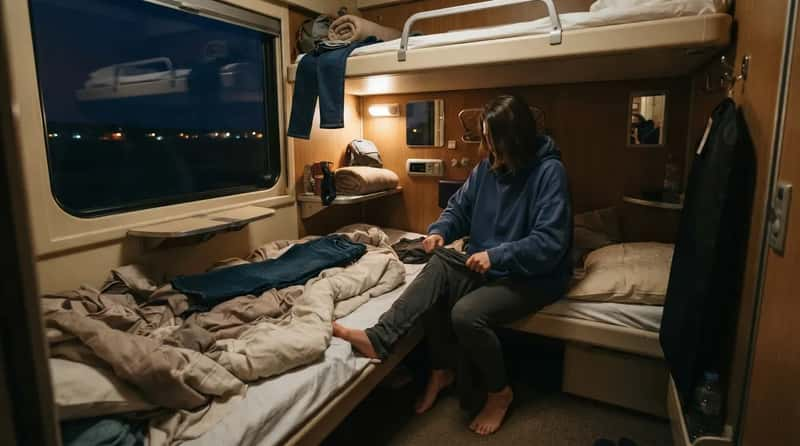
The first night is where most people learn this lesson. One rider said that on her first bedroom trip, she slept in the clothes she wore to travel. She later switched to leggings and a pajama top and slept comfortably.
Another forum poster wears leggings and a big sweatshirt. Some riders pack “train clothes” as a category of their own. It’s practical, not fancy. Two adults in a roomette have to change in tight quarters, so simple layers beat anything complicated.
Why It Stands Out
- It costs nothing if you already own leggings and a big sweatshirt.
- It fixes the “slept in my travel clothes” problem before it starts.
- Simple layers are easy to change into inside a tight roomette.
#4 – A Small Thank-You Treat for the Crew
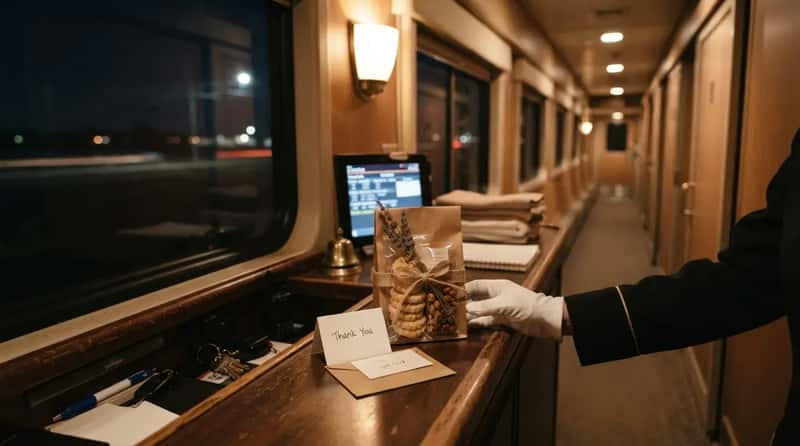
Not every thank-you has to be cash. One tipping guide says packaged treats and gift cards are lovely gestures for train staff. It’s not required, and it won’t replace a tip.
The reason is simple. Each sleeping car has its own attendant. That makes your attendant the person who handles your bedding, your meals and your luggage. A small, sealed treat shows you noticed. Most people don’t think of it until the trip is over.
#3 – Small Bills for the Dining Car, Because “Free” Isn’t Quite Free
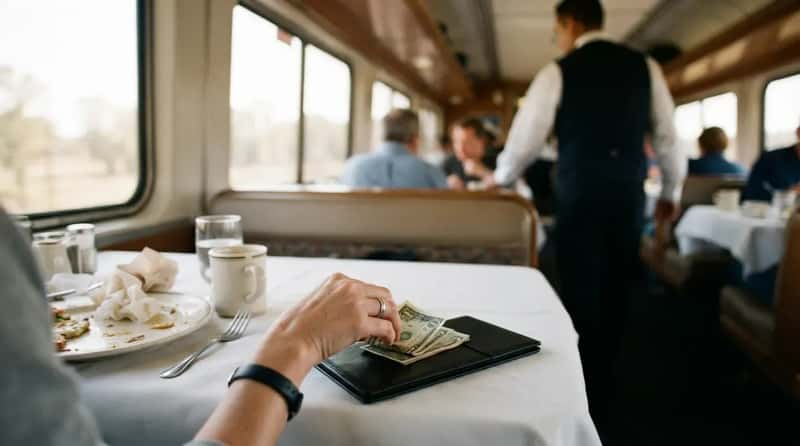
Your meals are included, but the people serving them still notice who tips. One forum poster says a server will appreciate a small tip after each meal. There’s no official rule, and opinions vary widely.
One writer suggests $5 per person for breakfast and lunch, and $10 per person for dinner. Another prefers 15-20% of what the meal would cost a coach passenger. There are no ATMs on the train, and you can’t get cash back. If you forget cash, one guide says you can buy a drink and add the meal tip on the charge slip.
Quick Compare
- Flat amounts: $5 per person for breakfast and lunch, $10 for dinner.
- Percentage: 15-20% of what a coach passenger would pay for the meal.
- No cash left: buy a drink and add the tip on the charge slip.
#2 – A Smaller Bag, Because the Room Is Tiny
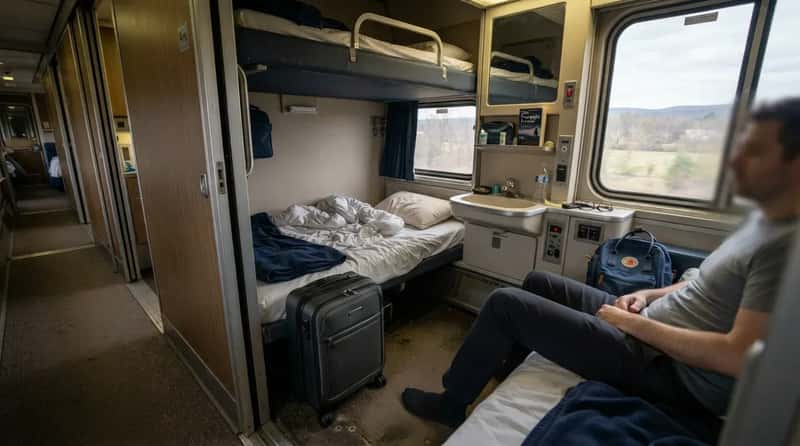
The room is smaller than most people picture. A smaller rolling case is best, because sleeping-car rooms are tight. With a bigger bag, you may keep leaving your roomette to dig through it in the vestibule.
One guide suggests bringing a small backpack to carry items back and forth. On a Viewliner, there’s really no space to stow luggage except in your compartment. On a Superliner, there’s a small luggage storage area on the first level. Pack for the room you’ll actually have, not the one you imagined.
#1 – Cash for Your Sleeping Car Attendant
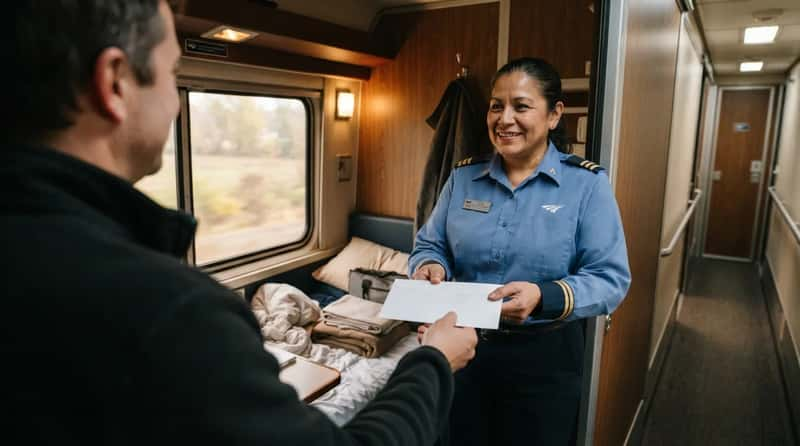
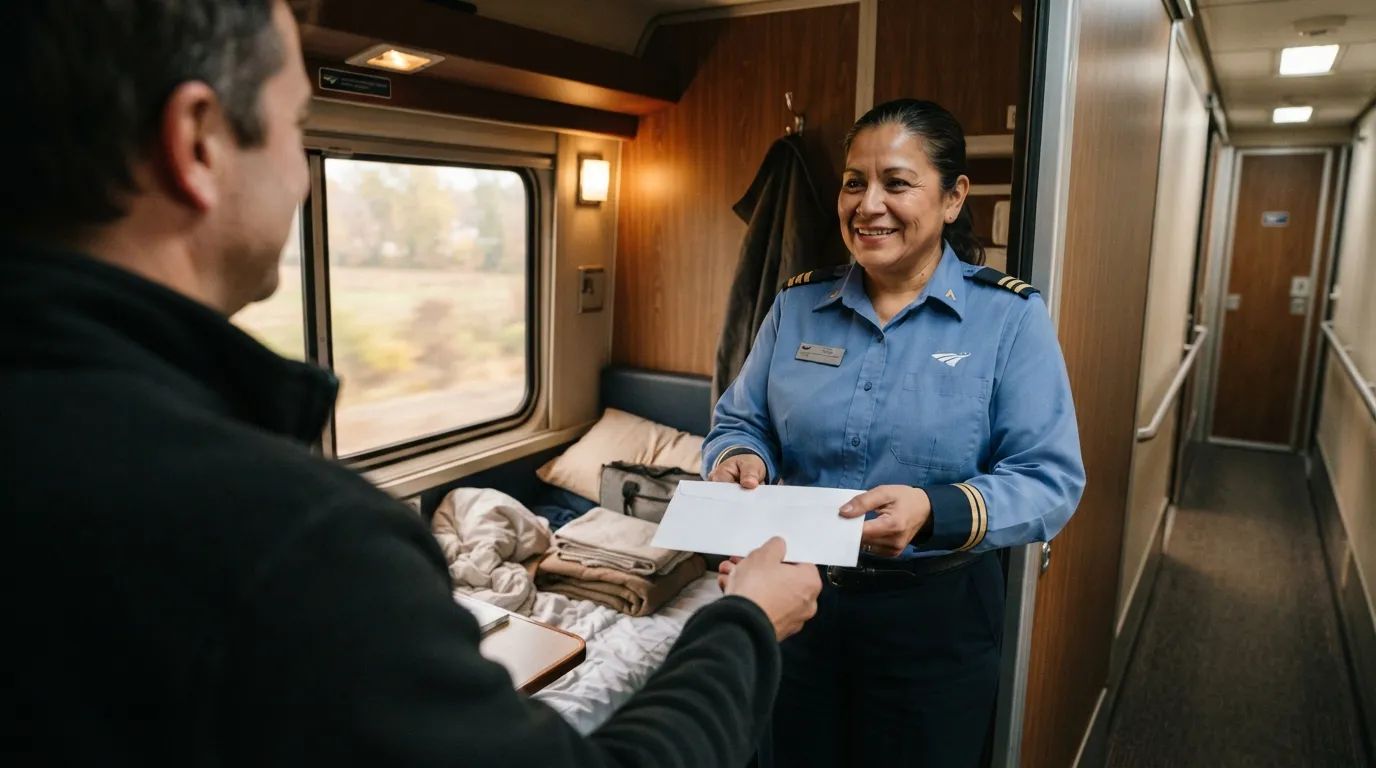
It’s the thing attendants would most like you to remember, and the one riders forget most. Your attendant does turndown, helps with meals and handles luggage. One guide says some passengers tip sleeping-car attendants $10 to $20 per night, usually at the end of the trip.
Another writer suggests $20 for the first night and $10 for each additional night. That’s a suggestion, not an Amtrak policy. Because there are no ATMs aboard, you have to bring the cash with you. Not everyone tips, and plenty of riders argue about what’s fair. But if the service was good, small bills in an envelope are the easiest thank-you on the train.
The best sleeper passengers aren’t the ones with the fanciest gear. They pack for a tiny room, shared bathrooms, one soda brand and a crew that can’t fix everything. The surprises are small: duct tape, a power strip, a cooler, safety pins.
The biggest one costs nothing to plan, but nobody can print it for you at 3 a.m. somewhere in the middle of the country. Which item would you never have thought to pack?