Most travelers walk into a hotel room, drop their bags, flip on the TV, and call it settled in. That’s the mistake. The first two hours of any hotel stay are quietly the most powerful window of the entire trip, and almost nobody uses them.
Frontline hotel staff have said it for years without most guests ever catching on: what you do in that first afternoon can shape your room quality, your amenities, and even your final bill. Here’s what actually pays off before the sun goes down.
15. Walk the Entire Room Before You Unpack a Single Bag

Sounds obvious, but most guests skip it entirely. Check the shower pressure, test the outlets near the bed, open every drawer, and peel back the sheets before you commit to staying put.
If something’s wrong, you have leverage the moment you arrive that disappears once your suitcase is open and your clothes are hanging in the closet. Front desks are far more accommodating about room swaps in the first 30 minutes than they are three hours later.
14. Photograph Any Existing Damage Immediately

Scuffed walls, a cracked mirror, a broken lamp switch – snap a photo the second you notice it, before you touch anything else. This one habit protects you from getting blamed for damage you didn’t cause.
Some properties have gotten aggressive about incidental damage charges at checkout, especially resorts with strict deposit policies. A few photos taken in the first five minutes can save you an ugly dispute days later.
Fast Facts
- Photos taken within minutes of arrival carry more weight than a memory from checkout day.
- Texting or emailing the photos to yourself creates an automatic timestamp.
- Include the room number in the shot or caption so there’s no confusion later.
- Cracked mirrors, chipped furniture, and stained carpet are among the most common dispute triggers.
13. Ask the Front Desk About Late Checkout Right Away

Most guests wait until the morning they’re leaving to ask for extra time, which is exactly when the answer is most likely to be no. Asking on arrival afternoon, before the next night’s occupancy is locked in, gets a surprisingly higher yes rate.
Staff can tentatively flag your room for a later checkout before the system fills up. It costs nothing to ask, and the timing matters more than the request itself.
12. Locate the Nearest Ice Machine and Stairwell
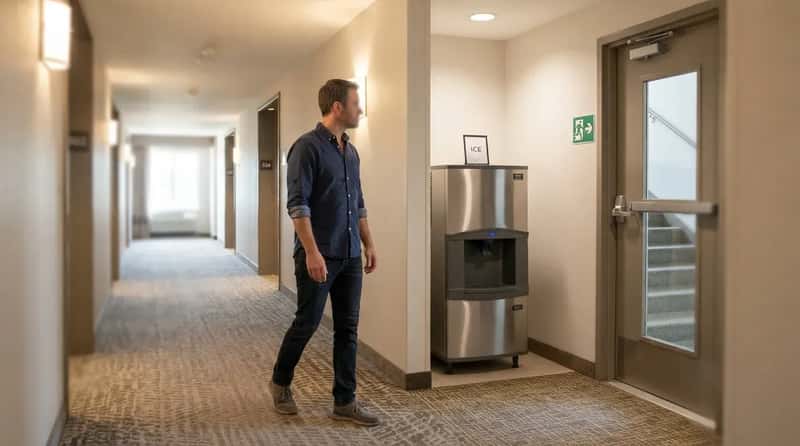
It feels unnecessary until 11 p.m., when the elevator is packed or out of service and you’re wandering an unfamiliar hallway in socks. Scouting your exit routes and ice location during daylight means you’re never fumbling in the dark.
Hotel security teams quietly recommend this more than guests realize. A five-minute afternoon walk of your floor beats a confused, half-asleep search later that night.
11. Test the Wi-Fi Before You Actually Need It

Free hotel Wi-Fi is notoriously inconsistent, and finding out it’s broken while you’re calm and unpacking beats discovering it during an urgent email at midnight. Some properties throttle the free tier and quietly reserve full speed for a paid upgrade.
Load a video, check your email, and confirm the connection actually holds up across the whole room, not just near the door. If it’s weak, ask about a stronger connection before the front desk line builds up later.
Worth Knowing
- Many hotels split Wi-Fi into a free basic tier and a faster paid upgrade.
- Signal strength often drops noticeably near the far wall, away from the router.
- Streaming a short video is a quick, realistic way to test real-world speed.
- Reporting a weak signal in the afternoon gives staff time to actually fix it before evening.
10. Introduce Yourself to Housekeeping Staff by Name

A short, friendly hello in the hallway does more than most people expect. Housekeepers who recognize a guest as polite and low-maintenance often quietly prioritize that room for extra towels, faster turnaround, or small favors.
It’s not a bribe or a trick, it’s basic human reciprocity that hotel workers have described for years in service industry conversations. A little recognition on day one tends to shape the tone of the entire stay.
9. Scope Out the Pool or Gym Hours Immediately
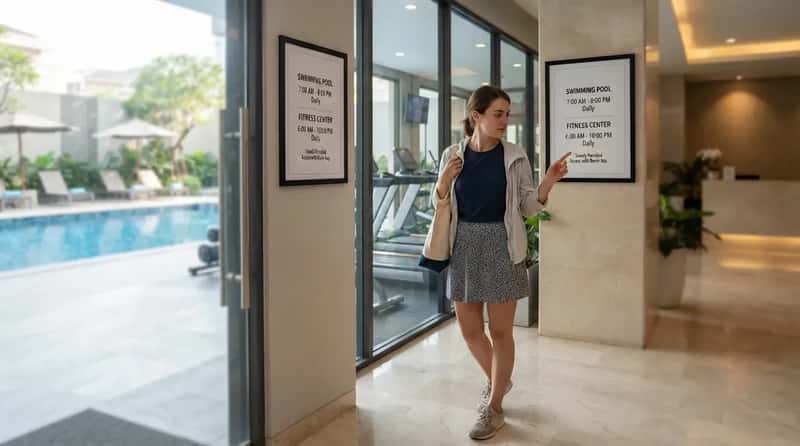
Amenity hours vary wildly between properties, and many close earlier than guests assume, especially outdoor pools after Labor Day or gyms with limited overnight staffing. Finding this out on afternoon one saves you a wasted trip downstairs in workout clothes at 9 p.m.
Some hotels also require a printed schedule or reservation for peak pool hours on busy weekends. Skipping this check is one of the most common reasons guests miss amenities entirely during short stays.
8. Check the Minibar and In-Room Snack Pricing Before Touching Anything
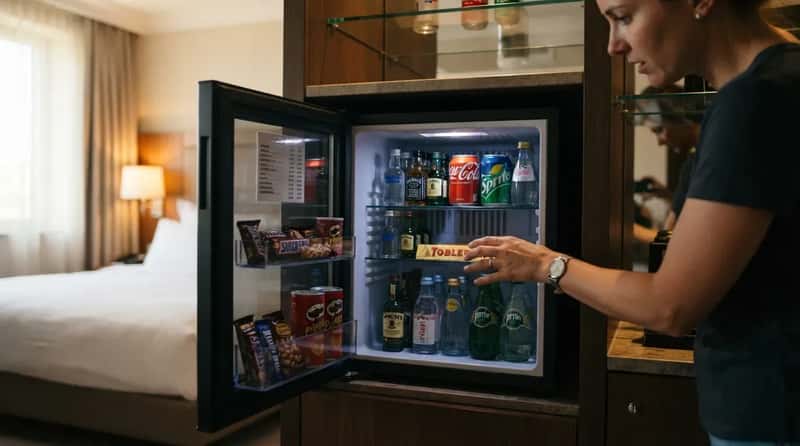
Minibar pricing can be shockingly steep, with some snacks and drinks marked up several times over retail. A quick glance at the price card prevents an unpleasant surprise on the final bill.
Many minibars now use weight-sensor shelves that charge you the instant an item is lifted, even if you set it right back down. Knowing this in advance stops an innocent afternoon snack search from turning into an accidental charge.
Quick Compare
- Minibar snacks: typically priced well above what the same item costs down the street.
- Nearby convenience stores: usually a fraction of the in-room price for the same brand.
- Weight-sensor shelves: register a charge the moment an item lifts, not when it’s opened.
- Bottled water: consistently one of the most marked-up items in the entire room.
7. Find the Nearest Non-Hotel Food Option Within Walking Distance

Room service and hotel restaurants routinely charge a premium of 20 to 30 percent above comparable local pricing, plus service fees on top. A short afternoon walk to scout nearby options often turns up better food for less money within a few blocks.
This is especially true near airport hotels and convention-district properties, where in-house dining leans hard on captive-audience pricing. Locals almost never eat at the hotel restaurant, and that’s usually a signal worth following.
6. Register for the Hotel’s Loyalty Program on the Spot

Signing up at check-in, rather than online before the trip, sometimes triggers same-stay perks like room upgrades, late checkout, or bonus points that aren’t available retroactively. Front desk staff often have small on-the-spot incentives they can apply immediately.
Even mid-tier chains have quietly expanded these instant-enrollment perks in recent years to compete with independent boutique properties. It takes under five minutes and can change the entire shape of the trip.
5. Call the Front Desk to Confirm Any Pre-Booked Extras
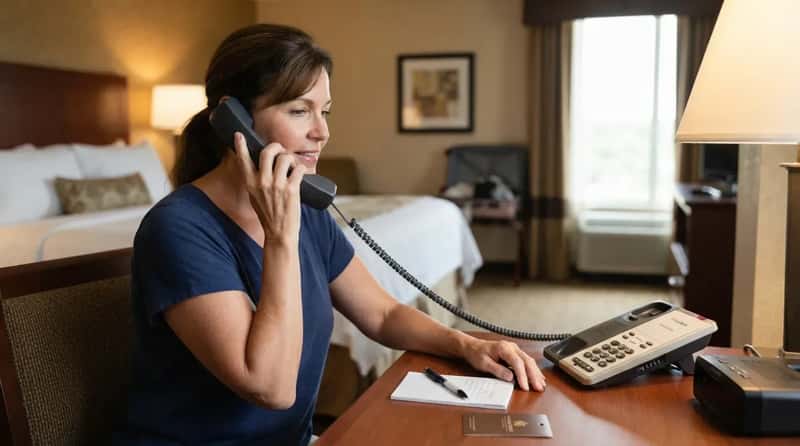
Late arrival notes, spa credits, breakfast vouchers, or special requests submitted online sometimes never make it into the in-house system. Confirming everything by phone in the first hour catches these gaps before dinner, when the front desk gets slammed.
Third-party booking platforms are especially prone to these communication gaps between the site and the actual property. A missing confirmation is far easier to fix at 3 p.m. than at 9 p.m. after a long day of travel.
4. Take a Slow Walk Around the Property Grounds

Beyond the lobby and elevator bank, most hotels hide quieter corners: a rooftop deck, a hidden garden, a lounge with better views than the room itself. These spaces rarely get advertised, and guests who never leave their floor often never find them.
Finding them on afternoon one means you actually get to use them, instead of stumbling onto a stunning rooftop view during the last ten minutes before checkout. It’s one of the simplest ways to squeeze more value out of a stay you’ve already paid for.
At a Glance
- Rooftop decks and sky lounges often sit unlisted on the main lobby directory.
- Hidden gardens and courtyards show up more often in older, historic properties.
- Quiet reading nooks and library corners frequently go unused by most guests.
- Some hotels have a scenic upper-floor lounge with better views than most rooms.
3. Ask a Local Staff Member for One Honest Recommendation

Skip the laminated tourist map and ask a bellhop or front desk agent what they’d actually do that afternoon. Staff recommendations tend to skew toward smaller, less crowded spots that never show up in a typical search.
This one question often produces the most memorable part of an entire trip, echoed again and again across traveler stories and forums. A genuine local tip beats a generic tourist pamphlet almost every time.
2. Set Your Room Temperature and Lighting Early, Not at Bedtime
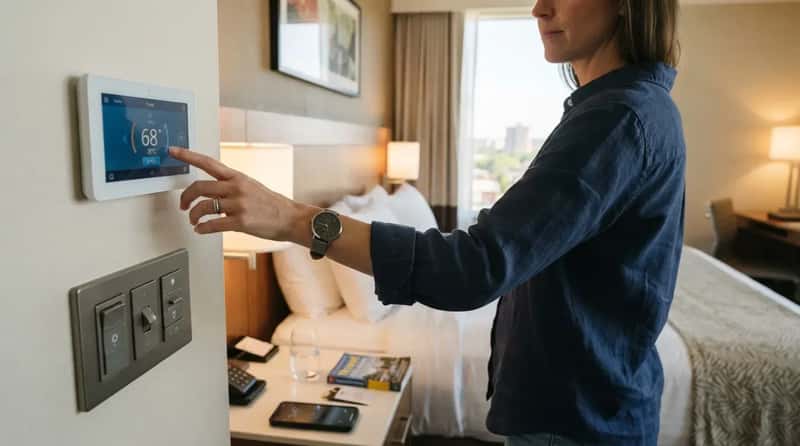
Hotel HVAC systems and lighting panels are notoriously inconsistent, and some take over an hour to fully adjust a room’s temperature. Setting it during the afternoon means the room is actually comfortable by the time you’re ready to sleep, not still cooling down at midnight.
It’s a small, unglamorous step, but frequent travelers consistently name it as one of the most overlooked comfort factors of a stay. A room that feels off at bedtime is usually just a setting nobody adjusted early enough.
1. Actually Sit Still in the Room for Ten Quiet Minutes

This is the one almost everyone skips entirely. Before rushing out to sightsee or unpacking every last item, sitting in the room and doing nothing resets travel stress in a way that’s easy to underestimate.
Frequent flyers and flight attendants alike have long described this quiet decompression window as the difference between a trip that feels rushed the whole way through and one that feels intentional from the start. It costs nothing, takes almost no time, and it’s still the step most people never think to take.
None of these are complicated. None require special access, extra money, or insider status. What they have in common is timing, because the first afternoon is simply when hotels are most flexible, staff are least rushed, and small requests carry the most weight.
Miss that window, and you’re stuck navigating the hotel on its terms instead of yours. Use it, and the rest of the stay tends to fall into place with a lot less friction than anyone expects walking in.