Picture this: you’ve barely clicked your seatbelt, tucked your purse under the seat, and settled in with your travel pillow, and the driver up front already has you figured out. Not your name. Not your life story. But something closer to the truth than most passengers would ever guess, and they got there before the bus even merged onto the highway.
Coach drivers aren’t reading minds. They’re reading patterns, the same ones that repeat trip after trip, decade after decade, especially among passengers over 60. What they notice in that first hour is oddly specific, sometimes a little uncomfortable, and often kinder than you’d expect. Here’s what they’ll actually admit once you get them talking.
16 – The Over-Packers Who Need Two Storage Bins
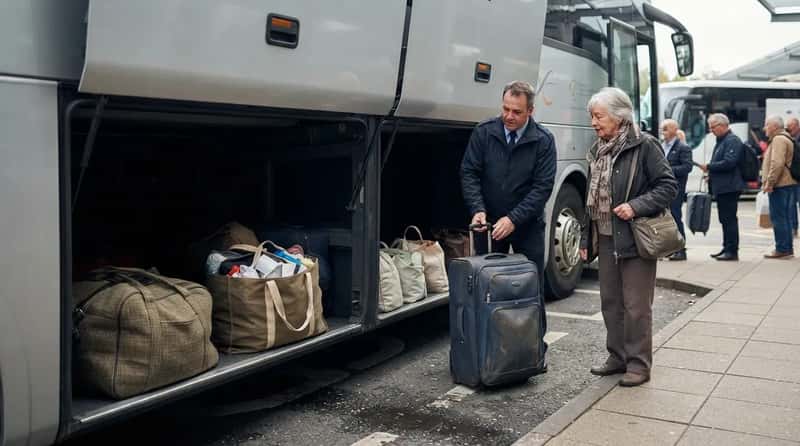
Drivers spot the over-packers before boarding even wraps up. These are usually the passengers over 60 who show up with a rolling suitcase, a duffel bag, and a tote stuffed with “just in case” extras. Within seconds, the driver already knows whose bags are going to swallow half the underneath storage bay.
The reasoning behind it might surprise you. Many older travelers over-pack because they remember decades of unpredictable trips and want backups for everything, from spare sweaters to extra reading glasses. Drivers say it’s almost never about vanity and almost always about control. The heaviest bags on the bus usually belong to the most experienced travelers, not the newest ones.
15 – The Sound Check: Who’s Secretly Hard of Hearing
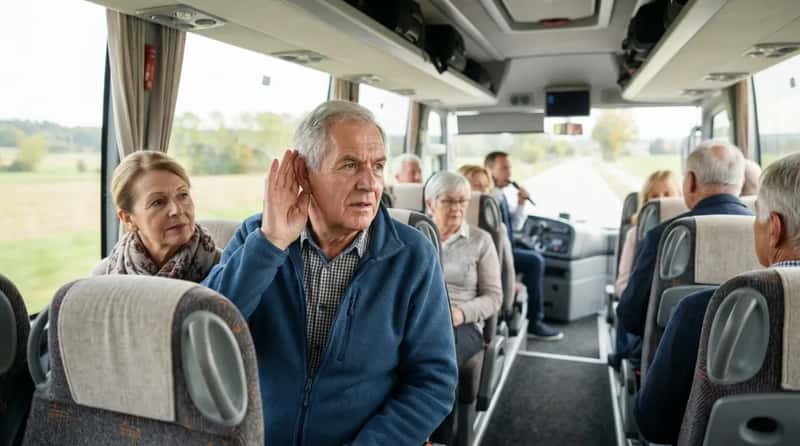
Within the first few announcements, drivers already know who didn’t catch a word. It shows up in small ways: a delayed nod, a request to repeat the departure time, or someone leaning forward instead of just asking outright. Drivers pick up on it almost instantly because it changes how they run the rest of the trip.
Most passengers won’t admit it, so drivers quietly adjust without making a scene. They repeat key details a little louder near certain seats, or step closer and make eye contact before speaking. Drivers say hearing loss is the most common thing passengers over 60 try to hide, and the easiest one to spot anyway.
Fast Facts
- About 1 in 3 adults ages 65 to 74 live with some form of hearing loss.
- Nearly half of adults 75 and older experience noticeable hearing loss.
- Most people who notice a hearing change wait years before addressing it.
- Age-related hearing loss is the single most common type among older travelers.
14 – The Blanket Brigade: Passengers Who Run Cold No Matter the Season

Drivers know exactly who’s going to ask about the air conditioning before the bus even leaves the parking lot. These passengers arrive with a blanket, a scarf, or a jacket draped over their arm no matter what the outside temperature says. It’s one of the most predictable patterns on any coach trip.
Interestingly, drivers say this has less to do with true cold sensitivity and more to do with circulation changes that come naturally with age. Once one passenger speaks up about the chill, others quietly agree, and the thermostat becomes a running negotiation for the whole ride. A single complaint about the AC in the first ten minutes almost guarantees three more before the first stop.
13 – The Route Captain: One Passenger Always Becomes the Unofficial Leader
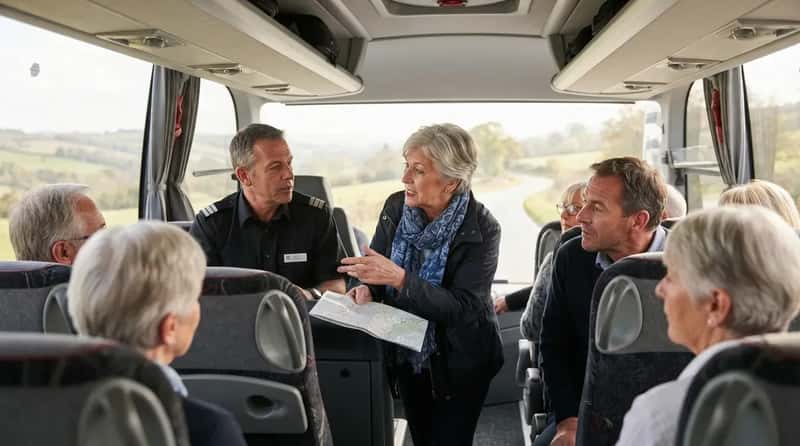
Every group has one. Drivers say there’s almost always a passenger over 60 who takes it upon themselves to ask the detailed questions on behalf of everyone else. They want exact timing, backup plans, and confirmation on every stop before anyone else even thinks to ask.
This person usually isn’t the loudest talker on the bus, but they quietly become the go-between for the driver and the rest of the group. Other passengers start directing their own questions to this person instead of the driver. Drivers privately admit they lean on this “route captain” to keep the whole group calm and organized.
12 – The Snack Stockpilers Who Never Trust the Rest Stop

Drivers notice who brought their own food supply before the wheels even start turning. These passengers pull out sandwiches, granola bars, or a thermos of coffee within the first thirty minutes, clearly prepared to skip whatever the rest stop is offering. It’s rarely about pinching pennies.
More often, it’s about dietary needs, a bad experience with gas station food years ago, or simply not wanting to depend on a schedule they can’t control. Drivers say this habit is one of the clearest signs of a seasoned traveler. The passengers who pack their own meals are almost never first-timers on a coach tour.
11 – The Anxious Itinerary-Checkers
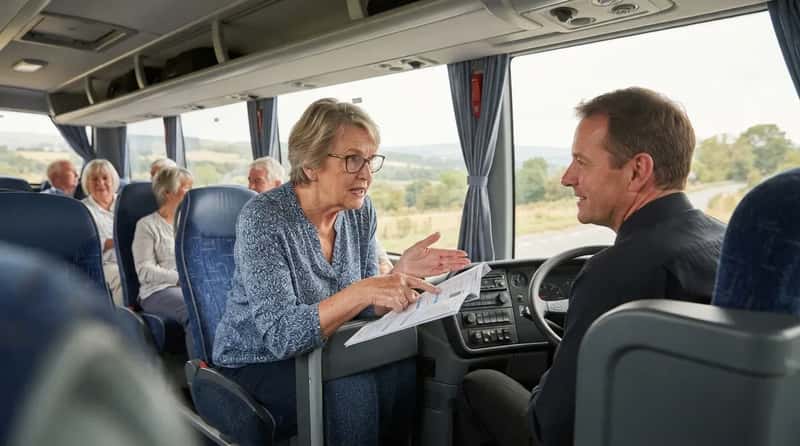
Some passengers can’t relax until every detail of the day is confirmed out loud. Drivers say these travelers will ask about arrival times, bathroom stop locations, and lunch options more than once in the first hour alone, even after the itinerary was already handed out in writing.
It’s not distrust. Drivers explain that repeated questions usually come from someone who’s had a rough trip before, like a missed connection or confusing directions on an older tour. Once the schedule gets confirmed a few times, they visibly relax into their seat. Drivers say calmly answering the same question three times is basically part of the unwritten job description.
10 – The Handrail Test: Spotting Mobility Needs in Seconds
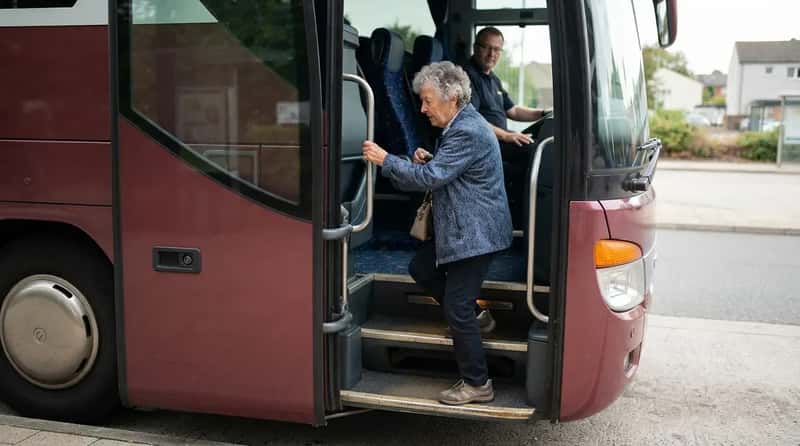
Drivers say boarding itself tells them almost everything they need to know. How a passenger grips the handrail, how long they pause on the steps, and whether they quietly ask for a hand all happen in seconds, but drivers register every bit of it instantly.
This isn’t judgment, it’s practical. Drivers use this information to decide who might need extra time at rest stops or a seat closer to the door for easier exits. Passengers rarely realize how much they’ve given away just by climbing three steps. A two-second pause on the bottom step tells a driver more than a ten-minute conversation would.
At a Glance
- Grip strength on the handrail during boarding
- How long a passenger pauses on the bottom step
- Whether help is requested before it’s even offered
- Seat choice relative to the door for easier exits
9 – The Window-Seat Photographers

Drivers can usually tell who’s going to spend the whole trip with a phone or camera pressed against the glass. These passengers claim the window seat immediately and start snapping photos before the bus has even left the pickup lot, often of things nobody else even notices.
It’s one of the more charming patterns drivers mention, mostly because it never seems to fade throughout the day. By the final stretch, these same passengers usually have hundreds of photos of scenery, quirky road signs, and roadside diners. Drivers say window-seat photographers are almost always the ones who leave the warmest reviews afterward.
8 – The Motion-Sickness Signal
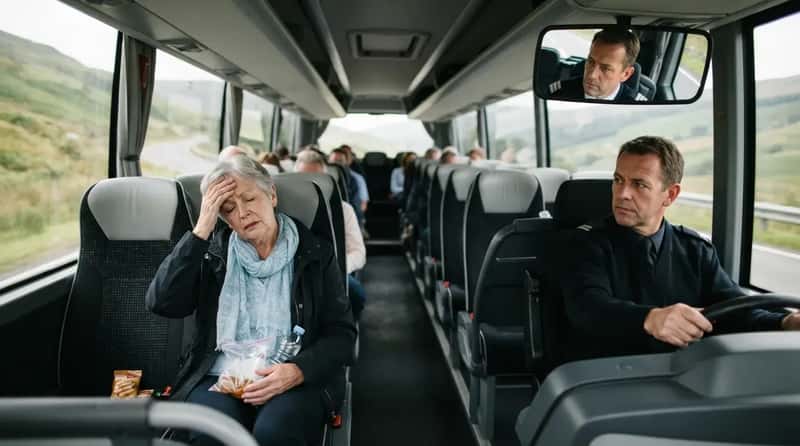
Certain passengers give themselves away within the first few curves of the road. Drivers notice the pale look, the sudden quiet, or the request to switch seats closer to the front. It’s a pattern experienced drivers say they can predict before the passenger even opens their mouth.
Many older travelers deal with more motion sensitivity than they did in younger years, and most have already learned to manage it with medication, ginger candy, or simply picking a front-facing seat. Drivers say catching this early heads off a much bigger problem later in the trip. Front-row seat requests in the first ten minutes are rarely random.
7 – The Front-Row Reservation
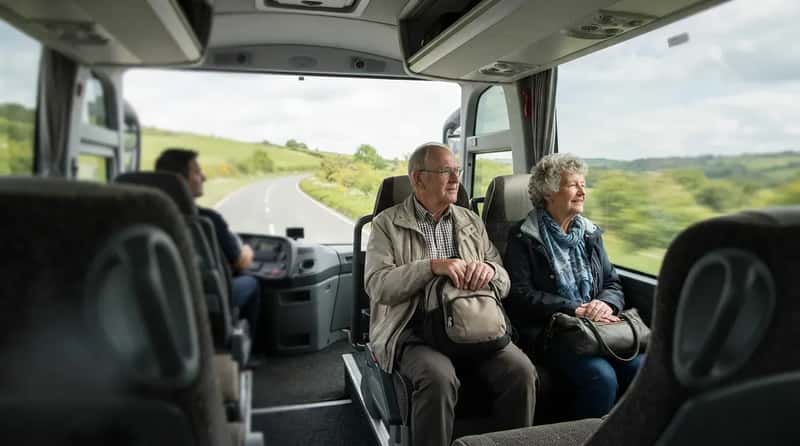
Speaking of the front row, drivers say it’s almost always claimed within minutes by the same type of passenger: someone who wants visibility, easy exit access, or simply a clearer view of the road ahead. It’s quietly one of the most competitive seats on the entire coach.
What surprises newer drivers is how fast this preference gets negotiated among the passengers themselves, often before the driver even says a word. Regulars know the unwritten rules and defer to whoever boarded first without any real discussion. Drivers say the front row tells them who values control over comfort.
6 – The Tippers vs. The Non-Tippers

This one might ruffle a few feathers, but drivers are surprisingly candid about it: they can often predict who’ll tip generously and who won’t, based purely on early interactions. Passengers who greet the driver by name, ask about their day, or make small talk near the door tend to follow through at the end of the trip.
Drivers insist it’s not about judging character from a first impression, but they admit the pattern holds up more often than not. Passengers who barely acknowledge the driver during boarding are usually the same ones who skip the tip envelope entirely. Many drivers say a simple “good morning” is a surprisingly accurate predictor.
Quick Compare
- Early greeters: Say hello by name, ask about the driver’s day, tip more often at the end.
- Silent boarders: Head straight to their seat, skip small talk, rarely leave anything.
- Middle ground: Polite nod on boarding, tip amount usually lands somewhere in between.
5 – The Loyal Regulars Who’ve Ridden the Same Route for Years
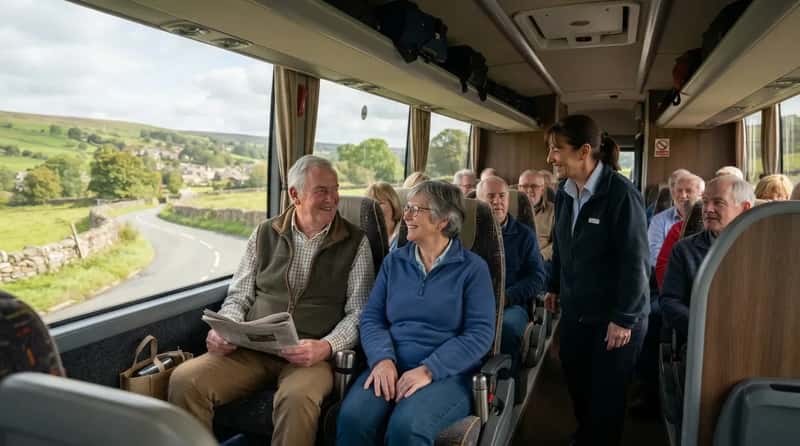
Some passengers don’t need an introduction because the driver already recognizes them. Drivers say a noticeable chunk of their older ridership consists of repeat travelers who’ve booked the same company, and sometimes the exact same seat, for years running.
These regulars often know the schedule better than the newer passengers do, and they’ll gently correct small details before the driver even finishes explaining them. It’s a quiet form of loyalty, and drivers say it’s a big part of what keeps a route profitable enough to stay on the schedule. Regulars are often the reason a route survives long enough to become anyone’s favorite.
4 – The Quiet Independent Travelers

Not every passenger over 60 wants conversation, and drivers say they can tell within the first hour who prefers to keep to themselves. These travelers settle into a book, a crossword, or just the view outside, and politely decline small talk without ever coming across as rude.
Drivers genuinely respect this group, noting that independent travelers are usually the lowest-maintenance passengers on the entire trip. They rarely ask for extra stops, rarely complain, and rarely need reassurance about the itinerary. Drivers say the quietest passengers are almost never the ones who cause problems later.
3 – The Complainers Who Judge the Whole Trip by the Restroom

Here’s a slightly controversial one: drivers say a small but vocal group of older passengers will judge an entire day’s trip almost entirely on restroom cleanliness and how often stops happen. One rough bathroom experience early on can sour their mood for hours.
Many drivers privately think this reaction is out of proportion to everything else that goes right on a trip, but they’ve learned not to argue the point out loud. Instead, most veteran drivers now scout rest stops in advance specifically to dodge this exact complaint. A single bad restroom stop can generate more grumbling than a delayed arrival ever would.
2 – The Social Butterflies Who Turn Strangers into Friends by Lunch

Some passengers don’t just make friends on a coach trip, they practically run a networking event from row seven. Drivers say these social butterflies introduce themselves to nearby seats within minutes and often have half the bus swapping stories before the first rest stop.
It’s one of the most rewarding patterns to watch, according to longtime drivers, because it tends to lift the mood for the entire group. By the time lunch rolls around, strangers are trading phone numbers and planning to sit together for the rest of the trip. Drivers say one talkative passenger can change the entire energy of a fifty-seat bus.
Worth Knowing
- Chatty rows tend to keep the whole bus more alert during long afternoon stretches.
- Friendships formed on a single day trip sometimes turn into future trips booked together.
- Group energy on a coach trip often shapes how the entire day gets remembered, not just the destination.
1 – The Passenger Who Becomes the Driver’s Best Friend by Day’s End
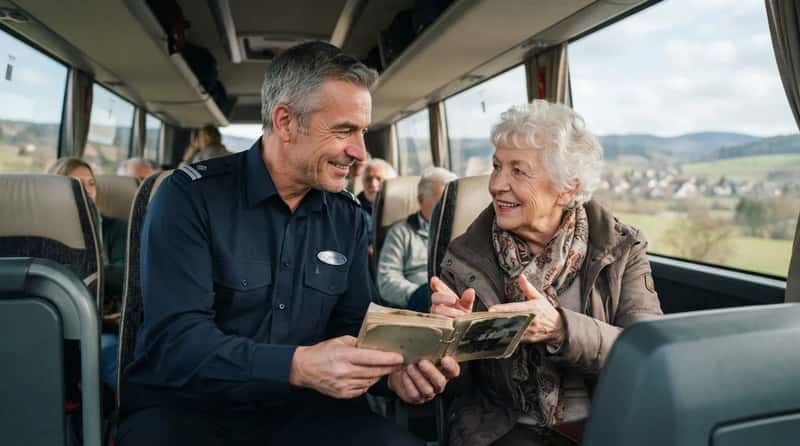
Every driver has a story about this one. There’s almost always a passenger over 60 who starts the day with a simple hello and ends it swapping life stories, family photos, and even phone numbers with the driver directly. It happens more often than most people would guess.
Drivers say these connections are one of the most rewarding, least talked about parts of the job. Long routes create long conversations, and older passengers often carry the most vivid stories, decades-old road trips, towns that don’t exist anymore, jobs that no longer exist either. Many drivers admit this is the real reason they still love the job after all these years behind the wheel.
None of this is about stereotyping. It’s simply what happens when someone spends thousands of hours watching people board, settle in, and reveal themselves in small, human ways. The luggage, the seat choice, the first hello, all of it adds up faster than most passengers ever realize.
So the next time you climb those coach steps, remember the driver up front already has a read on you, and it’s probably kinder than you’d expect.