You probably picture a cruise sommelier as the person who shows up with the wine list and a polite smile. The reality is sneakier. By the time your first course lands, a good wine steward has often figured out who’s really choosing the bottle, who’s worried about the bill, and who is quietly unhappy with what’s in their glass.
None of it takes a crystal ball. It comes down to glassware, glances, pacing and a few tiny habits you may be doing right now. Some of these clues are charming, a few are awkward, and the one at #1 has almost nothing to do with wine.
#16 – The Person Everyone Quietly Hands the Wine List To
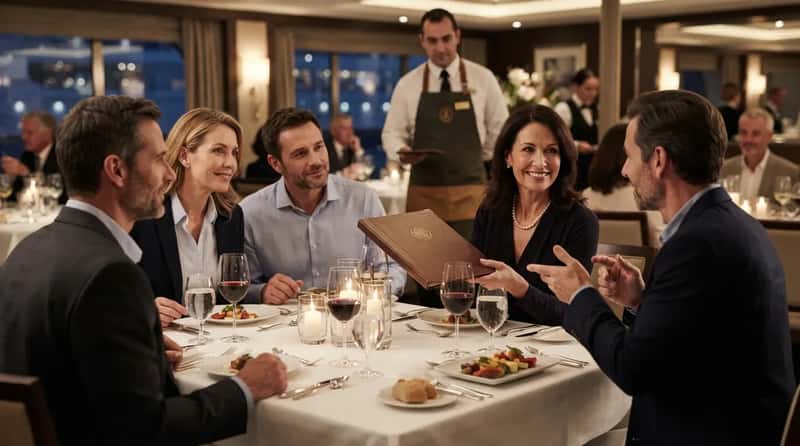
The wine list never lands randomly. Sommeliers say that when it reaches a table, the whole group tends to glance at one person. That person is the decider, and it often isn’t who you’d guess. The loudest guest at the table is frequently not the one choosing.
A good steward speaks to the decider first. Talk to the wrong person and the table feels the awkwardness, even if nobody says a word. Plenty of tables pass the list along while pretending they aren’t, and staff learn to catch the handoff in seconds.
But that’s nothing compared to what a table’s first drink order gives away at #15…
#15 – The Drink Order That Lands Before Anyone Opens the Menu
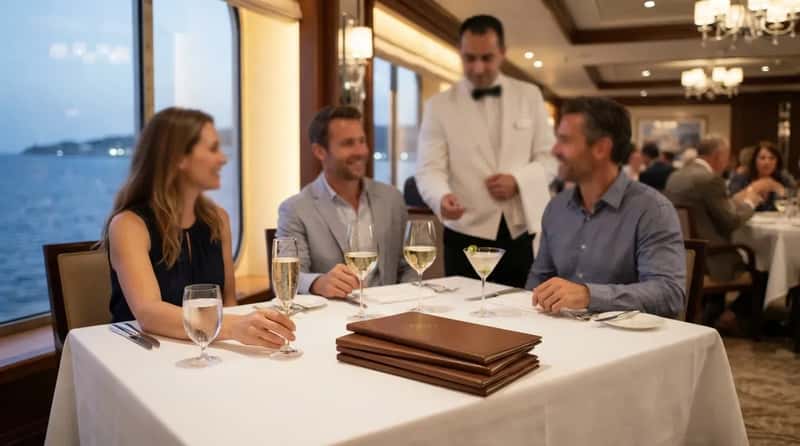
Some tables order drinks the second they sit down. Others read every line of the menu first. Sommeliers read these two groups very differently.
The drinks-first table usually wants a relaxed pace and a social night, so the steward keeps things easy and flowing. The menu-first table is often building the meal around a wine. That’s a cue to offer pairing ideas early, before the food order locks in. The sequence tells staff how much guidance a table actually wants.
- Drinks first: likely a casual, chatty evening.
- Menu first: likely open to pairing suggestions.
And the next clue is sitting right in front of every guest at #14…
#14 – The Way Someone Holds a Wine Glass (and What It Does to the Wine)
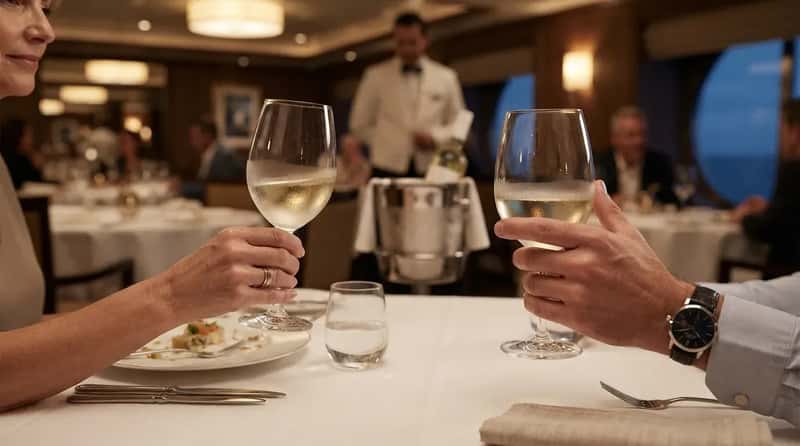
Hands tell a story. A guest who holds the glass by the stem usually has some wine experience. One who wraps a fist around the bowl is probably relaxed about the whole ritual.
Neither is a mistake, and good sommeliers don’t judge. But the bowl-holder is slowly warming the wine, and a chilled white can drift toward lukewarm in a hot dining room. That’s why a steward may quietly top up the ice bucket for certain guests. It’s a tiny cue that changes how they serve the whole table.
But what happens at the very first sip may be even more telling at #13…
#13 – The Face Someone Makes at the First Sip and Never Mentions

This is the moment staff watch most closely. A raised eyebrow, a pause or a hesitant glance around the table says plenty. A guest who loves the wine rarely comments. A guest who doesn’t is often too polite to speak up.
Sommeliers generally say they’d much rather hear, “This isn’t what I expected.” Wine is subjective, and a bottle that doesn’t suit your palate is just a mismatch. Many cruise lines will replace a bottle a guest genuinely doesn’t enjoy, so a silent grimace is a missed chance to fix the problem. Policies vary by line, so it’s fair to ask.
Worth Knowing
- A slow swirl and a sniff usually signals curiosity, not complaint.
- A glance toward the host often means a guest wants a second opinion.
- A polite “it’s fine” paired with an untouched glass deserves a gentle check-in.
- Staff would rather hear a quick preference than watch a full glass sit all night.
The next clue turns a classic dining rule on its head at #12…
#12 – The “Wrong” Pairing That’s Actually Fine
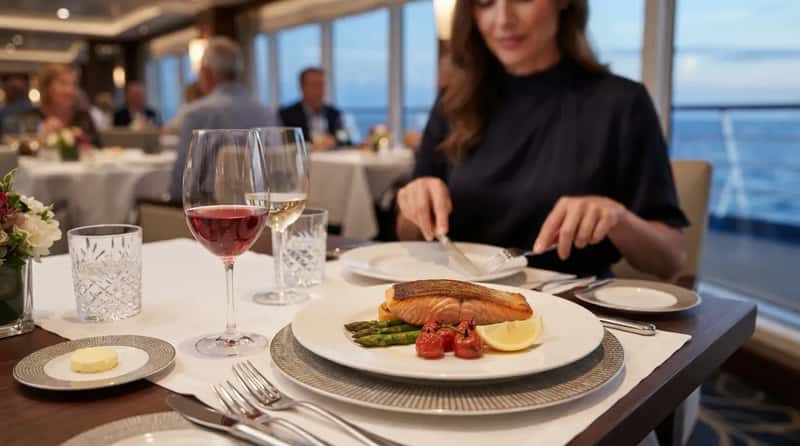
Here’s the one that surprises people. The old rule says white with fish and red with meat. Plenty of sommeliers now call that rule overrated. A guest who orders a light red with salmon isn’t making a mistake.
What staff really watch for is balance. A heavy, tannic red can swamp a delicate dish, while a crisp, bright white can cut right through a rich one. They’d rather see a table drink what it loves than follow a rule it doesn’t care about. The most common pairing error may be a table that believes it has to follow rules at all.
But the strangest signal of all has nothing to do with wine at #11…
#11 – The Water Order Nobody Thinks Matters
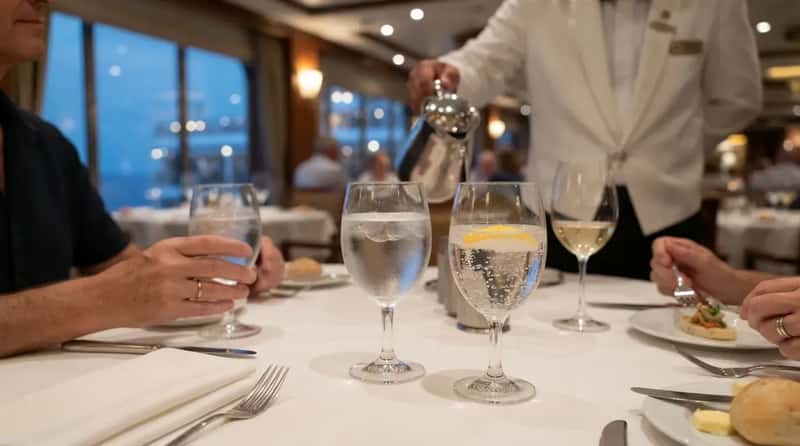
Sparkling or still? Ice or no ice? Sommeliers say water orders reveal how a table plans to drink. A table that asks for plenty of water early often intends to pace itself. A table that skips it may be heading for a faster evening.
Smart staff keep the water flowing either way. It cleans the palate between sips and keeps guests comfortable through a multi-course meal. On a ship, after sun, salt air and a long day of excursions, a full water glass matters more than most guests realize.
At a Glance
- Water ordered early: the table is likely pacing itself.
- No water ordered: a quicker evening may be ahead.
- Why staff refill it anyway: it resets the palate and keeps guests comfortable.
Next up is a pacing clue that pros say they spot within minutes at #10…
#10 – How Fast the First Glass Disappears
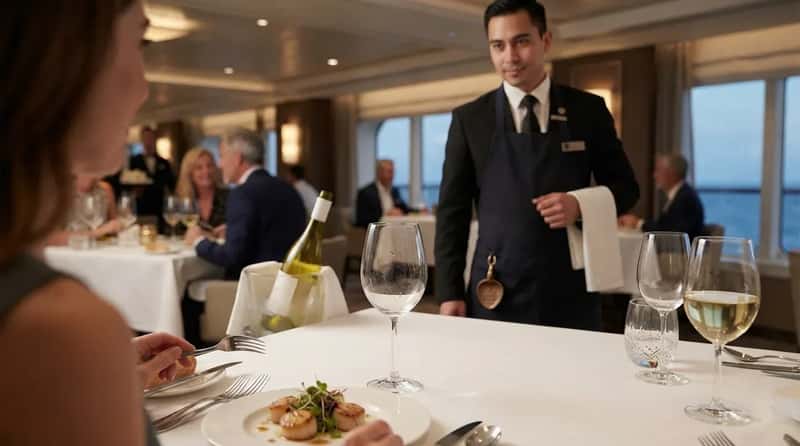
A glass that’s empty before the appetizer lands tells a story. So does a glass that’s barely touched when the main course arrives. Sommeliers track pace carefully, and not only for sales reasons.
A fast table might be celebrating, thirsty after a hot port day, or simply enjoying a great bottle. A slow table might be sipping carefully, or might not love the wine. A professional adjusts the pour and the conversation to match, and also keeps an eye on responsible service. A standard 750 ml bottle holds about five 5-ounce pours, which helps staff judge how long it should last.
But the table that’s celebrating is the one sommeliers watch most closely at #9…
#9 – The Tiny Signs That a Table Is Celebrating
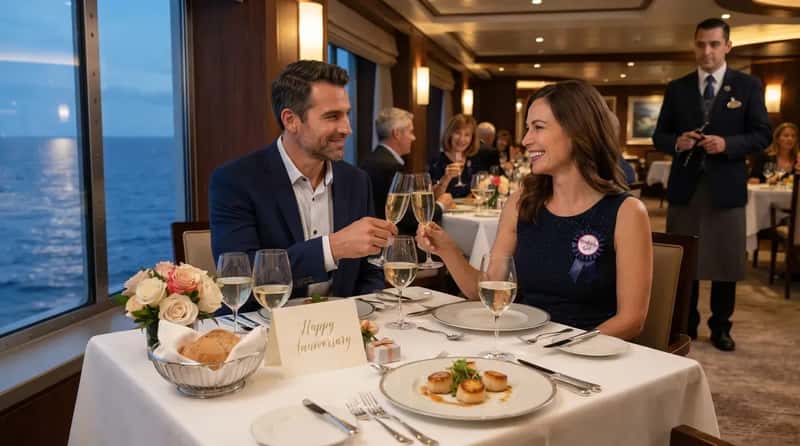
A card on the table. Matching outfits. A guest who keeps glancing toward the staff. Sommeliers say celebration tables are easy to spot within the first course, and they often change their whole approach.
Anniversaries, birthdays and vow renewals are common at sea. Staff may suggest something sparkling or a bottle worth the occasion, but only if the table seems open to it. The best ones read the mood, not just the occasion. A quiet, intimate anniversary doesn’t want a loud fuss, while a big family birthday might love one.
But the way a table splits its drinks causes more awkward moments than you’d think at #8…
#8 – The Awkward Math of the Drinks Package
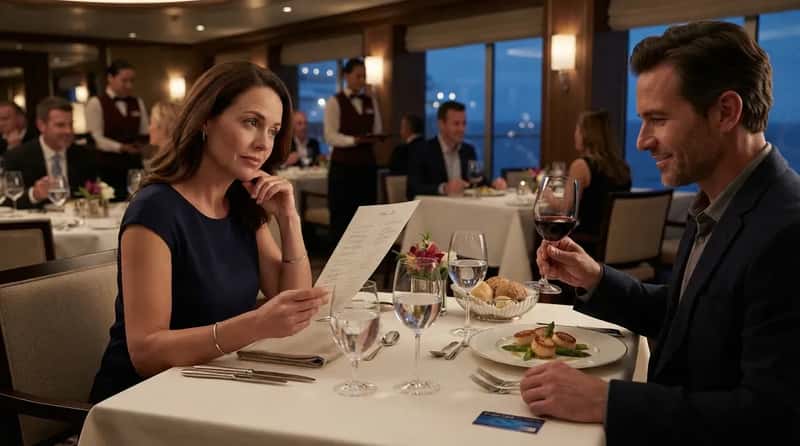
Here’s a hot take. Many sommeliers privately say a drinks package doesn’t suit every couple. When one person has a package and the other doesn’t, the table’s behavior shifts within minutes. One guest orders freely while the other hesitates.
Staff notice that hesitation fast. Package rules vary by cruise line, including which wines are covered and which bottles are excluded. A table that hasn’t checked can end up ordering something that costs extra. A good steward will gently mention it before the bottle is opened, not after the bill arrives.
- Check which bottles and glasses the package covers.
- Ask before ordering, not after.
Still, a small ritual at the table says even more at #7…
#7 – The First Sip That Gets Waved Off
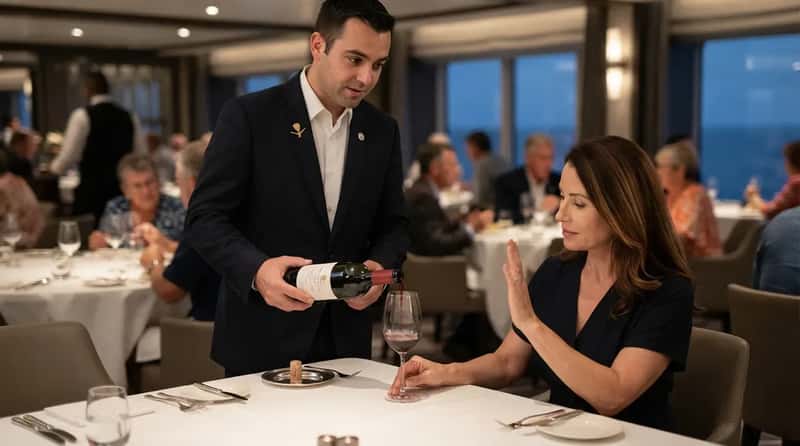
When a bottle is opened, the steward pours a small taste for the host. Plenty of guests wave it off or hand it to someone else. Sommeliers notice, because that taste exists for a very real reason.
It’s meant to check for faults, not to decide whether you like the wine. A bottle can smell musty from a bad cork, or taste flat or vinegary. A wine that’s merely not to your taste isn’t a faulty wine, and that’s a distinction many guests never learn. Staff are glad when a table understands it, because service goes smoother for everyone.
But there’s one price-related move that wine pros genuinely love at #6…
#6 – The Finger That Quietly Points at the Price
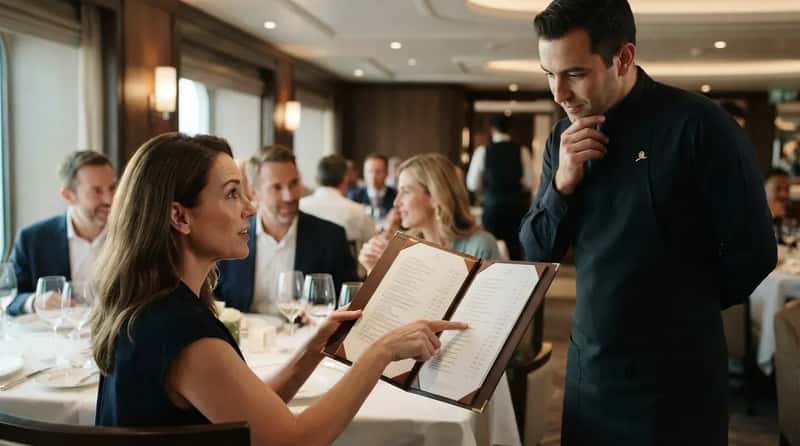
Sometimes a guest points to a line on the list instead of saying the wine’s name. Sommeliers know exactly what it means. It’s a discreet way of signaling a budget without announcing it in front of the table.
A good steward gets the message and steers toward a similar bottle at or below that price. No fuss, no embarrassment. It’s a classic bit of restaurant etiquette, and it still works. Staff generally say they’d rather have a clear budget than guess wrong and watch a guest wince at the bill.
Wait until you hear what temperature complaints really reveal at #5…
#5 – The Red That’s Too Warm and the White That’s Too Cold
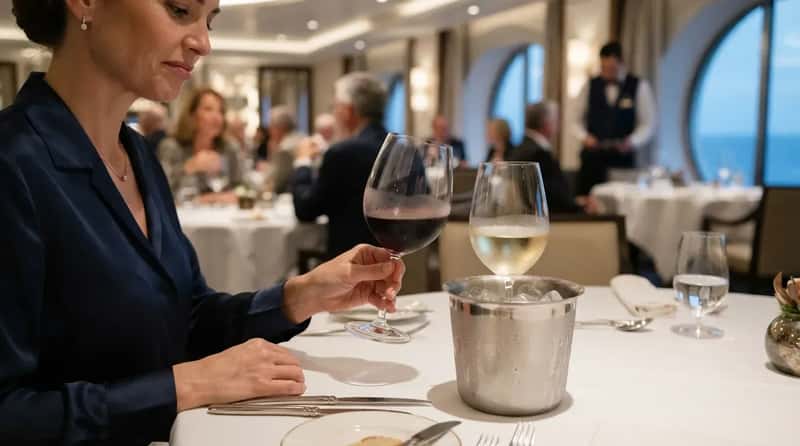
Few things draw a quicker reaction than wine at the wrong temperature. A warm red tastes heavy and boozy. An over-chilled white tastes dull and muted. Sommeliers notice when a guest tilts a glass, frowns and says nothing.
Serving temperature changes how a wine tastes more than many people expect. Whites are generally best cool rather than ice-cold, and reds often shine slightly below room temperature. In a warm dining room, ten minutes in an ice bucket can rescue a red. Staff are happy to do it, but guests rarely ask.
Fast Facts
- Sparkling wine: usually served around 40 to 45°F.
- Light whites and rosé: typically about 45 to 50°F.
- Light reds: often best around 55°F.
- Fuller reds: commonly served about 60 to 65°F, which is cooler than a warm dining room.
The next clue shows how a table treats the menu itself at #4…
#4 – The Table That Actually Reads the Pairing Notes
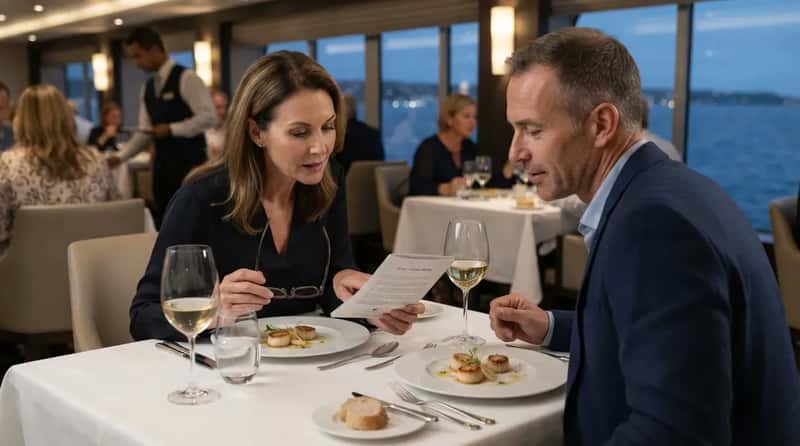
Many ships print wine suggestions beside menu items or offer pairing flights at specialty restaurants. Sommeliers notice which tables read them. Those guests tend to be curious, and curious guests often get the best service.
A table that asks, “Why this wine with this dish?” opens a door. Staff will happily share the story behind a producer, a region or a grape. Some of the best cruise wine moments start with a single question. It’s also where a guest’s next favorite bottle usually comes from, instead of a repeat of the usual.
But the words guests use to describe wine are the real giveaway at #3…
#3 – The Word “Dry” and What People Actually Mean by It
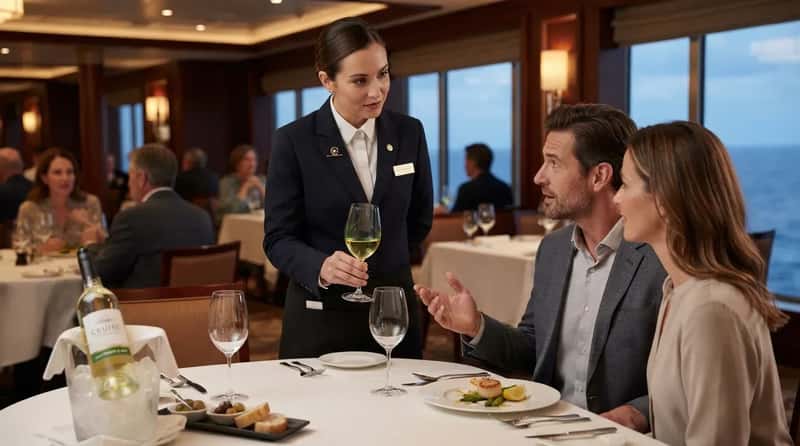
Ask a table what they like and you’ll hear, “Something dry.” Sommeliers hear it constantly. Here’s the catch: many guests use it to mean “not too sweet,” while others mean “not fruity.”
To a professional, a dry wine simply has little leftover sugar. A fruity wine can still be completely dry. That gap causes more mismatched orders than almost anything else. So skilled staff ask follow-ups like “crisp or round?” instead of taking the word at face value.
- Dry: little residual sugar.
- Fruity: flavor, not necessarily sweetness.
The last two clues are the ones sommeliers say matter most, starting with #2…
#2 – Who Quietly Pours for Everyone Else
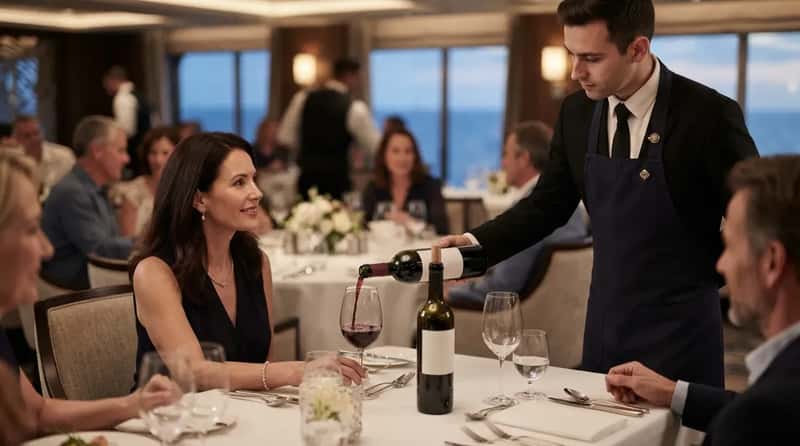
Watch who tops up whose glass. Sommeliers say the way a table shares a bottle shows how the group works. One guest may keep pouring for everyone else and forget their own glass. Another might hold the bottle all night and never offer it.
Staff notice the quiet host, the person looking after everyone. A thoughtful steward will pour for the table so that person can finally relax. It’s a small gesture, but guests remember it. Many sommeliers say the most memorable service is the kind a guest never had to ask for.
But the biggest clue of all has nothing to do with wine at #1…
#1 – Whether the Table Is Actually Having a Good Time
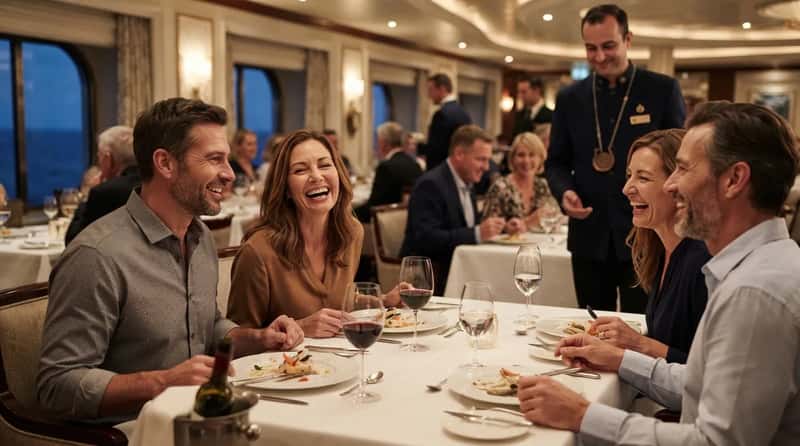
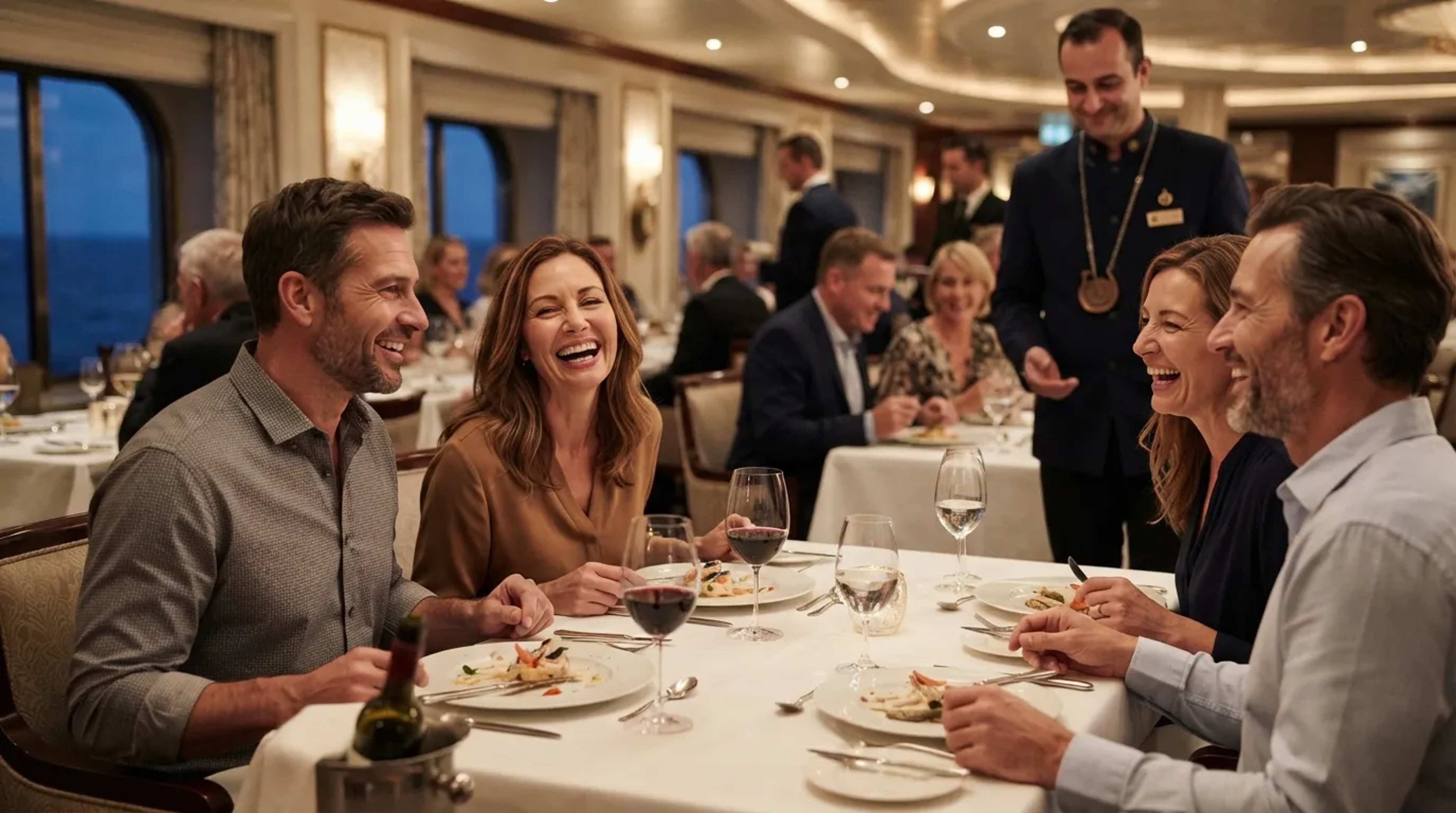
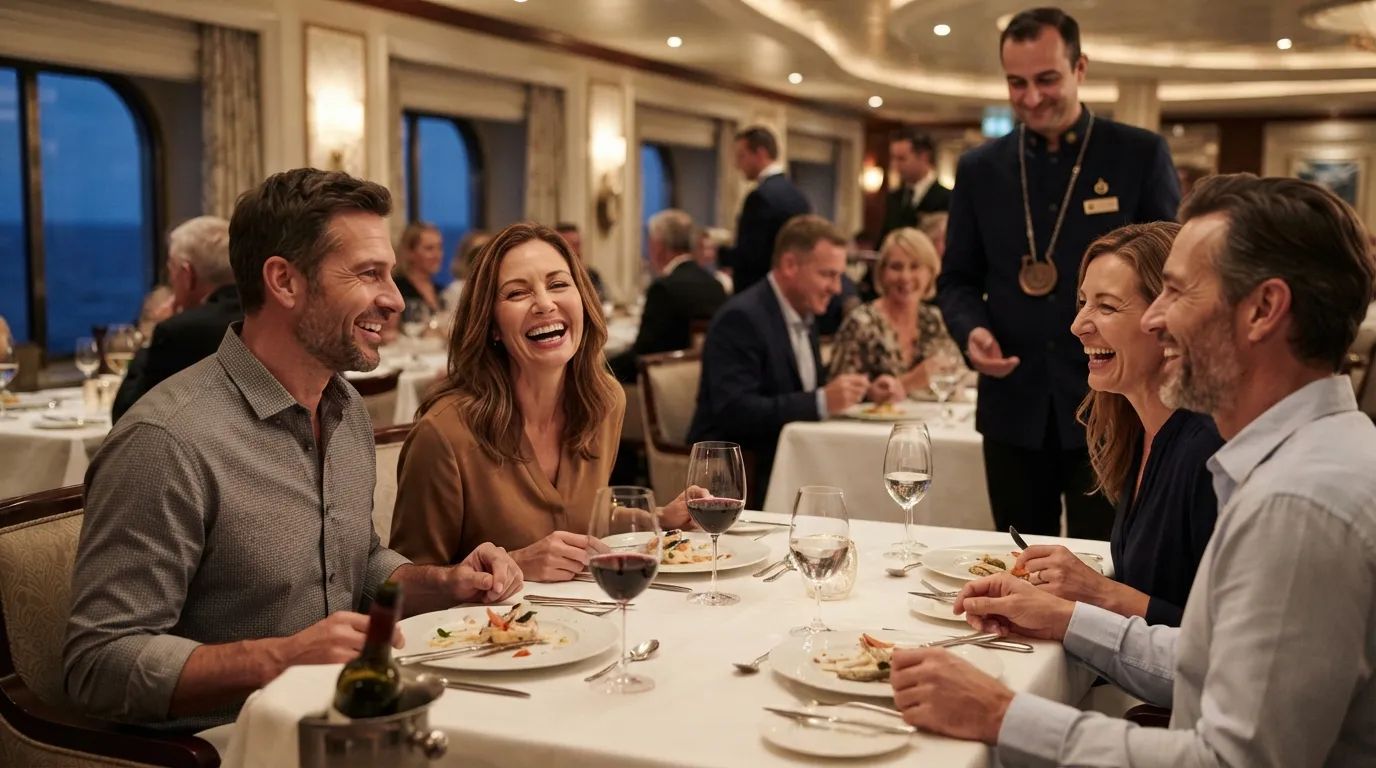
Everything else comes back to this. Sommeliers say the first course shows whether a table is relaxed, tense, bored or bursting with laughter. The wine is almost secondary. They read the energy and shape everything else around it.
A table that’s laughing doesn’t need a lecture on tannins. A tense table doesn’t need a long pitch. A quiet couple might want one simple suggestion and some space. The best sommeliers don’t sell wine so much as read the room. That’s the one skill no wine course can fully teach, and it’s why the good ones remember your table long after the ship docks.
Why It Stands Out
- It needs no wine knowledge from the guest at all.
- It decides whether staff offer suggestions or hold back.
- It shapes how long the steward lingers at the table.
- It shows up in the very first course, before the main dish even arrives.
So the clues that matter most have little to do with wine knowledge. They’re the decider, the pace, the quiet grimace, the pointing finger and the host who never gets to sip. Somewhere in that first course, a stranger in a black vest has already worked out what kind of night you’re having.
The good news is you don’t need to impress anyone. Say what you like, ask the question you’re curious about, and let the person holding the bottle do the rest.