You swipe the key card, the door clicks open, and most people do exactly one thing: fall face-first onto the bed. Frequent travelers do the opposite. Before the suitcase even hits the floor, they’re already running a quiet, practiced routine that most guests never think to try.
It’s not paranoia, and it’s not some travel-influencer gimmick. It’s pattern recognition built from hundreds of nights in hundreds of rooms, and once you see what these travelers actually do first, you’ll realize how many of us have been doing check-in completely backward.
1. They Lock the Deadbolt and Check the Peephole Before Anything Else
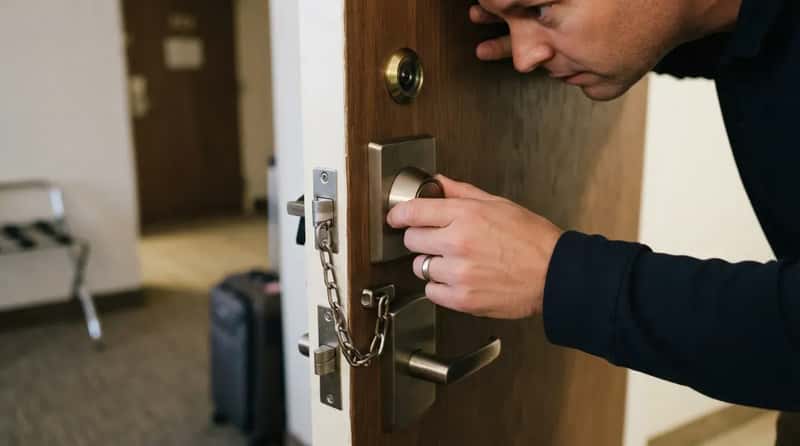
Before the lights are even fully on, experienced travelers walk straight to the door and test the deadbolt, the chain, and the peephole. It sounds excessive until you remember that hotel rooms cycle through thousands of key cards over their lifespan, and old cards don’t always deactivate as fast as they should.
A loose or jammed deadbolt is a red flag they never ignore, and plenty will call the front desk on the spot if the lock feels flimsy. This whole habit takes maybe ten seconds, but it closes the single biggest security gap most guests never even think about.
Fast Facts
- Most U.S. hotels use RFID or magnetic-strip key cards that get wiped and reprogrammed for every new guest.
- A deadbolt only works if it’s actually thrown – a door can look “locked” while just resting on the latch.
- Fire and safety codes require a secondary lock (deadbolt or chain) on nearly every U.S. hotel room door.
- Front desks can usually re-key or move a guest within minutes if a lock feels off.
2. They Yank Back the Comforter Before Touching the Bed

Comforters are notoriously the least-cleaned item in a hotel room, often washed far less frequently than the sheets underneath them. So seasoned guests fold it back immediately, check what’s actually touching their skin, and sometimes toss the whole thing aside for the rest of the stay.
This isn’t drama, it’s just knowing what housekeeping realistically has time to do during a fifteen-minute room turnover. Most travelers never stop to think about how rarely that top layer gets laundered between guests, and once you know it, you genuinely can’t unknow it.
3. They Photograph Every Scuff and Stain Within Two Minutes
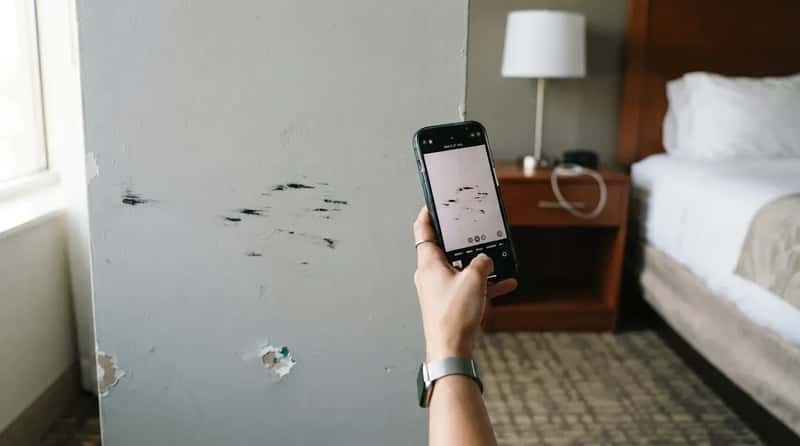
Scuffed walls, a stained carpet, a hairline crack in the mirror – experienced travelers photograph all of it before they’ve even unpacked a toothbrush. It’s a defensive move, plain and simple, protecting them from being blamed for damage they never caused.
Hotels do occasionally charge guests for pre-existing damage, especially at properties running short-staffed or rushing housekeeping between checkouts. A timestamped photo taken at check-in becomes instant proof the moment a disputed charge shows up on the final bill.
4. They Walk the Exit Route Before They Even Unpack

This one sounds intense, but frequent business travelers treat it as second nature. They count the doors between their room and the nearest stairwell, because in a real emergency, smoke-filled hallways make visual navigation almost impossible.
Fire safety experts have recommended this exact habit for years, yet almost nobody actually does it. It takes about fifteen seconds walking to the ice machine and back, and it’s the quiet difference between calm and chaos if something ever goes seriously wrong at 2 a.m.
5. They Override the Thermostat the Second They Walk In
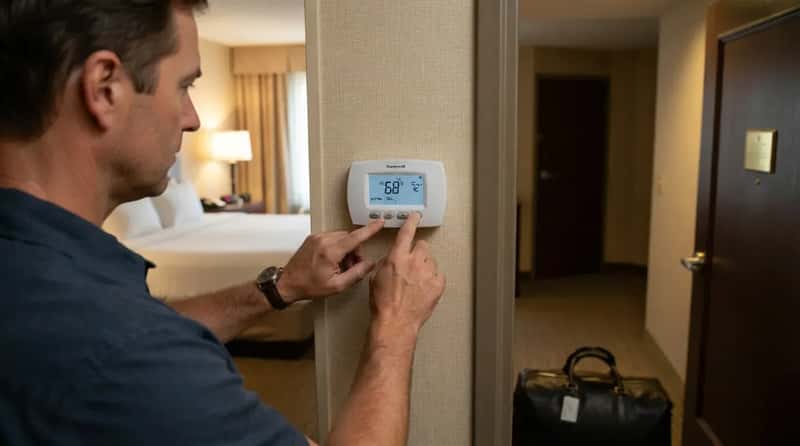
Hotel rooms are famous for being either a freezer or a sauna, largely because housekeeping resets a default temperature during cleaning that has nothing to do with what a guest actually wants. Veteran travelers go straight to the thermostat and change it before they even set down their bag.
Older HVAC units can take twenty to thirty minutes to actually shift a room’s temperature, so waiting until bedtime to fix it means suffering through an uncomfortable evening first. Handling it early is a tiny habit with a surprisingly outsized payoff.
6. They Sweep the Room for Hidden Cameras
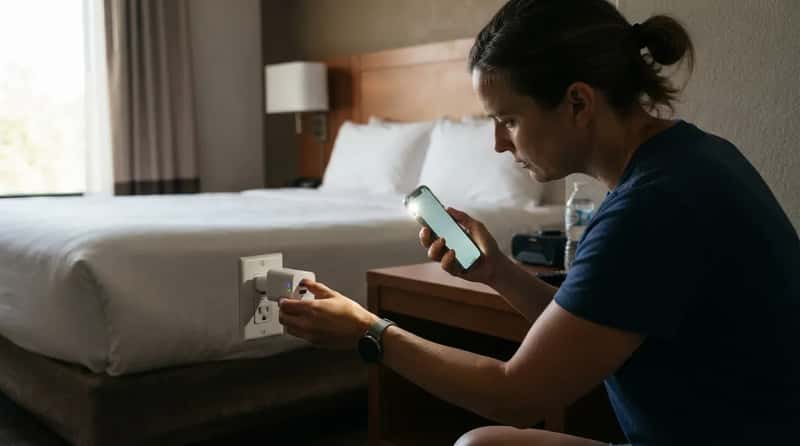
This habit has grown fast over the last few years, and not without reason – stories about hidden cameras disguised as smoke detectors, clock radios, and USB chargers have made headlines again and again. Experienced travelers now do a quick visual sweep of anything with a lens-sized hole or an oddly placed blinking light.
Some even use their phone flashlight to check dark corners for the telltale reflective glint of a camera lens. It’s a strange new addition to the checklist, but for a lot of frequent guests, it’s become as automatic as checking the lock.
Worth Knowing
- Common hiding spots include smoke detectors, alarm clocks, wall outlets, and USB charging ports.
- Turning off the room lights and slowly scanning with a phone flashlight can reveal a lens by its reflective glint.
- Free RF-scanner apps can detect nearby wireless signals, though they aren’t foolproof.
- Recording guests without consent in a private hotel room is illegal in every U.S. state.
7. They Wipe Down the Remote Before They Touch Their Face
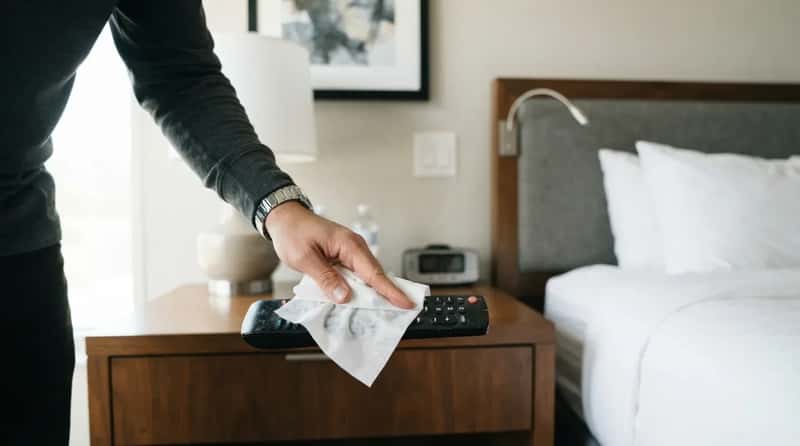
Studies on hotel room cleanliness have repeatedly flagged the TV remote as one of the germiest objects in the entire room, often carrying more bacteria than the bathroom floor. It’s rarely disinfected between guests because it’s small, easy to miss, and never on anyone’s official cleaning checklist.
Seasoned travelers give it a quick sanitizing wipe before it ever gets near their hands or face. Light switches and the thermostat panel get the same treatment, since they’re touched constantly by every guest and cleaned by almost none of them.
8. They Raid the Closet Before They Even Open Their Suitcase
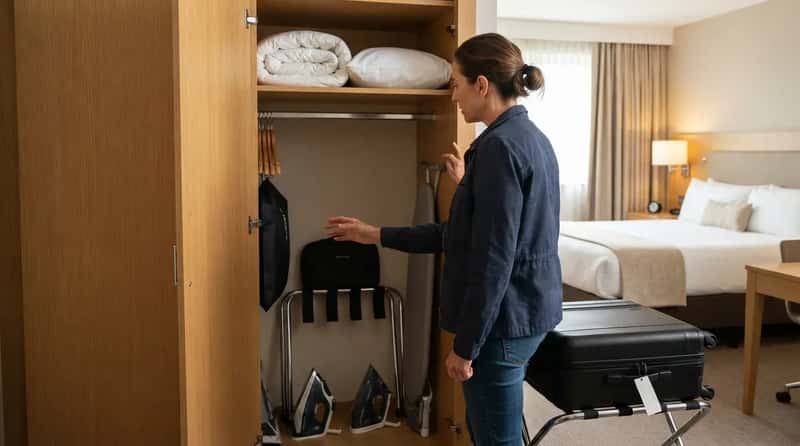
Instead of digging through luggage first, experienced travelers open the closet to see what’s already available. Extra pillows, a spare blanket, an iron, and sometimes a second luggage rack are often tucked away out of sight, and most guests never think to look.
This one habit solves problems before they start, especially for guests who run cold at night or need to press a wrinkled shirt before a morning meeting. It’s exactly why so many people end up calling the front desk later, asking for something that was sitting in the room the entire time.
9. They Judge the Whole Hotel by One Fast Bathroom Check
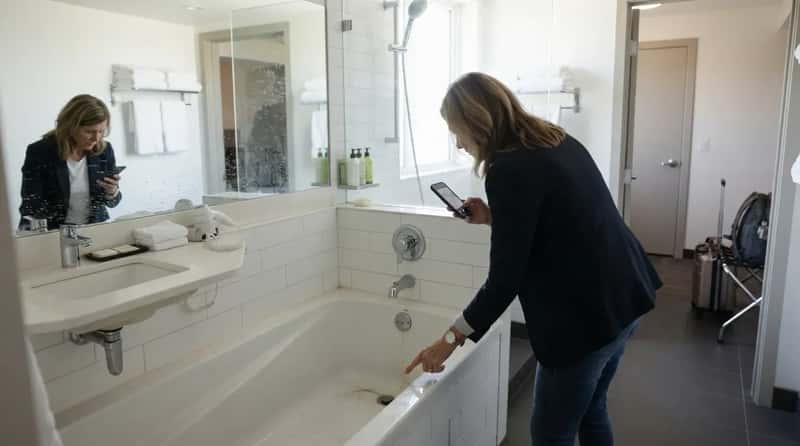
The bathroom gets a quick but thorough once-over – hair in the tub, water spots on the mirror, whether the towels smell freshly laundered or faintly musty. It’s often the clearest window into how well a property is actually run behind the scenes.
A grimy bathroom is treated as a dealbreaker by a lot of frequent travelers, triggering an immediate room-change request instead of a complaint filed after the fact. More than the lobby, more than the lighting, the bathroom is where seasoned guests quietly decide what a hotel is really made of.
The traveler sees what he sees; the tourist sees what he has come to see.
G.K. Chesterton
10. They Run the Shower Before They Ever Plan Around It
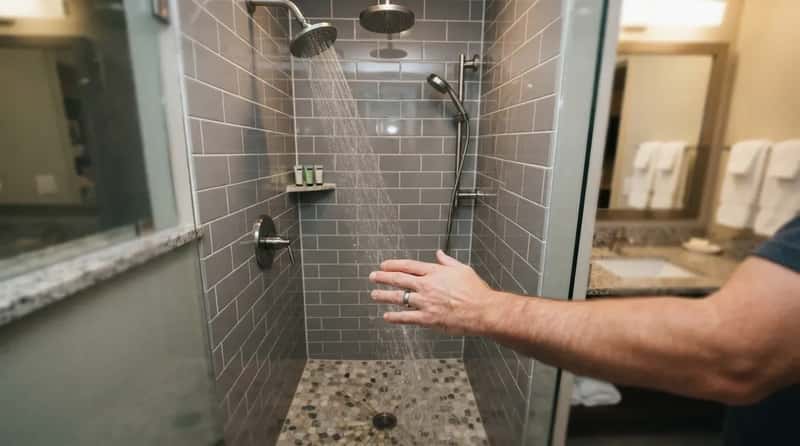
Running the water for a few seconds early on tells experienced travelers everything they need to know: water pressure, how long it takes to heat up, and whether the drain actually works. Nobody wants to discover a five-minute wait for hot water right before an early flight or a job interview.
This quick test also flags plumbing problems that housekeeping might have missed entirely, giving guests time to request a different room while options still exist. Waiting until the last minute to find out is a mistake most people only make once.
11. They Open the Curtains to Catch the Hotel in a Lie
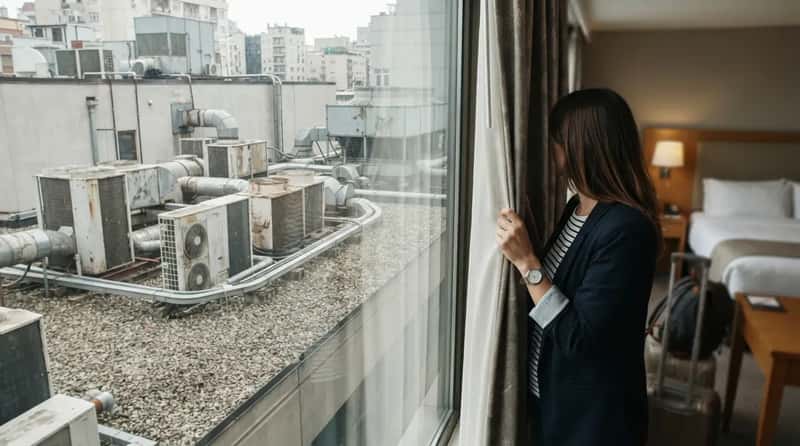
Room photos on booking sites are notoriously optimistic, and “city view” can quietly mean a parking garage or the top of an air conditioning unit. Experienced travelers pull the curtains open within minutes to see exactly what they’re actually paying for.
If the view doesn’t match what was promised, especially for a room booked at a premium, they raise it with the front desk immediately instead of stewing over it for the whole trip. Waiting even a single day tends to make a complaint far less effective, and far less likely to get resolved.
Quick Compare: What the Listing Says vs. What You Might Get
- “City view” – could mean skyline, or could mean a neighboring rooftop and an AC unit.
- “Ocean view” – sometimes a sliver of water between two buildings, not a wide-open horizon.
- “Garden view” – often a courtyard, but occasionally a service area or dumpster corral.
- “Partial view” – the honest disclaimer that usually means exactly what it sounds like.
12. They Call the Front Desk in the First Ten Minutes, Not at Midnight

Rather than waiting until bedtime to mention a missing amenity or a dead outlet, seasoned travelers call down almost immediately after settling in. Hotels are dramatically more responsive early in a stay, while housekeeping and maintenance staff are still actively working the floor.
Waiting until 11 p.m. to report a problem usually means a slower, more frustrated response, or no fix at all until the next morning. Timing the request right is a small trick that quietly changes how fast, and how well, a hotel actually treats you.
13. They Check the Safe and Minibar for Someone Else’s Fingerprints

A quick peek inside the safe confirms it’s actually empty and functioning, since forgotten items from a previous guest occasionally turn up, along with the occasional stuck lock. The minibar gets a glance too, mostly to confirm nothing has already been opened or tampered with.
This matters because some hotels now charge automatically for missing minibar items using weight-sensor shelves, and a pre-existing gap can trigger a false charge on checkout. A thirty-second check now prevents an ugly argument over the bill later.
14. They Memorize a Landmark So They Never Wander the Wrong Hallway
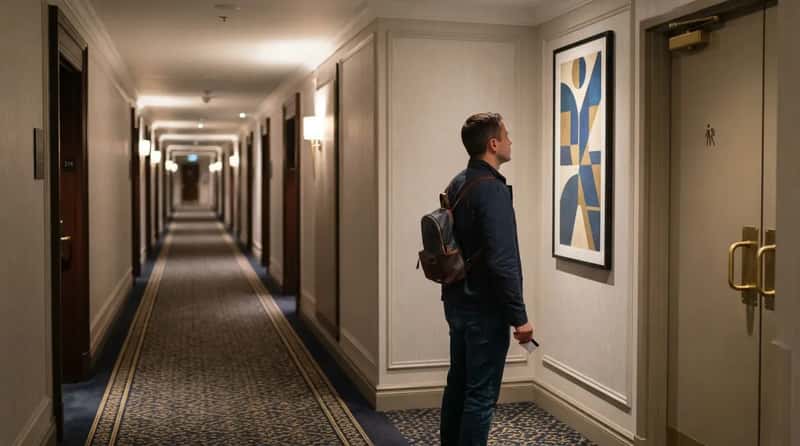
It sounds almost too simple, but frequent travelers make a point of noting their room number alongside something distinctive nearby – an ice machine, a stairwell door, a specific piece of hallway art. Hotel corridors are famously repetitive, and it’s shockingly easy to end up on the wrong floor after a late dinner and a couple of drinks.
This habit becomes especially useful in sprawling resort-style properties or connected hotel towers, where hallways can look identical for hundreds of feet in every direction. It’s a tiny mental note that saves real frustration, and a little embarrassment, later in the trip.
15. They Unpack Into Drawers Even for a One-Night Stay

Even for a single overnight, many experienced travelers put at least a few items into drawers rather than living out of a zipped-up suitcase. It sounds like a small thing, but it changes how the entire stay feels, shifting a room from temporary pit stop to something that actually functions.
This habit also cuts down on wrinkling and makes packing to leave noticeably faster, since everything is already organized instead of jumbled together in a bag. The psychological shift from “visitor” to “settled in” starts with this one deceptively simple move.
16. They Confirm the Door Actually Latched Before They Let Their Guard Down
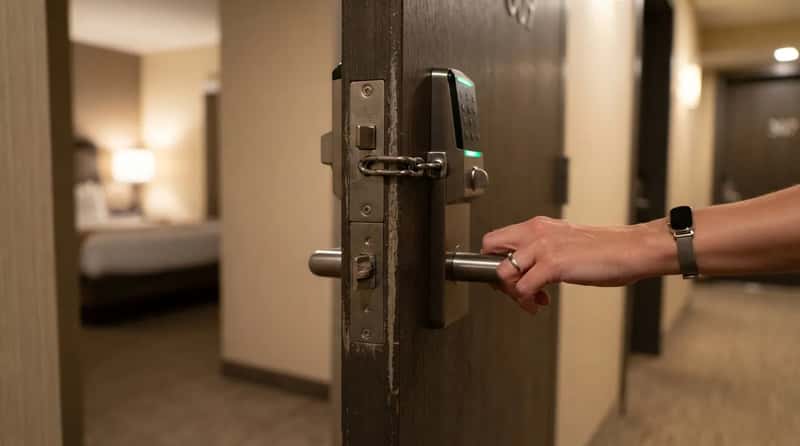
The last habit is almost always the same: confirming the “Do Not Disturb” sign or digital privacy light is genuinely working, and making sure the door is fully latched, not just resting closed. Some older doors look shut without the lock mechanism actually engaging.
This final check is what lets experienced travelers finally exhale and relax, because everything that could go wrong in the first few minutes has already been ruled out. It’s less about anxiety and more about control – knowing exactly what they’re dealing with before they ever let their guard down.
At a Glance: The Two-Minute Settle-In Checklist
- Door fully latched, deadbolt thrown, chain or privacy lock engaged.
- “Do Not Disturb” sign or digital indicator switched on and working.
- Window or balcony door locked, especially on ground-floor rooms.
- Phone or key card within reach of the bed in case you need to call down overnight.
None of these sixteen habits take more than a few minutes combined, yet together they explain why frequent travelers so rarely get blindsided by a bad hotel surprise. It’s not luck, and it’s not paranoia. It’s a routine built from hundreds of forgettable nights, repeated so many times it barely registers as effort anymore.
Which one of these did you already do without realizing it was a “pro” move? And which one are you stealing for your next trip? Drop your answer in the comments.