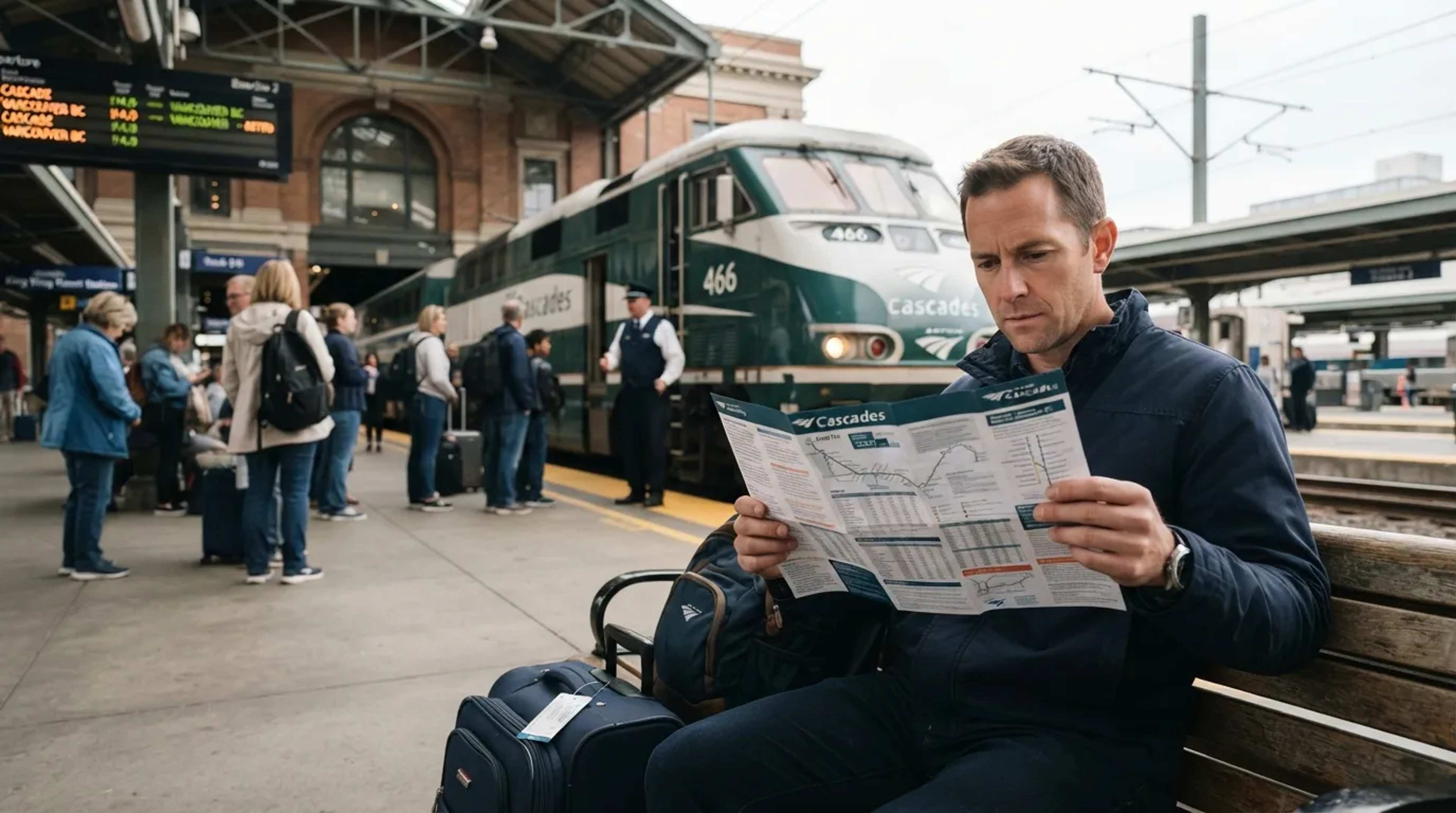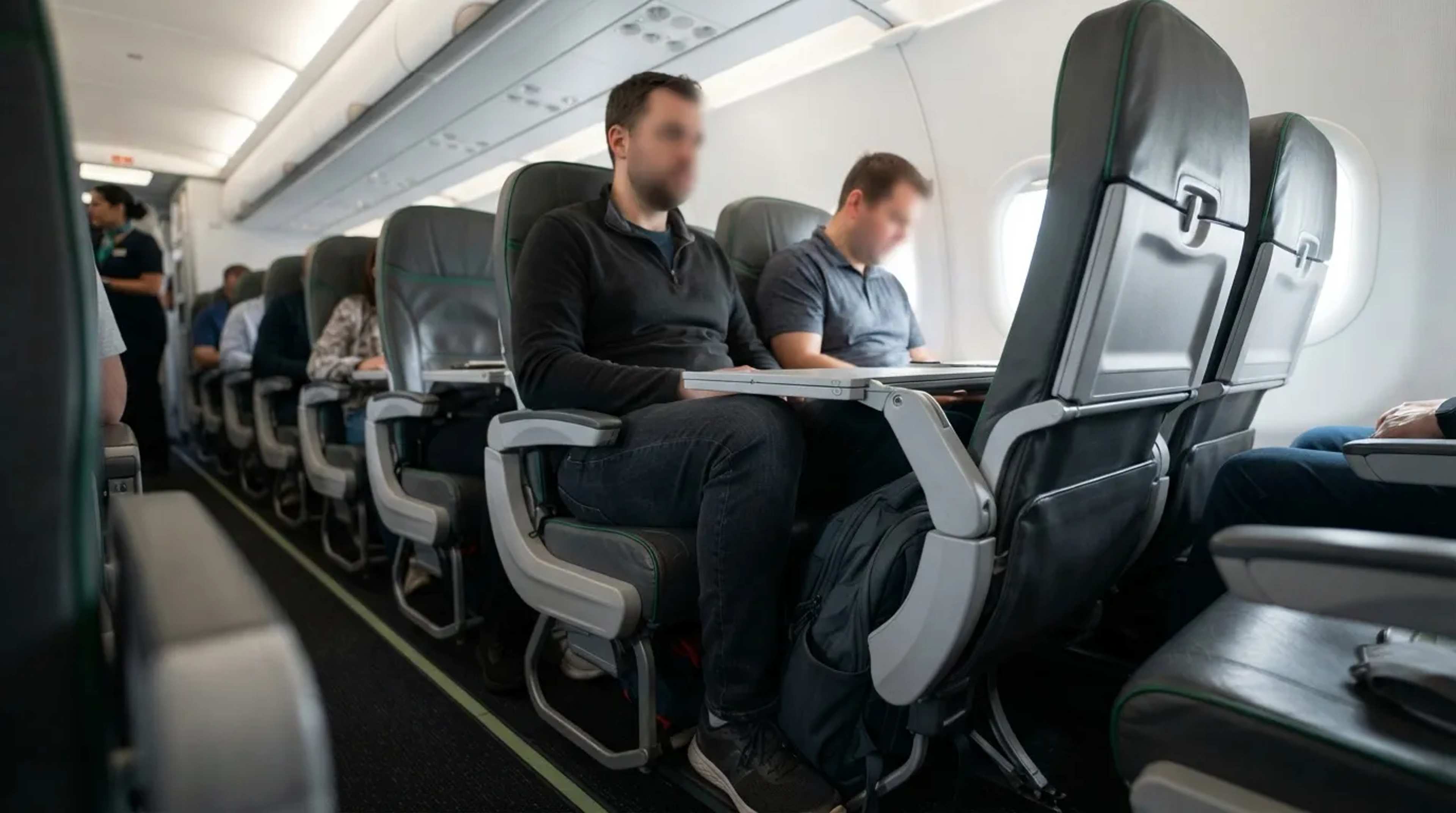
Amtrak carried a record 34.5 million customer trips in fiscal year 2025, and plenty of those riders walked into the station with airport habits that don’t fit trains. There’s no security theater, no boarding zones, and no cushion of time once the gate closes. Veteran riders glide through it all with a quiet routine that never appears on your ticket.
The mistakes that wreck a trip are rarely dramatic. It’s a gate that shuts earlier than you expected, a checked bag you can’t reach, or a dead phone with your ticket trapped inside. Here are the 16 small moves that separate seasoned riders from the people sprinting down the platform, starting with one that sounds too simple to matter.
#16 – They Treat “30 Minutes Early” as the Bare Minimum
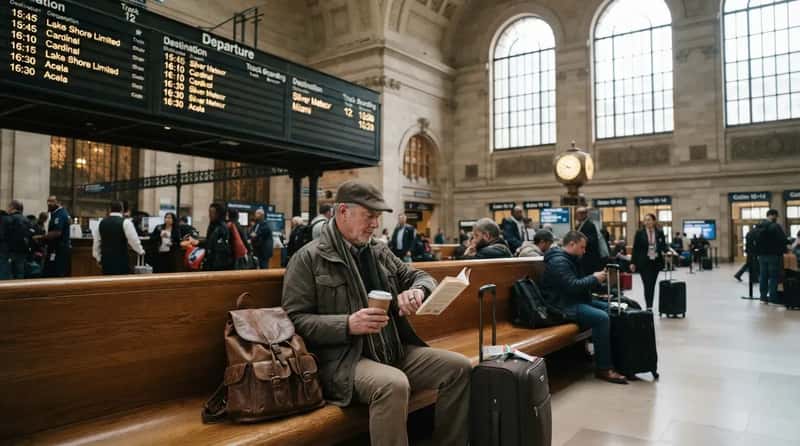
Amtrak’s own advice is simple. Unless you’re taking the Auto Train, plan to arrive 30 minutes before your scheduled departure. Veterans read that as the floor, not the goal. At a big station, finding the right hall can eat half that window before you even see a platform.
The clock gets tighter if you need help. If you need assistance with baggage or ticketing, Amtrak recommends arriving 60 minutes early. A train isn’t a flight with a long, forgiving boarding window. Some stops are short, and the train won’t wait for you to finish your coffee.
#15 – They Check Train Status Before They Leave the Driveway
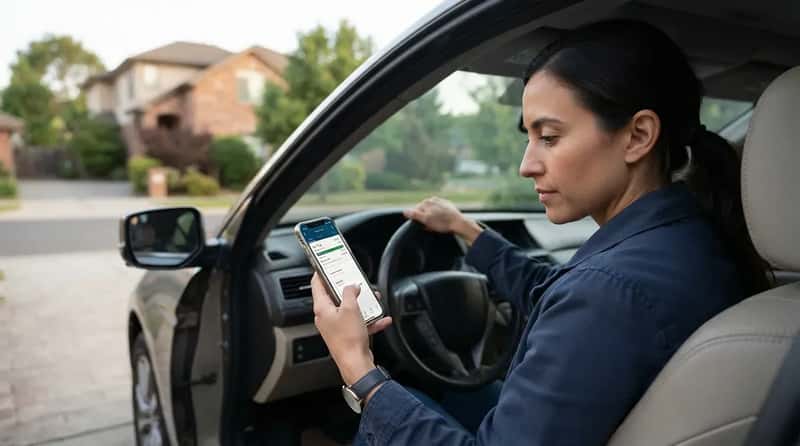
Experienced riders never trust the scheduled time alone. Amtrak tells passengers to check Train Status on Amtrak.com and in the Amtrak app before arriving at the station. It takes about ten seconds. It can save you an hour on a cold platform staring at a board that hasn’t changed.
The check cuts both ways. A late train may let you leave home later and skip the waiting. An on-time train means zero slack for a slow parking lot. The status check is the cheapest insurance in rail travel.
But that’s nothing compared to what happens at the boarding line in #14.
#14 – They Open the eTicket Before the Line Even Forms
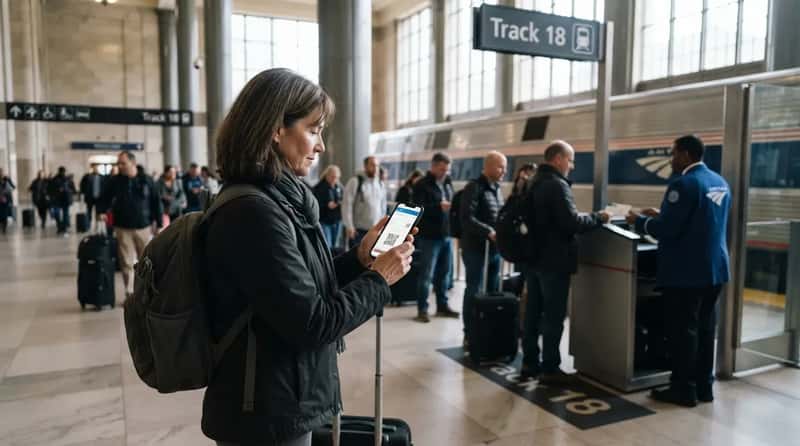
Nothing slows a boarding line like someone digging through their phone at the front of it. Veterans have the ticket ready before they reach the gate. Amtrak says to have your eTicket open on your device screen, or a printed ticket handy, while waiting to board if you qualify for priority boarding.
Station staff may need to verify eligibility on the spot. So pros also screenshot the ticket or print a backup. Spotty station Wi-Fi and a low battery are a bad pair, and the gate agent isn’t going to wait while your app reloads. The next mistake involves luggage, and it gets expensive.
Worth Knowing
- Open the eTicket before you join the line, not when you reach the front.
- Keep a screenshot as a backup in case the app stalls.
- A printed copy still works if your battery doesn’t.
- Priority boarding may mean staff verify your eligibility on the spot.
#13 – They Pack for the Station Sizer, Not an Airline Rulebook
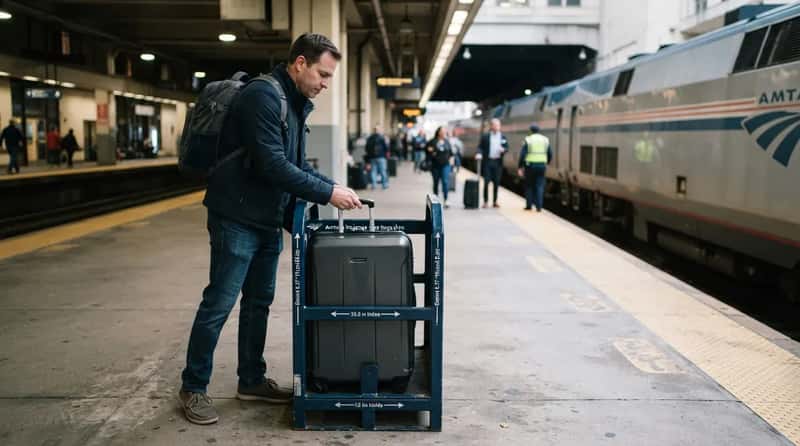
Amtrak’s carry-on rules surprise people in a good way. Each passenger gets one personal item and two carry-on bags of up to 28x22x14 inches and 50 pounds each. That’s far roomier than most airlines.
The catch is that the bag still has to fit. Bags must fit in the sizer at the station, and veterans measure at home because repacking on a platform with a train waiting is miserable. An over-limit bag can cost $20 or get refused outright. And that’s not even the biggest bag mistake on the list.
Wait until you see what veterans never put in a checked bag in #12.
#12 – They Never Check a Bag With Anything They’ll Need Onboard
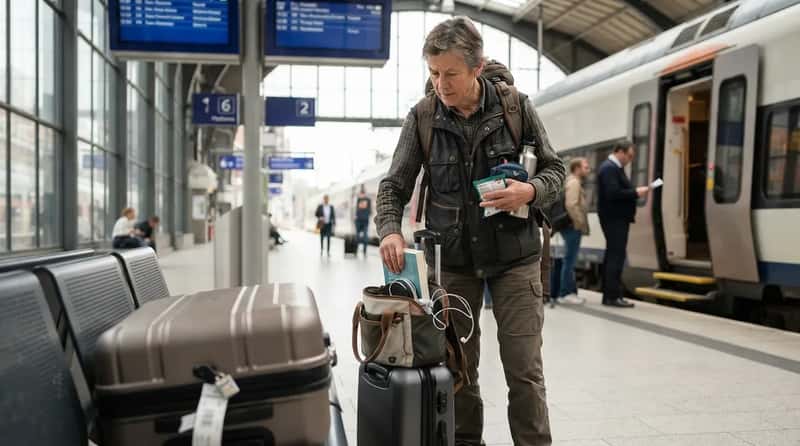
Checked baggage sounds like a perk, and where it’s offered, it is. But you won’t have access to your checked bags while onboard the train. That means medication, chargers, and snacks stay with you, no matter how tempting it is to travel light.
It also isn’t offered everywhere. Checked baggage is not available on every train or at every station. On multi-leg trips, you’ll need to collect your checked baggage after each segment of your journey. Some riders decide a checked bag is more trouble than it’s worth on connecting itineraries.
And the next one is physical, not logistical.
#11 – They Only Bring a Bag They Can Lift Over Their Head
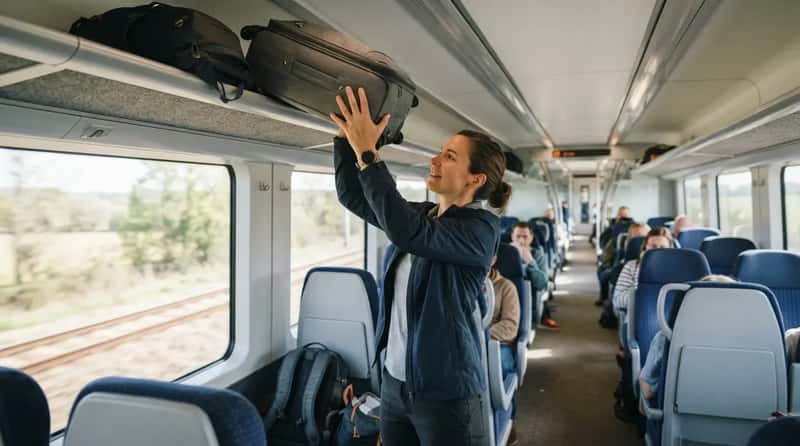
The generous bag limit hides a condition. Passengers must be able to lift their carry-ons overhead without assistance. A 50-pound limit on paper doesn’t help you if you’re standing in a swaying aisle unable to hoist it.
Veterans test this before they travel. Many pick a smaller bag and keep it well under the max. They pack heavy items at the bottom and daily essentials in a separate personal item. Crews may help with luggage, but you can’t count on it every time.
Quick Compare
- On paper: two carry-ons up to 28x22x14 inches and 50 pounds each.
- In real life: you have to lift each bag overhead without help.
- The veteran move: a lighter bag, with daily essentials in the personal item.
#10 – They Know the Track Number Shows Up Late
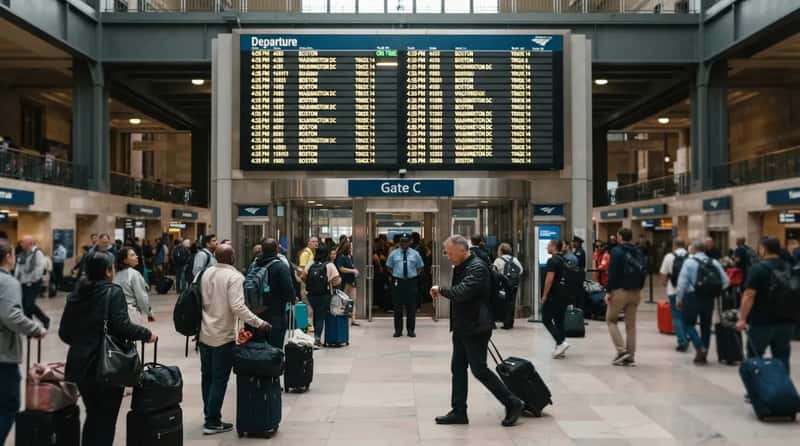
Many travelers expect a posted platform an hour ahead. On trains, it rarely works that way. Amtrak says gate and track information is posted just a few minutes before boarding. So veterans stay close to the departure board instead of wandering off.
The cutoff also comes earlier than people assume. At some stations, boarding gates close three to ten minutes before departure. That isn’t the last-second sprint the movies promise. Grabbing a coffee at the wrong moment can leave you standing outside a closed gate watching your train pull away.
But the view you get depends on a choice you make before you sit.
#9 – They Choose Their Side of the Train Like It’s a Window Seat Lottery
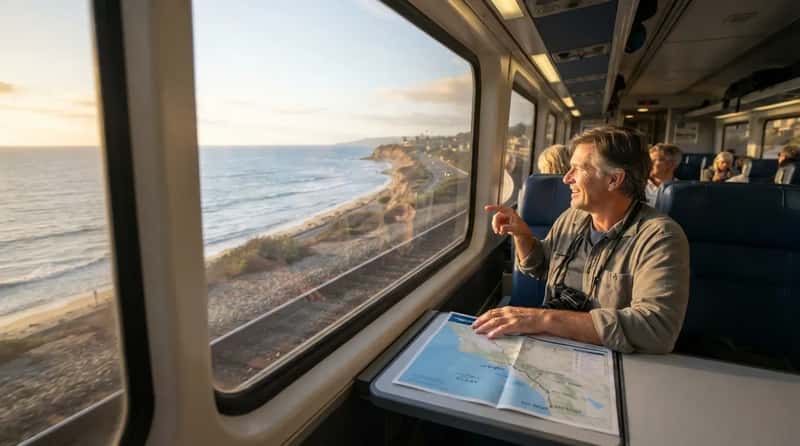
On scenic routes, the wrong side can mean hours of staring at a wall or a parking lot. Experienced riders look up which side has the coast, the river, or the mountains before they board. On the Pacific Surfliner, for example, riders tend to hunt for the ocean side.
The same thinking applies to sun glare and heat on long afternoon legs. A quick look at a route map beats guessing. One seat choice can decide whether the trip feels memorable or forgettable.
#8 – They Find Out Whether Seats Are Assigned Before They Board
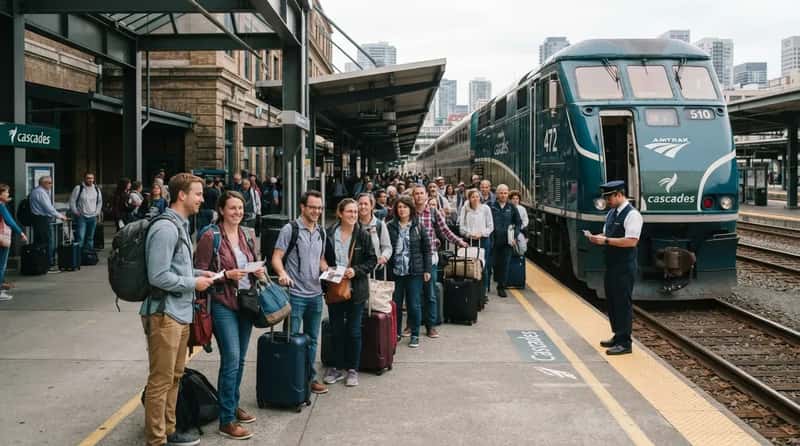
Not every train works the same way. Some routes let you pick or get assigned a seat, while others don’t. On many Amtrak Cascades trains, seating is first-come, first-served.
That changes how you behave in line. If seats are open, being near the front matters. If a group is traveling together, it matters even more. Plenty of riders only learn this while shuffling down a crowded aisle with a bag in each hand.
But what you eat may matter more than where you sit.
#7 – They Bring Their Own Food and Skip the Gamble
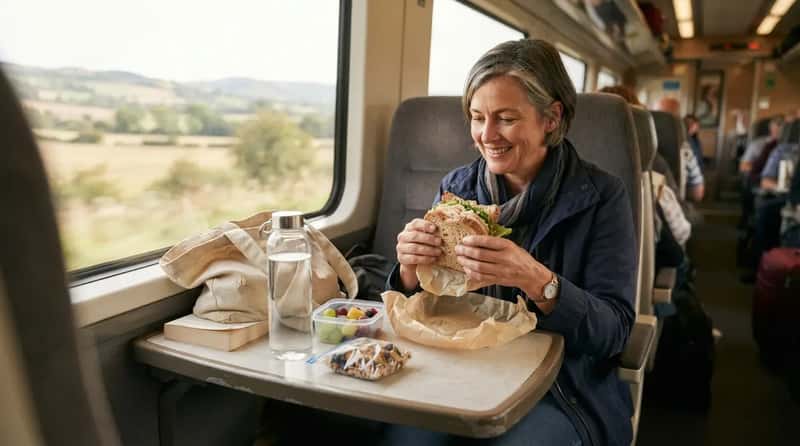
Food service varies a lot by train. Some routes have a café car, some have limited options, and some trips run through long stretches with little to buy. Veterans pack sandwiches, fruit, and a refillable bottle so hunger never depends on a menu.
For many seasoned riders, the café car is a backup plan, not the plan. On long-distance routes, sleeping car passengers usually get meals included, which changes the math entirely. Check your fare details for your exact train before you shop.
And running out of the next thing on the list can ruin a long ride.
#6 – They Charge Every Device Before Leaving Home

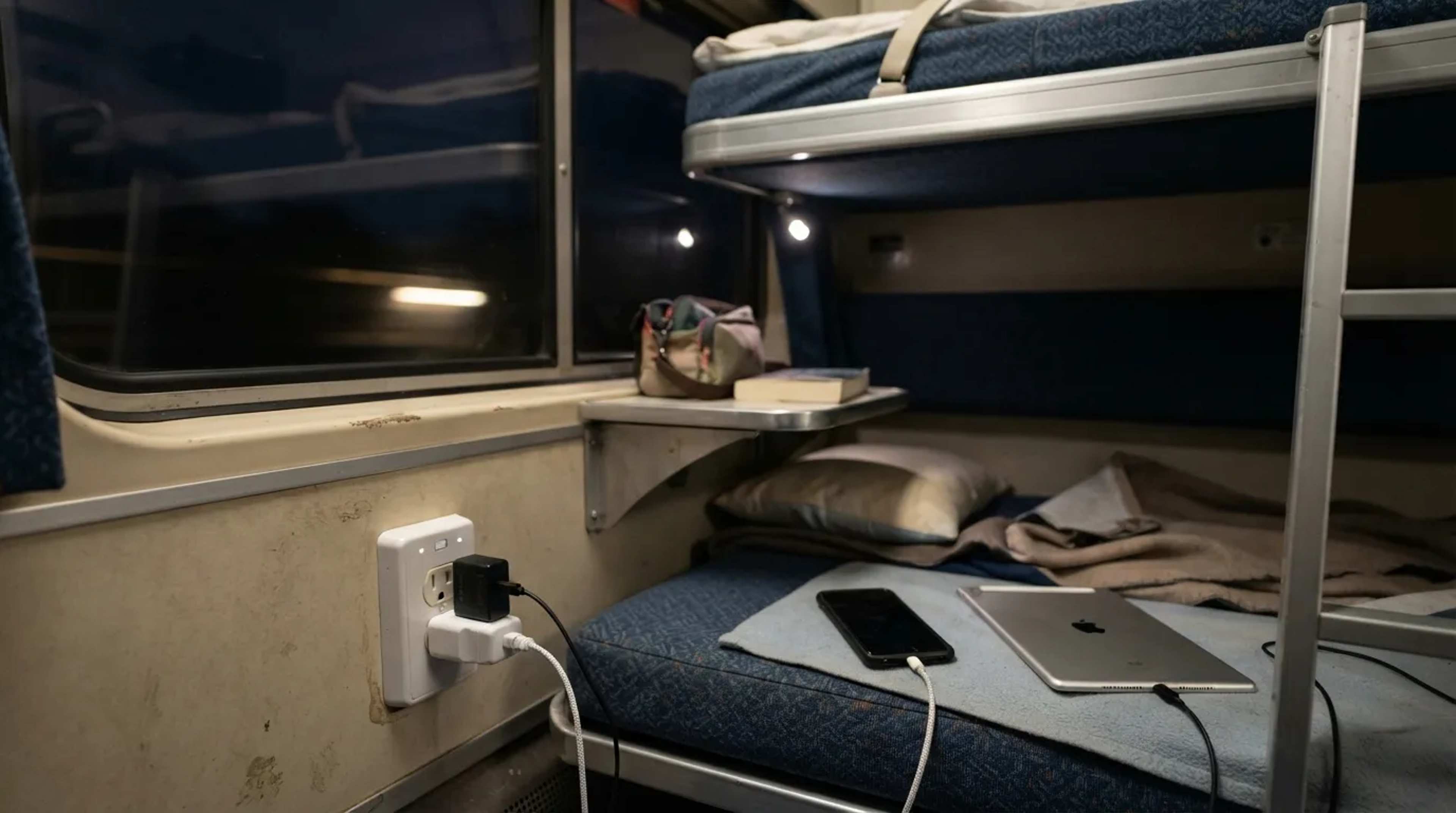
Many modern cars have outlets, but veterans don’t bet on them. Amtrak itself notes it operates with the challenges of an aging fleet, and a seat with a dead outlet isn’t unheard of. Being the person who can’t charge anything for eight hours is a very specific kind of misery.
So they arrive with full batteries and a power bank. Some download shows, maps, and the eTicket for offline use. Signal drops on rural stretches, which is the part first-timers forget. A dead phone can also mean a lost ticket.
At a Glance
- Phone fully charged before you leave the house.
- Power bank packed in your personal item, not a checked bag.
- Shows and maps downloaded for the dead-signal stretches.
- eTicket saved offline, with a screenshot as backup.
#5 – They Dress in Layers Because Train Cars Don’t Match the Weather
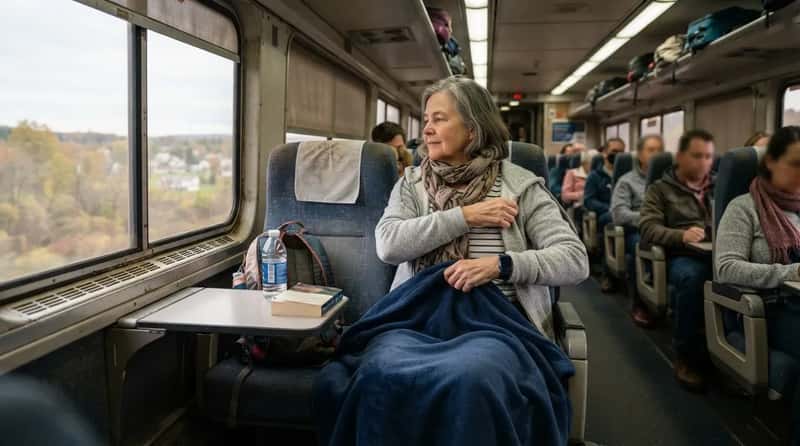
A train car can feel freezing at the start and stuffy by the end. Drafty platforms, opening doors, and hours of sitting still all play a role. Veterans carry a light sweater or scarf even in summer.
A small blanket or hoodie changes a trip more than most people expect. Amtrak allows pillows and blankets as personal items, so there’s room for one. It’s the cheapest upgrade on this list.
But the next item is the one that rewards people who plan for trouble.
#4 – They Build Delay Into Their Plans on Long Routes
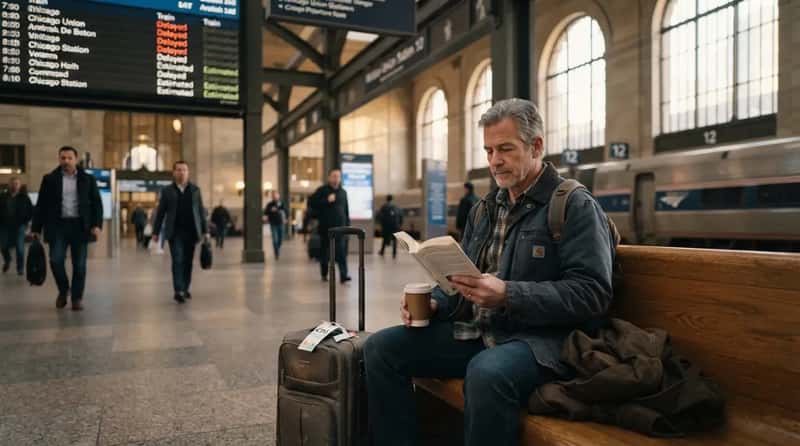
Here’s the truth that often gets glossed over. Amtrak’s own annual report acknowledges that long-distance trains struggle with on-time performance. Veterans read that as a planning note, not a reason to stay home.
They don’t book a tight connection or a nonrefundable event right after arrival. They treat the schedule as a goal, not a promise. The riders who book a flight, hotel check-in, or wedding for the same afternoon take the biggest risk. It’s a mild reality check, not a reason to skip rail.
And you can’t fix the next one at the last minute.
#3 – They Tag Every Bag Before They Leave the House
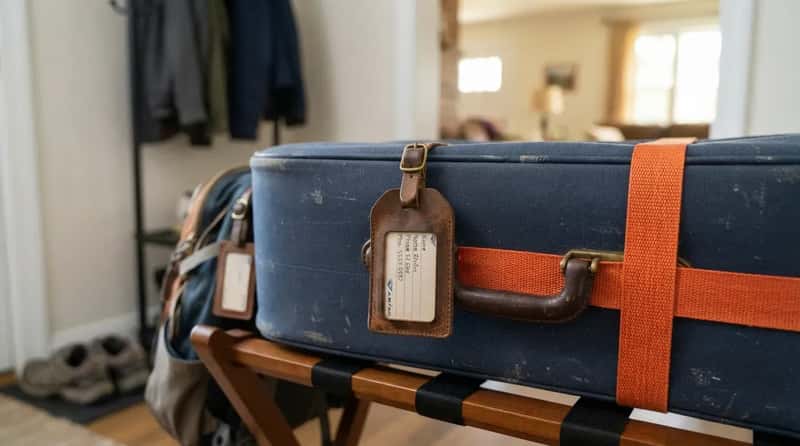
A lost bag is much more likely to come home if it says who owns it. Amtrak says ID tags are required on all luggage, and free tags are supplied at the station. Veterans don’t wait in line at the counter for one.
They put a name and phone number on the outside and a copy inside. Some add a bright strap so their bag stands out on a crowded rack. It takes a minute and costs next to nothing. A tag is often the difference between a funny story and a week of headaches.
#2 – They Keep a Photo ID Handy, Even Without an Airport Line
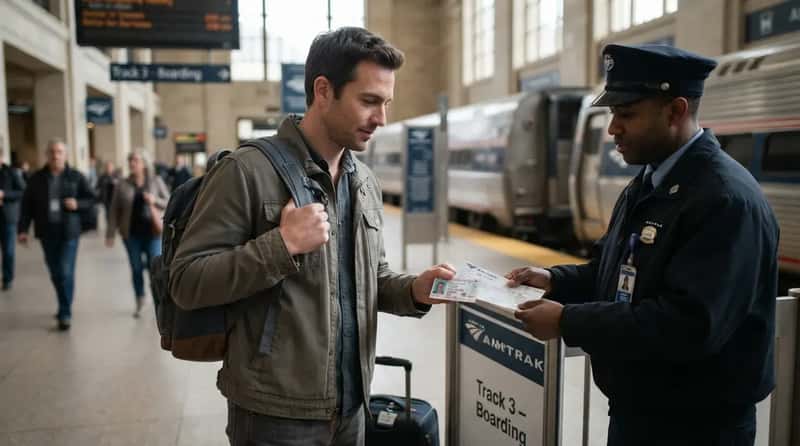
There’s no TSA lane, so many people bury their ID in the suitcase. That’s a mistake. Amtrak may require a valid government-issued ID when you buy tickets, check baggage, or when crew members ask.
Stations can also do spot checks. Amtrak doesn’t screen every bag, but it may conduct random baggage checks at stations. Veterans keep ID in an easy pocket, not at the bottom of a bag. Nobody asks for it until the one time they do.
Fast Facts
- ID may be requested when you buy tickets, check baggage, or when crew ask.
- Random baggage checks can happen at stations.
- No TSA-style lane doesn’t mean no ID requests.
- Best spot for it: an easy pocket, not the bottom of a bag.
#1 – They Read the Rules for Their Specific Train, Not Amtrak in General
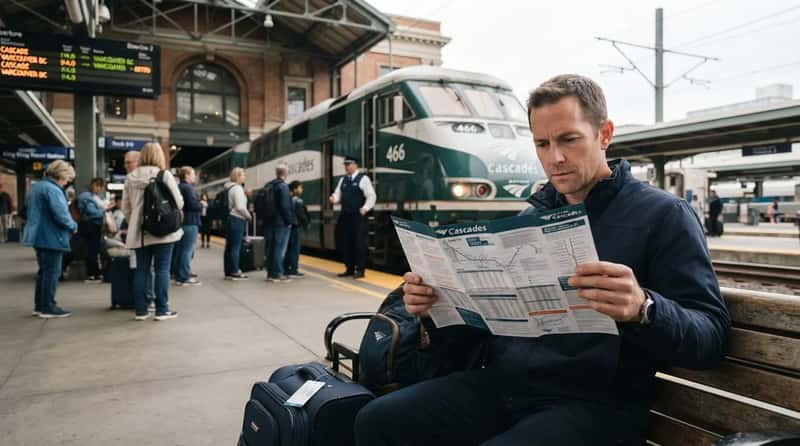
This is the habit that separates veterans from everyone else. Amtrak isn’t one experience. Auto Train passengers should arrive at least two hours before departure, which is four times the usual advice.
The details change by route. On Amtrak Cascades, you should arrive one hour early if crossing the U.S.-Canada border. Acela has no checked luggage. And the Pacific Surfliner uses slightly smaller carry-on limits of 28 x 22 x 11 inches. The one rule you didn’t read is usually the one that gets you.
None of these habits are secrets. They’re just the things nobody says out loud. Arrive early, watch the board, measure your bag, and keep your charger and ID within reach.
Most of all, plan for the train you’re actually riding, not the one in your head. What’s the one thing you do before boarding that nobody ever taught you?