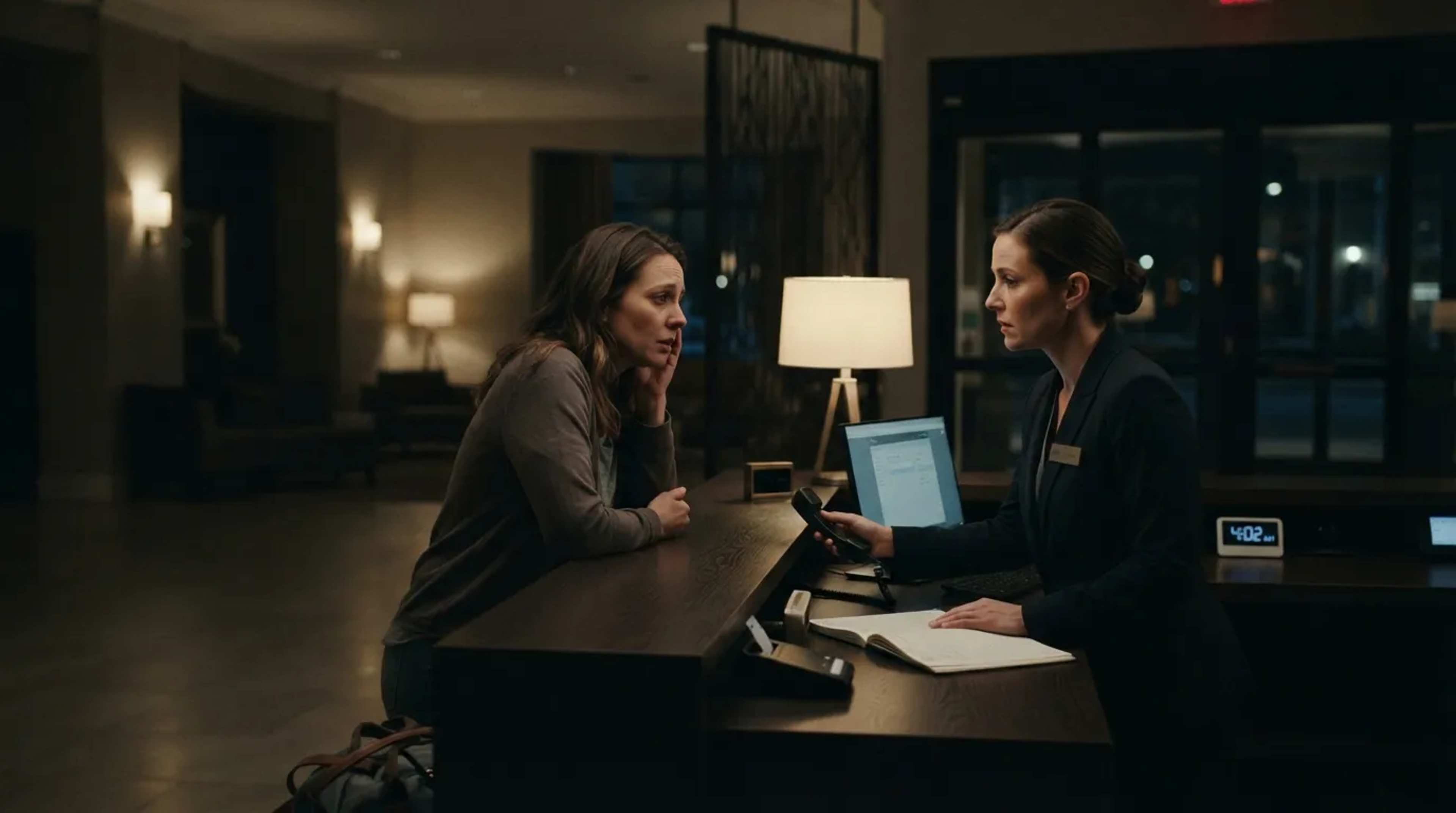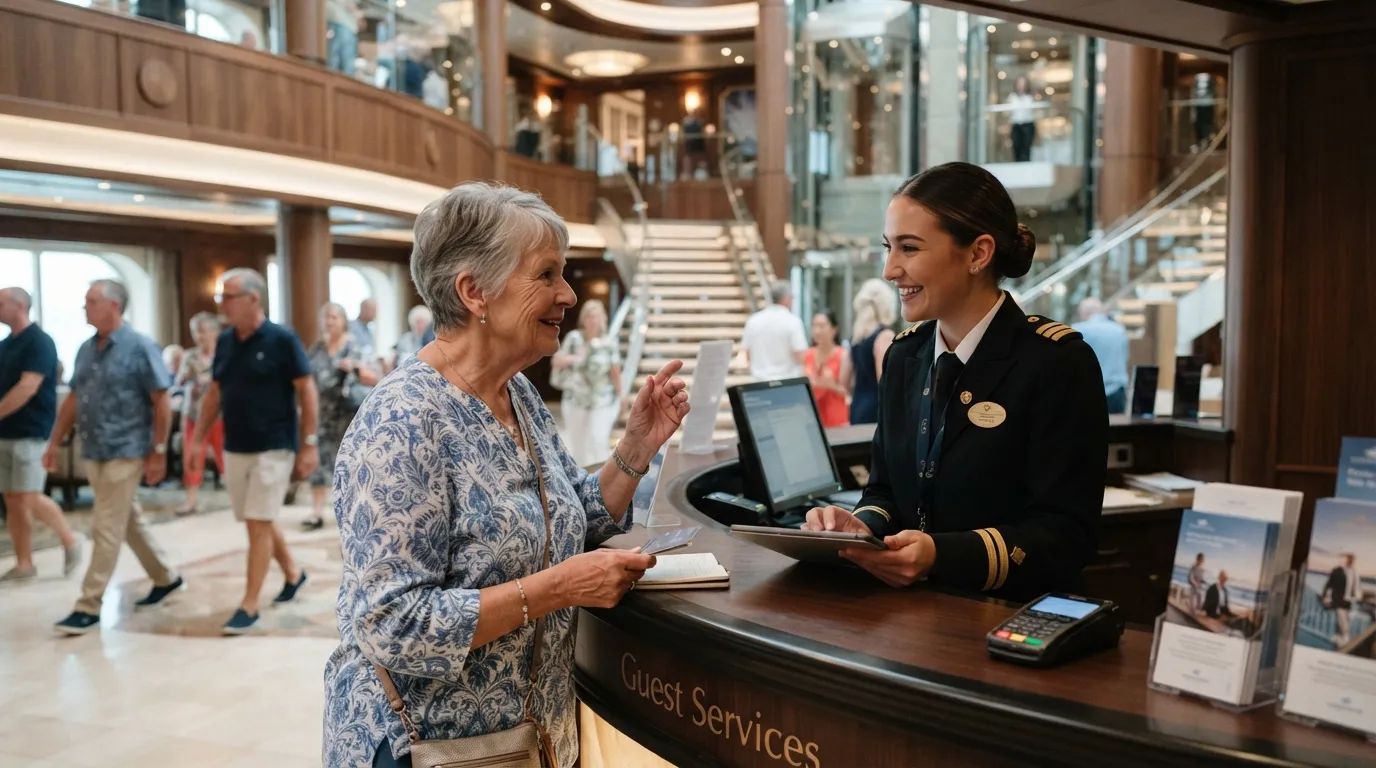
You probably picture a solo cruise after 65 as a table for one, a bill padded with extra fees, and a lot of quiet evenings. That picture is only half right. The other half plays out at the guest services counter, the modern version of the old purser’s office, where staff can quietly arrange far more than the brochure admits.
Policies vary by cruise line and even by ship, so none of this is a guarantee. But the pattern shows up again and again, from dance hosts to cabins built to dodge surcharges to a steward who learns your routine without being asked. The list starts with the smallest ask and builds to the one solo guests mention most when they get home.
#17 – The “Solo Guest” Note That Changes How Staff Treat You
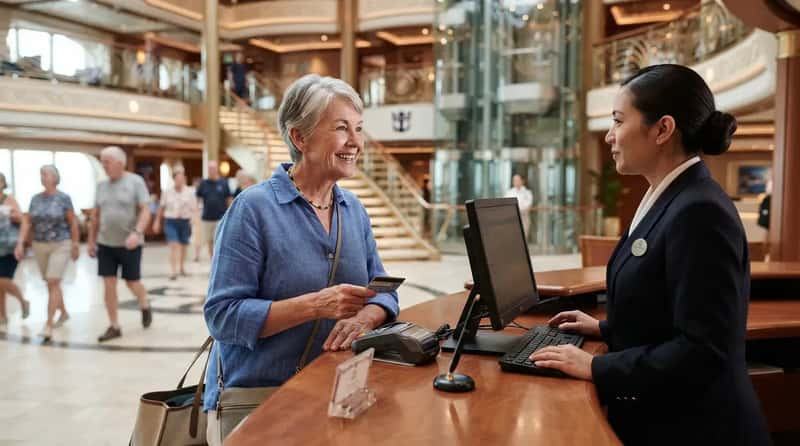
It starts with one short conversation. Cruisebound’s guide for solo travelers advises registering your solo status with Guest Services on embarkation day. It adds that some lines offer a daily check-in option, and most guests never hear about it.
Once staff know you’re alone, you’re easier to include. That can mean invitations to gatherings and a friendlier seating plan. None of it appears on the booking page, so you have to ask. The worst answer you’ll hear is “we don’t do that on this ship.”
But that’s nothing compared to the invitation some solo guests find waiting for them…
#16 – The Solo Gathering Invitation Tucked Away in the Daily Schedule
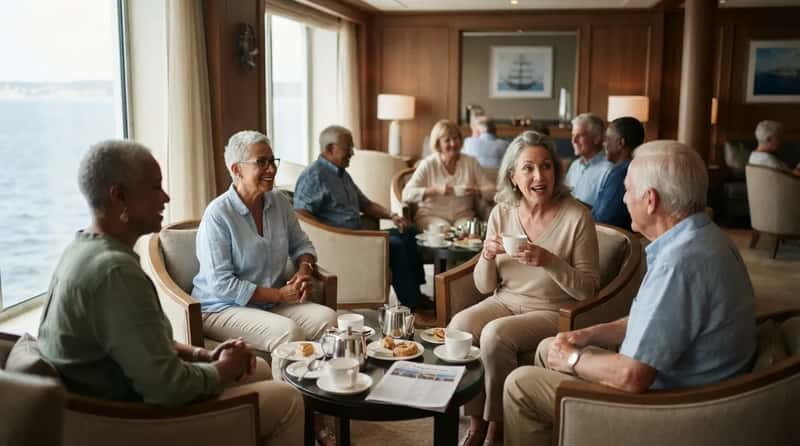
Many lines run solo get-togethers with almost no fanfare. Celebrity, for example, hosts a Solo Travelers’ Gathering and Dinner. Cunard is known for coffee mornings for solo travelers.
On river cruises, Riviera Travel offers designated hosts who help plan activities for solo passengers. Those include informal cocktail meet-and-greets, group dinners and excursions. Some of these events are mentioned only in the daily newsletter, so a quick question at the desk can save you from walking right past them.
The next arrangement decides who you’re sitting beside at dinner…
#15 – The Dinner Seat Somebody Chose for You on Purpose
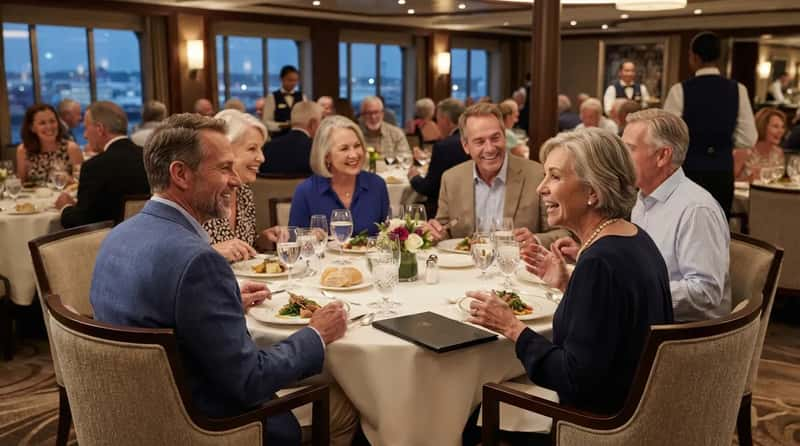
Dinner is where solo cruisers feel the most exposed. Budget Seniors reports that Holland America’s hosted dining and guest services team help arrange solo-friendly seating. In practice, a quiet word can land you at a shared table instead of a corner two-top.
Here’s the friction point. Many veteran cruisers say a shared table is the only reason they made friends. Others insist a private table is the whole point of a vacation. Either way, you can usually change your seating after the first night.
And some lines go further than seating, with hosts of a very specific kind…
#14 – The Gentlemen Hosts Who Show Up Without Being Asked
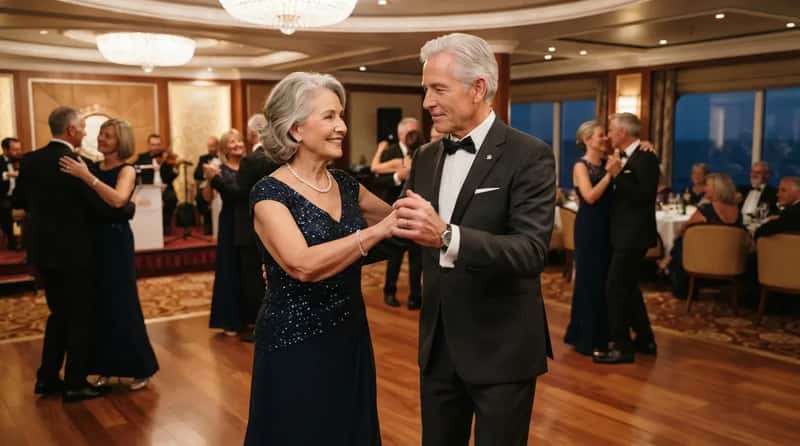
It sounds old-fashioned, and it’s still happening. On Cunard, a gentleman host program makes sure single ladies have dancing partners. Silversea offers gentleman hosts on some voyages, who greet guests traveling alone and keep them company at dinner and evening activities.
Crystal has a version too, with Ambassador Hosts who give solo travelers company for dinner, dancing and other evening events. Not every ship has them, and the programs are rarely front and center. Ask at the desk before you assume they don’t exist.
Quick Compare
- Cunard: gentleman hosts make sure single ladies have dance partners.
- Silversea: hosts on some voyages greet solo guests and join dinner and evening events.
- Crystal: Ambassador Hosts offer company for dinner, dancing and other evening activities.
Which raises the question everyone whispers about next…
#13 – The Screening Behind the Dance Floor Smile
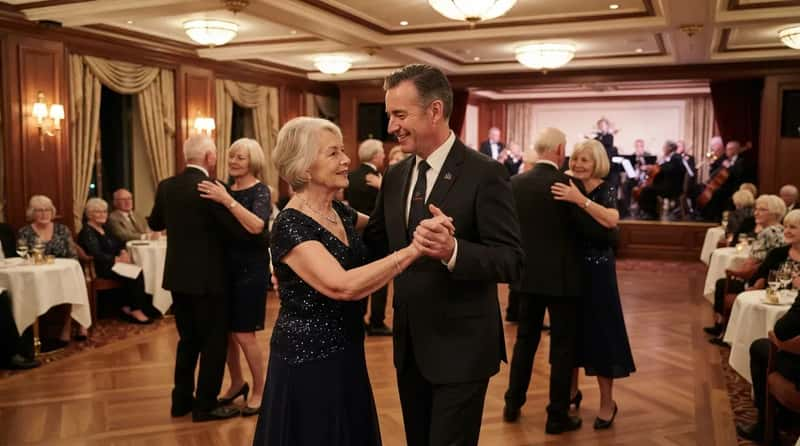
Handing part of your evening to a stranger sounds risky. Cruise Critic notes that Cunard’s dance hosts are fully screened by the cruise line. Most guests never learn that, because nobody announces it at the ballroom door.
That matters if you’ve been wary of the whole idea. Some critics call host programs a throwback that doesn’t suit modern travelers. Plenty of widowed guests say the opposite. The hosts are staff, not dates, and they exist so no one has to sit out the music.
Next up is a request that can decide whether your week is peaceful or miserable…
#12 – The Cabin Location You’re Allowed to Request
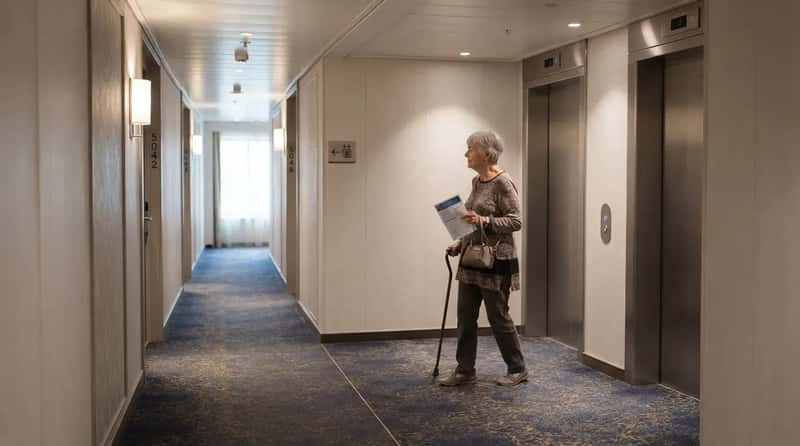
Where your room sits changes everything. A short walk to the elevators matters when your knees have opinions. So does being far from the nightclub and the anchor winch, and many guests never realize location requests are fair game.
Guest services can note a preference, though they can’t always move you. The reality is that the best-placed rooms are often gone months ahead. If you’re already aboard and unhappy, ask politely about a swap on day one, before the ship fills in.
But the real money secret has to do with the room itself…
#11 – The Solo Cabins That Dodge the Dreaded Surcharge
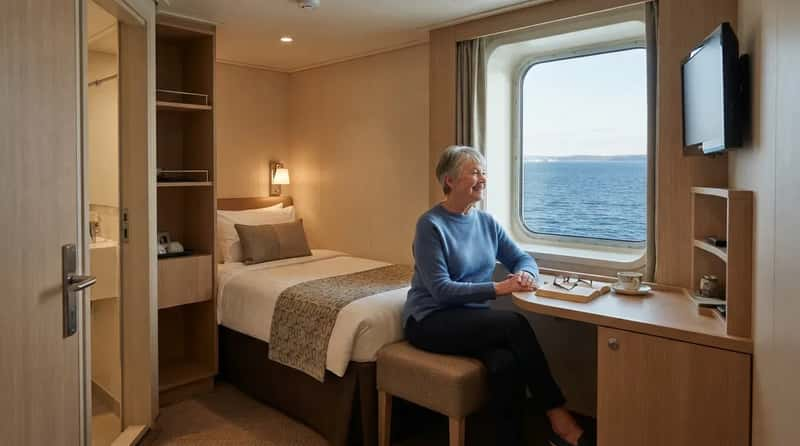
The single supplement is the biggest complaint among solo cruisers, and several lines built rooms to dodge it. These include Norwegian’s Studio cabins, Celebrity’s Edge Single Infinite Veranda cabins, and Holland America’s Single Ocean View cabins. Desk staff and onboard cruise consultants usually know what’s open.
Here’s the catch. These cabins are few and tend to sell out well before departure. Some travelers call them overhyped because they’re compact. Many solo cruisers say the savings are worth the squeeze.
Now for something small that makes a big difference on rough water…
#10 – The Free Seasickness Fix Behind the Counter
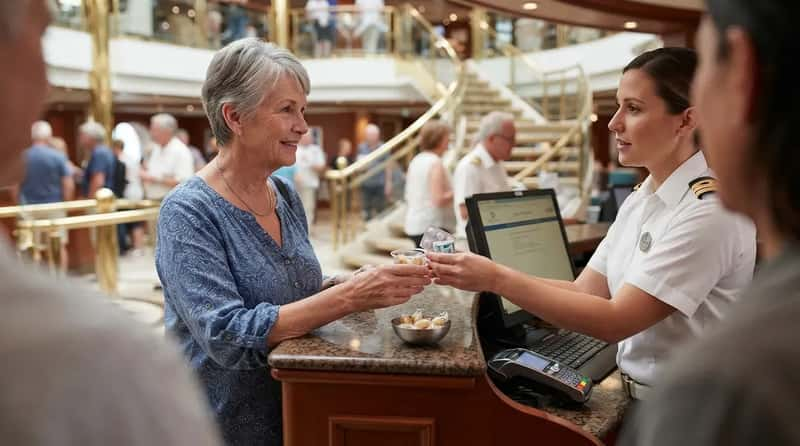
Nobody puts this in the welcome booklet. Many ships keep seasickness tablets at guest services, and some hand out ginger candies, often at no charge. Policies differ, so ask before you pay gift-shop prices for the same relief.
The medical center is another option if symptoms get bad. Waiting until you’re green is the classic mistake. If you take other medications, mention them before trying anything new.
And the next arrangement happens before you even reach the gangway…
#9 – The Wheelchair Waiting at the Terminal
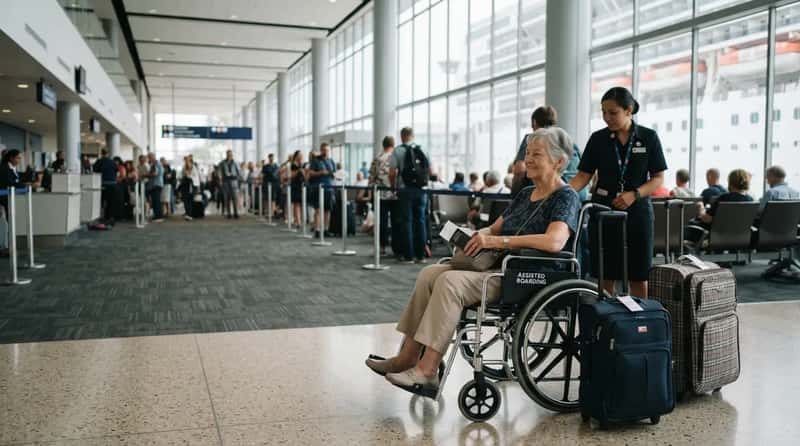
Embarkation can mean long lines and longer walks. Many cruise lines offer assisted boarding and wheelchair help, usually arranged in advance through their accessibility team. You don’t need to use a wheelchair full-time to ask for it.
The same goes for the way off the ship. Some guests learn about assisted exits only on the last night, when options are tight. A quick call or form before sailing avoids the scramble.
Meanwhile, someone else is quietly keeping an eye on your room…
#8 – The Steward Who Learns Your Routine
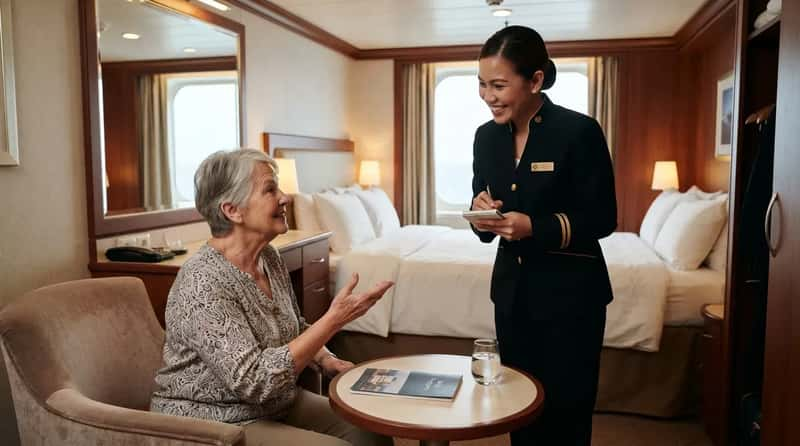
Your cabin steward is often the person who knows you best on board. A short chat on day one can set up useful habits. You can ask them to knock a certain way, adjust the bed height, or leave extra towels, and requests like these are routine.
Guests traveling alone can also mention they’d welcome a gentle check-in. No line advertises this as an official service. But a friendly steward who knows your schedule tends to notice when something’s off.
Worth Knowing
- Day one is the best time for the first chat, before routines set in.
- Ask for a knock style that suits you, so your rest isn’t startled.
- Bed height and extra towels are everyday requests, not favors.
- A gentle check-in is something you can ask for, even though it isn’t advertised.
The next item is the one that matters most when it counts…
#7 – The Emergency Plan Made Around Your Mobility
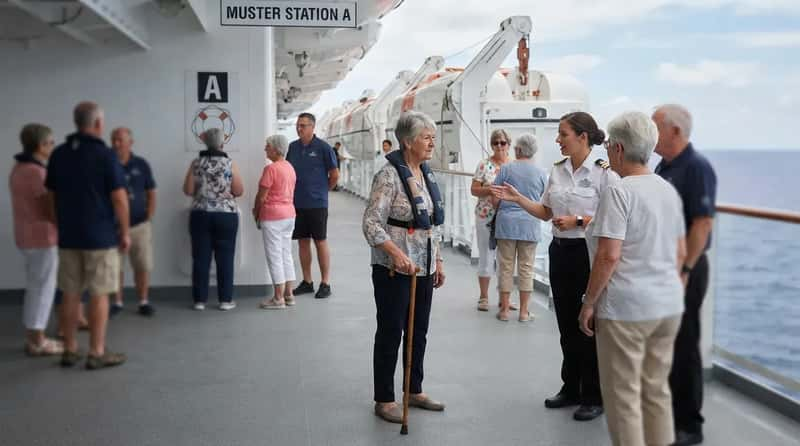
Ships hold regular safety drills, and the crew plans for guests who need help reaching muster stations. If you walk slowly or use a cane, tell guest services early. Most travelers never mention it, so staff can’t plan around it.
The details depend on the line. Some use special-assistance forms, others rely on a conversation at the desk. Either way, giving them your cabin number and your limits is a small step that matters a lot.
Dinner is next, and this one is about more than food…
#6 – The Allergy Note the Dining Room Actually Reads
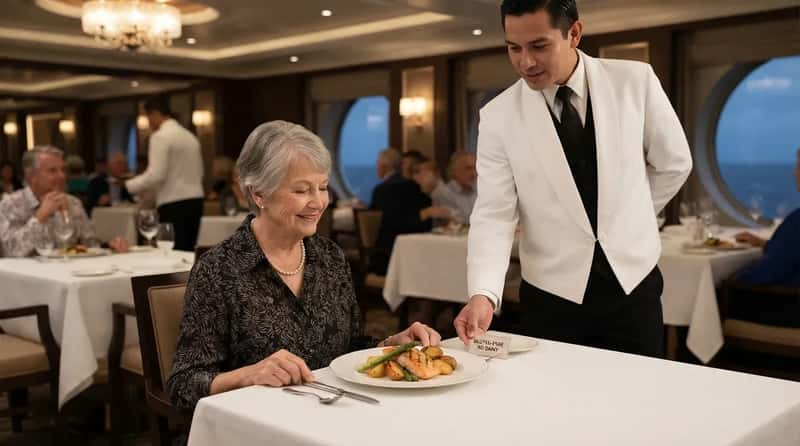
Dietary needs are easier to handle than most guests expect. Tell guest services or the restaurant manager about allergies, low-sodium needs or diabetic diets on day one. The dining team can then prepare for your table instead of improvising.
Many lines also let you submit this ahead of time. The mistake is waiting until the first plate arrives. A server who knows your needs from the second night onward also makes solo dining feel less like a performance.
And the following arrangement can save your knees on shore…
#5 – The Shore Excursion Matched to Your Pace

Port days can wear you out if you pick the wrong tour. Most excursion desks rate tours by activity level, so ask staff which ones involve steps, hills or long walks. They’ve heard feedback on every one of them.
Solo guests can also ask about small-group tours, which tend to be more social than a big coach. Many solo cruisers say their best friendships began on a slow-paced walking tour, not at the pool.
But what happens to your medication is a bigger deal than most people think…
#4 – The Fridge for Your Medicine, Quietly Delivered
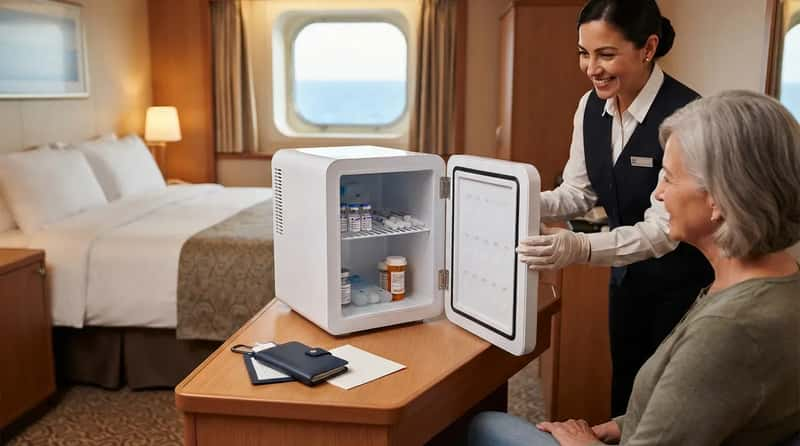
Many ships will supply a small refrigerator for medications like insulin if you ask. Guests who sail alone often have no companion to double-check these details. Ask at guest services or the medical center before your first night is over.
Travel experts commonly recommend packing medication in your carry-on, with a doctor’s letter and a spare supply. Checked luggage can arrive hours after you board. Introduce yourself to the medical staff too, because knowing where the clinic is beats finding it in a hurry.
At a Glance
- Ask: guest services or the medical center, before night one ends.
- Pack: medication in your carry-on, not your checked bag.
- Bring: a doctor’s letter and a spare supply.
- Learn: where the clinic is before you need it.
The next one is smaller, but people remember it for years…
#3 – The Birthday or Anniversary Staff Don’t Forget
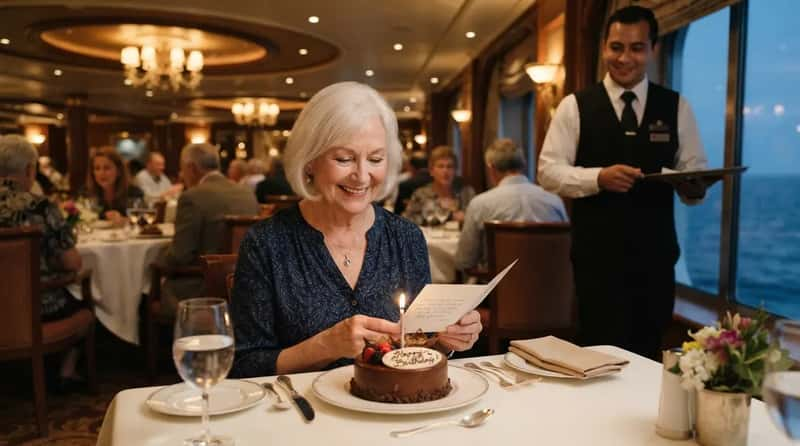
Many guests over 65 sail around milestones. For some it’s a first trip after losing a spouse. Tell guest services what you’re marking, and they can pass a note to dining and cabin staff. The response is often a quiet gesture, not a loud one.
You decide how public it gets. Some travelers want the cake and the singing; others only want a card. Say which one at the start, since staff would rather ask than guess wrong.
Which brings us back to dinner, and a decision most solo guests get backwards…
#2 – The Specialty Restaurant Table That Isn’t for One
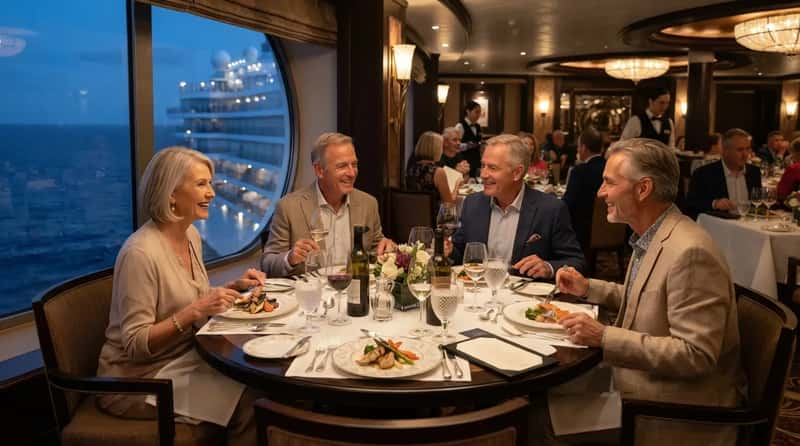
Solo diners often skip specialty restaurants, assuming the evening will feel awkward. But hosts and reservation staff can often seat you near others or pair you with fellow solo guests. It’s rarely offered, so you need to ask.
Here’s the opinion that splits cruisers. Some say eating alone in a good restaurant is the best part of traveling solo. Others call it the loneliest hour of the day. The arrangement matters either way, because it gives you the choice.
Why It Stands Out
- It turns a splurge dinner from a lonely risk into a social option.
- Seating near others or pairing with fellow solo guests is possible, but you have to ask.
- You stay in control, and you can still choose a quiet table.
And the last arrangement is the one people bring up most when they get home…
#1 – The Person Who Notices When You Don’t Show Up
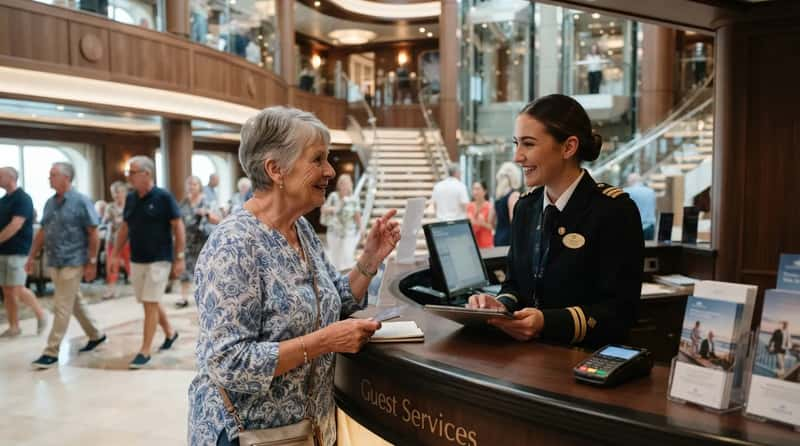
No cruise line promises daily welfare checks. But once the desk staff, your steward and your dining server all know your name, someone usually notices if you vanish from your routine. That’s what all these small arrangements quietly add up to.
That’s the real payoff. The brochure sells itineraries, but solo guests over 65 remember being known. And it begins with a single conversation at the desk on day one.
Cruise lines advertise cabins, ports and buffets. What actually helps solo guests over 65 is usually a conversation at the counter, not a line in the brochure. Seating help, hosts, medication storage, mobility planning and a steward who learns your routine are all worth asking about, and policies differ by line, so confirm before you sail.
The people behind the desk would much rather hear your request on day one than your regret on day seven.