Most of us blame crowds when a security line crawls. But a surprising share of the slowdown starts inside the bags, with everyday items that look harmless at home. A jar of dip, a worn-off label and a pretty wrapped present can each stop a lane while one officer digs through a bag.
The rules behind these stops aren’t secret, but most travelers have never read them. A few changed in 2025, and plenty of people missed the memo. Some items on this list will make you wince, and one comes with a number you won’t forget.
#17 – The Peanut Butter Jar That Secretly Counts as a Liquid
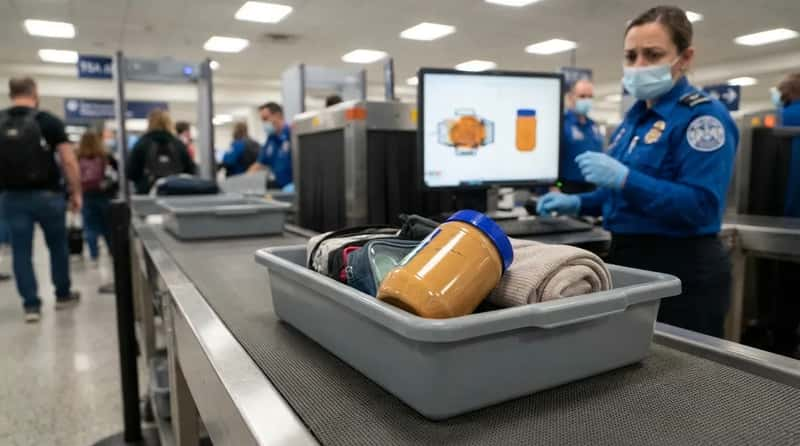
That “solid” jar of peanut butter is a liquid in the eyes of a checkpoint. TSA still catches spreads like peanut butter, hummus and dips when the container is over the limit. A full jar in a carry-on is a classic reason a bag gets pulled aside.
The rule is about texture, not ingredients. If you can spread it, pour it or squeeze it, it counts as a liquid or gel. One jar can hold up a whole lane while an officer opens the bag and checks it by hand. Put it in checked luggage and nobody has to stop.
Worth Knowing
- Peanut butter, hummus and creamy dips count as spreads.
- Jam, jelly and cream cheese get the same treatment.
- Salad dressing and sauces follow the liquid rules too.
- Bread, crackers and whole fruit are the easy carry-on snacks.
#16 – The “Almost Empty” Shampoo Bottle That Still Gets Flagged
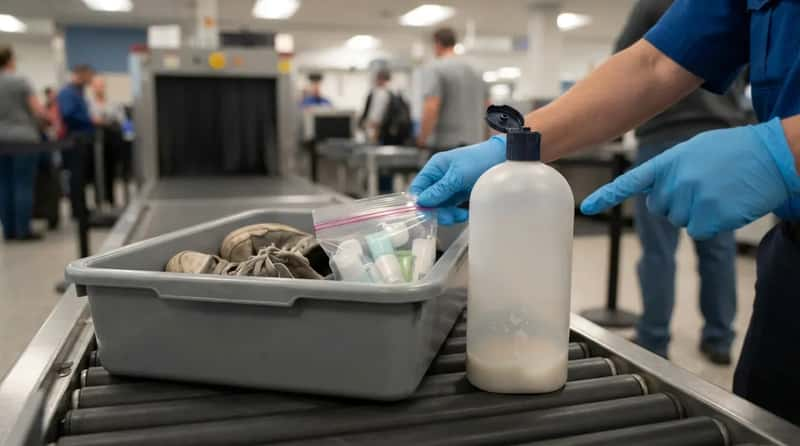
A travel-size amount in a giant bottle is still a giant bottle. Liquids in containers larger than 3.4 ounces belong in a checked bag. That applies even to a big shampoo bottle with just a splash left, per TSA policy.
The size printed on the container is what counts, not how much is inside. Screeners can’t eyeball a half-used bottle and wave it through. A nearly empty bottle gets the same treatment as a full one. Each container must be 3.4 ounces or smaller, and all of them must fit in one quart-size bag per traveler.
#15 – The Half-Frozen Ice Pack That Turns Into Contraband
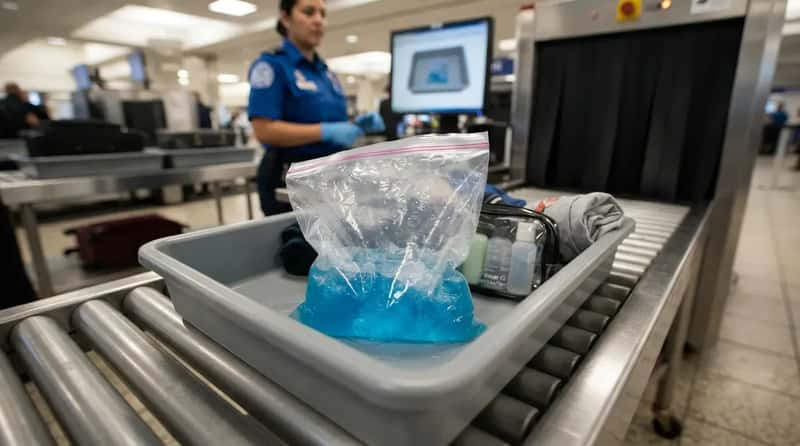
An ice pack that’s only mostly frozen can lose its seat on the plane. Frozen items pass as solids only if they are frozen rock-solid at screening. Slushy or melting ones can be confiscated.
The problem is timing. A pack that left the freezer at 5 a.m. may be soft by the time it reaches the belt, especially on a warm day. Medically necessary items, like a cooler of breast milk or medicine, get special handling. The same pack that was fine at home can fail at the checkpoint an hour later. Officers then have to treat it as a liquid and decide what to do with it.
#14 – Loose Spare Batteries With Bare Contacts
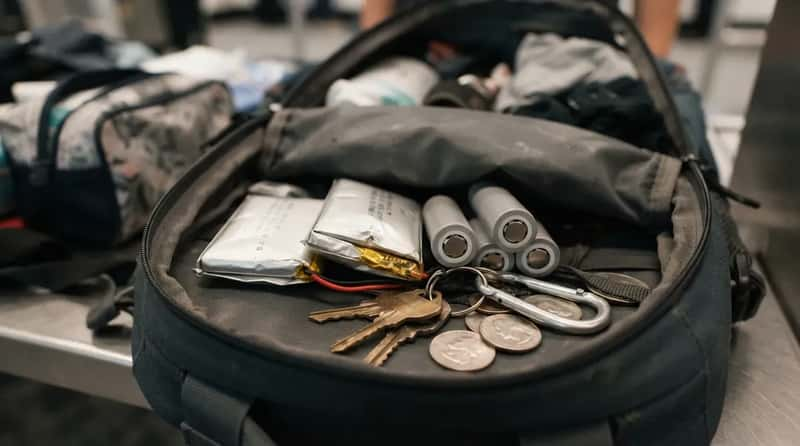
A battery rolling around a bag with exposed terminals is a short circuit waiting to happen. Safety guidance says spare battery terminals should be protected with the original packaging, non-conductive tape or individual pouches. Keys or coins touching a terminal are how trouble starts.
The other red flag is a battery that looks wrong. Batteries that are swollen, overheating, leaking or physically damaged are not allowed onboard because of the fire risk. A puffy battery pack isn’t a quirk. It’s one of the clearest warning signs a screener can see. A swollen device should stay home, because a cheap replacement costs far less than a missed flight.
#13 – The Power Bank Whose Label Rubbed Off
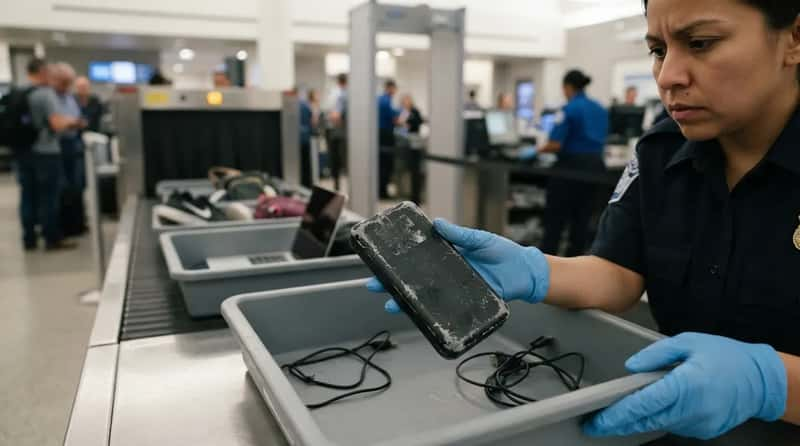
A power bank with no readable rating is a mystery to the person screening it. Airlines and regulators measure these in watt-hours, which is the energy the device stores. That’s not the milliamp-hours printed on many packs, and it’s not the watts the device puts out. If the rating has worn away, the screener has nothing to check.
One traveler guide warns that batteries without a visible rating may be confiscated. A scratched-off label can cost you a charger you’ve owned for years. Check the printing before you leave, because a faded label is a problem at the checkpoint, not at home.
#12 – The Power Bank That Went Into the Checked Bag
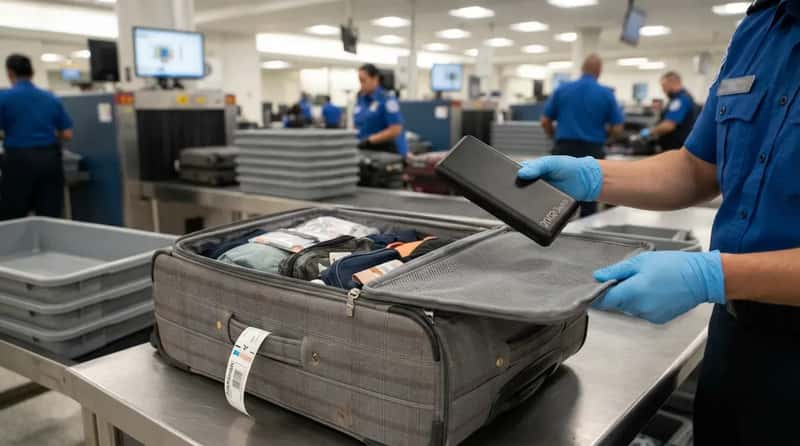
This is the most common battery mistake, and it’s the one that worries crews most. TSA allows power banks in carry-on bags and does not allow them in checked luggage. The FAA applies the same rule to spare lithium batteries, including battery charging cases.
The twist comes at the gate. If the overhead bins are full and your carry-on gets tagged for the hold, take the power bank out and keep it with you. Even a bag you carried to the gate can become a “checked” bag in seconds. Crews want batteries in the cabin so a problem can be handled fast. In the hold, nobody can reach it.
#11 – The Vape Pen Tucked Into Suitcase Pockets
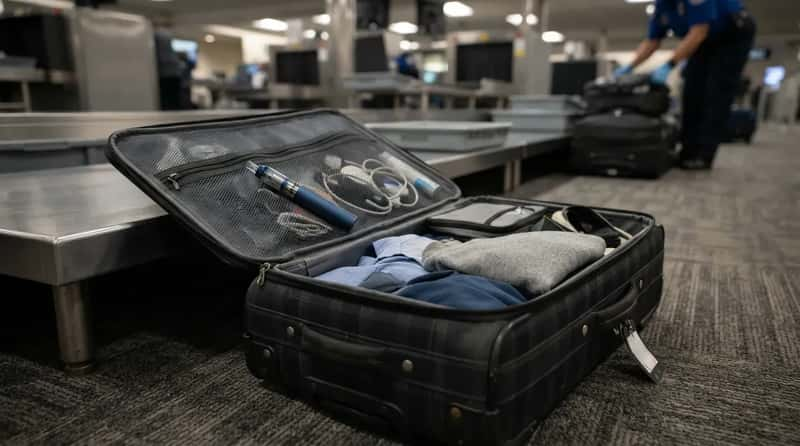
E-cigarettes are battery devices, and they follow battery rules. They’re allowed in carry-on bags but prohibited in checked bags. Many travelers toss a vape into a suitcase side pocket without a second thought.
The checkpoint doesn’t see a pocket. It sees a lithium battery heading for the hold. A forgotten vape in a checked bag can mean a bag opened and a delay for the owner. The fix takes seconds: check every pocket before you zip up, and move any battery-powered device to your carry-on.
Quick Compare
- Power banks: carry-on only, never checked.
- Vapes and e-cigarettes: carry-on only, never checked.
- Spare lithium batteries: carry-on only, with terminals protected.
#10 – The Gift-Wrapped Present That Gets Torn Open
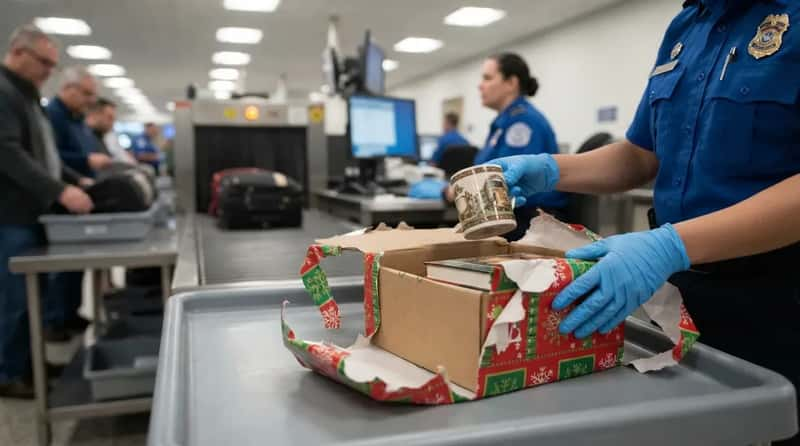
The prettiest present in your bag is often the one officers least want to see. Wrapped boxes hide their contents on the scanner. If an officer can’t tell what’s inside, the paper may have to come off.
TSA’s long-standing advice is to leave gifts unwrapped for the trip, or wrap them at your destination. A gift bag or a loose bow works well, because an officer can lift out the item. Perfectly folded paper isn’t protection at the checkpoint. It’s the first thing to go if a screener has doubts. Holiday travel makes this worse, because every lane fills with wrapped boxes at once.
#9 – The Driver’s License Without the Star
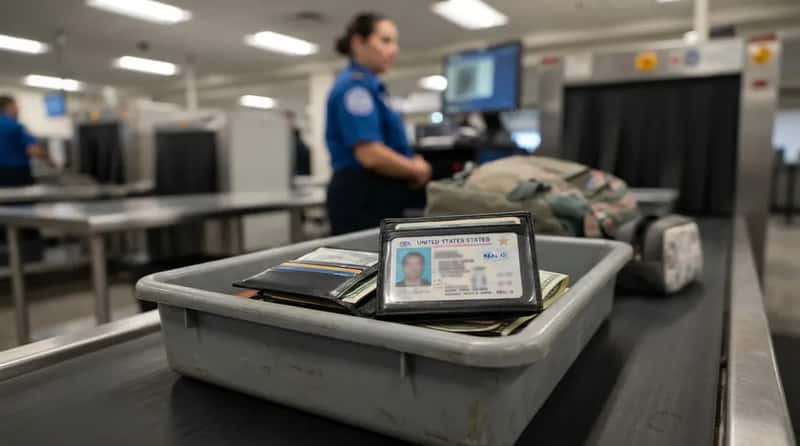
The wallet is part of the packing list, and the rules changed in 2025. REAL ID enforcement began on May 7, 2025, so a driver’s license now needs the compliant marking to be accepted for domestic flights. Without it, travelers need another accepted ID, such as a passport.
Plenty of people assume their old license still works because it hasn’t expired. It’s valid for driving, but not necessarily for boarding. A license that’s perfectly legal behind the wheel can still stop you at the checkpoint. That leads to a frantic dig through bags for a passport nobody planned to carry, so check the corner of your card for the star well before travel day.
Fast Facts
- Enforcement date: May 7, 2025.
- What to look for: a star marking in the upper portion of the card.
- Applies to: domestic flights and entry to certain federal facilities.
- Backup options: a valid passport or passport card works instead.
#8 – The Shoes That Don’t Have to Come Off Anymore (Mostly)
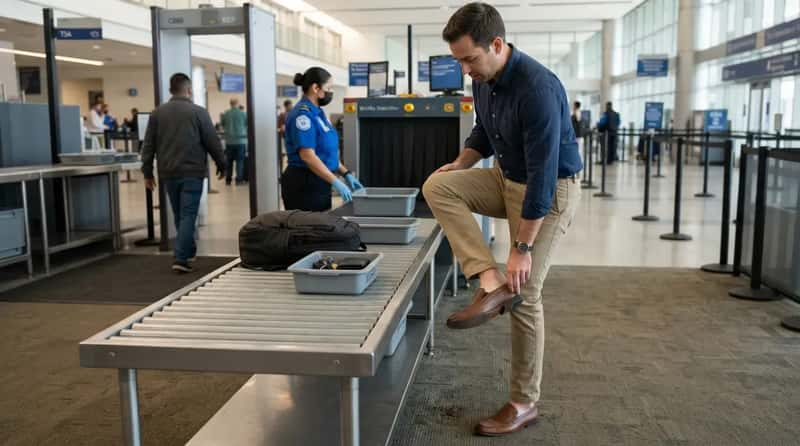
One of the oldest checkpoint routines is gone. On July 8, 2025, DHS ended the shoes-off requirement at TSA checkpoints, retiring a policy that had stood since 2006. Many travelers still strip off their shoes out of habit.
Here’s the catch. Mandatory shoe removal has ended, but shoes may still have to come off after an alarm. The shoes-on rule isn’t a guarantee, because extra screening can still bring the shoes back off. Slip-ons make that second step quick. Heavy boots with buckles and laces can turn it into a slow, one-footed hop.
#7 – The CT Lane You Assumed Would Fix Everything
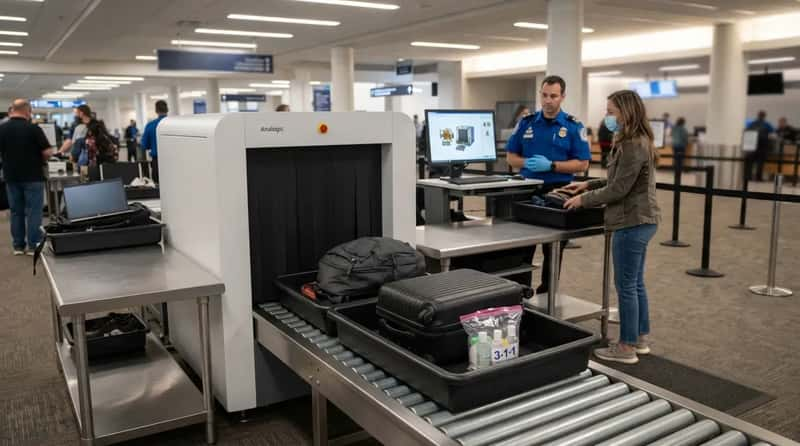
Many travelers hear “new scanners” and assume the old rules are over. The 3-1-1 liquids rule still applies at U.S. checkpoints, but some lanes with newer CT scanners let passengers leave certain items in their bags. It depends on the lane and the airport.
The rollout is uneven, and many airports still run older machines. Travelers also report that some officers enforce the traditional rules even at CT checkpoints. Pack for the strictest lane, because you can’t know which one you’ll get. The “liquids rule is dead” rumor has probably caused more delays than the rule itself.
#6 – The Medication That Never Got Declared
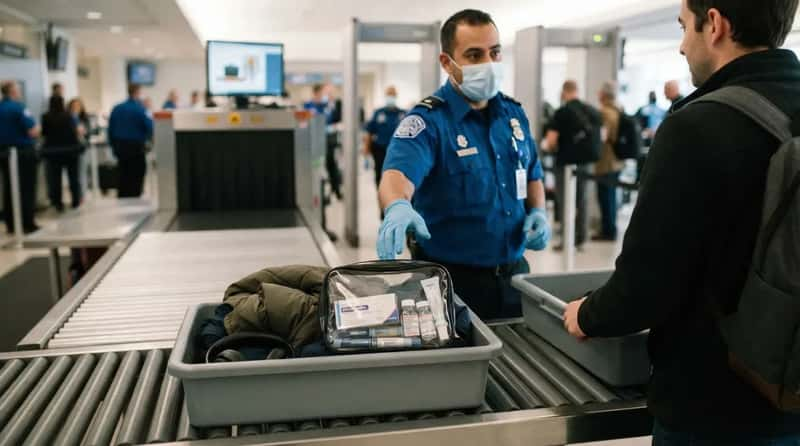
Medical liquids are the biggest exception to the size rule, and they only work if you speak up. Medically necessary liquids such as insulin, saline and prescription creams are allowed in larger amounts, but they must be declared for separate screening.
That last word matters. An undeclared bottle mixed in with the toiletries bag looks like any other oversized liquid. The exception exists, but it doesn’t apply itself, and the officer needs to be told. Keeping medical items in their own pouch lets screeners separate them in seconds. That protects the traveler who needs them and the people waiting behind.
#5 – The Baby Formula That Needs No Baby
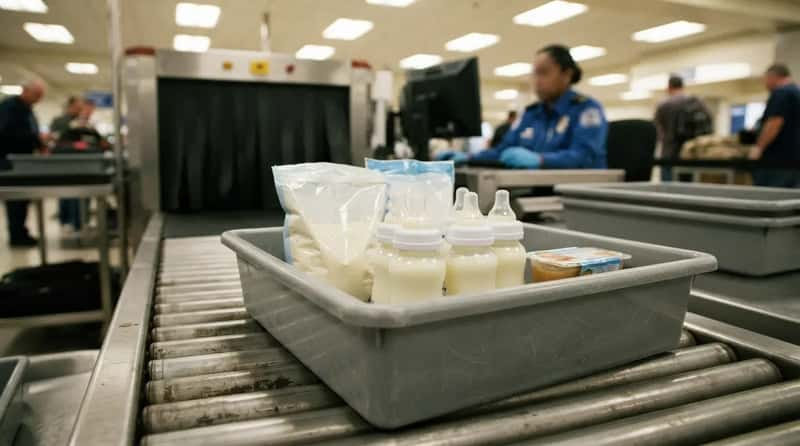
Parents often brace for a fight over formula and breast milk at security. In reality, these items get special allowances. Formula, breast milk and baby food are permitted in reasonable quantities, and TSA says the child doesn’t need to be traveling with you.
These items can also go past the standard size limit. Exceptions allow more than 3.4 ounces for medical liquids, baby food and frozen-solid items. You don’t have to fly with a baby to carry formula through the checkpoint. The catch is that these items are pulled out for separate screening, so parents who pack them in one easy-to-reach spot move through far faster.
#4 – The Pocketknife That Was “Always in the Bag”
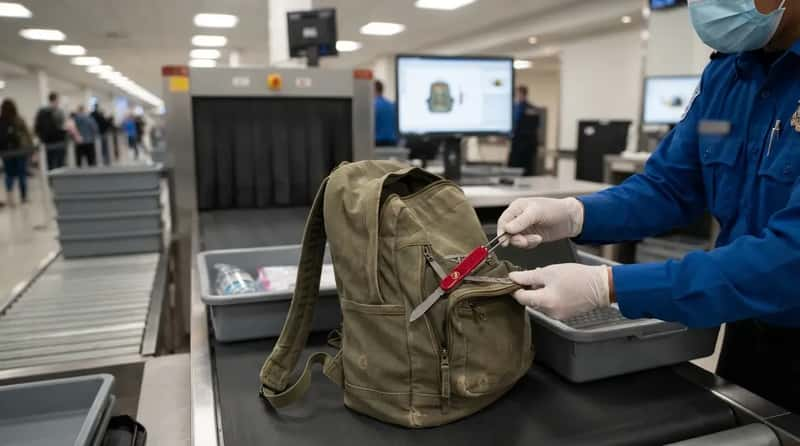
The most common story at the checkpoint is “I forgot it was in there.” Knives of nearly every kind aren’t allowed in carry-on bags, with narrow exceptions like plastic or round-bladed butter knives. A multi-tool with a blade falls into the same category.
The forgotten blade usually lives in a backpack pocket, a laptop sleeve or a toolkit from the last camping trip. The knife that has been in the bag for years is the one that gets spotted in seconds. Officers can’t wave it through because it’s sentimental. The choice is usually to surrender it, mail it home or move it to checked luggage.
#3 – The Toy Gun That Looks Real on the Screen
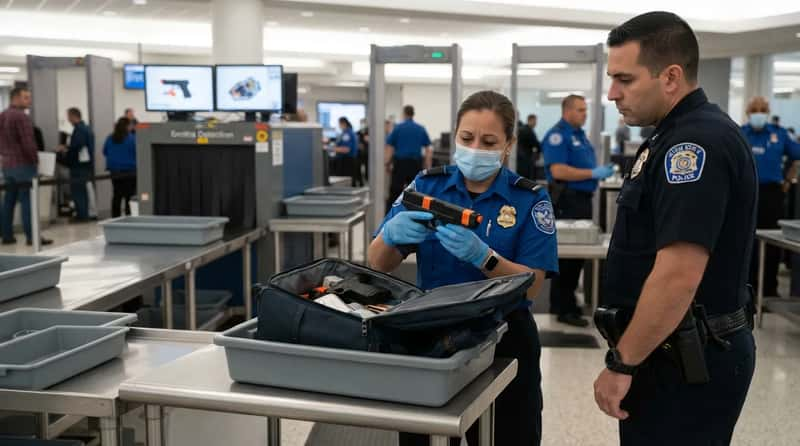
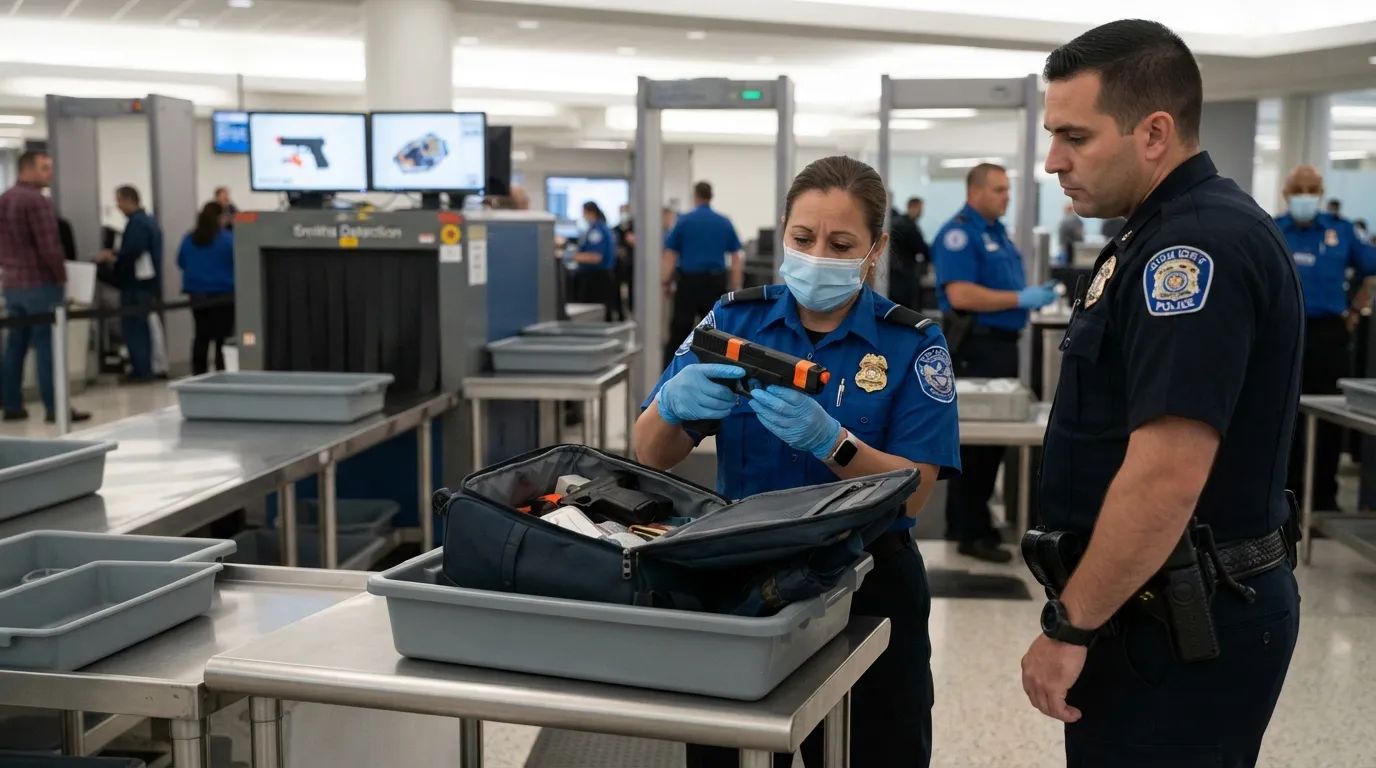
A fake gun can stop a checkpoint just as quickly as a real one. TSA says any type of replica firearm is prohibited in carry-on baggage and must go in checked luggage. On an X-ray screen, a realistic toy can look exactly like the real thing.
That means a prop for a costume party or a collector’s piece can trigger a serious response. When an officer sees what looks like a firearm, TSA notifies airport police, and a law enforcement officer steps in to speak with the traveler. A harmless toy can still set off a full law enforcement response. A prop belongs in checked luggage, ideally in its own case.
#2 – The Right Way to Fly With a Real Firearm
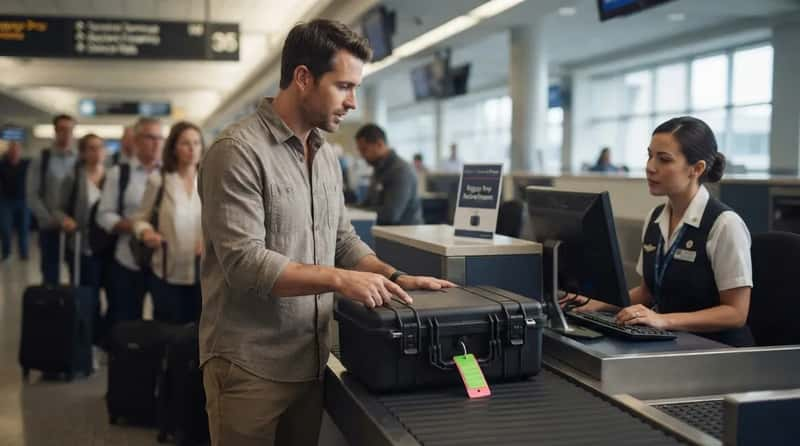
Flying with a gun is legal, but only through one narrow door. TSA says firearms can travel only if they are unloaded, packed in a locked, hard-sided case and placed in checked baggage. The traveler also declares the firearm at the airline counter.
The lock detail surprises people. TSA advises using a lock that only the owner can open, not a TSA-approved one. The usual TSA-approved luggage lock is actually the wrong choice for a firearm case. Gun owners who follow the steps rarely make the news. The ones who skip them are the story in #1.
At a Glance
- The firearm must be unloaded.
- It goes in a locked, hard-sided case.
- The case travels in checked baggage only.
- The owner declares it at the airline counter.
- Only the owner should be able to open the lock.
#1 – The Loaded Gun in the Carry-On, by the Thousands
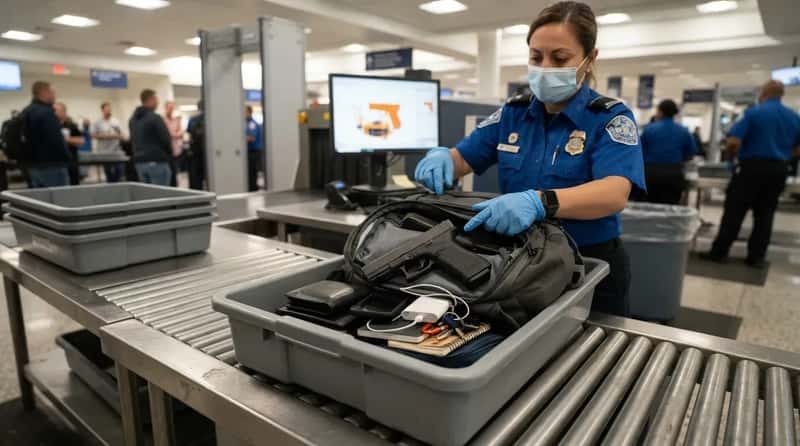
The biggest packing problem isn’t a forgotten shampoo. It’s firearms, and the numbers are huge. TSA found 6,678 firearms at checkpoints in 2024, after 6,737 in 2023 and 6,542 in 2022. About 94% were loaded.
Many owners assume a concealed carry permit covers them. TSA is clear that even with a concealed weapons permit, firearms are not allowed in carry-on luggage. The penalties are real: civil fines that can run into five figures, possible criminal charges and loss of TSA PreCheck eligibility. A gun that’s forgotten in a bag is still a loaded gun at a checkpoint. Every one of those finds stops a line, and it can end a trip before it starts.
The biggest time-wasters at security are usually small: a spread that counts as a liquid, a label that wore off, a battery in the wrong bag. A few are much bigger, like a license without the star or a forgotten firearm. The rules around shoes and scanners have shifted since 2025, but the 3.4-ounce limit and the battery rules are still very much in force.
Most delays come from things nobody meant to bring. Which item on this list did you think was fine all along?