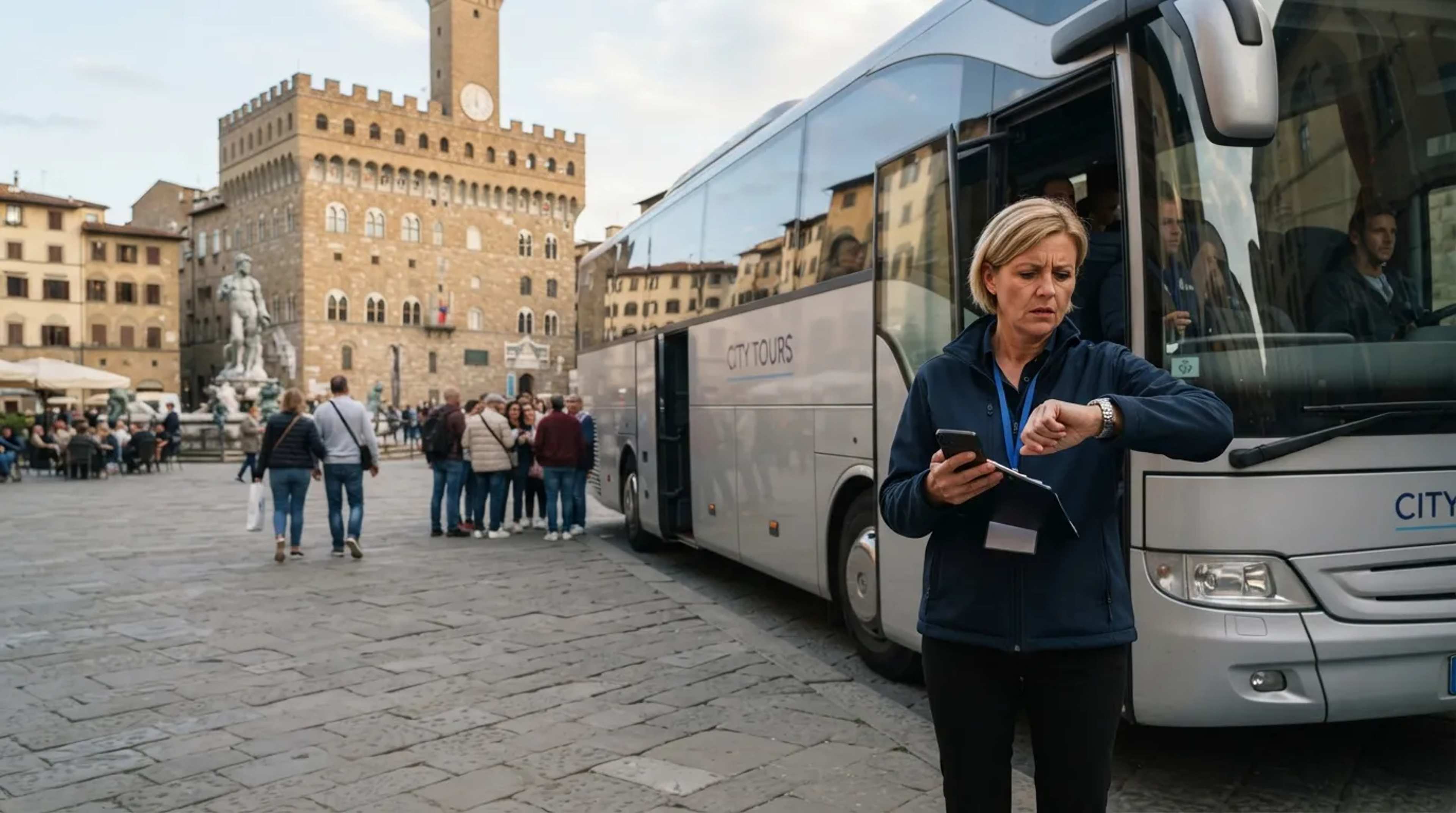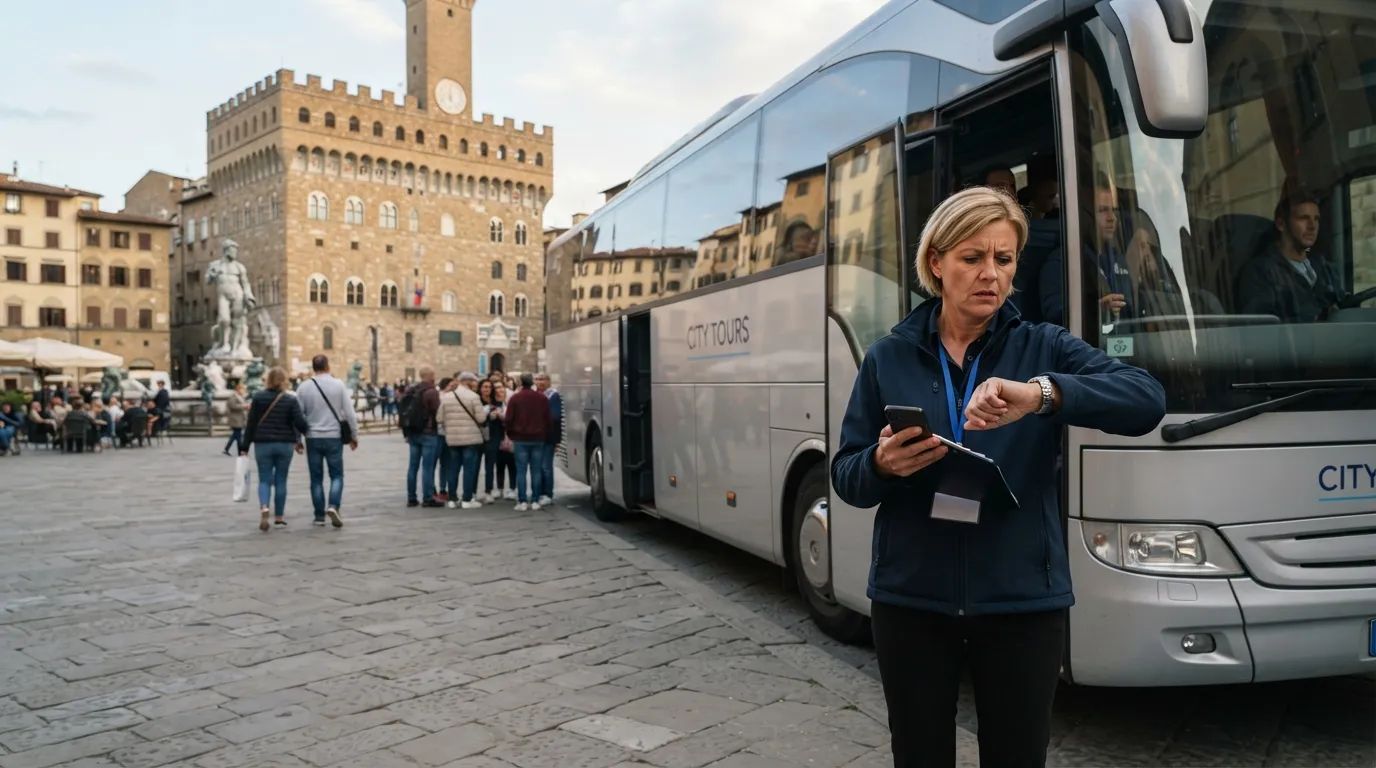
You step onto the coach, find your seat, and the day just seems to happen. Lunch is waiting, the museum doors open right on cue, and nobody mentions the dozens of calls that made it look so easy. Those calls get made earlier than you’d think, in a quiet depot, over a clipboard and a lukewarm coffee.
Some of the choices are purely practical. Others are small, sly and a little bit sneaky, like the departure time you were given that isn’t the real one. Here is what tour managers are weighing before the engine ever turns over, and the last item is the call that surprises people most.
The Headcount That Has to Match the Manifest Before Anything Moves

The first decision is simple and unforgiving: who is supposed to be on this coach today? Tour managers work from a rooming list or manifest, and what they see has to match it exactly. One missing name can rewrite the whole departure plan. A late checkout, an overnight illness or a quiet change of plans all show up right here.
Many managers count at the hotel, then count again once everyone is seated, because a count taken while people are still shuffling aboard can’t be trusted. Using the same counting method every day makes a mistake jump out instantly. A passenger left behind at a rest stop is every manager’s nightmare, which is why this habit is so hard to beat. The next decision, though, involves a small and very deliberate fib.
The Real Departure Time Is Never the One on the Itinerary

The printed time and the time the wheels actually roll are often two different things. Managers know that groups drift, elevators jam and somebody always goes back upstairs for a phone charger. So they announce a “be on the coach” time that leaves a cushion before the true departure. The buffer is built in on purpose, and most passengers never notice it.
That cushion isn’t there for the early birds. It protects timed entries and lunch bookings from the people who are always last. Some managers also settle, before leaving the depot, exactly how long they’ll wait for a straggler. That limit is agreed with the driver and almost never announced.
But the clock on the dashboard isn’t the one with the final word on the day.
The Driver’s Legal Clock That Can Veto Any “Quick Detour”
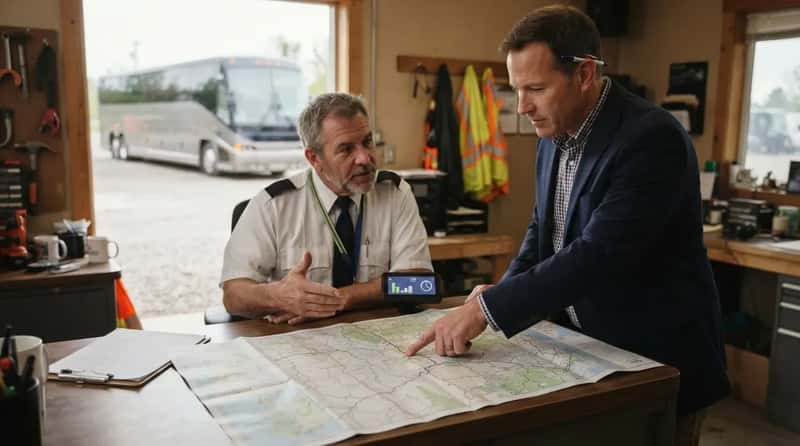
A tour manager might want one more scenic stop, but the driver’s legal limit can simply say no. In the U.S., federal rules for passenger-carrying drivers cap driving at 10 hours after 8 consecutive hours off duty. They also bar driving after the 15th hour on duty. No itinerary, however popular, can override that clock.
That’s why a “quick detour” is sometimes impossible, and why some long days are built around a fixed finishing time. The manager and driver talk it through at the depot. A stop that looks free on paper may quietly eat far more of the driver’s day than anyone on board realizes.
And that’s before anyone has even looked at the sky.
The Forecast That Quietly Rewrites the Whole Day
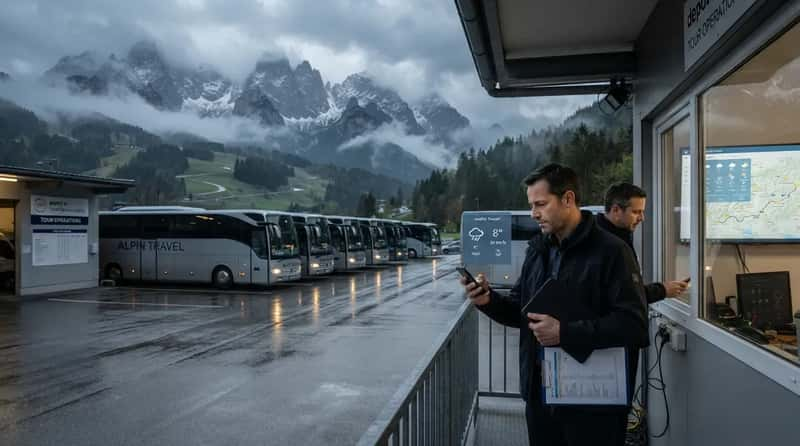
Managers check the weather before they check anything fun. Wind, fog, heavy rain or snow can change what a coach can safely do. Some mountain passes in the Alps close seasonally to traffic, and no schedule can talk them open. If the route depends on one, the plan may be switched before breakfast.
The changes are usually small, and that’s the clever part. A hilltop viewpoint slides to the afternoon, or a museum stop moves to the morning when the rain is due. Managers think about the sequence of the day, not just the destination. Done well, the group never learns anything was swapped.
Worth Knowing
- Wind: A tall, heavy coach catches gusts, so exposed bridges and ridgelines get a second look.
- Fog: Slow, low-visibility mountain roads can swallow a whole morning.
- Snow and ice: Many Alpine countries require winter tires or chains in wintry conditions.
- Heavy rain: Outdoor stops tend to move to the drier part of the day.
Still, nothing causes more quiet arguments than the next item.
The Seating Question That Turns a Front Row Into a Status Symbol
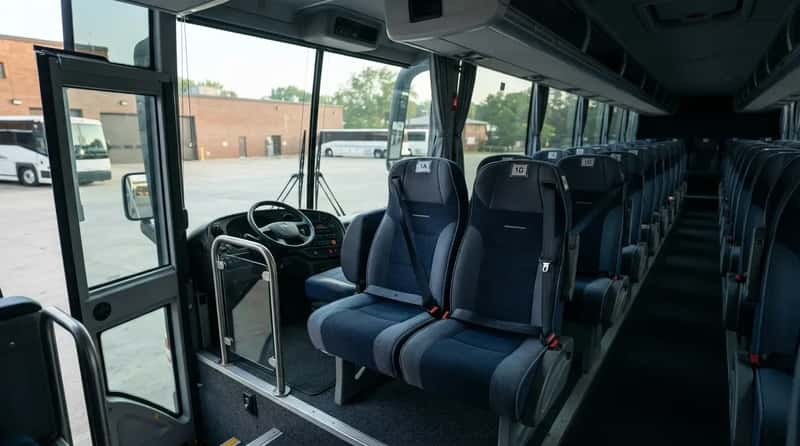
Seating looks trivial until a front-row seat becomes prime real estate. Some tour managers set a daily rotation so nobody is stuck at the back all week. Others say rotation causes more fuss than it solves. Plenty of veteran travelers swear the front seats are overrated, since the back often has more room to spread out. Ask any regular passenger and you’ll get a strong opinion.
Managers also think about comfort and safety. U.S. motorcoaches built since late 2016 are required to have lap and shoulder belts. Guests with motion sickness or mobility needs may be placed near the front or near the door. It’s a delicate decision, and it’s made quietly.
But a fair seat plan means nothing if the bags go in the wrong order.
The Luggage Loading Order That Decides Who Waits on the Sidewalk
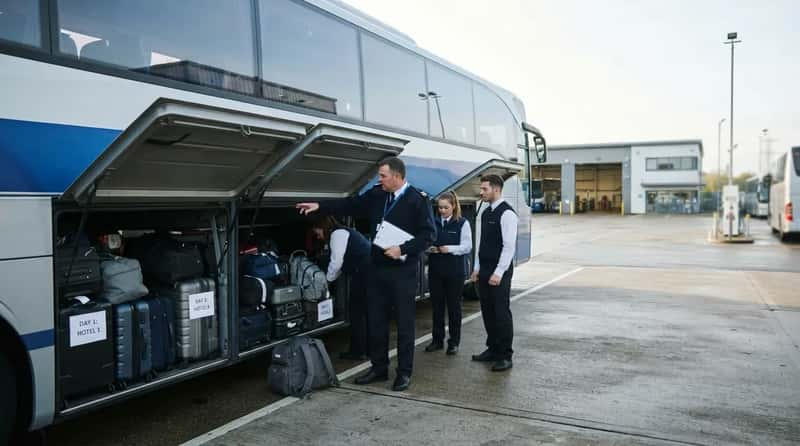
Luggage gets loaded in a deliberate order, not just tossed in. Managers think ahead to the first drop-off and the last. The bag you hand over first can be the last one you see at the next hotel. Get it wrong and a whole group stands on a curb, watching a crew dig.
Many coaches have underfloor bays on both sides. Experienced crews load so the right bay opens at the right stop. Fragile and oversized items get their own spots. A manager who sorts this out at the depot saves everyone a long wait later.
And the next decision is the one every passenger secretly cares about most.
Where the First Restroom Stop Lands (and Why It’s Never Random)
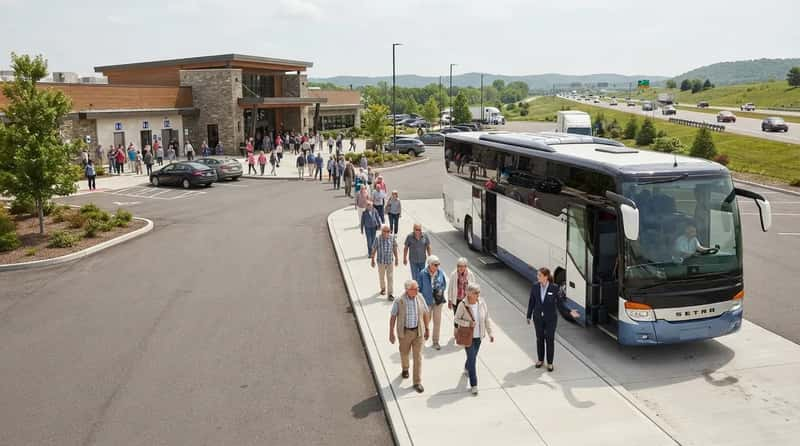
Nothing sinks a mood like a missed bathroom stop. Managers map facilities along the route before leaving, because not all rest areas are equal. A stop with too few stalls can burn half an hour for a full coach. That’s why experienced managers favor bigger facilities.
Many coaches have an onboard toilet, but it’s usually treated as a backup, not the main plan. Operators commonly ask guests to use it sparingly. Managers also consider who’s on board, since older groups often need more frequent stops. The first stop sets the rhythm for the whole day.
Quick Compare
- Big service plaza: More stalls and shorter lines, but plenty of shops to tempt people into lingering.
- Small roadside stop: Quick in and out, until a full coach forms one very long line.
- Onboard toilet: Handy in a pinch, but treated as the emergency option.
But a well-timed stop can still be wasted if the next one isn’t locked in.
The Timed Entries That Are Locked In and the Stops That Are Just Hopes
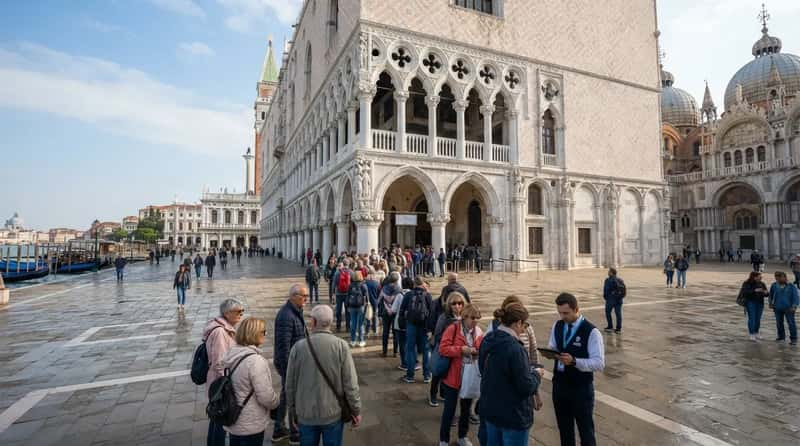
Popular attractions often run on timed entry, so managers sort the day into fixed and flexible. A timed ticket is a hard deadline. Miss your slot and the group may not get in at all. That single fact shapes the order of everything else.
Managers confirm bookings the night before or at the depot. They also decide which stops can absorb delay and which can’t. If something has to go, the flexible item goes first. That’s why you’ll sometimes lose a “free time” shopping stop without being told why.
Yet even a perfect ticket doesn’t help if the coach can’t get close.
Where the Coach Is Actually Allowed to Park (Hint: Not Near the Attraction)
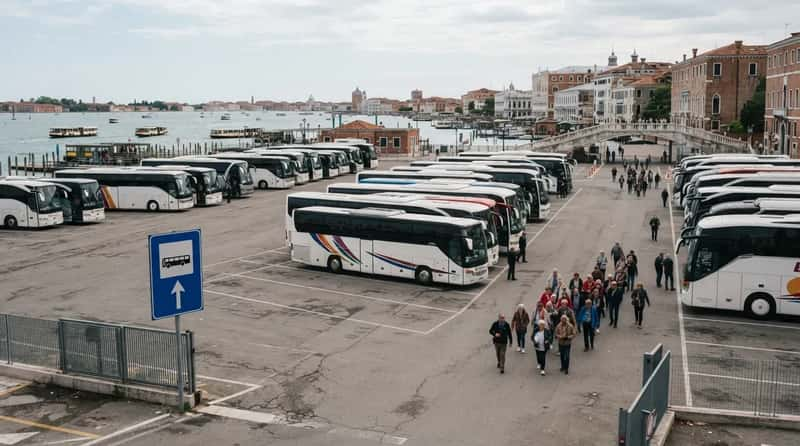
Big vehicles don’t get to park wherever they like. Many historic city centers limit coaches to designated drop-off points, often well away from the main sights. In Venice, coaches can’t go past the edge of the historic area at Piazzale Roma. Rome and other cities also restrict tourist coaches and may require permits.
That means managers plan the walk, not only the drive. Pick-up points get fixed in advance. Guests are told exactly where to meet and what the coach looks like. It sounds basic, but a wrong pick-up spot is a classic way to lose a group.
Next comes a decision that guests rarely see and always depend on.
Who Needs Extra Help Today, and How to Offer It Without Making a Scene

Every group has people with needs that aren’t obvious. A good manager reads the notes on mobility, medication and diet before departure. Under federal accessibility rules, lift-equipped coach service generally depends on advance notice. Last-minute surprises are much harder to fix.
Managers adjust the day around these needs. A hilly walking route might get an easier alternative. A guest who tires quickly might be dropped closer to the entrance. The best managers do all of this quietly, so nobody feels singled out.
But even a perfect plan stumbles if lunch goes wrong.
The Lunch Order That Saves (or Swallows) the Afternoon

A group of 40 walking into a restaurant unannounced is a recipe for a slow, cold meal. So managers often pre-book and, for larger groups, pre-order. One slow lunch can swallow the afternoon’s best stop. That’s the hidden cost of an unplanned meal.
Managers also collect dietary needs before leaving. Allergies, vegetarian choices and religious requirements get passed on in advance. Some prefer set menus because they’re fast. Others argue free choice keeps guests happier, even if it’s slower.
Still, the real safety net of the day is something you can’t see from your seat.
What the Driver’s Pre-Trip Walkaround Turned Up
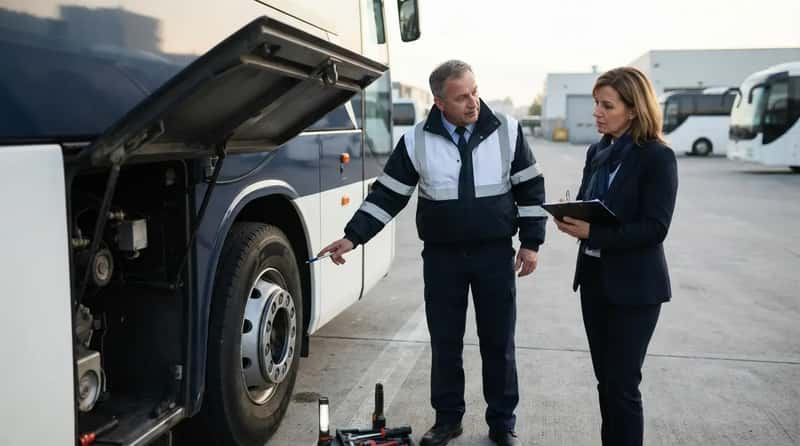
Before leaving, the driver walks around the coach and checks the essentials, and the tour manager wants to hear the result. Federal rules require commercial drivers to be satisfied the vehicle is in safe working order. Drivers must also file written inspection reports when they find defects. It’s a legal routine, not a courtesy.
Managers don’t do the mechanical check themselves, but they care deeply about the outcome. A warning light, a weak air conditioner or a sticky door can change the plan. If a swap is needed, it’s far easier at the depot than on a highway shoulder. That’s why one quiet word at 7 a.m. matters so much.
Fast Facts
- Tires and wheels: Checked for wear, damage and pressure problems.
- Brakes and steering: Both are on the federal list of items a driver must be satisfied about.
- Lights, mirrors and wipers: The small stuff that matters in rain and fog.
- Emergency exits and equipment: Worth a look every single morning.
And once the vehicle is cleared, the route itself needs one more look.
The Roads That Are Closed, Jammed or Hosting a Surprise Event
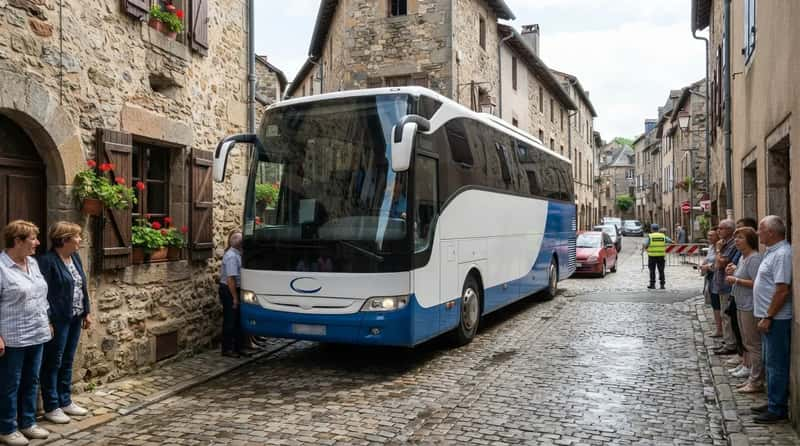
Roads change daily. Marathons, festivals, construction and accidents can all close a street that worked yesterday. A route that took an hour last week can take double today. Managers check live traffic and local notices before leaving.
They also think about the coach’s size. Low bridges, tight turns and narrow village streets are much bigger problems for a coach than for a car. Drivers and managers agree on a main route and a fallback. It’s not glamorous work, but it heads off most delays.
The next decision is about words, and it’s more strategic than you’d think.
What Gets Said on the Microphone and What Stays Quiet
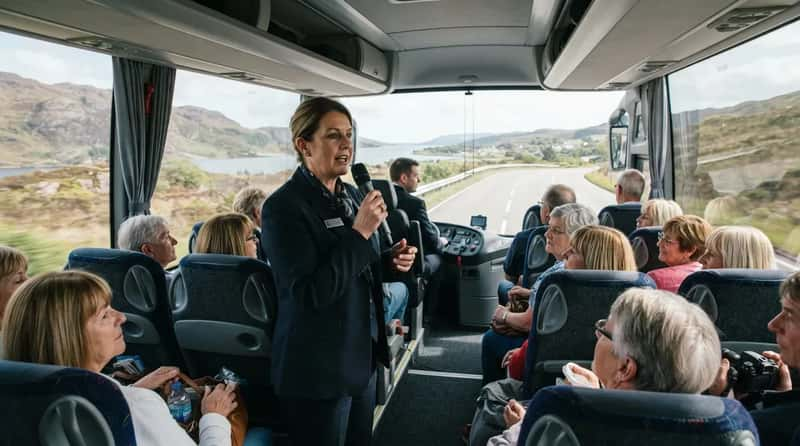
The microphone is a tool, and tour managers choose carefully when to pick it up. Talk too much and guests tune out or doze off. Many managers deliberately leave long stretches of silence. They know a quiet window is a gift on a long travel day.
Commentary is planned the same way as the stops. Key facts come just before a sight, not an hour earlier. Safety notes and times get repeated, since people forget them. Some travelers say constant commentary spoils the view, while others want every story.
But what happens when someone simply doesn’t show up?
The Plan for the Passenger Who Isn’t Back on Time
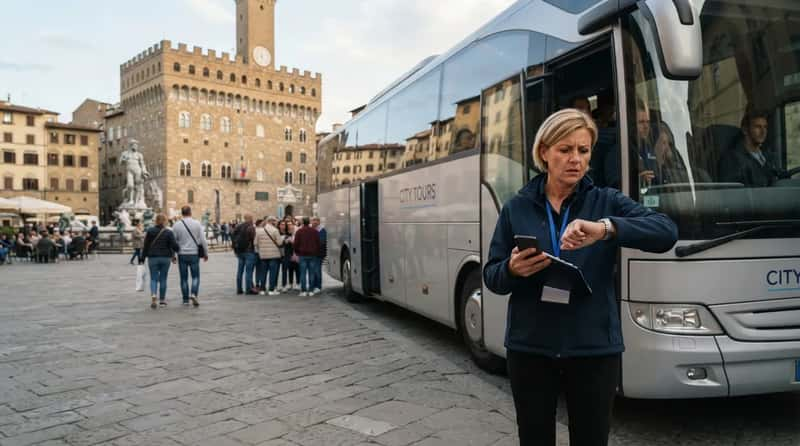
It happens on almost every tour sooner or later. Managers decide in advance what the procedure is for a missing guest. Most groups are told to carry the manager’s phone number and the hotel’s name at all times. That small slip of paper solves a lot of problems.
Clear meeting points help too. Managers pick landmarks that are easy to find and hard to confuse. They also agree with the driver on how long to wait before anyone starts searching. A calm, rehearsed plan turns a scary moment into a minor delay.
And behind all of this sits something nobody talks about at the depot door.
The Voucher Folder and Cash Check That Keep a Guest From Being Turned Away
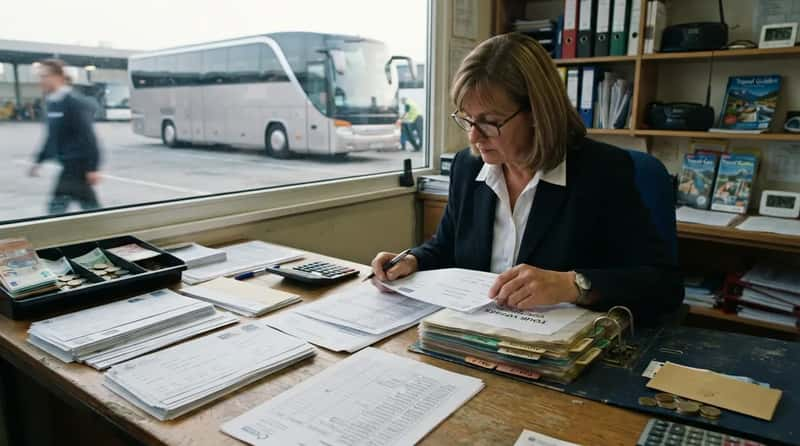
Behind every smooth day is paperwork and payment. Managers handle vouchers, local guide fees, entry confirmations and sometimes cash. A forgotten voucher can mean a guest is turned away at the door. That’s why the folder is checked before the coach moves.
Tipping customs vary by country and by tour company. Some operators include gratuities, and others leave them to guests. Managers usually explain the practice early so nobody is caught off guard. It’s a touchy topic, and clear communication prevents most of the awkwardness.
At a Glance
- Vouchers and entry confirmations: The proof that stops are actually paid for.
- Rooming list or manifest: The master record for every headcount.
- Contact numbers: Driver, local guide, hotels and restaurants, all in one place.
- Small payments: Cash or a payment method for guide fees and surprise costs.
Which brings us to the most human decision of the morning.
How Tired the Group Really Is, and Which Stop Quietly Gets Cut

The last call isn’t on any schedule. Managers read the mood of the group as people climb aboard. If everyone looks worn out, a planned stop can be shortened or dropped without a word. Nobody is told, so nobody feels they missed out.
It’s judgment built on experience. Heat, a late night or a long walk the day before can change the right pace. A good manager would rather skip one stop than spoil the rest of the day. The itinerary is only a plan, and the people on it come first.
Before the coach even leaves, a tour manager has counted heads, checked the clock, read the weather and the roads, and planned for problems nobody has met yet. Most of it is invisible by design. When the day goes well, it’s because dozens of small decisions were made quietly at the depot.
Next time your coach pulls out on time, remember that someone already had a very long morning.