You see the buffet, the glowing dining room, and the dessert that shows up on cue. What you don’t see is the machine behind it: orders placed two weeks out, trucks unloaded in a few frantic hours, and a countdown clock running inside the fridges. These 17 behind-the-scenes details are real, specific, and almost never mentioned on the guest side of the swinging doors.
Some are about logistics, some are about math, and a few are rules you would never guess existed. But all 17 trace back to one simple fact about life at sea, and it’s waiting at #1.
#17 – The Grocery Order Locked In Two Weeks Before Anyone Boards
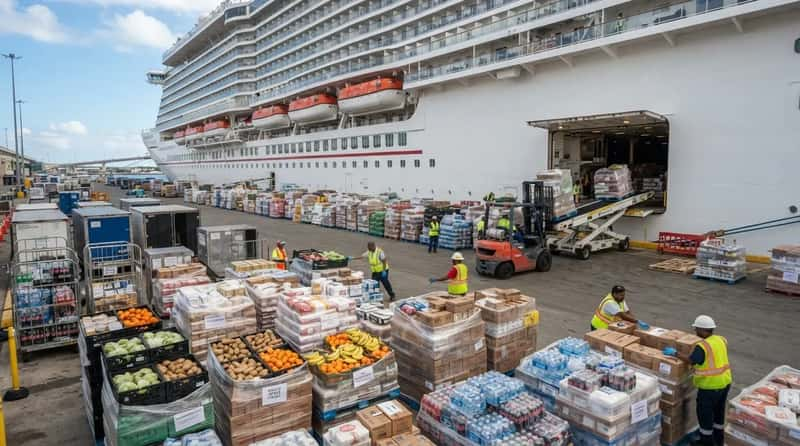
Your Tuesday-night dinner was probably ordered long before you packed a suitcase. On Carnival Jubilee, the food and beverage director told USA TODAY that food orders are placed around two weeks in advance and loaded on turnaround days. His team numbers just under 900 people, and the ship can hold more than 6,000 guests.
Ordering is only the visible part. Cruise procurement starts with detailed forecasting, often months before a ship leaves port. Once menus are approved, every ingredient is logged with volume estimates and sourcing requirements, and most of it has to be stocked before sailing, especially on longer itineraries.
Fast Facts
- Food orders go in around two weeks before sailing.
- Supplies are loaded on turnaround days.
- Jubilee’s food and beverage team numbers just under 900 people.
- The ship can hold more than 6,000 guests.
But the real pressure shows up on the morning those orders arrive, and that’s #16.
#16 – The Pre-Dawn Truck Parade Nobody Sees From the Cabin
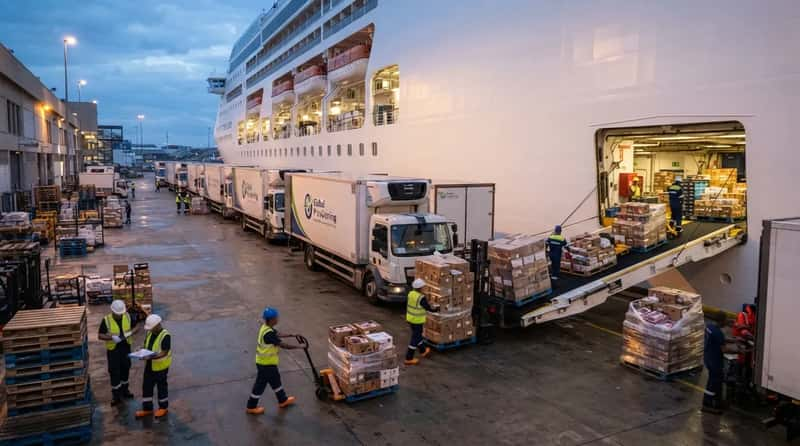
While you hunt for your stateroom, a small army is emptying trucks. Provisioning typically begins early on turnaround day, and every delivery must be checked, loaded, and stored before departure, often within a few hours. Some ships load up to 30,000 different items in a single day.
One behind-the-scenes account describes 20 to 30 refrigerated trucks’ worth of supplies going aboard. Every pallet is logged, temperature-checked, and moved to storage deep in the hull. If a pallet runs late, the ship still sails on schedule, so the crew has to make the clock work.
Still, loading the food is only half the plan, because some of it is never meant to be eaten, as #15 explains.
#15 – The Reserve Stock That Nobody Plans to Serve
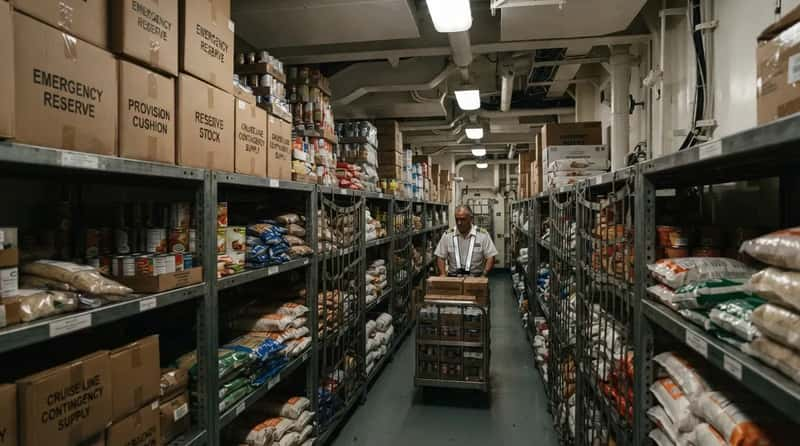
Every ship carries food it hopes never to cook. Provisioning references note that a ship must keep a percentage of its food in reserve to allow for delays. A late port arrival or a changed itinerary can’t be allowed to turn into empty shelves.
Hotels have it easier. They can place frequent orders and adjust to occupancy, while cruise ships work on a much more compressed provisioning schedule. Some travelers see a full buffet as pure waste, but many insiders argue the cushion is the whole point. AI-based forecasting tools are also being adopted to predict demand and reduce waste.
Speaking of prediction, the next item involves a forecast that studies you personally.
#14 – The Forecast That Quietly Reads Your Passenger List
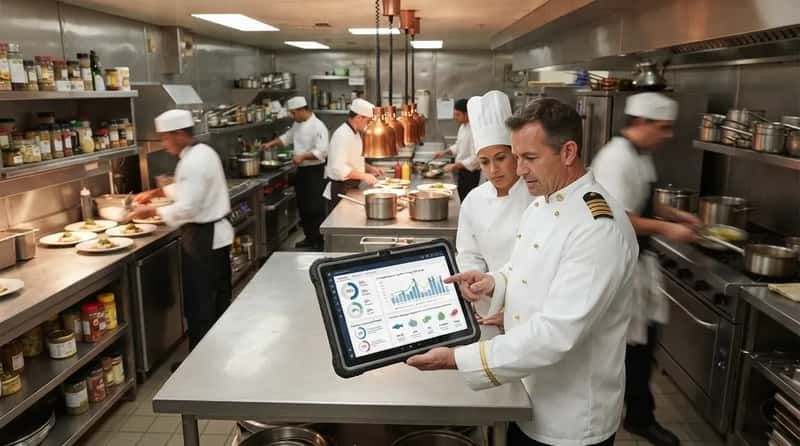
The galley may know more about your sailing than you do. Cruise Critic notes that galley tours explain how chefs predict which dishes will be most popular and how ships adjust provisioning based on the passenger list or ports of call. A ship full of families doesn’t eat like a ship full of retirees.
The tools are getting sharper. Industry procurement writers say forecasting systems can analyze consumption trends, sailing schedules, and guest demographics before bids are even issued. Your age group and itinerary may shape what’s in the cooler, though nobody publishes the exact formula.
All of that food then goes somewhere very specific, and #13 looks like a hidden supermarket.
#13 – The Cold Rooms Organized Like a Hidden Supermarket
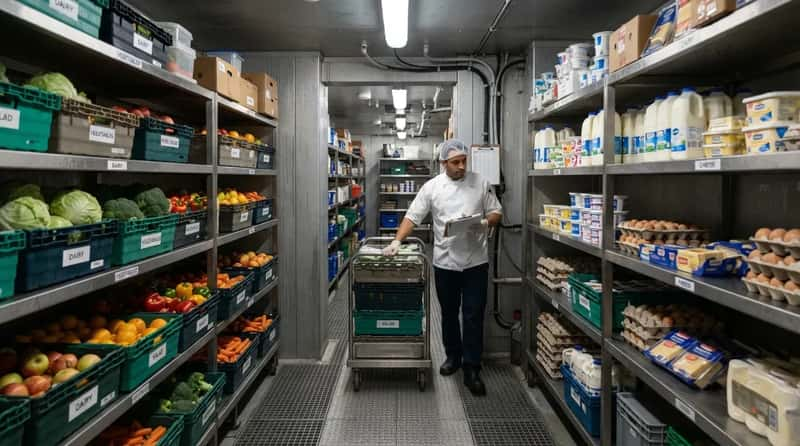
Deep in the hull, food is sorted into rooms by type. One account describes separate walk-in freezers and fridges for dairy, seafood, and poultry, and even a “chocolate room” kept at a set humidity. Each storage area runs at its own temperature.
USA TODAY’s Jubilee tour found fish thawing in a walk-in refrigerator the size of a small bedroom, two decks below the galley. A nearby freezer held ice cream, and another room was full of bottled spirits. The ship’s pantry is basically several warehouses stacked below the waterline.
Getting food out of those rooms is its own little secret, and #12 has to do with an elevator.
#12 – The Private Elevator Only Certain Crew Can Use
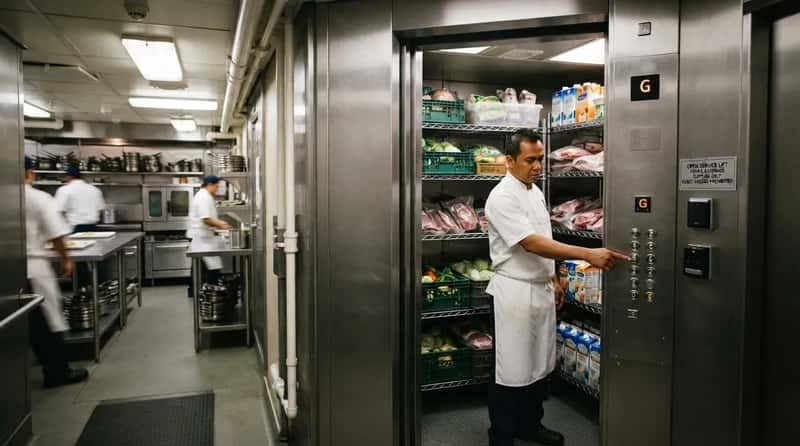
The ship’s food travels on its own lift. A blogger who toured Royal Caribbean’s Explorer of the Seas reported that a separate elevator moves food and beverage supplies, and only certain staff have access. Guests will never ride it.
The same visit described a galley split into separate sections for appetizers, cold cuts and salads, and a hot galley. Food is stored, prepared, and cooked apart to prevent cross-contamination. The layout itself is a food safety tool. Nothing about it looks dramatic, but every inch is deliberate.
And the real timing puzzle is still ahead, because #11 starts two days before you order.
#11 – The Two-Day Prep for a Dish You Get in Ten Minutes
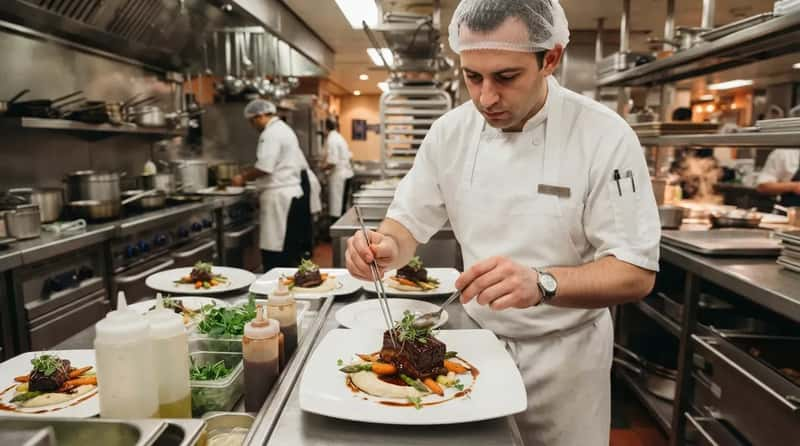
That quick plate took days. Carnival Jubilee’s food and beverage director said chefs order from the ship’s storeroom team two days before they need ingredients, and pre-prep like trimming and marinating happens a day beforehand. Final prep follows on service day.
Timing depends on the dish. Chicken breasts might be prepped an hour before service, but prime rib cooks for six hours and short rib braises for 12. A braised short rib has a 12-hour lead time, which is why the menu is fixed so far ahead.
Once service begins, the galley plays a game of staying ahead, and #10 shows how.
#10 – The Staggered Count That Keeps Cooks Ahead of the Line
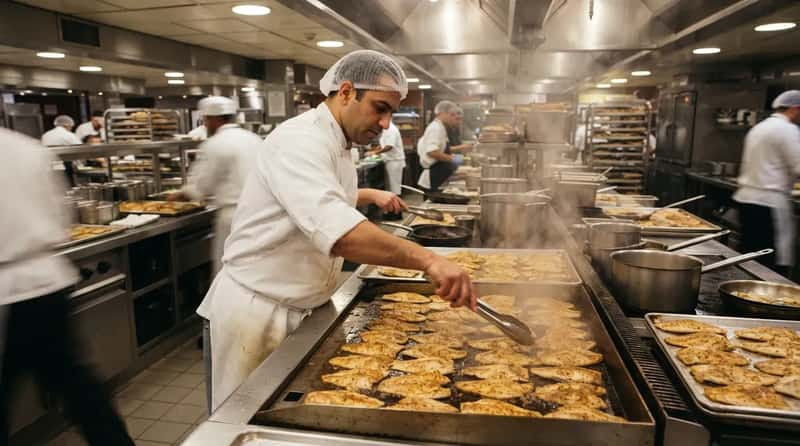
Galley cooks don’t wait for orders to start cooking. Jubilee’s food and beverage director described how, with 1,000 fish filets planned for early dining, the count is staggered so the cook stays roughly 200 ahead in the first 15 minutes. The cushion shrinks as demand catches up.
The scale is huge. The ship’s main galley averages 15,000 dishes per night. Production tapers as orders do, and by the end of service there is very little left. The goal is a near-empty galley when the last table finishes.
At a Glance
- 1,000 fish filets planned for early dining.
- Cooks stay roughly 200 filets ahead during the first 15 minutes.
- The cushion shrinks as real orders catch up.
- The main galley averages 15,000 dishes per night.
But some of the most important work happens while everyone sleeps, and #9 starts at midnight.
#9 – The Overnight Bakery That Works While You Sleep
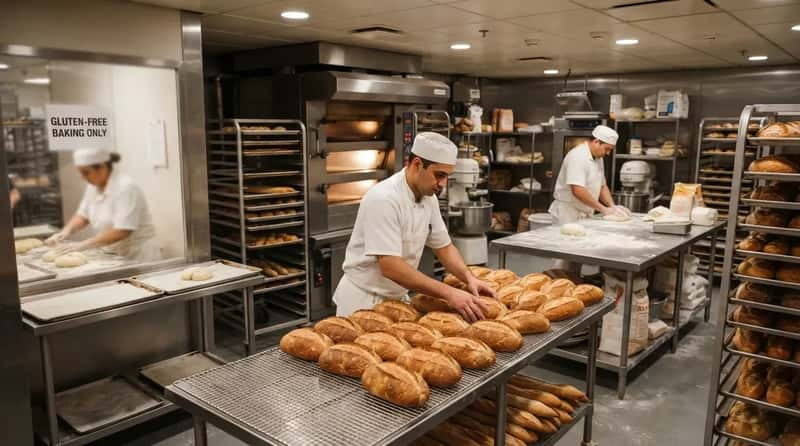
Fresh bread at breakfast has a night shift. One cruise guide lists one or two production bakeries making all the ship’s bread, pastry, and cake, operating overnight. Most guests never see them.
The numbers on Jubilee are specific. The galley staff bakes approximately 600 loaves of bread a week. Galley tours can show where baked goods are prepared from scratch and where gluten-free bread is baked. The gluten-free bread has its own baking spot, separate from the rest.
The morning rush is nothing next to #8, which is a race against the clock.
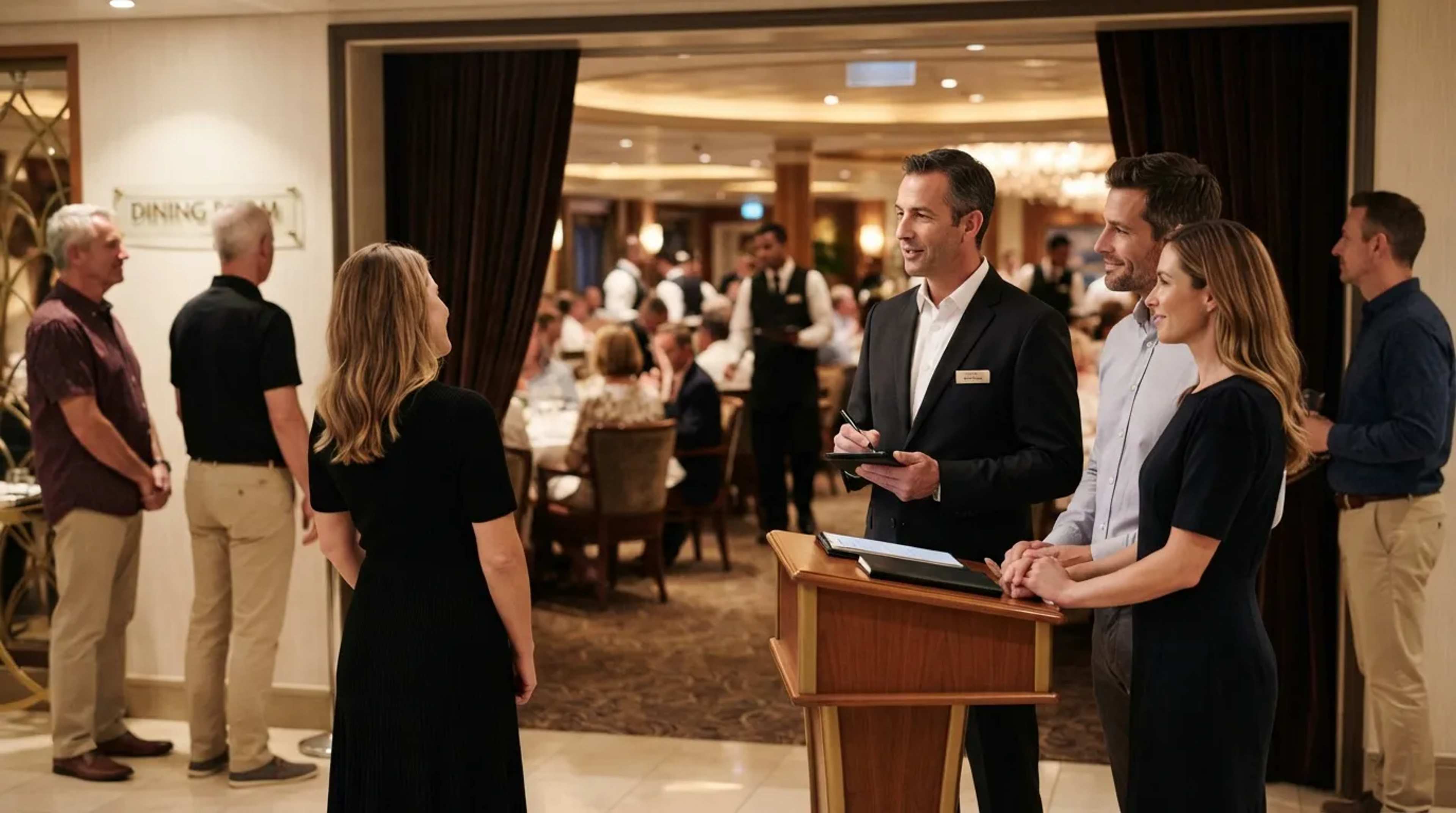
#8 – The 3,000-Plate Sprint Hidden Inside Every Dinner Seating
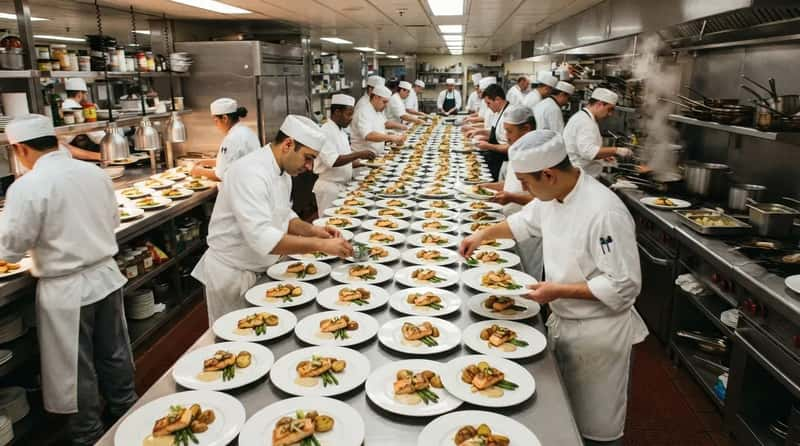
The main dining room is a sprint that never looks like one. One cruise guide estimates it produces 3,000+ plated dinners in roughly 90 minutes per seating, a feat it says most land restaurants couldn’t match. That is a very short window.
That’s also why the late-arrival rule exists. The same guide argues that latecomers slow the entire production chain. Some guests find fixed seating times annoying, but one empty table can ripple through hundreds of plates.
After the plates comes the cleanup, and #7 may be the most overlooked job on board.
#7 – The Dishwashing Mountain That Never Stops Growing
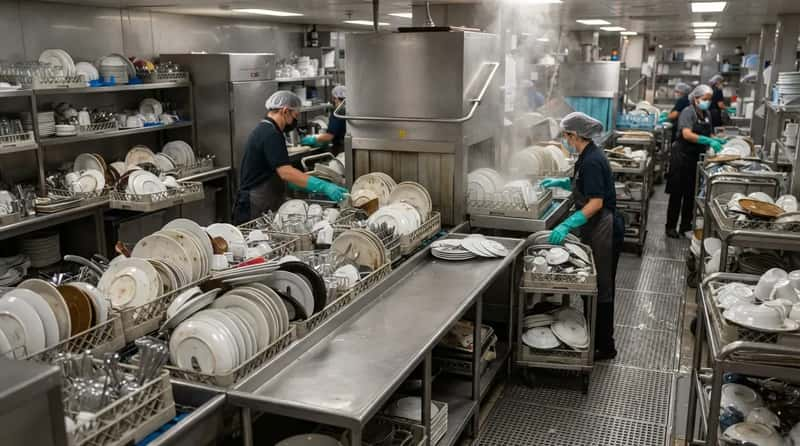
Every meal creates a second job. A Library of Congress blog post recounted a ship tour where staff quoted average daily figures including 70,000 dishes and 21,500 glasses washed. That is one older, single-ship account, so treat it as a snapshot.
Cleaning is built into the galley’s design. Reports on galley sanitation note large automatic dishwashers for cleaning and sanitizing, and crew members who must wear gloves and wash their hands often. The dish room is the galley’s quiet engine.
But a clean plate is no good if the food on it isn’t safe, and #6 shows a clock that never rests.
#6 – The Four-Hour Fridge Clock That Forces Food Into the Trash
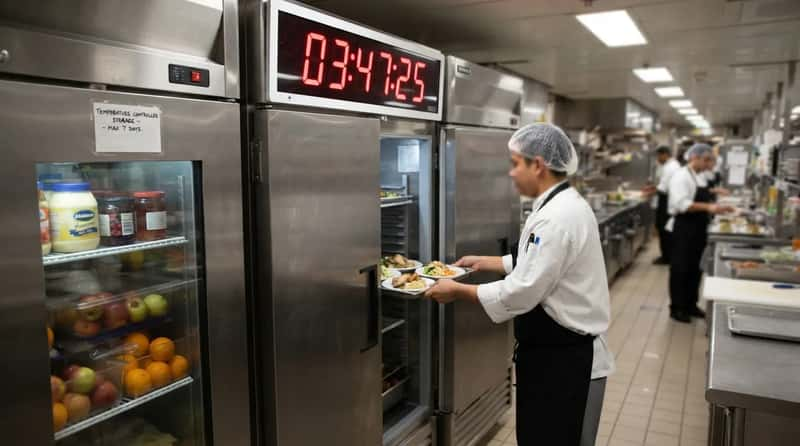
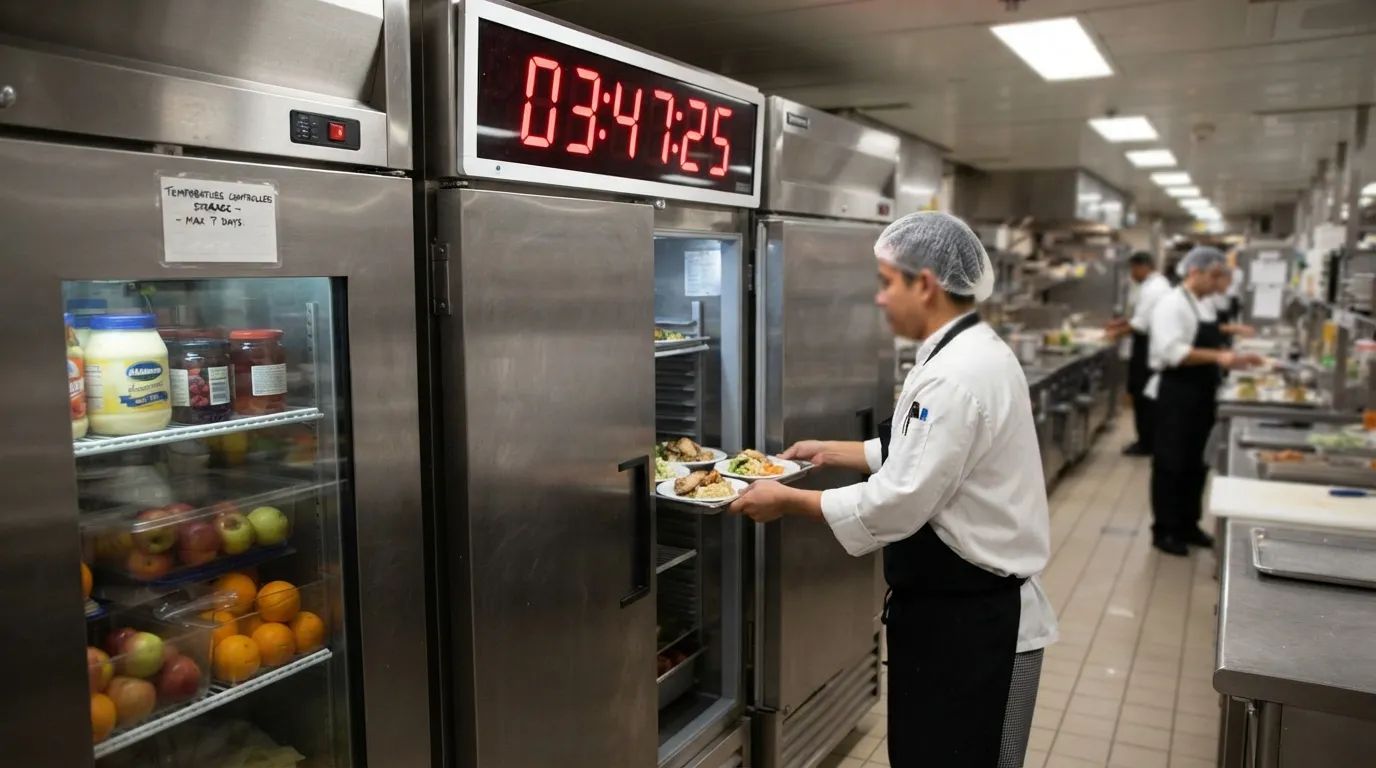
Some food is on a countdown the moment it comes out. A blogger touring Explorer of the Seas described a “time fridge” that is completely emptied every four hours, with unused food discarded for safety. The ship had two of them.
Other items get more time. The same visit noted a temperature fridge where foods like fruit, mayonnaise, and jelly may be stored for up to seven days. Rules like these exist so no one has to guess what’s safe at 2 a.m. Rules differ between ships, so this is one example rather than a universal standard.
Quick Compare
- Time fridge: emptied every four hours, and unused food is discarded.
- Temperature fridge: fruit, mayonnaise, and jelly may stay up to seven days.
The next item is the most personal one on the list, and #5 is about guests with allergies.
#5 – The Allergy Lane Built Away From the Main Line
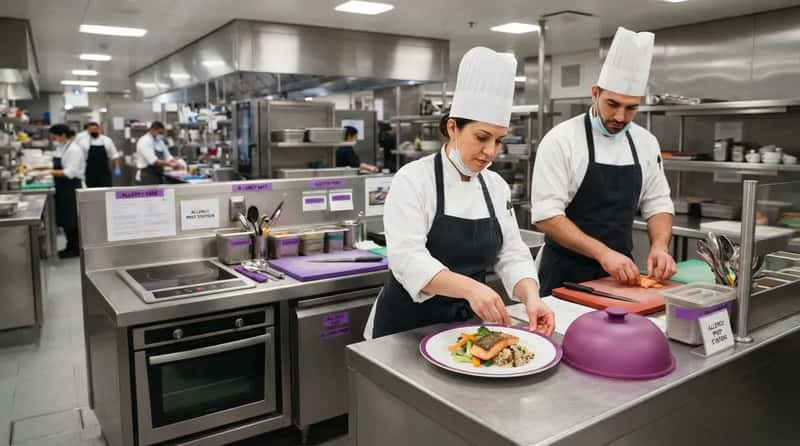
Allergy meals often aren’t made on the main line at all. Cruise guides describe dedicated allergy-friendly prep stations designed to prevent cross-contamination, and Royal Caribbean ships have a preparation area in the galley away from the main production area. Marked plates or covers help staff spot safe meals.
Training and planning matter too. Food and beverage staff attend recurring training on allergy protocols. On American Cruise Lines, the chef described an embarkation-day dietary meeting at 3:30 with guests who have allergies, plus three separate stations to prevent cross-contamination. The galley starts preparing for you before you’ve unpacked.
Allergies are one risk. The next one, #4, is a rule that protects everybody.
#4 – The Quiet Rule That Keeps Sick Crew Away From the Food
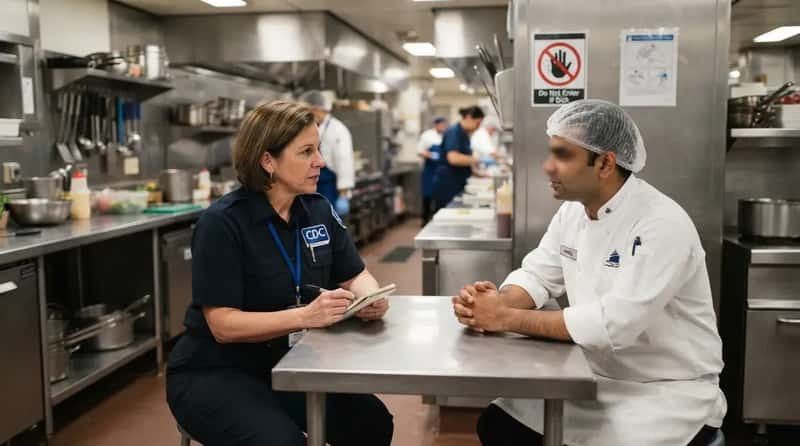
Nobody posts this rule on the dining room wall. When CDC inspectors visit, they interview food service staff on safe handling and check whether sick crew members have been kept away from food prep. The rule is about stopping illness before it starts.
The stakes are real. A letter from U.S. senators noted that a norovirus outbreak aboard Queen Mary 2 in March 2025 sickened 224 passengers and 17 crew members. Norovirus spreads in many ways, and the letter doesn’t blame the galley. Even so, kitchen discipline is one of the few things crews fully control.
Worth Knowing
- CDC inspectors interview food service staff about safe handling.
- They also check whether sick crew have been kept away from food prep.
- The March 2025 Queen Mary 2 outbreak sickened 224 passengers and 17 crew, according to the senators’ letter.
- Norovirus has many routes of spread, so the galley is only one piece of the puzzle.
Not every meal on board is for guests, though, and #3 is about a very different dining room.
#3 – The Crew Kitchen Menu Guests Don’t Know Exists
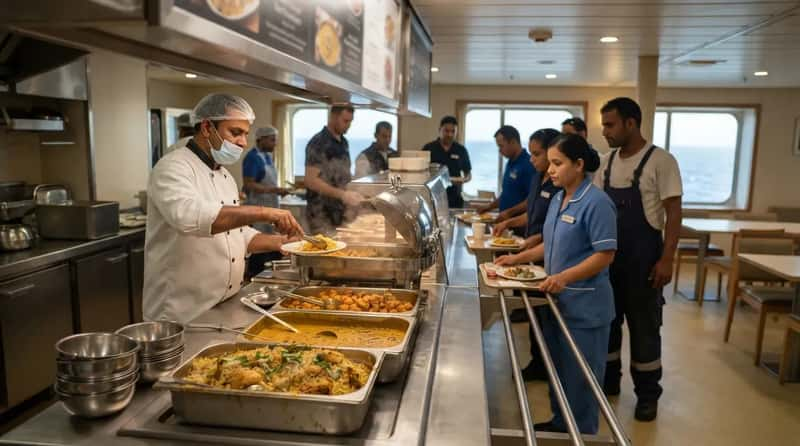
Guests aren’t the only ones eating. One guide estimates a modern megaship carries 5,000 to 7,000 passengers and 2,000 to 2,500 crew, and feeds them three or more meals a day. The crew needs its own food, on its own schedule.
Crew meals are cooked separately. A travel site reports that every ship feeds its international crew separately, and on many ships guests can ask for curry or Indian dishes prepared onboard that never appear on the guest menu. The crew menu can be a secret second restaurant. It varies by ship, so asking costs nothing.
None of this works without someone checking, and #2 is an inspector who never gives notice.
#2 – The Surprise Inspection That Can Show Up Any Day
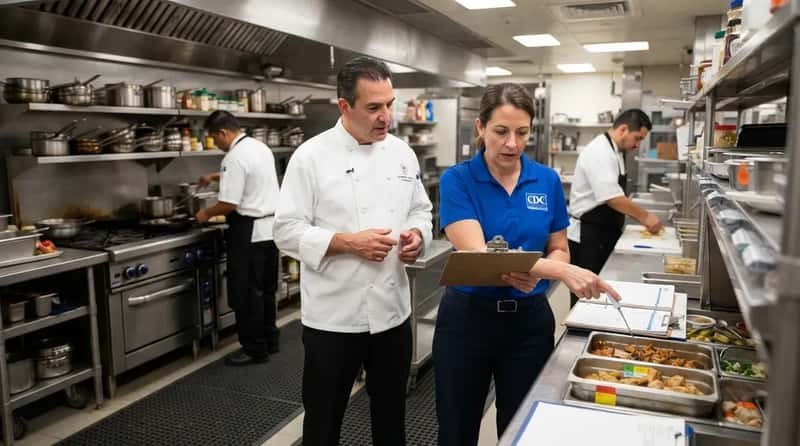
Galleys prepare for visitors they can’t predict. Under federal rules, every vessel with a foreign itinerary carrying 13 or more passengers is subject to twice-yearly unannounced operations inspections. Ships start with 100 points and lose points for violations, and 86 or higher is a pass.
The visits aren’t brief. Inspections typically run six to eight hours, with one to five officers depending on ship size. A ship scoring 85 or below fails and faces a reinspection. The program has had turbulence, as Cruise Industry News reported in April 2025 that the CDC was said to lack resources to continue inspections. Yet the CDC’s score-of-100 report listed inspections dated into December 2025 and January 2026.
But the biggest thing galley teams prepare for isn’t an inspector, and #1 is the one everyone forgets.
#1 – The Rule That There Is No Grocery Store Mid-Week
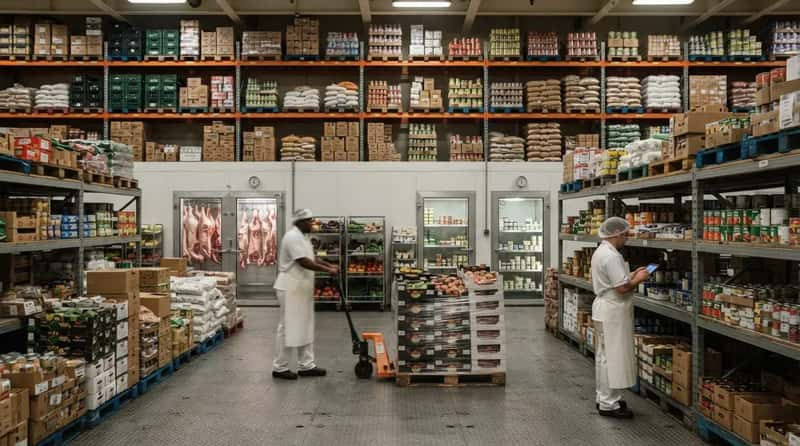
The hardest thing the galley prepares for is also the simplest. One guide estimates a megaship makes 25,000 to 40,000 meals per day, every day, with no possibility of running to the grocery store mid-week. That total counts snacks, room service, late-night pizza, and specialty dining.
That’s why everything above exists. The same guide says most ships re-provision every five to ten days at major ports. Weather, delays, and surprise appetites all land on a plan made weeks earlier. If the math is wrong at sea, nobody can fix it with a quick run to the store.
A cruise galley is a logistics operation first and a kitchen second. Orders, forecasts, cold rooms, reserve stock, allergy lanes, crew meals, and surprise inspections all happen out of sight. Everything on your plate was counted, ordered, and loaded before the ship left the dock.
So the next time a perfectly timed dessert lands in front of you somewhere in the middle of the ocean, remember the long road it took to get there. Which of these 17 did you never think about?