You saved for months, picked the ship and packed the sandals. Then the first few hours decide more of your week than most people realize. Embarkation day is the one day of a cruise that runs on deadlines: a payment card, security, a safety drill and dinner reservations, all before the ship leaves the harbor.
The people who glide through it aren’t lucky. They follow a handful of quiet rules that rarely make it into the excitement of booking. Seventeen of those habits follow, ranked from handy to costly, and each one can be done before or during boarding. The last one is the costliest on the list. It can end a cruise before it starts, and no clever move onboard can repair it.
#17 – The Online Check-In Window That Opens Weeks Early

Your boarding time is often settled long before you pack. Royal Caribbean’s online check-in portal opens 45 days before your cruise, and that’s where you enter travel documents, a card for onboard purchases and your preferred arrival time.1 Norwegian also lets you pick your arrival time when you check in online.2
Finish online check-in the day your line opens it. That’s how you get a say in your window instead of taking whatever is left. Skip the step and the terminal makes the choice for you, and at some terminals the window is a rule, so arriving ahead of it can leave you waiting outside.
#16 – Why Showing Up Early No Longer Wins the Line
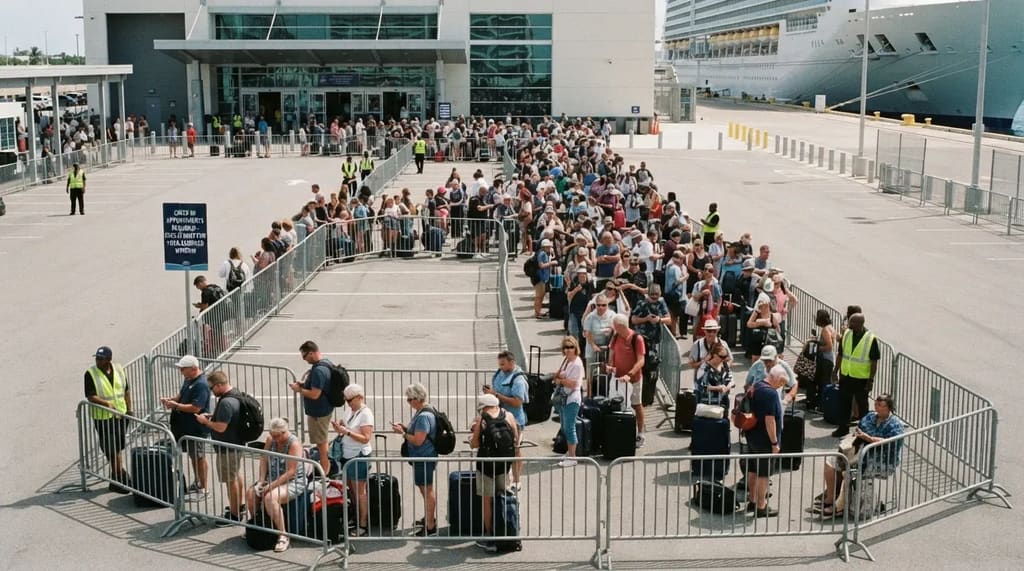
For years, the classic move was to be the first person at the pier. It doesn’t work the way it used to. On Carnival, arrival appointments are mandatory, and early arrivals wait until their window opens.3 Royal Caribbean’s written policy is nearly as strict, though enforcement varies by terminal.
Quick Compare
- Carnival: Arrival appointments are mandatory, and early arrivals wait for their window.
- Royal Caribbean: The written policy is strict, but enforcement varies by terminal.
- Norwegian: Guests who checked in online should arrive no earlier than one hour before the printed embarkation time.4
My verdict is that the old trick of being first in line has mostly stopped paying off. Spend that hour on a relaxed breakfast instead. Arrive when your assigned window opens, not when the terminal opens. Your suitcases run on a different schedule than you do, and it’s a slower one.
#15 – The Carry-On That Has to Last Until Late Afternoon
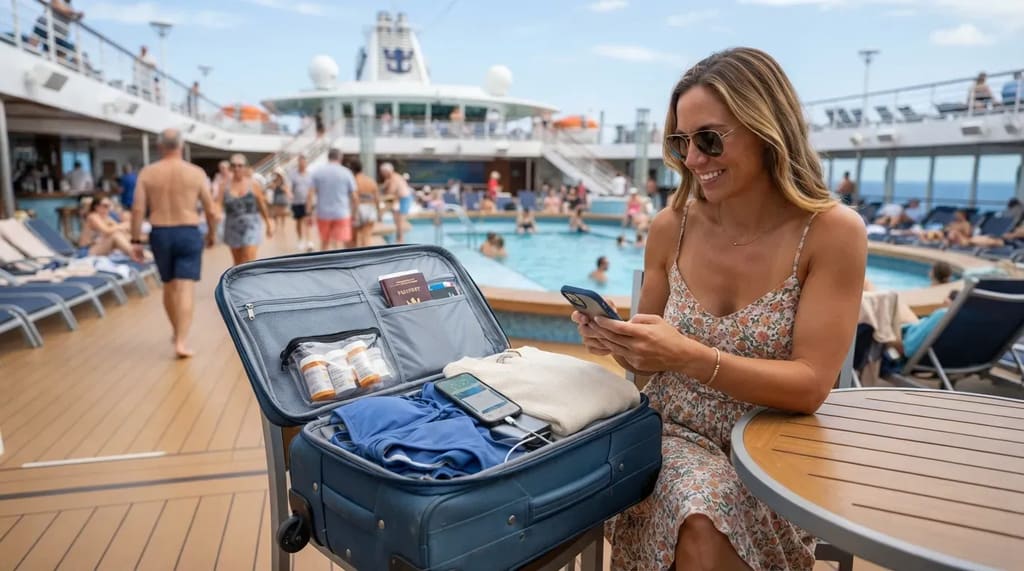
Checked luggage won’t reach your cabin until late afternoon. That gap is where the small disasters happen. Picture standing on the pool deck at 1 p.m. with a swimsuit, a phone charger and your daily medication all sitting in a suitcase somewhere below.
Passport, boarding pass, credit card and medications belong in a bag you keep with you. Pack everything you’ll need for the first four or five hours in that bag. The paperwork inside has its own weak point, and it lives on your phone.
#14 – The Paper Backup That Saves You When the Pier Signal Dies
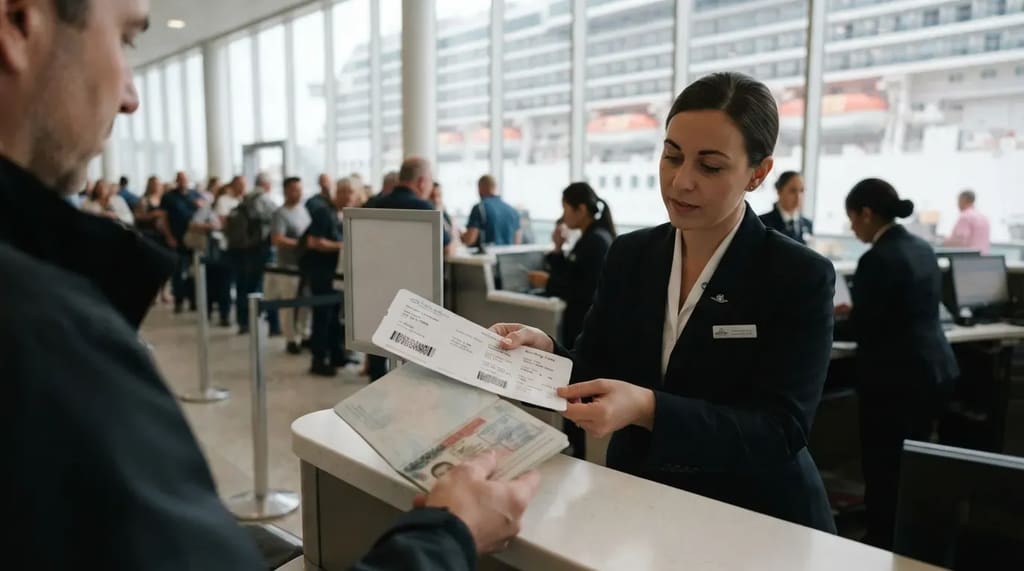
Your boarding pass goes by different names depending on the line, including SetSail Pass, eDocs and Boarding Summary, and most lines want it in their app. That works until the terminal is packed and the signal crawls. A phone at 5 percent battery turns a short line into a long one.
Keep a printed or screenshotted copy of your boarding documents in case terminal Wi-Fi is slow. Screenshot it and print one paper copy. Keep the paper copy with your passport so it can’t get lost in a checked bag. One more item in your bag looks harmless and can still be pulled at security before you ever reach the gangway.
#13 – The Power Strip That Security Confiscates at the Pier
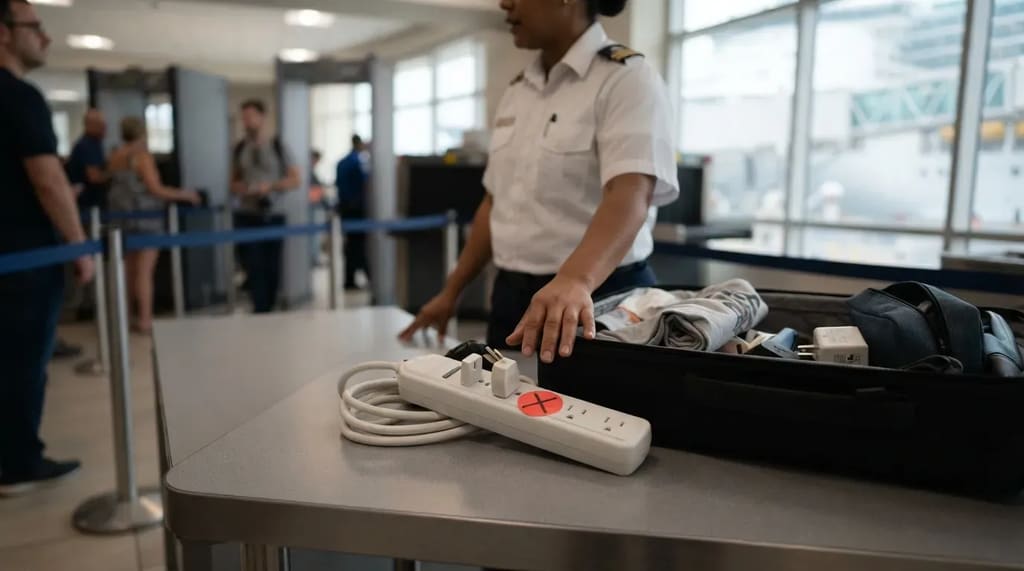
Cabins have few outlets, so a power strip from home feels like a smart pack. Surge protectors are banned in cabins on every major line, including Royal Caribbean, Carnival, Norwegian, MSC, Princess, Holland America, Celebrity and Disney.5 If security pulls one, it goes into a holding locker and you get it back at debarkation.6
Rules on non-surge strips differ between lines and change over time, so read your line’s current prohibited list before you pack anything with a plug. USB charging cubes are generally accepted. Pack a USB charging cube, and check your line’s prohibited list first. Once the gadgets are charging, your phone is about to become your most useful tool aboard.
#12 – The Cruise App You Should Set Up Before You Reach the Pier
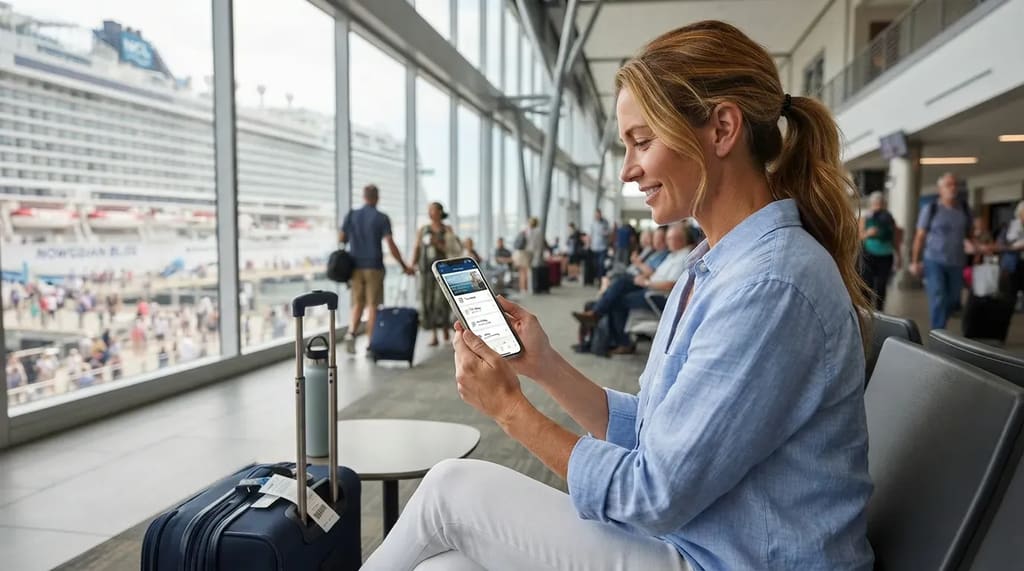
Norwegian calls downloading its app a must before you board.2 The reason is what lives inside. Apps let you book activities and specialty dining, view daily programs and track onboard spending. Celebrity’s Daily Planner lists each activity with its deck and location.
Download the app and sign in at home on reliable Wi-Fi. Doing it on a crowded pier is how people end up resetting passwords while the line moves on without them. The app also shows what your card is being charged, and that’s a number worth watching.
#11 – The Card on File That Quietly Pays for Every Little Thing
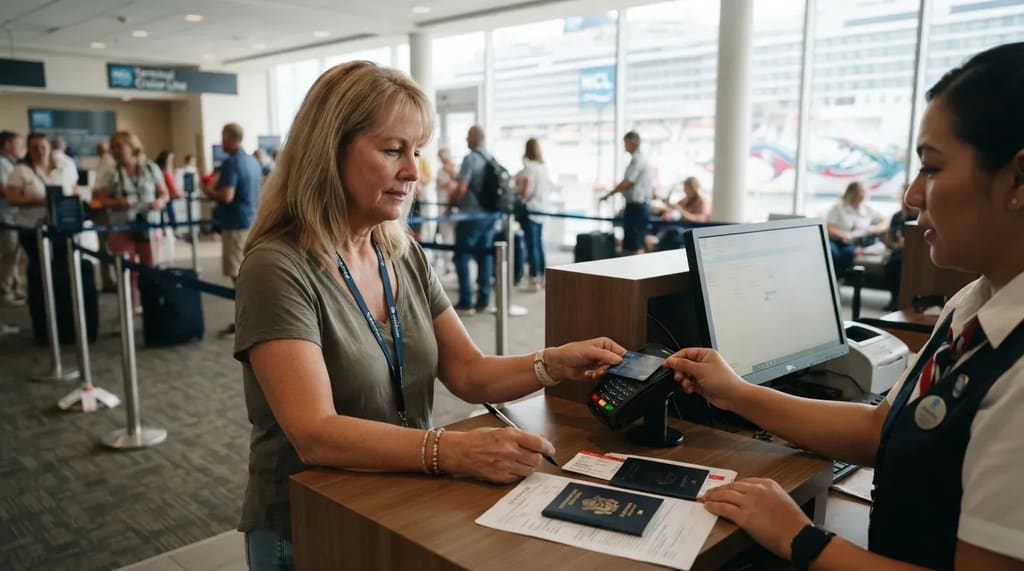
At check-in you register a credit or debit card for your onboard account, and it’s charged for drinks, excursions, spa treatments and everything else you buy aboard. If you entered that card during the online step in #17, you’re already set. If not, Norwegian will ask you to establish a payment method at the terminal.2
Most apps let you track your onboard spending. Check your onboard balance in the app every evening. Before you spend a dollar, though, there’s a ten-minute task that one line says can get your account suspended if you ignore it.
#10 – The Safety Drill Experienced Cruisers Finish First, Not Last
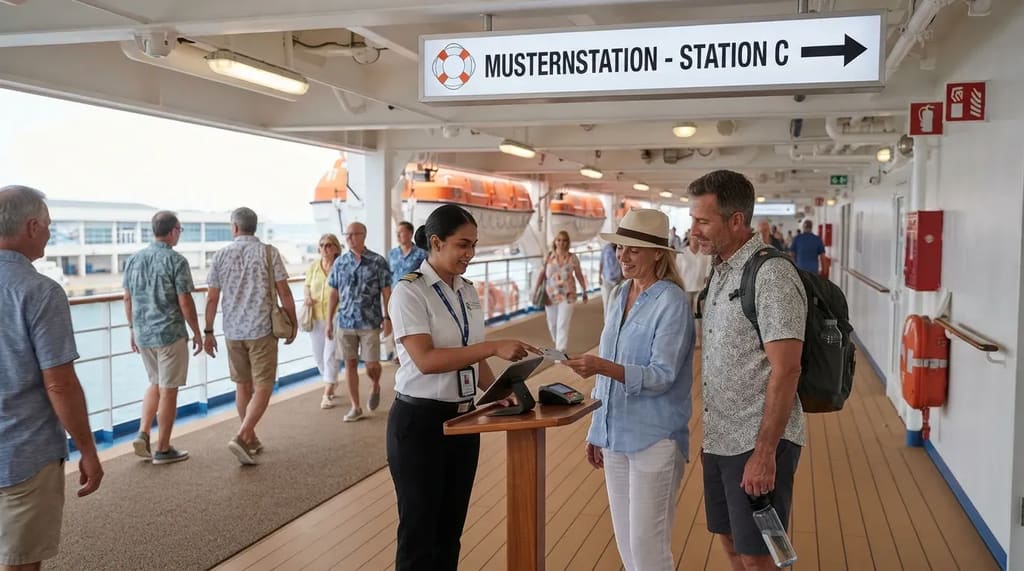
International Safety of Life at Sea rules require the drill. The modern e-muster takes roughly ten minutes. You watch a safety video in the app or on your cabin TV, then check in at your muster station.
Carnival encourages guests to complete the drill as soon as they board, and guests who delay risk a temporary suspension of their onboard account.7 Carnival says some sailings still include a full in-person drill, and guests on those get an email beforehand. Finish the safety briefing before you do anything else aboard. With the drill done, lunch is the question, and the longest line is rarely the best option.
#9 – The Buffet Stampede You Can Skip for a Lunch With a Table
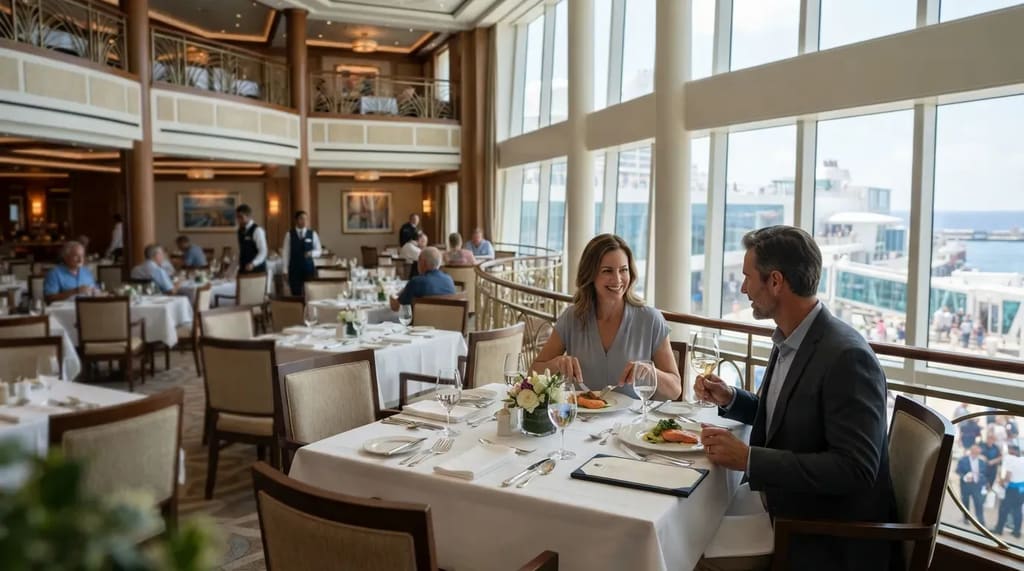
The buffet is the default first lunch, and I’d argue it’s the weakest one. Boarding begins around noon and runs well into the afternoon, so many people arrive hungry. That’s exactly when the buffet fills up. The main dining room sometimes serves an embarkation lunch too, and it’s calmer.
Seated lunches, including Princess’s dining room, typically wrap up around 1:30. Decide on lunch before you drop your bags, because seated service closes around 1:30. The best thing to do with the next hour is walk, and your muster station is the place to start.
#8 – The Quiet-Ship Walkthrough Before the Crowds Take Over
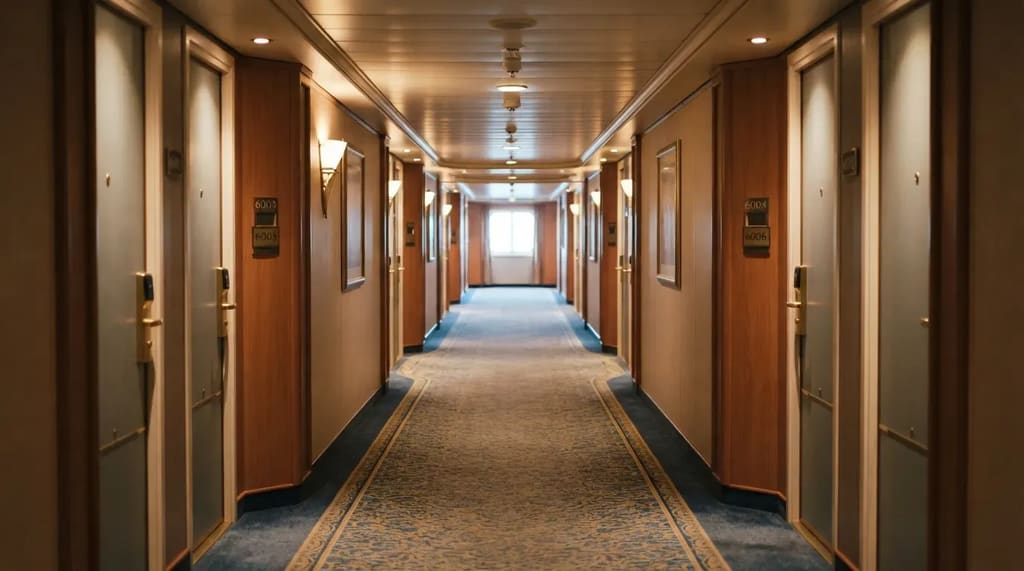
Most passengers are still boarding during the first two to three hours, so the corridors are calmer than they’ll be all week. That’s the time to find your cabin deck, the dining rooms, the buffet, the pools, the spa and any specialty restaurants you plan to visit. A ship feels enormous on day one and oddly small by day three.
At a Glance
- Best window: The first two to three hours, while boarding is still underway.
- Stop one: Your cabin deck and nearest stairwell.
- Stop two: The dining rooms, buffet and any specialty restaurants on your list.
- Stop three: The pools and the spa desk.
Your muster station is assigned by cabin number and shown on your key card or in the app. Walk to your muster station and your nearest stairwell once. That ten-minute loop makes a midnight emergency feel like a place you’ve been before. Your tour should end at the spa desk, where embarkation-day prices can differ from the rest of the week.
#7 – The Spa Discount That Vanishes After Day One
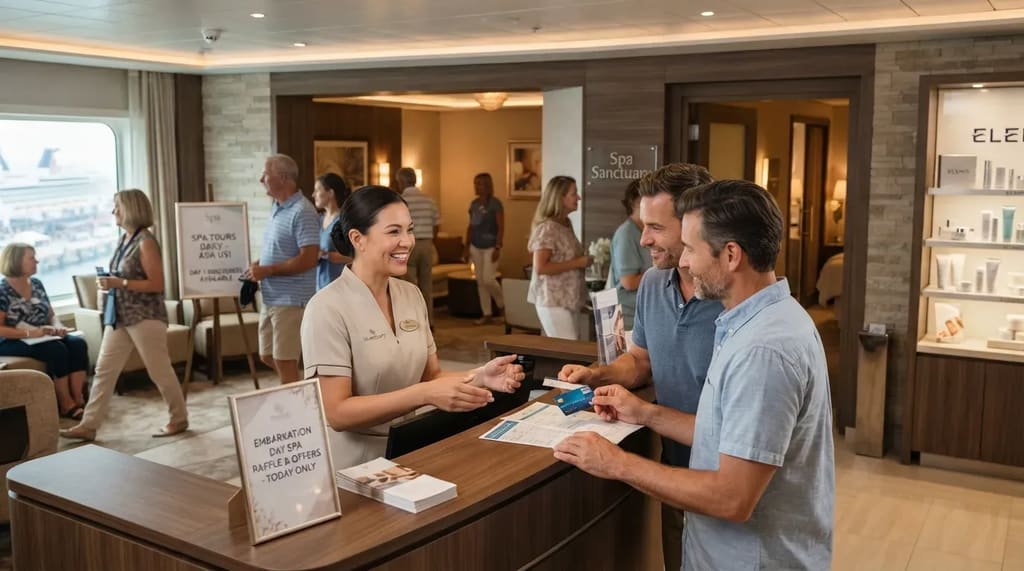
Spa treatments are often discounted on embarkation day, and popular time slots, like sea-day mornings, sell out fast. A spa tour costs nothing. You might get to sample a massage or win a free treatment in the first-day raffle.
Here’s my verdict: take the discount only on a treatment you’d have booked anyway. A bargain on a facial you didn’t want is still a charge on the card from #11. Book your sea-day spa slot on the first afternoon. Dinner needs the same early attention, and the venue with the shortest wait on night one may surprise you.
#6 – The Night-One Dinner Trick That Skips the Main Dining Room Rush
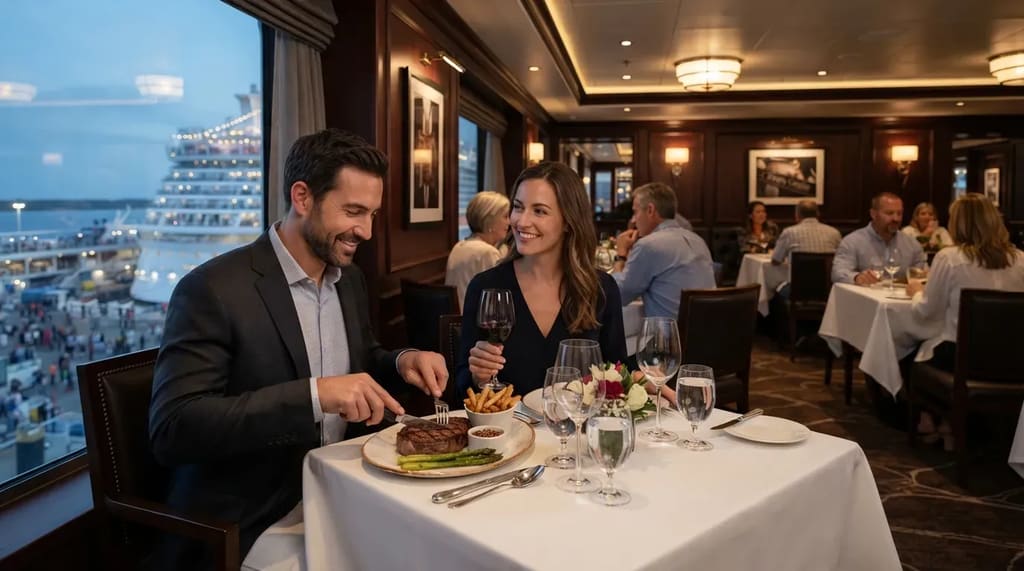
Cruise Critic advises against defaulting to the main dining room on embarkation night. Specialty restaurants are often less crowded, and some lines offer a reduced cover charge on the first night. That makes the first dinner a good time to try the steakhouse you’d otherwise pay full price for later.
Royal Caribbean lets you reserve specialty restaurants online up to two days before sailing. Once aboard, you go or call the restaurant directly. Ask whether your line discounts specialty dining on the first night. Dinner isn’t the only thing that can sell out. So can headliner shows and the best shore excursions.
#5 – The Shows and Excursions That Fill Before You Unpack
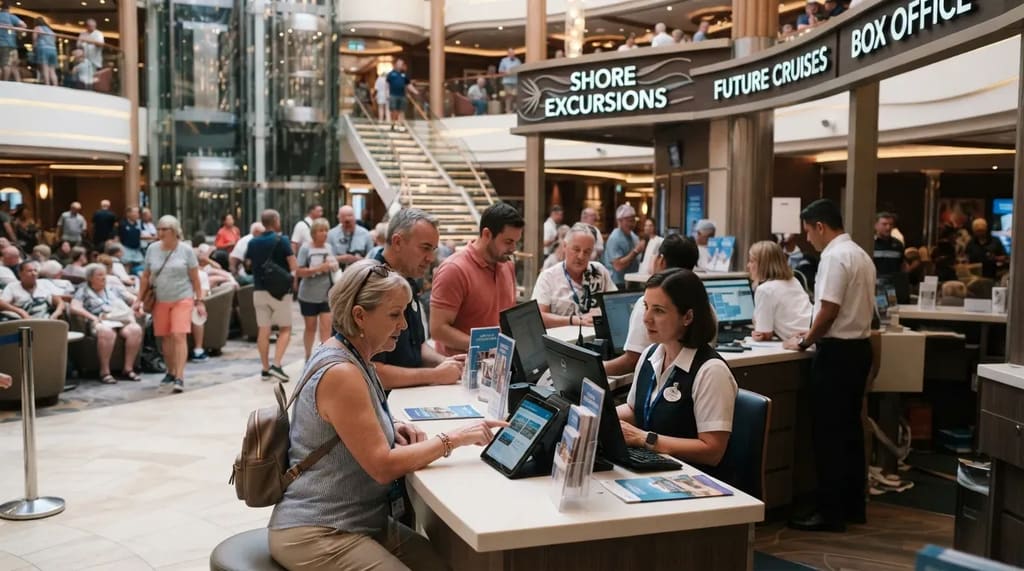
Most lines let booked guests reserve shore excursions, dining, spa treatments and sometimes classes or entertainment before sailing. That means some of #6 and #7 can be done from your couch. Royal Caribbean’s blog advises making sure you have reservations for popular shows, too.
Once aboard, Royal Caribbean says to make any remaining reservations for specialty dining, entertainment or shore excursions. On Norwegian, excursions can also be bought at the ship’s Shore Excursions Desk. Reserve the shows and excursions you care about during the first afternoon. The most helpful person on the ship for the rest of the week isn’t in the app at all.
#4 – The Two-Minute Hello That Changes Your Whole Room
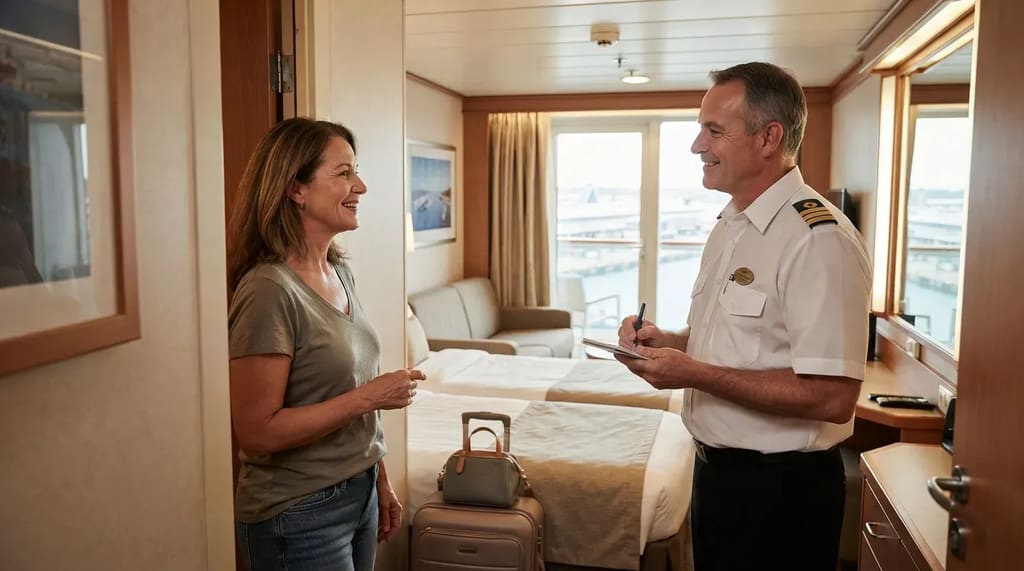
Your cabin steward is the one crew member who sees your room every day. When you find your cabin, introduce yourself and say what you’d like. Ask whether the beds can be set the way you prefer, and whether an extra pillow or blanket is available. Requests like these are far easier to make on day one than on night four.
Resist the urge to schedule the rest of the evening, too. Sail-away and your first dinner are usually plenty for one day. Let sail-away and first dinner be your entire first evening. Before you spend a cent on a package, there’s one piece of old advice worth testing.
Related Stories From Travelbinger



#3 – The Day-One Drink Package Advice That Deserves a Second Look
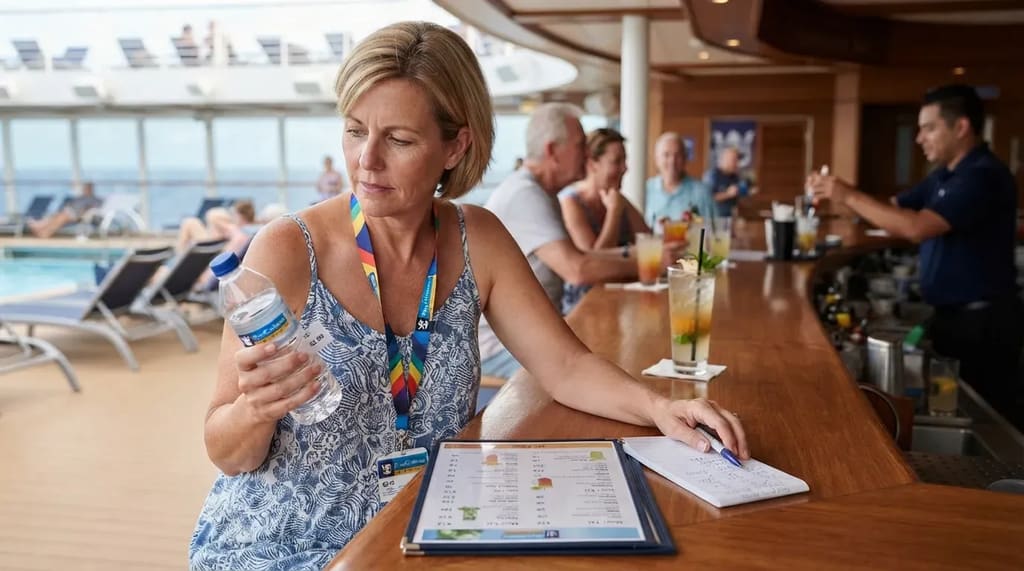
The old playbook said to board early, skip the buffet and buy packages on day one. Two of those three have lost ground, as #16 and #9 show. Lines like Royal Caribbean also list drink packages in their online Cruise Planner before sailing, so the desk on embarkation day is no longer the only place to buy.
Worth Knowing
- Drink packages can be browsed online before sailing, so there’s no rush at the desk.
- Step one: estimate how many drinks you’d order on a typical day.
- Step two: multiply that by the menu prices on your ship.
- Step three: compare the total with the package price, then decide.
My verdict: buying a package because the line at the desk is short isn’t a plan. Do the math on your daily drinks before you sign for any package. None of it matters if you’re still on the pier when the gangway closes, and that cutoff comes sooner than the departure time suggests.
#2 – The Boarding Cutoff Hiding Hours Before Sailing Time

Final boarding is typically 60 to 90 minutes before departure. An arrival appointment manages the crowd at the terminal, and it isn’t the ship’s departure time. Holland America, for instance, lets guests check in between noon and an hour and a half before the published departure time.
Treating the departure time as the deadline is a common mistake, since final boarding can be much earlier. Final boarding can close 60 to 90 minutes before the ship sails. That’s also why the window in #16 is worth respecting. The cheapest protection against missing the ship is decided before you leave home, and it’s a booking, not a gadget.
#1 – The Mistake Nothing Onboard Can Fix: Flying In the Morning of Sailing
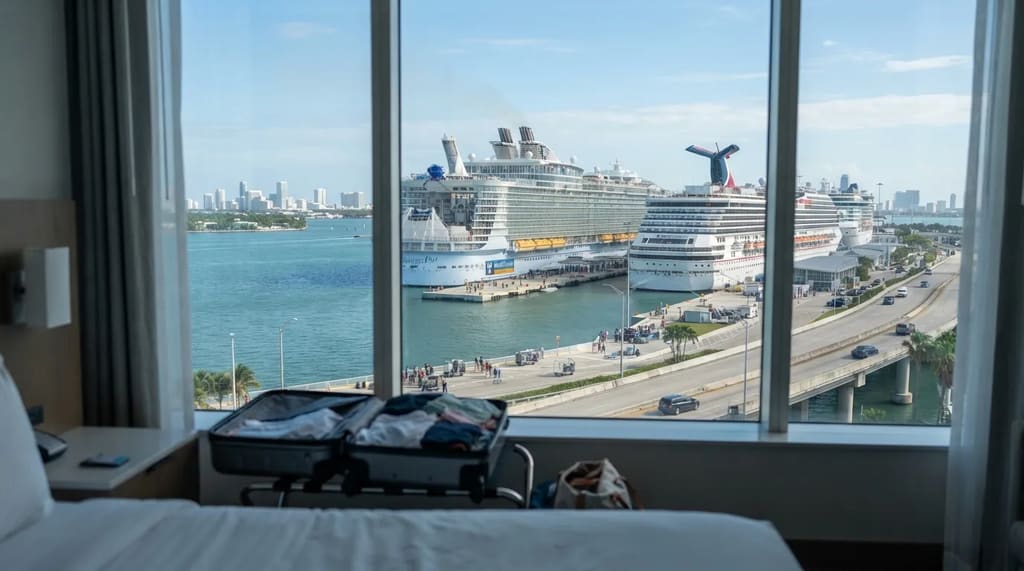
The most important rule of cruise travel is never to fly in on the morning the ship leaves. One delayed flight and you’ve missed the cruise entirely. Every other habit on this list fixes something small, like a line, a fee or a spa slot. This one prevents the only mistake with no onboard remedy.
The fix is simple. Arrive in the embarkation city at least one day before sailing, and keep your documents and medication with you as in #15. Use the extra evening to confirm the correct terminal, since a map pin saved the week before can be stale on embarkation day. Arrive in the embarkation city at least one full day before sailing.
Fast Facts
- Final boarding typically closes 60 to 90 minutes before departure.
- A morning-of flight leaves no buffer for a single delay.
- Documents and medication stay in your carry-on, not your checked bag.
- An evening in port gives you time to confirm the right terminal.
Look back over the list and you’ll see that nearly every item was about time: a window, a cutoff, a first afternoon. Embarkation day is a handoff, and the vacation you paid for starts once it’s done well.
When you board your next ship, which comes first for you: the safety drill, the spa desk, or a table for lunch?
- Royal Caribbean Blog Check-In: https://www.royalcaribbeanblog.com/2024/05/29/royal-caribbean-check-in-questions
- Norwegian Embarkation Day Guide: https://www.ncl.com/travel-blog/cruise-tips-what-to-expect-on-cruise-embarkation-day
- Carnival Arrival Appointments: https://www.carnival.com/safety-information
- Norwegian Boarding Times FAQ: https://www.ncl.com/in/en/cruise-faq/boarding-times
- Cruise Power Strip Rules: https://www.asktravel.org/2026/05/cruisespower-strip-on-cruise.html
- Royal Caribbean Power Adapter Rules: https://www.thewalkingcruiser.com/post/royal-caribbean-power-adapter-rules-2026
- Carnival Muster Drill Policy: https://www.cruisehive.com/carnival-cruise-line-addresses-muster-drill-concerns/160753