You’ve probably watched a park concession worker ring up a hot dog, hand over an ice cream and point toward the restrooms, and thought that was the whole job. It isn’t. Some of the most thoughtful things they do for older visitors never show up on a sign, a menu board or a review.
Some of these moves trace back to real accessibility rules. Others are habits good workers pick up on their own, and no manager ever wrote them down. Here is what park policy and visitor guidance say about each one, and the last item has far less to do with rules than you’d expect.
#17 – A Seat Appears Before Anyone Asks for One
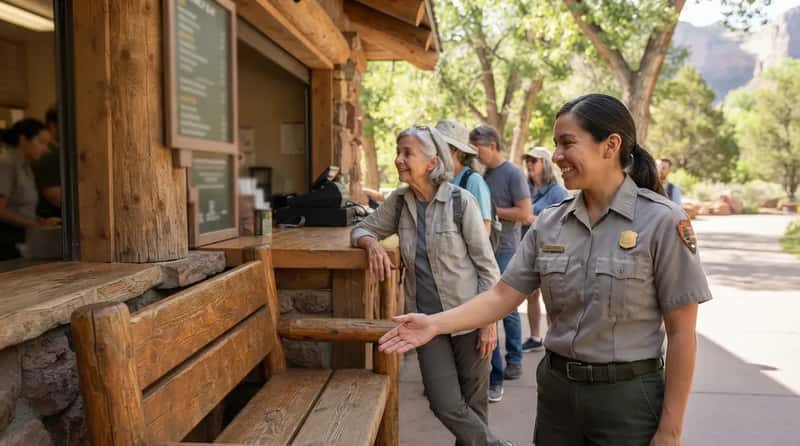
A long line at a park snack bar is harder on some people than others. Attentive staff notice a guest shifting weight or leaning on the counter. Then they point out a nearby bench or a spot at the end of the counter, with no fuss.
The National Park Service’s own accessibility checklist asks whether benches are provided throughout visitor facilities. Seating is a planned feature, not decoration. A worker who nods toward a bench is quietly following the spirit of that list.
#16 – They Step Around the Counter So Nobody Has to Shout
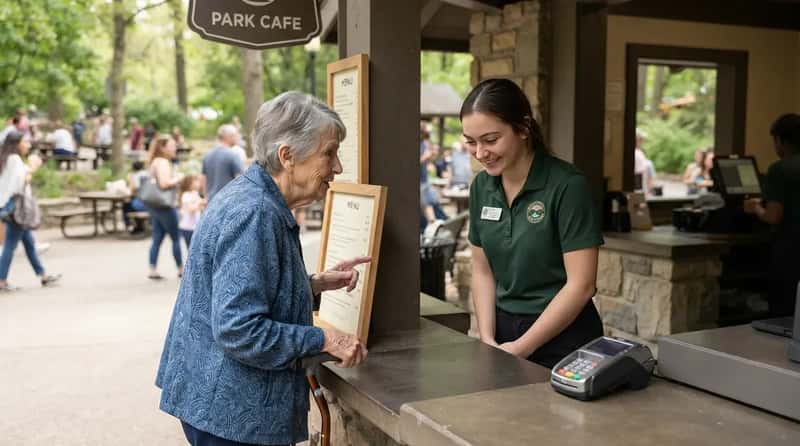
Noisy picnic areas and busy registers make it easy to miss what a guest is saying. Good staff lean in, lower their voice, or walk around the counter instead of calling “What?” across a crowded space. Nobody announces it. The order just gets taken.
Watch for it next time you’re behind someone with a cane or a hearing aid. The best workers repeat the order back clearly and confirm the total before the card comes out. That one habit heads off a lot of mix-ups at the register.
The next one is practical, and it solves a problem printed in very small type.
#15 – The Menu Gets Read Aloud Without Anyone Making It Awkward
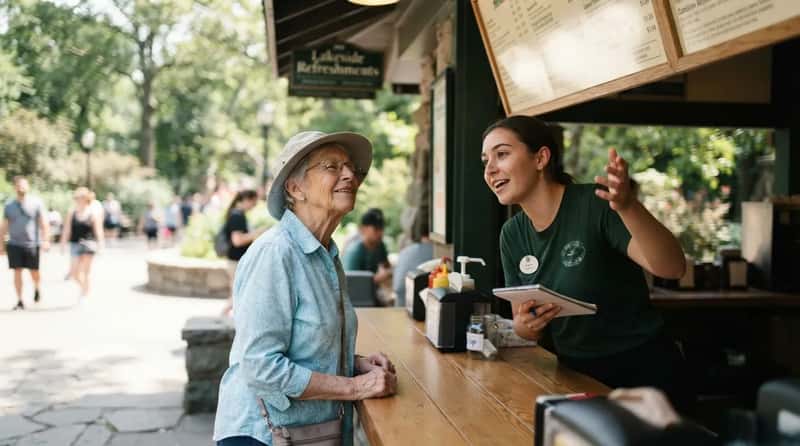
Menu boards in parks are often hung high, washed out by glare and crowded with tiny prices. When a guest squints, staff at many counters simply start reading the options aloud. There’s no announcement and no embarrassing pause. It’s treated like any other part of service.
Plenty of visitors skip asking because they don’t want to be a bother. Most workers would rather you did, since a confident order means fewer corrections later. A spoken menu can keep a guest from paying for something they never meant to order.
Worth Knowing
- Glare on outdoor menu boards is worst around midday, so that’s when a spoken rundown helps most.
- Asking for prices along with the item names avoids surprises at the register.
- Confirming the total before paying takes about five seconds.
- A good worker treats the question as routine, not as a favor.
#14 – Your Tray Gets Carried All the Way to the Table
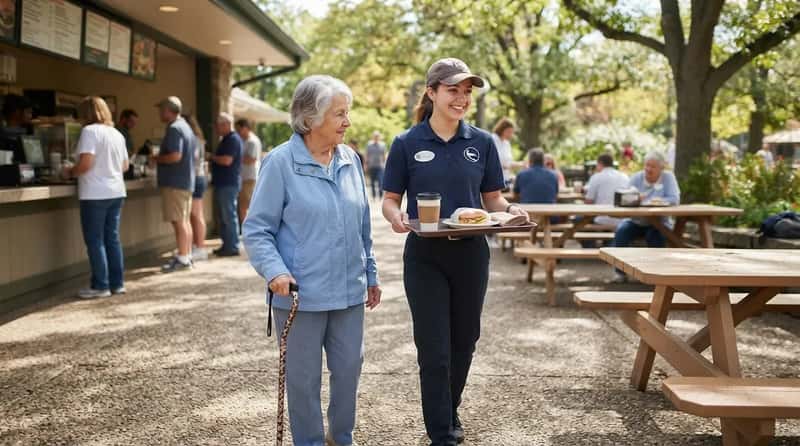
A tray with a hot coffee, a sandwich and a handful of napkins is a balancing act. Add a cane, a walker or a park map, and it gets harder. Many concession workers will offer to carry it to a table, and it’s one of the oldest hospitality moves in food service.
The offer goes unnoticed because it’s so smooth. The worker walks a few steps, sets everything down and heads back to the line. Spilled drinks are a real hazard on busy patios and uneven pavement, and a carried tray avoids the riskiest moment of the meal.
The next item is the one most guests only notice when it’s missing.
#13 – Water Bottles Get Topped Off Before Anyone Feels Dizzy
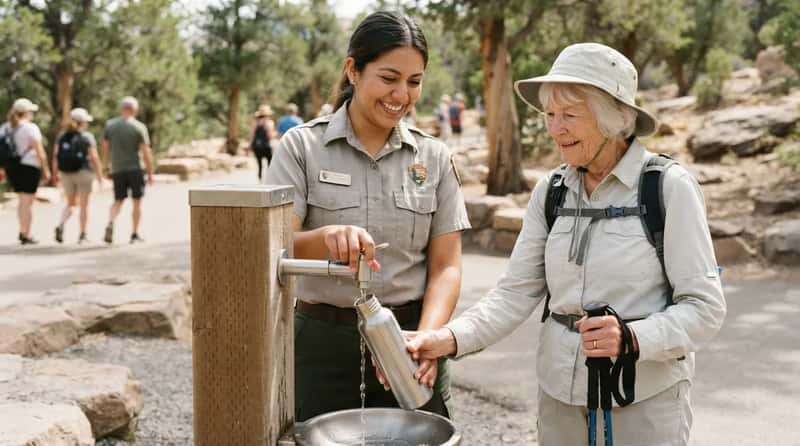
Parks can be hot, dry and high in elevation, and not everyone feels thirsty at the right moment. Staff at many stands will refill a bottle or point to the nearest refill station without being asked. The NPS accessibility guidance includes questions about where water-filling stations are and whether wheelchair users can reach them.
Water access sits on the NPS mobility checklist, right next to restrooms and entrances. A worker who volunteers a refill is doing what that list is meant to encourage. Many visitors wait until they feel lightheaded before saying a word, and a proactive offer gets ahead of that.
The item at #12 is about something even more basic than water.
#12 – The Table Nearest the Door Gets Quietly Saved
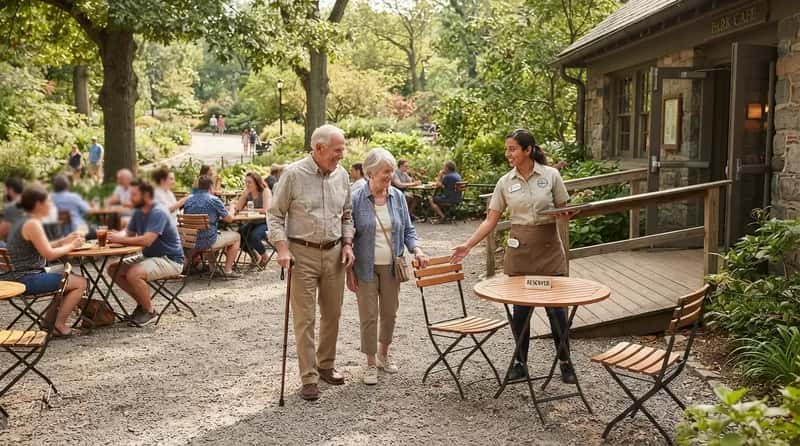
Walk across a crowded gravel patio and you’ll see why this matters. Staff at many cafes steer older guests toward tables close to the entrance, the ramp or the restrooms. They do it with a casual “this one’s open” instead of any announcement.
This is a judgment call, not a rule, and it varies by location. But a short walk can decide whether a meal break feels relaxing or exhausting. The guest usually just thinks they got lucky with a table.
#11 – They Point Out the Accessible Restroom Before It Becomes an Emergency
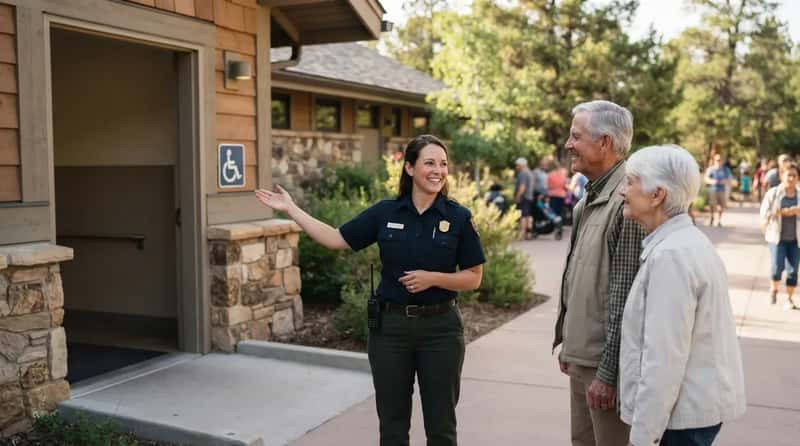
A worker who tells you where the accessible restroom is before you ask is tackling one of the biggest concerns visitors raise. Restrooms come up again and again in accessibility conversations, and they matter well beyond people with a formal disability. Many older guests have the same needs, such as no stairs, a short route and enough room to maneuver.
That’s why a quick “restrooms are around the left side, no steps” can mean so much. It sounds small. But plenty of visits get cut short because nobody mentioned the route.
The next item is even more specific, and it can save a whole afternoon.
#10 – The Honest Warning About Stairs and Steep Paths
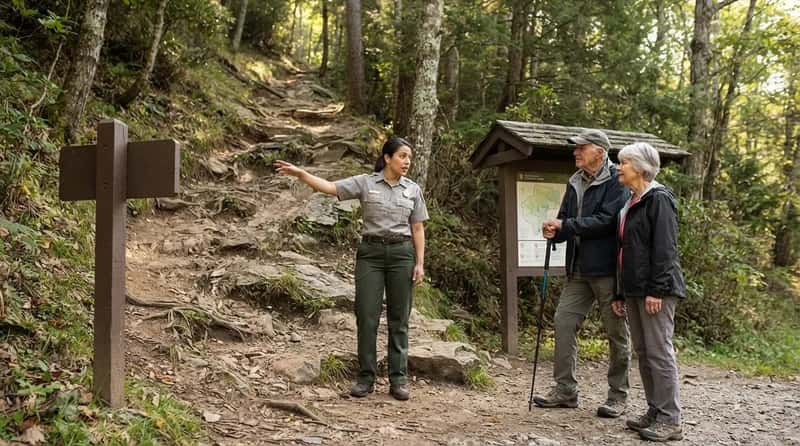
Some of the best things staff do is tell you what to skip. A worker who knows the boat dock has a steep ramp, or that the lookout path turns rough after the first bend, may mention it before you buy a ticket. That kind of honesty is worth more than most discounts.
The ADA requires businesses to make “reasonable modifications” to how they operate when that’s readily achievable. That standard sits at the heart of how concessioners are expected to treat visitors with disabilities. A heads-up about terrain is the simplest, most human version of it.
Fast Facts
- The Americans with Disabilities Act was signed into law on July 26, 1990.
- A useful terrain warning covers slope, surface and distance, not just “it’s a bit rough.”
- Paved, gravel and dirt paths can feel very different to a cane or a walker.
- Staff who mention a bench partway along a path are giving you a built-in rest stop.
#9 – Service Dogs Get Welcomed, Not Grilled
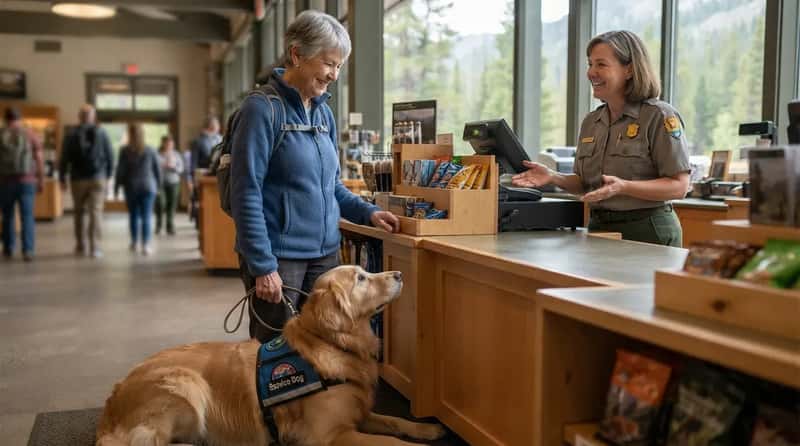
A visitor with a service dog shouldn’t be hassled at the counter. The NPS notes that visitors shouldn’t feel hassled over service animals, and that it’s a concern visitors raise often. Staff who know the rules simply step aside and let the team in.
Under the ADA, employees can ask only limited questions and can’t demand paperwork. Many guests are surprised by how little staff are allowed to ask. The correct response is generally a smile and a clear path.
The next item is where a lot of visitors quietly lose money.
#8 – They Warn You the Senior Pass Won’t Cover Everything
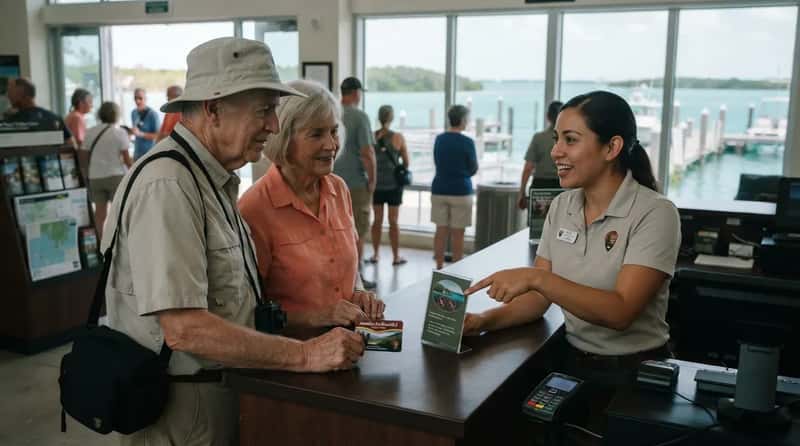
The America the Beautiful Senior Pass is a great deal. U.S. citizens and permanent residents aged 62 and older can buy an annual pass for $20 or a lifetime pass for $80. Many travelers assume it also discounts every tour and meal inside the park.
It doesn’t. One travel site notes the pass won’t cover concessionaire fees, such as a boat trip in Biscayne National Park. Helpful staff say so up front and mention any senior rate their own business offers. Not every concessioner has one, so it’s worth asking.
At #7, the story shifts from pricing to a rule hiding in the reservation system.
#7 – Accessible Rooms Get Held Back for the Guests Who Need Them
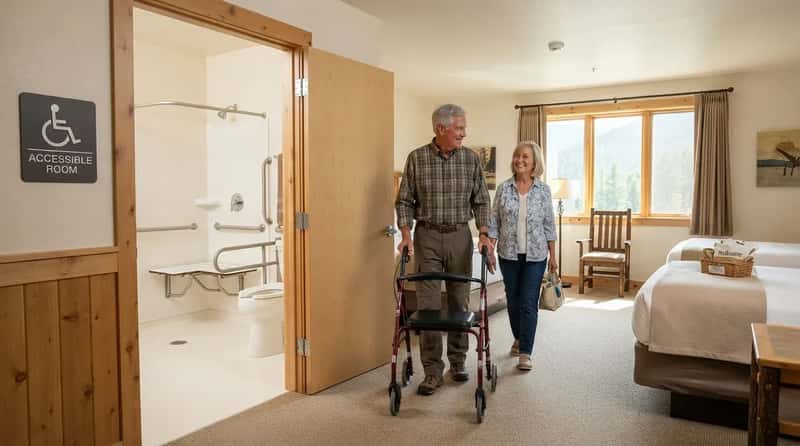
This one happens in the reservation system, not at the front desk. NPS rules say accessible guest rooms must be held until all other rooms of that type are rented, and releasing them early isn’t permitted. Staff don’t make a show of it.
That matters for older guests who need a step-free shower or wider doors. Accessible rooms can’t be handed out to just anyone while other rooms of the same type are still open. Many visitors never learn that this protection exists.
What staff say about those rooms is where the real help begins.
#6 – They Describe the Room in Plain, Honest Detail
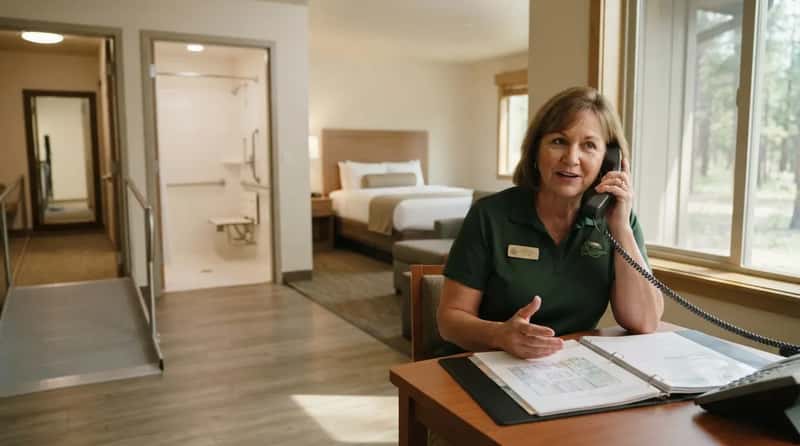
Concessioner reservation systems are supposed to describe accessible features in enough detail for a guest to judge whether a room will work for them. Good staff go further on the phone. They’ll say how far the room sits from the parking lot, or whether the bathroom has a roll-in shower.
Plenty of travelers book by photo alone. A room that looks perfect online can still sit at the far end of a long path. One short, honest call can prevent a miserable first evening.
At a Glance
- Distance from the room door to the nearest parking spot
- Roll-in shower, tub with a seat, or standard tub
- Steps, ramps or elevators between the lobby and the room
- How far the room sits from the dining area and the restrooms
#5 – A Wheelchair Gets Offered, and Nobody Makes It a Big Deal
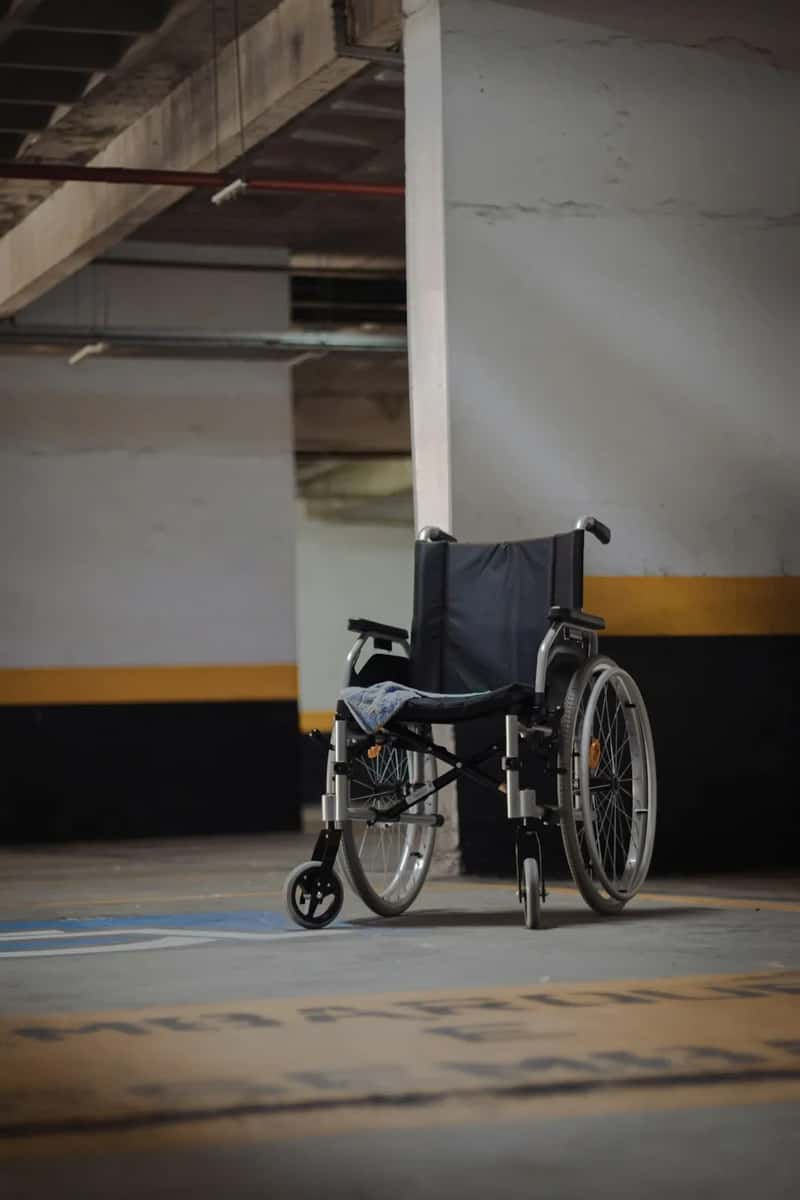
Some older visitors can walk, just not far. Staff at certain parks will mention that wheelchairs are available, and many national park visitor centers offer free loaners for visitors who tire easily. Those usually can’t leave the immediate area, though.
One travel guide has listed wheelchair rentals at the Yosemite Valley Lodge bike kiosk and at the Yosemite Medical Clinic. Availability changes, so check ahead. Renting a wheelchair for a day is a common way to see more with less pain.
The shuttle question at #4 is the one that can really change a day.
#4 – They Tell You Which Shuttle Actually Works for You
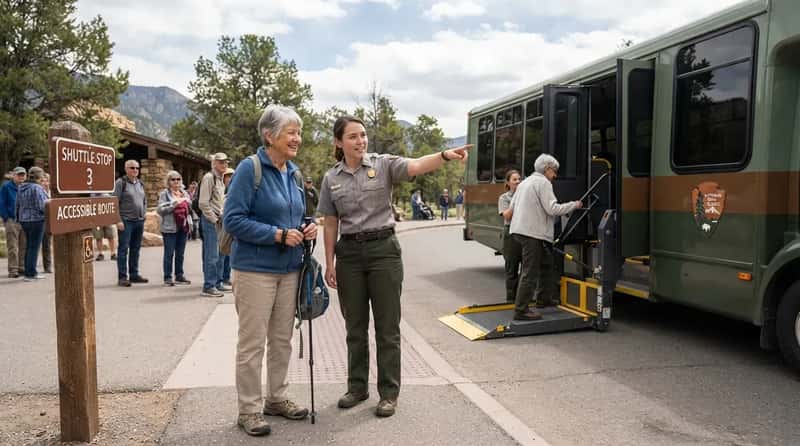
Park shuttles aren’t all the same. The NPS asks whether park shuttle buses are accessible to visitors using a wheelchair, and staff who know the answers can save a guest a long wait at the wrong stop.
They’ll often say which route has a lift, which stop has the shortest walk, and when the crowds thin out. One accurate tip about a stop can spare an older visitor a long trudge back. Nobody puts that on a brochure.
Quick Compare
- Guessing: You wait at the nearest stop and hope the bus has a lift.
- Asking a worker: You head to the stop with the shortest walk and the right vehicle.
- Guessing: You ride at peak hours and stand the whole way.
- Asking a worker: You learn when the crowds thin and a seat is easier to find.
#3 – Someone Is Watching for the Moment You Look Unwell
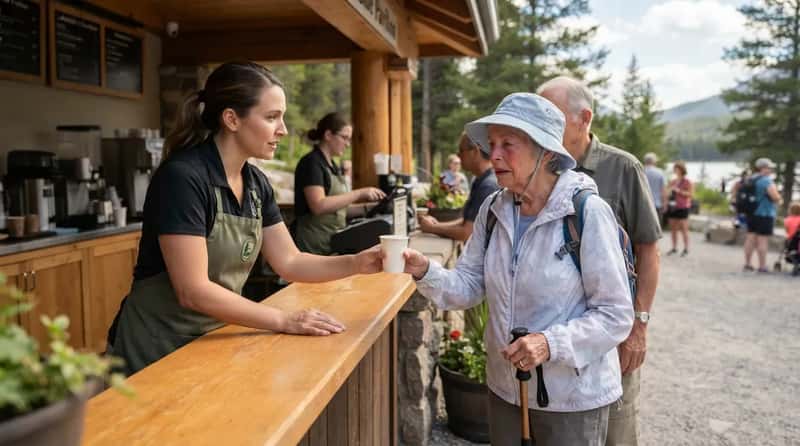
The best staff keep an eye out. If a guest looks flushed, pale or unsteady, a worker may offer a seat, a cold drink or a call for help. It’s usually done without drama, so nearby guests may never notice.
This isn’t an official duty at every stand, and it depends on the person. But a staffer’s quick eye is often the first safety net in a remote area. Far from a clinic, that can matter a lot.
What comes next is the part nobody trains for, and it’s more common than you’d think.
#2 – Shade and Ice Water Come Before the Sales Pitch
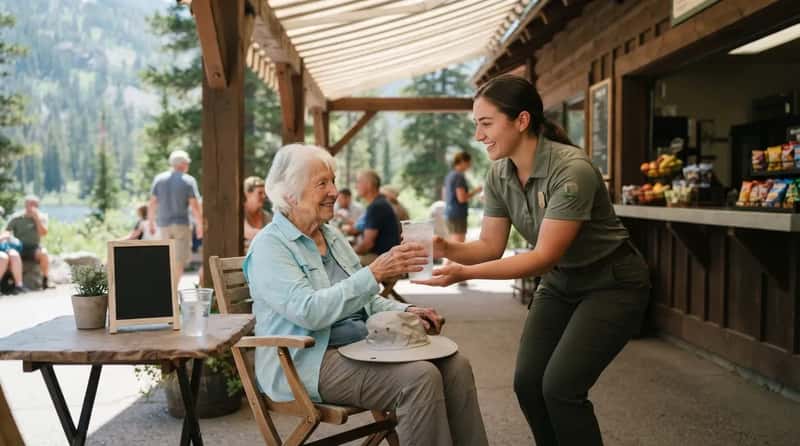
On hot days, the first thing a good concession worker offers may be a chair in the shade or a cup of ice water. Park stands sit at trailheads, overlooks and lakeshores where sun and altitude pile up. Older adults can be more vulnerable to heat, so attentive staff watch for it.
Heat illness can sneak up quickly. Shade and fluids are the first steps, well before any purchase. A worker who offers them first is thinking about the guest, not the sale.
There’s one more item, and it’s the one visitors tend to remember longest.
#1 – They Simply Slow Down and Wait
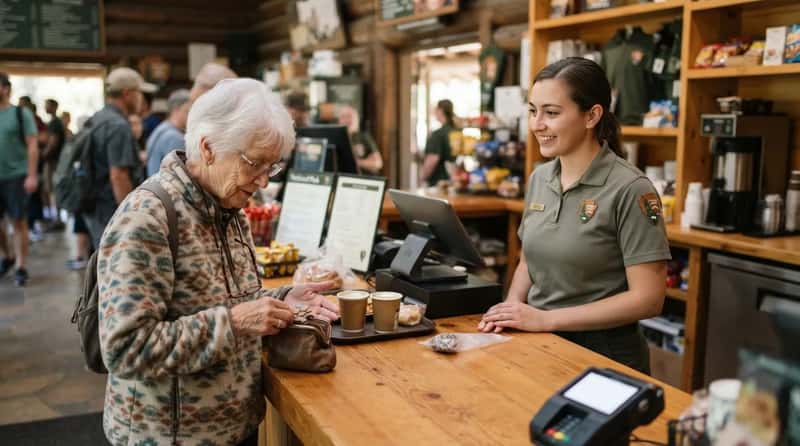
The most powerful thing concession staff do for older visitors has no rule behind it. They don’t rush. They let someone count out change, find the reading glasses, remember the order, or tell a short story about a first trip to this same park decades ago.
That patience matters more than any ramp. The NPS points out that when a place is unwelcoming to someone with a disability, it’s unwelcoming to those traveling with them too. Patience is the one accessibility feature that costs nothing and can’t be built into a building. It’s also the quiet thread running through every other item on this list.
Practices vary by park and operator, and not every worker does all 17 of these. But the ones who do make a visit easier in ways nobody writes down. The accessibility rules set the minimum, and real people fill in the rest with a chair, a refill, an honest warning or a few extra seconds of patience.
Which of these have you actually seen at a park stand, and which one surprised you most?