A ship easing up to a pier looks like the simple part: a few ropes, a gangway, done. In reality, that quiet moment is the final scene of a story that started days earlier, in inboxes, phone calls and government portals. The people running it are port agents, and most of the world has never heard of them.
Some of the 17 jobs below sound boring until you see what happens when one gets missed. One involves a tiny sealed bottle. One involves a hotel room where someone is waiting for a ship that’s running late. And one is a plan nobody wants to use at 3 a.m. Keep scrolling, because the best ones aren’t where you’d expect.
#17 – The Berth Is Booked Before the Ship Is Even Close
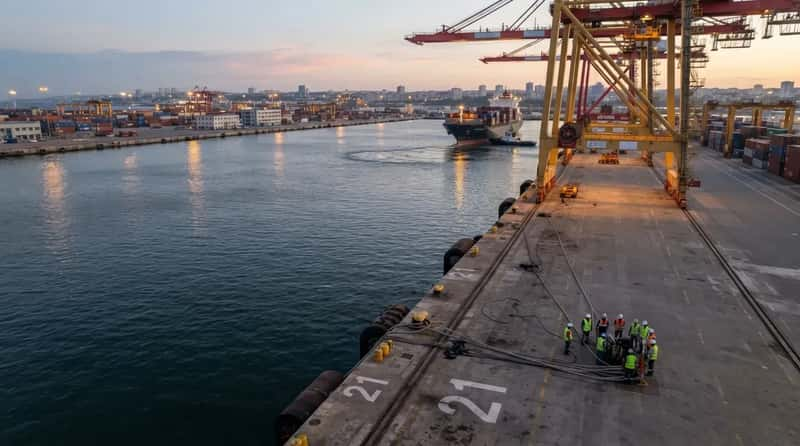
A ship never really “arrives” until someone has already saved it a spot. Port agents confirm a berth window with the terminal and the port authority, based on the captain’s estimated time of arrival. Tides, weather and a vessel ahead running late can reshuffle that window overnight. The agent keeps adjusting the plan as the ship gets closer.
Agents also help with the Notice of Readiness, the document a ship tenders to say it is ready to load or discharge. Under many charter agreements, it helps start the clock that decides who pays for waiting time. A few hours of confusion can turn into a real money dispute.
But the paperwork that goes out next involves governments, and it runs on strict deadlines…
#16 – Government Notices Go Out Days Before the Ship Appears
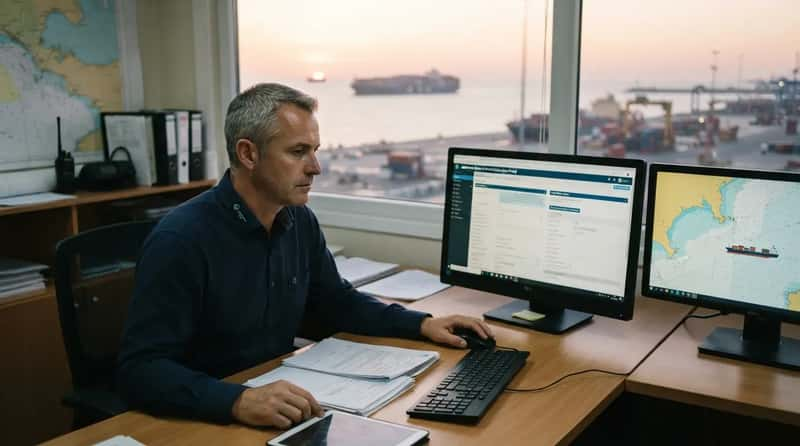
Authorities often know a ship is coming long before anyone on shore can see it. For U.S. arrivals from foreign ports, the Coast Guard requires a Notice of Arrival that includes crew, cargo and voyage details. The master, owner, operator or an agent can submit it. Agents often handle it because they know the port’s systems and the formats it expects.
Many countries now use electronic “single window” systems for these reports. The International Maritime Organization made such systems mandatory for its member governments from 1 January 2024. The idea is one submission instead of a stack of duplicate forms. The ship has to introduce itself to the government before it is even in sight.
But that’s nothing compared to the person who has to be ordered next, because the ship can’t move without them…
#15 – The Pilot Is Ordered Like a Very Specific Taxi
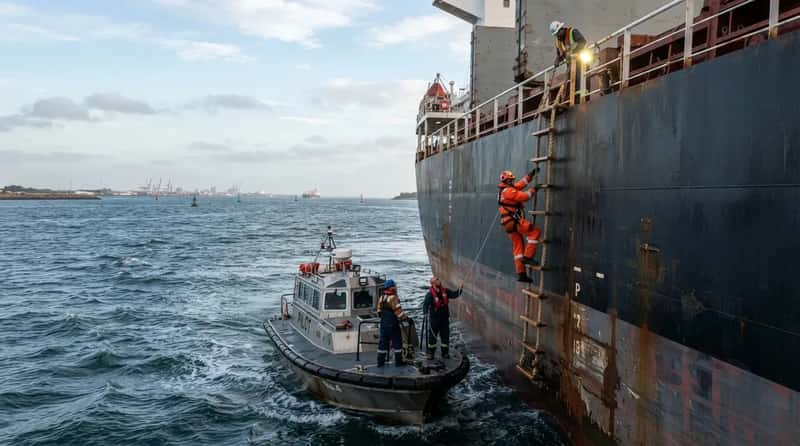
In many busy ports, a ship can’t steer itself to the dock on its own. Local pilots know the channel, the currents and the hidden shallow spots. The agent gives the pilot station the ship’s length, draft and arrival time so the right pilot is waiting at the right hour.
Pilots often board from a small boat by climbing a ladder on the ship’s side. If the ship slips behind schedule, the pilot may be bobbing around at sea for nothing. The agent’s early call decides whether anyone is even waiting. It’s a small detail that can shape a whole day of port operations.
Fast Facts
- Pilots usually meet the ship at a designated pilot station outside the harbor, not at the pier.
- Most boardings use a rope-and-wood pilot ladder, though a few ports use helicopters.
- In many ports, pilotage is compulsory for ships above a certain size.
- Fees commonly scale with ship size, so a bigger ship means a bigger bill.
And the next booking is the one that decides how hard it is to turn a giant ship…
#14 – Tugs and Line Handlers Are Lined Up Before Breakfast
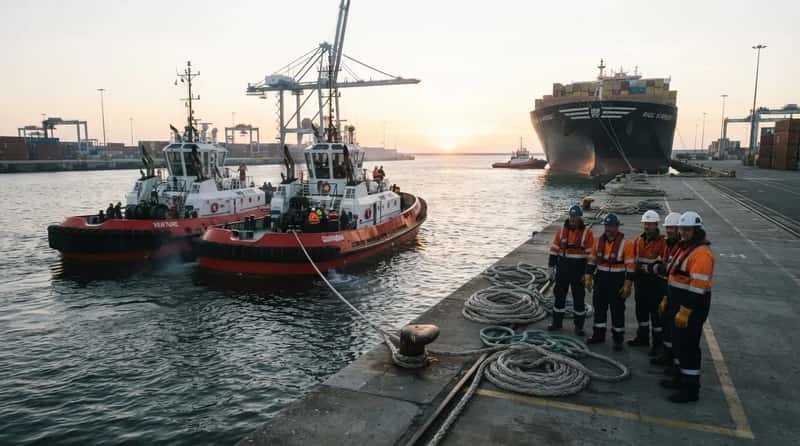
A large loaded vessel can weigh well over 100,000 tons, and it stops slowly. In many ports, agents help arrange tugs, and the number depends on the ship’s size, the berth and the weather. Line handlers, the crews who take the mooring ropes on the pier, need a time slot too.
A ship that arrives early may find nobody ready for it. A ship that arrives late may lose a tug it paid for. Either way, someone is paying for the mismatch.
But the people waiting on the pier aren’t only boat crews, because officials are on the list too…
#13 – Customs and Immigration Get Their Paperwork Before the Gangway Drops
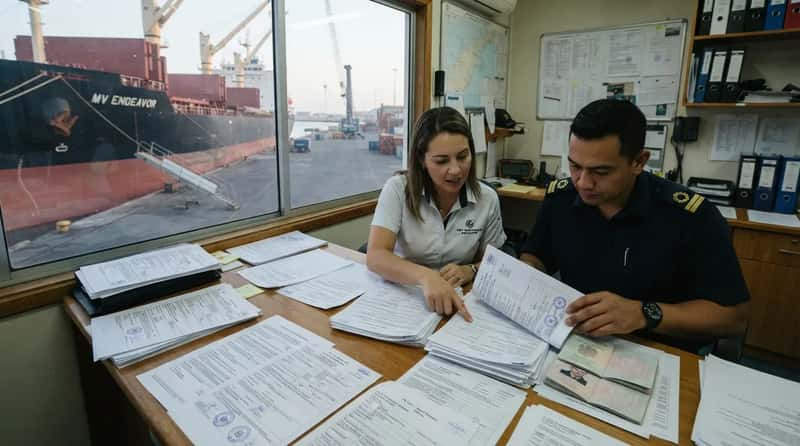
A crew can be fully pre-checked on paper before anyone steps ashore. International shipping uses standard forms for this, known as the FAL forms. They cover the general declaration, cargo, ship’s stores, crew effects, the crew list, passengers and dangerous goods. Agents make sure the right forms reach the right offices.
A missing name or a mismatched passport number can slow an entire call. Officials may board to check crew documents against what was submitted. The ship’s own paperwork is its first impression.
But there’s another declaration that has nothing to do with cargo, and it can halt everything…
#12 – A Health Form Can Keep a Whole Ship at the Pier Gate
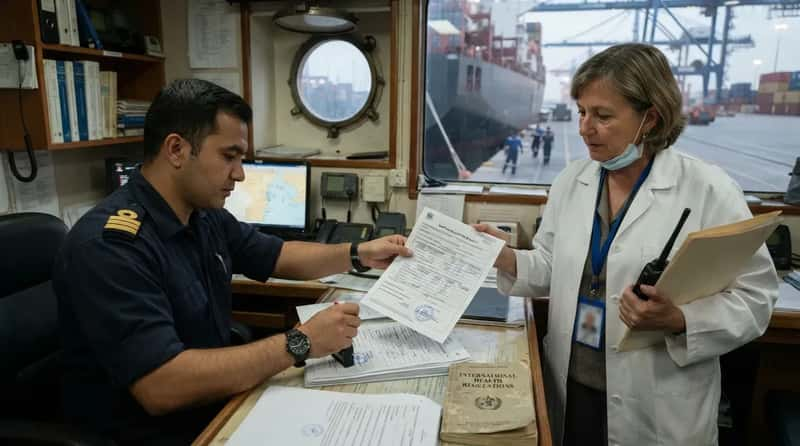
Before a ship can do business, it often needs a permission called free pratique. Health authorities rely on the Maritime Declaration of Health, where the master reports illness aboard and recent ports of call. Agents make sure it reaches the right office on time.
If someone aboard is seriously ill, the port may want details before the ship docks. Health officials can then decide whether to board or ask more questions. One unreported fever can turn a routine call into a quarantine headache.
Worth Knowing
- The Maritime Declaration of Health is tied to the WHO’s International Health Regulations.
- Free pratique is the green light to enter port, let people ashore and start cargo work.
- Ship sanitation certificates are generally valid for up to six months.
- The goal is protecting the port city, not punishing the ship.
But the next item is about who is allowed up the gangway at all…
#11 – Security Lists Decide Who Gets Aboard
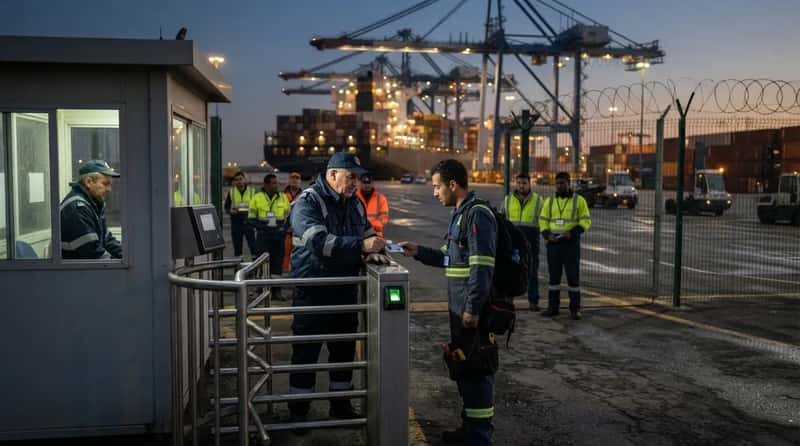
Every visitor to a ship is supposed to be on someone’s list. Since the ISPS Code took effect in 2004, ships and port terminals have followed strict access rules. Agents usually send terminals the names of surveyors, suppliers, inspectors and technicians who need to board.
A technician without clearance can end up waiting at the gate while the repair clock runs. The ship can’t leave until the work is finished. One missing name can hold a ship in place.
But the cargo side has its own scramble, and it involves heavy machinery and tight timing…
#10 – Cargo Crews and Cranes Are Booked for the Exact Hour
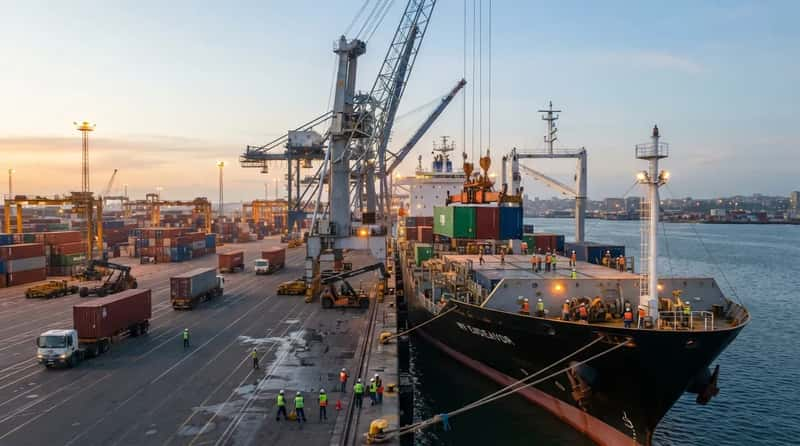
A ship can pay a lot to sit at a berth with nobody working. Agents pass cargo plans to terminals and stevedores, the dockworkers who load and unload. Containers, grain, steel and cars each need different equipment and different crews.
For bulk cargo, a draft survey is often used to estimate how much was loaded. Surveyors read the ship’s draft marks and calculate the weight from how deep it sits. Agents help make sure those surveyors can get aboard when needed. A ship’s cargo can be weighed by how low it floats.
Quick Compare
- Containers: Big shore cranes lift standardized boxes, one slot at a time.
- Grain and ore: Grabs, hoppers and conveyors move loose cargo, and a draft survey checks the weight.
- Cars: Vehicles drive on and off ramps, so drivers and pier space matter more than cranes.
- Steel: Heavy lifting gear and lashing crews keep the load from shifting at sea.
But the next arrangement is one you’d never think of until something goes wrong…
#9 – Someone Has to Arrange for the Ship’s Trash
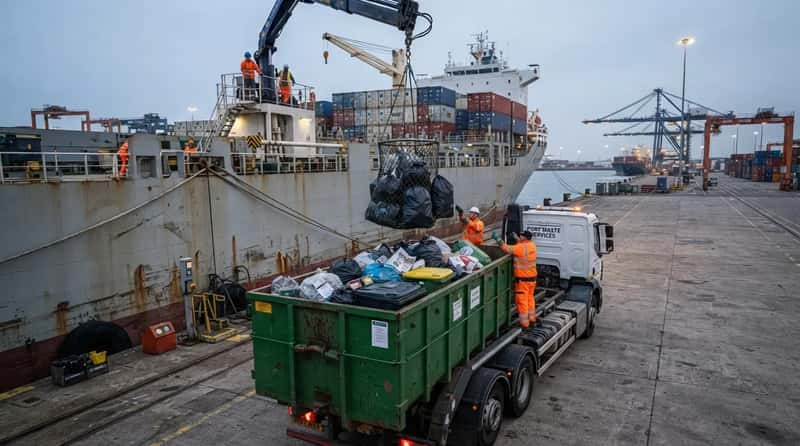
Ships can’t treat the ocean as a dumpster. Under MARPOL Annex V, discharging garbage at sea is tightly restricted, so ships bring it ashore. Many ports expect advance notice for garbage, used oil and oily waste. Agents book the trucks, barges or contractors to take it.
It is routine work, but it is a compliance matter. In the EU, waste fees are typically built into port charges, so a ship pays whether or not it delivers waste. Skipping the planning can cost more than doing it.
And the next arrangement is the one the crew actually notices, three times a day…
#8 – Fresh Food and Water Are Ordered Like a Floating Restaurant
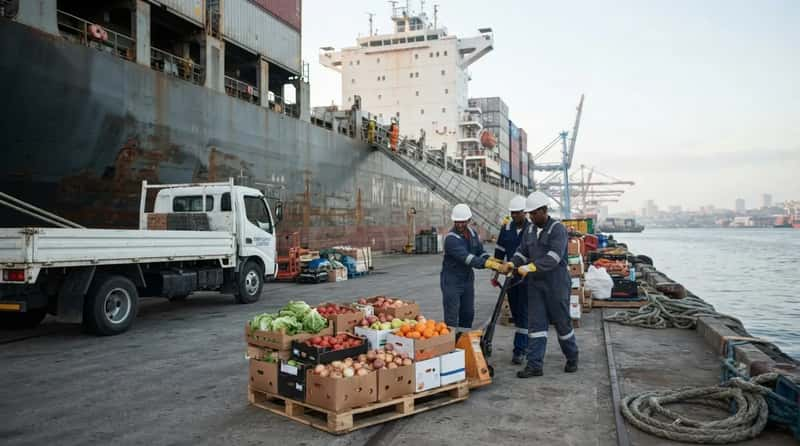
A ship’s galley can’t run to the store. Agents often work with ship chandlers, the suppliers who deliver food, cleaning supplies, rope, paint and other stores. Orders are placed ahead of arrival so goods meet the ship at the pier.
Fresh water can be arranged the same way. Seafarers often say food has a huge effect on morale during long voyages. When fresh produce is on the pier waiting, it can be the best news of the week.
But the next item is the fuel, and it comes with a document that stays on the ship for years…
#7 – Fuel Deliveries Get Coordinated Behind the Scenes
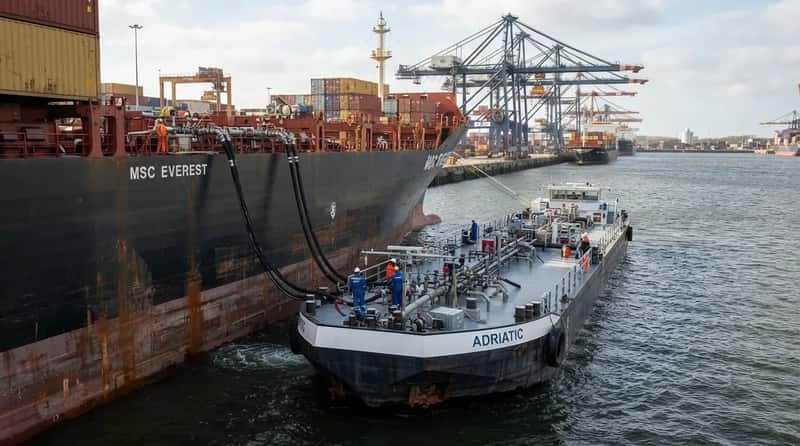
Ships don’t pull into a gas station, so the gas station comes to them. Bunker barges or trucks deliver fuel while the ship is at berth or at anchor. Agents often coordinate access, timing and the paperwork that goes with it, though the fuel itself is usually arranged by the owner or charterer.
Each delivery comes with a bunker delivery note and a fuel sample. Samples can matter later if there is a dispute about quality. A sealed bottle can settle an argument months after the fuel is burned.
But the next job is about a part that can cost a ship thousands of dollars in delay…
#6 – A Tiny Spare Part Can Hold Up a Giant Ship
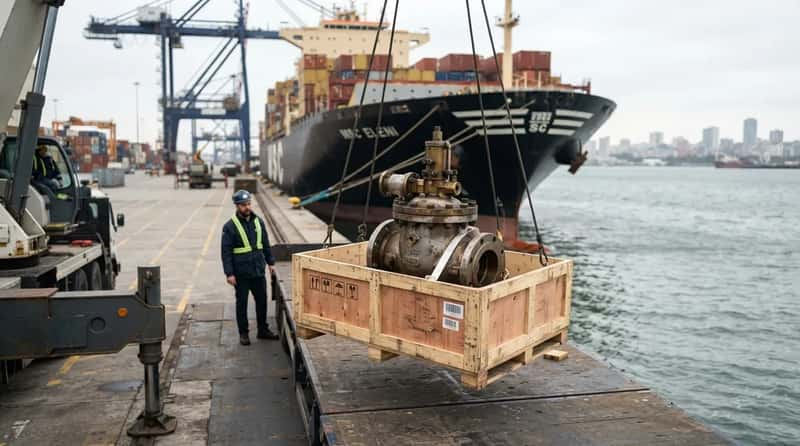
A missing valve can matter as much as a missing crane. When a part breaks, the owner may ship a replacement to a port rather than wait for the next stop. Agents help arrange delivery to the vessel, often with a courier or customs broker.
Spare parts for ships can be treated differently from ordinary imports, and rules vary by country. Getting it wrong can leave the part sitting in a customs office. A box stuck in clearance can stop a ship from leaving.
But the next one involves real people, flights and a very different kind of deadline…
#5 – Crew Changes Are Planned Like Travel Puzzles
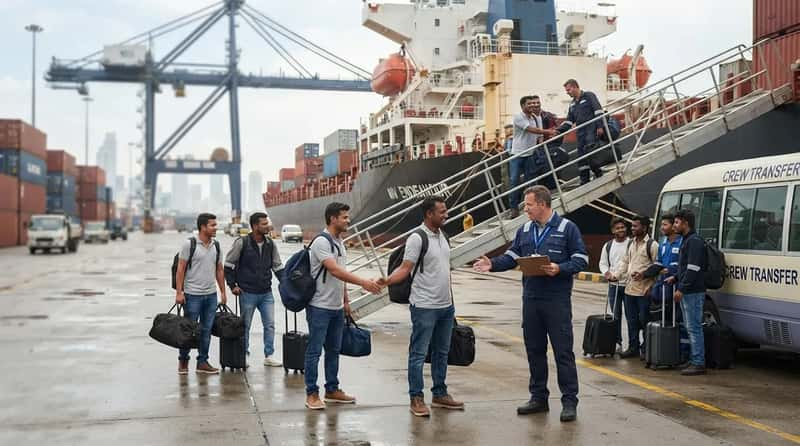
For some seafarers, the ship’s arrival is the day they finally go home. Agents help plan sign-on and sign-off: visas, airport pickups, hotels and transport to the pier. Flights must match the ship’s schedule, and ship schedules change.
If the ship is delayed, the replacement crew member may be waiting in a hotel. If it’s early, the outgoing crew member may miss the flight. One wrong date can strand someone on either side.
But there’s a quieter job tied to money, and it’s where some of the biggest arguments begin…
#4 – The Agent Pays the Port’s Bills Before the Ship Does
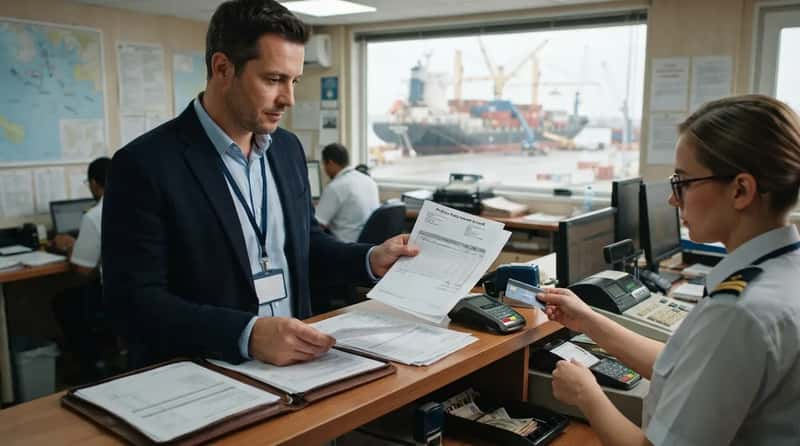
Port dues, pilotage, towage and other charges add up quickly. Before arrival, an agent usually sends the owner or charterer a proforma disbursement account, an estimate of port costs, and asks for funds. After the call, a final account shows what was actually spent.
Agents may also arrange cash for the master, for wages and small expenses. Cash handling is tightly controlled, and rules differ by country. Some owners complain that agent fees and markups are where bills balloon, while agents say the work and risk justify the price. Few people outside shipping ever see that argument.
At a Glance
- Before arrival: A proforma estimate goes out, along with a request for funds.
- During the call: The agent settles pilots, tugs, dues and other local charges.
- After departure: A final account compares real costs against the estimate.
- Where fights start: A gap between the two numbers is the usual trigger.
But the next job is where the stakes jump from money to detention…
#3 – Inspectors Can Show Up, and the Agent Has to Be Ready
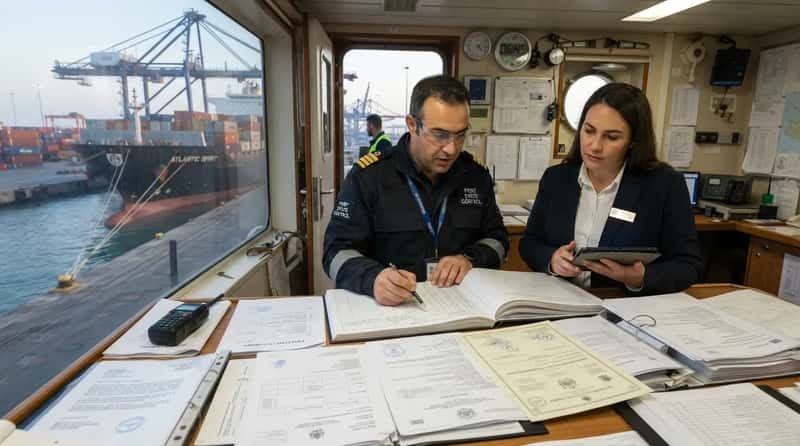
A ship can be inspected even when nothing is wrong. Port state control regimes such as the Paris MoU, the Tokyo MoU and the U.S. Coast Guard check foreign ships for safety and compliance. Inspectors review certificates, equipment, crew records and living conditions.
Agents often help with access, logistics and the flow of documents. A serious deficiency can lead to a detention, which means the ship cannot sail until it is fixed. An inspection can turn a quiet morning into a lost week.
But the next item is about people, and it’s the one the crew remembers most…
#2 – Shore Leave Isn’t Automatic, and Agents Fight for It
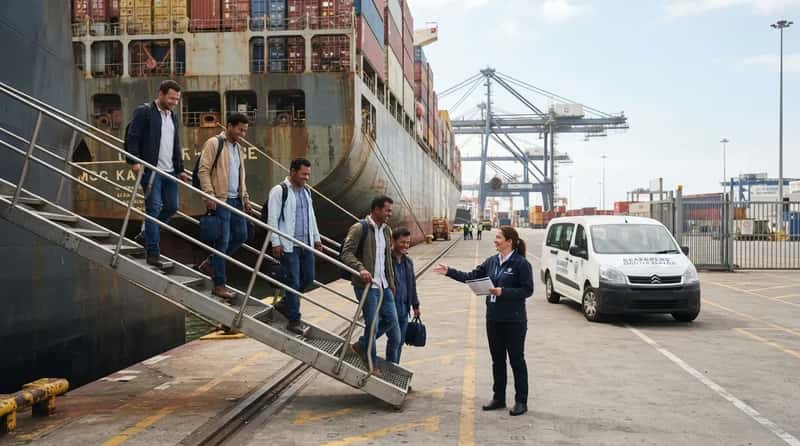
Being in port doesn’t mean the crew can leave the ship. Shore leave depends on visa rules and on local officials. In the U.S., most foreign crew members need a C-1/D visa to go ashore, and officials can still restrict them.
Agents help with transport to the gate, since many terminals are far from town and closed to walkers. They also connect crews with seafarers’ centers, where people can use Wi-Fi, buy a SIM card or call home. For some crews, a ride to a seafarers’ center is the best part of the port call.
But the strongest example of why agents exist comes from the call nobody hopes to make…
#1 – The 3 A.M. Medical Emergency Plan Is Already Written
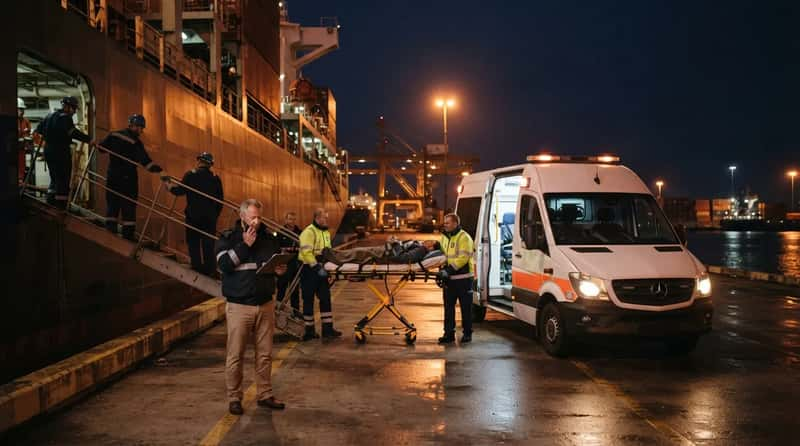
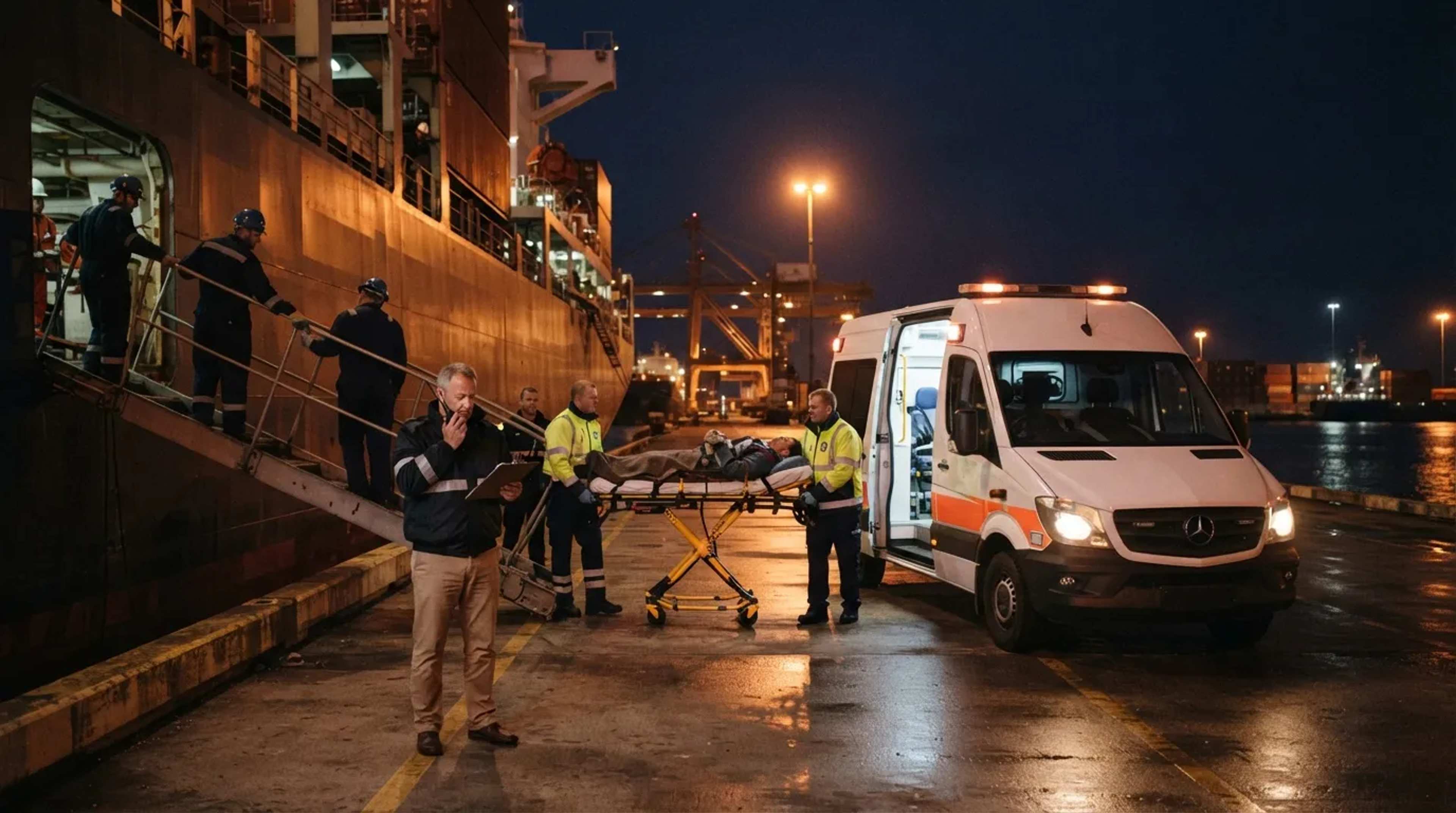
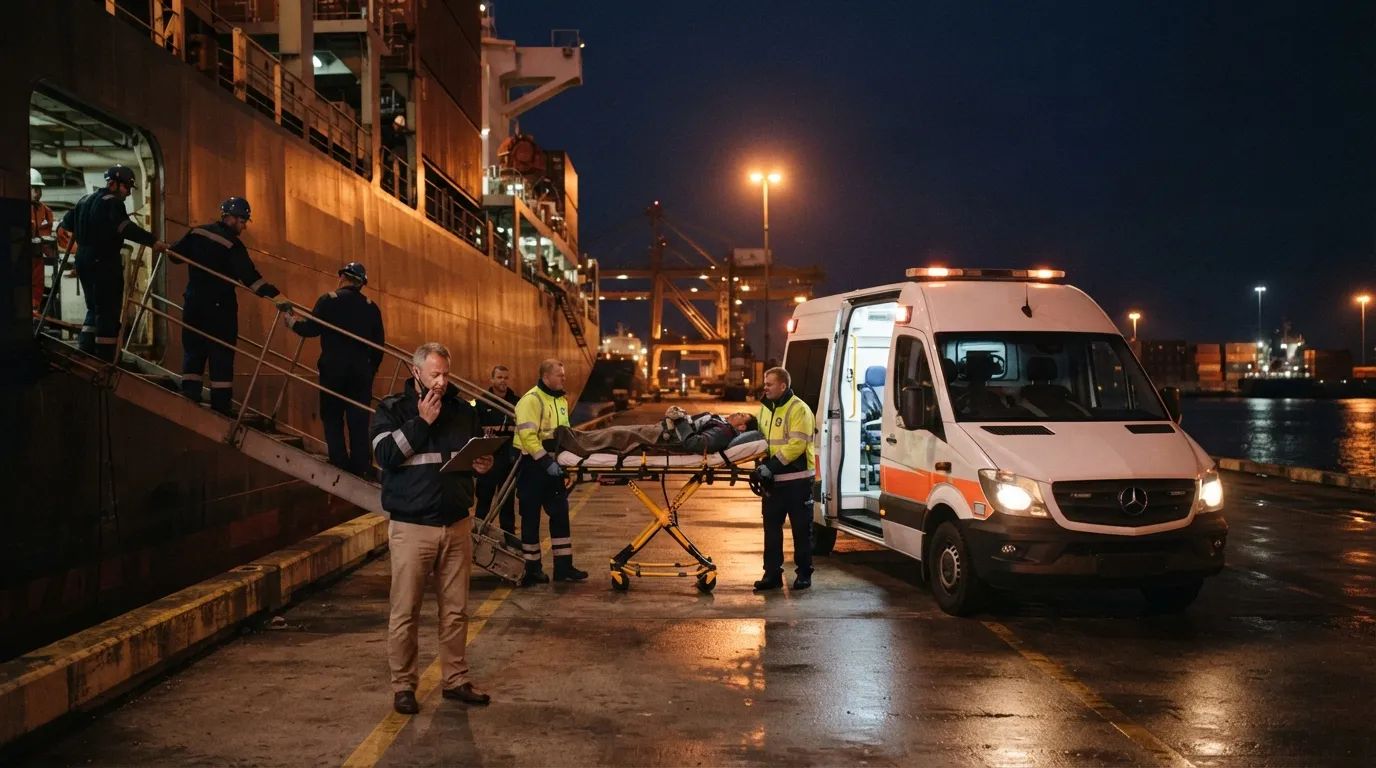
The most important thing an agent arranges may be the thing nobody wants to use. If a seafarer is badly hurt or ill, the agent may need an ambulance at the pier, a doctor or hospital and an interpreter. Officials may also need to approve a sick crew member leaving the ship.
The ship’s insurer, often a P&I club, may issue a guarantee so the hospital knows the bill will be paid. Agents sit in the middle of all of it, passing messages between the captain, the owner, the hospital and the authorities. When minutes matter, the agent’s phone list becomes a lifeline.
The ship you see at the pier is only the visible part of a port call. Behind it are berth slots, government notices, pilots, tugs, trash pickups, fuel paperwork, spare parts, crew flights and an ambulance that may never be called.
The best port calls are the ones where nobody notices any of it. The ropes go over, the gangway comes down, and the quiet work that made it possible has already been finished.