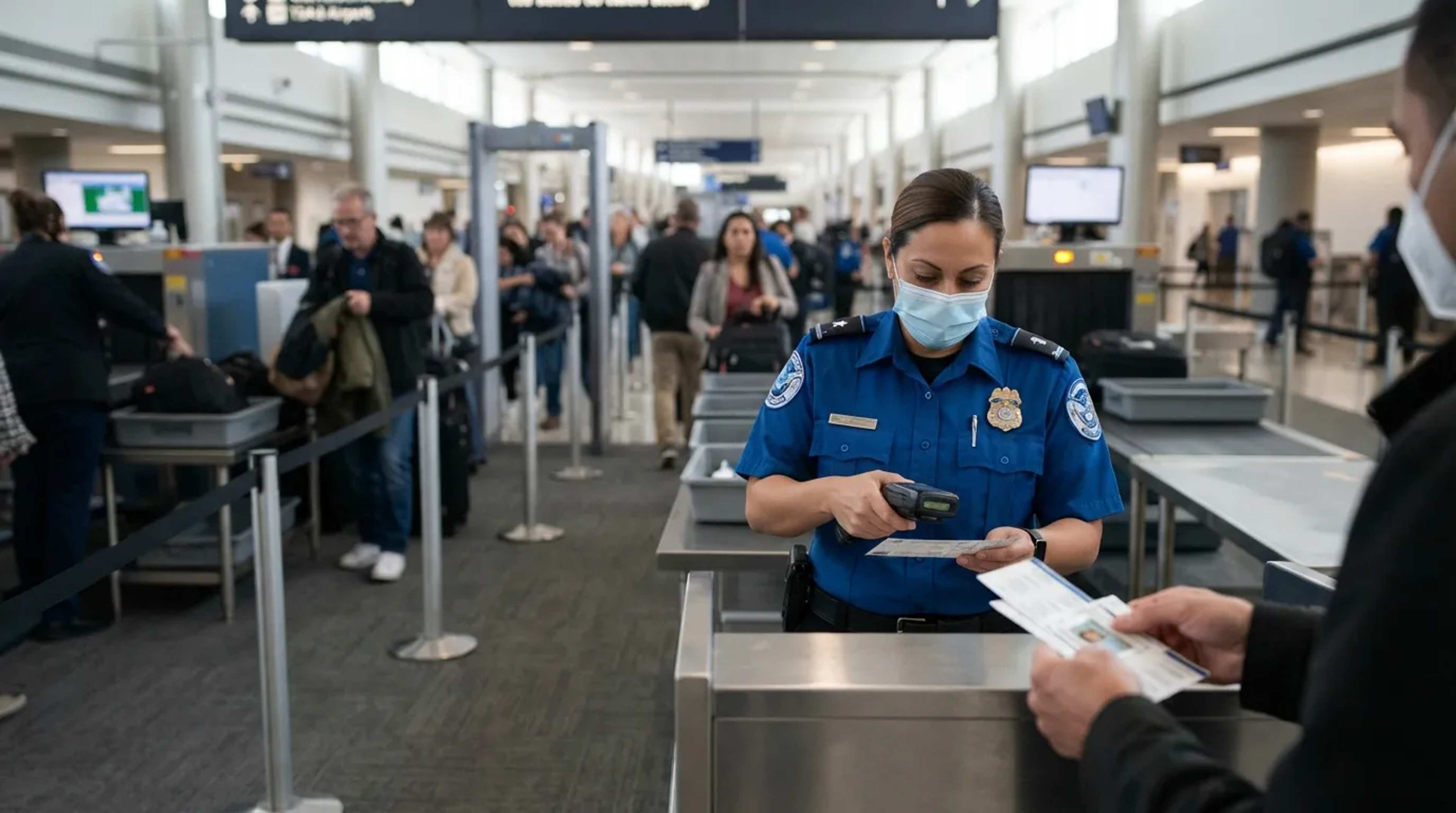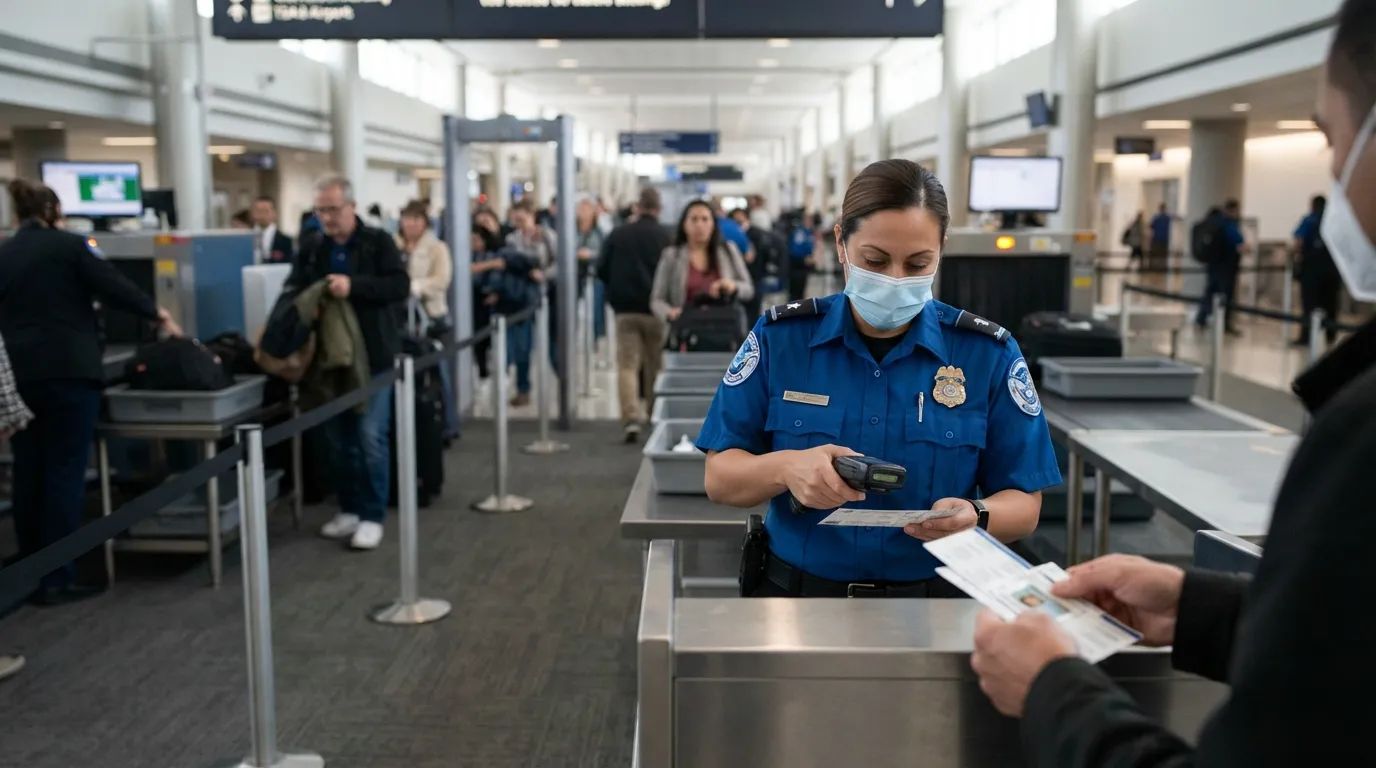
You’ve stood in that line, watching the back of someone’s head and wondering if anyone past the belt has any idea how long this is taking. They do. They also know things about the crowd, the bags, and the rules that never make it into the “please remove your jacket” announcement. In 2025 alone, TSA screened 906.7 million passengers, and the numbers behind that line are stranger than the wait.
Officers don’t have time to explain any of it while a long line builds behind you. So here it is: a shoe rule that vanished after almost two decades, a $45 fee for forgetting your ID, loaded guns found in carry-ons by the thousands, and a workforce that kept reporting to work through a 43-day shutdown. The one that stops people cold is waiting at #1.
#17 – The Line Is Actually a Small Country Moving Through One Door
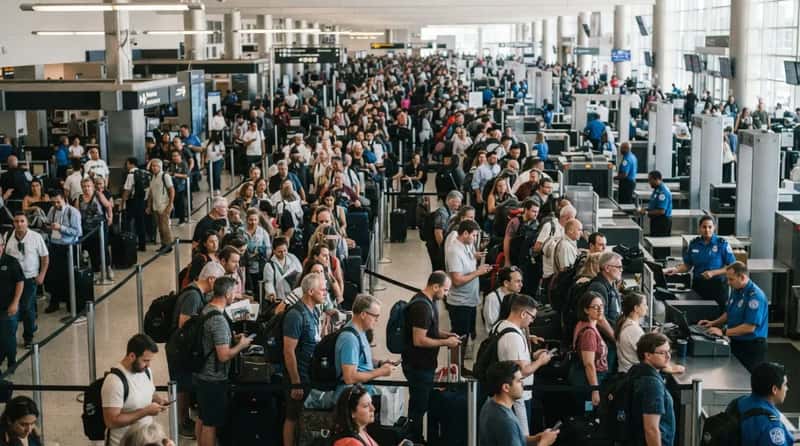
Every day, a population bigger than most U.S. states squeezes through checkpoints. TSA screened roughly 906.7 million people in 2025, the most in its history and the second straight year above 900 million. That works out to about 2.5 million people a day on average.
The year before wasn’t small either. 2024 set the prior record at 904 million people screened. The line you’re standing in isn’t a glitch. It’s the new normal, and the system has almost no slack when something goes wrong.
And the bags rolling past all those people tell a story of their own in #16…
#16 – Your Carry-On Is One of Billions Someone Has to Read
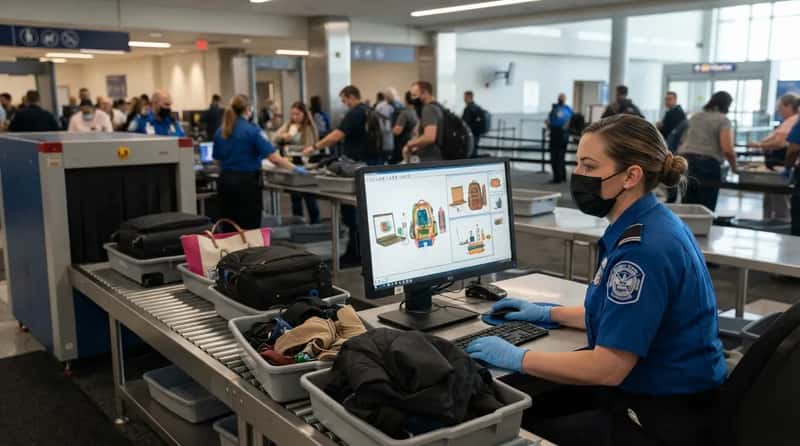
Officers don’t just watch people. They watch an endless stream of luggage. In 2025, TSA screened 480 million checked bags and 2.1 billion carry-on bags.
Carry-ons outnumbered checked bags by more than four to one. Every one of those bags is an image on a screen that someone has to read. That’s why the “just a quick look” at your backpack never feels quick when more backpacks are stacked up behind it.
Then one rule change quietly rewired the whole ritual in #15…
#15 – The Shoe Rule Died After Nearly 20 Years, and Not Everyone Is Cheering
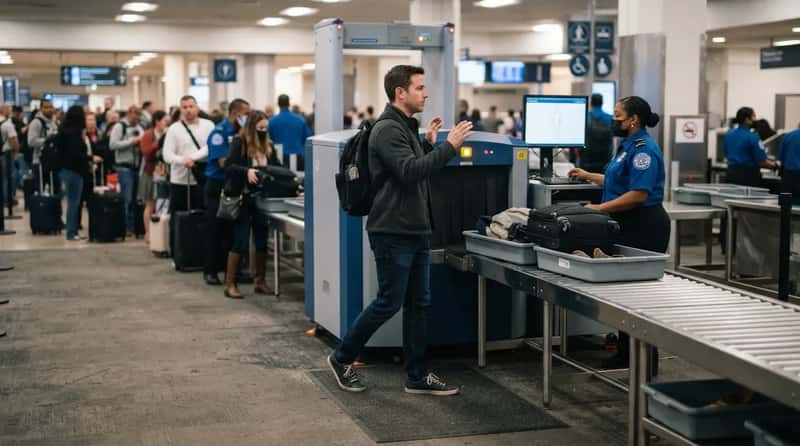
The most hated step in American air travel is officially gone. As of Tuesday, July 8, 2025, TSA no longer requires passengers to remove their shoes at checkpoints nationwide. TSA had been requiring it since 2006.
There are catches. Travelers without a REAL ID are subject to extra screening, and anyone sent to secondary screening can still be asked to take their shoes off. Some security experts warn that uneven technology across airports could create vulnerabilities. Whether that’s overblown caution or a real gap is a fair argument.
Meanwhile, one single day pushed the whole system harder than any other in #14…
#14 – The Sunday After Thanksgiving Hit a Number Nobody Had Seen
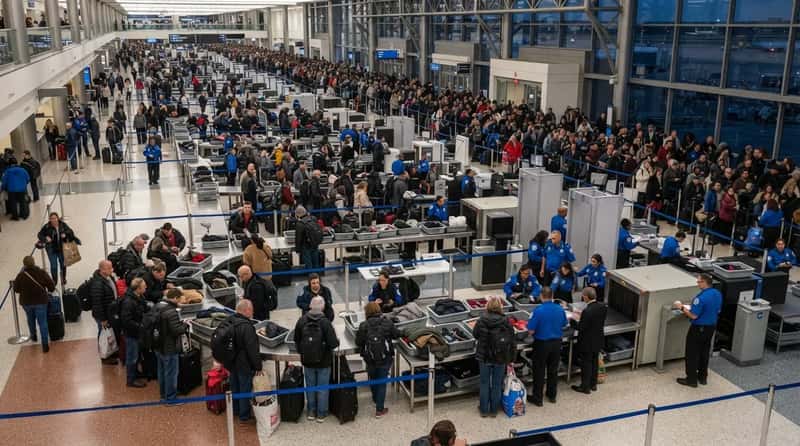
One Sunday in 2025 showed what the system can handle when everyone flies at once. TSA screened 3.13 million people on the Sunday after Thanksgiving, a new single-day record.
The old mark wasn’t ancient. In June 2024, TSA screened 2.99 million passengers in a day, breaking the previous record. The record keeps moving, and eight of the ten busiest travel days on record fell in 2025. If a checkpoint felt packed to you, the data say you weren’t imagining it.
Fast Facts
- Record day: 3.13 million people screened on the Sunday after Thanksgiving 2025.
- Previous benchmark: 2.99 million in a single day in June 2024.
- Eight of the ten busiest days on record landed in 2025.
- The 2025 daily average was about 2.5 million people.
Now, what’s in your wallet turns out to matter a lot more than it used to, as #13 shows…
#13 – Six Percent of Travelers Showed Up Without the Right ID
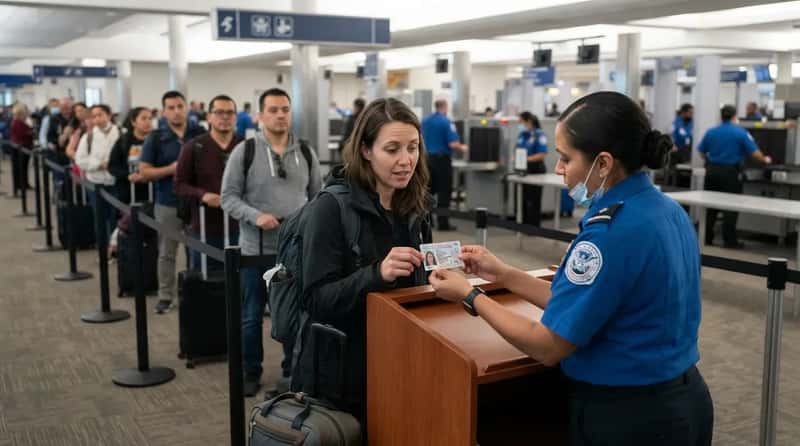
The REAL ID deadline arrived with a lot of drama, and a smaller group is still holding things up. Enforcement began May 7, 2025. TSA said about 94% of passengers had a compliant license or another acceptable ID like a passport, which leaves about 6%.
Six percent sounds tiny. Apply it to the 2.5 million daily average and it’s roughly 150,000 people a day. For months after the deadline, those passengers were allowed through with additional screening and a warning.
That price tag is waiting in #12…
#12 – The $45 “Forgot My ID” Fee That Splits Travelers
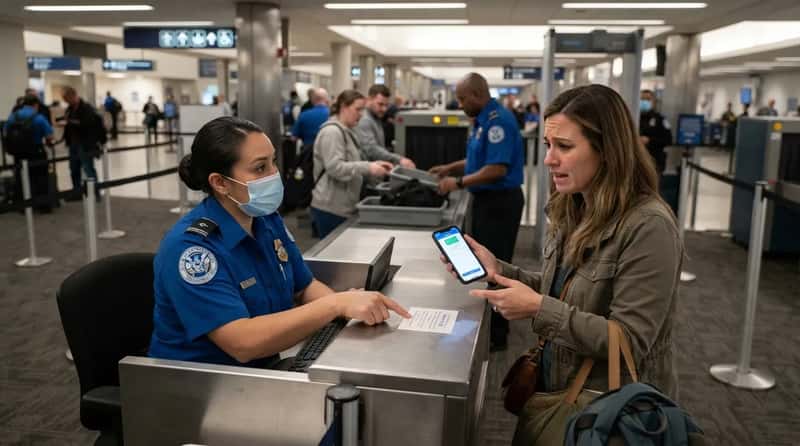
Showing up without acceptable ID now costs real money. TSA ConfirmID launched Feb. 1, 2026, as a $45 alternative for travelers without a REAL ID or other acceptable ID. The fee is non-refundable.
Paying doesn’t guarantee a pass. TSA will attempt to verify your identity, but there is no guarantee it can. The process can take 10 to 15 minutes, or up to 30 minutes or longer. TSA says the fee ensures non-compliant travelers, not taxpayers, cover the cost, while plenty of travelers call it a penalty for a DMV problem.
Forgotten IDs are an annoyance. What officers find in bags is something else entirely in #11…
#11 – Thousands of Guns Turn Up in Carry-Ons, and Nearly All Are Loaded
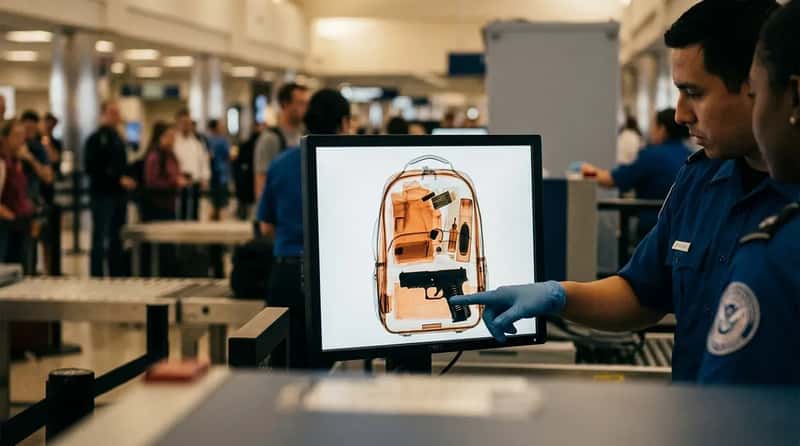
The most serious thing officers see is also the most routine. In 2024, TSA officers detected 6,678 firearms at airport checkpoints nationwide. About 94 percent of the guns caught in 2024 were loaded.
Nationwide, that was one firearm for every 135,384 passengers screened. The long-term trend is steep, with gun interceptions at airports up 152% since 2015. TSA has pointed to the rise of permitless carry laws as a connection.
And the excuse officers hear next is almost always the same, as #10 explains…
#10 – “I Forgot It Was in There” Doesn’t Erase the Consequences
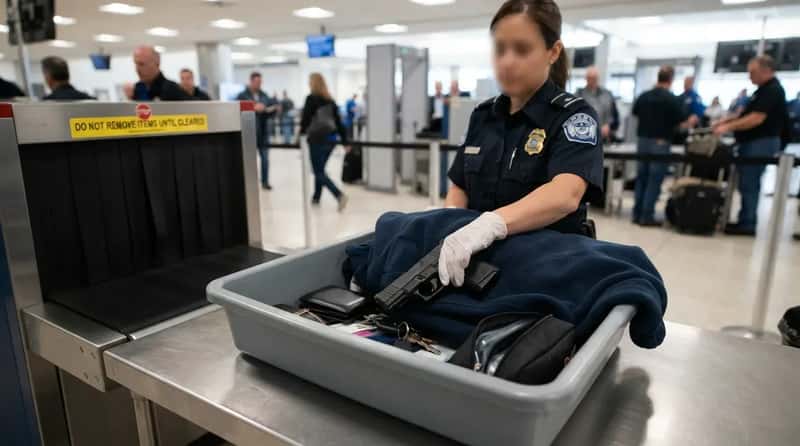
Officers hear that sentence constantly, and it doesn’t undo the problem. Firearms can only be transported on a commercial aircraft if they are unloaded, packed in a locked, hard-sided case, and placed in checked baggage. Even replica firearms are prohibited in carry-on baggage.
The penalties pile up. Violators can have TSA PreCheck eligibility revoked for up to five years and receive enhanced screening on future trips. Reported fines run up to $12,210, with possible criminal charges. What happens to the traveler is up to the airport’s law enforcement agency.
Worth Knowing
- Guns belong in checked bags only: unloaded, in a locked, hard-sided case.
- Replicas are banned from carry-ons too.
- PreCheck eligibility can be pulled for up to five years.
- Reported fines reach $12,210, and criminal charges are possible.
Where you fly changes how often officers see this, which #9 makes clear…
#9 – Some Airports Set Gun-Detection Records While Others Barely Notice
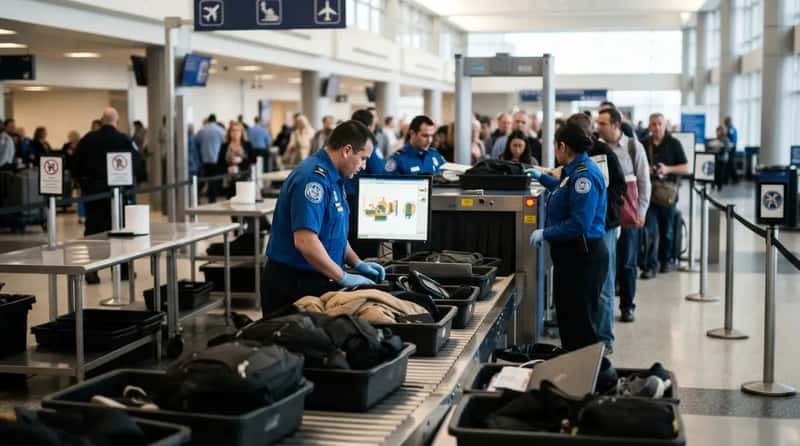
Where you fly changes what officers deal with. In 2024, BWI caught 47 handguns, Reagan National 41, and Dulles 29, and each airport set a record for a single year. Across the National Capital Area, TSA intercepted 117 handguns, an 11% jump from 2023.
Small airports can spike too. Hollywood Burbank found three loaded guns in carry-ons in May 2025 alone, after finding only six in all of 2024. Florida, on the other hand, saw 817 in 2024, down from 834 the year before.
Now step into the lane beside yours, where the clock ticks differently in #8…
#8 – The Line Next to You Is Running on a Different Clock
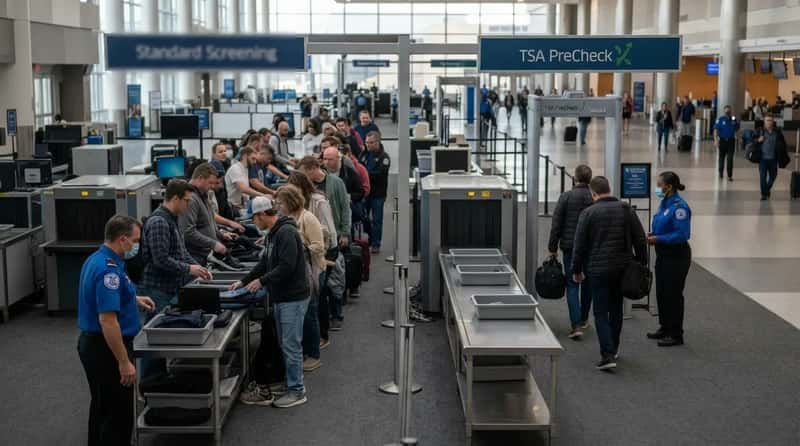
Not every lane has the same promise. TSA aims to keep PreCheck waits under 10 minutes, versus under 30 minutes in standard lanes. That’s a threefold gap in the stated goals.
The difference also changes what you do at the belt. DHS has said PreCheck travelers don’t have to take off a belt or coat, or pull out laptops or compliant liquids. Whether PreCheck is worth the money is a real debate now that standard lanes keep shoes on too. Many frequent flyers say the gap has shrunk. Others say the target clocks still tell the story.
Even the goals depend on a guess about the crowd, and #7 shows how shaky that guess can be…
#7 – The Official Crowd Forecasts Get It Wrong Both Ways
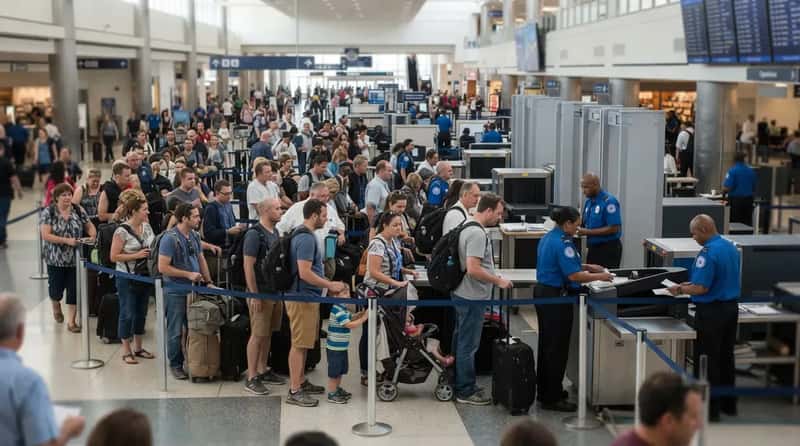
Even the experts can’t predict the line perfectly. TSA projected 44.3 million travelers for the 2025-26 winter holidays. The actual total was nearly 45.0 million.
Then summer went the other way. TSA screened about 18.3 million travelers over the 2026 Independence Day period, short of its 18.7 million projection, and no day reached 3 million. The “record crowds” headline isn’t always right. Officers staff to a prediction, and the prediction is a guess.
Quick Compare
- Winter 2025-26: 44.3 million projected, nearly 45.0 million actual. The crowd beat the forecast.
- July 4, 2026 period: 18.7 million projected, about 18.3 million actual. The crowd fell short.
For parents with a stroller and a screaming toddler, though, someone finally built something just for them in #6…
#6 – A Lane Built Just for Strollers, Snacks, and Meltdowns
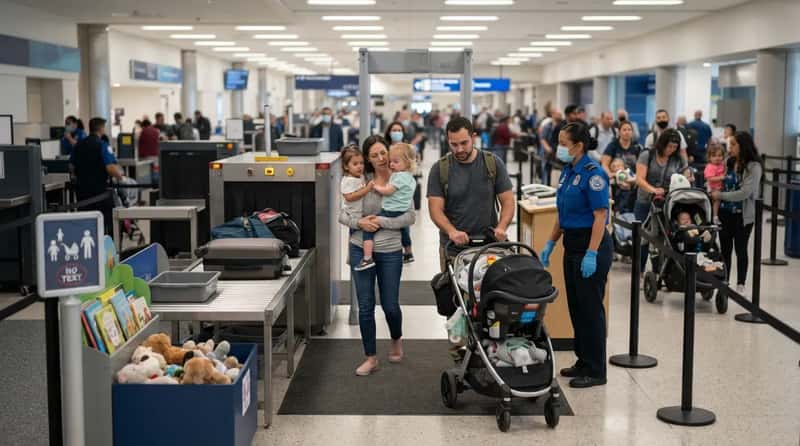
Someone finally designed a lane for the chaos of traveling with kids. TSA launched the “Families on the Fly” campaign, with dedicated family lanes at select airports.
The key word is select. Not every airport has one, so don’t assume yours does. Parents will tell you the real stress isn’t the scanner, it’s the stroller, the car seat, and the line behind you. A lane that expects that mess is a quiet but telling change.
Zoom out to the biggest events on the calendar, and checkpoints get rebuilt on the fly in #5…
#5 – Stadium-Sized Events Are Rebuilding Checkpoints in Real Time
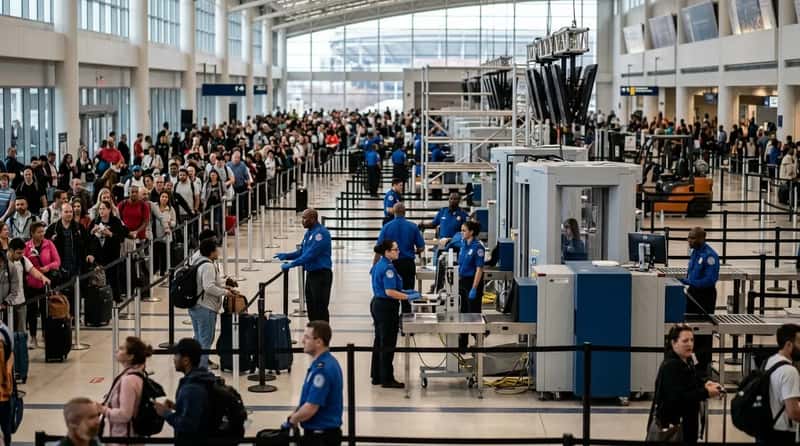
Big national moments don’t just fill planes. They change the machines. TSA said it implemented significant technology enhancements at key airports for the 2026 FIFA World Cup and for America 250 celebrations.
TSA’s own pitch is bold. Its leadership says travelers are experiencing faster screening lanes and enhanced technologies. The agency was also candid about the pressure. Officials told Congress TSA didn’t have the luxury of time to prepare for World Cup passengers.
One experiment could move the checkpoint away from where you expect it, in #4…
#4 – Boston Is Testing a Way to Skip the Traditional Checkpoint
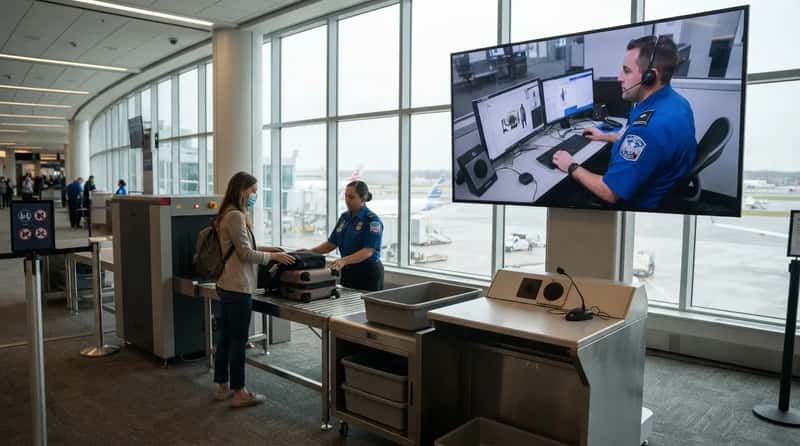
The checkpoint itself may not stay where you expect. On June 1, 2026, TSA launched a remote screening pilot program at Boston Logan, billed as a first-in-the-nation remote screening option.
Details are still thin in public announcements, so it’s worth reading TSA’s own page before drawing conclusions. It’s a pilot, not a nationwide rule. But the direction is clear: the agency is trying ideas that would have sounded strange a few years ago. If it works, the line in front of you could someday look very different.
At a Glance
- Launch date: June 1, 2026.
- Location: Boston Logan.
- Billed as the first remote screening option of its kind in the nation.
- Status: a pilot program, not a nationwide rule.
Not every squeeze happens at a giant hub, as #3 proves…
#3 – Even a Mid-Sized Airport Is Setting Records
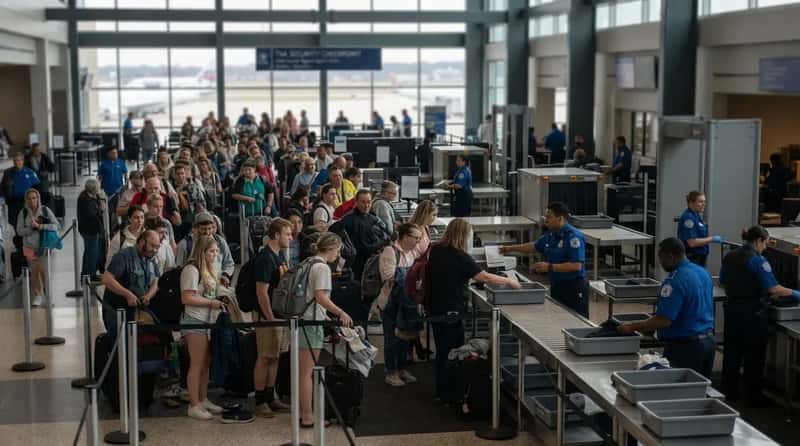
The crush isn’t only at the giant hubs. Dane County Regional Airport in Madison, Wisconsin, screened 123,795 people in March 2026, the highest March total in its history. That followed a new all-time passenger record at the airport in 2025.
The surge reaches places most people don’t associate with long security lines. A spring break week can feel like a holiday peak. Officers at a regional checkpoint often work the same kind of pressure as a major hub, just with fewer lanes to spread it across.
And over one long holiday weekend, the crowd grew to the size of a major city in #2…
#2 – A Single Holiday Weekend Pushed 10.4 Million Through the Door
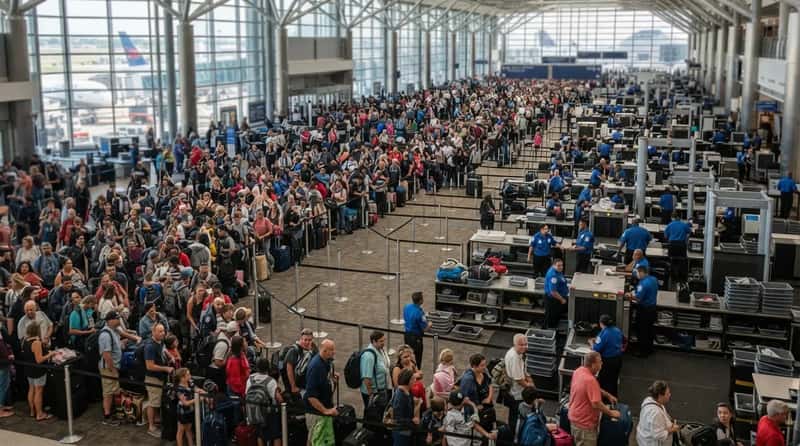
Four days, one huge number. TSA screened nearly 10.4 million travelers from Friday through Monday of the 2025 Labor Day weekend.
That’s about the population of a major world city, moving through checkpoints in a long weekend. Officers don’t get a holiday from that crowd. They’re the reason it moves at all. The next time a checkpoint feels slow on a holiday, remember the scale of who’s in it.
But the hardest part of the job shows up when the paychecks stop, in #1…
#1 – Officers Kept Showing Up Through a 43-Day Shutdown
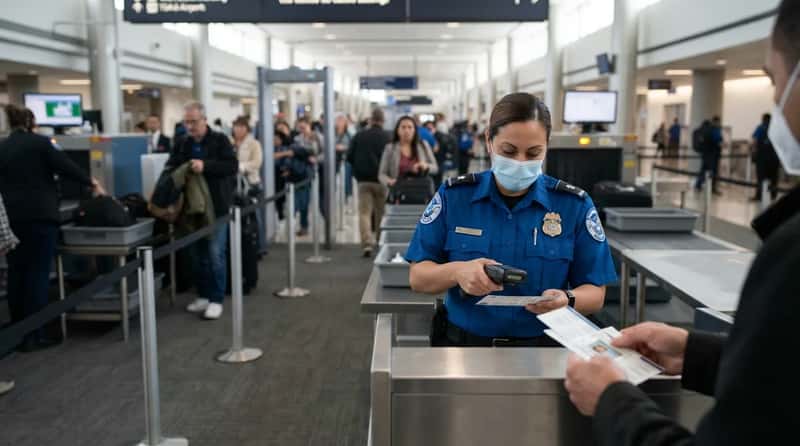
The hardest thing to say out loud may be what the job costs. TSA’s testimony says its frontline workforce reported to work through the recent 43-day shutdown, keeping operations running. The agency continues to screen around 3 million passengers on peak days even during a shutdown.
The strain showed up locally too. A Madison airport director publicly thanked the local TSA team for handling record volume while they weren’t being paid. The person scanning your boarding pass is part of a national security agency, and sometimes they’re doing it without a paycheck.
The line in front of you is bigger, stranger, and more tense than it looks. It handled 906.7 million people in 2025, lost its shoe rule, added a $45 ID fee, and turns up thousands of loaded guns a year.
Next time you’re shuffling toward the belt with your boarding pass in hand, remember that the line isn’t just a delay. It’s a small country on the move, and the people holding it together rarely get to say a word about it.