On paper, the Grand Loop looks like the easiest road trip in America. It’s about 142 miles, which sounds like a pleasant drive with lunch at the end. Then visitors get on the road and find out the mileage is the least important number on it.
The speed limit, the gate, the bridges, the phone signal and even the calendar all work against that tidy plan. A few of these surprises are small annoyances. One of them explains why the whole road feels so slow, and it isn’t what most people guess. Here’s what the park’s own road information and trip guides actually say.
#17 – The “Loop” Is Really a Figure Eight, and the Math Won’t Add Up
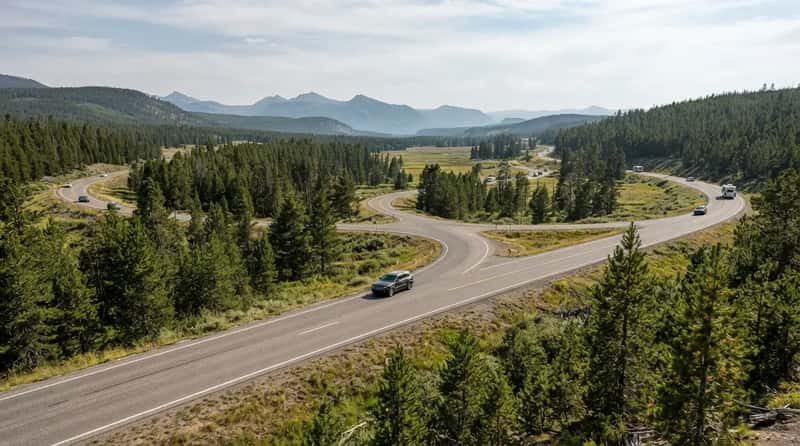
Most people picture a neat ring around the park. It’s actually two loops joined in the middle. The two loops share a stretch of road, so the numbers for each half don’t add up to the total.
At a Glance
- Upper Loop: about 70 miles
- Lower Loop: about 96 miles
- Full Grand Loop: about 142 miles
- Crossing between the two circles: roughly 20 to 30 minutes, per one guide
The shape is useful, because you can stop at the halfway point without missing the point of the trip. Drivers who treat it like a ring road often don’t notice the crossover until they’re already committed to the second half. And the shape isn’t the thing that throws people most. The speed is.
#16 – That 45 mph Limit Is the Ceiling, Not the Norm
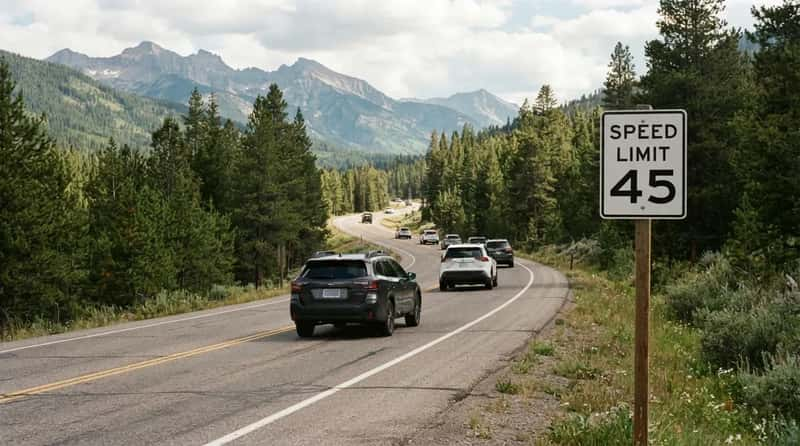
If you’re hoping to make up time on the straightaways, there aren’t many. The speed limit is 45 mph at most, and many stretches drop to 25 or 35. Cruise control turns out to be nearly useless here.
One park-photography writer calls 142 miles at 35 to 45 mph a lengthy drive, and that’s before a single stop. Most first-timers burn their first hour just recalibrating what “highway speed” means.
But that’s nothing compared to what your GPS is hiding about #15…
#15 – Your GPS Says 30 Minutes. Reality Says an Hour.
Navigation apps do the math with a normal road in mind. Yellowstone isn’t one. A road-trip guide gives a blunt rule of thumb: allow twice the time your GPS suggests, so a 30-minute drive becomes an hour.
The reason is simple. Drivers brake for scenery, for pullouts and for animals standing where they please. The estimate that matters most on this loop isn’t the one on your screen. The same guide warns that you’ll be stopping constantly. That’s also why “how long does the whole loop take” has such a messy answer, as #14 shows.
#14 – The “Whole Loop in One Day” Plan Is the Most Argued-Over Move in the Park
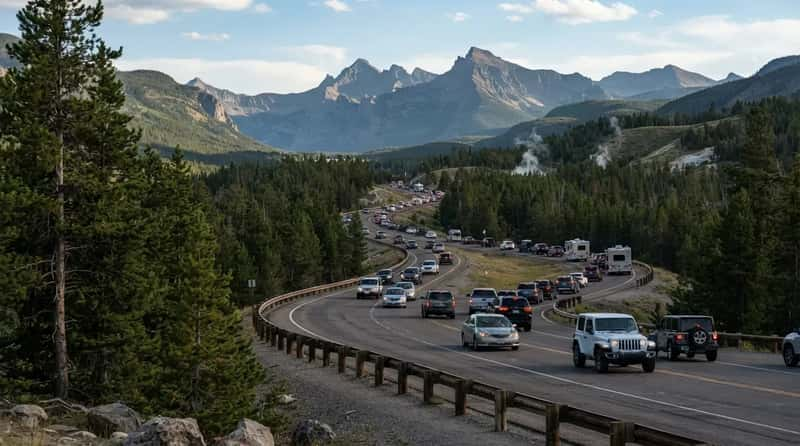
Plenty of travelers swear a single-day loop is the smart way to see everything. Others call it the fastest way to see nothing properly. One guide says the full Grand Loop takes between 4 and 7 hours to drive. Another puts the entire figure eight at 7 to 8 hours.
Those are driving hours, not sightseeing hours. A separate guide answers whether it can be done in a day with “Yes, but it’s exhausting.” You can technically finish the loop and still have almost no time left to get out of the car.
And before you even reach the loop, there’s a drive you probably haven’t counted, which brings us to #13…
#13 – Your Loop Day Can Start With a Two-Hour Drive Before Mile One
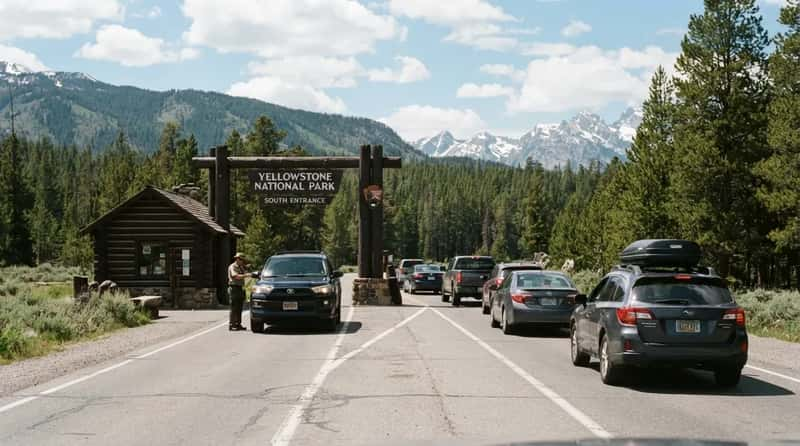
The loop sits in the middle of the park, so you have to get to it first. The five entrance roads can take an hour or more on their own. That time almost never shows up in anyone’s daily plan.
The South Entrance is a good example. From Jackson, Wyoming, it’s 58 miles, and visitors should allow one and a half to two hours. That means your “loop day” may begin with a long drive just to reach the loop. Then comes the gate, and for some families it holds a bigger surprise than the road does.
#12 – The $100-Per-Person Gate Surcharge Catches International Families Off Guard
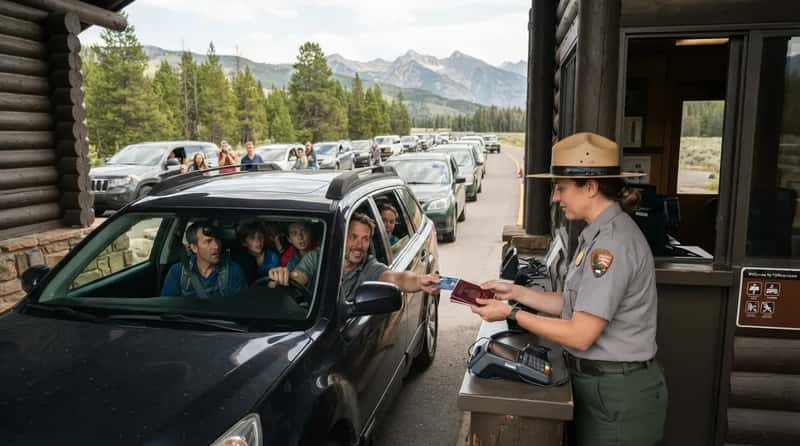
For most U.S. drivers, the fee is simple. It’s $35 per private vehicle, covering everyone in the car for seven days. There are no timed-entry reservations to deal with.
The twist applies to international visitors. Non-U.S. residents pay a $100 per person fee in addition to the standard entrance pass. The surcharge is waived for holders of an Annual or America the Beautiful Pass, according to the park’s fee page. It stings because it’s charged per person, not per car.
Pay the fee, get through the gate, and you still have a bigger problem ahead, outlined in #11…
#11 – Road Work Is Basically Part of the Route
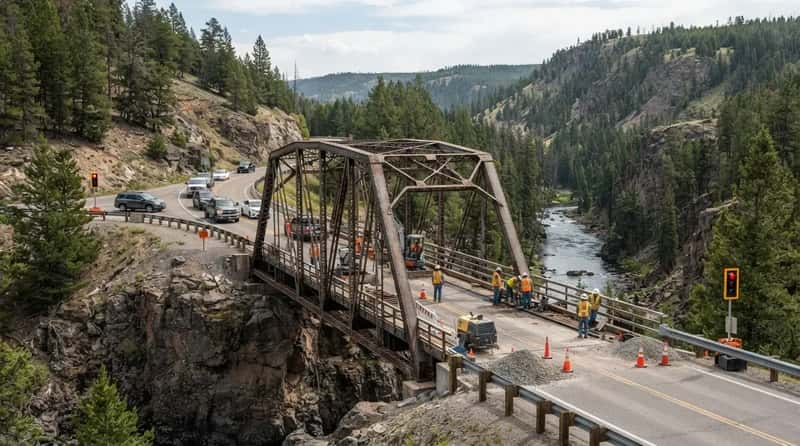
Yellowstone’s season is short, so repairs happen while visitors are driving. The 2026 projects included the Gardner River High Bridge, the Yellowstone River Bridge, the Bridge Bay Bridge, the Firehole River Bridge and parkwide chip sealing, with delays of 15 to 30 minutes. Those minutes add up fast over a loop day.
Some zones were locked in for months. The Gardner River High Bridge near Mammoth had single-lane traffic with delays of up to 15 minutes, around the clock, from April through late October 2026. A bridge-work zone between Fishing Bridge and Bridge Bay had delays of up to 15 minutes through November 1, 2026, according to a lodging alert. Then there’s the repair work that doesn’t just slow you down, which is #10.
#10 – Fresh Chip Seal Can Fling Gravel at Your Windshield
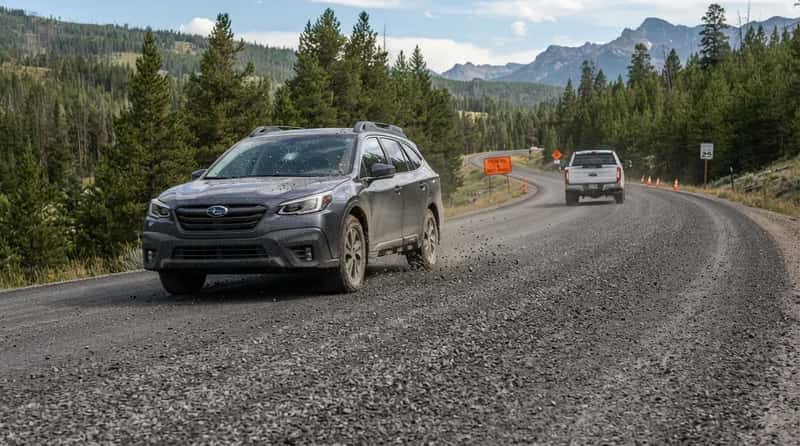
Every summer, crews seal the cracks in park roads. It protects the pavement, but it makes a mess for drivers. Reports say chip sealing happens every year and can mean delays of up to 30 minutes.
The loose stone is the real catch. One road guide warns drivers to go slowly and keep to the recommended speed to reduce the risk of gravel damaging cars or windshields. A freshly sealed stretch that looks harmless can end with a cracked windshield.
Of course, you can’t Google the repair schedule if your phone has no signal, and that’s #9…
#9 – Your Phone Turns Into an Expensive Paperweight
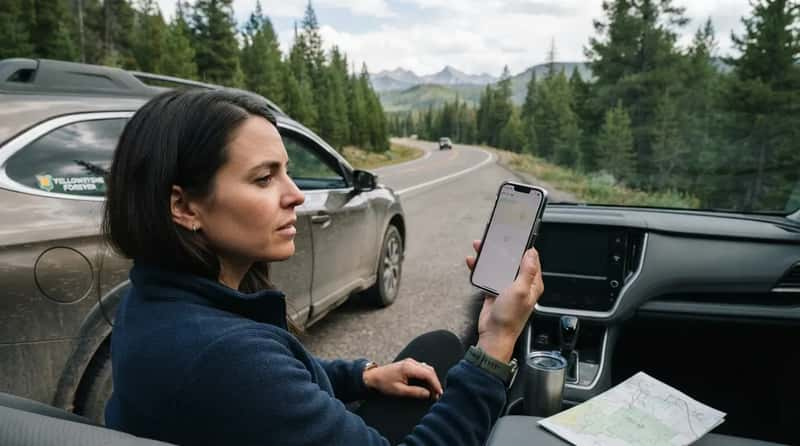
Many visitors assume their phone will work like it does at home. The park says otherwise. Cellular service in Yellowstone is extremely limited.
Service is tied to a few towers, so coverage comes in patches. Between those spots, many drivers lose signal without warning. Another guide says texting is usually the most effective way to communicate in the park. Download your maps before you go.
Worth Knowing
- Towers serve Mammoth Hot Springs, West Yellowstone, Old Faithful, Grant Village, Lake Village and Mount Washburn.
- Those towers cover most developed areas plus the North and West entrances.
- Texting tends to go through when a call won’t.
- Offline maps beat live navigation here.
#8 – Gas Is Available, but Not Where You’d Guess
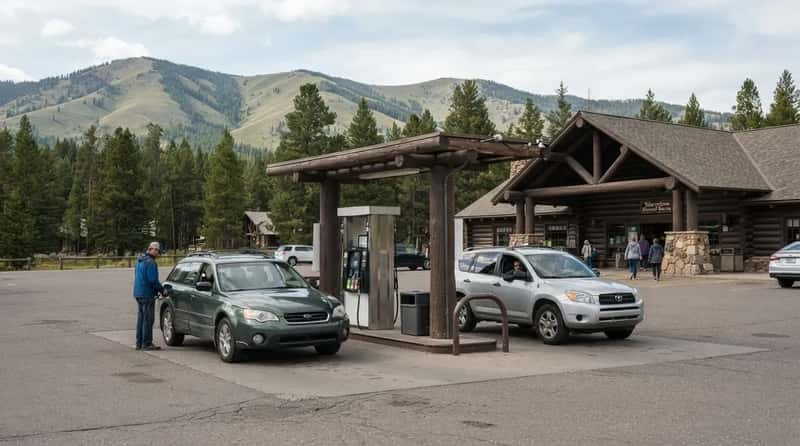
You won’t be stranded, but you do have to plan. The park’s services page lists gas stations at Canyon Village, Fishing Bridge, Grant Village, Mammoth Hot Springs, Old Faithful and Tower Junction. That’s six locations spread across a 142-mile road.
Prices are the other shock. One guide says it’s smart to fill up in a gateway town like Gardiner, West Yellowstone or Cody first, and adds that fuel in the park can cost more. Some travelers say the higher price buys peace of mind, while others call it an easy way to waste money.
Even with a full tank, there’s one thing you can’t buy inside the park, and it’s #7…
#7 – There’s No Shuttle to Bail You Out
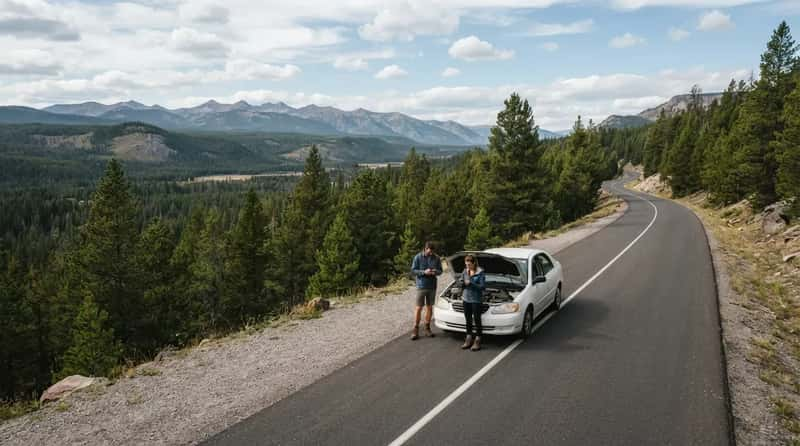
Many visitors assume there’s a bus loop like in other big parks. There isn’t one. A driving guide says plainly that you need a car to see Yellowstone, because the park has no shuttle system.
Bikes don’t solve it either. One Yellowstone travel site says recreational bicycle riders may find the park’s roads unsafe, aside from a few paved trails. If your car has a problem, you can’t just hop on something else and keep going. That’s one more reason the rhythm of the loop, in #6, matters so much.
#6 – The Big Stops Are Spaced Like a Slow-Motion Schedule
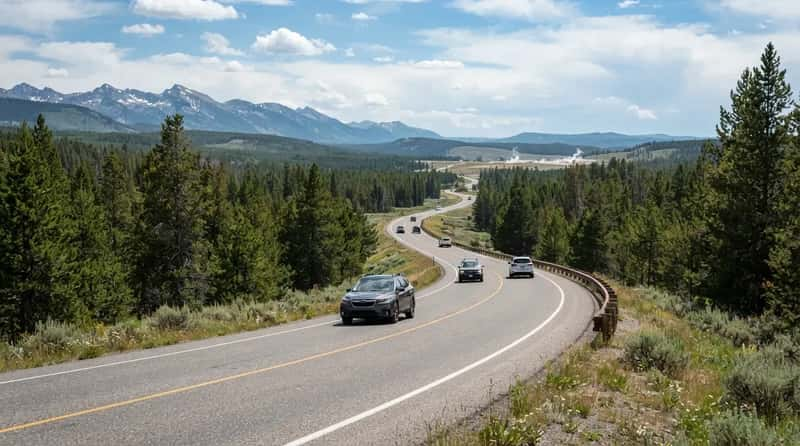
The major hubs are farther apart than they look on a map. One guide counts four major stops on the Upper Loop and six on the Lower Loop, roughly 15 to 20 miles apart. That sounds close until you remember the speed limit.
The same guide’s planning advice is blunt. It suggests allowing about 30 minutes of driving between major stops. Four stops can use up two hours of road time before you’ve gotten out of the car once.
Plan all of that perfectly, and you can still be a month early, as #5 reveals…
#5 – The Full Figure Eight Doesn’t Exist Until Late May
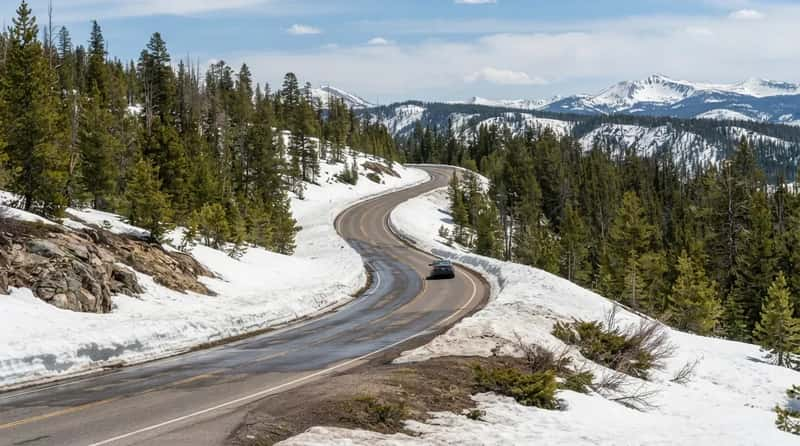
A spring trip can mean half a loop. The park opens roads in stages, so nothing is fully open on day one. Here’s how the projected 2026 schedule stacked up.
Quick Compare
- West Entrance: April 17
- East Entrance: May 1
- South Entrance: May 8
- Lower loop, finished with Craig Pass: May 8
- Full figure eight, finished with Dunraven Pass: May 22
The complete loop waits on the high passes, and weather can change even those dates: in April 2026, a winter storm delayed the planned April 17 openings. Late in the year, the same thing happens in reverse, as #4 shows.
#4 – The High Passes Close Weeks Before the Rest of the Park
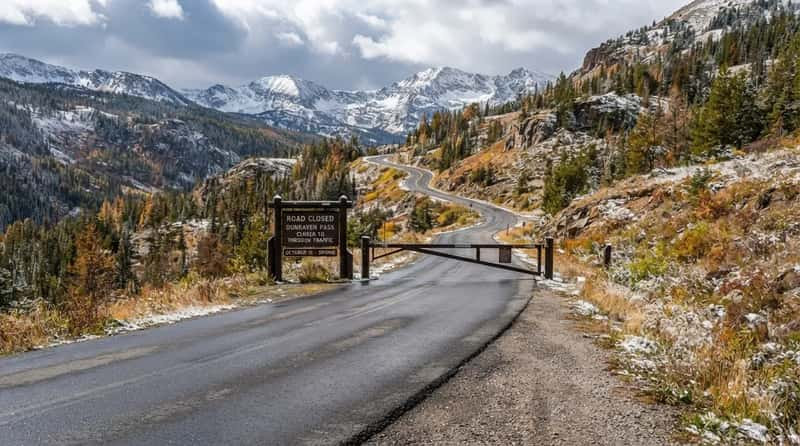
Fall travelers often assume the roads stay open until snow physically stops them. The schedule is actually firmer than that. In 2026, high passes closed October 12 and most roads closed October 31.
Dunraven Pass is the one that matters most to the loop. It links Canyon Village and Tower-Roosevelt, and in 2026 it was open from May 22 to October 12. After that date, the upper loop can’t be completed as a full circuit. A mid-October trip is a gamble most guides rarely mention.
After the last gate closes, though, the park gets even stranger, and that’s #3…
#3 – By Early November, the Loop Is Closed to Cars
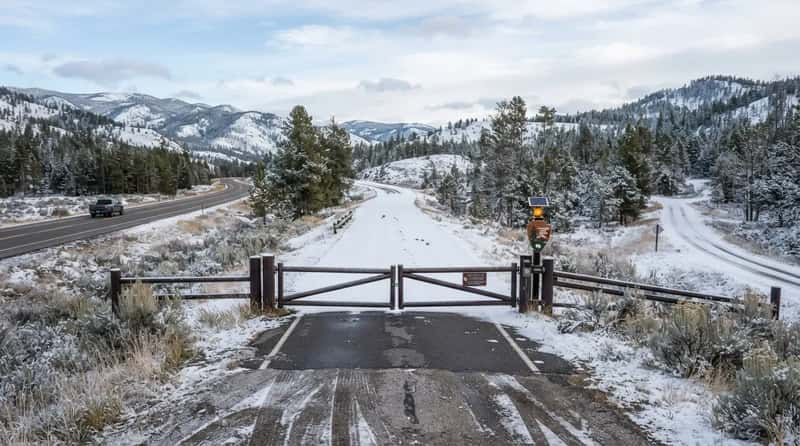
This is the part nobody pictures. In winter, the park’s roads normally leave just one driving corridor, from Gardiner through Mammoth and Tower Junction to Cooke City. The rest of the Grand Loop goes dark for cars.
Exact closing dates vary a little each year. Most interior roads close to cars from early November to late April. The “full park loop” simply isn’t a driving option for much of the year. And when the park is open, the traffic jams look nothing like what you’d expect.
Wait until you see what actually causes the traffic, in #2…
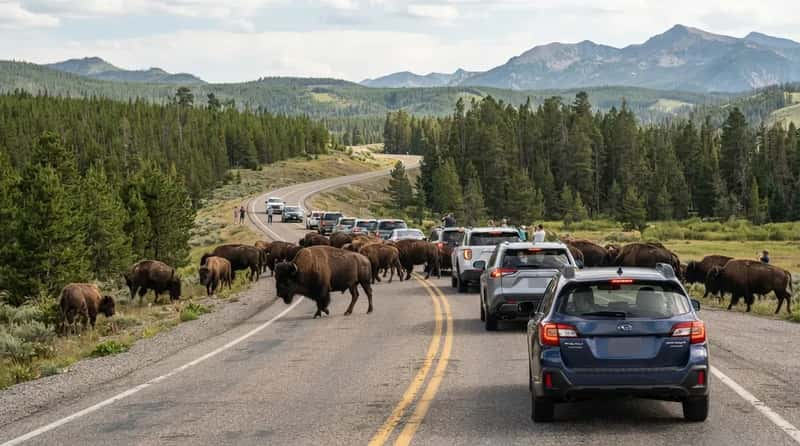
#2 – The Slowest Vehicle on the Loop Has Hooves
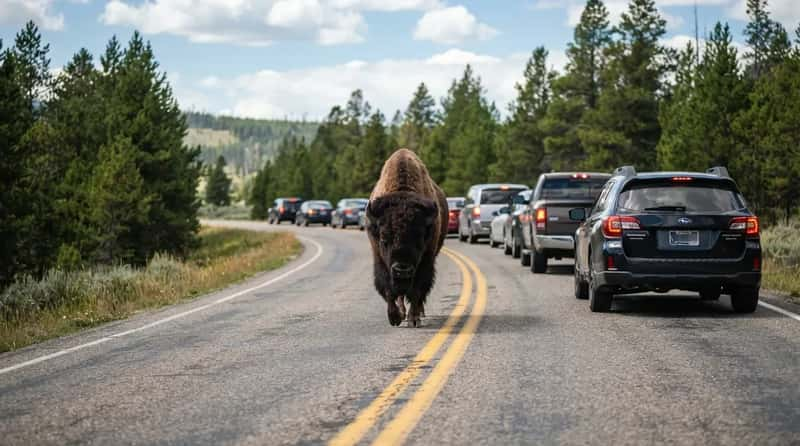
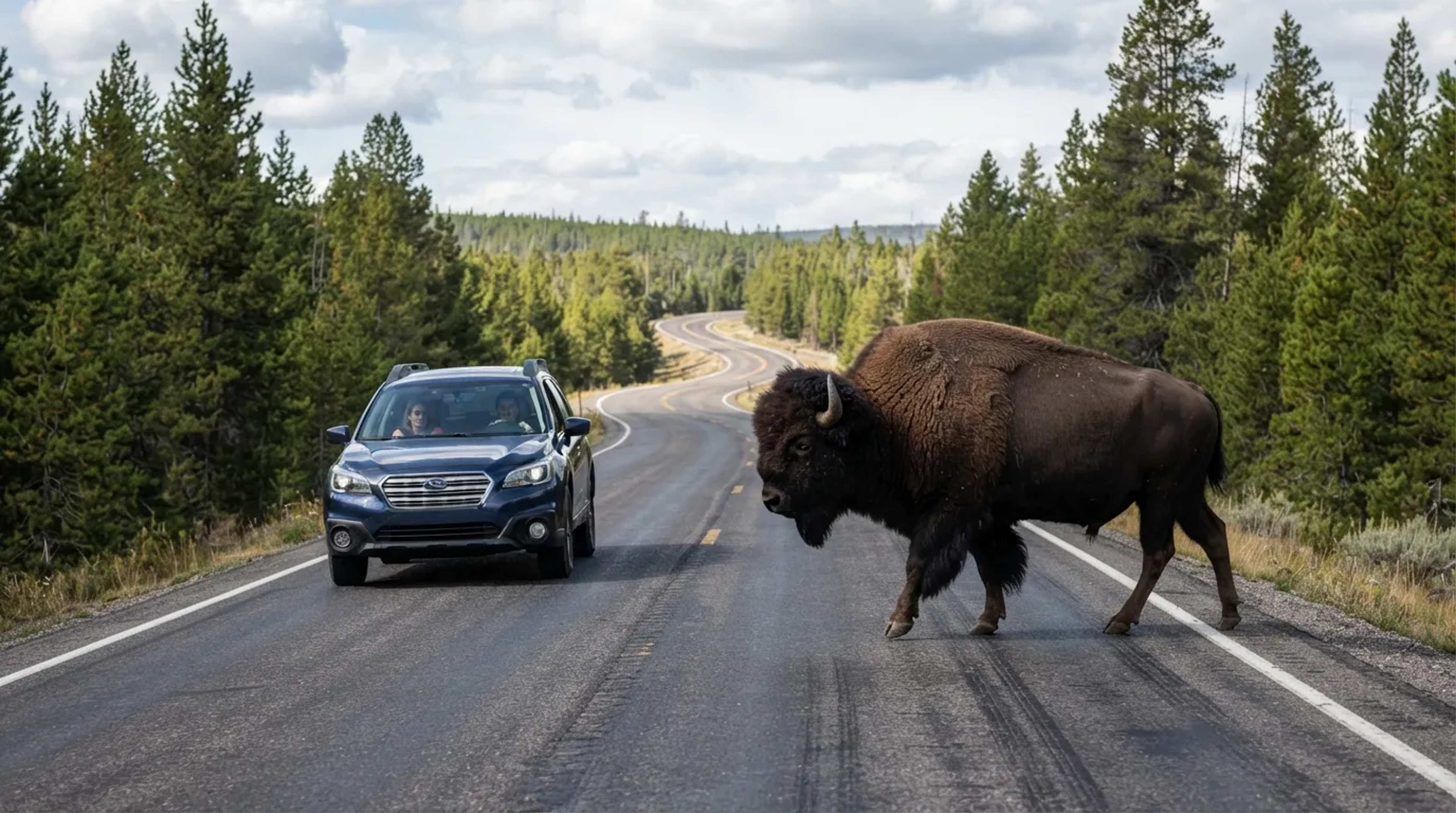
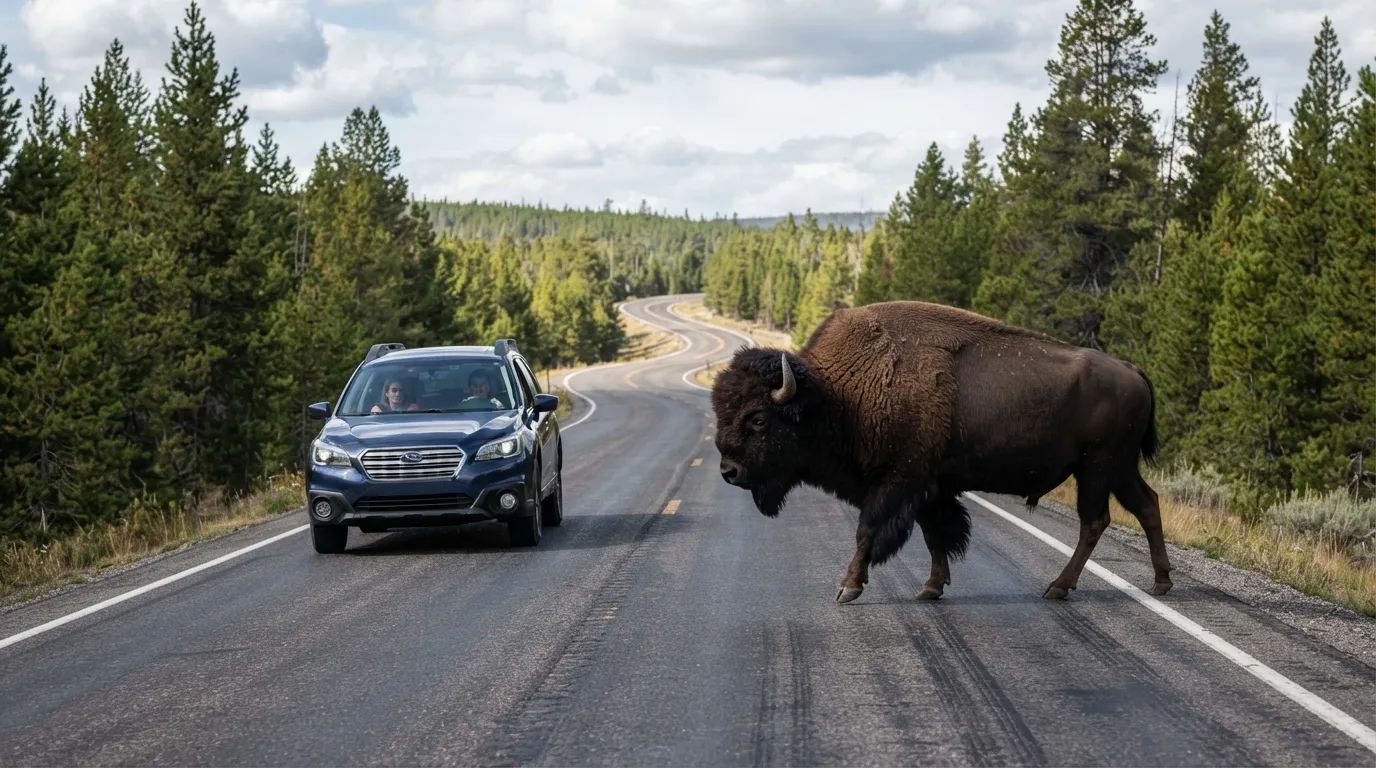
Many people expect construction or crowds to cause the worst delays. Often it’s a bison strolling down the center line. One road guide notes that bison, bears and other wildlife don’t obey traffic laws or speed limits.
That’s why “stopped traffic due to wildlife” is a standard part of the loop. One travel site says scenery and animals in or near the road can slow everything down. Park rules on distance still apply, even when the animal is the one blocking your lane. In a jam, that means cars crawl and wait, sometimes for a very long time. The more serious side of all this speed and wildlife is #1.
Fast Facts
- Stay at least 25 yards from bison and most other wildlife.
- Stay at least 100 yards from bears and wolves.
- The speed limit tops out at 45 mph, with many stretches at 25 or 35.
- Wildlife jams are a normal part of the loop, not a rare event.
#1 – The Speed Limit Is Strict for a Reason You Don’t See
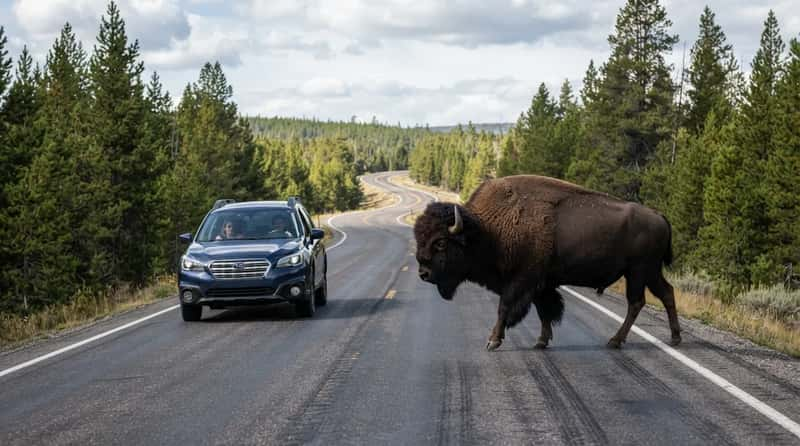
That 45 mph ceiling isn’t just a suggestion. One road guide says the limit is strictly enforced and that most animal deaths in the park involve vehicle accidents. That’s the part visitors rarely hear before they arrive.
So the slow pace isn’t just an inconvenience. It’s the safety margin, for the animals and for you. A bison stepping onto the road gives you very little time to react. The loop can feel like a maze of delays, but those delays are part of what keeps people and wildlife from harm.
On paper, the Grand Loop is 142 miles. In real life, it’s measured in bridge delays, bison traffic and the number of times someone in the back seat yells “pull over!”
Maybe that’s the part nobody can explain beforehand. Did the 4-to-7-hour estimate hold up on your trip, or did a bison stretch it?