

Yosemite has always been the park everyone talks about, and lately that reputation has come with a price. 2025 saw 4.27 million visitors for Yosemite, nearly as many as before COVID-19. Then, just as things seemed to stabilize, Yosemite Superintendent Ray McPadden announced that the NPS would do away with reservations in 2026, and the federal government eliminated Yosemite National Park’s entry reservation system for 2026, leading to gridlock, towing, and massive lines.
None of this means the Sierra Nevada or the rest of the national park system suddenly lost its appeal. It just means the smart move in 2026 is looking a little further down the map. These six parks offer granite, glaciers, deep canyons, and ancient trees without the parking apocalypse Yosemite has become known for.
1. Sequoia & Kings Canyon National Park, California
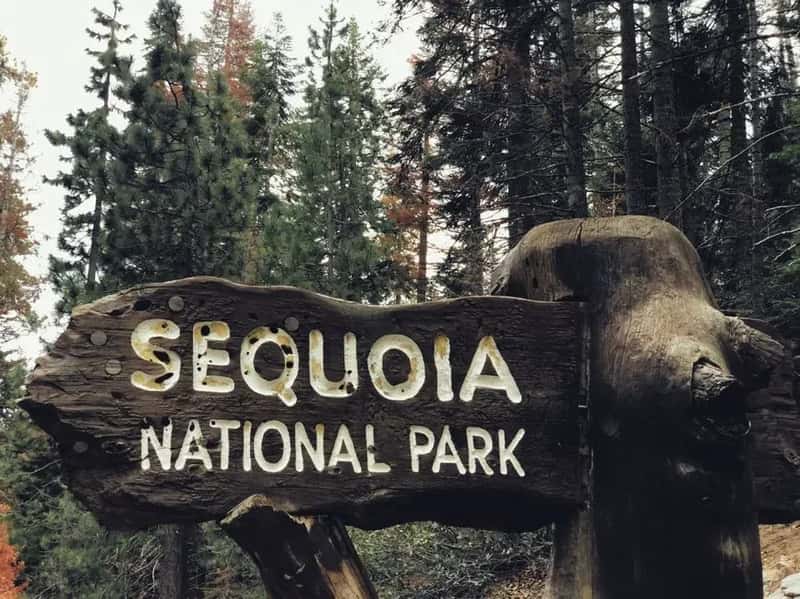
If you want Yosemite’s granite without Yosemite’s gridlock, Sequoia and Kings Canyon sit right next door in the same mountain range. These joint reserves sit southeast of the soaring Half Dome, in the very same mountain range as Yosemite Valley, and share many of the national park’s jaw-dropping natural wonders. The parks also hold their own record breaker: together they cover a mind-boggling 865,964 acres and encompass the peak of Mount Whitney, the highest point in the continental United States.
The numbers tell the crowd story clearly enough. A new National Park Service report shows a record 2,008,962 visitors to Sequoia and Kings Canyon National Parks in 2024, spending $192.5 million in communities near the park. That is still less than half of what Yosemite absorbs in a single year, and it comes with a bonus most visitors never expect. Sequoia and Kings Canyon’s Grant Grove is a mighty wonder that includes the second-largest tree on the planet, surpassing any located in nearby Yosemite’s Tuolumne or Mariposa groves. Best of all, the parks are only a three-hour drive, give or take, from Yosemite, so it works well as a standalone trip or a quieter add-on.
2. North Cascades National Park, Washington
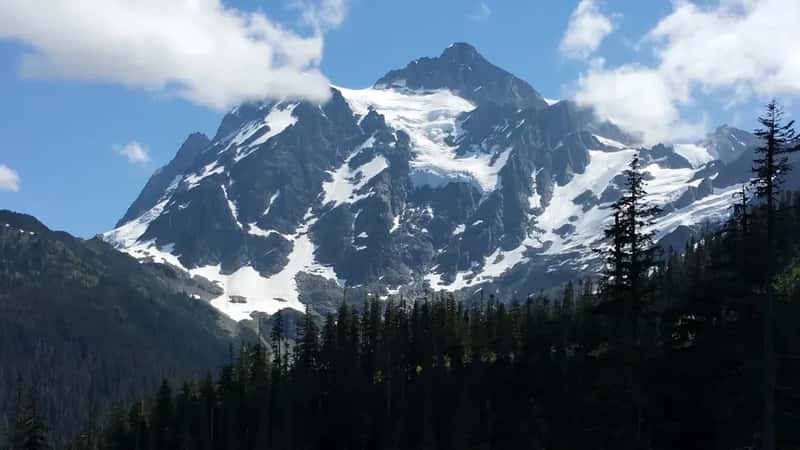
North Cascades gets compared to Yosemite far less often than it should, mostly because it sits quietly in Washington State rather than trending on social media. North Cascades, in Washington, actually does alpine terrain a little better, with a horizon full of towering, jagged peaks where the Cascade Range is steep and rugged, and the highest peak in the park, Mount Baker, tops out at 10,781 feet. It also claims a title Yosemite cannot match. North Cascades has more glaciers than any other spot in the Lower 48, at around 300, and is punctuated with backcountry lakes and wildflower-covered meadows.
The visitation gap between the two parks is almost hard to believe. All of this grandeur is just three hours east of Seattle, and yet North Cascades National Park is one of the least visited parks in the contiguous United States, drawing just 46,925 people in 2025. That is roughly one hundredth of what Yosemite sees in a comparable year. For hikers chasing solitude among glaciers and granite spires, that math is hard to argue with.
3. Pinnacles National Park, California
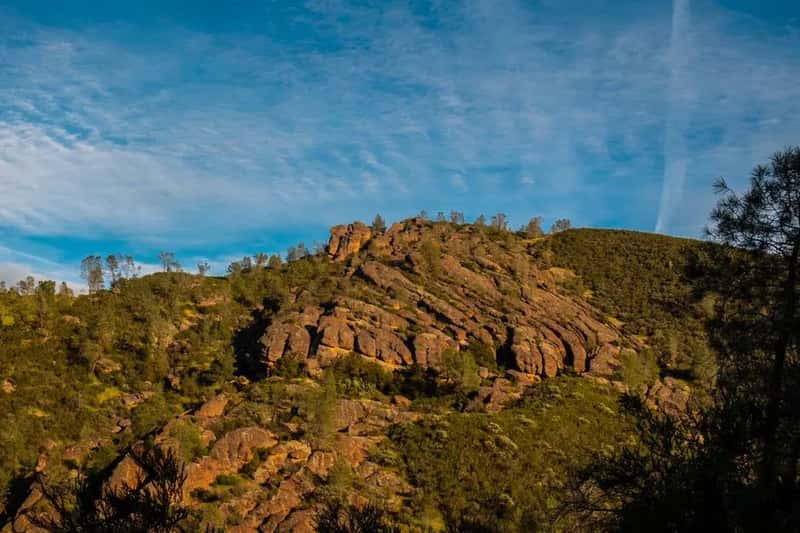
Pinnacles rarely comes up in the same sentence as Yosemite, yet it delivers a strange and photogenic version of the same rocky drama on a smaller, calmer scale. California’s newest national park is also one of its least visited, and just outside the wine country of Hollister, a landscape filled with caves and weird rock formations entices outdoor enthusiasts. The hiking here is compact enough for a single day but still rewarding, with underground detours built in.
What separates Pinnacles from a typical granite park is the wildlife overhead. Visitors can explore Bear Gulch Cave on a 2.2-mile hike, or get an elevated view across the park by hiking into the High Peaks, and Pinnacles Campground even offers an overnight option with a swimming pool, a rarity in a national park. Look up while you are there, because California condors make their home in the rocky crags of the High Peaks, and the largest birds in North America, with a 10-foot wingspan, can often be seen in the early mornings.
4. Great Basin National Park, Nevada
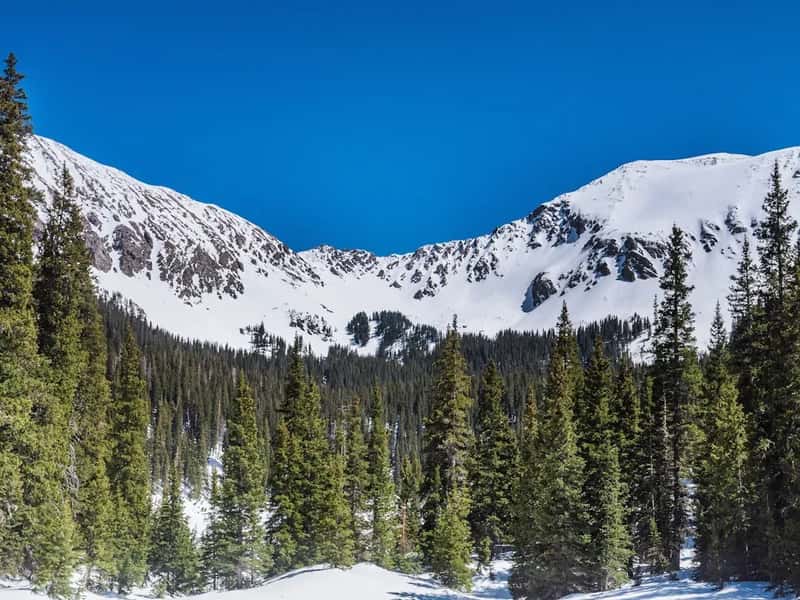
Great Basin is one of those parks people drive past on the way to somewhere else, which is exactly why it stays peaceful. Nevada’s only national park is a land of extremes, where visitors can go deep inside the Earth in Lehman Caves to see stalactites, stalagmites and other weird formations in the marble. The elevation swing here rivals anything in the Sierra Nevada.
From the caves, the park climbs to genuine high-alpine territory. Head high up to the base of 13,000-foot Wheeler Peak, where a short hike on the Bristlecone Pine Trail will take you past some of the oldest trees in the world. It also makes an easy pairing with a bigger Southwest trip, since less than 2.5 hours from Zion, you can easily add this quiet and marvelous spot to a Utah national park trip once you’ve tired of the crowds.
5. Guadalupe Mountains National Park, Texas
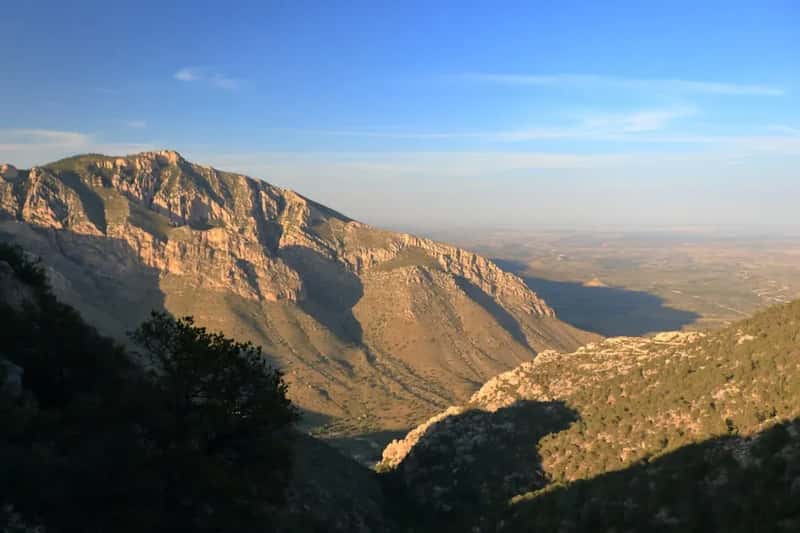
Few people associate Texas with dramatic mountain scenery, which makes Guadalupe Mountains one of the more surprising entries on any crowd-free list. Guadalupe Mountains National Park protects the world’s most extensive Permian fossil reef, the four highest peaks in Texas, an environmentally diverse collection of flora and fauna, and the stories of lives shaped through conflict, cooperation and survival. The landscape shifts dramatically within a short drive, moving from desert floor to forested canyon.
The signature outing is a true summit hike rather than a scenic overlook. Guadalupe Mountains National Park is a land of contrasts, with towering peaks, deep canyons, fall colors and white dunes, and a favorite hike is the 8.4-mile strenuous trek to the top of Texas’s highest point, Guadalupe Peak. It does have its own busy stretches, and in the fall and spring the park can fill to capacity, so a little planning around timing still pays off even here.
6. Wrangell-St. Elias National Park, Alaska
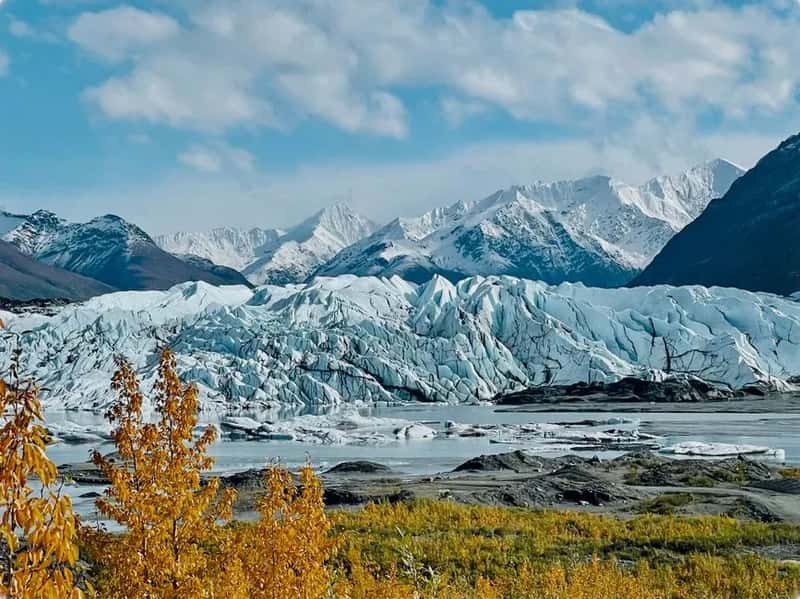
For sheer scale, nothing on this list, or arguably in the entire park system, compares to Wrangell-St. Elias. Wrangell-St. Elias is the largest national park in the United States, the size of Yellowstone National Park, Yosemite National Park, and Switzerland combined. Its geography reads like a list of superlatives rather than a typical park description.
The specifics back up the scale. With the second-highest peak in the country in Mount St. Elias, one of the largest active volcanoes in North America in Mount Wrangell, and a glacier larger than Rhode Island in the Malaspina Glacier, it offers endless opportunities to explore. Getting there takes more effort than a weekend at Yosemite, and since it’s relatively difficult to get to, Wrangell-St. Elias is best explored over a few days, with lodging options ranging from small historic hotels in old mining towns to remote backcountry lodges reachable only by bush plane.
Crowds at Yosemite are not going anywhere soon, especially now that entry limits have been lifted going into the 2026 season. The parks above are not consolation prizes. Each one holds its own geology, its own history, and its own reason to visit, and in most cases, a far shorter line at the trailhead.