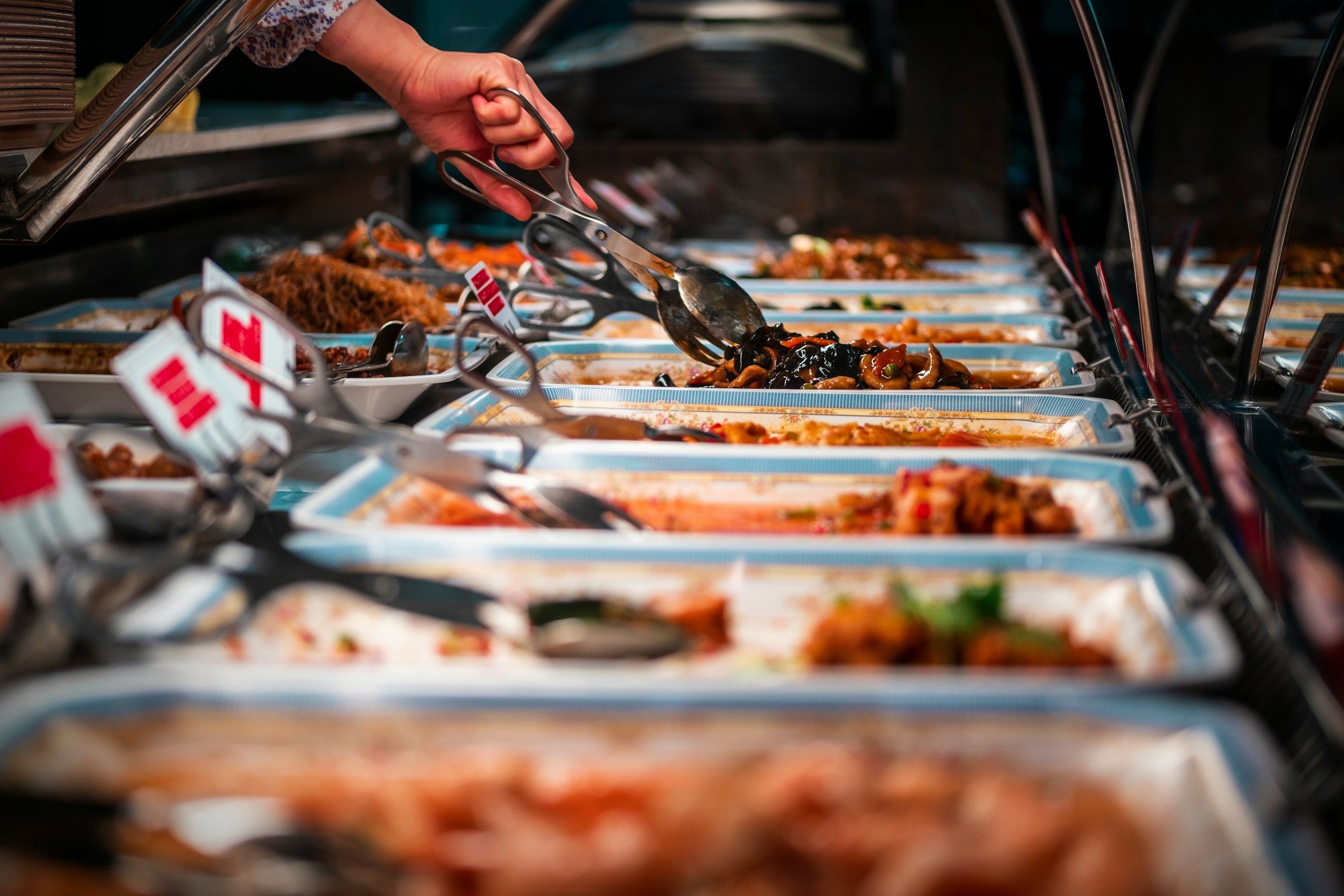
Walk into almost any hotel breakfast room between seven and nine in the morning and you’ll see the same quiet choreography: guests moving through the buffet line, coffee cups clinking, the low hum of a busy service window. Most of it runs smoothly because most guests follow the unwritten rules without thinking twice. But hotel managers and the staff working the chafing dishes notice the moments when those rules break down, and they’ve seen the same handful of habits repeat themselves in cities and countries far apart.
These aren’t rare disasters or viral horror stories, though a few of those exist too. They’re the small, everyday behaviors that quietly frustrate kitchen teams, slow down service, and occasionally cost hotels real money. Here’s what actually bothers the people running the show.
1. Piling plates far higher than anyone can finish
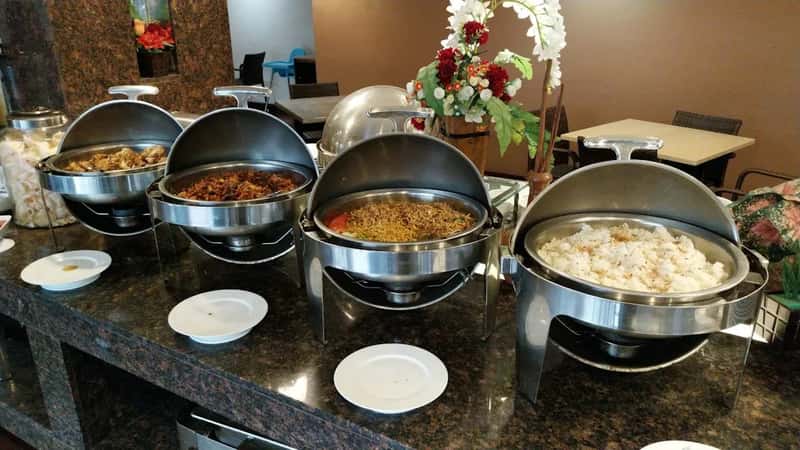
There’s a reason buffet plates keep getting smaller at some properties, and it isn’t just about controlling portions for health reasons. Researchers found that people eat 45 percent more and waste 135 percent more food at buffets using large plates compared to smaller ones.[1] That gap shows up every single morning in the form of half-eaten omelets and untouched pastries scraped into the bin.
The financial hit is bigger than most guests assume. In one five-star hotel study, each patron left behind an average of 300 grams of food at breakfast and 400 grams at dinner, of which 92 percent was considered avoidable waste, and plate size matters more than most guests think, since people eat 45% more and waste 135% more food at buffets with large plates than at those with smaller plates.[2] Kitchen staff prep for volume based on past patterns, so when plates come back stacked and barely touched, it throws off both cost and morale.
2. Smuggling food out of the dining room
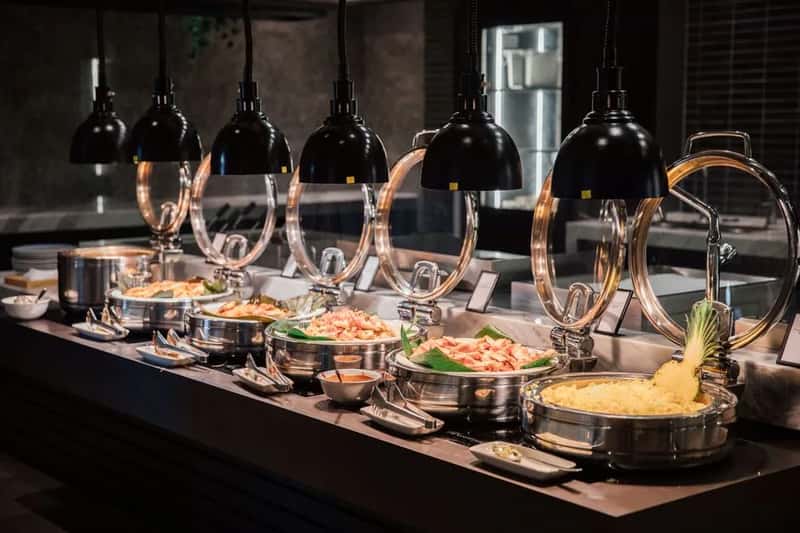
This one is more common than most travelers would admit out loud. A Hotels.com study conducted with 2,000 British adults found that one in three hotel guests admit to smuggling food from the breakfast buffet to snack on later in the day.[3] Muffins wrapped in napkins, extra yogurt cups tucked into a bag, fruit slipped into a jacket pocket, staff have seen it all.
Housekeeping staff often know exactly who these guests are, because the evidence tends to turn up in the mini-fridge or wrapped in a napkin on the desk.[3] It isn’t just about optics, either. Hotels frown on this practice because they could lose money if everyone loaded up their plates with several meals’ worth of food and walked it out the door, and most hotels already have policies in place that clearly state “no leftovers,” with some charging extra for taking food out of the dining area.[3]
3. Moving serving utensils between trays
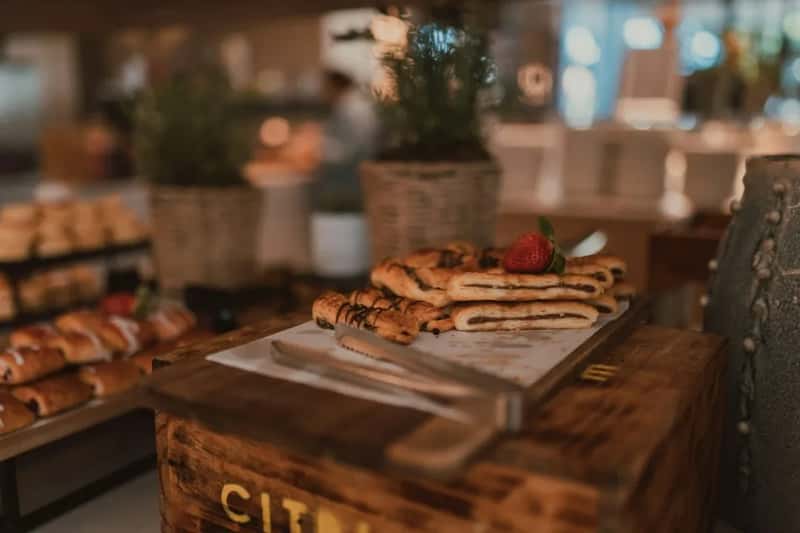
It seems harmless enough. You grab the tongs from the bacon tray because the pancake server is missing, and you figure nobody will notice. Staff notice immediately, and for good reason.
Moving the bacon tongs into the pancake tray seems like a small convenience, but it’s a cross-contamination risk hotels take seriously, especially for guests with allergies.[1] Etiquette experts are specific about this one: never move a serving utensil from one tray to another unless there’s genuinely no other option.[1] For a guest managing a gluten intolerance or a nut allergy, that swapped spoon isn’t a minor inconvenience, it’s a real health risk.
4. Camping at a table long after the plates are empty
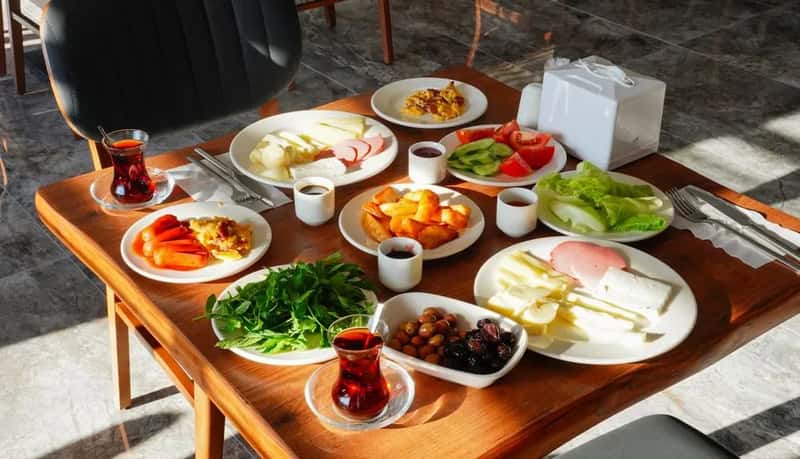
Breakfast service windows are tight, usually two hours at most, and every table matters when the room fills up fast. Managers rarely say anything in the moment, but the frustration is real. During a two-hour breakfast window, a table claimed at 7 a.m. and held until 9:45 creates a real bottleneck for everyone else, and managers say this is one of the quiet frustrations they rarely mention out loud, because confronting a guest over a table feels petty even when the problem is real.[1]
The math behind the frustration is straightforward. Limited seating, a fixed service window, and guests who treat the space like a personal office with laptops and long phone calls mean every extra minute someone lingers is a minute a family with hungry kids stands waiting by the door.[1] It rarely escalates into a confrontation, but the tension builds quietly near the coffee station long before anyone says a word.
5. Letting kids treat the buffet like a playground
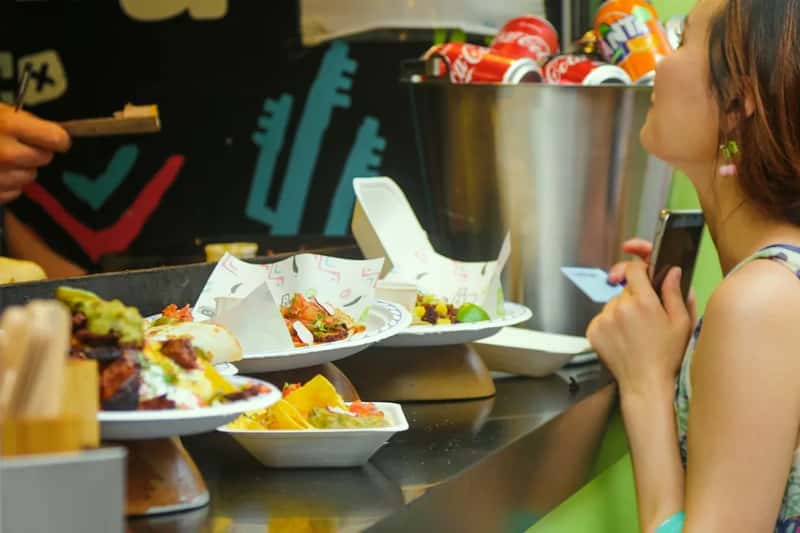
Hot trays, glass juice dispensers, and unsupervised toddlers are a combination that makes staff nervous for good reason. It’s consistently one of the top complaints logged behind the scenes, even when it never turns into a formal one at the front desk.
Unsupervised kids near hot trays and glass juice dispensers is one of the most common complaints hotel staff quietly log, and in a national survey on annoying hotel behavior, inattentive parenting topped the list outright, with 67 percent ranking it as the single most annoying guest behavior.[1] There’s also a waste angle nobody talks about as much. Researchers studying buffet behavior found that the presence of children leads to more plate waste, since children and first-time diners at a given buffet tend to leave more food unconsumed, and etiquette writers are blunt about why: kids just don’t understand buffet rules and lack self control, which is exactly the gap parents end up filling, or don’t.[2]
6. Reusing the same plate for multiple trips
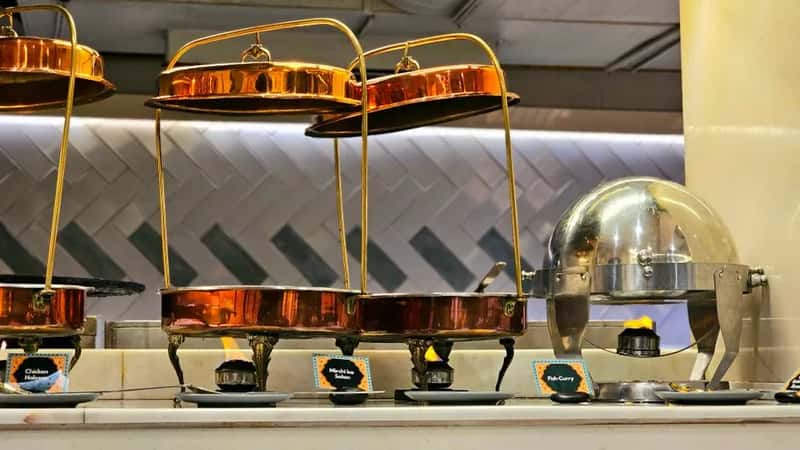
It feels considerate, almost thoughtful, like you’re saving the dishwasher some extra work. In a commercial kitchen, it reads very differently. Grabbing seconds without swapping out your plate might feel efficient, even considerate toward the dishwashing staff, but it is one of the most common food-safety complaints buffet workers raise.[4]
It’s perfectly acceptable to use plates and bowls more than once during a meal at home, but this is poor hotel breakfast buffet etiquette, since commercial[4] kitchens operate under different food safety standards than a home kitchen does. Once a plate has touched raw juices from meat or dairy, bringing it back to a shared serving line introduces bacteria that the original design of a buffet, with clean plates at the start, is meant to prevent.
7. Demanding instant service like the buffet owes you
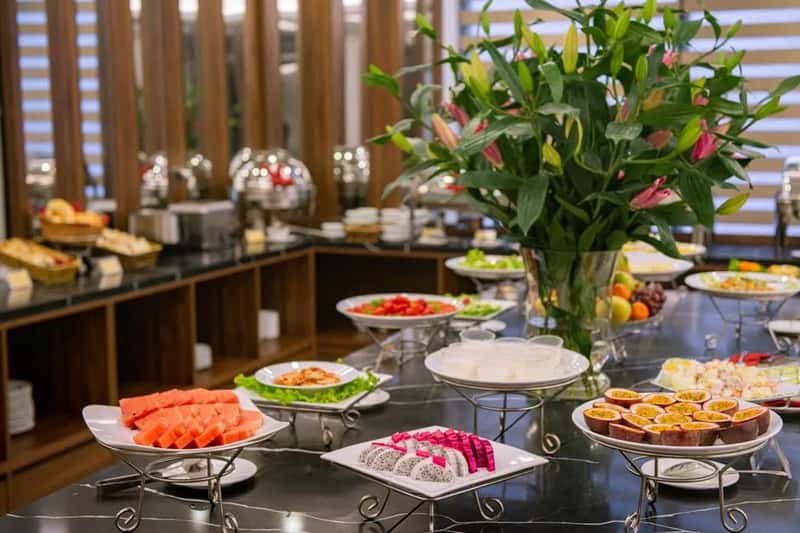
Something has shifted in guest expectations over the past few years, and staff notice the change more than anyone. Some guests treat the buffet like a personal service they’re entitled to control, and it’s a mindset staff say has gotten noticeably worse in recent years.[2]
The pattern tends to show up at the worst possible moments, when the kitchen is already stretched thin. Hotel readers themselves have described a post-pandemic wave of entitlement, with too many travelers believing that paying for a room means they own the place for a night, and that attitude shows up loudest at breakfast, when guests demand fresh trays be brought out immediately or snap at staff over minor delays.[2] A little patience during the busiest twenty minutes of service goes further than most guests realize, both for the mood of the room and for how quickly that fresh tray of eggs actually appears.
None of these behaviors are new, and none of them require a etiquette manual to fix. Most come down to a simple habit: pausing for a second before piling the plate, pocketing the muffin, or waving down a server. The guests who do that tend to get better service, fresher food, and a calmer room, mostly because they’re working with the rhythm of breakfast service instead of against it.