Hotel breakfast buffets look effortless from the guest side of the chafing dishes, but staff who work them every morning notice far more than most travelers realize. Behind the friendly smiles at the omelet station, servers and kitchen teams are quietly tracking behavior that ranges from mildly annoying to genuinely unsafe. Some of these habits feel harmless in the moment, yet they create real problems for hygiene, food cost, and the overall flow of a crowded dining room.
What follows are five specific habits that hospitality workers consistently flag as the ones they wish guests would simply stop doing. None of these require special etiquette training to avoid, just a bit more awareness of how a shared serving space actually works.
1. Reusing the Same Plate for Multiple Trips
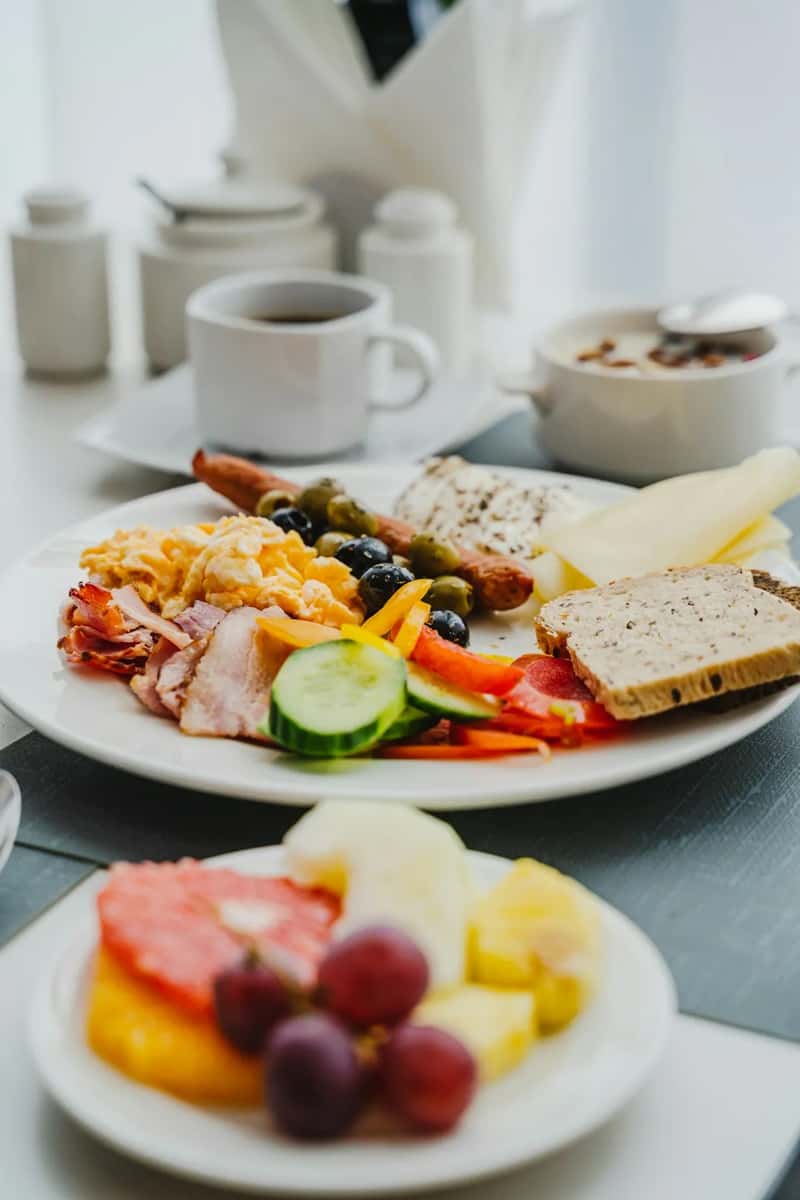
Grabbing seconds without swapping out your plate might feel efficient, even considerate toward the dishwashing staff, but it is one of the most common food-safety complaints buffet workers raise. It’s perfectly acceptable to use plates and bowls more than once during a meal at home, but this is poor hotel breakfast buffet etiquette, since commercial kitchens have other rules in place for important safety reasons.[1] The only-use-it-once mandate at buffets is in place to prevent foodborne illnesses and cross-contamination.[1]
The habit is so widespread that some properties have had to adjust their staffing just to manage it. Managers say the habit is so common they’ve had to train front-of-house staff to gently intercept people before they walk back to the buffet with a used plate.[2] A fresh plate takes only a few seconds to grab from the stack, and it removes any question about whether bacteria from your first round of food is now mixing with a second helping.
2. Using Personal Utensils Instead of Serving Tools
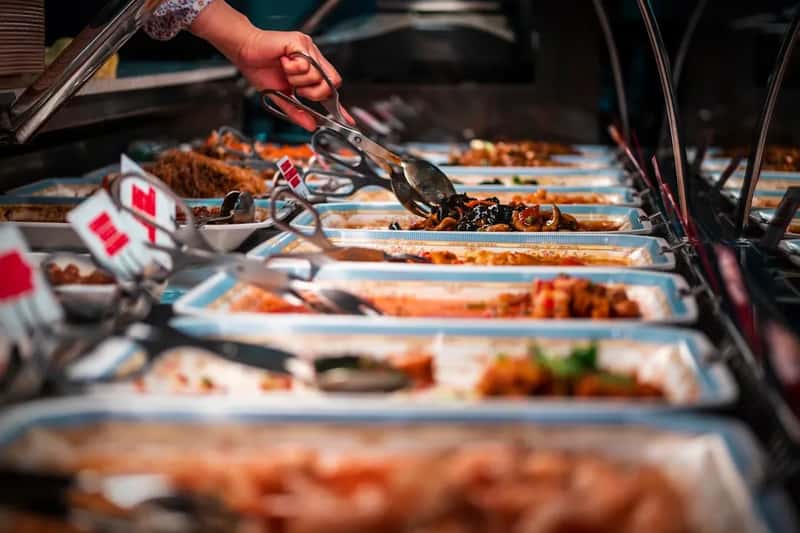
Every buffet station comes stocked with its own tongs, spoons, or serving forks for a reason, yet plenty of guests reach in with whatever fork or spoon is already in their hand. Etiquette experts are direct about this one. Buffet etiquette experts stress that guests should always use the appropriate utensil for each dish, such as tongs for solid foods and a serving fork for meats, rather than reaching in by hand.[2]
The rule against personal utensils goes further than just picking the right tool for each dish. Most importantly, never use your own utensils to take food out of trays.[1] Staff notice this immediately because it turns a shared communal dish into a personal one, and it is exactly the kind of small lapse that spreads germs through an entire buffet line without anyone realizing it until later.
3. Piling Plates Impossibly High
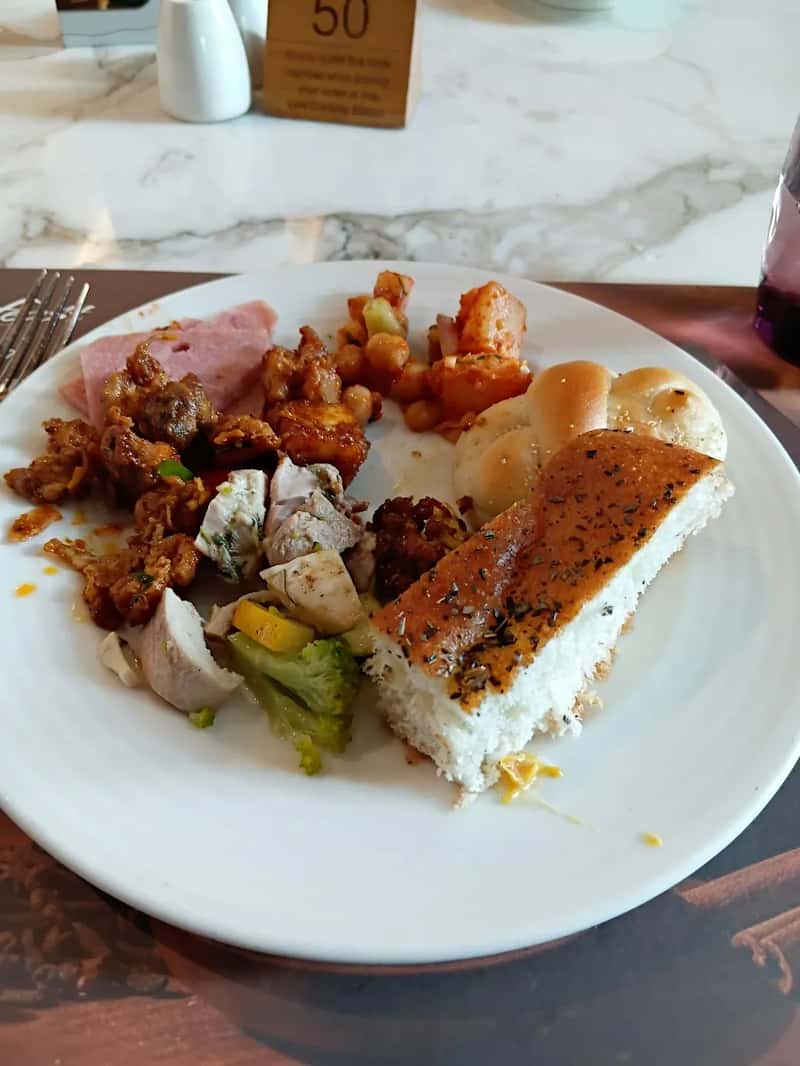
There is a particular type of plate that makes servers wince the moment they see it coming, food stacked so precariously that it starts sliding off before the guest even reaches the table. There’s a particular kind of plate servers dread walking past, the one piled so high that food is sliding off the edges before the guest even sits down, and it’s become such a common sight that etiquette guides now call it out specifically as a rule to avoid.[3]
This habit ties directly into a documented waste problem in the hospitality industry. Research on hotel breakfast buffets has found that Juvan et al. (2018) show that guests at hotel breakfast buffets often take more food than they actually consume, creating avoidable plate waste and unnecessary cost.[4] One widely cited hotel study found the scale of that waste is not trivial. In one five-star hotel study, each patron left behind an average of 300 grams of food at breakfast and 400 grams at dinner, of which 92 percent was considered avoidable waste.[3] Overloading a plate might feel like getting your money’s worth, but staff see the leftovers scraped into the bin an hour later, and it registers less like enjoyment and more like waste they have to clean up.
4. Taking Food Out of the Dining Room
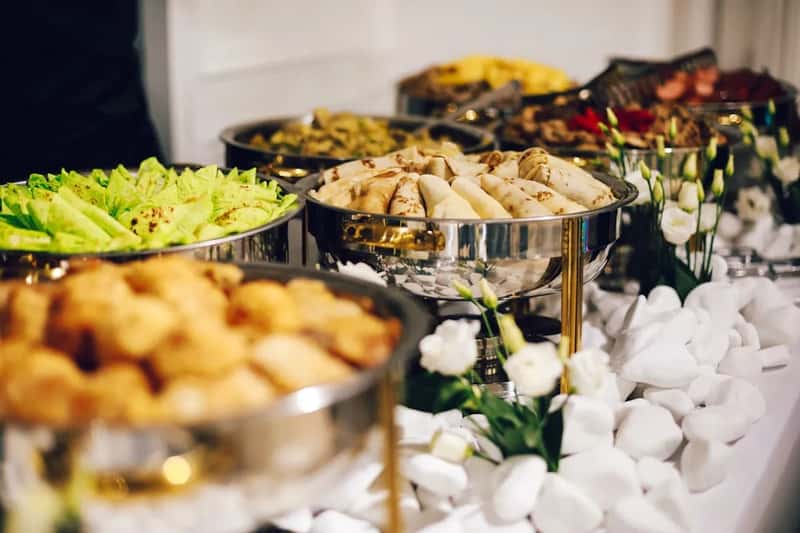
Slipping a muffin, a few pieces of fruit, or a handful of pastries into a bag to eat later feels like a minor act of thriftiness to many travelers, but hotels take it more seriously than guests expect. Most hotels already have policies in place that clearly state “no leftovers,” and some charge additionally for taking food out of the dining area, and staff flag this behavior, and in hotels that track guest profiles, it tends to be noted.[5]
Part of the reason this matters so much to hotels is financial. Buffets already run on thin margins because of how much food gets thrown away rather than served, and food carried out the door represents inventory the property planned for a specific number of guests, not a stockpile for later snacking or someone skipping a paid meal entirely. Staff are trained to notice patterns, and a guest who repeatedly walks out with wrapped food tends to get remembered, even if nothing is ever said directly.
5. Cutting the Line or Crowding the Person Ahead of You
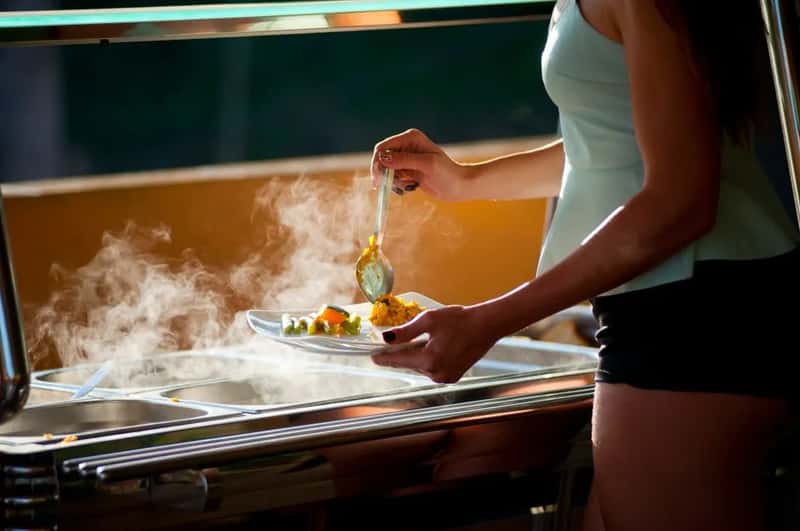
Buffet lines run on an unspoken rhythm, and guests who reach across others or crowd the person in front of them break that rhythm fast, creating friction that staff often end up managing. Buffet lines have an unspoken order to them, even without a host directing traffic, and reaching in front of someone still serving themselves, or crowding the person ahead of you, breaks that rhythm fast, since buffet etiquette requires respecting personal space in the serving line, and diners should wait their turn rather than reaching across or in front of someone who is still serving themselves.[3]
Slow-moving lines add to the tension, especially around waffle irons and toasters where guests have to wait for a single machine to finish. Staff have seen this boil over more than once. Confrontations over a toaster are more common than guests admit, and staff often get pulled in to referee two grown adults arguing over waffle batter.[6] The fix is simple enough: step away, grab something else from another station, and circle back a few minutes later rather than hovering or making comments that put pressure on someone already trying to serve themselves.
None of these five habits require rewriting how you approach a hotel breakfast or dinner buffet. They mostly come down to basic awareness, using the right utensil, taking a clean plate, portioning realistically, leaving food in the dining room, and giving other guests a bit of space and patience in line. Buffets work because they run on trust, an unspoken agreement that everyone treats the shared spread with the same care they would want from the person in front of them. Staff notice the guests who respect that agreement just as much as they notice the ones who do not, and a little consideration goes a long way toward making the whole experience smoother for everyone in the room.