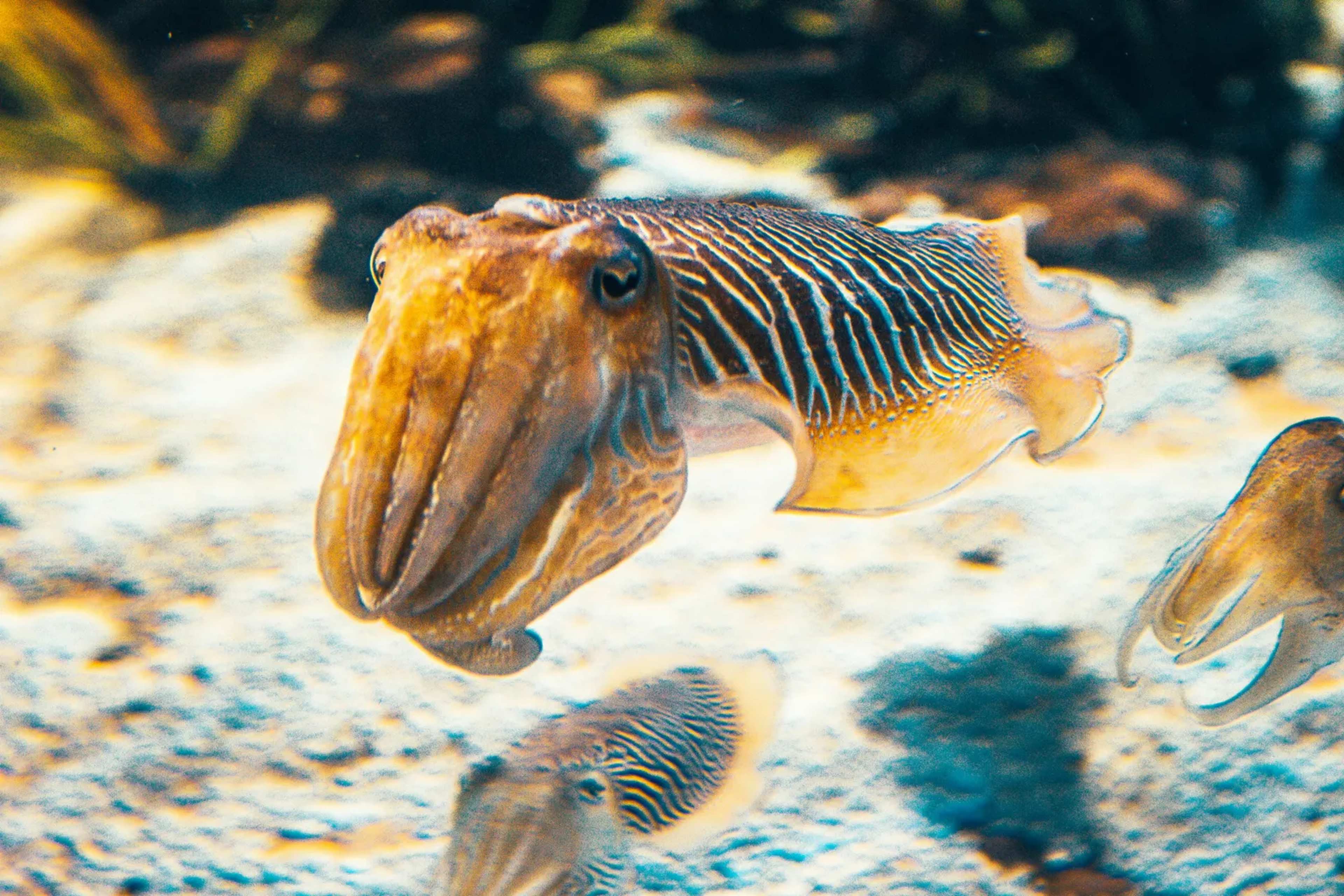
Beneath the coppery fronds of the world’s only floating bamboo kelp forest, a cuttlefish faces a predator and makes a split-second choice. Rather than simply fleeing, it releases a cloud of ink shaped like its own body while the real animal darts away in the opposite direction. The behavior is one of many details in a recent ([1])commentary arguing that kelp forests need far more protection than they receive.
How the Decoy Works
Researchers and divers call the tactic pseudomorph ink, a “false body” strategy in which the animal emits a dark cloud resembling its outline. The species involved is the tuberculate cuttlefish, Sepia tuberculata. Predators tend to strike at the illusion, which buys the cuttlefish time to slip out of reach.
The escape does not end there. Once the animal settles under a rock or inside a crevice, its camouflage and mimicry make it difficult to spot. The combination of deception and concealment shows how much a single animal can rely on the complex habitat around it.
A Forest That Runs for Hundreds of Miles
The cuttlefish lives in the Great African Seaforest, a kelp system that stretches more than 1,300 kilometers from South Africa to Namibia. It is one of many such forests around the globe. Together, they shelter thousands of species that hide, breed, feed and raise young within their fronds.
Kelp forests are not niche habitats. They fringe roughly a third of the world’s coastlines in temperate and polar waters, and they rank among the most biodiverse nearshore ecosystems on the planet. Some scientists regard their biological importance as comparable to that of rainforests on land.
The Numbers Behind the Warning
Despite their ecological weight, kelp forests have been largely overlooked in conservation planning. The commentary highlights several figures that frame the problem:
- Less than 2 percent of kelp forests are meaningfully protected.
- Warming water could wipe out as many as 25 million hectares, or almost 62 million acres, by 2050.
- In August, the global ocean surface reached its highest temperature on record.
Those trends place kelp forests in a difficult position. Supporters argue that these habitats deserve the same level of attention already given to coral reefs and mangrove forests, which have long drawn funding, research and public campaigns.
Why Naming Could Matter
The commentary’s central proposal is that giving kelp forests distinct names could help boost their conservation. A named ecosystem becomes easier to identify, discuss and defend in policy debates. It also gives the public a clearer picture of what would be lost if the forest disappeared.
The stakes extend well beyond a single reef. Governments, coastal communities and conservation groups all depend on healthy nearshore waters, and the decisions made over the next decade will shape whether these forests keep sheltering the creatures that rely on them. The cuttlefish, slipping away behind a cloud of ink, offers a small but memorable reminder of how much remains hidden in these waters.