Java doesn’t sound like a quiet place, and it isn’t. It’s the world’s most populous island, home to an estimated 159.2 million people, about 56% of Indonesia’s population, on only 7% of the country’s land area.[1] Jakarta’s gridlock makes that crowding obvious.
Yet a few hours from the capital, another Java comes into view. Giant stone temples, a living sultanate and some of the richest fossil beds on Earth sit among the rice fields and volcanoes. This walk through the island takes them one frame at a time.
Frame One: A Crowded Island With a Deep Past
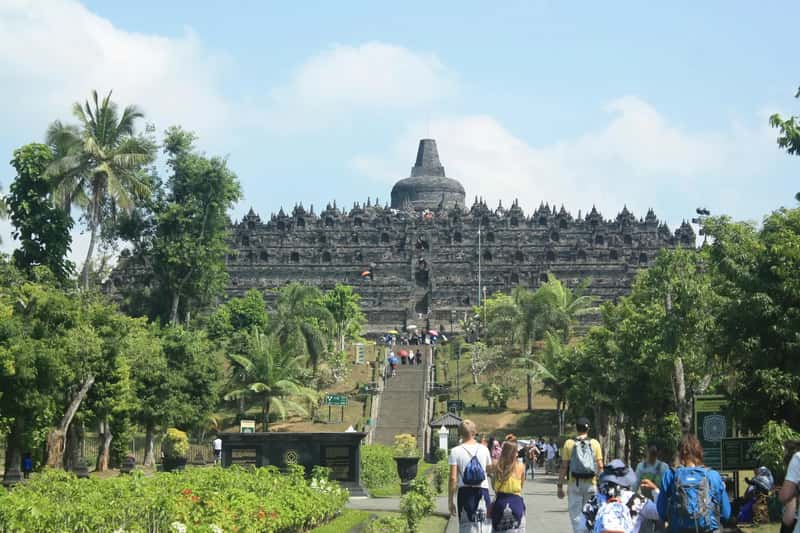
Java’s numbers explain why “busiest” fits. Its population was put at about 158 million in mid 2025, with a density of roughly 1,192 people per square kilometer.[1] That’s a lot of people on an island smaller than many countries that hold far fewer.
The crowds sit on top of a very deep historical record. Java was the center of powerful Hindu-Buddhist empires and the Islamic sultanates, and it was the core of the colonial Dutch East Indies.[2] Each era left something behind, which is why a short trip here can cross centuries, and in one case, more than a million years.
Frame Two: Borobudur, a Mountain of Carved Stone
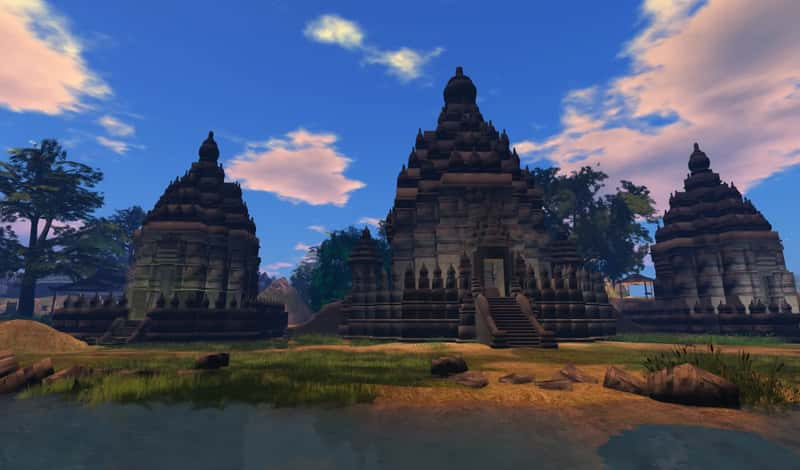
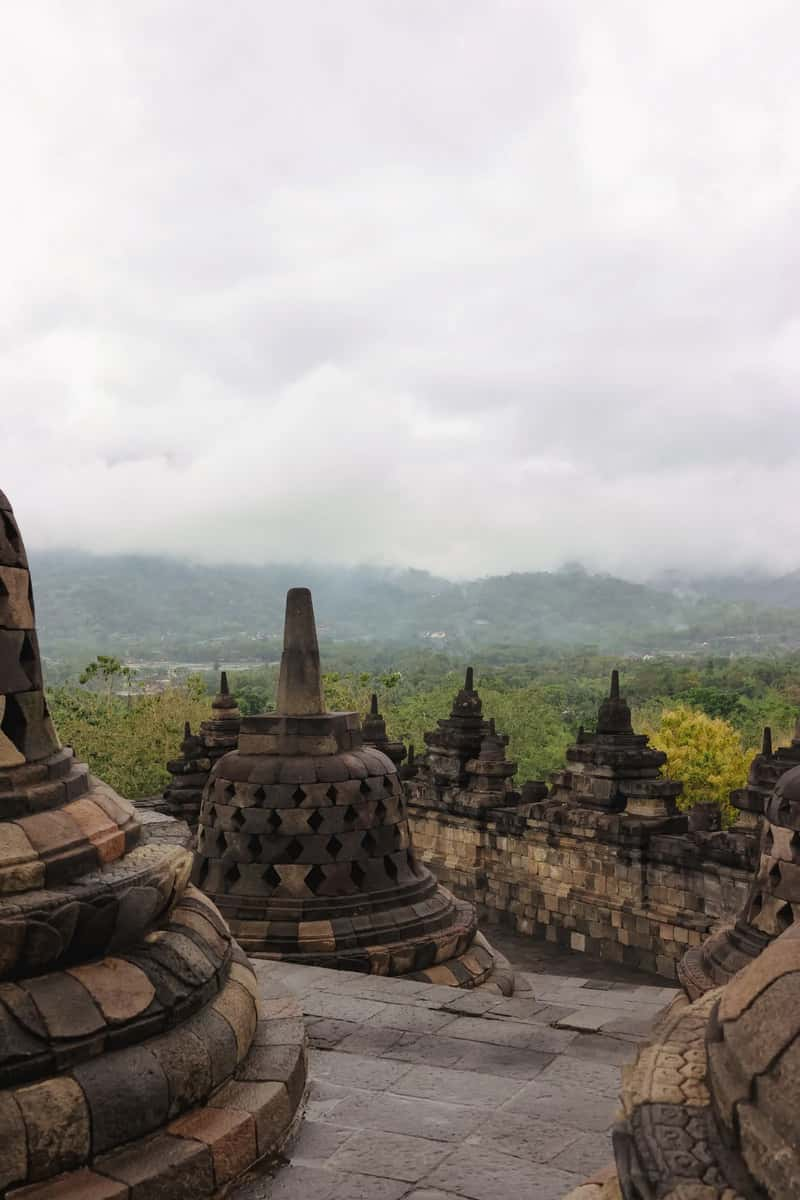
Borobudur is the obvious headliner. It’s one of the grandest Buddhist temples in the world.[3] It was built on Buddhist principles, with 72 stupas and a shape inspired by a mandala.[4] UNESCO designated it a World Heritage site in 1991.[5]
The scale is hard to take in from photographs. The temple is built from about 2 million blocks of volcanic stone.[6] Its nine stacked platforms carry 2,672 relief panels and 504 statues.[6] Those figures come from a visitor guide rather than UNESCO, but they match the numbers widely quoted for the monument.
Frame Three: Reading the Stories on the Walls
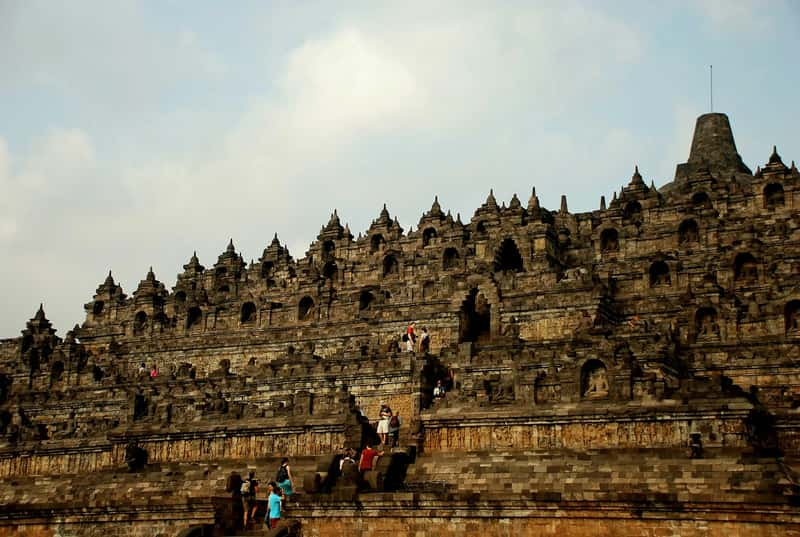
The walls work like a long picture book. In CNN’s reporting, a Yogyakarta native and SOAS lecturer advises visitors to study the reliefs, which show scenes from the life of the Buddha. The idea is that ancient people told stories through carvings, and you can try to “read” them.[4]
Borobudur’s survival is a story too. Hindu and Buddhist dynasties thrived on Java in the 8th and 9th centuries, though Islam is now the most practiced religion in Indonesia.[3] Much of Java’s population converted to Islam and Borobudur was abandoned, but it was not destroyed.[3] Many statues are now missing heads or arms, a reminder of how old the site really is.
Frame Four: Protecting a Monument From Its Own Popularity
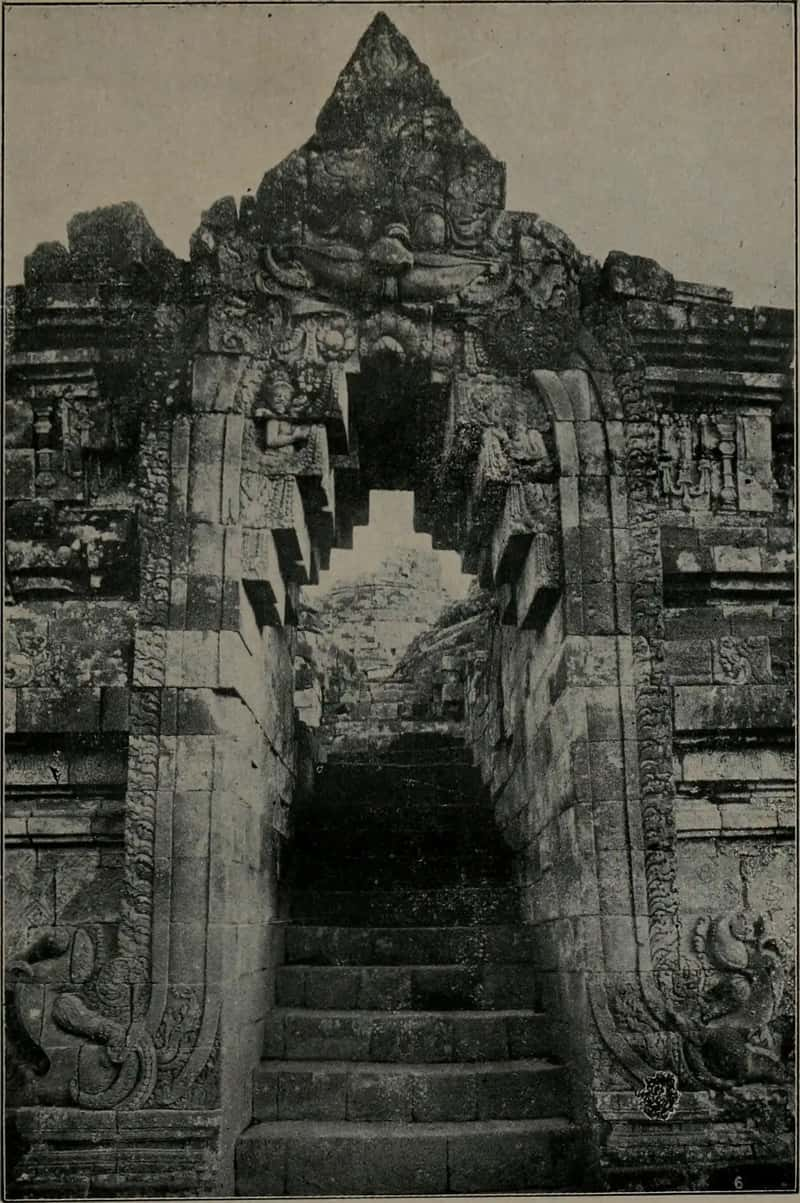
Borobudur is a crowded place on a crowded island, and the temple shows the strain. Management has linked signs of deterioration to over-tourism, and before the pandemic the temple averaged about 10,000 visitors a day.[7] Climbing rules were tightened afterward to protect the stone.
Today the climb comes with conditions. Access to the temple was opened every day from the third week of July 2025.[8] All visitors are still required to wear special footwear called upanat to protect the structure from wear and tear.[8] Online sources disagree on whether a fixed daily quota still applies for the regular climb, so check the operator’s current rules before you go.
Frame Five: Prambanan, the Hindu Counterpart
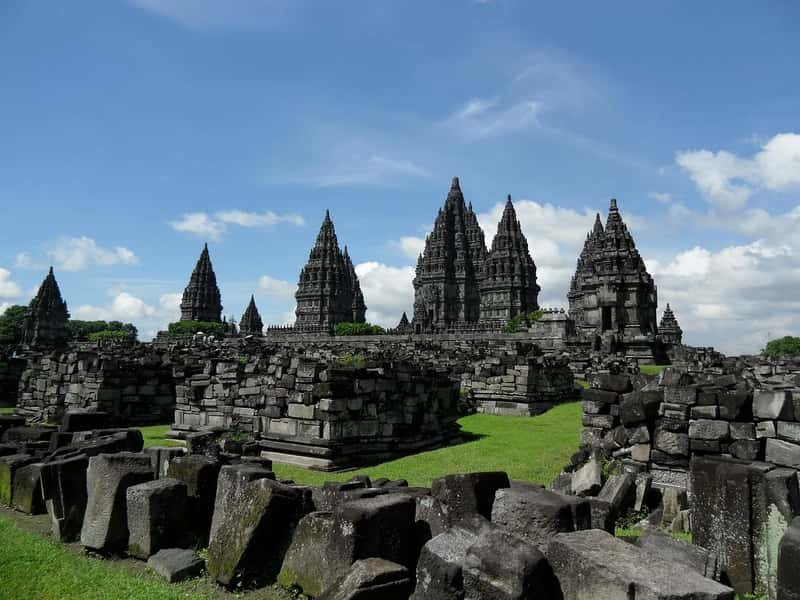
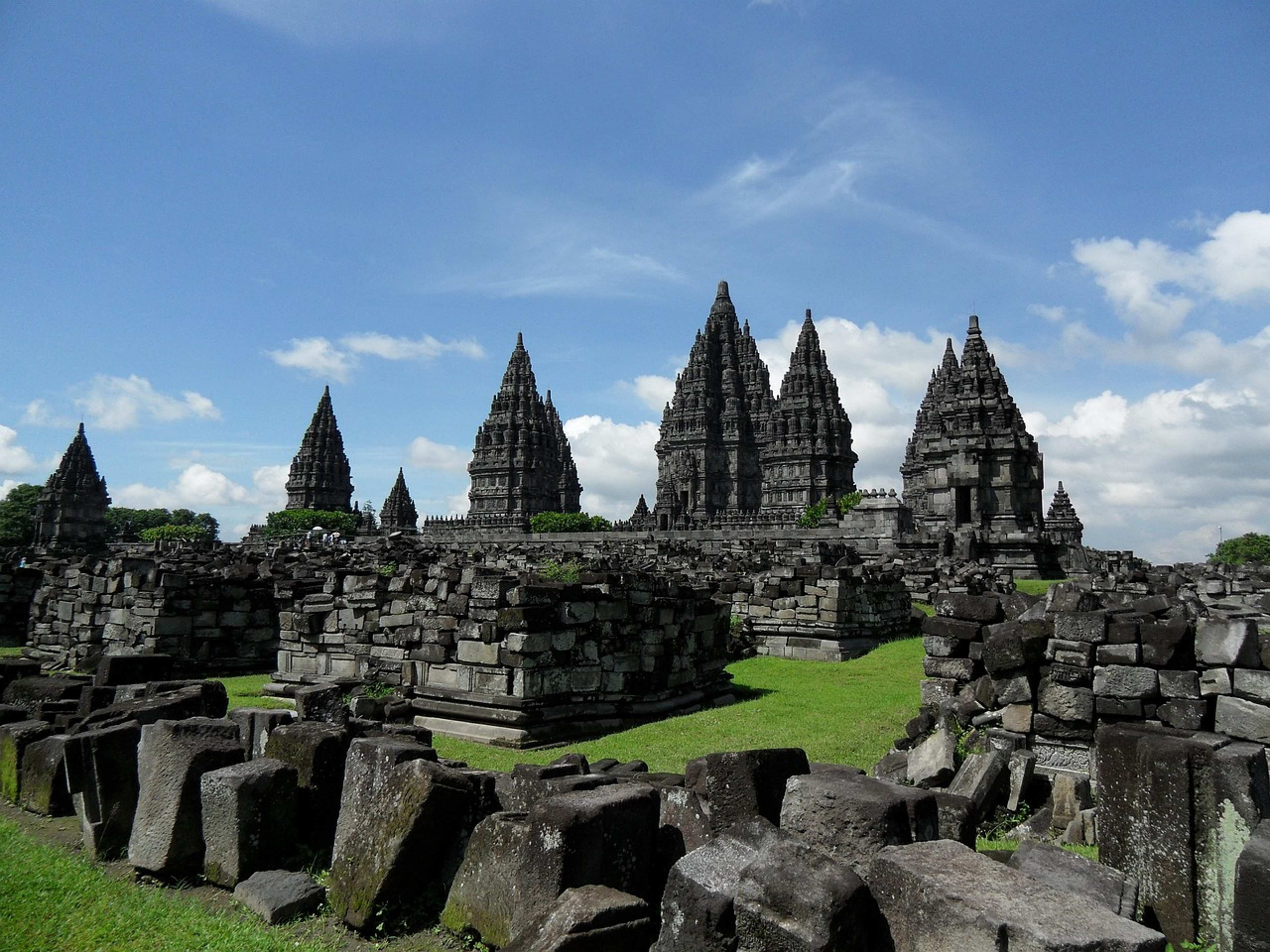
Not far away, Prambanan tells a different religious story. It’s a Hindu temple complex dedicated to the Trimurti: Brahma, Vishnu and Shiva.[9] CNN notes that travelers in Asia may feel déjà vu on first seeing it, because it resembles Cambodia’s Angkor Wat.[4]
The site is bigger than the main towers suggest. More than 200 shrines and temples are scattered across 40 hectares.[4] Intricate stone reliefs depict scenes from the Ramayana.[10] Prambanan has also been affected by several earthquakes, and UNESCO has been involved in the rebuilding process.[10]
Conclusion: Where the Crowds and the Centuries Meet
Java’s crowds and its monuments aren’t really in conflict. The same island that moves well over 150 million people through busy cities also holds a Buddhist mandala in stone, a Hindu temple complex, a royal city planned with care and a fossil site that stretches back over a million years. The pressure of visitors is real, which is why rules like guided climbs and protective sandals exist at Borobudur.
If you go, give each site time and read the details. Java rewards slow attention more than it rewards a checklist.