Most first-time cruisers think a cabin is a cabin – you sleep, you shower, you head back out to the pool deck. Ask anyone who has sailed a dozen times and they’ll tell you a different story: your room number can quietly decide whether you sleep eight hours or lie awake listening to deck chairs scrape overhead at 6 a.m.
There’s an entire underground knowledge base of cabin tricks that cruise lines never print in the brochure, and most passengers never stumble onto it by accident. Here’s what repeat cruisers actually say once you get them talking.
#14 – The Walls Are Secretly Magnetic, and Almost Nobody Uses This
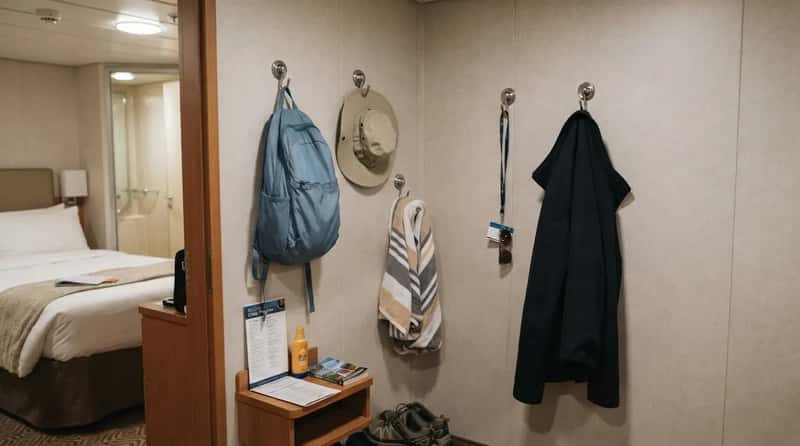
Cruise cabin walls are made of steel, which means ordinary command hooks and sticky tape are a waste of luggage space. Bring magnetic hooks instead, and suddenly you’ve got a spot for jackets, hats, and backpacks that never falls down mid-cruise. Veteran cruisers travel with a full set, sometimes twenty or more, and skip the weak five-pound versions in favor of heavier-rated magnets that can hold towels and swimwear.
The one place this trick fails you is the shower, since bathrooms are usually tile, marble, or fiberglass where magnets won’t stick. Suction cup hooks handle that gap just fine. It’s a tiny detail, but it turns a cramped cabin into a surprisingly organized one within an hour of boarding – and it’s nothing compared to the “free” upgrade hiding in plain sight on certain decks.
Fast Facts
- Cruise cabin walls are essentially bare steel, so magnetic hooks click into place with zero drilling or sticky residue.
- Rated hooks (5+ lbs) hold hats, totes, and beach bags without sliding off mid-cruise.
- Bathrooms are usually tile or fiberglass, so suction hooks – not magnets – are the fix for shower gear.
- Frequent cruisers often pack 15-20 hooks per cabin just for extra hanging space.
#13 – Some Cabins Come With a Free Spa Nobody Mentions
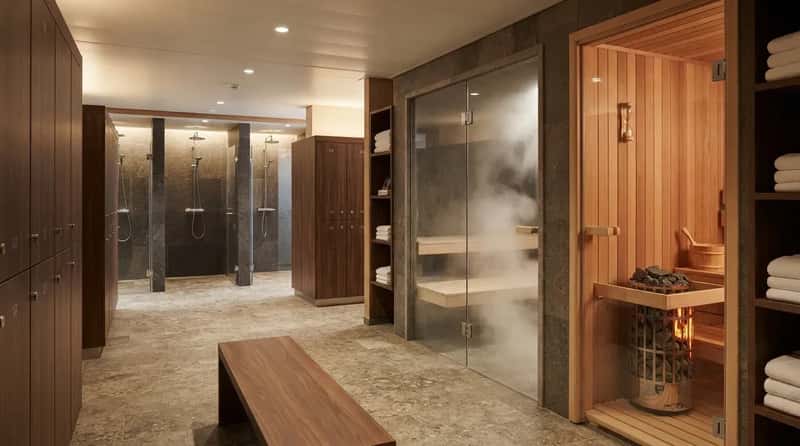
Here’s a detail cruise lines are strangely quiet about: the locker rooms attached to the spa often come with amenities open to everyone, no upcharge required. The showers, saunas, and steam rooms in those locker rooms – not the pricier thermal suites, just the basic locker room facilities – cost nothing to use. Book a cabin with easy access to the spa entrance and you’ll practically have the place to yourself.
Most passengers never even walk past the spa unless they’ve booked a treatment, so the sauna and steam room stay uncrowded almost all week, even on a packed sailing. Repeat cruisers deliberately book near the spa deck for exactly this reason, treating it like a private amenity nobody else knows to ask for. It’s a perk that costs the cruise line nothing to offer but saves passengers real money compared to a spa day pass – and it’s nothing next to the hidden bed that folds out of your ceiling while you’re at dinner.
#12 – There’s a Second Bed Hiding in Your Ceiling
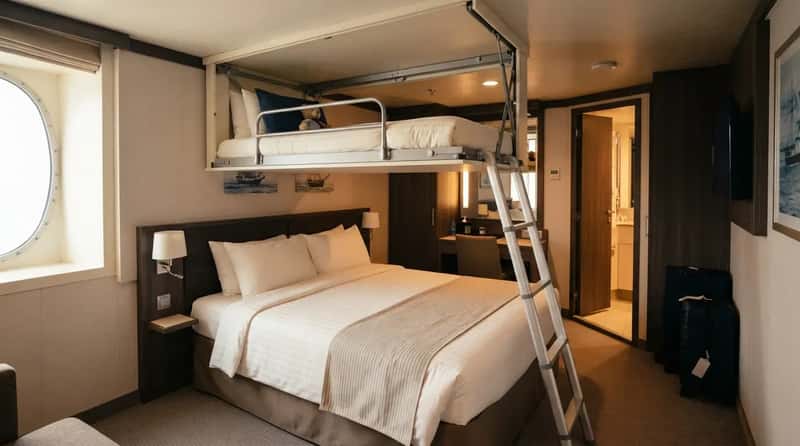
Families assume a “standard” cabin only sleeps two comfortably. That’s not always true. Many cruise lines, including Disney Cruise Line, have built in an extra bed so cleverly you’d never notice it unless you were looking for it – a bunk that folds down from the ceiling, which the cabin steward quietly sets up while you’re at dinner and hides again the next morning.
It sounds like a minor engineering trick, but it’s the reason so many families squeeze four people into a cabin built for two without ever tripping over a rollaway. Repeat cruisers specifically request cabins with this feature when traveling with kids, since it means more floor space during the day and nothing cluttering the room at night. Most first-timers never even learn it exists unless a steward happens to mention it – and next up is a cabin quirk that gets you a bigger balcony for the exact same price as everyone else.
#11 – “Hump Rooms” Get a Bigger Balcony for the Same Price
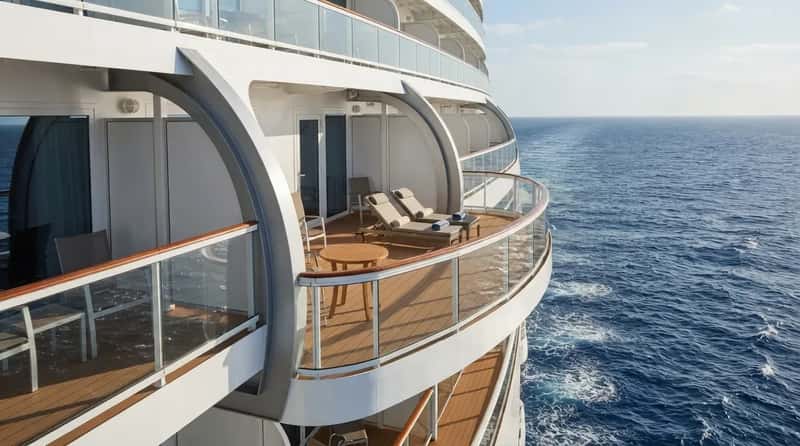
Somewhere on most ships, the hull curves outward slightly, and that curve creates an accidental bonus. Insiders call these “hump rooms” – cabins where the ship’s shape bulges out, giving the balcony noticeably more square footage than a standard one. They sell in the exact same category and at the exact same price as every other balcony room on the deck plan.
These aren’t flagged anywhere on the booking page. You have to know the term, then go hunting through the deck plan for the section where the hull curves. It’s the definition of a hidden upgrade, and it’s one of the first things seasoned cruisers teach newcomers in Facebook cruise groups – but bigger balconies mean nothing if you can’t sleep, and that’s where the next secret changes everything for light sleepers.
#10 – Interior Cabins Aren’t a Downgrade, They’re a Sleep Hack

Most first-timers assume the windowless interior cabin is the consolation prize. Repeat cruisers know better. Yes, interiors are small and dark – but that darkness is a genuine feature, not a bug. Total blackout conditions make for some of the best sleep you’ll get anywhere on the ship.
There’s no early sunrise leaking through thin curtains and no port lighting bleeding into the room, which is why experienced cruisers book interiors on purpose for overnight sailings and repositioning voyages. It’s a controversial opinion in cruise Facebook groups – some travelers insist a balcony is non-negotiable – but plenty of frequent sailors would argue the sleep quality alone makes the smaller room the smarter buy, banking the savings for excursions instead. That’s a mild trade-off compared to what happens if you get stuck at the back of the ship.
#9 – Aft Cabins Are Gorgeous, But They Come With a Catch

Aft-facing cabins photograph beautifully, and for good reason – the wake views are spectacular and the sail-away sunsets are hard to beat. But there’s a trade-off veteran cruisers always mention: aft cabins tend to carry more engine vibration than anywhere else on the ship.
That vibration isn’t subtle on some vessels. It’s a low hum that runs through the mattress at night, especially on itineraries with long stretches of open ocean. Repeat passengers who prioritize sleep over scenery often skip the aft section entirely, no matter how tempting the wraparound balcony photos look online – though plenty of others swear the view is worth it. Forward cabins have their own version of this problem, and it wakes people up far earlier than engine vibration ever does.
#8 – Forward Cabins Wake You Up Before Sunrise, Literally
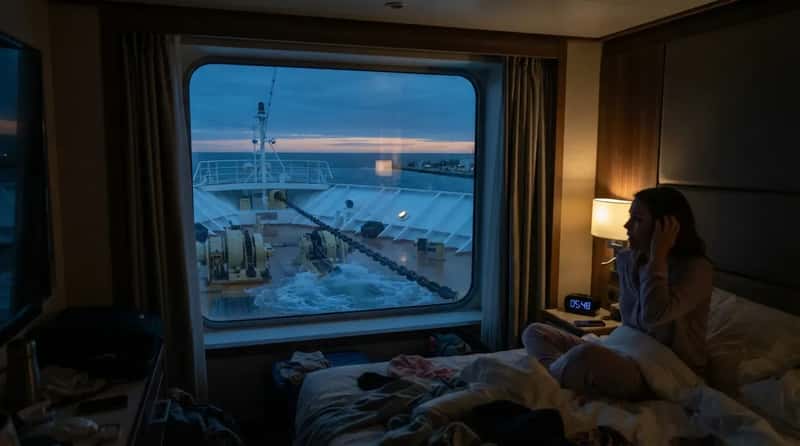
Book a cabin at the front of the ship and you’re signing up for an early alarm you didn’t ask for. On itineraries with tender ports – common in the Caribbean and parts of Alaska – the anchor drops well before most passengers are awake for breakfast, and forward cabins feel it first and loudest.
Bow thrusters during docking can shake a forward cabin too, especially on itineraries with frequent port stops. Repeat cruisers who’ve been startled awake by an anchor chain once rarely book forward again without checking the port schedule ahead of time. Still, none of that compares to what happens when your cabin sits directly under the pool deck.
Quick Compare
- Aft cabins: stunning wake views, but a steady engine vibration runs through the night.
- Forward cabins: less engine noise, but anchor chains and bow thrusters can wake you before dawn.
- Midship cabins: generally the calmest ride, which is one reason crew often prefer bunking there.
#7 – The Pool Deck Above You Turns Into an Alarm Clock

This is probably the single most common complaint frequent cruisers repeat to newcomers. During the day, the pool deck is one of the busiest areas onboard – but the real issue is early morning, when crew start resetting the deck before breakfast, and the scraping sound of lounge chairs carries surprisingly well into the cabins directly below.
It’s not a one-time nuisance. It happens every single morning of the cruise, often before 6 a.m., regardless of how late the party ran the night before. Repeat cruisers specifically scan the deck plan for what sits directly above their cabin before booking, treating “pool deck above” as an automatic pass – and nightclubs cause the same problem in reverse, with bass that travels even farther than chair legs do.
#6 – Cabins Near the Nightclub Feel the Bass Through the Floor
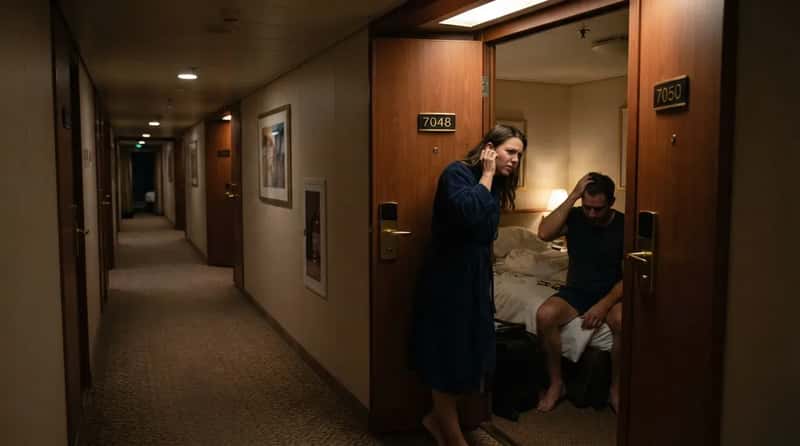
It’s not just about hearing the music – it’s about feeling it. Getting to sleep in a cabin above or below a nightclub, piano bar, or theater can be a real challenge depending on the ship’s soundproofing, which is why it pays to study deck plans closely before choosing a room.
On some ships, this creates entire clusters of cabins that seasoned cruisers privately nickname trouble zones – a section near an aft elevator bank that sits just above the main entertainment deck, for example, where guests deal with both elevator noise and music rising up the stairway. Certain cabin clusters on certain ships have a reputation, and it’s earned; ask around cruise forums before booking near any late-night venue, because the bass rarely respects a closed door. Connecting doors cause a version of this problem too, just from a different direction.
#5 – Connecting Doors Leak Sound Way More Than You’d Expect
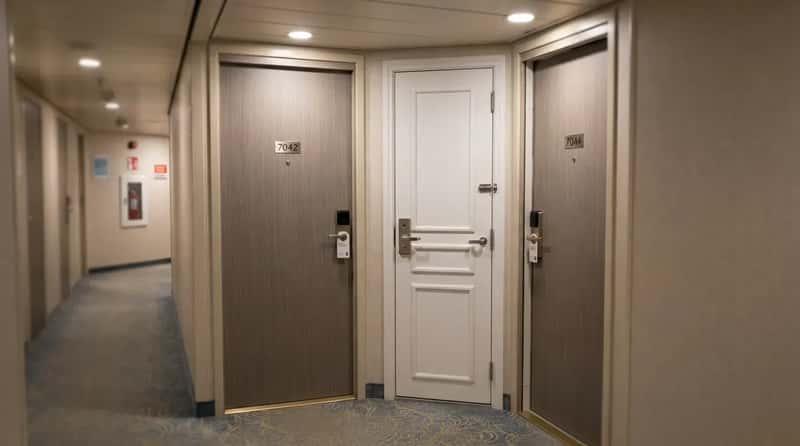
Connecting cabins sound like a dream for families, until the strangers on the other side turn out to be night owls. Unless you’re traveling with friends or family, avoid cabins with connecting doors – sound carries through them far more than through a solid wall, and countless cruisers have complained about loud neighbors on the other side.
Even a locked, closed connecting door doesn’t behave like a real wall – you may still hear talking or a blaring television louder than expected. Most passengers assume a closed door means privacy, and it simply doesn’t. If you book a guarantee fare you can’t request a non-connecting room after the fact, which is exactly why repeat cruisers pay closer attention to deck plans than price alone – and the fix experienced cruisers use next takes this a step further.
#4 – The “Cabin Sandwich” Rule Frequent Cruisers Swear By
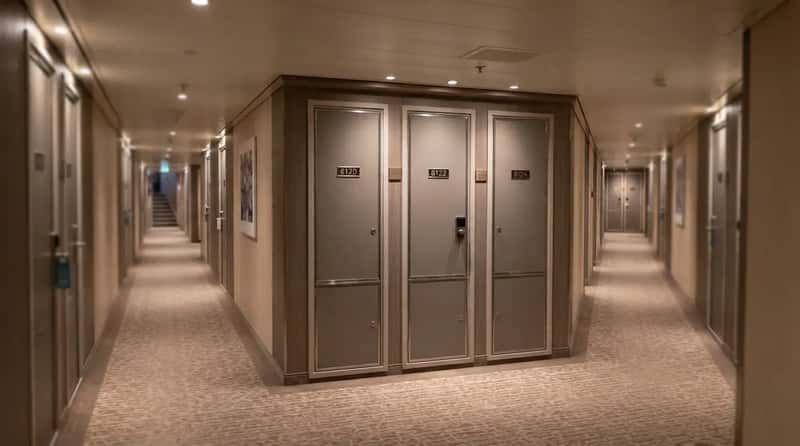
Ask any repeat cruiser for their number one cabin rule and you’ll hear some version of the same phrase: get sandwiched. The best place to be if you want any real shot at a quiet cabin is one surrounded on every side by other guest rooms – one directly above, one directly below, and cabins on both sides.
The logic is simple. With ordinary cabins in every direction, the only noise you’ll ever hear is an occasional neighbor, not an entire restaurant or nightclub. It sounds almost too simple to matter, but frequent cruisers treat the cabin sandwich as the single most reliable predictor of a peaceful week at sea – and even a perfect sandwich cabin won’t save you from the next mistake, which happens before you even choose a room.
At a Glance
- Above: another passenger cabin, not a pool deck, gym, or buffet.
- Below: another passenger cabin, not a theater, nightclub, or lounge.
- Sides: two more passenger cabins, not a connecting door or elevator bank.
- Result: the only noise you’ll typically hear all week is an occasional neighbor.
#3 – Guarantee Fares Are a Gamble Most People Don’t Realize They’re Taking
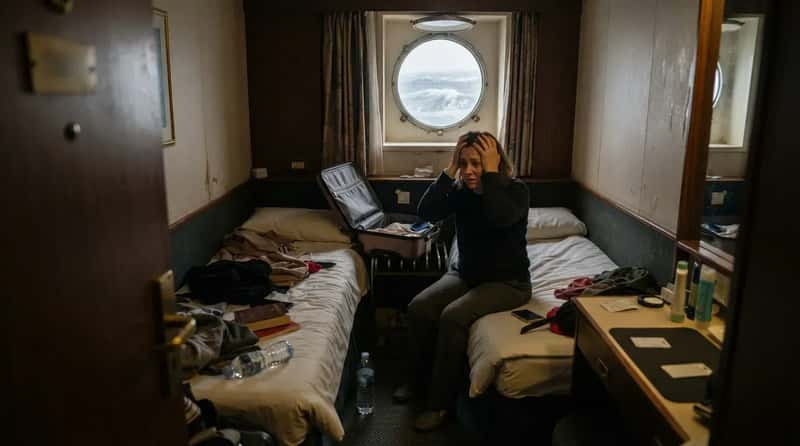
Booking the cheapest “guarantee” fare feels like a smart discount. Repeat cruisers know it’s really a coin flip. Cruise lines assign guarantee-fare passengers a cabin from whatever’s left unreserved closer to departure, which means you could just as easily land in a noisy, undesirable spot as a great one.
It gets worse if you accept an upgrade offer without reading closely. Most cruise lines automatically enroll you in “auto-upgrades” unless you opt out, meaning they can move you to a supposedly better cabin without asking – and you can’t revert to your original pick. Cruisers have found themselves relocated to rough forward cabins on transatlantic sailings this way, regretting it for days. It’s a quiet trap buried in the booking flow, and it’s exactly why frequent cruisers pick their exact cabin number rather than trust a guarantee fare, even when it costs a little more upfront.
#2 – Your Cabin Steward Knows More About You Than You Think
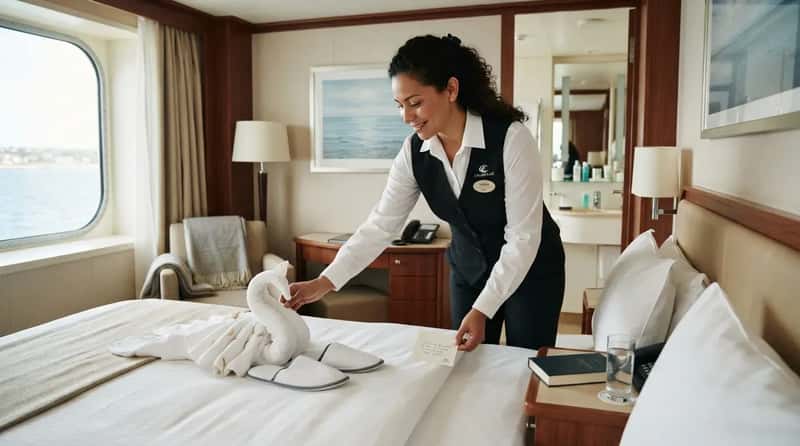
By day three, your steward has quietly built a profile on you that would make most guests uncomfortable if they realized it. They piece together your habits from the evidence left behind each day – what time you wake up based on the shower, whether you’re fighting with your travel companion based on how the beds get rearranged.
It’s not creepy, it’s genuinely useful – for you. Stewards remember repeat passengers with almost supernatural precision: your preferred towel arrangement, whether you like the curtains open or closed, even which side of the bed you sleep on. That’s exactly why repeat cruisers build a relationship with their steward on day one instead of treating them as invisible – extra hangers, a mattress topper, a quiet request handled without a call to guest services. But even your steward isn’t the biggest secret cruise lines keep about problem cabins.
#1 – Cruise Lines Keep a Private “Noise Map” of Bad Cabins
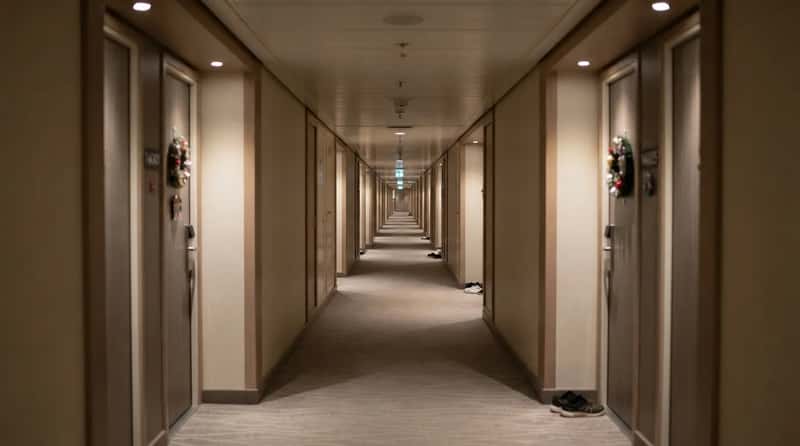
This is the one secret that genuinely surprises even experienced cruisers the first time they hear it. Crew members have described ships keeping an internal document – sometimes called the “Noise Map” or the “Problem Map” – listing every cabin on every deck with a known issue.
It’s not a rumor, it’s operational. One crew member who worked on Norwegian described Deck 14 forward cabins under the outdoor sports complex as a known trouble spot, causing steady vibration and noise every cruise – staff expect the complaints and will move guests if a cabin is available, but they wait for you to raise it first, and it’s never a list they’ll hand over voluntarily. Cruise lines already know which cabins are bad before you ever complain; they simply won’t warn you in advance. Say your room number to guest services early if something feels off, and don’t be surprised when they already know exactly what you mean.
Worth Knowing
- Crew nicknames for problem cabins rarely make it into public reviews or brochures.
- Vibration and noise complaints tend to cluster near sports decks, engine rooms, and galley stairwells.
- Guest services can sometimes move you to an open cabin if you flag the issue early in the cruise.
- The map exists mainly for crew training and internal complaint handling, not passenger disclosure.
None of these fourteen secrets require insider access or a travel agent connection – they’re simply the things repeat cruisers pick up the hard way, one bad night’s sleep or one lucky upgrade at a time. The pattern running through nearly every entry here is the same: cabin location decides more about your trip than the price tag ever will, and cruise lines rarely volunteer that information upfront.
The good news is that every one of these tricks is free to use on your very next booking. Study the deck plan, ask what’s above and below your room, and don’t be afraid to say your cabin number out loud to guest services if something feels off. Did we miss a cabin secret you learned the hard way? Drop it in the comments – the next cruiser scrolling through might thank you for it.