Most people picture a ship’s officers on the bridge, squinting at the horizon like a movie scene. The real job is far less glamorous, and it’s the reason your trip runs smoothly. If you’re traveling alone, nobody beside you is checking the schedule, the weather or the safety plan. The deck team has already handled all three.
None of this is secret. It’s just decided out of sight, before you wake up and long after you’ve gone to bed. Some of it is deeply reassuring. One item explains why a ship will leave without you, and a few might change how you hear the next announcement you usually tune out.
#22 – Your Emergency Spot Is Chosen Before You Even Unpack
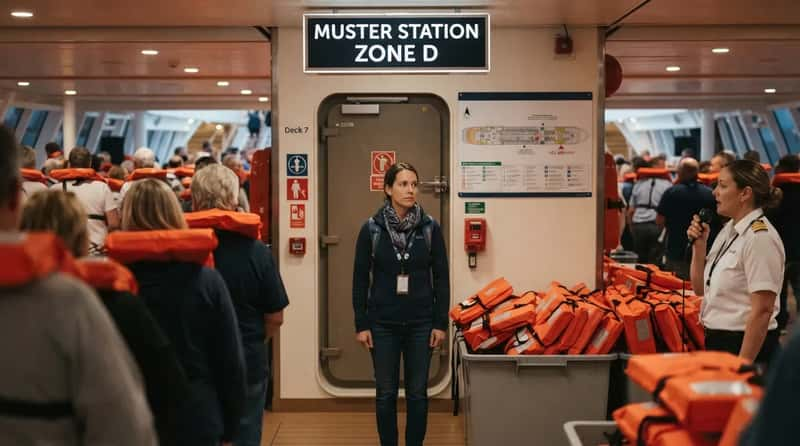
You don’t get to pick your muster station. It’s assigned, so nobody has to improvise in a crisis. Many lines now show it in the app or on your stateroom TV before you ever walk to it.
For a solo traveler, that matters more than it sounds. There’s no travel partner to follow and no friend to say “it’s this way.” The officers’ plan assumes you need one clear answer, and it hands you one. But the timing of your first drill is where the rules really changed, and #21 tells that story.
#21 – The Drill Moved Up Because of One Terrible Night
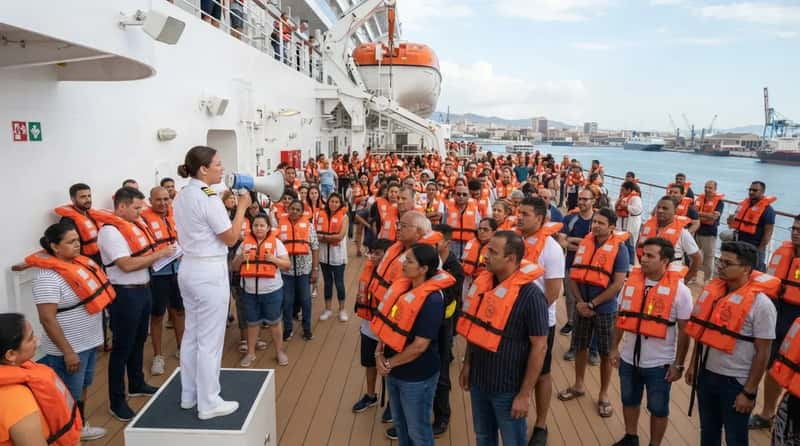
It used to be possible to sail for hours before anyone showed you a lifeboat. Then the Costa Concordia ran aground off Italy in January 2012, and 32 people died. Some passengers had boarded only hours earlier and hadn’t yet had their safety briefing. The industry rule changed in response. The amended SOLAS rule, adopted in 2013, requires passengers to drill before the ship departs or immediately on departure.
Deck officers schedule the drill so the whole ship is covered at once. Many lines hold it shortly before departure on embarkation day. Some travelers call it a pointless chore. Officers see it as the hour that matters most.
#20 – Miss the Group Drill and You Still Get Your Own Briefing
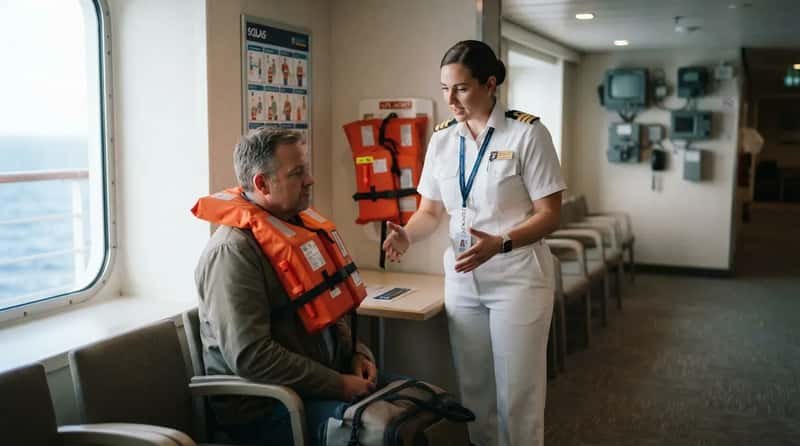
If your flight was late and you missed the muster, nobody simply skips you. Passengers who board after the drill get a briefing of their own. Royal Caribbean, for one, says late arrivals receive individual or group safety briefings that meet SOLAS requirements.
That’s a quiet detail for solo travelers, who often board at odd hours after a travel mess. The officers’ goal is a ship where every person aboard has been briefed. Nobody gets to slip through because of a missed connection. And once you’re briefed, the ship needs to know where you are, which is #19.
Worth Knowing
- A late-boarder briefing is held to the same SOLAS safety standard as the big group drill.
- Delayed flights and missed connections are the usual reasons people need one.
- If you’re not sure your briefing was logged, guest services is the place to ask.
- Your assigned muster station stays the same, whenever you board.
#19 – Someone Is Keeping Track of Whether You Showed Up
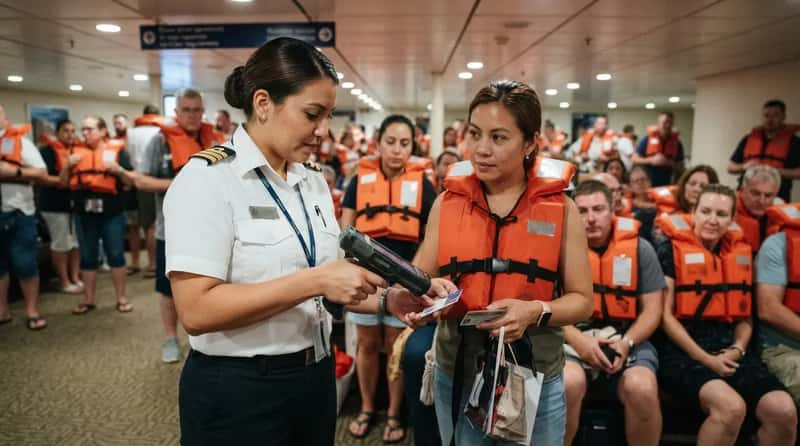
You probably think the drill is just a crowd. It’s also a headcount. On many ships your cruise card is scanned and a crew member marks you present. That record is built into the muster process.
Attendance records also help the crew follow up with anyone who missed the drill. So the person hiding in the cabin does get noticed. Next is the sound that starts it all, which almost nobody describes correctly.
#18 – There Are Two Alarms, and Only the Captain Can Order the Big One
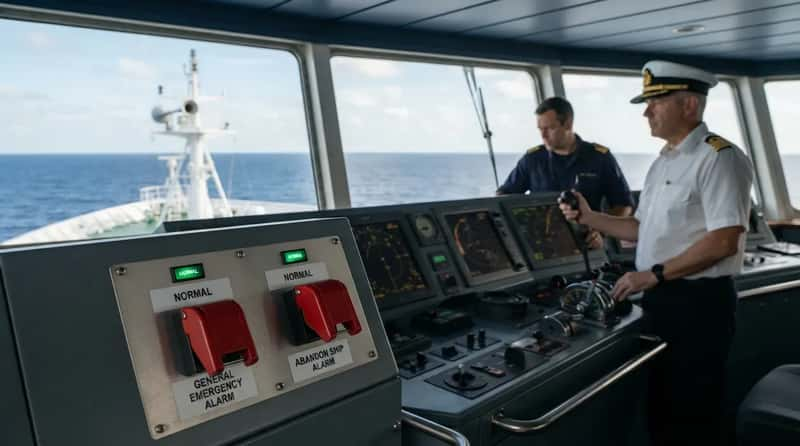
Everyone knows an alarm when they hear it. Fewer know there are two kinds. The abandon-ship order is separate from the general emergency alarm. It comes only after other efforts have run out, and the master gives it over the PA system.
That split gives deck officers a clear order of operations. First comes the alert, then the assembly, and only at the very end the decision to leave the ship. Solo travelers who know the sequence stay calmer. But does the ship even have room for everybody? That’s #17.
#17 – Lifeboats Are Sized for a Full Ship, Even on a Half-Empty Sailing
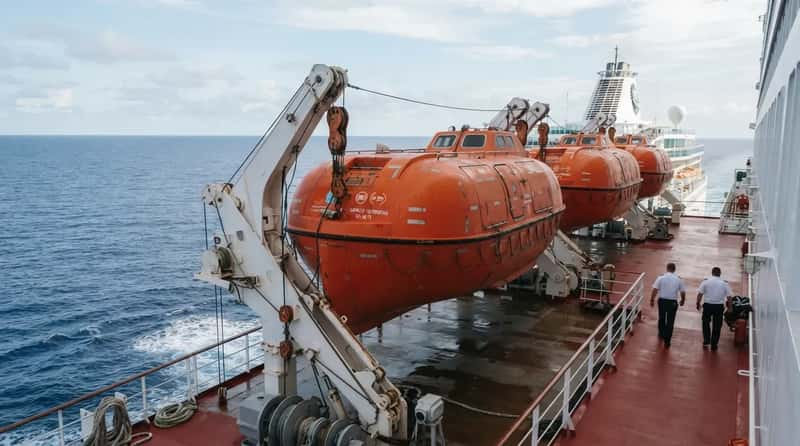
You might assume the lifeboats match the passenger list on your sailing. They don’t. The safety equipment is built for the ship’s maximum capacity, not for your trip. Maritime rules require capacity for everyone aboard, plus a margin.
Officers don’t recalculate it each crossing. They check that the boats, rafts and launching gear work, and they run the drills. A half-empty ship doesn’t mean fewer safety checks. And the next item sits closer to your bed than you’d think.
Fast Facts
- Under SOLAS, a passenger ship’s survival craft must have room for 125% of the people aboard.
- Lifeboats must cover at least 37.5% of that load on each side, or 75% in total.
- Inflatable liferafts make up the rest of the margin.
- The numbers are tied to the ship’s certified capacity, so a quiet sailing doesn’t shrink them.
#16 – Your Cabin Life Jacket Isn’t the Only One Aboard
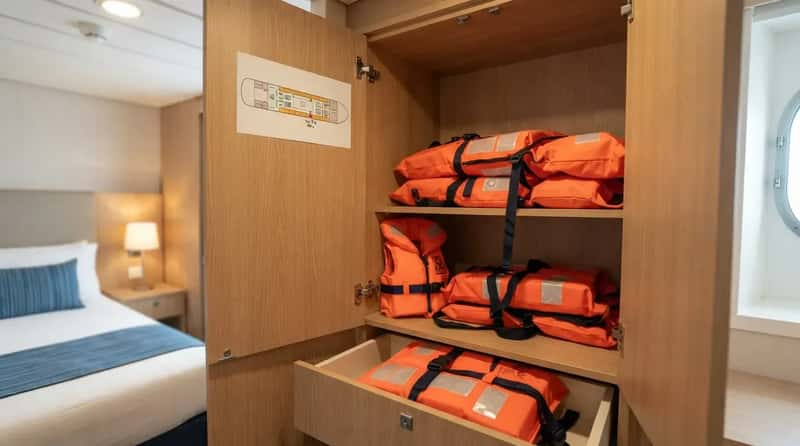
It’s easy to think the jacket in your cabin is all there is. It isn’t. Ships carry extra jackets beyond the number of people on board. Spares include sizes for children, and more are kept at muster stations and in the survival craft.
Deck officers are the ones who inspect that gear. The redundancy is deliberate, because a jacket that’s missing or damaged is never allowed to be the weak link. Now, speaking of conditions at sea, here’s why an outside door can suddenly be locked.
#15 – The Deck Door You Wanted Is Locked for a Reason
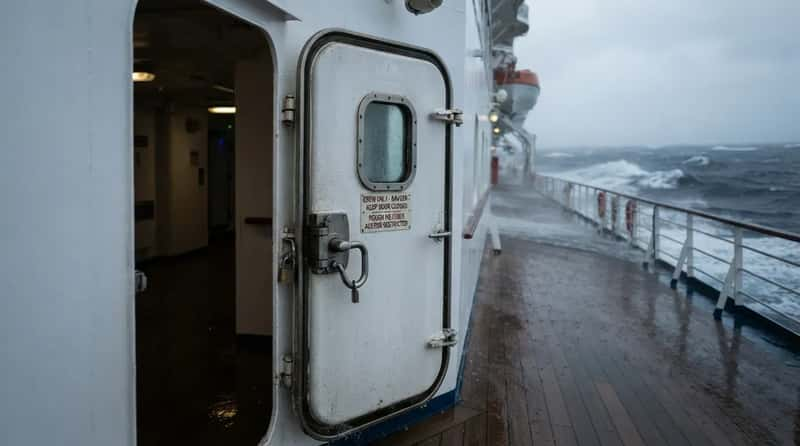
You walk out for fresh air and the door is shut. That isn’t a mood. The bridge decides when wind and sea make open decks unsafe. Officers watch wind speed and the ship’s motion, and they can close doors, pools and promenade sections.
Some travelers grumble that the lines are overcautious. Officers would rather take the complaint than an injury. For a solo passenger with no companion to catch a slip on a wet deck, the closure is less annoying than it looks.
#14 – The Route You Booked Quietly Bends Around Storms
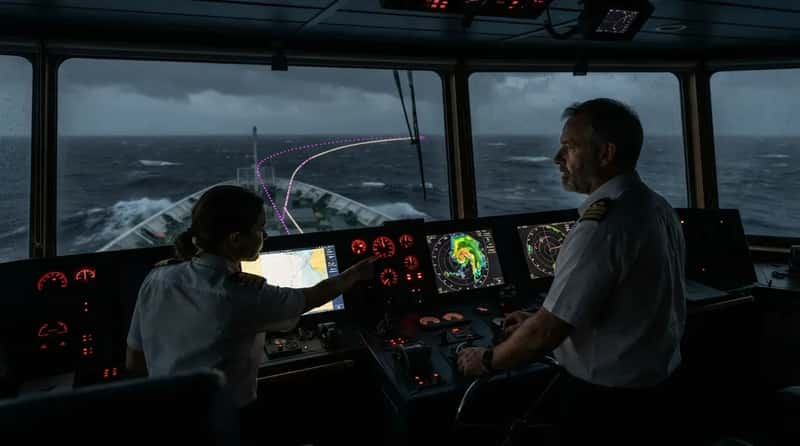
The map you saw at booking is a plan, not a promise. Navigation officers adjust course and speed to dodge bad weather. The goal is a safe and comfortable passage, and sometimes that means arriving at a different time or skipping a stop.
Passengers tend to blame the cruise line when this happens. In reality, the master has the final say on safety at sea. A longer route or slower pace is often the least dramatic result of an ugly forecast. And one routine change to your day happens whether or not a storm shows up.
#13 – Your Clock Changes When the Bridge Says So
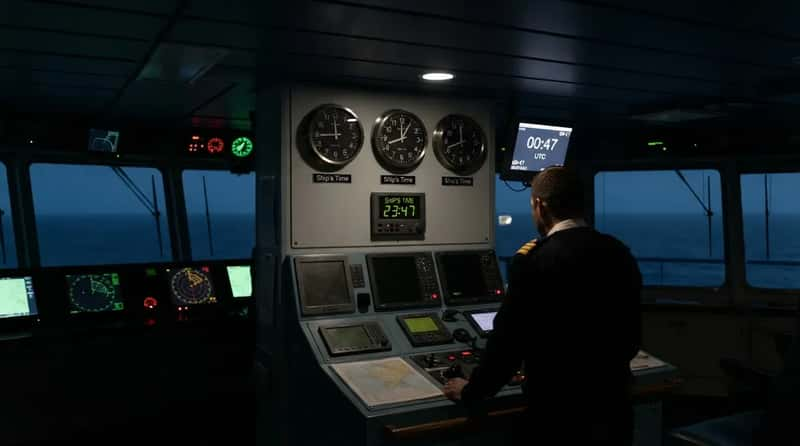
On a long crossing, time quietly slides. Ship’s time is set by the bridge, and it can disagree with your phone. Ships typically adjust clocks in steps on long east-west voyages and announce the change in the daily program.
Miss the notice and you can show up an hour early or late for dinner. A solo traveler with no one to compare watches with is the likeliest to get caught. And what about the hours when nobody is awake to hear any announcement?
#12 – Someone Is Watching the Sea While You Sleep
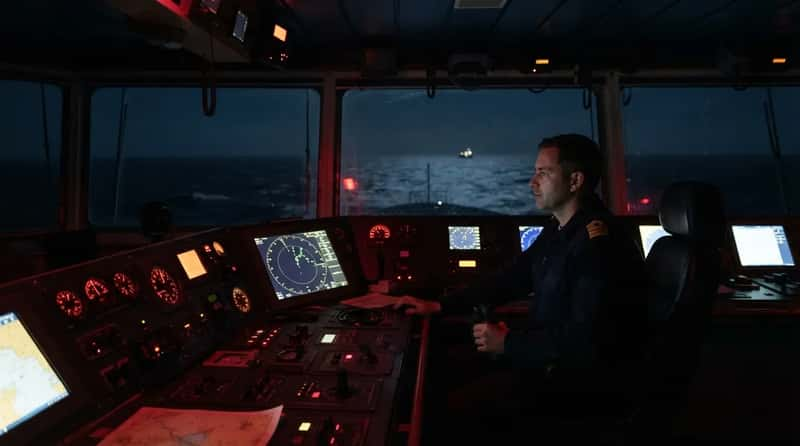
At 3 a.m., most passengers assume the ship runs itself. It doesn’t. The bridge is staffed around the clock by an officer on watch. Lookouts and radar are part of the routine, and the watch rotates so nobody works a full day alone.
For someone traveling solo, the quiet overnight hours can feel lonely. Knowing a trained person is awake at the front of the ship changes how those hours feel. Next is a visitor who shows up at the start and end of many voyages, and he isn’t from your ship.
#11 – A Stranger Climbs Aboard to Steer You Into Port
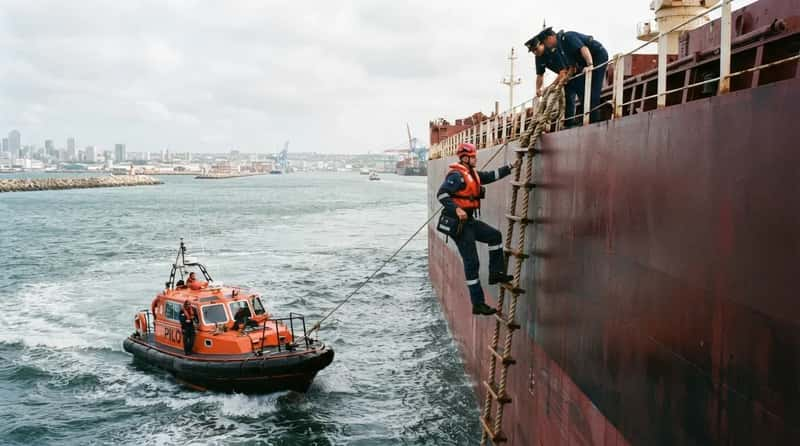
Near harbors, the ship gets a guest. A local pilot boards to guide it through tricky waters. Deck officers prepare the boarding arrangements and brief the bridge team. The pilot advises on local conditions, while the captain keeps overall command.
Most passengers sleep through it or never notice. Yet it’s one of the riskiest, most carefully timed moments of the day. Tide and harbor traffic shape the timing. So when your ship slides in a bit late, the pilot’s schedule might be part of the reason.
Why It Stands Out
- The pilot knows local currents, shallows and traffic patterns that a visiting crew may not.
- The pilot usually climbs aboard from a small boat alongside a moving ship.
- The captain stays in command, and the pilot works as a specialist advisor.
- Many passengers are asleep or at breakfast when it happens.
#10 – The Gangway Is Watched Like a Border Crossing
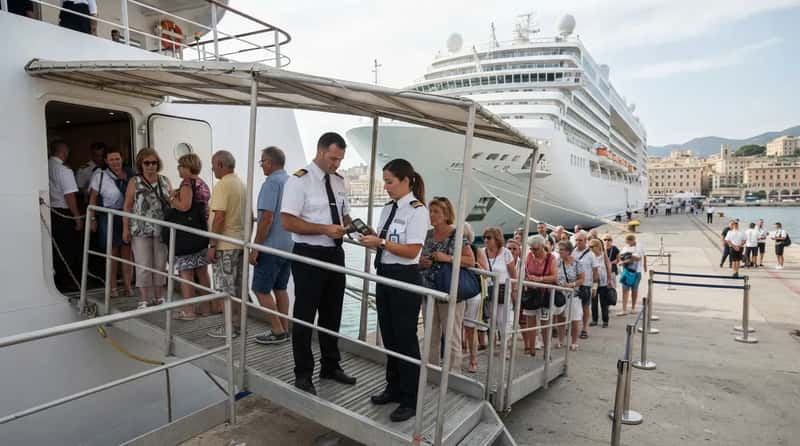
When the ship docks, the gangway isn’t just a ramp. Someone is tracking who goes ashore and who comes back. Deck and security staff check IDs and cards at the gangway. That’s how the ship knows, at any moment, who is on board.
It’s a quiet comfort for a solo traveler. If you get lost in port, the system notices your absence. Still, nothing tests an officer’s training like the scenario in #9.
#9 – A Person Overboard Triggers a Script Officers Pray They Never Use
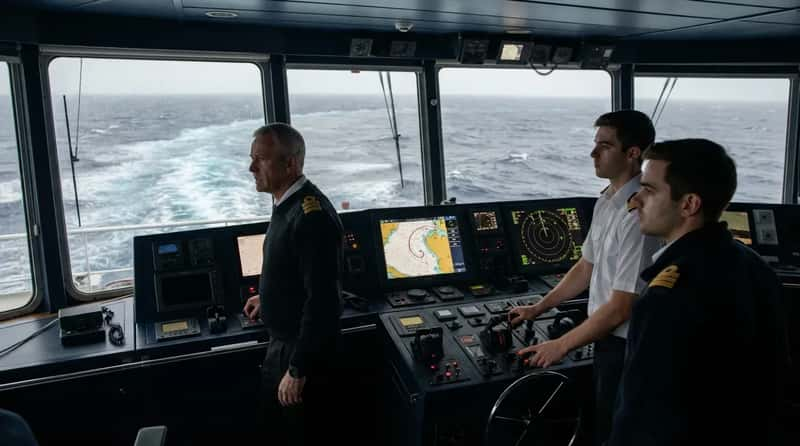
It’s the scenario every officer rehearses and hopes never to see. A U.S. law passed in 2010 pushed ships toward higher rails and overboard detection. The Cruise Vessel Security and Safety Act covers vessels calling at U.S. ports, and rail height and detection technology are part of it.
For solo travelers, the takeaway is simple. Rails and rules exist because the sea gives nobody a second chance. Officers treat each drill as if it were real.
#8 – The Tender Boats Can Be Cancelled on the Spot
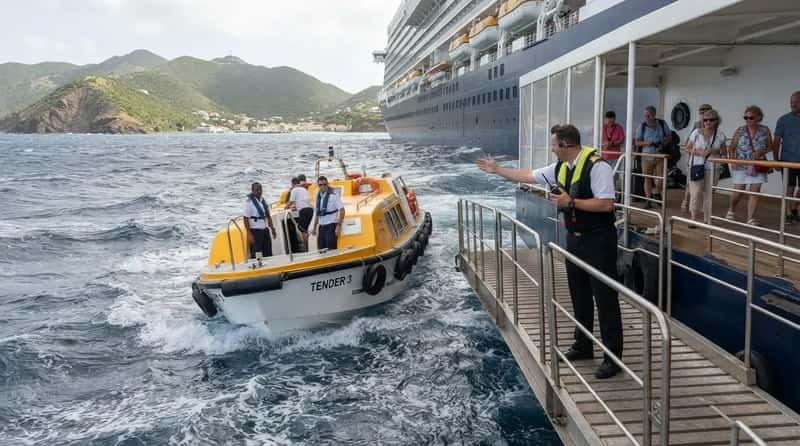
You’ve dressed for the island and the little boats don’t run. It happens. When the ship is anchored, officers decide whether it’s safe to ferry passengers ashore. Swell, wind and the condition of the landing point all count.
Some travelers argue lines cancel too easily to save money. Officers point to the risk of injury while people step between a moving boat and a platform. Either way, the call is made by people who can see the water.
#7 – The Bridge Is Mostly Off-Limits, and That’s Deliberate
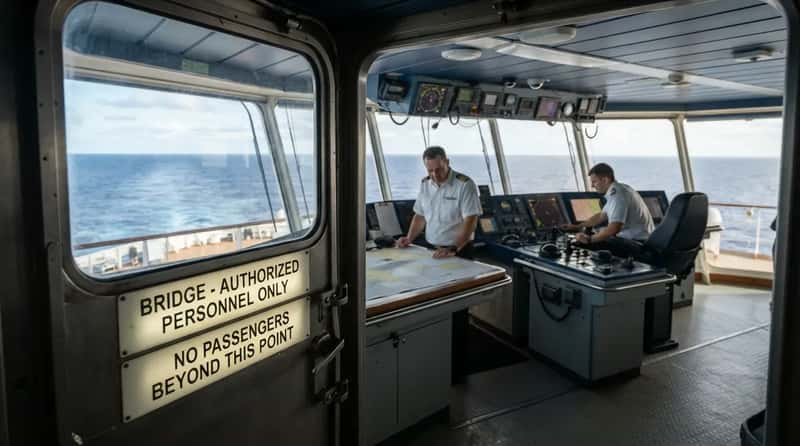
Everyone wants to see the bridge. Few get to. Access is limited because the watch team needs to focus. Some lines offer occasional tours or special visits, but regular access is tightly controlled.
Passengers sometimes read that as secrecy. Really, it’s about cutting distractions in the room where steering and navigation decisions get made. For a solo traveler, the best view is usually an open deck, not the wheelhouse. The next item happens in the corridors you walk every day.
#6 – Safety Rounds Happen While You’re at Dinner
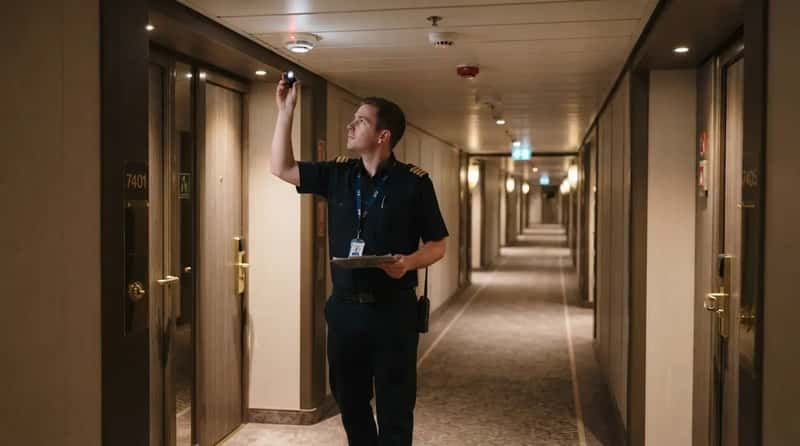
The ship is inspected constantly, and mostly out of sight. Crew members walk fire and safety rounds throughout the day and night. Safety officers, often drawn from the deck department, oversee checks of alarms, doors and equipment.
Most passengers only notice when a test alarm sounds. That test is the system working. Solo travelers sleeping alone benefit from it quietly. But not every problem can be solved on board.
#5 – One Medical Emergency Can Redirect the Whole Ship
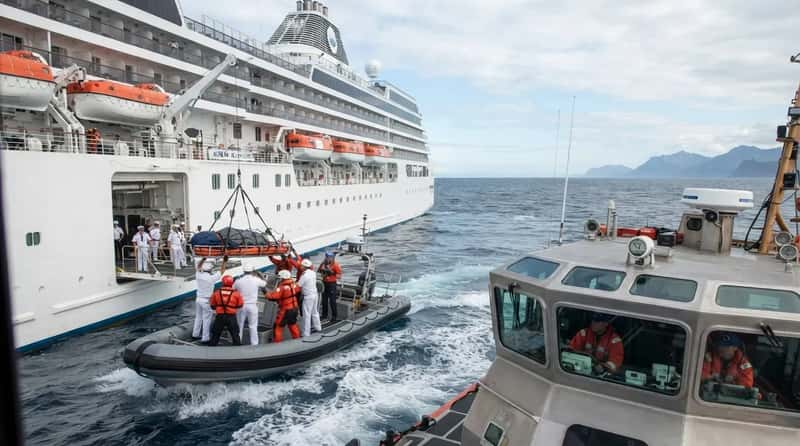
One sick passenger can change the itinerary. The master can divert the ship or call for outside help. Maritime rescue coordination centers, and in U.S. waters often the Coast Guard, can arrange an evacuation.
If you’re traveling alone, tell the medical team about any conditions you have. The ship can only act on what it knows. And the readiness behind these calls comes from practice, which is #4.
#4 – Crews Rehearse Emergencies Far More Than You’d Guess
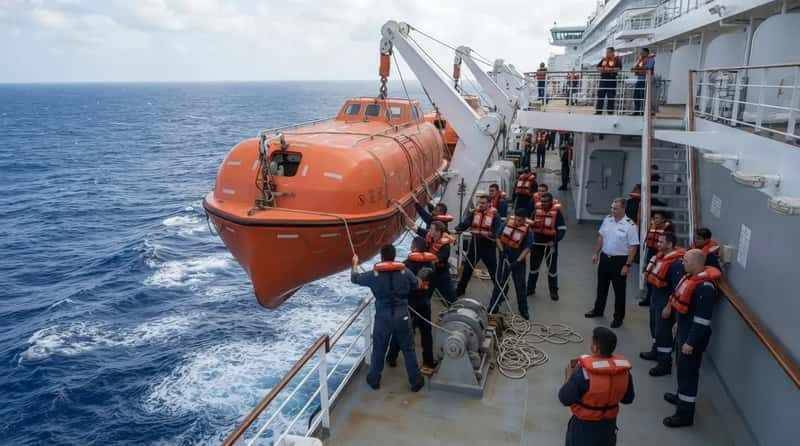
Your boarding-day drill is only the visible part. Behind the scenes, the crew trains on a steady schedule. Under SOLAS, each crew member must take part in at least one abandon-ship drill and one fire drill every month.
Many lines now let passengers watch the safety video on a phone or TV first. Most still have you walk to your muster station for a check-in. Veteran travelers say standing at your own lifeboat teaches you something a screen can’t. The ship’s design plays its part too, and you walk through it daily.
At a Glance
- Every crew member joins at least one abandon-ship drill and one fire drill each month.
- If more than a quarter of the crew missed the previous month’s drills, a make-up round is due within 24 hours of leaving port.
- Passenger musters happen before or right at departure, so guests are covered from the start.
- Walking to your own muster station is the part a safety video can’t teach.
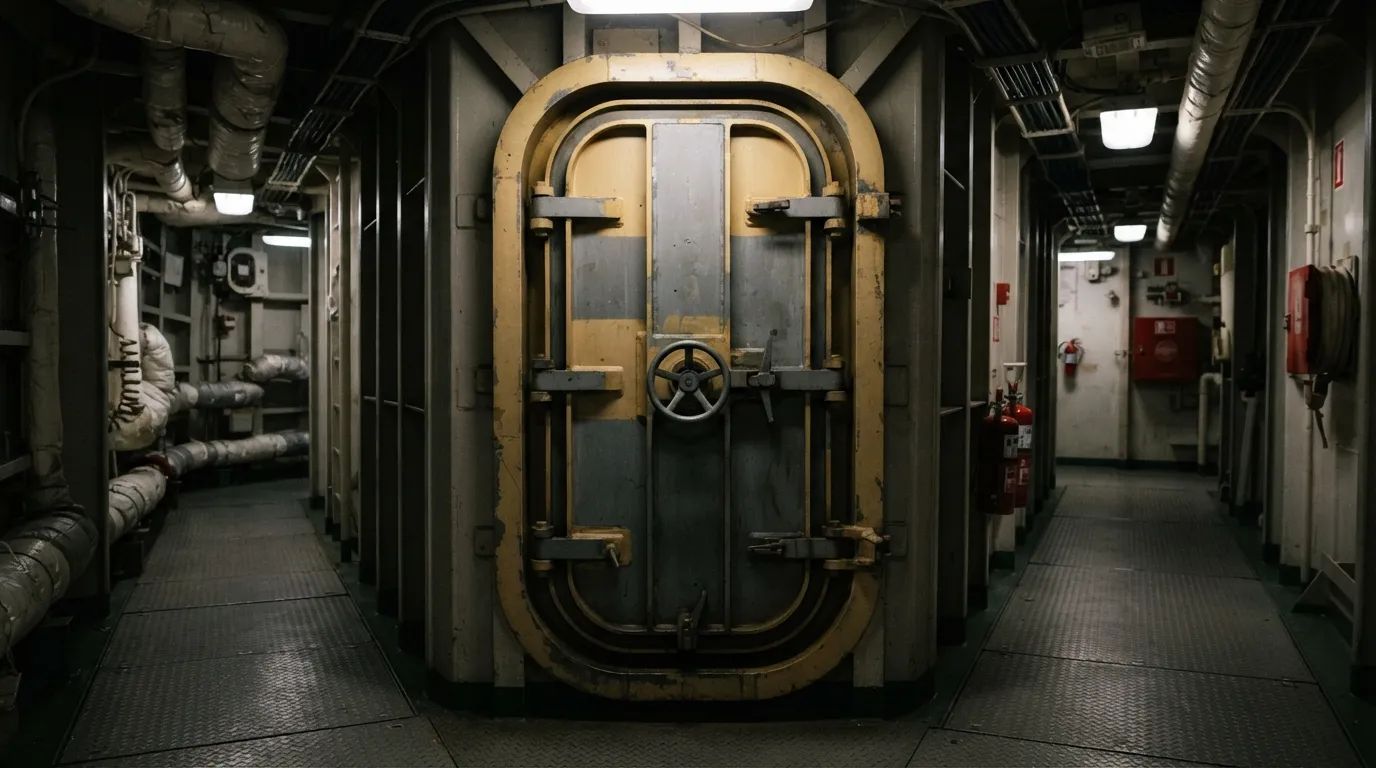
#3 – Heavy Doors You Never Notice Can Be Shut From the Bridge
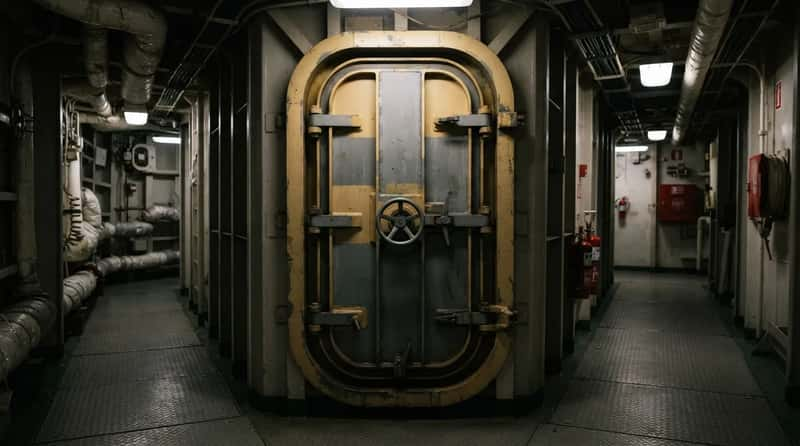
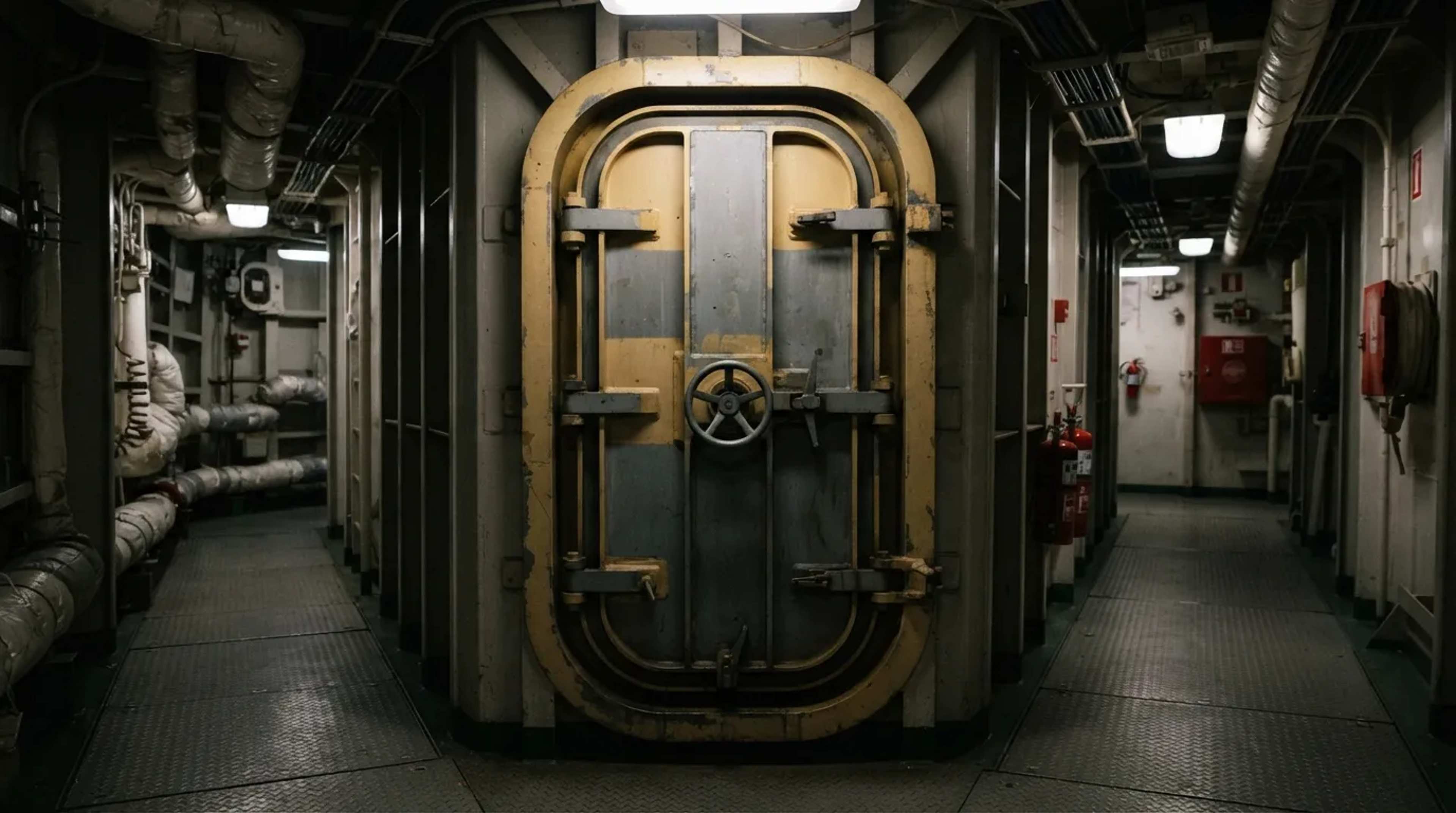
Those heavy doors low in the ship are not decoration. Watertight doors can be closed from the bridge. They carry alarms, and they split the hull into compartments so flooding can be contained.
Passengers rarely think about them until a warning sounds. For solo travelers, the signs near those doors are worth reading once. Officers drill on them as well. What turns all of this into calm routine for you is a voice on the speaker.
#2 – That Crackly Noon Announcement Is a Daily Status Report
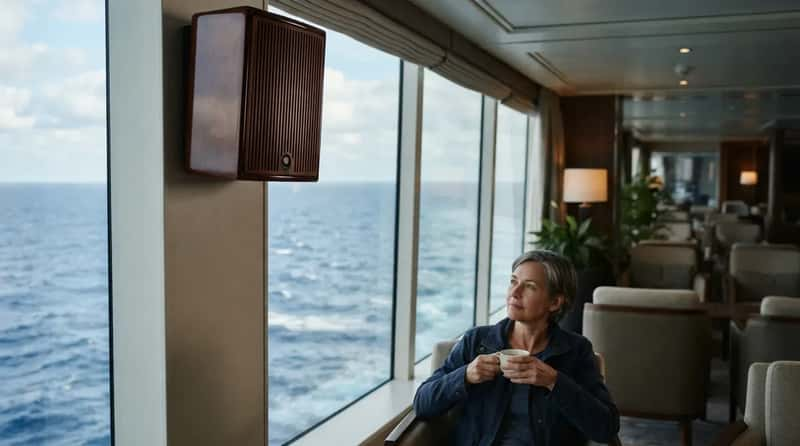
That voice isn’t filler. The bridge uses it to share position, weather and plans. It’s how officers tell a ship full of strangers what’s really happening.
Many people tune it out. The ones who listen know whether the seas will get rough and when the next port is due. For a solo traveler, it’s free information straight from the people steering. It also sets up the final item, the one that strands travelers every year.
#1 – The Ship Will Not Wait Past All-Aboard, Even for You
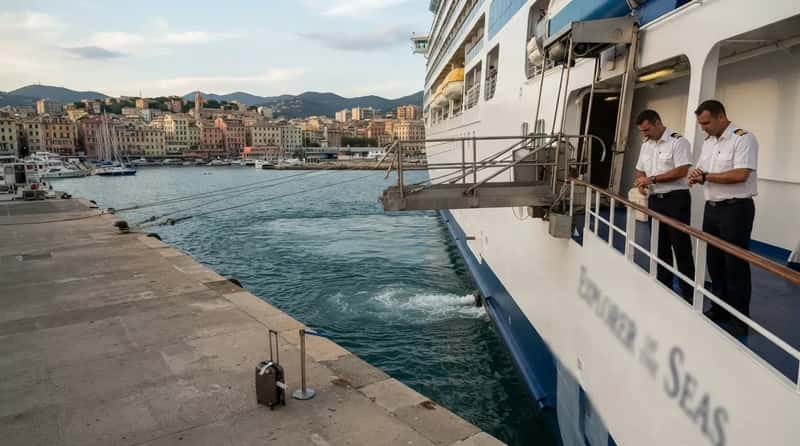
Here’s the one that surprises people most. The all-aboard time is firm, and it applies to a solo traveler as much as to anyone. Officers coordinate departure with tides, port schedules and pilots. Ships typically wait only when the delay involves ship-organized tours.
If you travel alone, nobody will be on the dock waving you in. The gangway watch and headcount mean the crew knows when someone is missing. But the deadline is the deadline, and the ship leaves on time.
Most of what deck officers settle each crossing isn’t dramatic. It’s the muster, the headcount, the weather call, the clock change and the moment the gangway comes up. The surprise is how much of it is decided before you ask.
Next time the announcement crackles on, listen to it. Which of these did you not know the bridge handled?