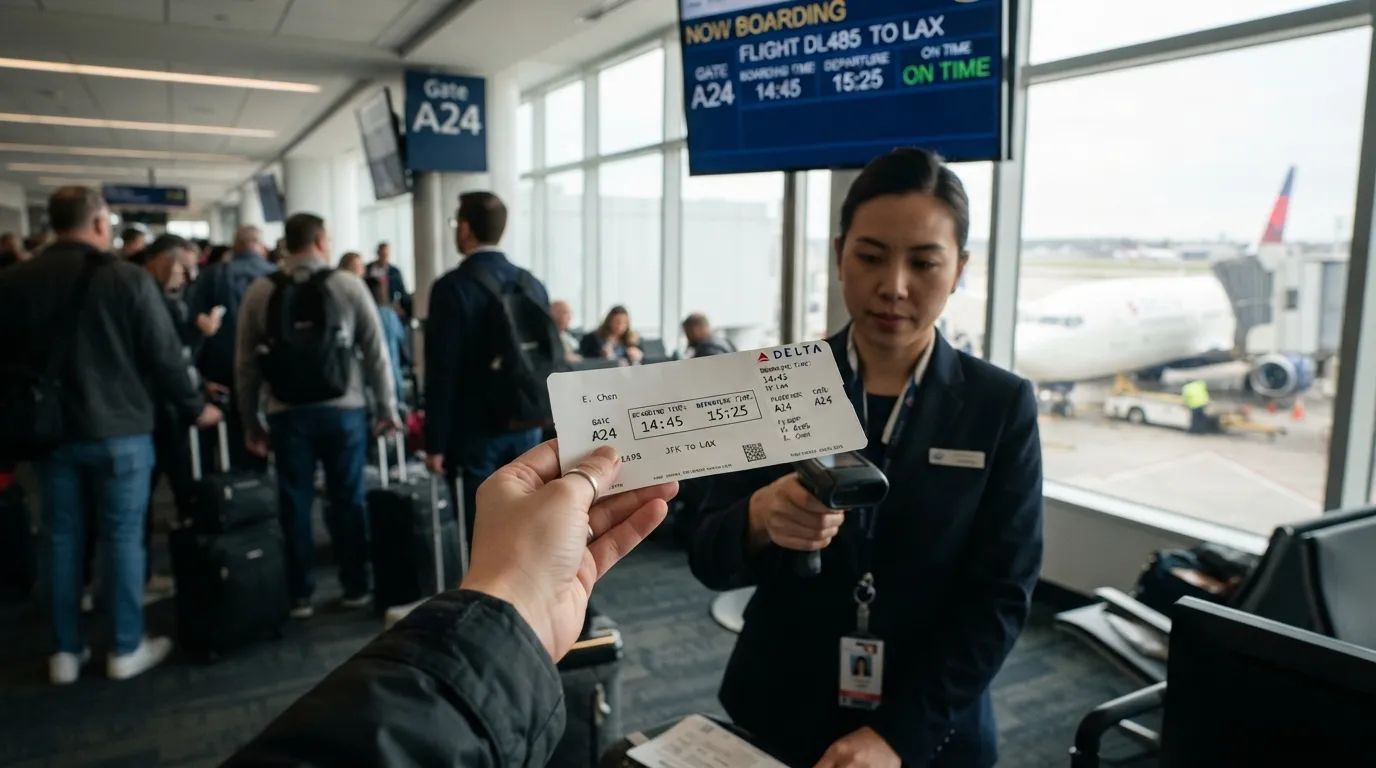
You hand over your boarding pass like it’s nothing – a formality between you and the jet bridge. But the second that barcode hits the scanner, a gate agent knows more about you than most coworkers do after a year.
Your name, your fare, your loyalty status, even whether you’ve caused trouble before – it’s all sitting right there in plain sight. By the time you get to #1, you’ll never glance at that little slip of paper the same way again.
#14 – Your Full Name, Checked in Seconds
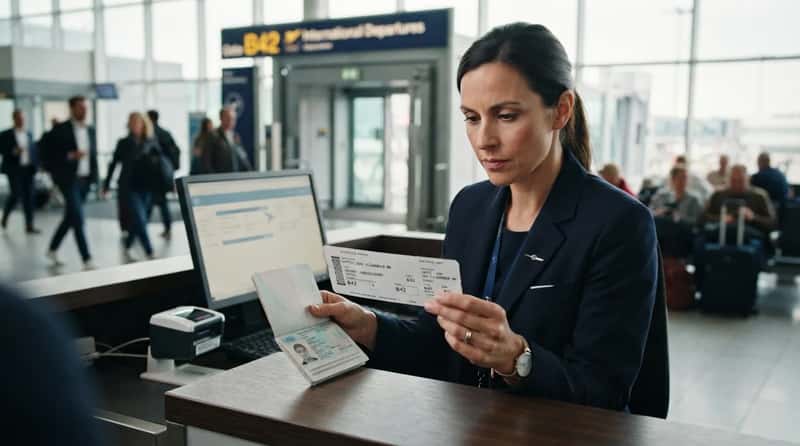
The first thing gate staff check is your name – and they’re not just skimming it. Your full name has to match your photo ID exactly, down to the last hyphen.
A missing hyphen or a swapped letter can trigger a flag. That’s not a paperwork hiccup – it can mean you don’t board at all, and agents are trained to catch it in under five seconds.
Most travelers assume this is a formality. It isn’t – and the name check is just the surface.
#13 – Your Flight Number and Airline Code
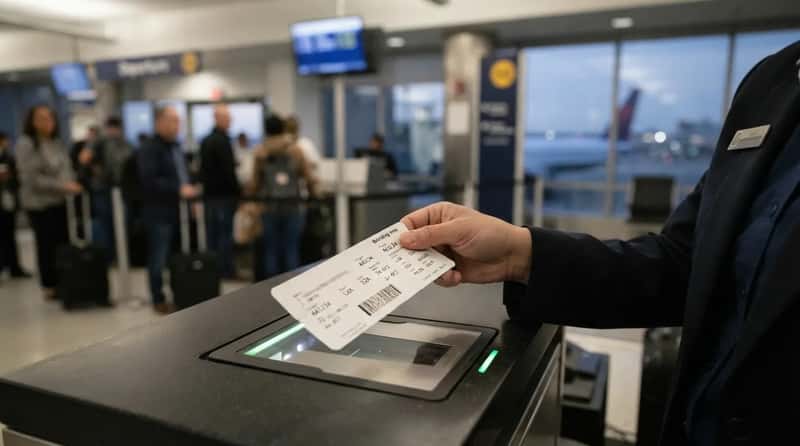
The flight number pairs an airline code with a route number, and gate staff check it constantly because passengers show up at the wrong gate more often than airlines admit. A misread gate or a last-minute change, and someone’s suddenly trying to board the wrong plane entirely.
The airline code identifies the carrier; the number after it identifies your exact flight. When a gate changes, agents cross-reference this instantly so no one from a different flight slips into the wrong line.
It sounds routine. It absolutely isn’t – and #12 reveals something even frequent flyers rarely notice.
#12 – Your Boarding Group (And Whether You’re Cheating It)
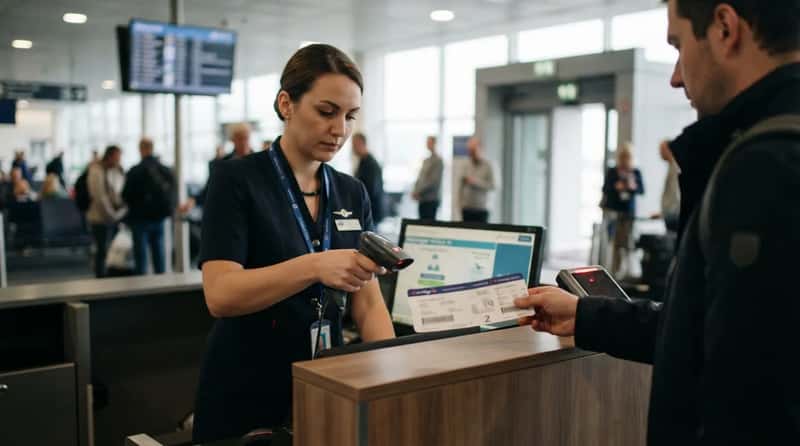
Almost every airline sorts passengers into boarding groups, and most travelers assume the system is loosely enforced. It isn’t – elite members and first- or business-class passengers board early, and that group assignment is one of the first things that appears on an agent’s screen.
Every scan triggers a visual check and a computer verification, and the two have to match. Trying to sneak into an earlier boarding group sets off an alert instantly.
Staff aren’t guessing – the system tells them before you even reach the podium. But there’s a number on your pass that decides something even bigger than when you board.
#11 – Your Sequence Number
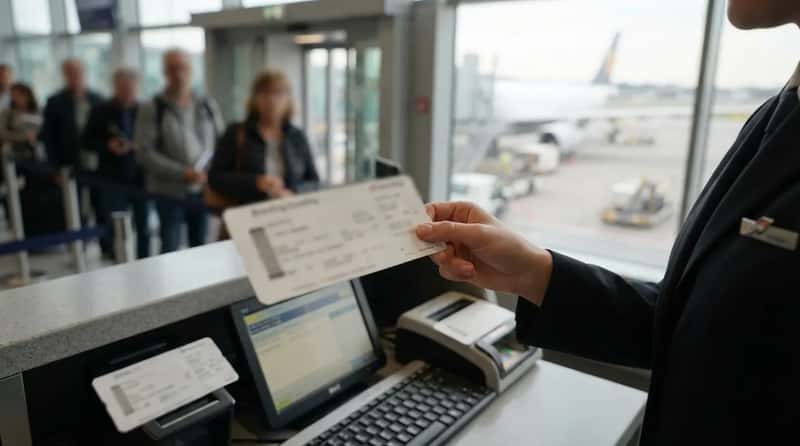
SEQ or SEQ NO stands for sequence number, and it marks your exact place in the boarding order. Flyers on the travel forum FlyerTalk have long said the most coveted code is “SEQ 001” – first to board, no exceptions.
That number is a direct reflection of when you checked in. Check in early online and it stays low; show up at an airport kiosk an hour before departure and you’re near the back of the pack.
Gate agents use this number to manage the whole boarding flow. And it’s quietly linked to something else on your pass most people never bother reading – coming up in #10.
#10 – Boarding Time vs. Departure Time
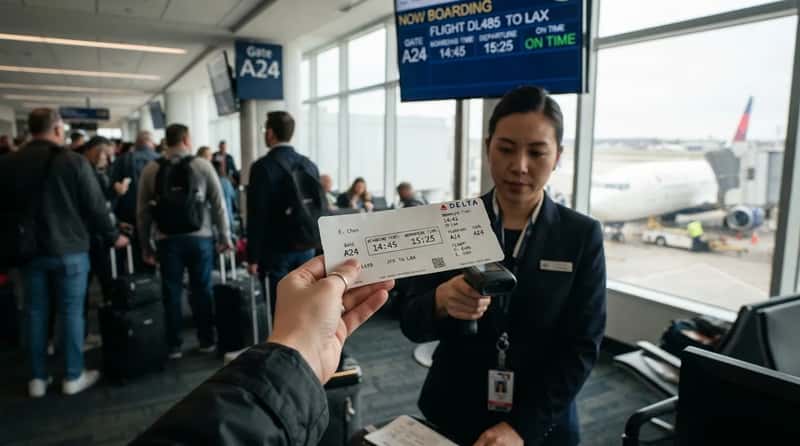
Passengers confuse these two constantly, and gate staff know it. Boarding time is when you need to be at the gate – usually 30 to 60 minutes before departure – and it’s a completely separate number from your actual departure time.
Delta’s domestic policy requires customers to be at the gate and ready to board 15 minutes before scheduled departure. JetBlue requires the same window domestically, and 20 minutes for international flights.
Quick Compare
- Delta: gate-ready 15 minutes before departure, domestic flights
- JetBlue: 15 minutes domestic, JetBlue allows passengers on international flights to arrive at the gate up to 20 minutes before departure
- United: all customers must be on board the aircraft 15 minutes before the scheduled departure time for flights within the U.S.
A late group number does not extend either clock. Miss this window and the door closes on you – literally – but your timing on the pass is nothing compared to what a single letter on your ticket quietly reveals.
#9 – Your Fare Class Code
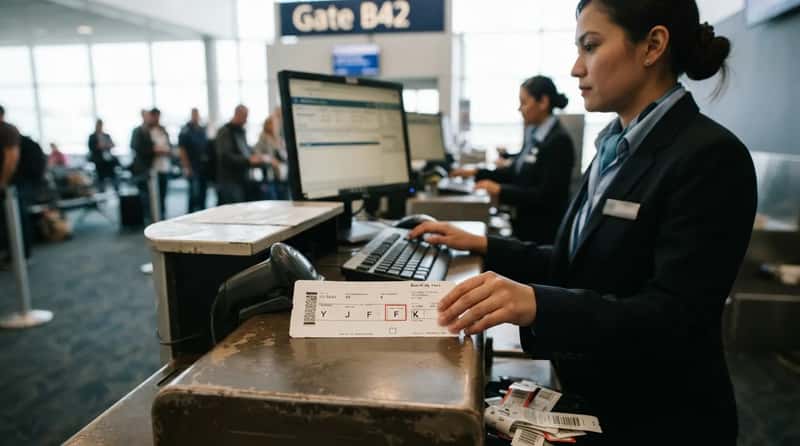
The fare class code is a single letter indicating ticket type, flexibility, and mileage accrual rules. “Y” typically means full-fare economy, while “J” usually means full-fare business class – though the exact codes vary by carrier.
Fast Facts
- F usually marks full first class
- J usually marks full-fare business class
- W often marks premium economy
- Y marks full-fare economy
- Discounted economy seats can carry letters like Q, K, or S
When a flight is oversold, agents go straight to fare class to decide who gets bumped first. Most passengers assume it’s random selection – it isn’t.
Your fare class letter is the single biggest factor in whether you get bumped on an oversold flight. And the code that follows it is even more revealing.
#8 – The PNR: Your Entire Travel History in Six Characters
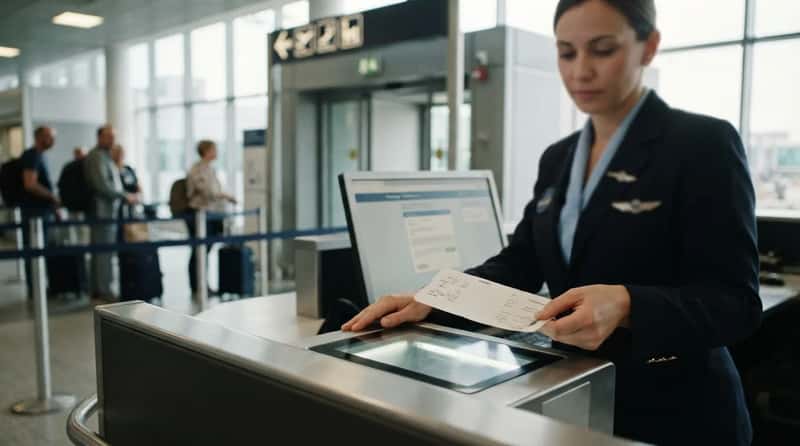
That short alphanumeric code printed in bold unlocks nearly everything about your trip. The PNR, or Passenger Name Record, is issued by the airline for your whole booking.
Gate staff can pull your full itinerary, contact details, and any special notes attached to your reservation with one scan. That includes whether you’ve had past issues with that airline.
This is exactly why security experts are unanimous: never post a photo of your boarding pass online. The next item explains just how much damage that could actually cause.
#7 – The Barcode Itself (It Knows More Than You Think)
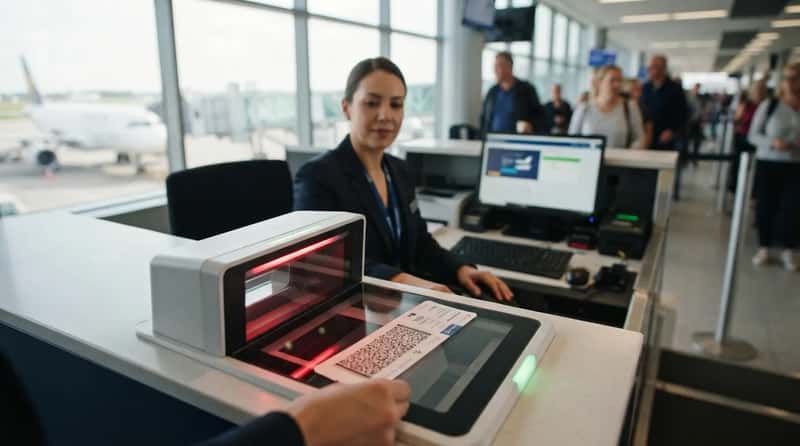
If someone screenshots your pass and scans it before you do, the system flags a duplicate scan and alerts gate staff instantly. Two attempts on the same barcode stops both passengers cold until identity is verified.
This is also why “lending” a boarding pass to someone else is essentially impossible now. Once issued, a pass is tied to one named passenger on one specific flight, and the scanner confirms identity in real time.
The barcode is smarter than most people realize. But there’s a four-letter code that can stop you dead at security – and it’s on #6.
#6 – SSSS: The Four Letters Nobody Wants to See
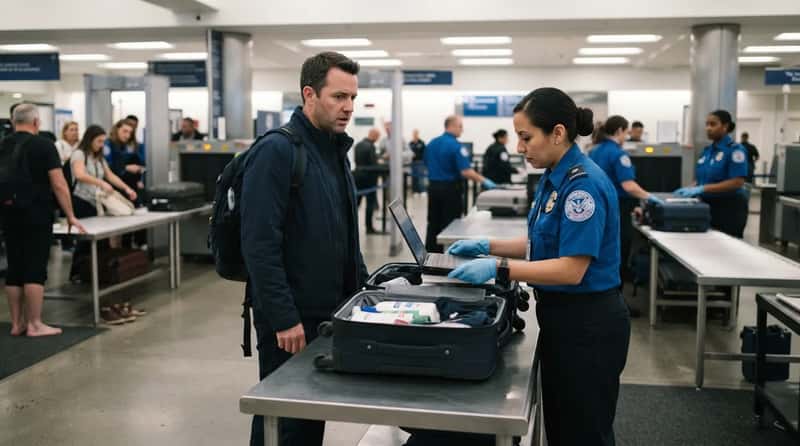
SSSS is the code flyers dread most. It stands for Secondary Security Screening Selection, and it means additional screening – luggage searches, pat-downs, extra questioning at the TSA checkpoint.
The designation comes from TSA’s Secure Flight system, not from the airline or the gate agent. TSA doesn’t publish the exact criteria behind any individual selection, only that Secure Flight matches passenger data against federal watch lists before boarding.
Worth Knowing
- Selection is made by the Transportation Security Administration’s Secure Flight system, not by the airline or a gate agent
- Extra screening can add roughly 15-45 minutes longer than expected in airport security
- SSSS can appear on domestic and international itineraries, both at U.S. airports and international airports where you have a flight to the U.S.
- Getting flagged doesn’t always mean something’s wrong – random selection happens too
Gate staff see this flag before you even reach the podium. And there’s another code that signals something almost as significant – #5.
#5 – Your Frequent Flyer Status
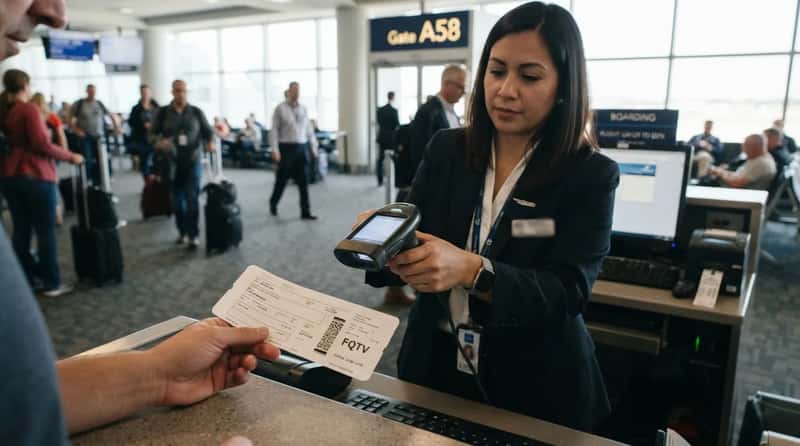
This field changes how an agent treats you before you say a word. If you’re enrolled in the airline’s loyalty program, your status level shows up right on the pass – early boarding, upgrade priority, all of it.
The code FQTV stands for Frequent Traveler, marking you as registered in the airline’s loyalty system. Elite status passengers get flagged instantly, all from one glance at the barcode.
The next detail is one most passengers have never even thought to look for.
#4 – Special Service Requests (SSRs)
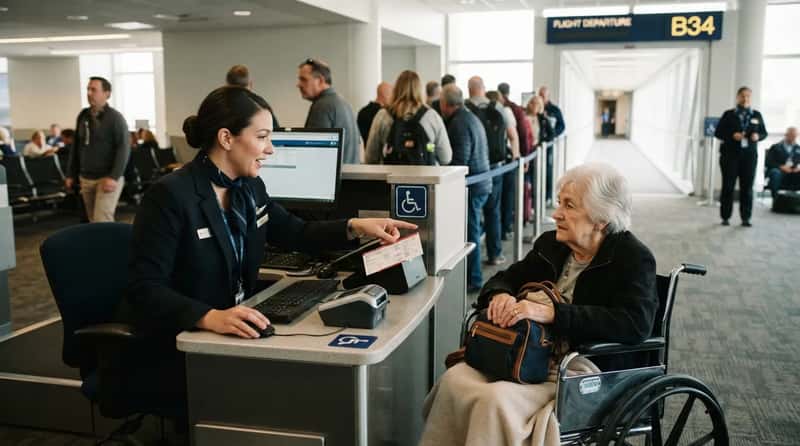
Encoded inside the barcode or QR code is the same PNR that links your pass to your full reservation – itinerary, contact details, meal preferences, everything. Special Service Requests, or SSRs, cover things like meal requirements and wheelchair assistance.
There’s also “Other Service Information,” or OSI – notes sent to the airline so they can better handle your trip. Gate agents see these the moment your pass is scanned.
If you requested a wheelchair and none is waiting, it’s this field that triggers the scramble. The next item is one gate staff use to make a judgment call that affects whether you fly at all.
#3 – “See Agent” or Blank Seat Field
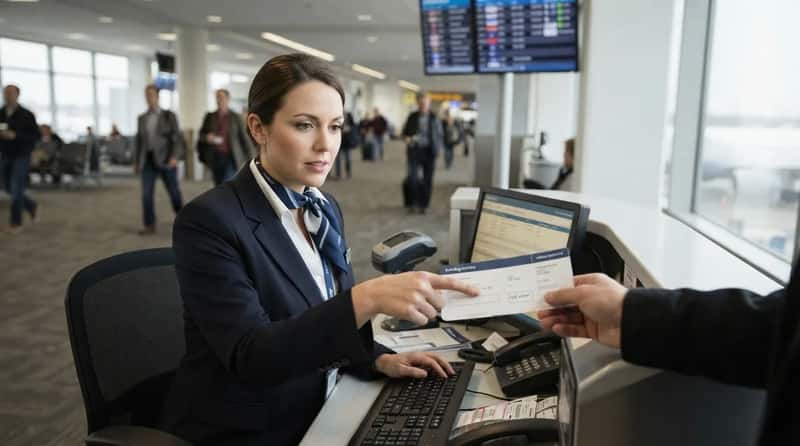
The phrase “see agent” can mean several things: the airline needs to verify travel documents, your destination requires a visa check, the flight is a codeshare, it’s overbooked, or your fare is basic economy.
Some carriers – American, Delta, United – don’t assign a free seat for basic economy until you reach the counter or gate. If no one volunteers to give up a seat on an oversold flight, those without an assignment are often first in line to be bumped.
“See agent” is the quiet warning that your seat – and your spot on the flight – isn’t guaranteed yet. What gate staff check next is something most passengers never even suspect exists on their pass.
#2 – The Standby Indicator
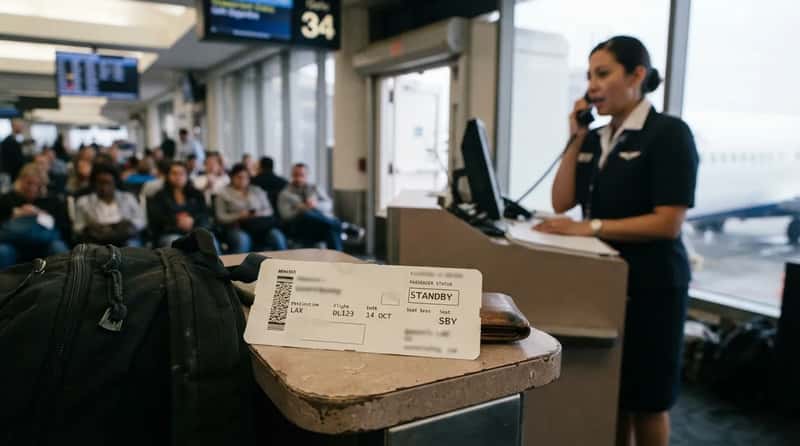
A boarding pass can quietly mark you as being on the standby list. If it does, you’re expected at the gate from about an hour before departure until the jet bridge doors close.
If a seat opens up, a gate agent calls your name over the loudspeaker. You are not confirmed until you hear that call – nothing before it counts.
At a Glance
- Standby passengers should be at the gate about an hour before departure
- A seat is confirmed only once your name is called aloud
- Elite status and fare class both influence standby priority order
- Nothing on the pass guarantees a seat until that announcement
Standby passengers live in a kind of airport limbo, and gate staff manage that list with precision right up to the last second. The #1 item, though, is the one that surprises even seasoned travelers the most.
#1 – Your Full Reservation Record: One Scan Reveals Everything
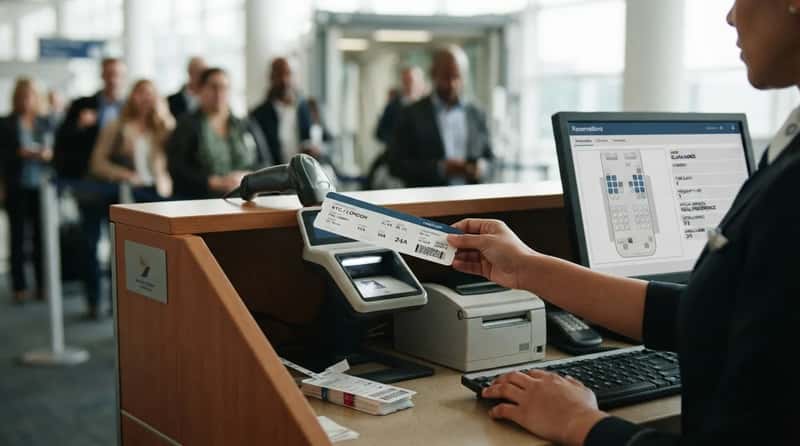
Gate staff can pull your full itinerary, contact details, and any special notes tied to your reservation with a single scan. Anyone with access to the right lookup tools can see the same thing – which is exactly why experts warn against posting boarding pass photos online.
When the barcode is scanned, it also feeds the crew real-time data: how many passengers have boarded, which seats are filled, how many checked bags have already made it into the hold.
In a single scan, a gate agent knows your name, fare class, loyalty status, special requests, past airline history, and whether your bags are already loaded. That blank expression at the podium? It’s doing a lot more work than you ever imagined.
The Bottom Line
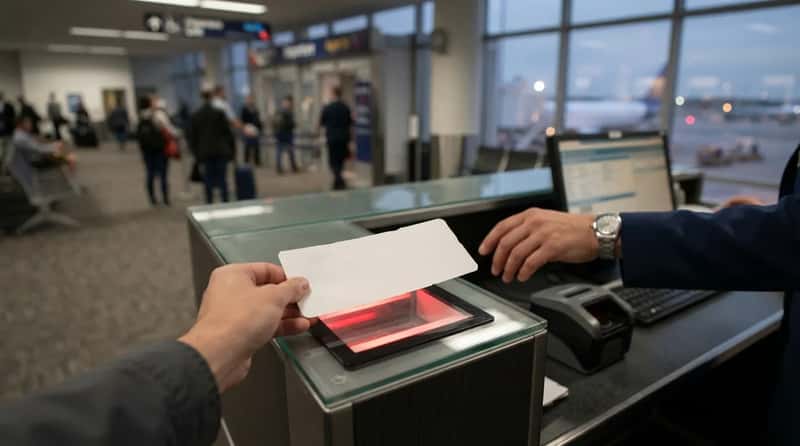
Your boarding pass is one of the most information-dense documents you’ll ever carry, and most people treat it like a hall pass. Fare class, boarding group, standby status, SSSS flags, PNR, special requests, loyalty tier – gate staff see all of it before you say a single word.
The single biggest surprise? One scan pulls up your entire reservation history, including any past issues with the airline. Guard that barcode like you’d guard your wallet, and never post it online.
Which of these surprised you the most? Drop it in the comments below.