Most passengers spend the nineteen minutes before boarding staring at their phones or hunting for coffee. They have no idea those same minutes are the tightest, most unforgiving window in all of commercial aviation.
One missed step in that window can cascade into a full delay – or a missed flight entirely. Here’s what gate agents, ramp crews, and pilots know that you almost certainly don’t.
#9 – The Standby List Is Already Moving Against You
Before you even queue up, your seat is already at risk.
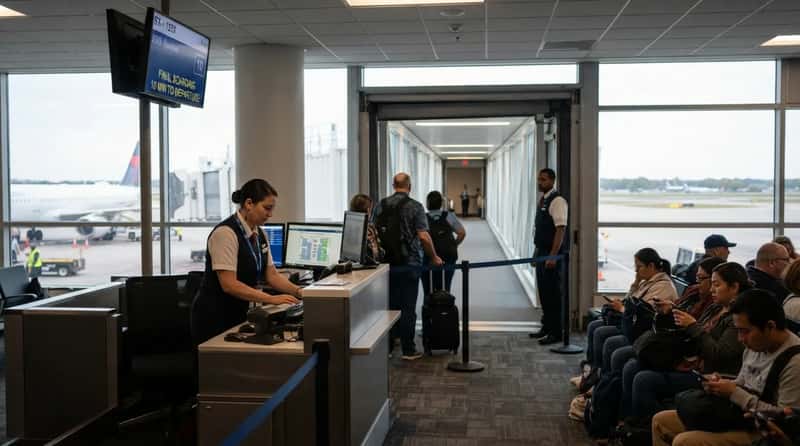
Once final boarding announcements go out, gate agents check who’s missing and start seating standby travelers in their place. If the cutoff is 15 minutes before departure, your seat can vanish the instant that clock hits zero.
Most travelers assume their seat is theirs until the plane pushes back. It isn’t – some gate agents close the door as early as 10 minutes before departure, and which side of that door you’re on decides your whole trip.
The clock isn’t running against the plane. It’s running against you.
But that’s nothing compared to what’s quietly happening on the other side of the jet bridge in #8.
#8 – The Bags Are Being Locked In Without You
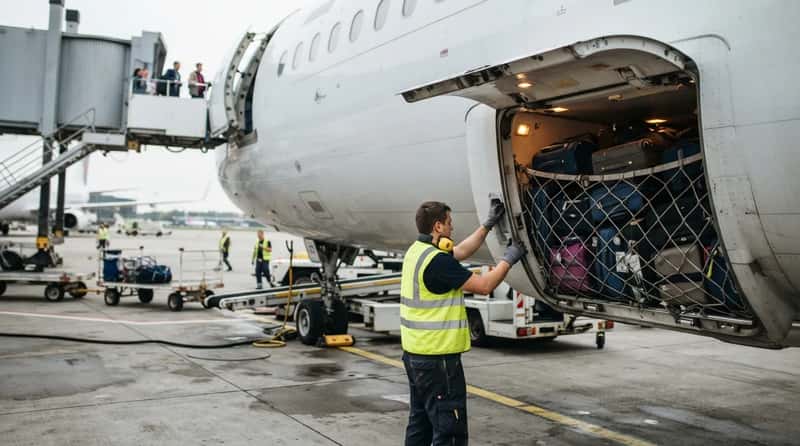
While passengers mill around the gate, the cargo hold is already closing up.
For most airlines, everyone must be aboard 10 minutes before departure, with cargo loading fully finished six minutes out. Your bag has been moving since you dropped it off 40 minutes prior – and after that six-minute mark, the hold closes whether it made it or not.
Fast Facts
- Checked bags are typically due 30-45 minutes before domestic departure, or up to 60 minutes for international flights.
- Cargo hold loading is finished about six minutes before departure – no exceptions.
- On international routes, every bag must be matched to a boarded passenger before departure.
- An unmatched bag has to be physically pulled, even if it delays the whole aircraft.
On international flights, the stakes climb even higher. Bags must be matched to passengers, and if you’re late, your bag has to be physically pulled from the plane – a single process that can delay an entire aircraft full of strangers.
But that’s nothing compared to what the pilots are locked into doing in #7.
#7 – The Pilots Are Already Talking to Air Traffic Control
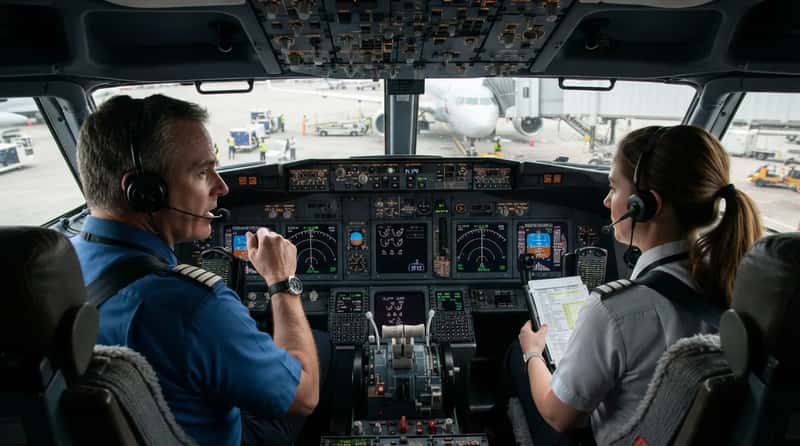
While you’re deciding between a window or an aisle seat, the flight deck is running its own parallel countdown.
Around this time, the crew requests ATC clearance and checks the assigned route against what’s programmed into the aircraft. Altitude, frequency, transponder code – every detail has to be locked in before the plane can legally move an inch.
The pilots aren’t waiting for boarding to finish. They’re deep into their own sequence, and the passenger headcount is the one wild card that can freeze the whole thing.
Speaking of headcounts – #6 reveals the check that has the power to stop an entire aircraft cold.
#6 – One Wrong Number Can Halt the Whole Aircraft
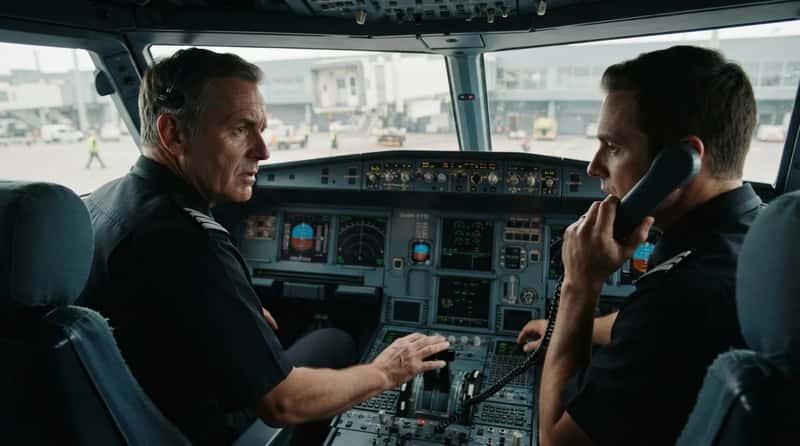
The passenger count is not a formality. It’s a hard stop.
Pilots need formal confirmation that the count matches the manifest before they’ll move. A single mismatch could mean a wrong-flight boarding, a missing child, or someone still in the lavatory.
The senior flight attendant has to confirm doors armed, headcount matched, everyone seated. If that call doesn’t come – or even sounds slightly off – the plane simply does not move.
A pilot who senses something uncertain won’t guess. They’ll hold.
Standard cockpit protocol
Even a hesitant tone in a flight attendant’s voice can trigger a delay. It’s one reason airlines are so ruthless about boarding cutoffs – late passengers introduce the one thing this system tolerates zero of: uncertainty.
That rigidity extends to the gate itself – and #5 shows just how final “final call” really is.
#5 – “Final Call” Is Not a Warning – It’s Already Too Late
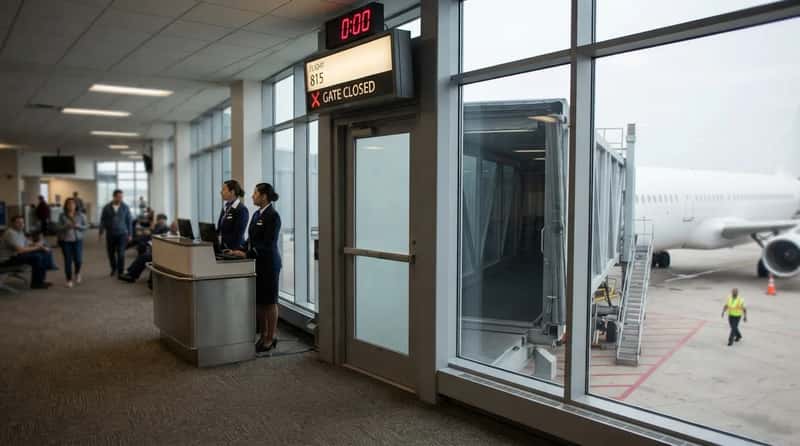
There’s a widespread belief that “final boarding call” buys you a few more minutes. You almost certainly don’t have them.
It’s the last reminder to get to the gate immediately – closure can follow within moments. If you arrive after that door shuts, you’re not getting on, even if the plane is still sitting right there at the gate.
The rule isn’t even consistent. Some agents close at 15 minutes out; others move earlier if the flight is full and ready to go.
There is no universal rule that protects you. The only safe strategy is to never test it.
And the reason no one can bend that rule for you? #4 explains why reopening a gate isn’t just inconvenient – it’s operationally impossible.
#4 – Reopening the Gate Would Trigger a Full Reset
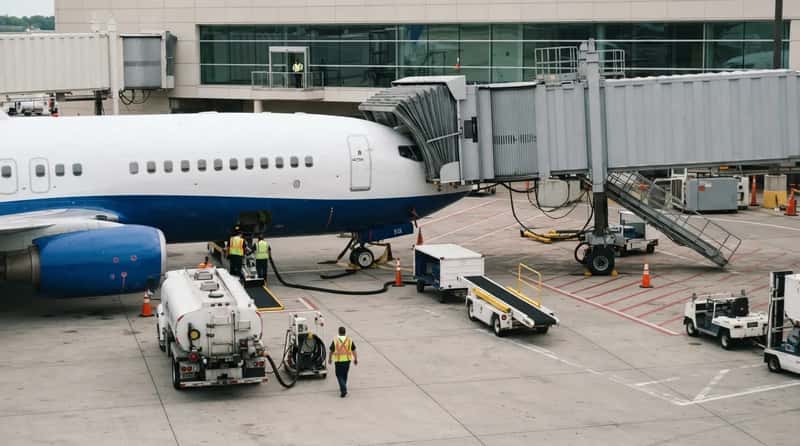
Most passengers who miss boarding assume the agent simply chose not to let them through. The reality is bigger than one person’s decision.
Outside the aircraft, baggage handlers are finishing the last bags, fueling teams are clearing out, catering is locked in, and the jet bridge is retracting. Reopening the door isn’t a quick “slide you in” moment – it resets a chain of processes involving dozens of people.
Worth Knowing
- Baggage handlers are closing out the last bins in the hold.
- Fueling teams are disconnecting hoses and clearing the wing.
- Catering carts are locked in place and pulled away from the galley.
- The jet bridge itself is already retracting from the fuselage.
The ground operation doesn’t pause for late passengers. Airlines won’t reopen boarding doors for stragglers precisely to keep that rushed environment from becoming a safety risk – it’s caution, not indifference.
But the consequences of missing that door go far beyond rebooking – #3 reveals what actually happens to your ticket.
#3 – Missing Boarding Can Wipe Out Your Entire Itinerary
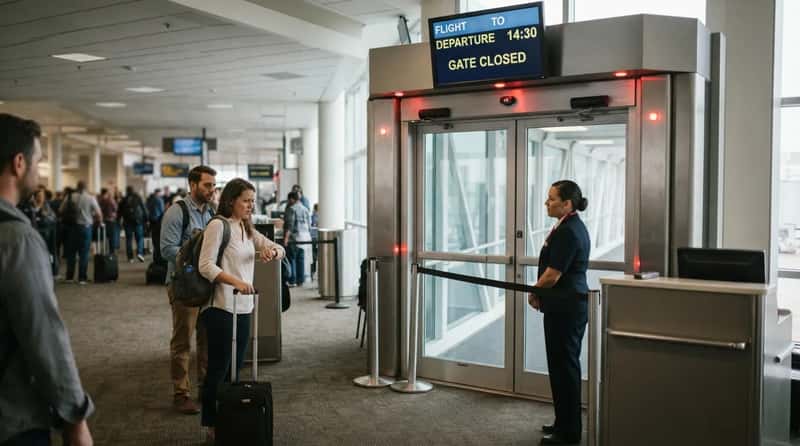
Most passengers assume missing a flight just means catching the next one. Sometimes it means losing every flight on the reservation.
For no-shows, many airlines cancel the whole itinerary – including your return flight, even if you only missed the outbound leg. The moment gates close, usually 15 minutes before departure, you’re reclassified from “late” to “no-show,” and the rules that apply get far harsher.
Budget carriers are the least forgiving of all. Some low-cost airlines lock the gate exactly 15 minutes before takeoff, no exceptions, no grace window – status or excuse be damned.
What’s equally surprising is how much this varies between airlines – and #2 shows why that inconsistency can trip up even seasoned travelers.
#2 – Airline Policies Are Inconsistent – Even Inside the Same Carrier
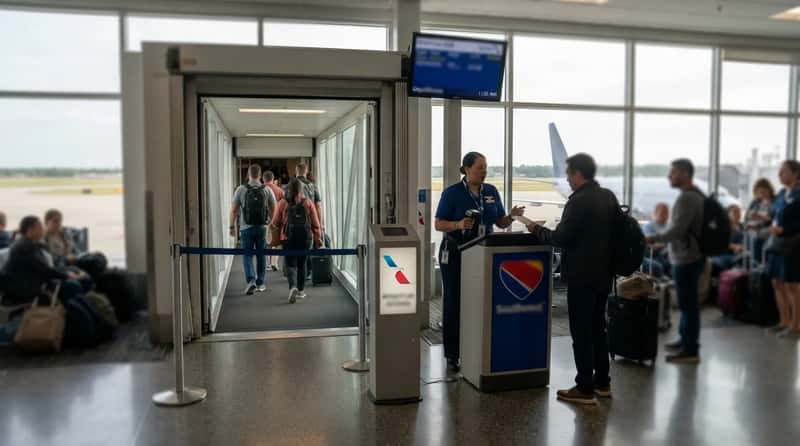
Travelers who think they know the rules because they’ve flown one airline for years are often the most caught off guard.
American Airlines closes boarding 15 minutes before departure regardless of destination – the standard for most domestic carriers. Southwest, by contrast, allows boarding up to 10 minutes before departure, a five-minute gap that can be the difference between making it and watching the plane leave.
Quick Compare
- American Airlines: boarding ends 15 minutes before departure, regardless of destination.
- Southwest Airlines: boarding ends 10 minutes before departure – that five-minute gap matters.
- Domestic flights: boarding typically opens 30 to 45 minutes before departure.
- International flights: boarding opens 50 to 60 minutes out, with stricter final cutoffs.
Domestic boarding typically opens 30 to 45 minutes before departure. Wide-body international flights stretch that to 50 or 60 minutes – with stricter cutoffs to match.
The most dangerous assumption in air travel is that every airline runs on the same clock. They don’t – and even the same airline can shift depending on the route, the gate agent, or how full the flight is.
Which brings us to the single fact that will permanently change how you think about that nineteen-minute window.
#1 – The Aircraft Door Closes Five Minutes Before Departure – Not at Departure
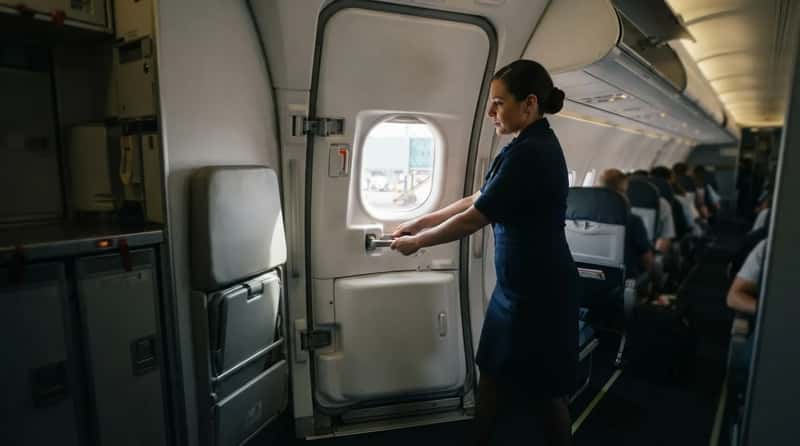
This is the fact almost no casual traveler knows, and it matters more than anything else in this article.
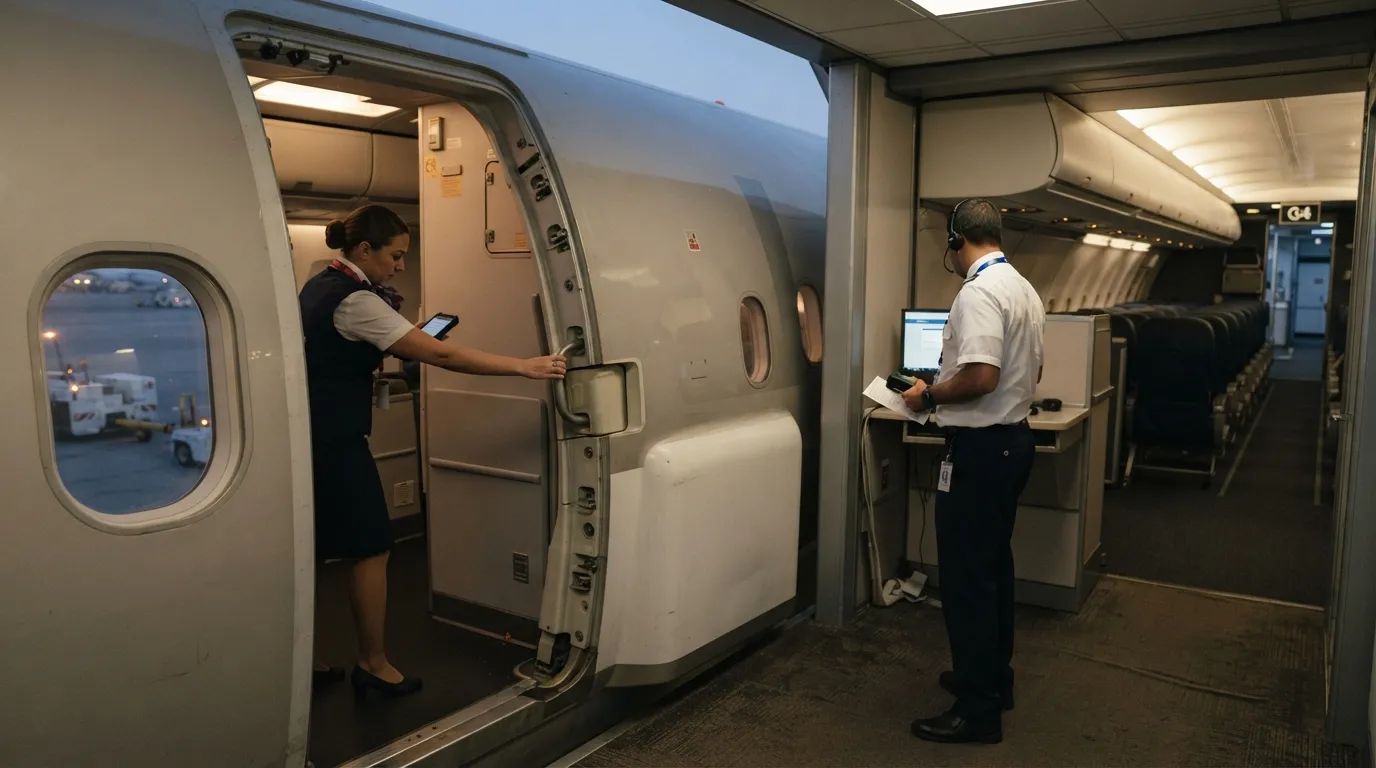
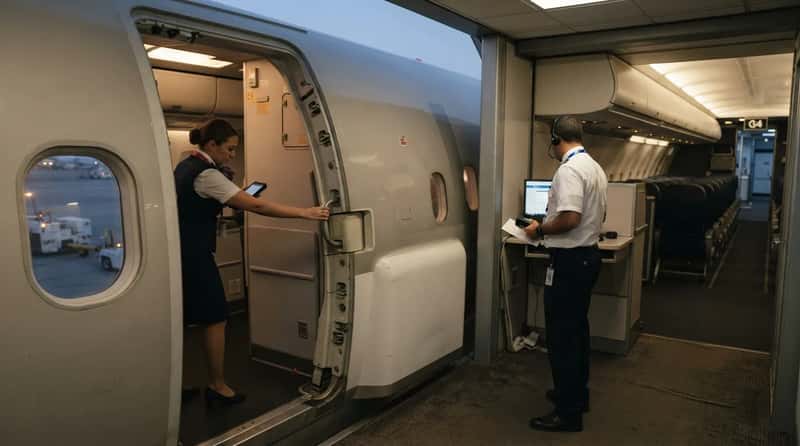
Five minutes before the time printed on your boarding pass, all passengers must be seated and the doors are sealed. The jet bridge retracts and loading equipment clears out – all before your “departure time” even arrives.
At two minutes before departure, the captain calls for pushback. The aircraft contacts the Control Center, requests clearance, and receives instructions – all while your ticket still says you have minutes to spare.
At a Glance
- T-15 minutes: gate boarding closes on most major carriers.
- T-6 minutes: cargo hold loading is finished.
- T-5 minutes: aircraft door seals and the jet bridge retracts.
- T-2 minutes: captain calls for pushback and requests ATC clearance.
By the time your boarding pass says “departs,” the plane is already moving. The nineteen minutes before boarding are where all of this quietly gets set in motion – and almost every passenger spends them completely unaware.
The Bottom Line
Those nineteen minutes are not downtime. They’re the tightest, most consequential window in commercial aviation.
Bags get locked in six minutes before departure. Passenger counts must clear before the plane can legally move.
Gate agents hand your seat to standby travelers the moment you miss the cutoff. The aircraft door closes five minutes before the time on your ticket, with pushback called just two minutes later.
Every airline plays by slightly different rules, which makes complacency the real enemy. Know your airline’s cutoff, get to the gate early, and never trust “final call” to save you.
Did any of these surprise you? Drop your experience in the comments.