Phra Samut Chedi, Thailand – Communities along the Chao Phraya River Delta face relentless pressure from the sea, where strong waves strip away 20 to 60 meters of shoreline each year and repeatedly breach protective dikes. Aquaculture farms in the area suffer regular flooding as a result. Previous efforts to restore natural mangroves or install bamboo barriers have fallen short, prompting researchers to explore a different approach built around engineered structures that copy the shape of mangrove roots. A recent 15-month field trial evaluated whether these artificial systems could trap sediment and reduce land loss in the same way living roots do. ([1])
The Scale of Coastal Loss
The problem centers on Samut Prakan province, where the Chao Phraya empties into the Gulf of Thailand. Erosion here moves faster than in many other Thai coastal zones, and the flat delta terrain offers little natural resistance once protective vegetation disappears. Local farmers report that wave action not only removes soil but also undermines the earthen dikes built to safeguard ponds and fields. Over time, repeated failures have forced repeated repairs and, in some cases, abandonment of productive land.
Standard responses such as planting new mangroves or erecting temporary bamboo fences have shown limited durability. Mangrove seedlings often fail to establish in high-energy zones, while bamboo structures degrade quickly and add plastic or wood debris to the water. These shortcomings led engineers to design a more resilient alternative that works with, rather than against, the movement of water and sediment.
Design and Function of the Artificial Roots
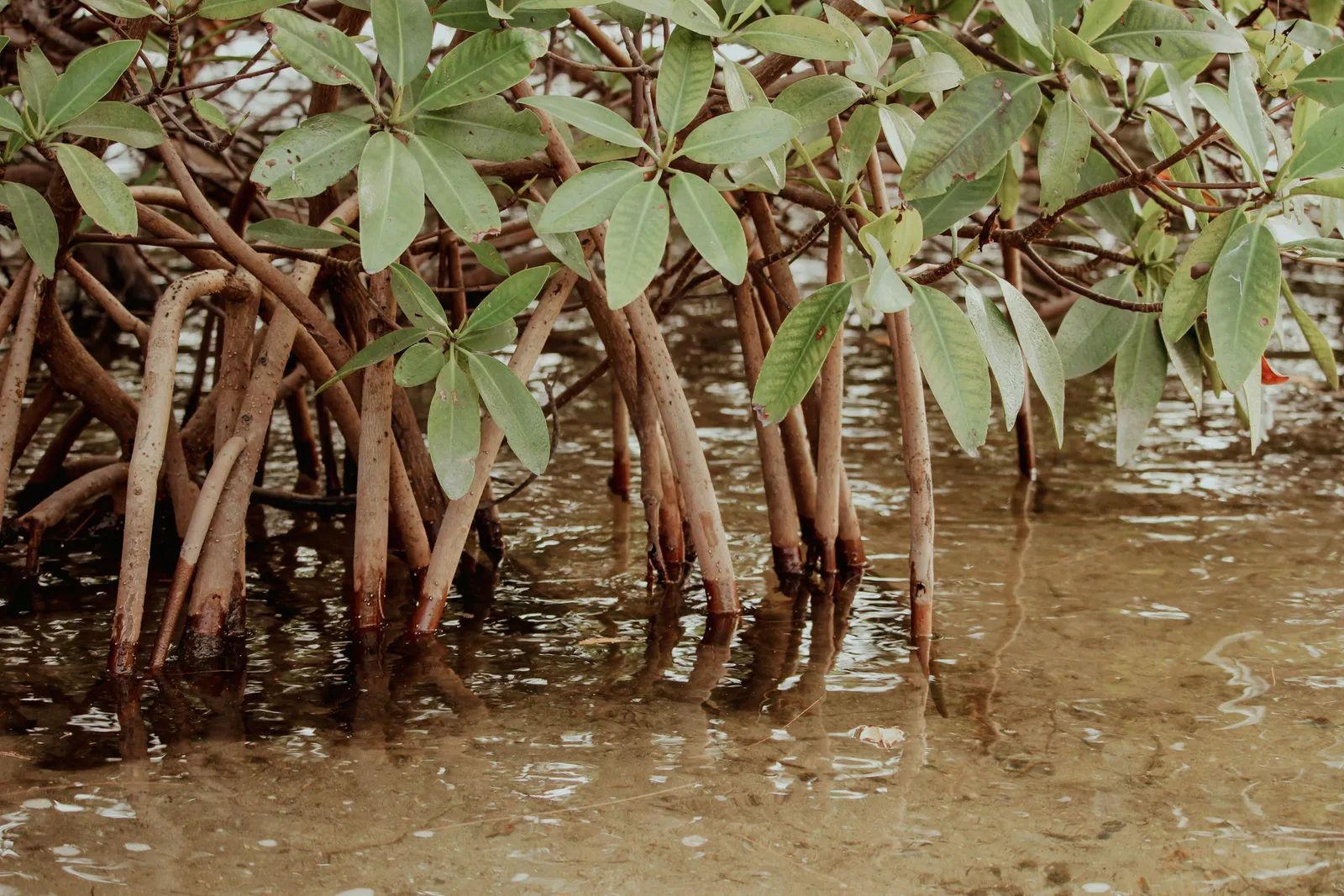
The tested structures consist of composite wood-plastic and rubber elements shaped to resemble the tangled prop roots of real mangroves. Unlike solid seawalls, the open design permits water to pass through while generating localized turbulence. That turbulence slows suspended mud particles, allowing them to settle on the seabed behind the installations. The materials were chosen for durability in saltwater and to avoid rapid breakdown into marine litter.
Researchers installed the units at 11 sites across Phra Samut Chedi and nearby areas. The goal was not to replace natural ecosystems but to create short-term conditions that might later support mangrove regrowth or at least buy time for other protective measures. Early observations indicated that the artificial roots altered local flow patterns enough to promote sediment accumulation without blocking the broader movement of water along the shore.
Results from the 15-Month Trial
After more than a year in place, the structures captured between 16 and 88 centimeters of sediment at 10 of the 11 locations. The variation reflected differences in wave exposure, sediment supply, and exact placement. In several spots the buildup reached depths sufficient to begin stabilizing the immediate foreshore, though the effect remained localized rather than extending far along the coast.
The trial also highlighted practical limits. The artificial roots provide only a temporary buffer; they do not halt the underlying drivers of erosion such as sea-level rise or reduced sediment delivery from upstream. Long-term monitoring will be needed to determine whether the accumulated sediment stays in place during stronger storm events and whether the structures themselves require periodic maintenance or replacement.
| Aspect | Observed Outcome | Remaining Uncertainty |
|---|---|---|
| Sediment capture | 16–88 cm at most sites | Stability during major storms |
| Material durability | Resistant to rapid breakdown | Multi-year performance data |
| Ecological fit | Water flow preserved | Support for natural mangrove recovery |
Next Steps for Coastal Protection
Local aquaculture operators have already shared footage showing reduced wave impact on their dikes, suggesting the installations offer immediate practical relief even if they do not solve the broader erosion problem. Researchers continue to refine placement and spacing to improve consistency across different shoreline conditions. The approach is viewed as one tool among several rather than a standalone solution.
Further trials are expected to test larger installations and combinations with other low-impact measures. For communities along the Chao Phraya Delta, the work represents a measured attempt to adapt to ongoing coastal change while longer-term strategies, such as upstream sediment management, are developed.