Weddings in much of the world have quietly shifted toward two people making a private choice, sealed with a signature and a party. Yet in several long standing cultures, a wedding still functions as a negotiation, a blessing, and a merger between two households rather than just two individuals. The rituals below are not relics kept alive for tourists. They are lived practices, still shaping how millions of people begin married life.
India: when parents still choose the guest list and the groom
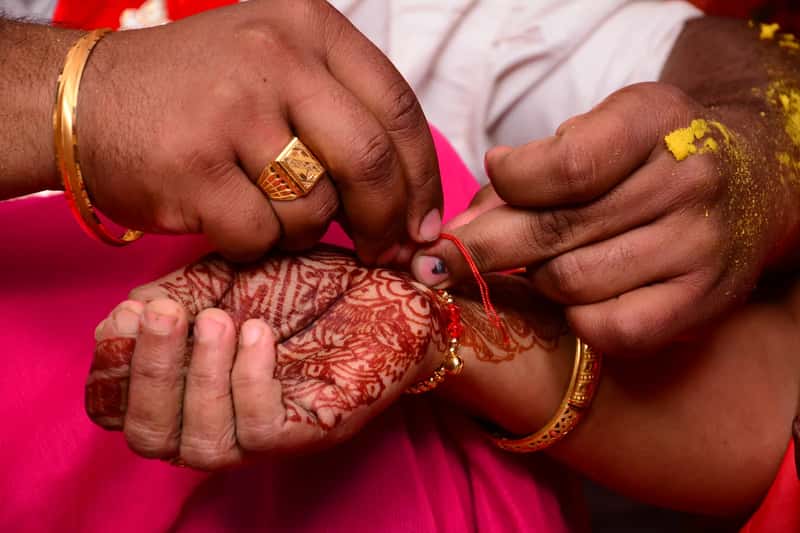
In much of India, marriage remains framed as a bond between families first and a couple second. In India, marriage is not just a union of two individuals, it is the coming together of two families. Parents and elders are typically involved from the earliest stages, checking compatibility across background, values, and social standing before a match is even proposed to the two people involved.
Even where love marriages have become more common in cities, the extended family rarely steps back entirely. The wedding is an important life experience not just for the couple but also for their families and all others involved, and the planning, preparations, and rituals engage strong sentiments and feelings. Many households now blend the two approaches, letting couples meet through family networks while still relying on elders to bless the final decision.
China: the tea ceremony that formally joins two households
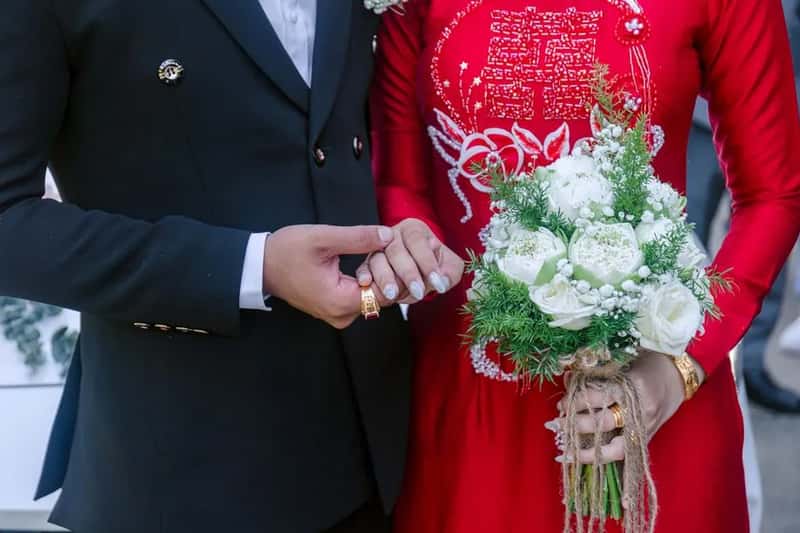
The Chinese wedding tea ceremony is less a photo opportunity than a functional ritual of belonging. It is a Chinese tradition wherein the bride and groom serve tea to their respective families, including parents, grandparents, aunts, and uncles, and other esteemed elders. Serving tea in a fixed order, starting with the eldest relatives, is how the couple publicly signals respect and gratitude before the marriage is considered socially settled.
The ceremony carries real weight because it makes the union official within the family structure, not just legally. Both bride and groom are expected to serve tea in a gaiwan to both sides of the parents, representing an important moment in which members of both families become relatives of each other. In return, elders typically hand over red envelopes, a gesture that functions as both blessing and formal welcome into the extended family.
Nigeria: Yoruba and Igbo weddings run through family elders
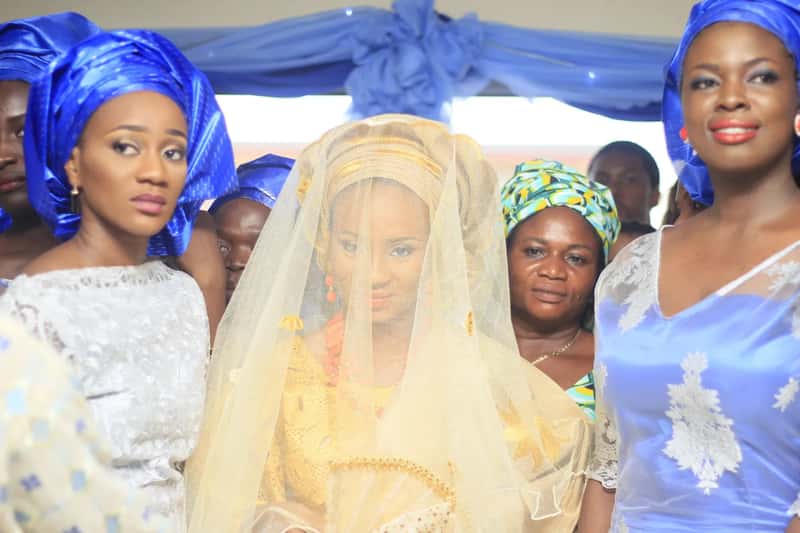
Among the Yoruba, the introduction ceremony known as idana is led entirely by extended family, long before the couple’s own vows take center stage. Idana is a formal Yoruba engagement ceremony led by an alaga iduro, a female emcee, where the groom’s family officially requests the bride’s hand through gift presentations and prostrations. Bride price talks are handled by dozens of relatives on both sides rather than by the couple themselves.
Igbo tradition follows a similarly layered process built around family consultation rather than individual decision. A gathering allows both families to discuss the union, share family histories, and ensure broader compatibility, and bride price is usually a long process where a list of requirements is presented to the groom’s family. The community involvement in these ceremonies, sometimes numbering in the hundreds of guests, underlines how far marriage extends beyond the couple in Nigerian tradition.
South Korea: pyebaek turns the wedding day into a family rite
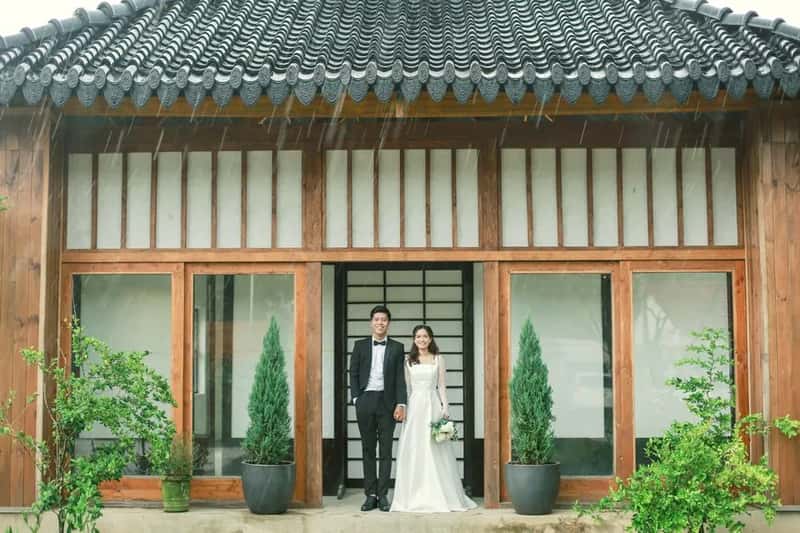
The pyebaek ceremony, held either right after the main wedding or a few days later, is reserved almost entirely for family. The paebaek ceremony is a traditional part of a Korean wedding that focuses on family unity, and while the main wedding ceremony is often public and includes all of the guests, the paebaek is usually reserved for close family members. Deep bows to the groom’s parents, and increasingly the bride’s parents too, mark the couple’s formal entry into a combined family unit.
The ritual also carries lighter, symbolic moments that still center on the family rather than the couple alone. After the ceremony, the parents and elders will throw chestnuts and dates at the couple, and they must catch them with the bowing cloth to signify the number of children they will have. What was once limited strictly to the groom’s relatives has, in recent years, opened up to include the bride’s family as well, reflecting a gradual but real shift in how the ritual is practiced.
Morocco and Berber communities: villages, not just families, get involved
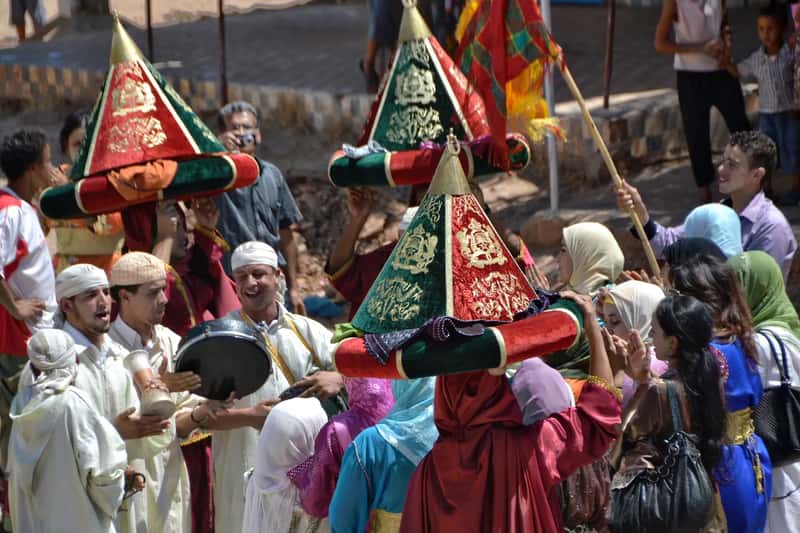
In Berber weddings across the Atlas Mountains, the scale of family involvement goes well beyond the two households. Berber weddings are the most communal and traditional celebrations in Morocco, and the entire village participates. Dowry negotiations are handled formally between families, and the transfer of the bride to the groom’s home is often staged as a public procession rather than a quiet handoff.
The marriage contract itself is negotiated as a family matter well before any religious ceremony takes place. One of the most essential pre-wedding traditions is the negotiation of the marriage contract, known as the Melk el-Kitaab, during which representatives from both families work out the terms together. Rural weddings in particular can stretch across most of a week, with separate celebrations hosted in both the bride’s and groom’s villages, so the entire process remains a shared family production from start to finish.
Greece: the crowning ritual that binds two families under one roof
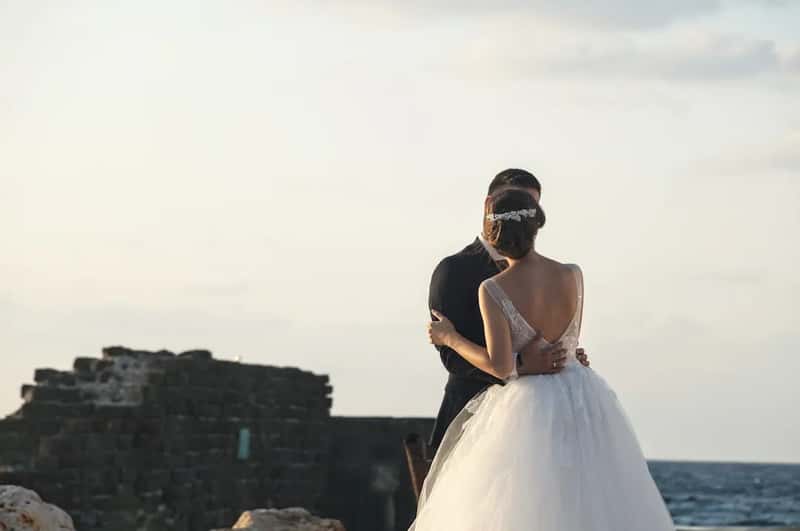
In Greek Orthodox weddings, the couple is crowned with linked wedding wreaths called stefana, joined by a ribbon that symbolizes the union of two households, not just two people. A close family friend or relative, the koumbaros or koumbara, is chosen well before the wedding to serve as a sponsor of the marriage, a role that carries lasting obligations toward both the couple and their children. This position is not ceremonial in name only; koumbari are expected to remain involved in the couple’s life for years afterward.
The dance that follows the ceremony, the Isaia circle dance around the altar, is traditionally led by the priest with both families joining hands together. Wedding planning in Greek communities, especially in smaller towns, still tends to involve parents and grandparents heavily in decisions about the guest list, the church, and the reception. The wedding is treated as a milestone for the extended family’s standing in the community, not solely a private celebration for the couple.
Jewish tradition: the chuppah as a shared family structure
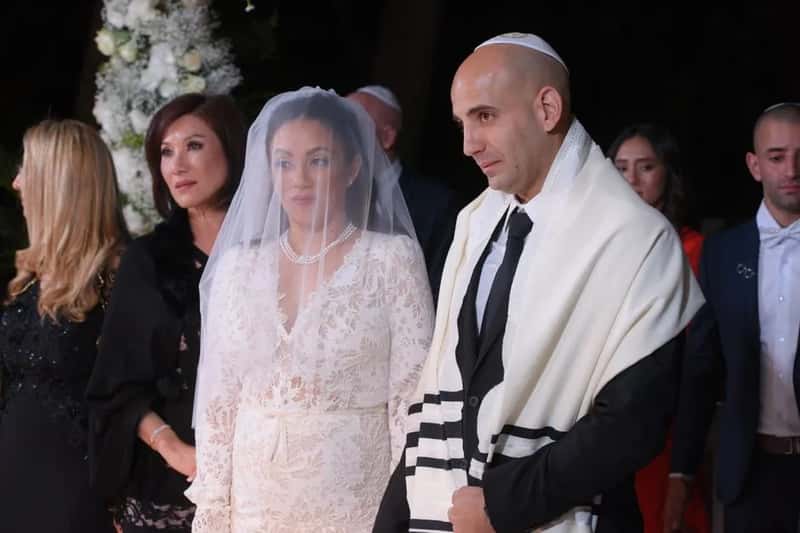
The chuppah, the canopy under which a Jewish couple marries, is traditionally held up or arranged by family members, and it has no walls, a detail meant to represent an open, welcoming household. In many Ashkenazi ceremonies, the bride is escorted around the groom seven times, sometimes accompanied by mothers from both families walking alongside her. The ketubah, the formal marriage contract, is signed before the ceremony and witnessed, tying the legal and financial commitments of the marriage to family oversight rather than treating it as a private matter between two people.
Breaking the glass at the end of the ceremony is met with a communal shout, a moment that pulls both families and guests directly into the couple’s transition. Pre wedding customs, such as an aufruf in some communities where the groom is called up during a synagogue service, also involve family and community recognition well before the wedding day itself. The overall structure treats marriage as something that reshapes two families’ futures together, not just the couple’s.
Ethiopia: elders negotiate the marriage before the couple does
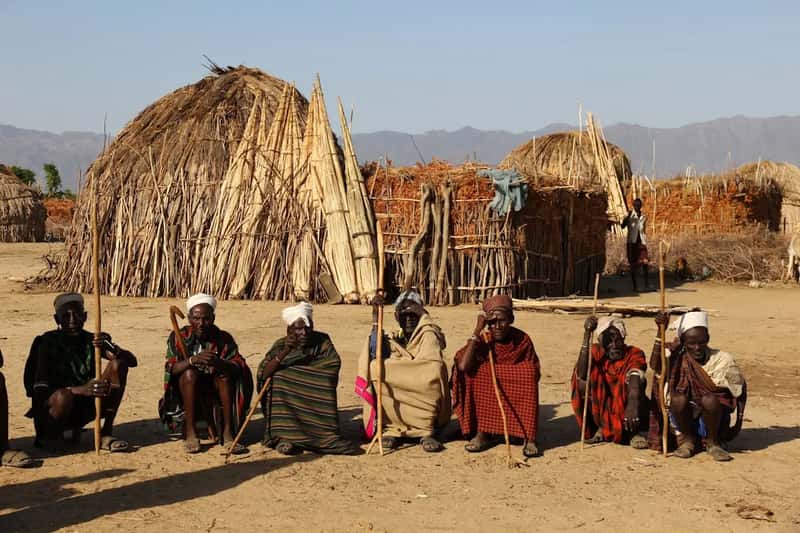
In many Ethiopian communities, marriage negotiations traditionally run through respected elders known as shimagle, who act as go betweens for the two families rather than leaving early discussions to the couple. These elders help settle matters such as dowry, timing, and family expectations, smoothing over disagreements before they reach the young couple directly. Their involvement is treated as a mark of respect, not interference, and reflects how deeply marriage is tied to family reputation and stability in Ethiopian tradition.
Wedding celebrations themselves often stretch across multiple days and draw in extended relatives, neighbors, and community members well beyond the immediate families. Blessings from parents and grandparents typically carry significant weight during the ceremony, and refusing or skipping this step would be unusual in most traditional settings. The result is a process where family involvement starts long before the wedding date is even set.
Vietnam: ancestor worship keeps marriage tied to the family line
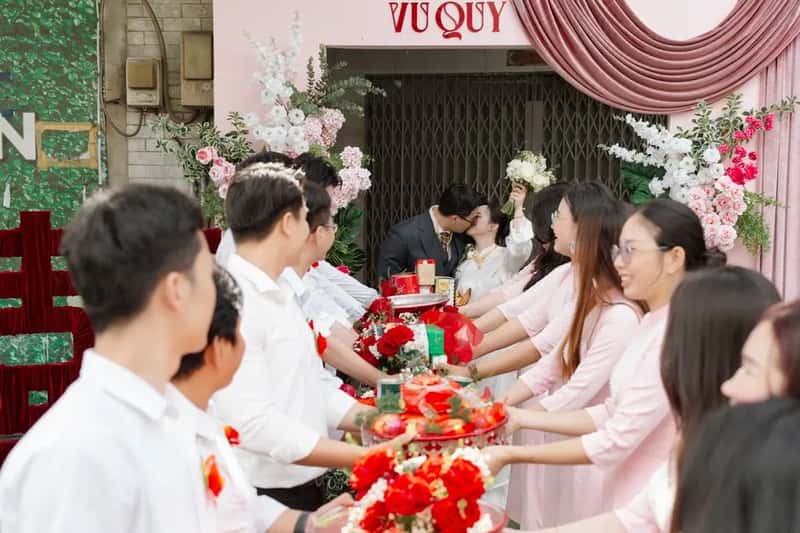
Vietnamese weddings traditionally begin with a formal engagement visit, where the groom’s family brings gifts to the bride’s family as part of a process that treats the union as an alliance between two households. Central to the ceremony is a ritual bow before the family ancestral altar, where the couple honors both sets of ancestors before turning to their living relatives for blessings. This step reflects a broader cultural view that marriage extends a family’s lineage rather than simply joining two individuals.
Older relatives, particularly grandparents, are often consulted on timing and compatibility, sometimes with reference to traditional astrology. Wedding processions between the two family homes remain common in more traditional or rural celebrations, turning the day into a visible journey between households rather than a single self contained event. Even as urban Vietnamese weddings adopt more Western elements, the ancestral bow and family blessing rarely disappear from the schedule.
A shared thread across very different traditions

Despite the distance between Seoul and Marrakech, or Lagos and Athens, these nine traditions share a similar logic. Marriage is treated less as a private contract between two adults and more as a structural event that reorganizes two families into one. Whether through tea served to grandparents, elders negotiating a bride price, or a canopy held up by relatives, the message running through each custom is consistent: a wedding day belongs to more people than just the couple standing at its center.