The United States handles some of the busiest airspace on the planet, and most of the time it does so safely. Yet a run of equipment failures in 2025 showed how much weight sits on infrastructure that has been patched, extended and postponed for years. A few seconds of lost radar can ripple into hundreds of delayed flights and exhausted controllers.
Federal officials now describe a rebuild on a scale the system hasn’t seen in decades. Congress has paid for a first installment, and the Department of Transportation is asking for much more. This article looks at what went wrong, why the weak points existed, and how far the fix has actually come.
The Newark Blackouts That Put The Problem In Public View

On April 28, 2025, controllers in Philadelphia lost the ability to see or talk to aircraft heading into and out of Newark. All communications failed at the Philadelphia facility when a copper wire burned inside one of the telecommunications lines.[1] The loss lasted about 90 seconds, which is a long time when planes are in the air.
The fallout lingered. At least five controllers took 45 days of trauma leave after the incident, which left Newark with rolling delays.[2] By May 9, it was the third time in two weeks that radars failed at the Philadelphia facility.[3] The FAA said aircraft remained safely separated after later glitches, but the pattern was hard to ignore.
A Single Telecom Line Became A Point Of Failure
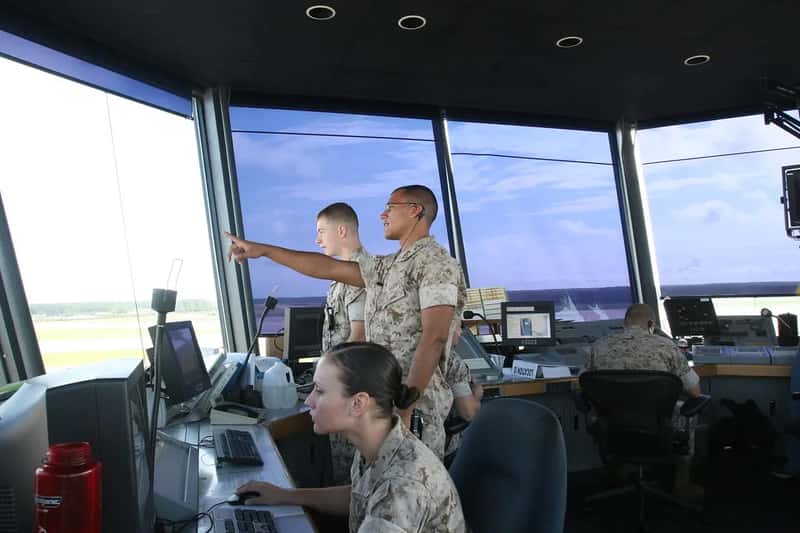
The Newark story is partly about geography. Control of Newark airspace moved to a Philadelphia facility in July 2024, which left controllers more than 100 miles away relying on data flowing through telecom lines.[1] If those lines falter, the people guiding the planes lose their picture of the sky.
Officials disagreed over who was to blame. Transportation Secretary Sean Duffy defended the plan but said the previous administration had failed to properly harden the telecom lines feeding radar and flight data.[1] The FAA also added fixes after the outages, though a software patch and backup line that kicked in after one May outage were paired with a precautionary 45-minute ground stop.[2] The episode showed how a modest weakness in the network can have outsized effects.
Not Just Newark, A Wider Pattern Of Glitches
Newark wasn’t the only place where controllers lost their view. The Denver air route traffic control center lost communications for about 90 seconds, and controllers apparently couldn’t see the planes they were responsible for on radar.[4] In that case, controllers used a backup frequency to reach pilots, which limited the damage.
That detail matters. Backups worked in Denver, and the FAA has consistently said the system remains safe. Still, CNN described the Newark outage as the latest after a series of failures involving staffing shortages and decades-old technology.[2] Resilience, in other words, was being tested in real time rather than in a lab.
Two Decades Of Modernization Efforts That Fell Short
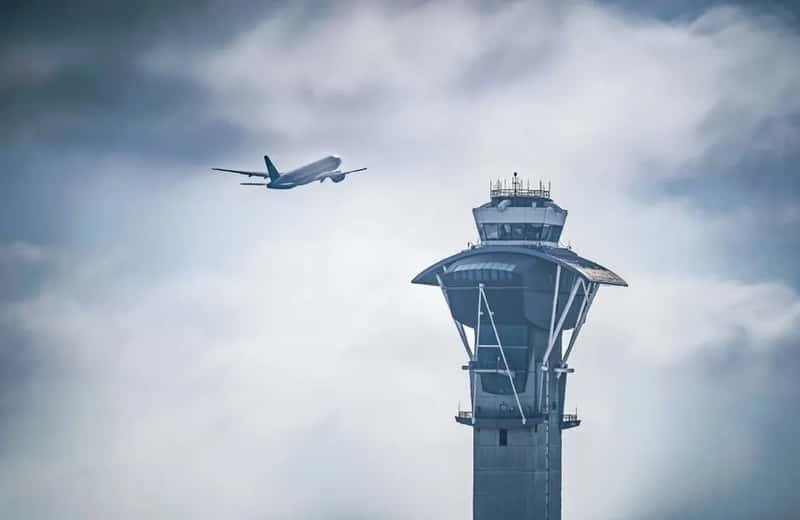
Aging equipment didn’t happen overnight. The government has been trying to modernize the national airspace system since 2003, with little success.[5] Large programs in this space tend to be slow, because the system can’t simply be switched off while engineers swap parts.
The 2025 push framed the problem in four parts. The plan seeks to revamp communications, surveillance, automation and facilities.[6] That breadth is a reminder that the weak spots aren’t confined to one box or one radar. They run through the whole chain, from the copper in the ground to the screens in front of controllers.
Staffing Gaps Make Technical Failures Harder To Absorb
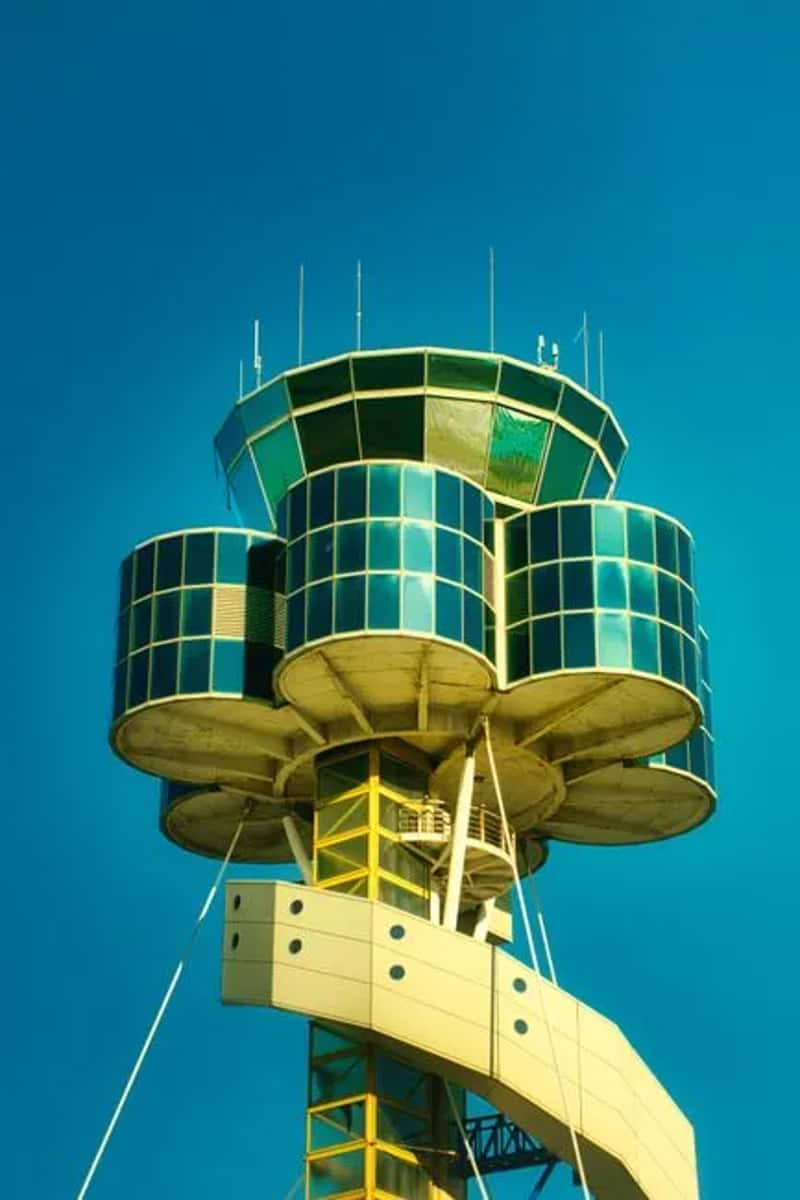
Technology is only half the story. The workforce that runs it has been thin for years, which leaves less slack when something breaks. At the end of fiscal 2024, there were 1,020 fewer certified professional controllers than at the end of fiscal 2012, a 9 percent drop.[7]
There has been recent progress. The FAA hired a record 2,235 controller trainees this fiscal year.[8] It entered fiscal 2026 with 10,694 certified controllers and ended with 11,027.[8] Meanwhile, the target itself has shifted: the 2026 to 2028 workforce plan calls for 12,563 certified controllers, down from the 14,633 forecast in 2024.[9] The agency says better scheduling and tools make that possible, though critics may want to see it proven.
What The First $12.5 Billion Is Actually Buying
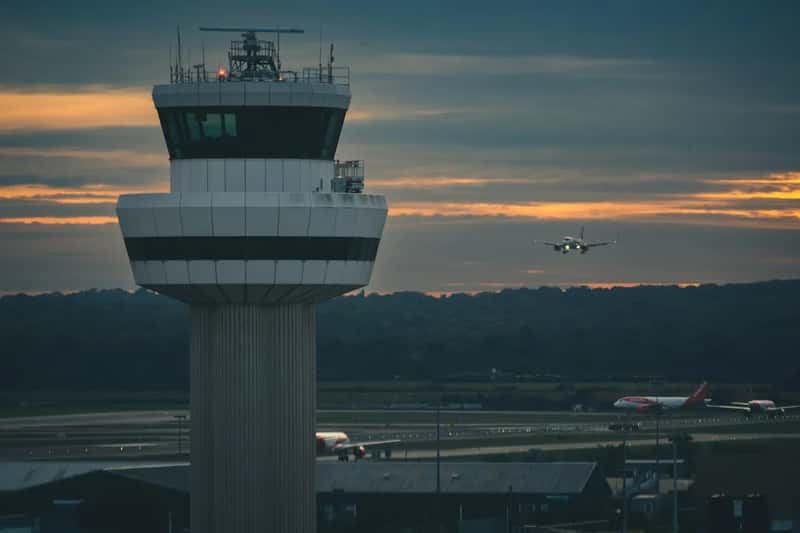
The money arrived through legislation. Congress authorized $12.5 billion for the air traffic control system in the July 2025 reconciliation law.[10] The Department of Transportation has used that capital to begin implementing digital flight strips, upgrading communications systems and deploying enhanced surveillance systems.[11]
Some of the progress is measurable. The FAA had converted 35 percent of its copper wire to fiber, with completion targeted for the third quarter of 2027.[6] Given that a burned copper wire helped trigger the Newark blackout, that conversion speaks directly to the problem. Officials have also said parts of the work are on schedule, though Duffy acknowledged a few workstreams are “a little behind.”[5]
A Prime Integrator, An Ambitious Deadline And Some Skepticism

To coordinate the work, the FAA announced on December 4, 2025, that it had selected Peraton, a Virginia-based defense contractor, as prime integrator.[6] The contract is described as first of its kind, built to reward good performance and penalize unnecessary delays.[12] The department has set a finish line of the end of 2028.
Not everyone is convinced the date will hold. Duffy has expressed confidence in Peraton, but some skepticism lingers about whether the 2028 timeline will stick.[13] Peraton also has to coordinate a wide range of suppliers and partners, which is complex work.[13] Past modernization attempts make caution reasonable.
The Funding Gap And The Software Problem Still Ahead
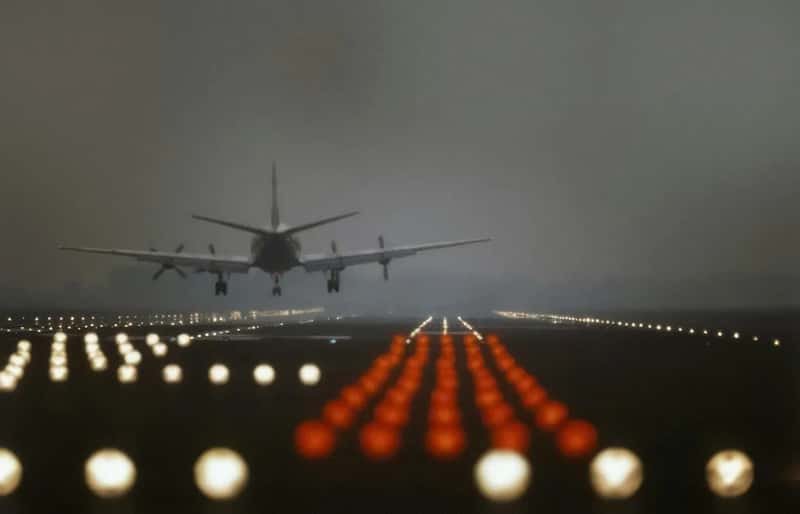
The first installment was never meant to cover everything. In late September 2026, the FAA asked Congress for an additional $30 billion to reach its modernization goals.[11] The Modern Skies Act, introduced by Duffy and Senator Eric Schmitt, aims to replace aging facilities and upgrade telecommunications infrastructure.[14] The figure is higher than earlier estimates, and it is a big jump from the $4 billion in the White House’s fiscal 2027 proposal.[11]
FAA Administrator Bryan Bedford has argued that hardware alone won’t solve the underlying design issue. Each of the 350 FAA facilities has its own computing power, with no ability to see across.[15] He warned that stopping early would leave a more reliable but still inefficient airspace system.[15] Industry groups agree. The Modern Skies Coalition warned that partial funding risks stranded investments and prolonged reliance on obsolete systems.[16]