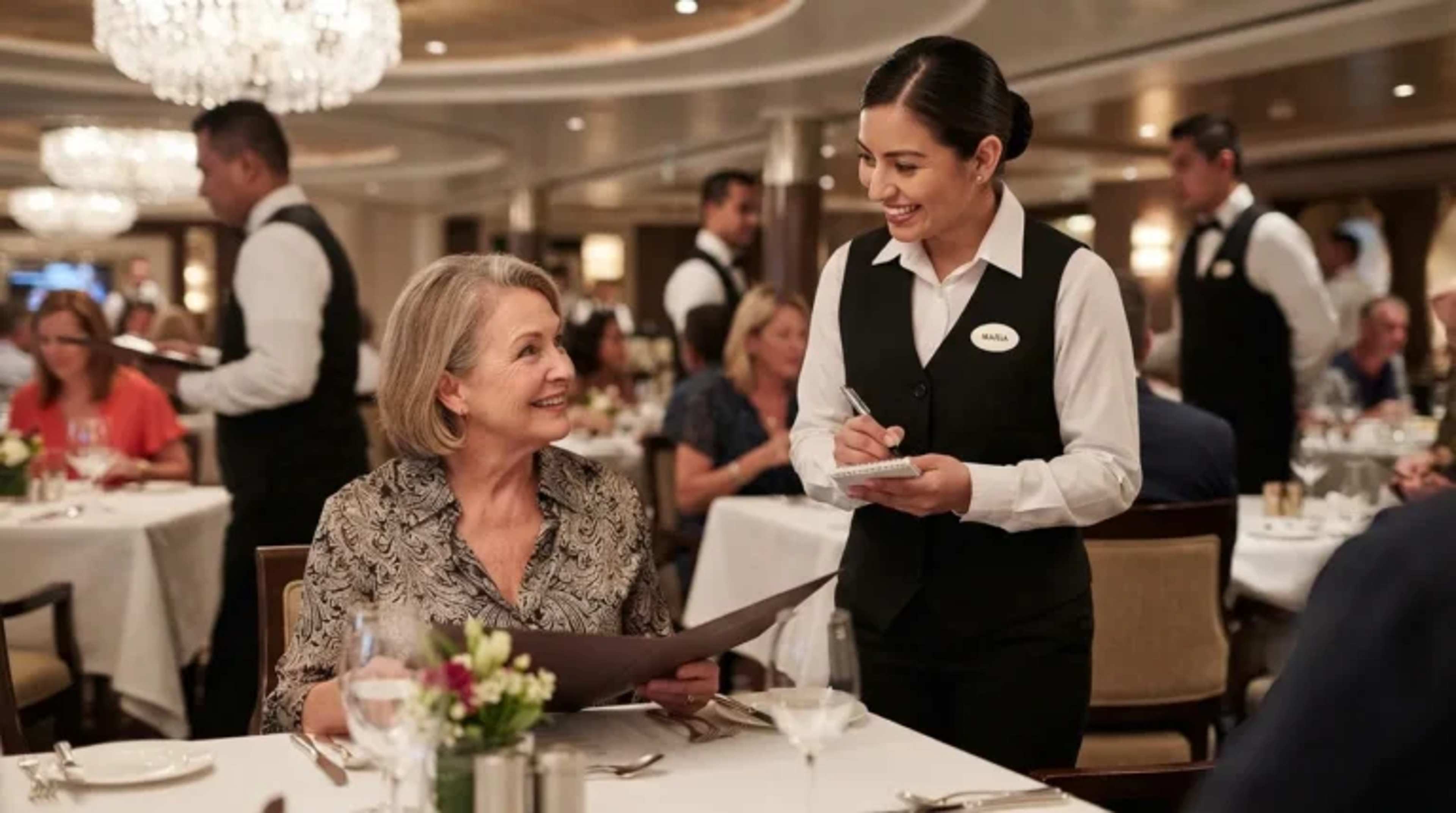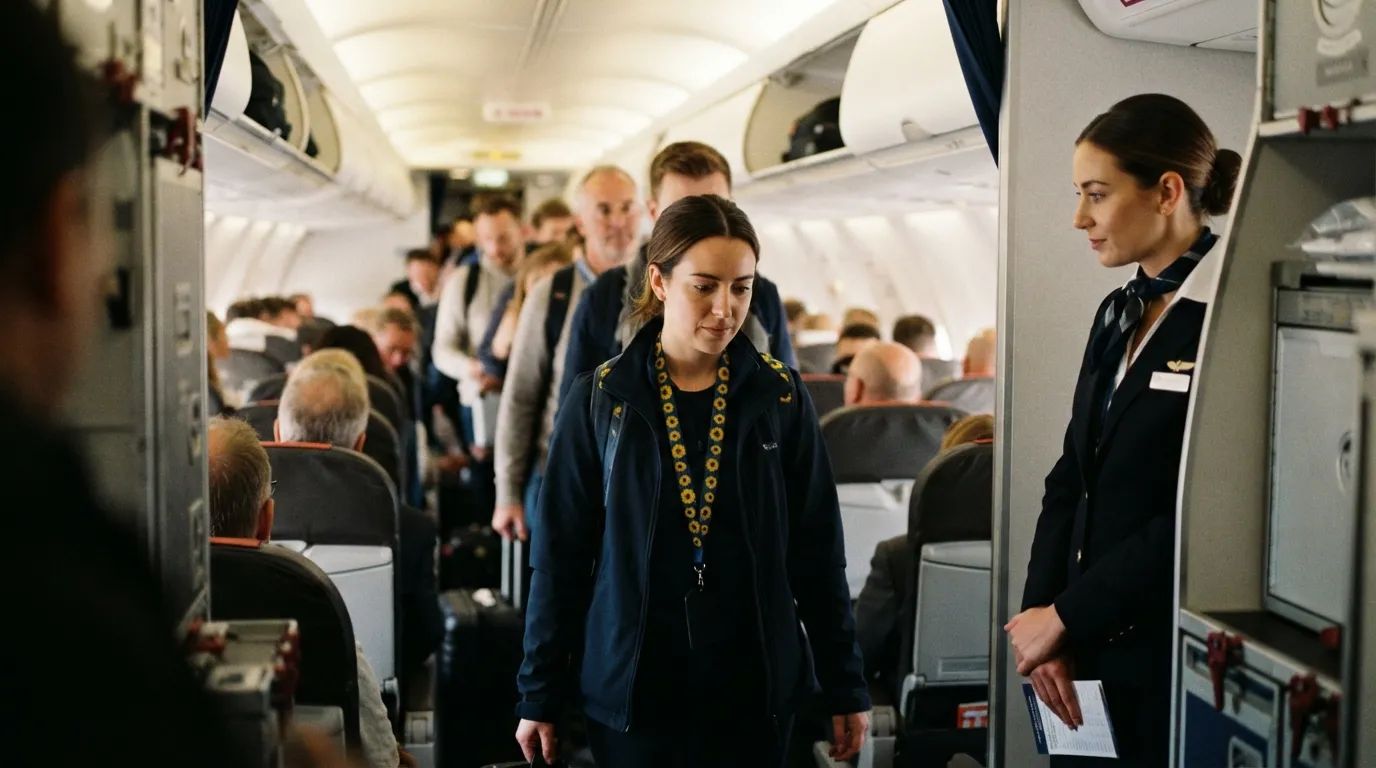
Most passengers think the flight attendant at the door is just being polite. They’re not.
In the few seconds it takes you to mutter a distracted “hi” and shuffle toward your seat, a trained crew member has already clocked your shoes, your body language, your bag, and whether you look like trouble – or a lifesaver.
That “welcome aboard” is a risk assessment wearing a customer-service smile, and it happens in three to four seconds flat. Here’s exactly what flight attendants are cataloguing about you before you’ve even found your row.
#10 – Whether You Even Acknowledge Them
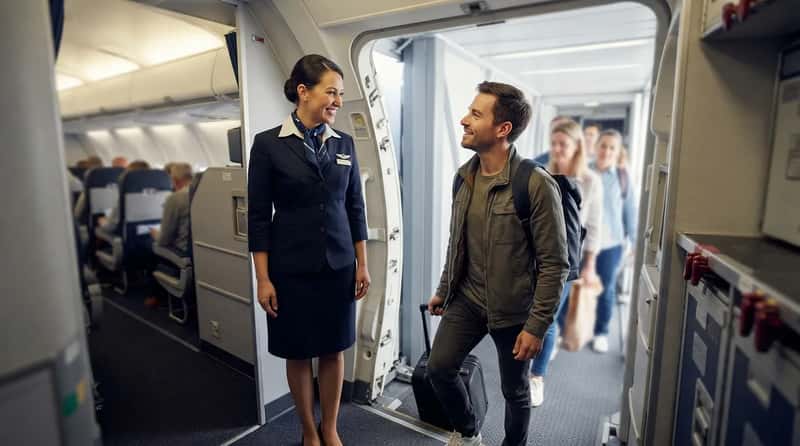
One of the first things flight attendants notice is whether you acknowledge them at all. A simple hello, or even just a nod, tells them a lot about your mood.
They’re reading your body language, your tone, your eye contact – all in the second it takes to say hi. A warm smile builds instant trust; a blank stare or irritated glance raises a flag.
The passengers who make zero eye contact are immediately flagged as wildcards. It sounds minor, but to a crew trained to read people in seconds, dismissiveness is data.
A smile, a hello, or a simple thank you goes further than most people realize. Passengers who build a little rapport often get the extra snacks, the extra drinks, or even a quiet nudge toward more legroom – the rude ones don’t.
But your face is just the start. What’s on your feet matters far more than you’d expect at #9…
#9 – Your Shoes (Yes, Really)
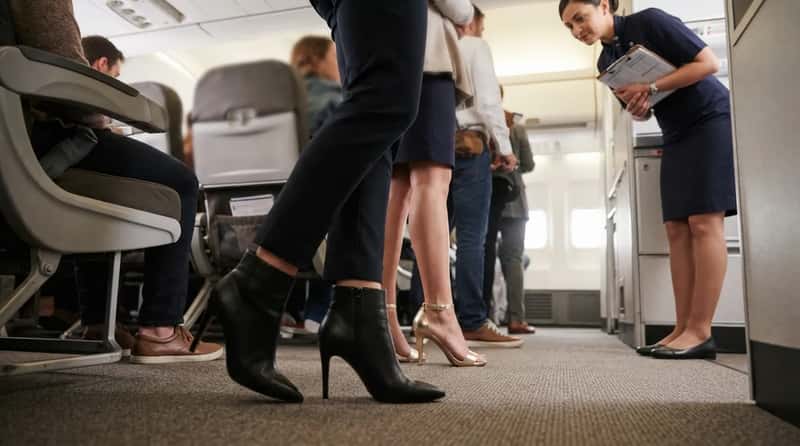
This one catches most people completely off guard.
I always look at what kind of shoes a customer is wearing to determine whether they can run quickly and easily in them. If I see someone wearing high heels during boarding, I can make a note to add in an emergency command about removing them if the need arises.
Amy Caris, flight attendant
If your footwear could slow you down, the crew quietly adjusts. They may plan to direct you more deliberately or add extra verbal cues if an evacuation happens.
High heels on an emergency slide can puncture the inflatable, grounding the entire evacuation. Comfortable, closed-toe shoes earn quiet approval – heels and restrictive outfits raise a flag.
It’s not a fashion judgment. It’s a survival calculation.
And your shoes connect to a broader scan of your entire outfit that’s happening simultaneously at #8…
#8 – Your Clothing and What It Signals
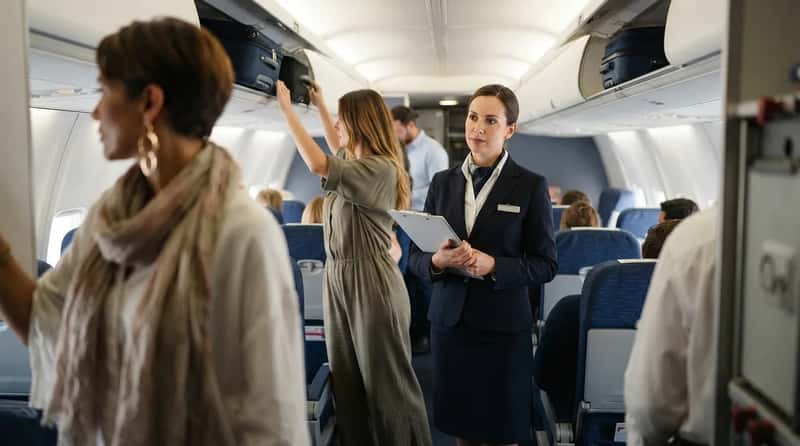
Flight attendants scan for anything loose, dangling, or restrictive – big hoop earrings, jumpsuits, tight-fitting outfits. Anything that could snag or slow you down in an emergency gets noted.
This isn’t casual people-watching. It’s a practiced procedure that factors clothing, baggage, health, and attitude into how prepared the cabin really is.
Worth Knowing
- Dangling jewelry, scarves, and loose sleeves are the details crews mentally flag first.
- Fitted layers and closed-toe shoes let you move fastest if an evacuation order comes.
- Slides and exits are built for quick, unobstructed movement – anything that could snag works against you.
- None of this affects boarding itself, but it quietly shapes how a crew member plans to help you.
A passenger in loose, comfortable clothing who moves efficiently is unconsciously ranked as a potential asset in a crisis. Sensible dressing projects alertness and confidence – qualities that make helping you easier if turbulence hits.
Dressing smart isn’t just style. It’s functional, and it helps the crew spot who’s actually prepared for the unexpected.
The clothing scan feeds directly into a much bigger profiling exercise – and #7 reveals who they’re specifically hunting for in the crowd…
#7 – Who Could Actually Help in an Emergency
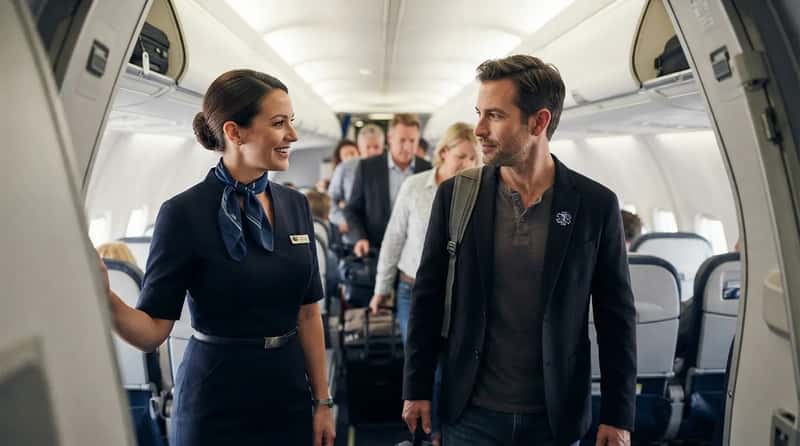
While watching for passengers who might need help, flight attendants are also quietly scouting for the opposite: people who could help them.
They’re looking for able-bodied passengers with no physical restrictions who speak the crew’s language – off-duty police officers, firefighters, or fellow flight crew. These passengers might end up operating an exit, holding a slide steady, or moving others away from the aircraft.
Most passengers have no idea they’re being mentally shortlisted as emergency crew the second they walk through the door. One traveler mentioned wearing an EMT pin on their lapel – multiple flight attendants said that single detail was “extremely helpful.”
If you’re ex-military, a first responder, or just visibly calm and fit, you’ve already been noted. And the flip side of that coin is just as important, which leads to #6…
#6 – Signs of Intoxication
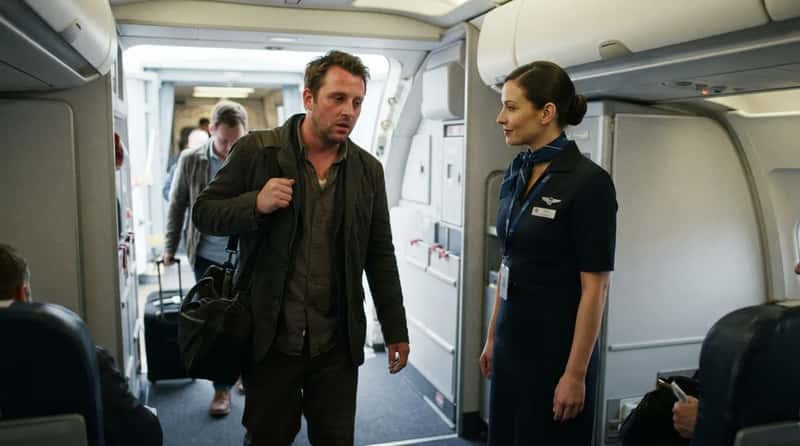
If a passenger looks like they might be drunk and disruptive, crew need to catch it the moment boarding starts. “If a passenger is visibly intoxicated, they can be removed from the flight, so that is something I keep an eye out for,” says one flight attendant.
This isn’t about judgment – it’s about what happens at 35,000 feet with no exit. Alcohol hits harder at altitude, and crews actively watch consumption to prevent problems before they start.
Fast Facts
- The cabin pressure in an airplane is typically equivalent to the pressure at 6,000 to 8,000 feet above sea level.
- At higher altitudes, the body absorbs alcohol more quickly, leading to a more pronounced effect.
- Passengers under the influence of alcohol may be more likely to engage in disruptive behavior, such as arguing with flight attendants or ignoring safety instructions.
- Once the door is closed, there’s no way off the aircraft – which is exactly why crews watch so closely at the gate.
The moment of boarding is the last practical chance to remove a disruptive passenger before the door closes – and crew know it. They’re watching for drunk, drugged, aggressive, or rude behavior in those first few seconds.
Once you’re wheels up, those options disappear. The eye for intoxication connects closely to the next thing they’re watching – your overall body language at #5…
#5 – Nervous Flyers
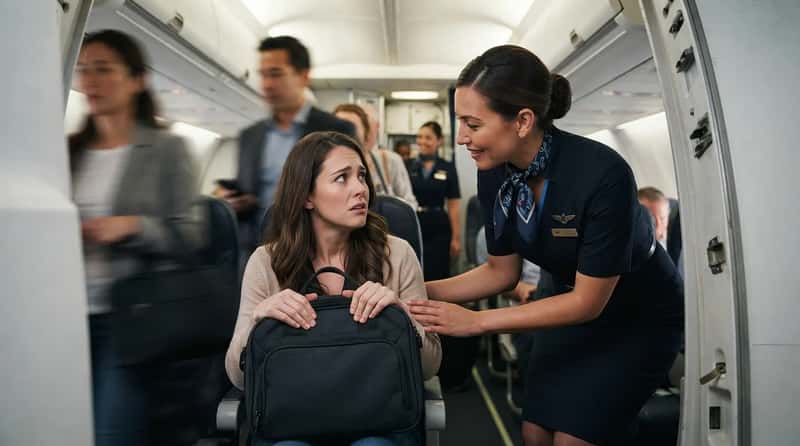
Hesitation at the door, a tightly gripped bag, or anxious body language signals someone who needs reassurance. Flight attendants clock it instantly and often start a short, calming conversation right there.
Nervous flyers who mention their fear can be reseated – over the wing, or close to a jumpseat – and talked through the sounds and movement of the aircraft.
An anxious passenger who spirals mid-flight can create chaos in the cabin, so crew would rather catch it at the door. The reassurance isn’t just kindness. It’s cabin management.
A calmed nervous flyer is far less likely to become an in-flight incident. But anxiety is easy to spot – what’s harder to catch is the quiet observation happening at #4…
#4 – Passengers Who Might Need Extra Help
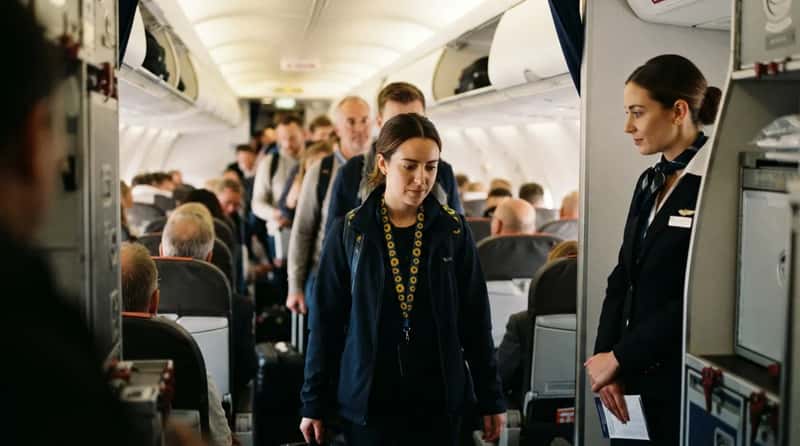
Flight attendants watch for children, anyone who looks unwell, and people wearing a sunflower lanyard – a discreet symbol of hidden disabilities.
By the time boarding finishes, a crew member has already mapped the whole cabin. They know who’s traveling solo with a toddler, who’s using a cane, who looks pale and unsteady.
The sunflower lanyard is one detail most passengers have never heard of – it’s an internationally recognized symbol crew are specifically trained to look for. This rapid triage runs quietly in the background of every single flight.
And it’s connected to an even more serious observation happening at #3…
#3 – Signs of Human Trafficking
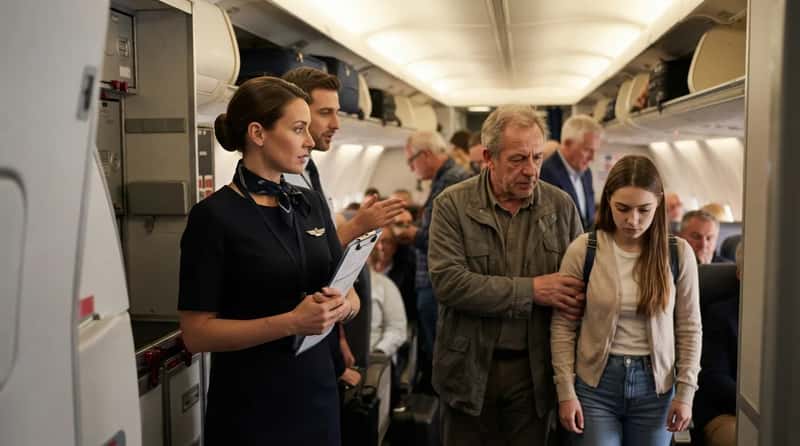
This is the one that genuinely shocks people. “We’re looking for human trafficking,” one flight attendant revealed. “It happens a lot in the industry, and our passengers’ safety is our number one priority, so we’re just looking for things that look off.”
Red flags include people traveling together who don’t seem to actually know each other. Anything suspicious gets reported straight to the captain, who can arrange help on the ground before the plane even lands.
At a Glance
- The federal Blue Lightning Initiative trains aviation employees to recognize and report trafficking, and the training is 25 minutes in length, and is comprised of four lessons.
- Common indicators include a companion controlling someone’s travel documents, restricting their movement, or a child traveling with an adult who isn’t actually their guardian.
- One anti-trafficking training group notes that a single flight attendant can encounter thousands of passengers a year, multiplying the impact of trained eyes across the industry.
- Suspicious cases are reported directly to the captain, who can alert authorities before the aircraft ever lands.
Flight attendants receive specific training on trafficking indicators – it’s a formal part of crew preparation, not a hunch. The boarding door is the last point of intervention before a victim is airborne and unreachable.
The stakes for this observation couldn’t be higher. But they’re also watching something far more routine – and far more revealing – at #2…
#2 – Your Bag and How You Handle It
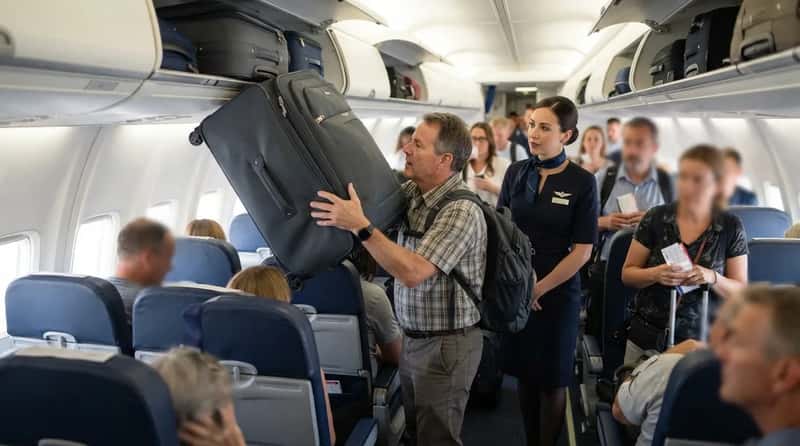
Flight attendants immediately notice bags that clearly won’t fit the overhead bins. Oversized items slow the whole boarding process and jam up the aisle behind you.
How you handle your luggage tells them plenty – whether you’re a bottleneck risk, whether you’ll need help, whether you respect the people stuck behind you.
A passenger who blocks the aisle rummaging through three bags gets flagged immediately – not just for etiquette, but because aisle congestion during an emergency evacuation is a documented danger. Crew can usually tell right away if you’ve planned ahead or if you’re about to cause a jam.
Passengers with their boarding pass and seat number ready move through with barely a pause. Stop to dig through three bags, and that gets noticed too.
Everything so far has been building to the single most important thing flight attendants are doing at the door – and most passengers have no idea it’s even happening at #1…
#1 – A Full Safety Risk Assessment, Disguised as a Greeting
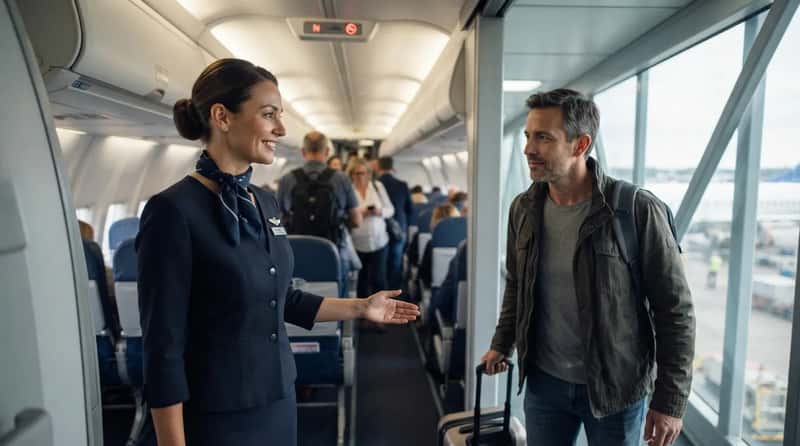
This is the big one. That smile at the door isn’t small talk – it’s a risk assessment dressed up as a welcome.
Flight attendants are running a quick safety and security screening on every single passenger, built to catch problems before the door ever closes.
Safety is at the heart of everything they do during boarding. They’re carefully watching every passenger, looking for anyone who might pose a threat before the plane even leaves the gate.
Why It Stands Out
- Ten separate signals – eye contact, shoes, clothing, sobriety, anxiety, bags, and more – all get read in one three-to-four-second window.
- The assessment runs on every passenger, every flight, with no exceptions and no visible checklist.
- It quietly separates who might need help from who might be able to give it.
- By the time the door closes, the crew already has a mental map of the entire cabin.
Every single interaction at that door – the eye contact, the shoes, the bag, the attitude – feeds into one unified mental picture the crew builds before the aircraft door even closes. Most passengers assume attendants are just collecting tickets and smiling politely.
In reality, they’re gathering cues about your safety, your confidence, your cooperation – reading your body language, your tone, even how you hold your bag. It’s a silent skill sharpened over years of experience.
The boarding minute is, quietly, the most important safety window of the entire flight.
The Bottom Line
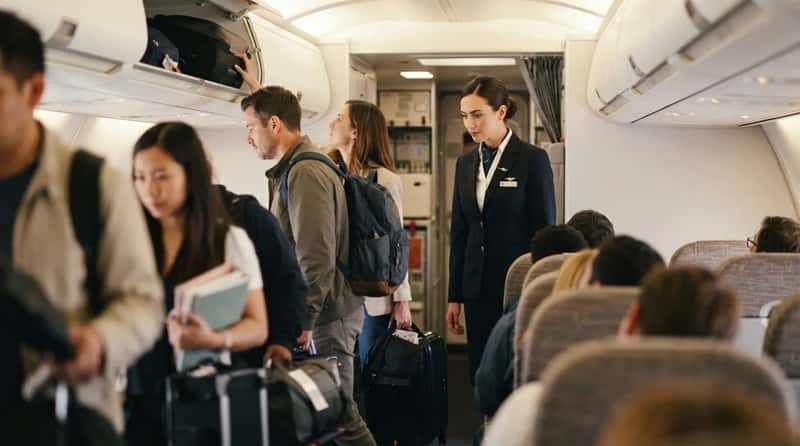
Flight attendants aren’t greeting you. They’re reading you.
In under a minute, a trained crew member catalogues your shoes, your bag, your body language, your sobriety, and whether you’re an asset or a liability in a crisis.
The entire boarding process is a live, real-time risk assessment that most passengers walk through completely oblivious to. From spotting nervous flyers to screening for human trafficking, the work happening behind that smile is remarkable.
Next time you board, make eye contact, say hello, and have your bag sorted – because you’re already being assessed before you find your seat. Which of these surprised you most?
Bonus: The Seat-Picking Trick Frequent Flyers Use
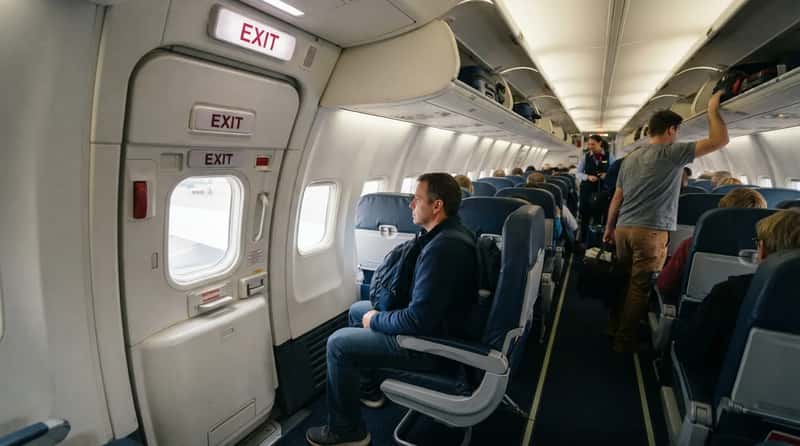
Here’s the one move that goes beyond how you act at the door – it’s about where you sit before you even board.
Safety researchers who studied real accident evacuations found that survival odds are noticeably higher for passengers seated close to an emergency exit row, and drop the farther back you sit from one.
- When picking seats, count the rows between your seat and the nearest exit in both directions – aim to be within about five rows of one if you can.
- An aisle seat near an exit beats a window seat farther away, since you can move the instant an evacuation order comes.
- Skip the very back rows and the far mid-cabin section when you have a choice – they’re consistently the slowest to empty.
- Once seated, spend ten seconds finding your two nearest exits, including one behind you – crews are trained to do this instantly, and so can you.
It takes less effort than picking a seat for legroom, and it’s the one habit crew members quietly rely on themselves.