
Plenty of people assume a remote work visa is a formality. You show a laptop, a contract and a bank statement, and a stamp follows. In practice, the gap between the easiest and hardest programs is huge, and it’s still moving in 2026.
Some countries ask for little more than proof of savings, while others want a high salary, months of bank history and a consulate visit before you travel. The figures below come from 2026 guides and official rule updates. Exchange rates shift, so treat dollar and euro amounts as approximate and check the official immigration page before you apply.
1. Thailand: Destination Thailand Visa

Thailand’s Destination Thailand Visa, launched in 2024, is the easiest of the major options by most accounts. It has the lowest formal income or savings threshold of any major nomad visa.[1] Instead of an income test, it uses a bank balance test of 500,000 baht.[2]
One tracker describes a five year multiple entry visa with no income floor and an online portal application.[3] The same guide reports complete files processed in 5 to 15 business days, with rejection rates under five percent.[2] That’s one source’s reading, so confirm current processing times with the embassy that handles your filing.
2. Georgia: Remotely From Georgia

Georgia’s program is the one most guides point to for simplicity. It costs nothing to apply, asks for $2,000 a month in income, lasts one year and is open to citizens of 95 or more countries.[4] It’s fully online and processes in roughly ten business days.[5]
There’s also a route that skips the visa entirely. Georgia offers visa free stays of 365 days to most nationalities, with no income proof required.[1] If you only want a year on the ground, that may be the lightest paperwork anywhere on this list.
3. Colombia: Digital Nomad Visa

Colombia keeps its income bar low compared with Europe. The floor is about $1,400 a month, which is three times Colombia’s 2026 minimum wage of COP 5,252,715.[3] That makes it one of the most reachable programs for freelancers earning modest salaries.
The permit also lasts a while. WhereNext’s index lists a fee of $239 and roughly 21 days of processing.[6] The visa runs 24 months and can be renewed up to a maximum of 48.[6] Keep in mind that foreign income falls under standard resident tax rules[6], so talk to a tax adviser before settling in.
4. Brazil: Digital Nomad Visa

Brazil’s remote worker visa is among the cheapest to qualify for in the Americas. Brazil asks for $1,500 a month.[7] The paperwork list is fairly standard.
Applicants need a valid passport, health insurance, proof of transportation in Brazil, a clean criminal record certificate, proof of remote work and proof of monthly income.[8] Nothing on that list is unusual, though a criminal record certificate from your home country can take time to arrange. Build that wait into your timeline.
5. Malaysia: DE Rantau Nomad Pass

Malaysia’s DE Rantau pass offers one of the more accessible entry points in Asia. It asks for about $24,000 a year for digital roles, runs 12 months and is renewable, with a fee of around $270.[7] One 2026 checker calls its requirement the lowest in Asia, at about $2,000 a month.[3]
There is a catch worth noting. Your job has to fit one of the approved digital categories.[7] Check that your work qualifies before you pay the fee.
6. Iceland: Long Term Visa for Remote Workers

Iceland sits at the demanding end of the spectrum. One 2026 dataset puts its requirement at about $7,980 a month, the highest of any open program in that dataset.[9] In local currency, the bar is ISK 1,000,000 per month.[10]
Couples face an even higher threshold. A guide lists ISK 1,300,000 combined for an applicant with a partner.[10] Iceland’s high cost of living explains much of it, but few remote workers will clear the number.
7. Romania: Digital Nomad Visa

Romania surprises people because it isn’t an expensive country. Its formula still produces a steep threshold. The requirement is three times Romania’s average gross salary, which for 2026 means about 27,600 RON, or roughly €5,400 per month.[11]
The number moves because it’s tied to national wage data. A different 2026 comparison cites a slightly higher July figure of 29,127 lei, about €5,525.[12] Either way, check the current average salary figure before you plan around it.
8. Japan: Digital Nomad Visa

Japan launched its program in 2024 and kept the bar high. The income requirement is at least ¥10,000,000 a year, about €57,000, which is among the highest bars worldwide.[11] The fee is ¥15,000 for a single entry or ¥30,000 for multiple entry, for applications from July 1, 2026.[11]
It also comes with limits. It gives six legal months in Japan for high earners from 51 eligible nationalities, and it’s explicitly not a path to residency.[13] You pay for a short, high quality stay rather than a foothold.
9. South Korea: Workation Visa

South Korea’s rules changed in 2026, so older guides are out of date. The visa was introduced in January 2024 and moved from its pilot phase to full implementation on June 30, 2026.[14] The income threshold now ranges from one to two times Korea’s per capita GNI, depending on age and intended residence.[15]
At the top end, the requirement is after tax income above twice GNI per capita, about $5,483 per month.[10] There is some relief for younger applicants, as the program added a discounted tier for people aged 18 to 34 based outside the Seoul metro area.[16] The visa lasts one year and can be extended one year at a time, up to three years.[15]
10. Indonesia: Remote Worker KITAS

Bali’s reputation as a nomad capital hides a demanding permit. Indonesia’s remote worker E33G KITAS requires $5,000 a month, or $60,000 a year, the highest in that 2026 checker.[3] That’s well above what the usual Southeast Asian programs ask for.
Tax is the other worry. One guide notes that Indonesia technically taxes the worldwide income of residents, and the legal framework around nomad taxation is unclear.[17] Get local tax advice before committing to a year.
11. Estonia: Digital Nomad Visa
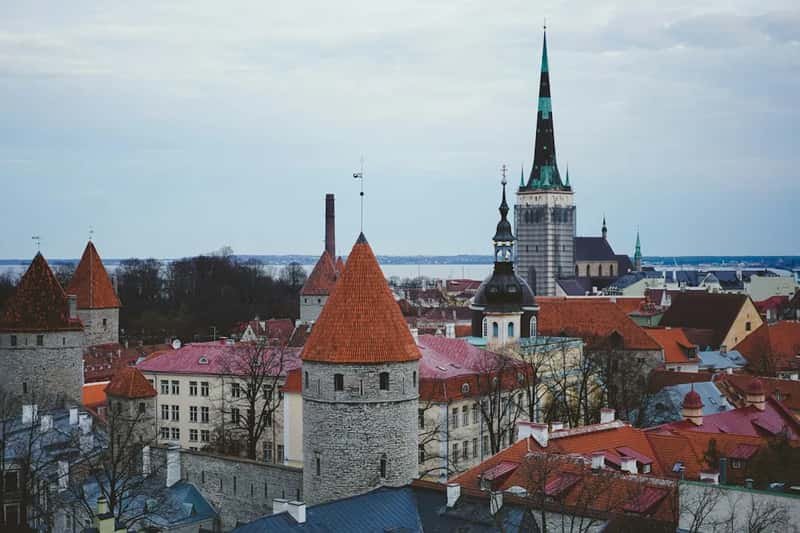
Estonia was an early mover in remote work, and its income test is strict. It requires €4,500 net per month, shown over the six months before applying, and the official page confirms it is measured net, not gross.[11] That net wording catches out applicants who quote their gross salary.
Many people also confuse the visa with e-Residency. E-Residency lets you run an Estonian company online but doesn’t grant the right to live in Estonia.[11] The nomad visa does grant that right, for one year.[17]
12. Thailand: Long Term Resident Visa for Work From Thailand Professionals

Thailand has a second remote work route, and it’s nothing like the Destination Thailand Visa. The Work from Thailand Professional category carries an income requirement of $80,000 a year, about $6,700 a month, the highest on that comparison list.[18] It’s aimed at established high earners, not freelancers testing the waters.
On the plus side, it doesn’t include a degree test.[19] Thailand rolled out the extended Destination Thailand Visa and the Long Term Resident Visa as part of its 2025 and 2026 framework.[20] The two programs sit at opposite ends of the same country’s system.
13. Cayman Islands: Global Citizen Certificate

The Caribbean’s pricier programs set a tough income bar. In the Cayman Islands, the minimum income is $100,000 per year for an individual and $150,000 for a couple.[4] The visa runs two years, and the application fee is approximately $1,469.
There’s no nationality restriction, which is unusual. Anyone can apply.[4] The money requirement does the filtering that other countries do with passport lists.
14. Croatia: Digital Nomad Residence Permit

Croatia is popular, and its income test has crept up. The formula linked threshold jumped to €3,622.50 per month under a March 2026 gazette update.[16] The same comparison lists a small supplement for a spouse or child.[10]
The tax treatment helps balance the cost. Croatia exempts a nomad’s foreign income from local tax even for stays longer than six months, a rare combination of an EU residence permit and a zero rate.[21] You’ll pay more to qualify, though the tax picture is simpler once you’re in.
15. Greece: Digital Nomad Visa

Greece tightened its process in 2026. The threshold is €3,500 a month net, and since February 2026 documents are accepted only at a consulate before entry.[21] The change came through Law 5275/2026.[21]
In practical terms, the old route is gone. Greece eliminated in country visa conversion, so applicants must apply from a Greek consulate before traveling rather than switching from a tourist stay.[16] Family members add to the total, with €700 more for a spouse and €525 for each child.[10]