

Every winter, Minnesotans roll into Arizona convinced the hard part was the drive. After a few days of sunshine and no shoveling, it feels like the finish line. It isn’t. Arizona has a handful of rules that sound minor on paper and hit hard in real life, usually in the form of a fine, a closed trail or a very awkward letter.
Some of these will make you laugh. One involves a cactus, and another carries the best nickname in the state. But the last few have nothing to do with sunscreen or speed limits, and one of them can reach all the way back to your Minnesota mailbox. Start with the one that looks easiest, because it fools almost everybody.
#11 – Camelback Looks Like a Short Hike, but the City Rates It Extremely Difficult
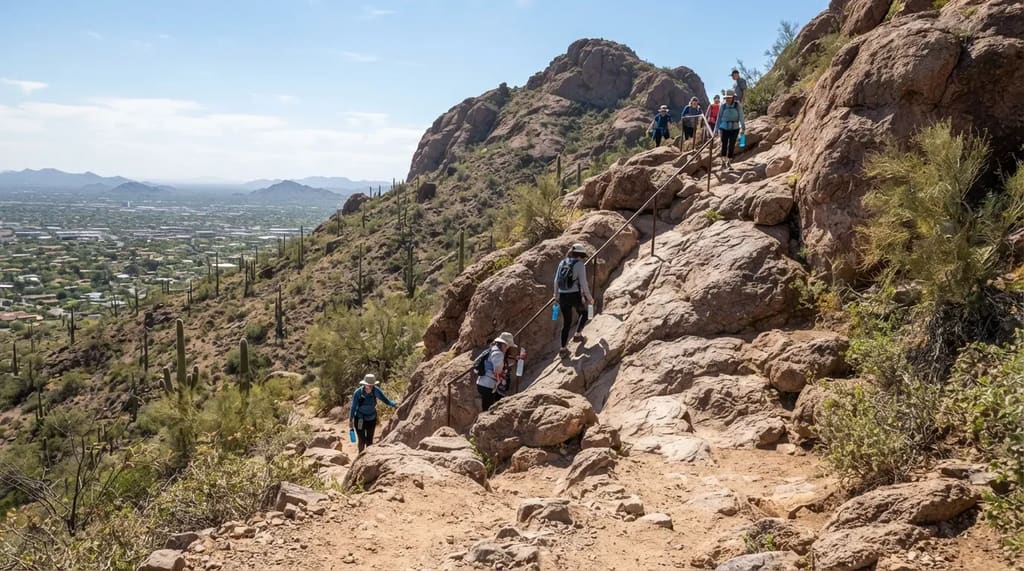
On a map, Echo Canyon looks harmless. The trail is just 1.14 miles long, and that sounds like a morning stroll before brunch. But the summit of Camelback Mountain sits about 1,280 feet above the trailhead. The path is dirt, gravel and boulders, with some handrail-assisted sections, and the city rates it extremely difficult.1
That gap between the mileage and the reality is the trap. Plenty of fit, experienced hikers turn around partway up, and the fire department regularly pulls people off the mountain, mostly for heat and dehydration. Treat it like a scramble, because that’s what it is. Bring far more water than feels reasonable and start early. And while you’re checking your watch, the next rule says your watch may be lying to you.
Fast Facts
- Echo Canyon trail length: 1.14 miles
- Climb to the summit: about 1,280 feet above the trailhead
- Surface: dirt, gravel and boulders
- Terrain: some handrail-assisted sections
- City rating: extremely difficult
#10 – Arizona Never Springs Forward, and Your Calls Home Will Show It

Arizona doesn’t change its clocks. It stays on Mountain Standard Time all year, even when the rest of the country moves twice a year. The Navajo Nation is the big exception within the state, because it does observe daylight saving time. The Hopi Reservation, surrounded by Navajo land, doesn’t, which makes for one of the stranger time maps in the country.2
For snowbirds, the real shock is the gap with home. In winter, Arizona runs one hour behind Minnesota. Once Minnesota springs forward in March, the gap becomes two hours. That’s how a doctor’s call or a grandkid’s video chat gets missed right when the weather is at its best. It’s a small rule with a small cost, but it keeps catching people out.
#9 – That Saguaro Is Protected, and Treating It Like a Prop Is a Legal Problem
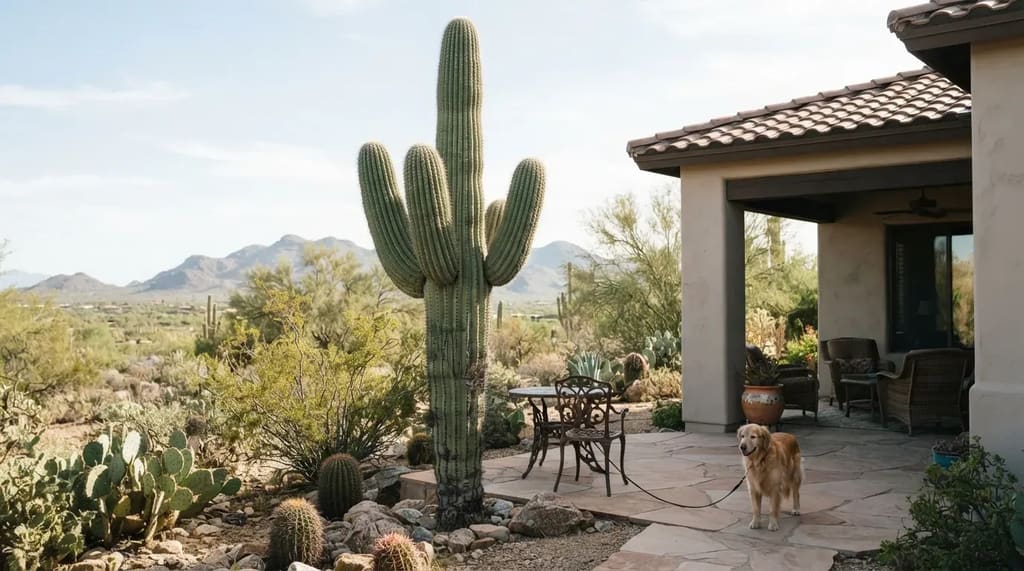
The saguaro is the cactus on every postcard, and its white blossom is Arizona’s state flower. Arizona’s native plant law protects it. You can’t dig one up, haul it off or cut it down on a whim. That includes the perfect one standing next to your rental’s patio.
The reason comes down to time. A saguaro is often 50 to 70 years old before it grows its first arm. One careless cut can erase a lifetime of slow growth in seconds. Even landowners who want a saguaro moved generally have to go through the state’s process first. Some visitors figure a cactus is just a cactus. Arizona disagrees, and the law backs it up. Your dog, though, may have a bigger problem coming.
#8 – Your Dog Gets Barred From Phoenix Trails Once It Hits 100 Degrees
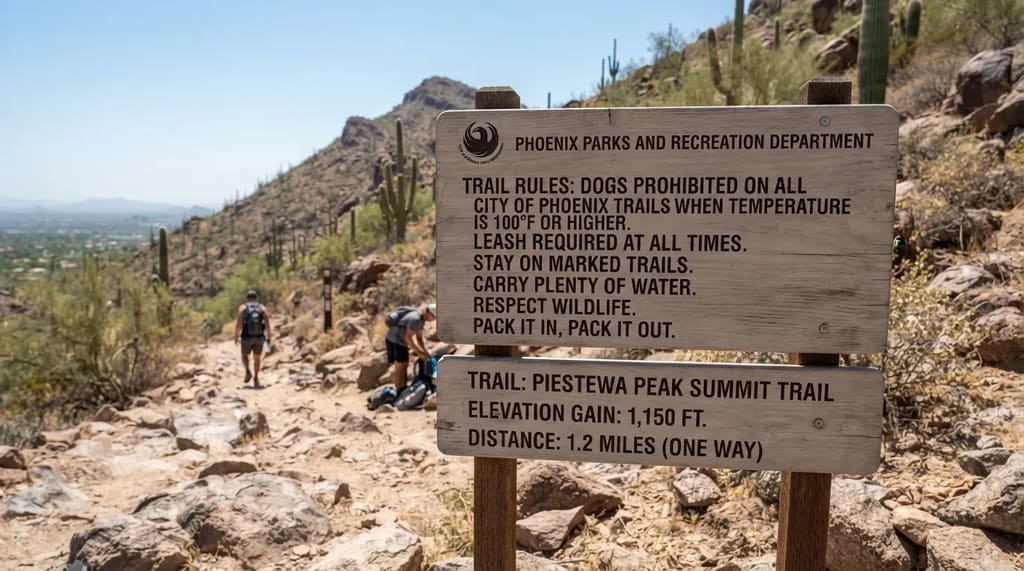
Snowbirds bring their dogs, and Phoenix has a rule for them. Dogs are prohibited on City of Phoenix trails whenever the temperature hits 100 degrees or higher, and they’re expected to be leashed the rest of the time. It’s easy to assume that only matters in July. It doesn’t, because Phoenix can see triple digits earlier in the year than most visitors expect.
The heat on the ground is worse than the number on your phone. On a sunny day, rock and pavement can get hot enough to burn paws long before the air feels extreme. The rule isn’t really about fines. It’s about a dog’s feet and the rescuers who would have to carry a dog down. If your dog can’t handle the trail, you probably shouldn’t be on it either. Which brings us to what happens when people ignore the heat.
Worth Knowing
- At 100°F or higher, dogs are prohibited on City of Phoenix trails.
- Below that, a leash is expected.
- Hot rock and pavement can burn paws before the air feels extreme.
- Vets often suggest a quick check: if the back of your hand can’t stand the ground for five seconds, it’s too hot for paws.
#7 – Phoenix Closes Its Most Famous Trails to Humans Too, and Tickets Are Possible
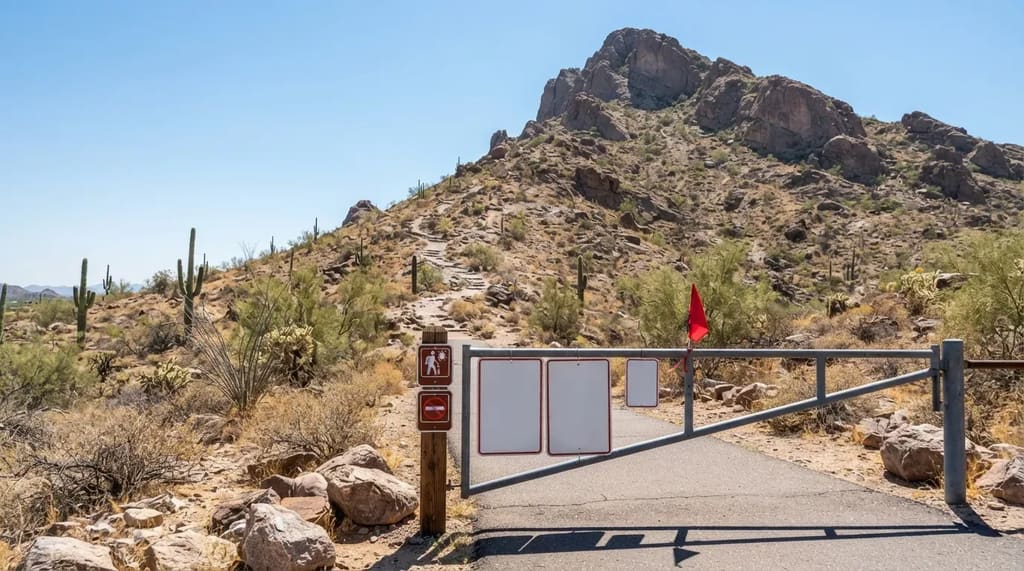
In 2021, the Parks and Recreation Board set up the Trail Heat Safety Program. It restricts access to certain trails from 8 a.m. to 5 p.m. when the National Weather Service issues an Extreme Heat Warning.3 The list includes Echo Canyon, Cholla and the Piestewa Peak Summit Trail, which are some of the most photographed hikes in the Valley.4
City officials say more than 200 hikers are rescued from Phoenix desert and mountain parks and preserves each year. Entering a closed trail isn’t just risky. It can be a city-code violation. Some people call that nanny-state thinking, but the rescue numbers make a strong counterargument.
#6 – Arizona’s Hands-Free Law Catches Minnesotans Holding Phones the Wrong Way
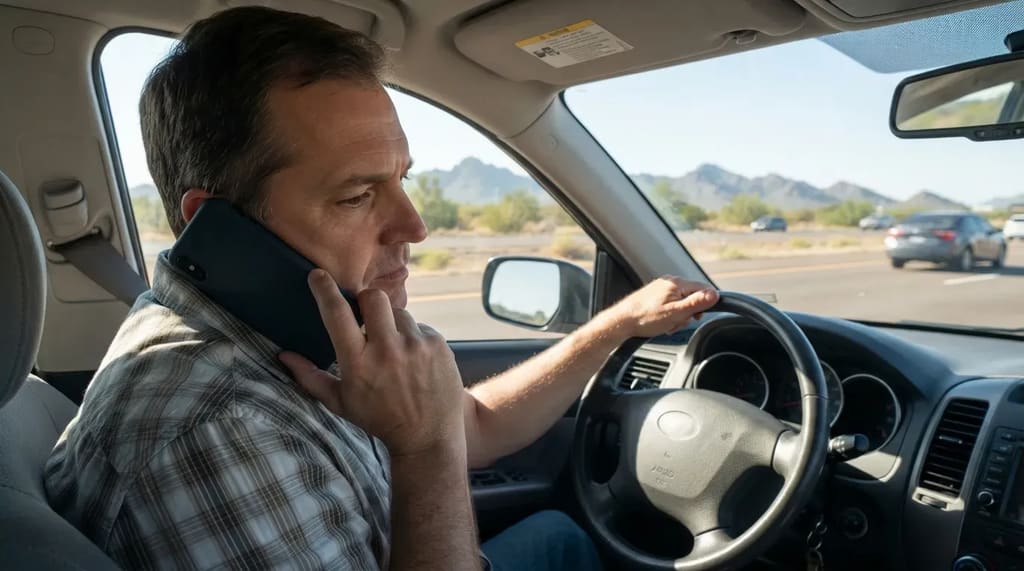
Arizona’s hands-free law took effect January 1, 2021, and it applies to all drivers on all Arizona roads. Minnesota has its own hands-free rules, so you’d think this one would feel familiar. The twist is how broad it is. The law bans holding or supporting a device with your body, not just your hands, so the shoulder-and-knee trick won’t save you.5
Quick Compare
- First offense: $75 to $149
- Second or later offense: $150 to $2505
- Where it applies: all drivers, all Arizona roads
Those fines come with a catch. An officer can pull you over for the phone alone, with no other violation needed. When the law was new, officers could only hand out warnings. Those days are over, so don’t count on a free pass.
#5 – The “Stupid Motorist Law” Is Real, and Your Insurer May Not Cover the Bill
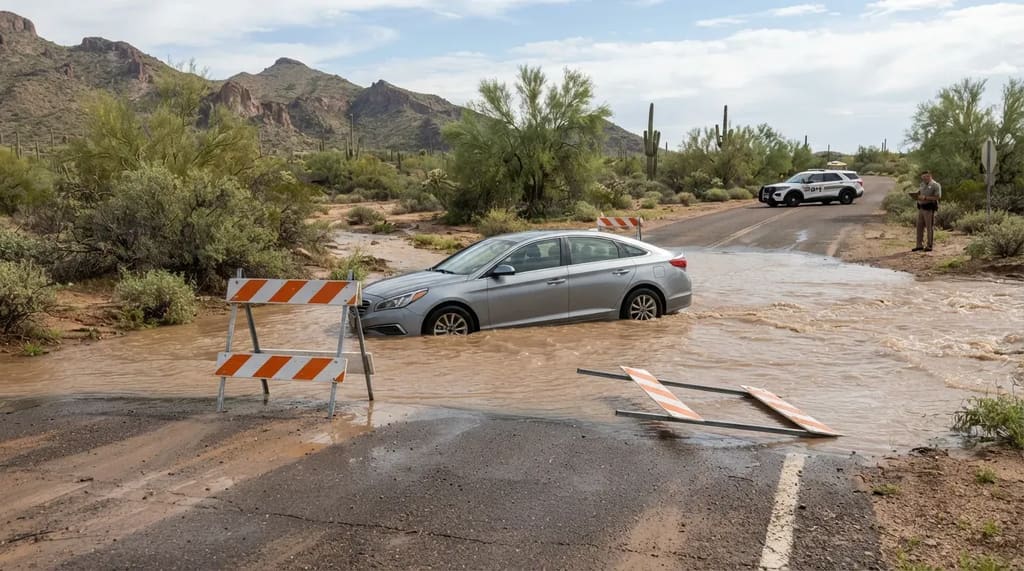
The nickname belongs to A.R.S. § 28-910. It lets a public agency bill you for your own rescue if you drive around a barricade onto a flooded road and get stuck. Agencies can charge up to $2,000 for a single incident.6 Arizona does get winter rain, and dry washes can fill fast when a storm hits miles upstream, even under a clear sky.
Here’s the catch. The law allows insurers to exclude coverage for that rescue-cost liability, so the bill could land on you personally.6 It’s rarely enforced, but it has been used, and rescue crews take barricades seriously for good reason. A barricade in the desert doesn’t mean the road looks bad. It means the road already failed someone.
#4 – Minnesota Can Hold You to One Home State, Whatever You Told Arizona

Many snowbirds think they can pick a home state form by form. They can’t. One adviser warns that you cannot claim Arizona residency for tax purposes while claiming Minnesota residency to qualify for in-state tuition for a grandchild or to keep a professional license. Those answers can end up side by side on someone’s desk, and the paper trail is long.
The stakes are concrete. Minnesota’s top income tax rate is 9.85%, while Arizona taxes income at a flat 2.5%. If you remain a Minnesota resident, your pensions, IRA distributions and investment income stay taxable by Minnesota. The state can also argue you never changed your domicile if you kept a home, voter registration, banking and social ties there. Think about that before you announce you’ve moved on your cousin’s Facebook page.
#3 – Arizona Has No 183-Day Rule, and Nine Months Is the Line
Minnesotans love the 183-day number, so they assume Arizona uses it too. That’s a common mistake. Arizona has no 183-day rule, and residency turns on your purpose in the state and your domicile. The state looks at intent and facts, not just a calendar count.
At a Glance
- Arizona’s 183-day rule: there isn’t one
- What matters: your purpose and your domicile
- Nine-month mark: more than nine months in a tax year creates a presumption of residency
- Warning signs: a bought home, an Arizona-registered car, ever-longer stays
That presumption isn’t the whole story, because you can be a resident on far fewer days if your purpose isn’t genuinely temporary. A winter visitor can become a resident one factor at a time. The danger is drifting. If both states claim you, you may face taxation by both. So what does Minnesota actually look at?
#2 – Fewer Than 183 Days Away From Minnesota Doesn’t Protect You

The Minnesota rule most snowbirds half-remember is only half the story. Minnesota looks at the totality of circumstances, not just day counts. You can spend four months in Arizona and still be a Minnesota resident for tax purposes if your domicile remains there. Domicile is the place you intend to return to, your permanent home.
Related Stories From Travelbinger



In residency disputes, the department has looked at a long list of factors. They include which checking account you use most actively and whether you bought resident or nonresident fishing, hunting or watercraft licenses. Audit selection criteria aren’t public, so you can’t know what might trigger one. A fishing license can be evidence, and most people never think about that until someone asks.
#1 – A Five-Month Arizona Winter Can Still Leave You in Minnesota for 183 Days or More

If you keep a Minnesota abode, meaning a dwelling suitable for year-round use, and spend at least 183 days in the state, you’re a resident whatever your domicile. Any part of a day counts as a full day.7 The threshold is “at least 183,” so day 183 itself is enough. The rule applies to the whole calendar year.
Now do the math. A five-month Arizona winter is roughly 150 days. If the rest of the year is spent at home, that’s around 215 days in Minnesota, well past the line. The trap is that the usual snowbird schedule is shorter than it feels. And partial days, like the day you drive in or out, count against you.
Most of these rules are small and cheap to follow. The phone law, flood barricades, heat closures and cactus protections are easy fixes once you know them. The day count is the exception, because it can reach every dollar of your retirement income.
Arizona’s sunshine is the easy part. The hard part is being in two places at once on paper.
- Phoenix Echo Canyon Trailhead: https://www.phoenix.gov/administration/departments/parks/activities-facilities/trails/camelback-mountain/echo-canyon-trailhead.html
- Arizona Time Zone Explained: https://timeanddate.us.com/does-arizona-observe-daylight-saving-time
- Phoenix Heat Safety Program Update: https://www.phoenix.gov/newsroom/parks-news/phoenix-updates-trail-heat-safety-program-ahead-of-summer–what-.html
- Phoenix Trail Heat Safety Program: https://www.phoenix.gov/administration/departments/parks/activities-facilities/trails/heat-safety.html
- ADOT Hands-Free Law: https://azdot.gov/news/adot-distracted-driving-campaign-raises-awareness
- AZFamily Stupid Motorist Law: https://www.azfamily.com/2023/03/22/arizona-flood-rescues-stupid-motorist-law/
- Minnesota 183-Day Rule: https://www.revenue.state.mn.us/183-day-rule