You glance at the final bill and the total is higher than the number you booked. You’re not imagining it. The federal junk-fee rule took effect on May 12, 2025, and it was supposed to end surprise hotel pricing. But it doesn’t ban resort fees, and government taxes still get added at checkout.
Here’s the twist: a lot of what lands on that last page was avoidable. Parking, Wi-Fi, deposits, pets and even a soda you only picked up can all end up on the bill. Many of them can be dodged with one question or one click before you arrive. We’ll start with the sneaky small ones, and the biggest offender is waiting at #1.
#13 – The “Late Check-Out” Fee That Nobody Mentioned at the Front Desk
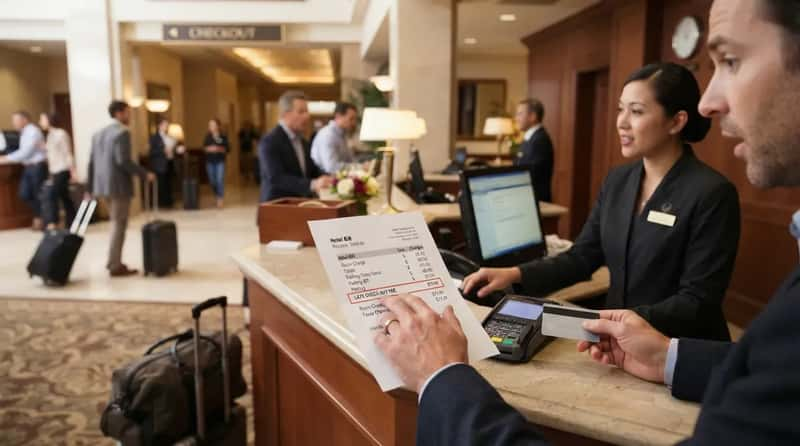
That extra hour in bed can cost real money. Early check-in and late check-out show up on standard lists of hotel add-on charges, right beside parking and amenity fees. Policies change from property to property, and plenty of hotels bury them in the fine print. The answer often depends on how full the hotel is that day.
Some loyalty programs list late check-out as an elite perk, so status can make the fee disappear. Without status, asking early still gives you leverage. Waiting until 11:55 a.m. on departure day gives you none. But that’s nothing compared to what some hotels charge when a third person walks through the door.
#12 – The Extra-Guest Fee That Punishes Anyone Who Brings a Friend

You booked for two and showed up with three. According to Kayak, many hotels will hit you with an additional guest fee, especially in Europe, ranging from $20 to $50 per night. It’s the same pillow, the same room and the same air conditioning. The charge is basically for breathing in the room.
Quick Compare
- 2 nights: $40 to $100 added for one extra guest
- 3 nights: $60 to $150 added
- 5 nights: $100 to $250 added
The fix is dull but effective. Enter your real headcount when you book, then compare a room type built for more people. A family room can come in cheaper than a standard room plus nightly extras. Hotels point to occupancy limits as the reason, while plenty of guests call it a pure cash grab. And the next charge hides in a place most guests assume is free.
#11 – The Wi-Fi Charge on a Stay That Promised “Free” Internet

Paying for Wi-Fi in 2026 feels like paying extra for the lights. Many major chains offer basic Wi-Fi free to loyalty members, but faster “premium” tiers can still be sold at the desk or on a login page. Meanwhile, resort fees at some properties are said to cover services like Wi-Fi. That means some guests can end up paying for the same internet twice.
Joining the free loyalty program takes a couple of minutes and often unlocks the standard tier. The Points Guy has asked how Wi-Fi or a gym can still be missing from the room rate in 2025. Plenty of travelers ask the same thing. But the next charge doesn’t come from a login page at all. It comes from a tiny bottle of soda.
#10 – The Minibar Sensor That Billed a Guest for Just Moving a Soda

You picked it up, read the price, and put it back. Some hotels use sensor-equipped minibars that log an item the moment it leaves its spot. If it isn’t returned fast enough, the charge can post to your room. Many guests only find out when they see the folio at checkout.
Take a quick photo of the minibar when you arrive. If you want the space for your own drinks, ask staff to clear it. Ask for an itemized bill the night before you leave, not while the car is waiting. A charge you spot at 9 p.m. is far easier to fight than one you spot at 11 a.m. And the next fee shows up with a tip line that looks suspiciously like an invitation.
#9 – The Room-Service “Service Charge” Sitting Right Above a Blank Tip Line

Dinner arrived, the receipt came, and the bill already had extra lines on it. Many hotels add delivery fees or service charges to room-service orders, and the receipt can still include a blank tip line below them. A guest can easily end up tipping twice for the same tray. The charge is usually spelled out on the menu, in print small enough to miss.
Read the menu footer before ordering and ask whether gratuity is already included. Picking the food up from the lobby café can skip the delivery fee entirely. Guests argue that a delivery charge plus a tip line is double-dipping. Hotels reply that the charge covers the cost of running the service. Either way, it’s your bill. And the next charge isn’t about food. It’s about your dog.
#8 – The Pet Fee That Never Showed Up Until the Final Bill

Your dog behaved perfectly and the bill still arrived with a surprise. Pet fees can be charged per night or per stay, and the rules vary by property. In a recent Los Angeles hotel fee index, only 47% of the hotel websites checked stated a pet policy. That means more than half left guests guessing.
Worth Knowing
- Some hotels charge pets by the night, others by the stay.
- Weight limits and room restrictions can apply on top of the fee.
- Under the ADA, hotels generally can’t charge pet fees for trained service dogs, though damage can still be billed.
- Emotional support animals are treated differently from service dogs.
Call before you book and ask for the fee, the weight limit and any room restrictions. Get the answer by email so you have it in writing. It turns a vague “we’re pet-friendly” into something a front desk can’t quietly rewrite. And the next charge targets travelers who never even see the price.
#7 – The “Helpful” Currency Offer That Quietly Costs More

The clerk smiles and asks whether you’d like to pay in dollars. It sounds like a favor. Known as dynamic currency conversion, this option lets the hotel or its card processor pick the exchange rate. The rate is usually worse than what your own card network would apply. Most guests don’t realize they had a choice at all.
When the terminal asks, choose the local currency every time. Let your own card handle the conversion. A card with no foreign transaction fee makes this even easier. The same trick applies at restaurants and shops abroad, so it’s a habit worth keeping. But the next one doesn’t charge you at all. It borrows your money instead.
#6 – The Deposit Hold That Freezes Your Money Long After You Leave
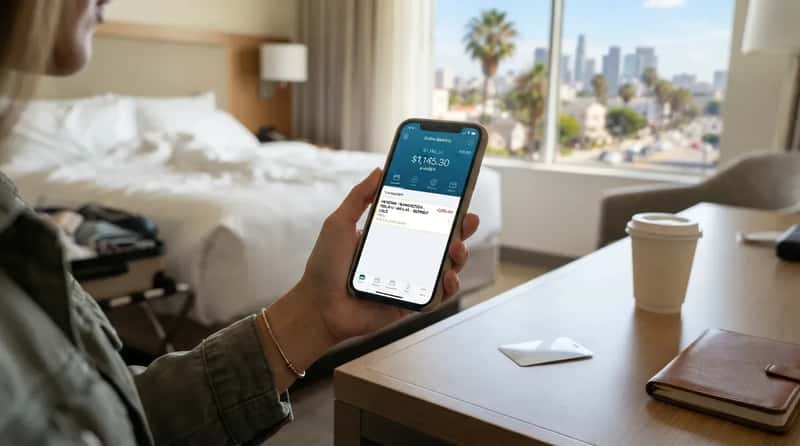
Checkout is done, yet your balance still looks smaller. At check-in, many hotels place a hold on your card to cover possible extras. The Los Angeles fee index counts security deposits and card holds among the fees hotels disclose, next to pets and early check-in. Debit cards feel it most, because the held money is unavailable until the hotel releases it.
Release can take several days after departure, depending on the bank. On a short trip, that can mean you’re still waiting for your money after you’re home. Use a credit card instead, and ask at check-in how large the hold will be. Ask when it releases, too. A two-minute question at the desk beats a week of staring at your account. And the next charge starts the moment someone else touches your car keys.
#5 – The Valet Charge That Costs Double What Self-Parking Does
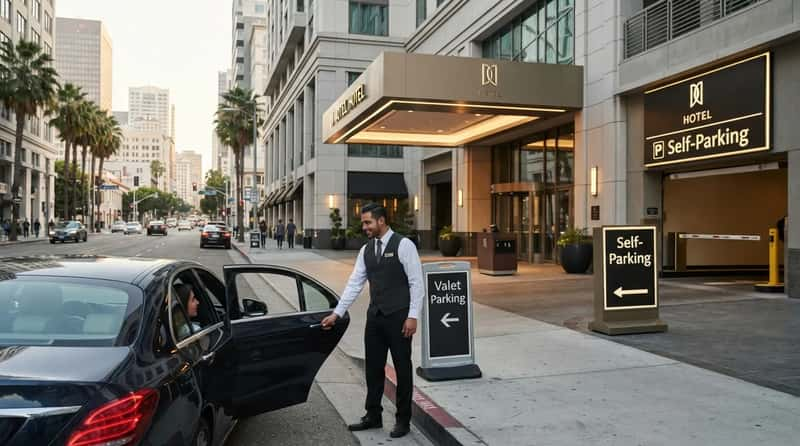
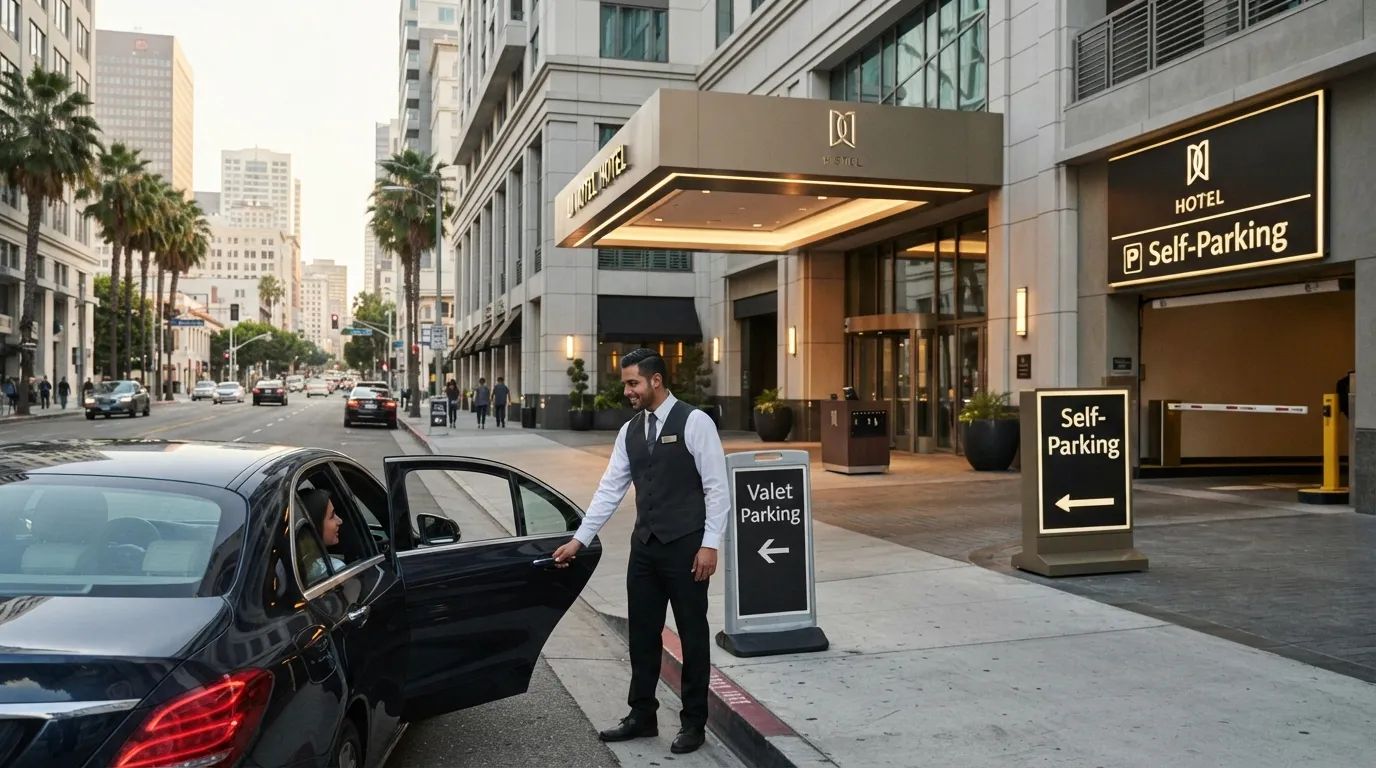
The attendant opens your door before you’ve seen a price. In the Los Angeles index, valet was priced far above self-parking, and the gap is hard to miss.
Fast Facts
- Median valet charge: $60.25 a night
- Median self-parking charge, where one applied: $30
- 72% of hotels that stated a self-parking price said it was free
- None of the 30 hotels that listed a valet price said it was free
Ask for the self-parking option before anyone takes your keys. It is often cheaper, and sometimes free. A quick map search can also turn up nearby public lots. One consumer reporter noted that hotels often charge more than public lots, and a three-minute search can save $30 a night. Valet exists for convenience, and you pay a hefty premium for it. But the next fee is stranger still: it’s supposed to vanish, and doesn’t.
#4 – The Resort Fee That Survives on a Points Stay

You paid with points and still got a bill. Some programs officially waive resort fees on award stays. For example, Wyndham Rewards waives them officially, though enforcement is inconsistent. The rule on paper and the charge at the desk don’t always match.
Policies differ across chains and change over time, so check the current terms for your booking. Raise the issue at check-in, before you hand over a card. It’s a much easier conversation than the one at checkout. Keep it calm and keep the paperwork handy. But the next charge hits travelers who didn’t even bring a vehicle.
#3 – The Parking Fee Billed to a Guest Who Had No Car

It sounds like a joke, but it actually happened. A guest at a Chicago boutique hotel found a $25-per-night parking fee on her bill, even though she didn’t have a car. Hotels often fold parking into mandatory charges. Some guests pay for a space they’ll never see.
The stakes are real. The average hotel parking fee is $44 a night, according to ResortFeeChecker.com. In New York, hotel parking fees can exceed $100 a night. Before you book, ask whether parking is optional or built into a mandatory fee. If it’s optional, ask for it to be removed in writing. And the next item shows how taxes can quietly make every fee bigger.
#2 – The Tax That Quietly Lands on Top of Every Fee

The advertised price isn’t the number you pay. Hotel taxes are still added at checkout, because government charges are excluded from the rule’s total price. Worse, lodging tax can apply to the resort fee too. Each fee gets taxed, so each fee costs more than it looks.
The good news is that every avoided fee also avoids the tax on top of it. Skipping a resort fee or a parking charge shrinks the bill twice. Compare hotels by the total for your whole stay, not by the headline rate. The cheaper-looking room often flips. And the biggest fee of all is still waiting.
#1 – The Resort Fee That Charges You for a Pool You Never Visited

This is the charge that started the whole fight. Sources differ on the average, with one putting it at about $42 per night and Kayak at around $35. In Las Vegas, most major Strip hotels charge between $45 and $55 per night before tax. It’s almost always per room, per night, no matter how many people are staying. Over three Strip nights, that can add $135 to $165 before tax.
The fee is legal. Hotels can still charge resort fees; they just can’t hide them in the fine print anymore. Resort fees are concentrated at resorts, casinos and upscale urban hotels, so picking a different kind of property can skip them. Hotels say the fee covers amenities like the pool and gym. Travelers United’s president argues it misrepresents the true price of a room. Which side is right is up to you, but the bill is the same either way.
The rule that took effect in 2025 changed how prices are displayed, not what hotels can tack on. Most of these charges can still be dodged with one question or one click before you arrive.
Read the fee page, ask in writing, and add up the whole stay. The number that matters was never the one on the booking page. It’s the one on the last screen of checkout.