The line is moving, your coffee is still warm, and then the agent says the three words nobody wants to hear: you can’t board. Check-in looks like the boring part of a trip. But it’s where some of the most retold travel disasters begin, from a $400 suitcase surcharge to a €55 desk fee that was never in the fare.
Here’s the twist: almost none of these stories are about careless people. They’re about rules that quietly moved in 2025 and 2026. A star on a license, a battery in a pocket, a cutoff that crept earlier. Thirteen of them are below, and the one at #1 is the quietest of all.
#13 – The Gate-Check Offer That Leaves a Battery in the Hold
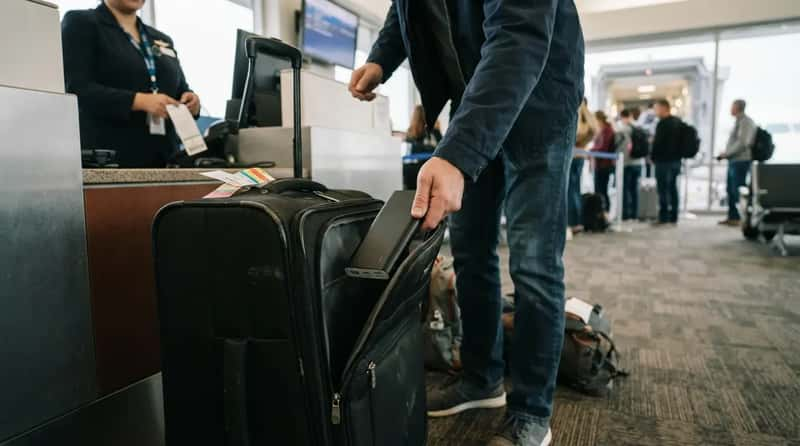
The gate agent offers to check your carry-on for free, and it sounds like a gift. But if a power bank is zipped into a side pocket, you may be about to break a rule you didn’t know applied. The rule follows the battery, not the bag. If you’re asked to gate-check, every power bank and spare battery has to come out and ride with you in the cabin.
The reason is fire. A lithium battery fire in the cargo hold can’t be spotted or fought by the crew the way one in the cabin can. That’s why spare batteries travel with the passenger. Pull every charger and spare battery out while you’re still at the gate, before the tag goes on the bag.
Worth Knowing
- The rule covers power banks, spare batteries and battery charging cases.
- Empty every side pocket before you hand over a gate-checked bag.
- Spare lithium-ion batteries of 100 Wh or less are the usual limit. Larger ones generally need airline approval.
- A fire in the cabin can be seen and fought. A fire in the hold can’t.
But that’s nothing compared to the bag fee surprise waiting at #12…
#12 – The Bag Fee You Budgeted Is Already Out of Date
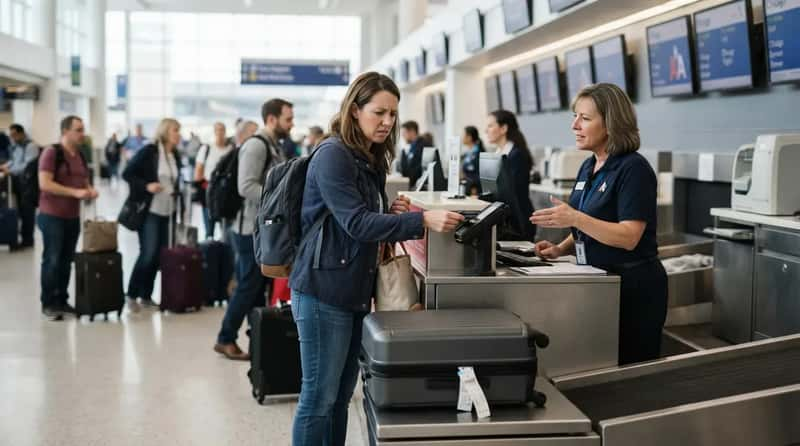
If you’re still budgeting an old, low number for a checked bag, you’re probably wrong. One 2026 roundup reports that every major U.S. airline raised prices in April 2026. Another comparison lists Delta at $45 and American at $50. Published numbers differ by roundup and fare type, which is exactly the problem.
Here’s the part most people skip. One 2026 chart lists American’s first bag at $50, or $45 online. Same bag, same plane, and the only difference is when you pay. Five dollars isn’t a disaster, but it adds up fast when a whole family travels. Procrastination, it turns out, is billed per bag.
Next is a suitcase that looks perfectly normal and can still get refused in the hold at #11…
#11 – The Smart Suitcase That Isn’t Allowed to Sleep in the Cargo Hold
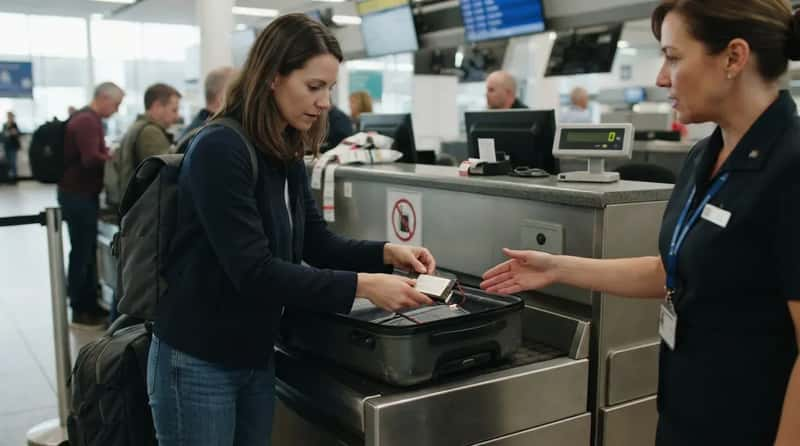
Your high-tech luggage might be the problem. Bags with built-in batteries for tracking, digital weighing or motors fall under the FAA’s lithium rules. Baggage equipped with lithium batteries must be carried as carry-on baggage unless the batteries are removed. A removed battery then follows the spare-battery rules.
The exception for checked bags is tiny. A smart bag can only go in the hold with lithium-ion batteries rated 2.7 Wh or less, or lithium metal batteries under 0.3 grams. That’s a very small battery. Devices inside must also be completely switched off, not in sleep or hibernation mode. The mistake usually isn’t buying the bag. It’s learning the rule at the counter.
Still, the next one has nothing to do with batteries, and it ends more trips than you’d think at #10…
#10 – The Counter Closes Earlier Than Your Confidence Does
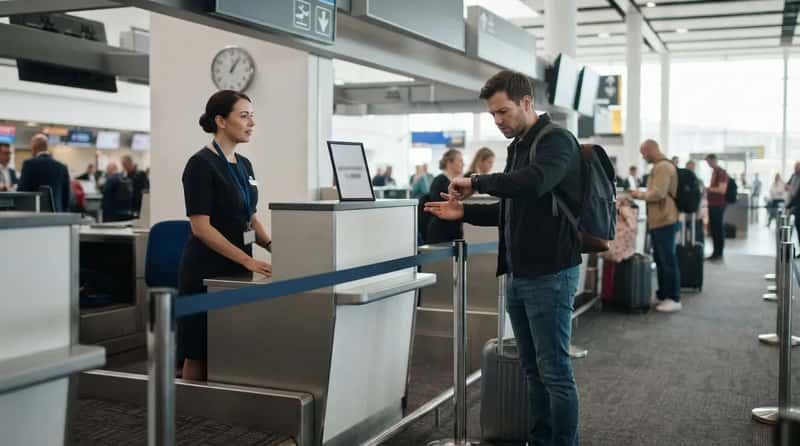
Showing up on time and still being turned away is one of the most retold check-in stories. The bag cutoff isn’t the departure time, and it varies by airline. Ryanair, for one, says that if you miss its deadline it can deny you boarding without a refund. Its desks close 40 minutes before departure, and the boarding gate closes 30 minutes before.
Here’s the twist. From 10 November 2026, a Ryanair update lists airport check-in and bag drop closing 60 minutes before departure instead of 40. Cutoffs can shift quietly. The number from your last trip may already be stale.
A missed cutoff is bad. A dying phone at the worst moment is worse, at #9…
#9 – The Dead Phone That Holds Your Boarding Pass Hostage
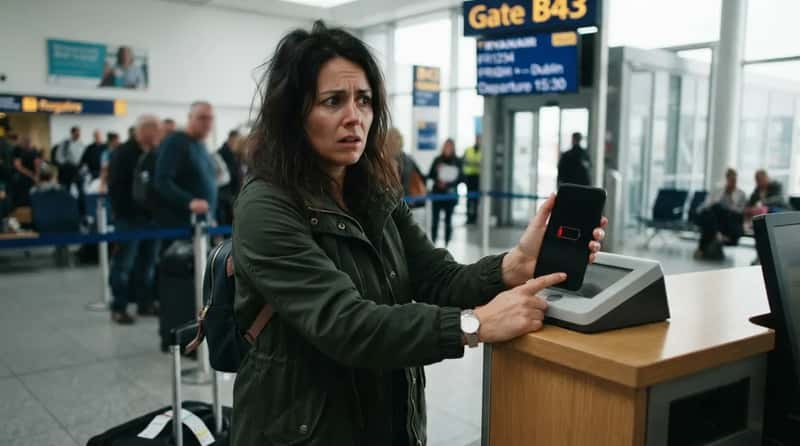
A 4% battery can turn into a scene at the gate. Ryanair is the clearest example of where this is heading. Since 12 November 2025, it no longer issues paper boarding passes, either as a self-print or at the airport desk. Elsewhere, most airlines accept digital boarding passes, and many let you save them to your phone’s wallet app.
The safety net exists, but it’s narrower than people think. Ryanair says if you checked in online but can’t show the pass in the app, it issues one free of charge. The rescue depends on that online check-in. Without it, you’re back in fee territory. Saving the pass to a wallet app also gives you offline access.
The next mistake has nothing to do with technology and everything to do with typing, at #8…
#8 – The Name Typo That Can Outprice the Ticket
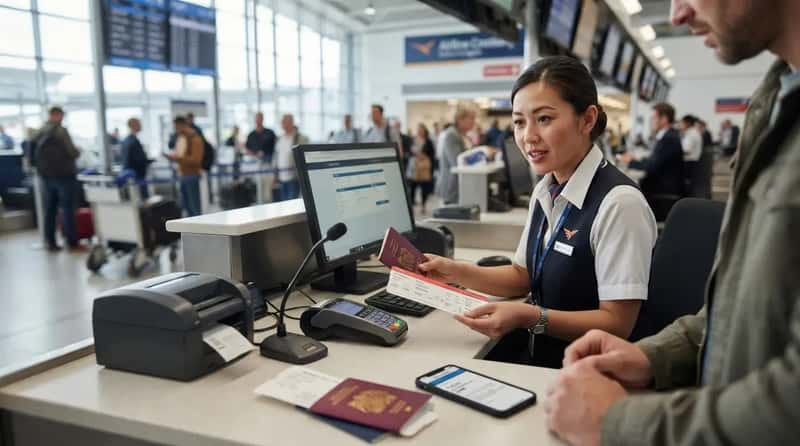
One wrong letter in a booking can quietly wreck a trip. Most airlines expect the name on your ticket to match the government ID you show. When it doesn’t, the fix often lands at the worst place: the counter. Rules for minor corrections vary, so don’t count on a shrug.
The steepest example we found is Ryanair. A fee guide says name changes made through the contact centre or at the airport cost £160 per passenger, the steepest single fee on the list. That’s well ahead of the €55 check-in charge. If every name on a family booking had the same slip, four passengers would owe £640. Read the confirmation email slowly, and read it against the passports.
Quick Compare
- One name slip, one passenger: £160
- Same slip, family of four: £640
- Desk check-in, family of four, one flight: €220
- Prices are in different currencies, but the typo is the costlier mistake either way.
Next is luggage that fails two tests at once, and the bill is bigger than most people expect, at #7…
#7 – The Suitcase That Fails the Tape Measure and the Scale
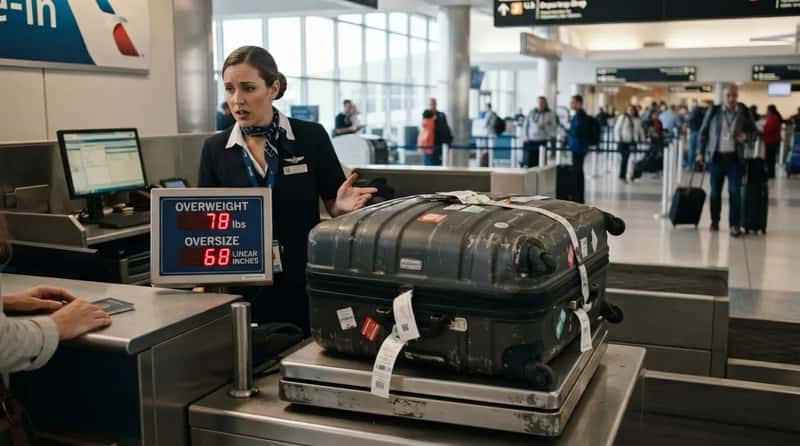
Heavy bags get the headlines. Big bags get the surprise. Many U.S. carriers cap checked bags at 62 linear inches, which is length plus width plus height. Frontier’s policy counts that figure including handles, wheels and straps, so the tag on the suitcase may understate the real size.
Here’s the painful part. At major U.S. carriers, overweight and oversize fees apply independently and get added together. One roundup says a bag that is both overweight (71-100 lbs) and oversized draws $400 in surcharges, per bag, per direction, before the base fee. Alaska’s policy says the fees compound with base bag fees and with each other.
Now for a rule that changed in 2026 and catches anyone who carries a drawer full of gadgets, at #6…
#6 – The Power Bank Count Nobody Told You to Do
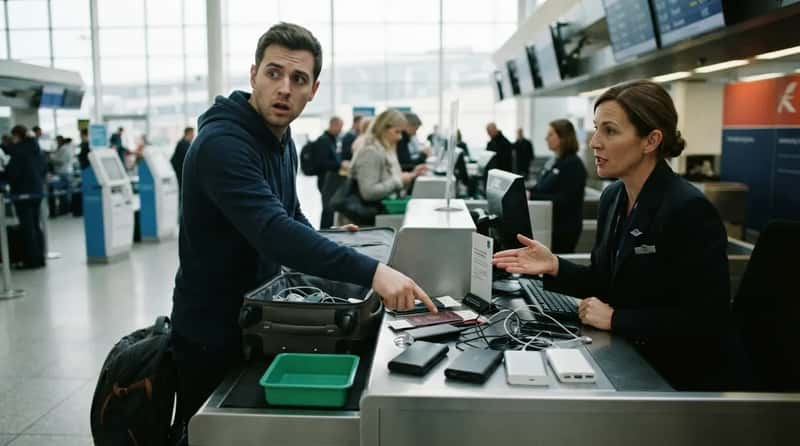
You probably own more power banks than you think, and the number you can bring is shrinking. One 2026 guide says that under ICAO’s international rules, from 27 March 2026, travelers are limited to two power banks per person and shouldn’t use them to charge devices onboard. The guide covers international travel specifically.
Airlines add their own limits on top, and they don’t all match. The smart move is to count your banks against the strictest airline on your trip. The loose cable drawer is not a safe place to start.
Quick Compare
- International rule (from 27 March 2026): two power banks per person, no onboard charging with them.
- Southwest: just one power bank, per one 2026 guide.
- American Airlines: two chargers, each 100 Wh or less, starting May 1, 2026, per one report.
But a bag that’s just one pound too heavy has its own kind of drama at #5…
#5 – One Pound Over, and the Whole Bag Becomes a Debate
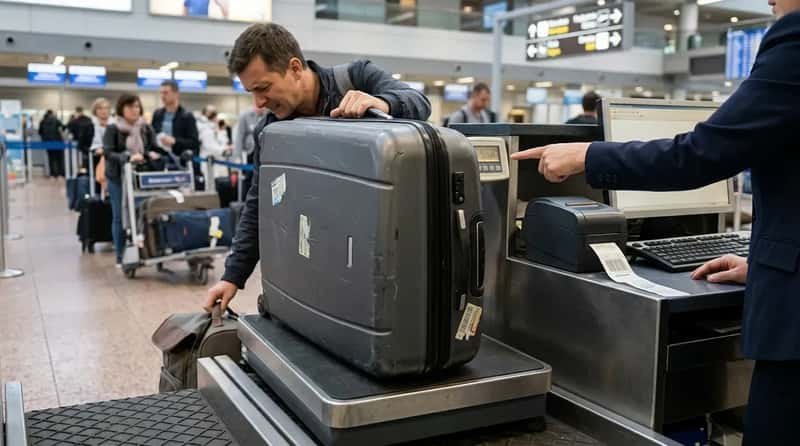
The scale at the counter has no sense of humor. Most airlines define a standard checked bag as up to 50 lbs (23 kg). One 2026 comparison says a bag even one pound over can cost $100-$200 extra. That’s usually per bag and per direction, on top of the base fee.
Delta’s published schedule lists $100 for 51 to 70 lbs and $200 for 71 to under 100 lbs. And here’s the truth about the 50-pound rule: it isn’t universal. On Frontier, a standard checked bag tops out at just 40 pounds, and 41 to 50 pounds costs $75. The number you’ve heard from friends might not be the number on your ticket.
The next rule isn’t a fee at all. It’s a hard no, at #4…
#4 – The Power Bank in the Checked Bag Rule With No Exceptions
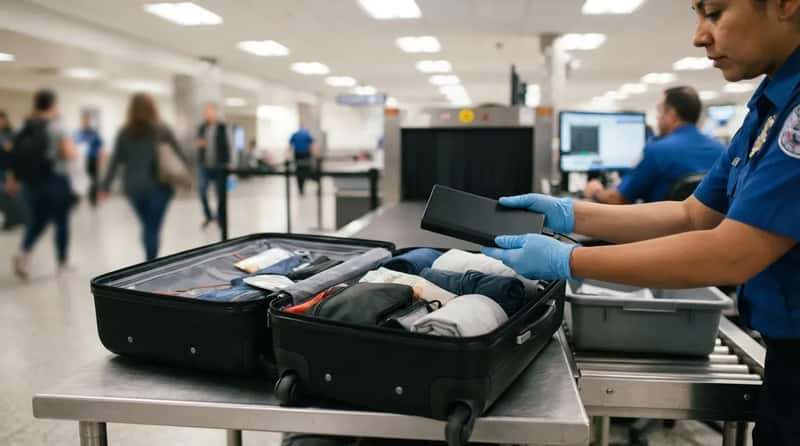
This one isn’t a fee. It’s a flat no. The TSA allows power banks in carry-on bags and does not allow them in checked luggage. The FAA sets the same rule for every spare lithium battery, including power banks and battery charging cases. It’s the single most important thing to know about batteries and flying.
The logic comes down to fire risk. A lithium fire is far easier to catch in a cabin than in a cargo hold. A power bank over 100 Wh without airline approval, or a damaged one, can be stopped at the checkpoint, and it can’t go into a checked bag instead. Most consumer power banks fall under 100 Wh. That doesn’t change where they must ride.
Now we meet the airline that charges for something most airlines give away free, at #3…
#3 – The €55 Desk Fee That Catches Ryanair Passengers
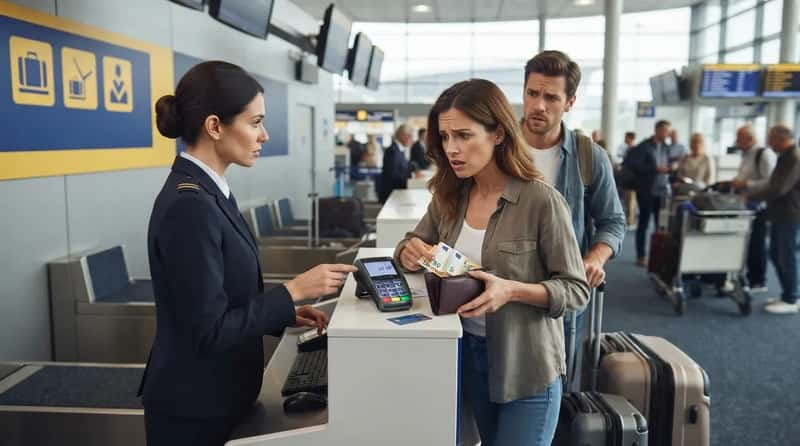
Some travelers think airport check-in is a free backup. At Ryanair, it’s the opposite. Online check-in is free. Check in at the airport and, in an August 2026 check, the fee was €55 per passenger, per sector, with €30 listed for flights from Spain and €40 for Austria.
Do the math for a family. Four people checking in at the desk for one flight would pay €220. The fee also doesn’t cover luggage, since hold bags are booked and paid for separately. And with online check-in open until two hours before departure, the window to avoid it is generous. The cheap fare only stays cheap if you click first.
The next mistake can strand you before you reach the security line, and the fix is hiding in your wallet, at #2…
#2 – The Backup ID Still Sitting in the Desk Drawer
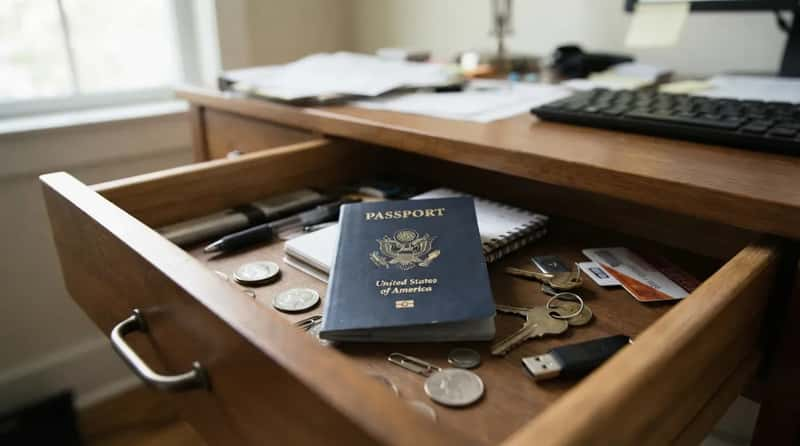
The passport you left home is the cheapest fix you’ll never use. TSA’s list of acceptable IDs isn’t just REAL ID. Plenty of people are already carrying a card that works and have no idea.
TSA’s own FAQ is blunt. If you brought a valid passport, you don’t need to pay the fee or use ConfirmID. Before your next trip, flip through the cards behind your license. A passport in the bag can turn a bad morning into a non-story.
At a Glance
- A U.S. passport or passport card
- DHS trusted traveler cards: Global Entry, NEXUS, SENTRI and FAST
- State-issued Enhanced Driver’s Licenses
- Certain military IDs, including Common Access Cards
And the one at the top of this list is the quietest of all, because it looks exactly like every other license, at #1…
#1 – The Star Nobody Checked on the Driver’s License
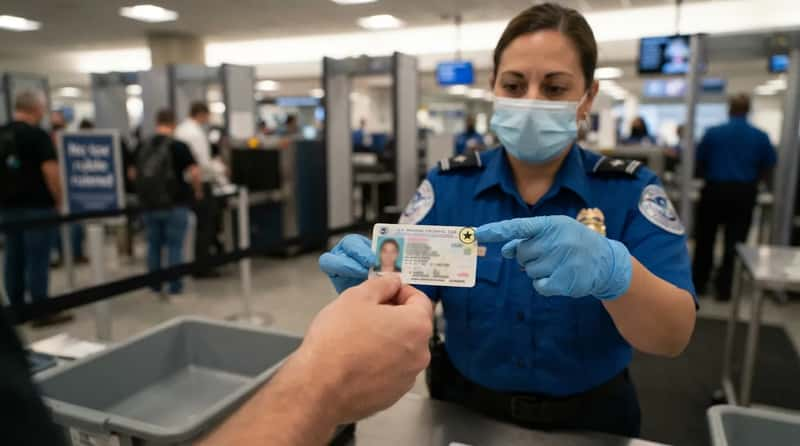
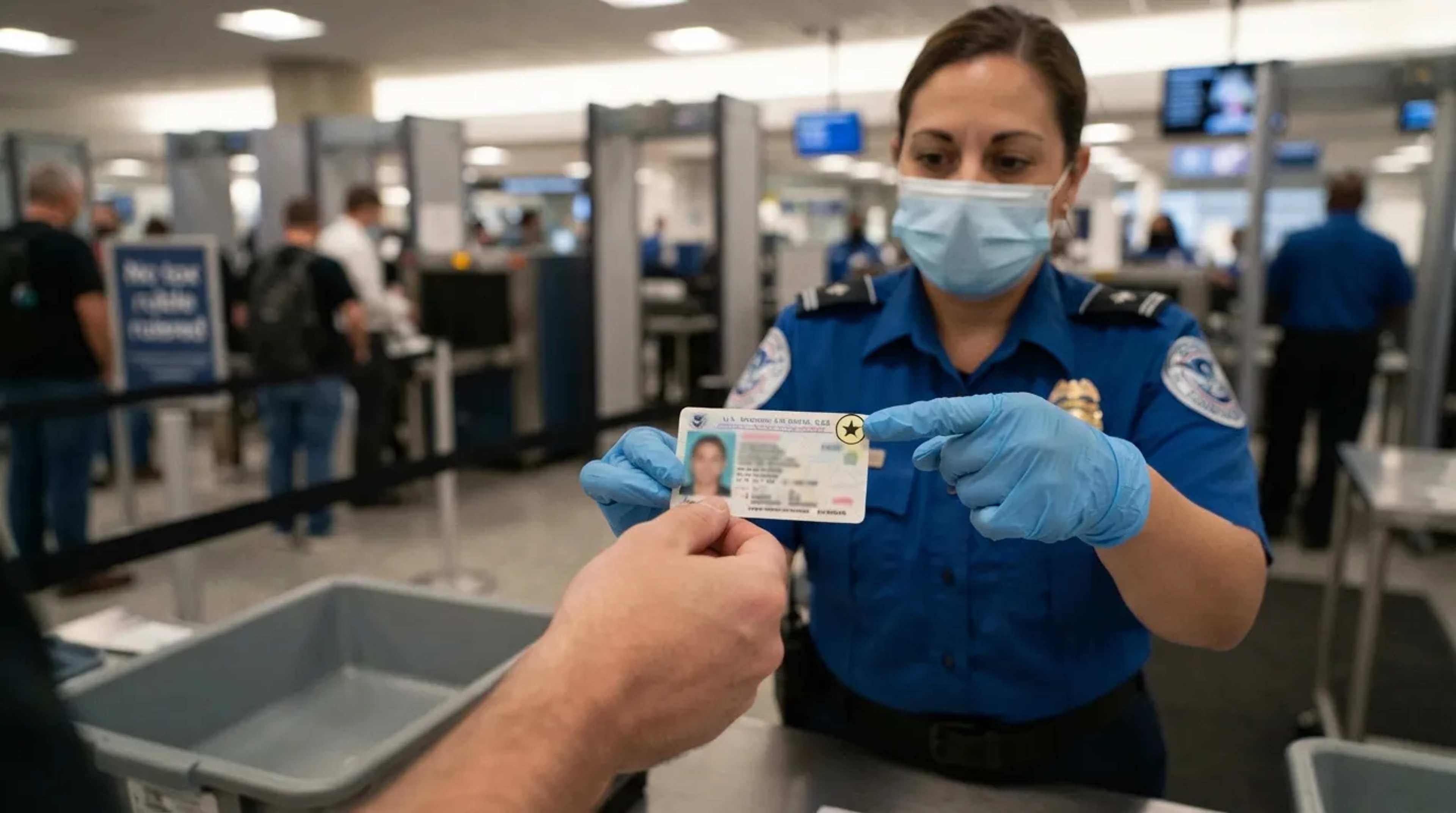
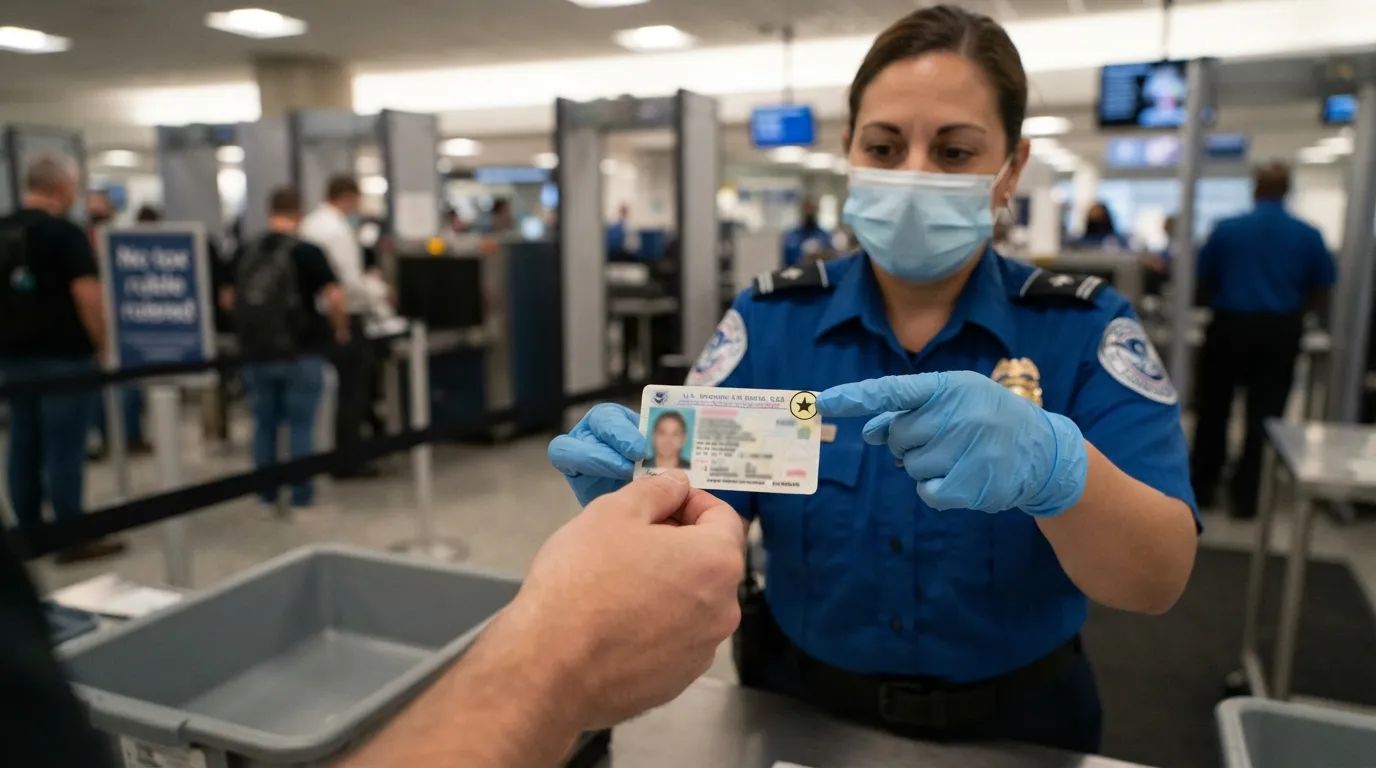
Here’s the scene. You reach the front of the line, hand over a license that has always worked, and learn it isn’t enough. Starting May 2025, U.S. travelers must be REAL ID compliant to board domestic flights. Compliant cards carry a star marking near the top of the card. Check yours at home.
Since February 1, 2026, there’s a rescue option: TSA ConfirmID, for a $45 fee. But paying doesn’t guarantee TSA can verify you, and the fee is non-refundable. Verification is expected to take 10 to 15 minutes on average, though TSA says it could stretch to 30. TSA advises paying early and showing your receipt at the checkpoint.
TSA’s early data say 95-99% of travelers present a REAL ID or another acceptable ID. So the people with a story to tell are the few who skipped the check.
The pattern across all thirteen is hard to miss. Most of these mistakes aren’t about carelessness. They’re about rules that moved while nobody was looking: a REAL ID star, a tighter cutoff, a power bank count, a bag fee that changes with the click. The costs ran from $45 at the checkpoint to €220 for one family flight, and up to $400 in stacked bag surcharges each way.
None of it was a secret. It was just posted somewhere nobody looked, and that’s how a two-minute check at home becomes the story people retell for years.